Can I Put Betta Fish in My Turtle Tank
Putting a betta fish in a turtle tank is strongly discouraged due to significant risks including predation, incompatible water conditions, and stress. Turtles are natural predators that will likely attack or eat your betta, while their vastly different habitat needs make cohabitation nearly impossible. This article explores why this pairing fails and offers safer alternatives for both species.
Key Takeaways
- Turtles are predators: Most turtle species will view betta fish as food, making cohabitation extremely dangerous for the fish.
- Water requirements differ: Turtles need deeper, warmer water with powerful filtration, while bettas prefer shallow, calm, slightly cooler water.
- Stress kills bettas: Constant threat from a turtle causes severe stress that weakens a betta’s immune system and shortens its lifespan.
- Filtration conflicts: Turtle tanks require strong filters that create currents too powerful for betta fish to handle comfortably.
- Separate tanks are best: Keeping bettas and turtles in their own properly set up tanks is the only responsible option.
- Size doesn’t matter: Even large tanks don’t solve the fundamental incompatibility between these two species.
- Safer tank mates exist: If you want community fish, explore species that thrive in conditions similar to bettas instead.
📑 Table of Contents
- Can I Put Betta Fish in My Turtle Tank? The Honest Answer
- Understanding the Natural Predator-Prey Relationship
- Water Requirements: A Fundamental Mismatch
- The Stress Factor: Silent Killer of Betta Fish
- Water Quality and Health Concerns
- What About Large Tanks? Does Size Help?
- Safer Alternatives for Your Turtle Tank
- Creating the Perfect Betta Tank Instead
- Final Verdict: Keep Them Separate
Can I Put Betta Fish in My Turtle Tank? The Honest Answer
You’ve got a beautiful turtle tank set up, and now you’re eyeing that gorgeous betta fish at the pet store. The colors are stunning, the fins are flowing, and you think they’d look amazing swimming around your turtle’s home. It’s a tempting thought, right? But before you grab that little cup and head to the checkout, let’s talk about why putting a betta fish in your turtle tank is one of the worst ideas in the aquarium hobby.
The short answer is no. You really shouldn’t put a betta fish in your turtle tank. I know that’s probably not what you wanted to hear, but the reality is that these two animals are fundamentally incompatible. They have completely different needs, different temperaments, and different survival instincts. What might seem like a fun experiment could end in tragedy for your betta within hours or even minutes.
In this article, we’re going to break down exactly why this combination doesn’t work. We’ll look at the natural behaviors of both animals, the environmental requirements that clash, and the very real dangers your betta would face. We’ll also explore some safer alternatives if you’re looking to add life and color to your aquatic setup. Let’s dive in and get the full picture.
Understanding the Natural Predator-Prey Relationship
Turtles Are Opportunistic Hunters
Here’s the hard truth that many pet owners overlook. Turtles are natural predators. In the wild, fish are a staple part of many turtle species’ diets. Red-eared sliders, painted turtles, map turtles, and most common pet turtle species actively hunt fish. It’s not a matter of training or personality. It’s instinct. Your turtle doesn’t care how pretty your betta’s fins are. To your turtle, that betta is lunch.
Even if your turtle seems docile and slow, don’t be fooled. Turtles can strike with surprising speed when they spot something that looks like food. A betta fish, with its bright colors and flowing fins, is essentially a flashing dinner sign to a turtle. The movement of those fins triggers a predatory response that your turtle simply cannot ignore.
Bettas Are Not Equipped to Defend Themselves
Betta fish are known for being aggressive toward other bettas, but that aggression is entirely different from being able to defend themselves against a predator. A betta might flare its gills and spread its fins at another fish, but that display means absolutely nothing to a turtle. Your betta has no defense mechanism against an animal that can bite through its body in one snap.
Some people argue that bettas are “fighters” and could hold their own. This is a dangerous misconception. Betta aggression is limited to displays and brief skirmishes with similar-sized fish. Against a turtle, a betta is completely helpless. The size difference alone makes any confrontation a one-sided event.
Water Requirements: A Fundamental Mismatch
Temperature Conflicts
One of the biggest reasons you can’t put a betta fish in your turtle tank comes down to water temperature. Turtles generally need water temperatures between 75°F and 85°F depending on the species. Bettas prefer temperatures between 76°F and 82°F. While there’s some overlap on paper, the practical reality is different.
Turtle tanks often run on the warmer side to support the turtle’s metabolism and digestion. This warmer water can stress a betta over time, leading to a weakened immune system and increased susceptibility to disease. On the flip side, if you keep the water cool enough for your betta, your turtle may become sluggish and develop health problems.
Water Depth and Swimming Space
Turtle tanks are designed with depth in mind. Most aquatic turtles need water that’s at least 1.5 to 2 times their shell length deep. This gives them room to swim, dive, and exhibit natural behaviors. Betta fish, however, are shallow-water dwellers. In the wild, bettas live in rice paddies, shallow ponds, and slow-moving streams where the water is rarely more than a foot deep.
Deep water can actually stress betta fish. They need to surface regularly to breathe air using their labyrinth organ. In a deep turtle tank, a betta would have to make frequent trips to the surface, which is exhausting and stressful. Over time, this constant effort takes a toll on their health.
Filtration and Water Flow
Turtles are messy animals. They produce a lot of waste, which means turtle tanks need powerful filtration systems to keep the water clean. These filters create strong water currents that are necessary for maintaining water quality but are terrible for betta fish. Bettas come from calm, still waters and struggle in strong currents.
A betta forced to constantly fight against a strong filter current will become exhausted and stressed. This stress leads to fin damage, loss of appetite, and a compromised immune system. You can’t simply turn down the filter either, because your turtle’s health depends on that strong filtration.
The Stress Factor: Silent Killer of Betta Fish
Constant Fear and Anxiety
Imagine living in a house with a predator that could attack you at any moment. That’s exactly what life would be like for a betta fish in a turtle tank. Even if your turtle hasn’t attacked yet, the constant presence of a predator creates chronic stress. Betta fish are intelligent enough to recognize threats, and living under constant threat is devastating to their well-being.
Chronic stress in bettas manifests in several ways. You’ll notice loss of color, clamped fins, refusal to eat, and lethargy. These are all signs that your betta is suffering. Over time, chronic stress suppresses the immune system, making your betta vulnerable to diseases like fin rot, ich, and velvet.
Physical Injuries
Even if your turtle doesn’t outright eat your betta, the fish is likely to sustain injuries. Turtles may “play” with fish by nipping at their fins or chasing them. A single bite from a turtle can cause severe damage to a betta’s delicate fins and body. These injuries often become infected in the bacteria-rich environment of a turtle tank.
Fin damage from turtle attacks is usually severe and often irreversible. Unlike fin rot, which can be treated, chunks missing from a betta’s fins due to turtle bites may never grow back properly. This affects the fish’s ability to swim and its overall quality of life.
Water Quality and Health Concerns
Ammonia and Waste Levels
Turtles produce significantly more waste than fish. Their waste, combined with uneaten food, creates high levels of ammonia and nitrites in the water. While a properly cycled turtle tank with strong filtration can manage these levels, the water quality in a turtle tank is still far from ideal for a betta fish.
Bettas are sensitive to water quality. They thrive in clean, well-maintained water with stable parameters. The fluctuating water conditions in a turtle tank can cause ammonia burns, gill damage, and other health issues in bettas. Even with frequent water changes, maintaining betta-quality water in a turtle tank is extremely difficult.
Bacterial and Parasitic Risks
Turtle tanks harbor different bacteria and parasites than fish tanks. Turtles can carry Salmonella and other pathogens that may not affect them but can be harmful to fish. The bacterial load in a turtle tank is naturally higher due to the amount of waste produced.
Introducing a betta fish to this environment increases the risk of bacterial infections. Open wounds from turtle nips become entry points for bacteria. The combination of stress, poor water quality, and exposure to unfamiliar pathogens creates a perfect storm for disease.
What About Large Tanks? Does Size Help?
The Myth of “Enough Space”
Some betta owners wonder if a large enough tank could solve the problem. The thinking goes that in a big enough tank, the betta could simply stay away from the turtle. Unfortunately, this doesn’t work in practice. Turtles are persistent hunters, and a betta fish can’t avoid a predator indefinitely in an enclosed space.
Even in a 100-gallon tank, the stress of living with a predator would still affect your betta. The fish would spend its entire life in fear, hiding and avoiding the turtle. This is no way for any animal to live. The quality of life for your betta would be severely compromised regardless of tank size.
If you’re looking for information on where to properly place your betta fish tank, that’s a much better use of your energy than trying to make a turtle tank work for both species.
Hiding Spots Aren’t Enough
You might think that adding plenty of hiding spots could protect your betta. While plants and decorations can provide temporary refuge, they don’t solve the fundamental problem. Your betta still needs to come out to eat, breathe, and swim. Every time it leaves its hiding spot, it’s at risk.
Moreover, turtles are surprisingly good at rooting around in decorations and plants. They’ll move things, dig things up, and generally destroy the carefully arranged hiding spots you’ve created. Your betta’s safe spaces won’t stay safe for long in a turtle tank.
Safer Alternatives for Your Turtle Tank
Fish That Can Coexist with Turtles
If you really want fish in your turtle tank, there are some species that have a better chance of survival. Fast-moving fish like mollies, platies, and certain types of minnows can sometimes coexist with turtles. These fish are quick enough to avoid turtle attacks and hardy enough to handle the water conditions in a turtle tank.
However, even with these species, there are no guarantees. Some turtles will eat any fish they can catch, regardless of speed. It’s also important to understand that adding fish to a turtle tank should be done with the understanding that the fish may not survive long-term.
Focus on Turtle-Safe Decorations
Instead of adding fish, consider enhancing your turtle tank with turtle-safe decorations. Artificial plants, rocks, and driftwood can add visual interest without the risk of losing a pet. You can create a beautiful, natural-looking environment that’s safe for your turtle.
Live plants can also work in turtle tanks, though many turtles will eat or destroy them. Hardy plants like java fern and anubias are more resistant to turtle damage and can add a nice touch to your setup.
Creating the Perfect Betta Tank Instead
Setting Up a Dedicated Betta Home
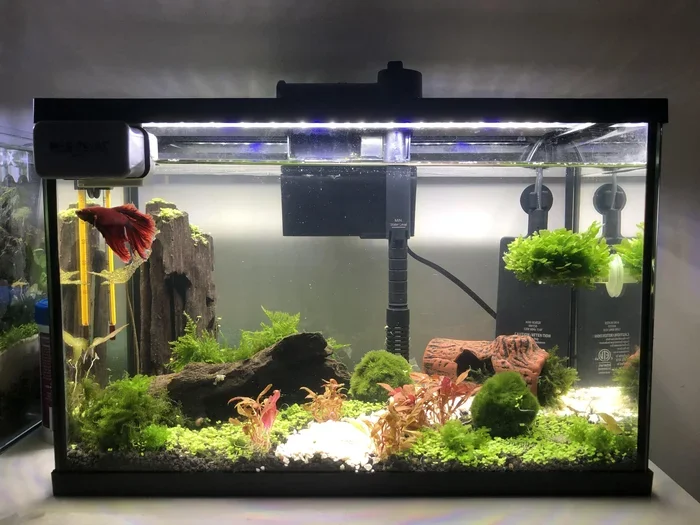
Rather than trying to force a betta into a turtle tank, why not set up a beautiful dedicated betta tank? A 5-gallon or 10-gallon tank is perfect for a single betta. You can create a stunning aquascape with live plants, soft substrate, and gentle filtration that your betta will love.
A proper betta tank allows you to control all the environmental factors that your betta needs. You can maintain the perfect temperature, keep the water clean, and provide a stress-free environment. Your betta will reward you with vibrant colors, active behavior, and a long, healthy life.
If you’re wondering when you can put your betta fish in a new tank, the answer depends on proper cycling and water parameter testing. Taking the time to set up the right environment from the start makes all the difference.
Compatible Tank Mates for Bettas
If you want to add some life to your betta tank, there are safer options than turtles. Small, peaceful species like neon tetras, corydoras catfish, and ghost shrimp can sometimes coexist with bettas. However, every betta has a unique personality, so introductions should be done carefully.
For more information on what fish can live with your betta, check out our detailed guide on compatible tank mates. Remember that even with compatible species, you should always monitor interactions closely and be prepared to separate animals if problems arise.
Snails and shrimp are generally the safest betta tank mates. Nerite snails and mystery snails are popular choices that help with algae control while staying out of your betta’s way. Cherry shrimp can also work, though some bettas may see them as snacks.
Final Verdict: Keep Them Separate
After looking at all the factors, the conclusion is clear. You should not put a betta fish in your turtle tank. The risks far outweigh any potential benefits. Your betta would face constant danger from predation, stress from incompatible living conditions, and health problems from poor water quality.
The kindest thing you can do for both your turtle and your betta is to give each their own properly set up home. Your turtle needs a tank designed for its specific needs, and your betta needs a calm, clean environment where it can thrive without fear.
If you’re a fan of both species, consider setting up separate tanks for each. This way, you can enjoy the unique beauty and personality of both animals without putting either at risk. It might require more space and more equipment, but the health and happiness of your pets is worth the investment.
Remember, responsible pet ownership means understanding and respecting the needs of each species. What looks good in theory doesn’t always work in practice. When it comes to bettas and turtles, the two simply don’t mix. Keep them separate, keep them healthy, and enjoy each one for the amazing creature it is.
Frequently Asked Questions
Will my turtle definitely eat my betta fish?
While not guaranteed, it’s highly likely. Most turtle species are natural predators that view fish as food. Even well-fed turtles will often attack and eat fish due to instinct. The risk is simply too great to justify the attempt.
Can I put a betta fish in my turtle tank temporarily?
Temporary housing is still not recommended. Even brief exposure to a turtle can cause severe stress or injury to your betta. If you need temporary housing for your betta, use a clean container or quarantine tank instead.
What fish can live with turtles safely?
Fast-moving fish like mollies, platies, and feeder guppies have the best chance, but no fish is truly safe with a turtle. Success depends on the individual turtle’s temperament, and even then, fish may eventually be caught and eaten.
Do betta fish and turtles need the same water temperature?
While there’s some overlap in their temperature ranges, the practical needs differ. Turtles often need warmer water for proper digestion, which can stress bettas. The filtration and water flow requirements also conflict significantly between the two species.
How big does a tank need to be for a betta and turtle together?
No tank size makes this combination safe. Even in very large tanks, the stress of living with a predator and the incompatible water requirements make cohabitation impossible. Separate tanks are the only responsible option.
What should I do if my turtle already caught my betta?
If your turtle has caught your betta, remove the fish immediately and assess for injuries. Minor injuries may heal with clean, warm water and aquarium salt, but severe injuries often require humane euthanasia. This situation highlights why prevention through separation is critical.