What Fish Can I Put with My Betta
Choosing tank mates for a betta is both an art and a science. This guide answers “what fish can i put with my betta,” explains ideal species, tank requirements, and how to keep peace. Follow our practical tips and create a thriving, colorful community aquarium.
Key Takeaways
- Temperament matters: Not all fish can share space with a betta; choose peaceful, non‑fin‑nipping species.
- Tank size is crucial: A minimum of 10‑gallon is recommended for most community setups.
- Water parameters must match: Keep temperature, pH, and hardness within the betta’s comfort zone.
- Provide plenty of hiding spots: Plants, caves, and décor reduce stress and aggression.
- Introduce slowly: Use a quarantine or “dip” tank to acclimate new fish and monitor behavior.
- Watch for signs of stress: Faded colors, clamped fins, or rapid gill movement signal trouble.
- Never force compatibility: If aggression appears, be ready to separate the fish quickly.
📑 Table of Contents
- Introduction: Why You’re Asking “What Fish Can I Put With My Betta?”
- 1. Understanding Betta Behavior
- 2. The Basics: Tank Size, Filtration, and Water Conditions
- 3. Choosing the Right Tank Mates
- 4. Setting Up the Community Tank
- 5. Ongoing Care and Troubleshooting
- Conclusion: Creating a Happy Home for Your Betta and Friends
Introduction: Why You’re Asking “What Fish Can I Put With My Betta?”
Betta fish, also known as Siamese fighting fish, are famous for their vivid colors and flowing fins. Their reputation for aggression—especially toward other males of their own species—often makes hobbyists wonder if they can ever live with anyone else. The short answer is yes, but only under the right conditions.
In this article we’ll walk through everything you need to know to answer the question “what fish can i put with my betta” confidently. From tank size and water parameters to species selection and real‑world set‑up tips, you’ll finish this read with a clear plan for a peaceful community aquarium.
1. Understanding Betta Behavior
1.1 Natural instincts
Betas are native to the shallow rice paddies and slow‑moving streams of Southeast Asia. In the wild they defend small territories and display bright colors to attract mates. This territorial streak is why they often flare at mirrors or other bright fish.

Visual guide about What Fish Can I Put with My Betta
Image source: petshun.com
1.2 Gender differences
Male bettas are the ones that fight. Females can be a bit more social, but they still have a strong instinct to protect their space. Knowing the gender of your betta helps you decide which tank mates are safest.
1.3 Signs a betta is comfortable
- Bright, full‑color fins
- Active swimming, exploring the tank
- Regular feeding without hesitation
1.4 Signs of stress or aggression
- Clamped fins (held close to the body)
- Rapid gill movement or heavy breathing
- Frequent flaring or nipping at décor
2. The Basics: Tank Size, Filtration, and Water Conditions
2.1 Minimum tank size
While many beginners start a betta in a 2‑gallon bowl, a community setup needs at least a 10‑gallon tank. The extra space dilutes aggression and gives each fish its own “personal bubble.”
Visual guide about What Fish Can I Put with My Betta
Image source: petshun.com
2.2 Filtration and flow
Betas prefer calm water, so choose a gentle filter or a sponge filter that creates a low current. A flow rate of 2–3 times the tank volume per hour is ideal.
2.3 Temperature and pH
Most bettas thrive at 76–82°F (24–28°C) with a pH of 6.5–7.5. Pick tank mates that share this range—most tropical community fish do.
2.4 Lighting and plants
Soft, natural‑looking lighting reduces stress. Live plants (Java fern, Anubias, and Vallisneria) provide hiding spots and help maintain water quality.
3. Choosing the Right Tank Mates
3.1 General rules
- Avoid long‑fin, bright‑colored fish that might be mistaken for a rival.
- Pick species that swim at different levels (bottom, mid, top) to reduce competition.
- Select peaceful, fast‑moving fish that can dart away if the betta gets aggressive.
3.2 Best community fish for bettas
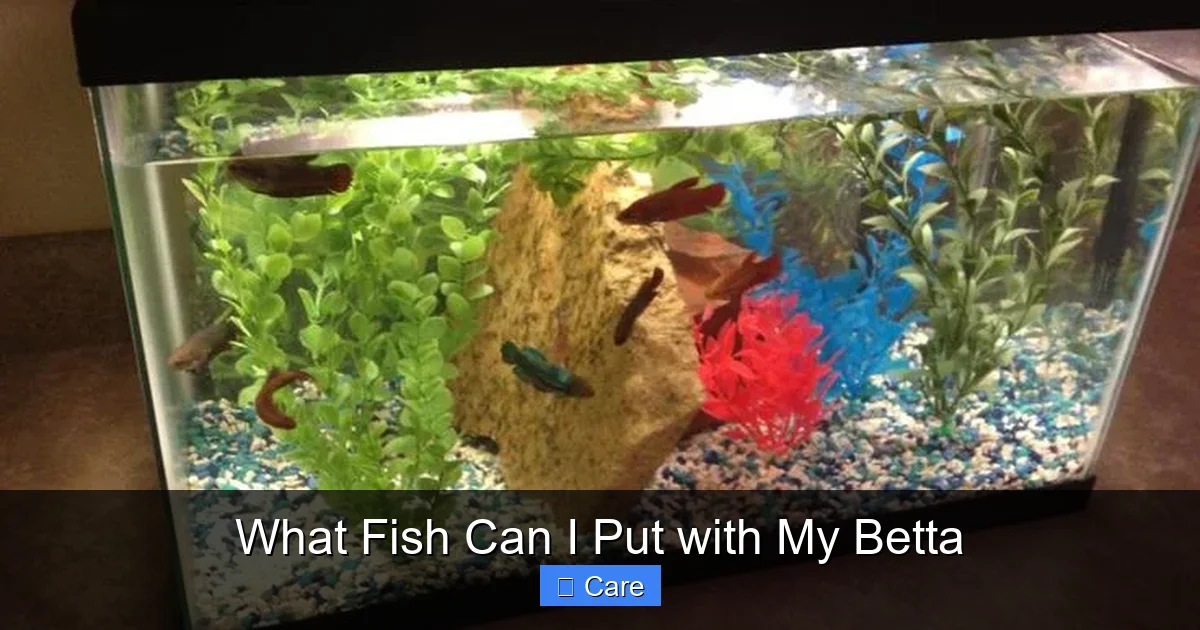
Below is a curated list of species that consistently get good results when paired with a healthy betta.
Visual guide about What Fish Can I Put with My Betta
Image source: i.pinimg.com
3.2.1 Neon Tetra (Paracheirodon innesi)
Size: 1.5” max
Temperament: Peaceful schooler
Why they work: Their tiny size and fast, schooling behavior keep them out of the betta’s line of sight. Keep at least 6 in a group.
3.2.2 Ember Tetra (Hyphessobrycon amandae)
Size: 1” max
Temperament: Very calm
Why they work: Their subtle orange hue is less likely to trigger a betta’s aggression, and they thrive in the same temperature range.
3.2.3 Harlequin Rasbora (Trigonostigma heteromorpha)
Size: 2” max
Temperament: Semi‑peaceful, schooling
Why they work: Active swimmers that occupy the middle of the tank, giving the betta its own territory at the surface.
3.2.4 Corydoras Catfish (Corydoras spp.)
Size: 2–2.5” max
Temperament: Bottom dweller, very gentle
Why they work: They keep the substrate clean and stay far from the betta’s vertical display area.
3.2.5 Kuhli Loach (Pangio kuhlii)
Size: 4” max
Temperament: Shy, nocturnal bottom dweller
Why they work: Their eel‑like body hides in the substrate, providing activity without eye contact.
3.2.6 Otocinclus Catfish (Otocinclus spp.)
Size: 1.5” max
Temperament: Peaceful algae eater
Why they work: Small, quick, and they help control algae, making the tank cleaner for everyone.
3.2.7 Dwarf Gourami (Trichogaster lalius)
Size: 3” max
Temperament: Generally peaceful, but can be semi‑aggressive
Why they work: If you have a very calm betta, a dwarf gourami can coexist; keep them in a larger tank (20 gal) and watch for flares.
3.3 Fish to avoid
- Other male bettas – inevitable fighting.
- Fin‑nippers like Tiger Barbs or Guppies with long tails.
- Large, brightly colored cichlids or aggressive tetras.
- Slow‑moving, bottom‑dwelling fish that look like food (e.g., certain loaches) if the betta is a voracious hunter.
4. Setting Up the Community Tank
4.1 Layout and décor
Start with a layer of fine sand or smooth gravel, then add live or silk plants. Create a “front‑row” of tall plants (e.g., Amazon sword) and a “back‑row” of shorter ones (e.g., Anubias). Include caves, driftwood, and PVC tubes for hiding.
4.2 Cycling the tank
Never introduce fish into an uncycled tank. Allow the nitrogen cycle to complete (usually 4–6 weeks). Test for ammonia, nitrite, and nitrate; only proceed when ammonia and nitrite are at 0 ppm.
4.3 Acclimating new fish
- Float the sealed bag in the tank for 15 minutes to equalize temperature.
- Gradually add ¼ cup of tank water to the bag every 5 minutes for 30 minutes.
- Use a net to transfer the fish, avoiding the bag water.
- Observe the new arrivals for the first hour; keep lights dim.
4.4 Monitoring the first 48 hours
Watch for any fin nipping, rapid flaring, or hiding. If the betta shows aggression, consider a temporary divider or move the new fish to a separate tank.
5. Ongoing Care and Troubleshooting
5.1 Feeding routines
Feed bettas high‑quality pellets or frozen bloodworms once or twice daily. Community fish can receive micro‑pellets, brine shrimp, or finely crushed flakes. Feed only what is consumed in 2–3 minutes to avoid water fouling.
5.2 Maintenance schedule
- Weekly 20% water change (use dechlorinated water at the same temperature).
- Monthly substrate vacuum.
- Trim plants as needed to keep open swimming space.
5.3 Dealing with aggression
If the betta starts flaring at a specific fish, try rearranging décor to break line‑of‑sight. Adding more hiding spots often diffuses tension. As a last resort, move the aggressor to a separate tank.
5.4 Health checks
Regularly inspect fins for ragged edges, look for white spots (ich), and monitor appetite. A healthy community tank shows bright colors and active swimming from all species.
Conclusion: Creating a Happy Home for Your Betta and Friends
Answering “what fish can i put with my betta” isn’t a one‑size‑fits‑all formula. It depends on your betta’s personality, tank size, and how well you maintain water quality. By choosing peaceful, appropriately sized companions, providing plenty of hiding places, and monitoring behavior closely, you can enjoy a vibrant, multi‑species aquarium that showcases the betta’s beauty without compromising anyone’s wellbeing.
Remember: patience and observation are your best tools. Start with a modest community of tetras, rasboras, and bottom dwellers, and watch how your betta reacts. With a little care, you’ll have a thriving underwater neighborhood that you’ll love to watch day after day.
Frequently Asked Questions
Can I keep a male betta with a female betta?
Yes, but only if the tank is at least 20 gallons, there are plenty of hiding spots, and you watch closely for any signs of aggression. Even then, many hobbyists prefer to keep them separate.
Are guppies safe tank mates for bettas?
Generally no. Guppies have long, flowing tails that can trigger a betta’s territorial instincts, leading to fin nipping.
What is the minimum tank size for a betta with community fish?
A 10‑gallon tank is the absolute minimum. Larger tanks (20 gallons or more) provide more stability and reduce aggression.
How often should I feed a community tank with a betta?
Feed small amounts 2–3 times a day, ensuring all fish can eat within a few minutes. Overfeeding leads to poor water quality and stress.
Can I add shrimp to a betta tank?
Yes, larger shrimp like Amano or Ghost shrimp often do well because they are quick and can hide among plants. Keep an eye on the betta’s behavior, as some may hunt them.
What should I do if my betta attacks a new fish?
Immediately separate the fish using a breeder box or a tank divider. Re‑evaluate the species you chose and consider a larger tank with more cover before trying again.