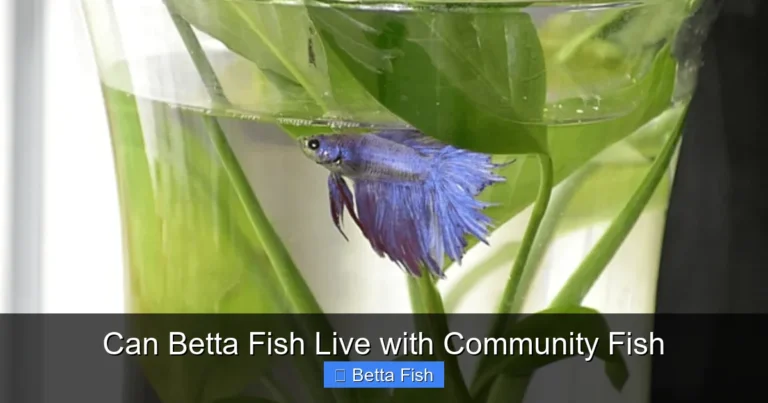
When Can I Put My Betta Fish in the Tank
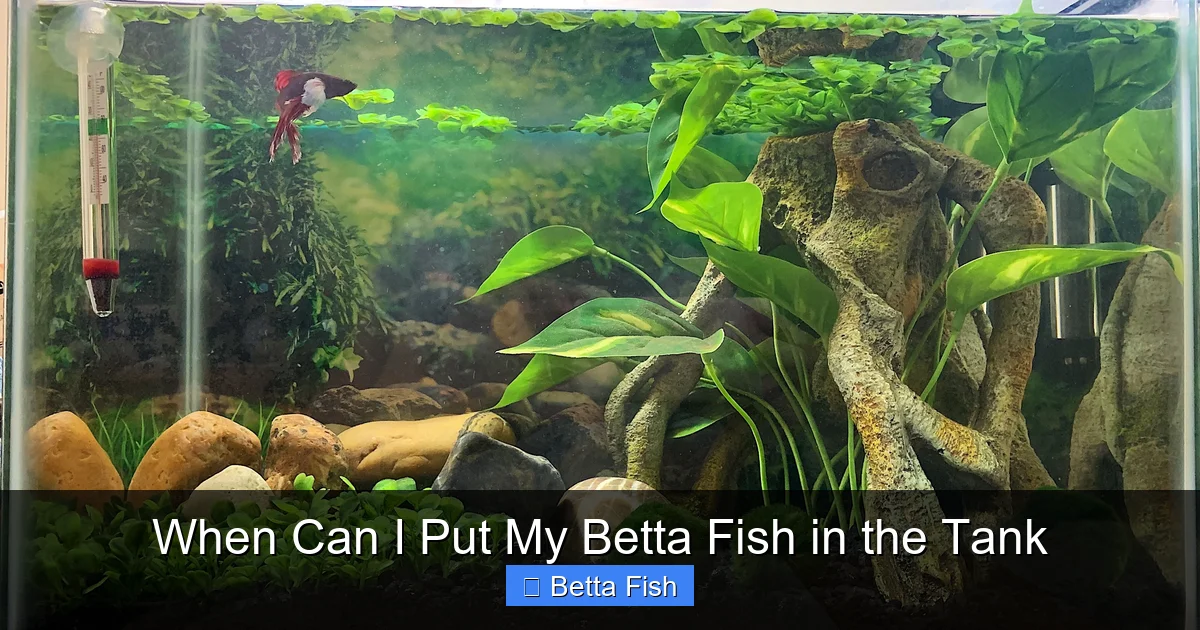
You should never put your betta fish in a tank immediately after filling it with water. The tank must first undergo a complete nitrogen cycle, which typically takes 4-6 weeks, to establish beneficial bacteria that process toxic fish waste. Rushing this process is the leading cause of “new tank syndrome” and betta death. Always test water parameters with a liquid test kit to confirm ammonia and nitrite are at 0 ppm and nitrates are below 20 ppm before introducing your fish.
Key Takeaways
- The nitrogen cycle is non-negotiable: A tank must be fully cycled to build a biofilter of bacteria that converts toxic ammonia to less harmful nitrates. This takes 4-6 weeks.
- Water tests are your guide: Never guess. Use a liquid water test kit (not strips) to confirm ammonia and nitrite read 0 ppm and nitrates are under 20 ppm before adding your betta.
- Temperature and dechlorination are immediate: Tap water must be treated with a dechlorinator and matched to your betta’s current temperature (78°-80°F) during acclimation.
- Acclimation is a slow drip: The floating bag method is insufficient. Use the slow drip acclimation method over 60-90 minutes to equalize water chemistry parameters.
- Patience prevents death: Adding a betta to an uncycled or improperly prepared tank causes extreme stress and susceptibility to disease like dropsy or fin rot, often leading to death within days.
📑 Table of Contents
- The Exciting (and Critical) First Step
- The Unseen Foundation: Understanding the Nitrogen Cycle
- The 4-6 Week Timeline: How to Cycle Your Betta Tank
- Water Parameters: The Specifics for a Betta
- Tank Setup: Ready Before the Fish
- The Acclimation Process: The Final Hour
- Common Mistakes That Kill Bettas (And How to Avoid Them)
- The Final Checklist: Before You Dump the Cup
The Exciting (and Critical) First Step
You’ve just brought home a beautiful betta fish, perhaps in its little cup from the store. You’ve set up a gorgeous, filtered tank with plants and decorations. The excitement is palpable! But before you triumphantly pour your new finned friend into its aquatic mansion, you must ask the most important question: Is the tank truly ready? The answer isn’t about the water being clear or the heater being warm. It’s about a hidden, microscopic world that determines life or death. Putting your betta in the tank too soon is the single most common and devastating mistake new owners make. This guide will walk you through the exact science and steps to ensure that moment of introduction is safe, stress-free, and the beginning of a long, healthy life for your betta.
The Unseen Foundation: Understanding the Nitrogen Cycle
Think of your aquarium not as a bowl of water, but as a living, biological system. At its core is the nitrogen cycle. This is the process by which toxic fish waste (ammonia) is converted by beneficial bacteria into nitrite (also toxic), and then into nitrate (much less toxic, which is removed by water changes). Without this cycle established, ammonia from your betta’s gills and waste will build up rapidly, poisoning it.
Visual guide about When Can I Put My Betta Fish in the Tank
Image source: fishlab.com
Stage One: Ammonia (NH3/NH4+)
As soon as you add a fish (or even fish food), it begins producing ammonia. In an uncycled tank, this ammonia spikes, burning the betta’s gills and causing extreme stress. You’ll often see fish gasping at the surface, clamped fins, and lethargy.
Stage Two: Nitrite (NO2-)
As the first type of beneficial bacteria (Nitrosomonas) grows on your filter media and surfaces, it consumes ammonia and produces nitrite. Nitrite is even more dangerous than ammonia; it binds to a fish’s hemoglobin, preventing oxygen transport, essentially causing the fish to suffocate internally. This is the most dangerous phase of the cycle.
Stage Three: Nitrate (NO3-)
A second bacteria (Nitrospira) finally establishes itself and consumes the nitrite, converting it into nitrate. Nitrate is still toxic at high levels but is managed through regular partial water changes (25-50% weekly). A tank is considered fully cycled and safe for fish when it can process 1-2 ppm of added ammonia to 0 ppm nitrite and 0.25 ppm or less nitrate within 24 hours.
The 4-6 Week Timeline: How to Cycle Your Betta Tank
Cycling is a waiting game, but it’s an active one. You must “feed” the bacteria to make them grow. Here is a practical, step-by-step timeline.
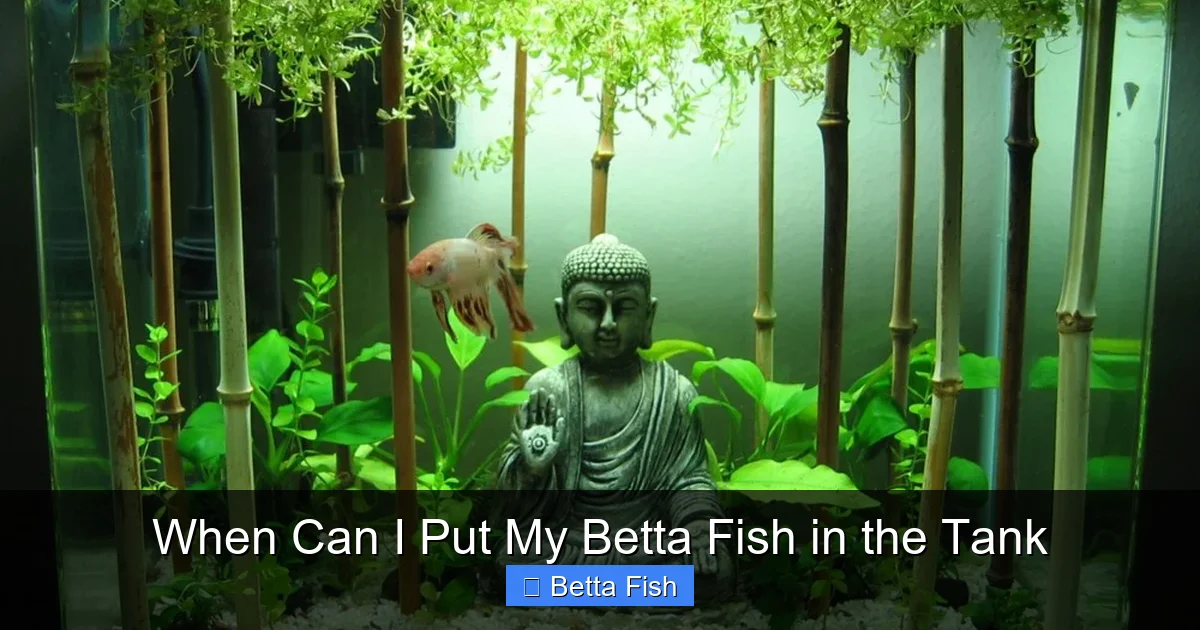
Visual guide about When Can I Put My Betta Fish in the Tank
Image source: nippyfish.net
Week 0: Setup & “Seeding”
Fill your tank with dechlorinated water. Install your heater (set to 78-80°F), filter, and any decorations. Do not add your betta. To start the cycle, you need an ammonia source. Options include:
- Pure Ammonia Method: Add unscented household ammonia (like Janitor’s Ammonia) a few drops at a time until your test kit reads 2-4 ppm. This is the cleanest, most controlled method.
- Fish Food Method: Add a pinch of flake food or a frozen pea daily. It will decompose and produce ammonia. It’s messier and less precise but works.
- Bacteria Starter Method: Add a commercial bacterial supplement (like Tetra SafeStart or FritzZyme 7). This can speed up the process but does not instantly cycle a tank. You still need an ammonia source.
Place your filter media (sponges, ceramic rings, bio-balls) in the filter. These provide the massive surface area bacteria need to colonize.
Weeks 1-3: The Wait and Watch
Test your water every 2-3 days. You will see:
- Days 1-7: Ammonia rises (0 -> 2-4 ppm). Nitrite remains 0.
- Days 10-21: Ammonia starts to fall as Nitrosomonas bacteria grow. Nitrite begins to rise, often peaking very high (1-5 ppm). This is the most dangerous period for any living creature. Do not add fish.
- Days 21-35: Nitrate begins to appear. Nitrite starts to fall as the second bacteria colony establishes. Ammonia should be at or near 0.
During this time, perform partial water changes (25%) only if nitrate levels exceed 40 ppm or if the water becomes extremely cloudy. When you change water, you must replenish the ammonia source to keep feeding the bacteria.
Week 4-6: Confirmation
Once nitrite has dropped to 0 ppm and you see a steady nitrate reading (e.g., 10-20 ppm), it’s time for the final test. Add a small amount of your ammonia source to reach 2 ppm. Retest 24 hours later. If the ammonia and nitrite are both 0 ppm and nitrate has increased (even slightly), your tank is cycled! If ammonia or nitrite remains, wait another week and test again.
Water Parameters: The Specifics for a Betta
Betta fish are native to shallow, warm, slow-moving waters in Southeast Asia. They are labyrinth fish, meaning they breathe air from the surface, but they are still highly sensitive to water quality. The ideal parameters for a cycled betta tank are:
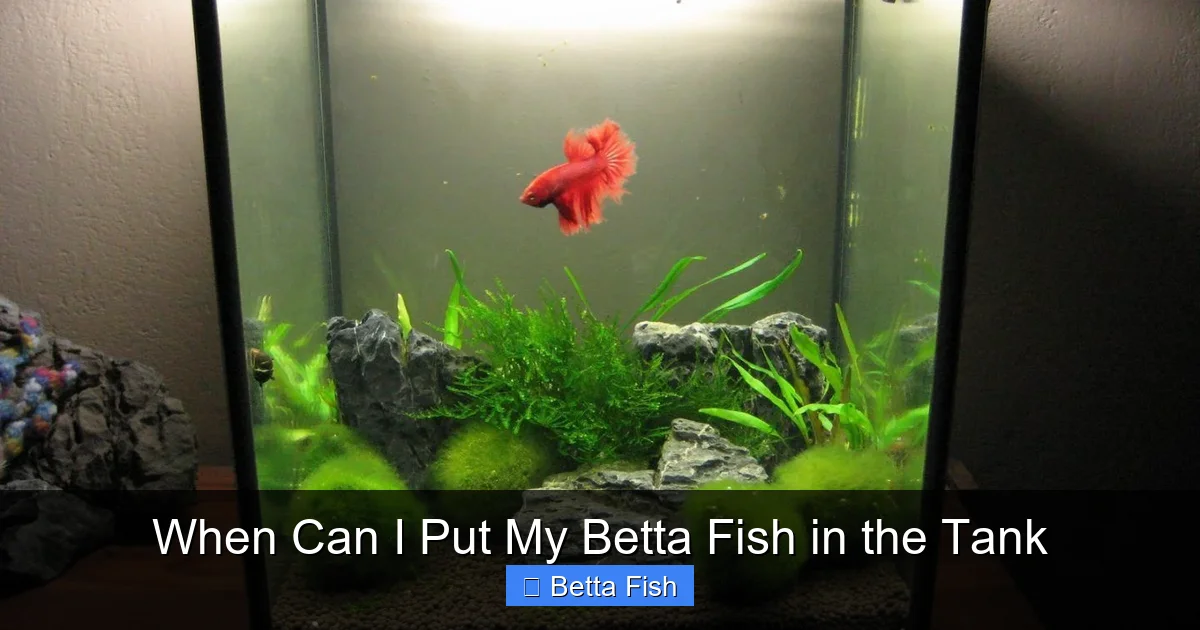
Visual guide about When Can I Put My Betta Fish in the Tank
Image source: i.pinimg.com
- Temperature: 78°-80°F (25.5°-26.7°C). Use a reliable aquarium heater and a thermometer to monitor. No sudden swings!
- pH: 7.0-7.5 is ideal. Bettas can tolerate a slightly wider range (6.5-8.0) if it is stable. Stability is more important than a perfect number.
- Ammonia (NH3/NH4+): 0 ppm. Any detectable amount is harmful.
- Nitrite (NO2-): 0 ppm. Extremely toxic.
- Nitrate (NO3-): <20 ppm in a cycled tank with a betta. Regular water changes will keep this low.
Pro Tip: Always use a liquid water test kit like the API Freshwater Master Test Kit. Test strips are notoriously inaccurate and can give false readings, leading you to believe your tank is ready when it is not.
Tank Setup: Ready Before the Fish
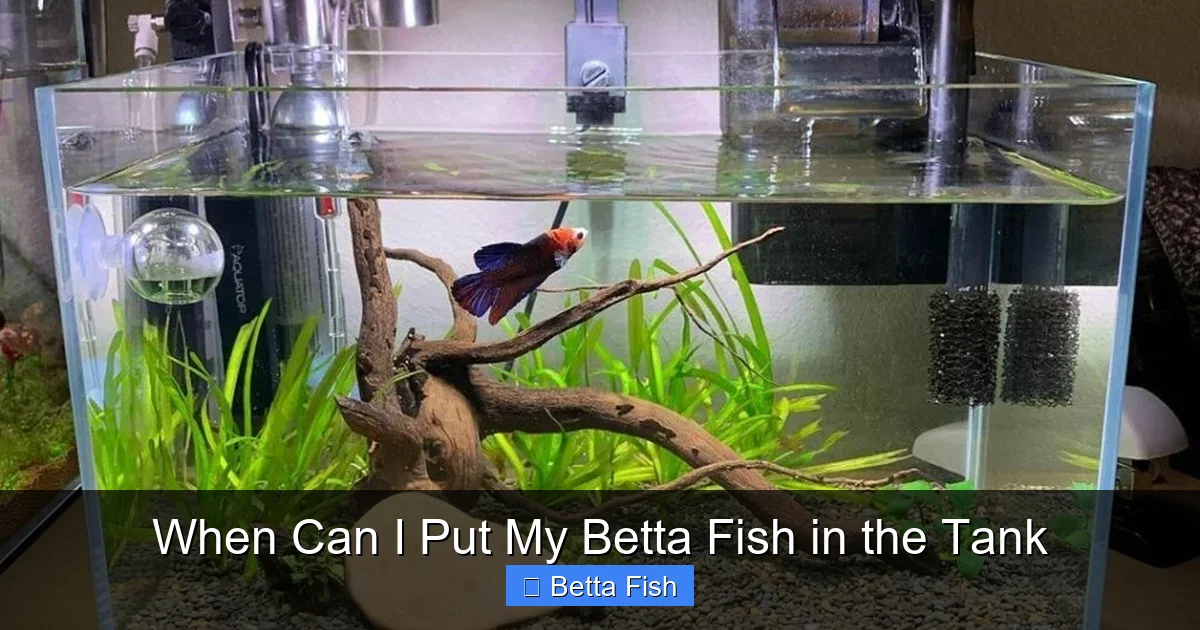
Your tank’s physical setup must be complete and running for at least 24-48 hours before you even consider adding a betta, even in a cycled tank. This allows temperature stabilization and filter flow to normalize.
Filtration: Gentle is Key
Bettas have long, delicate fins. A strong filter current causes them stress and exhaustion. Choose a filter with an adjustable flow, or baffle your filter output with a sponge, decorative outflow, or by placing plants/decorations in front of it. The water should be mostly still, with only a gentle ripple. Sponge filters are an excellent, betta-friendly option that also provide great biological filtration surface area.
Heating and Temperature
Betta are tropical fish. A heater is mandatory unless you live in a consistently warm climate. A 25-50 watt heater (depending on tank size) with an automatic thermostat is essential. Always use a separate thermometer to verify the heater’s accuracy. Temperature shock is a major killer during introduction.
Hiding Places and Security
In the wild, betta hide under leaves and in plants to feel safe. Provide multiple hiding spots using live plants (like java fern, anubias, or floating water lettuce), silk plants, or driftwood. Avoid rough decorations that can tear fins. A secure lid is also crucial—bettas are skilled jumpers.
The Acclimation Process: The Final Hour
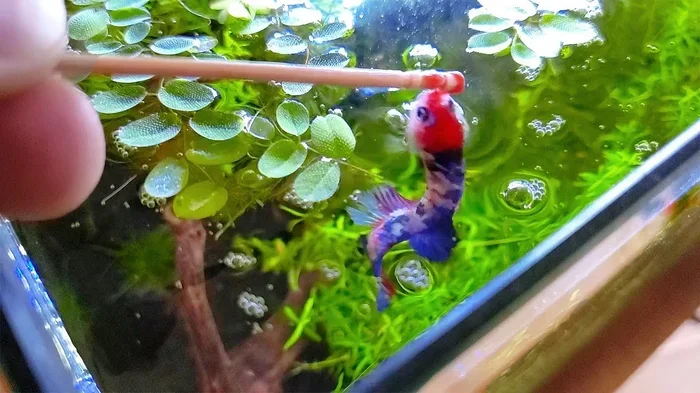
Your tank is cycled, parameters are perfect, and the temperature is stable. Now, you must carefully acclimate your betta. The old “float the bag for 15 minutes” method only equalizes temperature, not water chemistry. The drip acclimation method is the gold standard.
Step-by-Step Drip Acclimation
- Float the sealed bag in your tank for 15-20 minutes to equalize temperature.
- Gently empty the bag’s contents (betta and its store water) into a clean, dedicated acclimation bucket or container. Do not pour store water into your main tank.
- Set up a siphon drip: Use airline tubing. Start a siphon from your main tank into the acclimation container. Control the flow with a knot in the tubing or a drip clip. Aim for 2-4 drops per second.
- Double the water: Let the tank water drip slowly into the container until the volume has roughly doubled. This usually takes 30-60 minutes.
- Release your betta: Using a soft net, gently catch your betta and transfer it to the main tank. Discard the acclimation bucket water (it contains waste and possibly pathogens from the store).
This slow process allows your betta’s cells to gradually adjust to the new water’s pH, hardness, and other parameters, preventing osmotic shock.
Common Mistakes That Kill Bettas (And How to Avoid Them)
Even with the best intentions, these errors are fatal:
Mistake 1: “My tank looks clear, it must be ready.”
Clarity has nothing to do with the nitrogen cycle. A clear tank can have lethal ammonia. Always, always test.
Mistake 2: Using 100% Store-Bought Bacteria to Cycle Instantly
These products contain live bacteria that can help populate a filter, but they are not a magic bullet. They cannot instantly process the ammonia load of a fish. They are best used in conjunction with a proper ammonia source during the cycling period, not as a shortcut to add fish immediately.
Mistake 3: Adding Fish During the Nitrite Spike
If your test shows any nitrite (0.25 ppm or higher), the tank is toxic. The cycle is not complete. Wait.
Mistake 4: Poor Water Changes After Introduction
Once your betta is home, maintain pristine water. Perform 25% water changes weekly, matching temperature and using dechlorinator. Never change 100% of the water, as this destroys the beneficial bacteria you’ve worked to build.
The Final Checklist: Before You Dump the Cup
Do not add your betta until you can check every single one of these boxes with confidence:
- ✅ Tank has been running with filter and heater for at least 4-6 weeks.
- ✅ Water test kit (liquid) shows: Ammonia = 0 ppm, Nitrite = 0 ppm, Nitrate < 20 ppm.
- ✅ Tank temperature is stable between 78°-80°F.
- ✅ Filter flow is gentle; betta can swim without struggling.
- ✅ Tank has secure hiding places and a lid.
- ✅ You have a dedicated acclimation bucket and airline tubing for drip acclimation.
- ✅ You have a water conditioner (dechlorinator) on hand for all future water changes.
When all of these are true, you can confidently net your betta from its cup, acclimate it slowly, and watch it explore its new, safe home. The first few days, keep an eye on it. Is it eating? Is it active? This careful start sets the stage for years of enjoyment with your stunning, personality-filled companion.
Frequently Asked Questions
Can I add my betta to the tank on the same day I set it up?
Absolutely not. A new tank has no beneficial bacteria to process fish waste. Ammonia will poison and kill your betta within 24-72 hours. You must complete the full nitrogen cycle, which takes 4-6 weeks, before adding any fish.
I used a bacterial starter like SafeStart. Can I add my betta now?
No. While bacterial starters can help seed your filter, they do not instantly create a fully functioning biofilter. You still need to go through the entire nitrogen cycle and confirm with a water test kit that ammonia and nitrite are at 0 ppm before adding your betta.
What if the temperature in my tank drops during acclimation?
Maintaining a stable, warm temperature is critical. Ensure your heater is properly sized and has been running for at least an hour before starting acclimation. Use a separate thermometer to verify the temperature. A sudden drop of more than 2-3 degrees can cause shock and stress.
My filter flow is too strong for my betta. What can I do?
You must reduce the flow. Options include: adding a sponge pre-filter on the intake, placing a decorative sponge or mesh over the outflow, using filter media to block part of the opening, or switching to a gentler filter like a sponge filter. A stressed betta from strong current is a sick betta.
Can I use live plants to cycle my betta tank faster?
Live plants can absorb some ammonia and nitrates, which can help lower levels, but they do not replace the bacterial nitrogen cycle. A tank with only plants and no established bacteria colony is still not cycled for a fish. Plants are a fantastic addition for a cycled tank but are not a cycling shortcut.
How long after cycling can I add my betta?
You can add your betta immediately after confirming your tank is cycled (ammonia and nitrite at 0 ppm). However, it’s wise to let the stable, cycled tank run for a few more days to ensure parameters remain stable before the stress of adding a new inhabitant. The key is the test results, not the calendar.