Can I Keep My Betta Fish in a Cup

Keeping a betta fish in a cup is not a safe or humane long-term solution. While bettas are often sold in small cups, they need a heated, filtered tank of at least 5 gallons to truly thrive. A cup lacks space, stable water temperature, and proper filtration, which leads to stress, illness, and a shortened lifespan.
Key Takeaways
- Cups are temporary only: Betta fish should only be kept in a cup for a very short time, such as during transport or tank cleaning.
- Minimum 5-gallon tank: A proper betta setup requires at least a 5-gallon tank with a heater and filter.
- Water quality matters: Cups cannot maintain stable water parameters, leading to ammonia buildup and stress.
- Temperature is critical: Bettas are tropical fish and need a stable temperature between 76-82°F (24-28°C).
- Stress and disease: Small, unfiltered environments weaken a betta’s immune system and shorten its lifespan.
- Enrichment and space: Bettas are active, curious fish that need room to swim, explore, and hide.
- Proper setup is affordable: Setting up a correct betta tank is easier and cheaper than most people think.
📑 Table of Contents
- Can I Keep My Betta Fish in a Cup? The Honest Answer
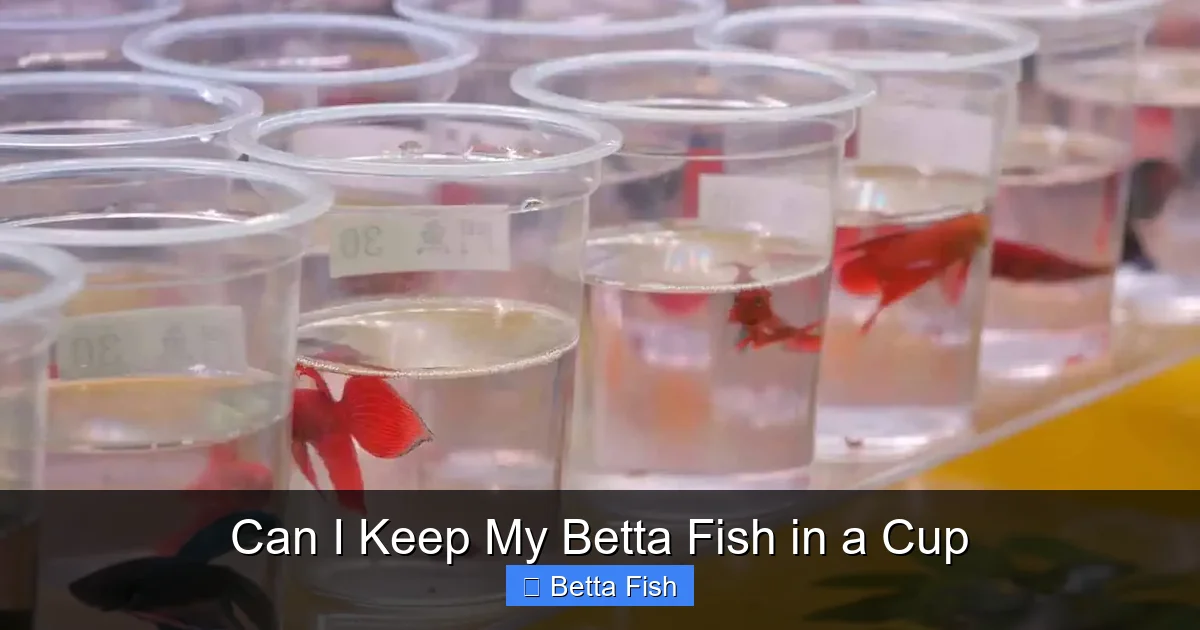
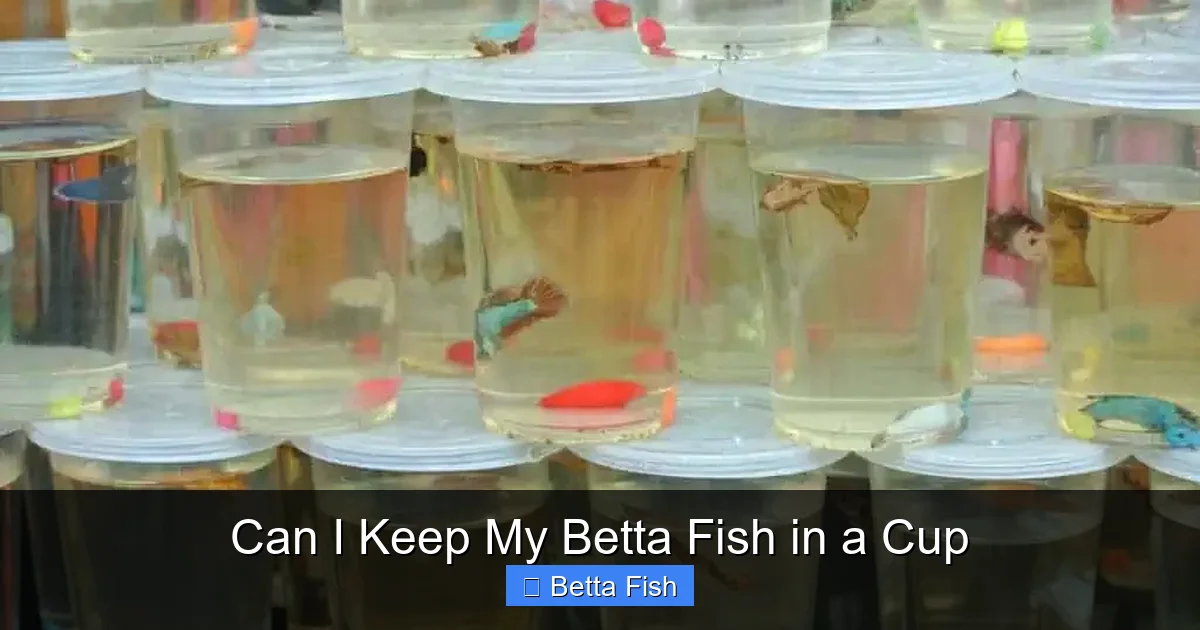
- Why Pet Stores Keep Bettas in Cups
- The Problems with Keeping a Betta Fish in a Cup
- What Does a Betta Fish Actually Need?
- When Is It Okay to Keep a Betta in a Cup?
- How to Set Up a Proper Betta Tank on a Budget
- Signs Your Betta Is Unhappy in a Cup
- The Ethical Side of Betta Care
- Conclusion
Can I Keep My Betta Fish in a Cup? The Honest Answer
If you have ever walked into a pet store, you have probably seen betta fish sitting alone in tiny cups of water. It is one of the most common sights in the aquarium world. So it is no surprise that many new betta owners ask, “Can I keep my betta fish in a cup?” It seems logical, right? If the store keeps them there, it must be okay.
The short and honest answer is no. A cup is not a suitable long-term home for a betta fish. While bettas can survive in a cup for a very short period, they will not thrive. In fact, keeping a betta in a cup for too long can lead to serious health problems and a dramatically shortened life. In this article, we will break down exactly why cups are harmful, what betta fish actually need, and how you can set up a proper home that lets your fish live a long, healthy, and happy life.
Why Pet Stores Keep Bettas in Cups
The Reality Behind the Display
Before we dive into why cups are bad, it helps to understand why pet stores use them in the first place. The reason is not because bettas are happy in cups. It is purely a matter of business and logistics.
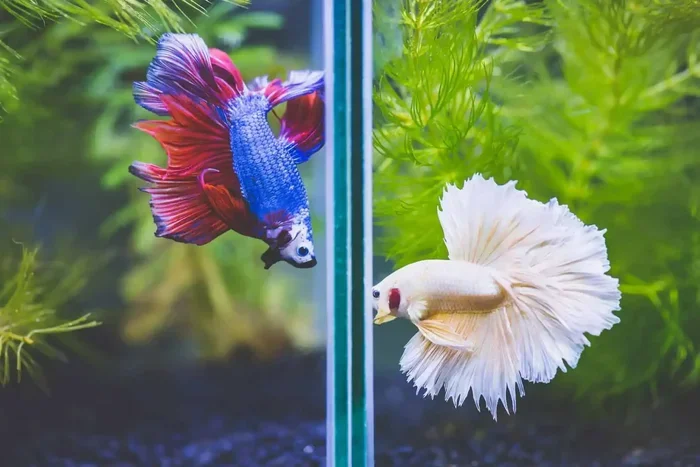
Betta fish are extremely territorial, especially males. If you put two male bettas in the same tank, they will fight, often to the death. Pet stores have dozens or even hundreds of bettas to house. Using individual cups is the cheapest and most space-efficient way to keep them separated and alive until they are sold.
Think of it like a waiting room. A hospital waiting room is not where anyone wants to live. It is just a temporary holding space. The cup is your betta’s waiting room, not its forever home.
Survival vs. Thriving
Here is an important distinction. There is a big difference between surviving and thriving. Betta fish are hardy creatures. They can survive in conditions that would kill many other fish. This is partly because of their unique organ called the labyrinth organ, which allows them to breathe air directly from the surface. This adaptation helps them survive in low-oxygen water in the wild.
But just because a betta can survive in a cup does not mean it should. Survival is not the same as a good quality of life. A betta in a cup is under constant stress, its immune system is weakened, and it is living a fraction of its potential lifespan.
The Problems with Keeping a Betta Fish in a Cup
1. Extremely Limited Space
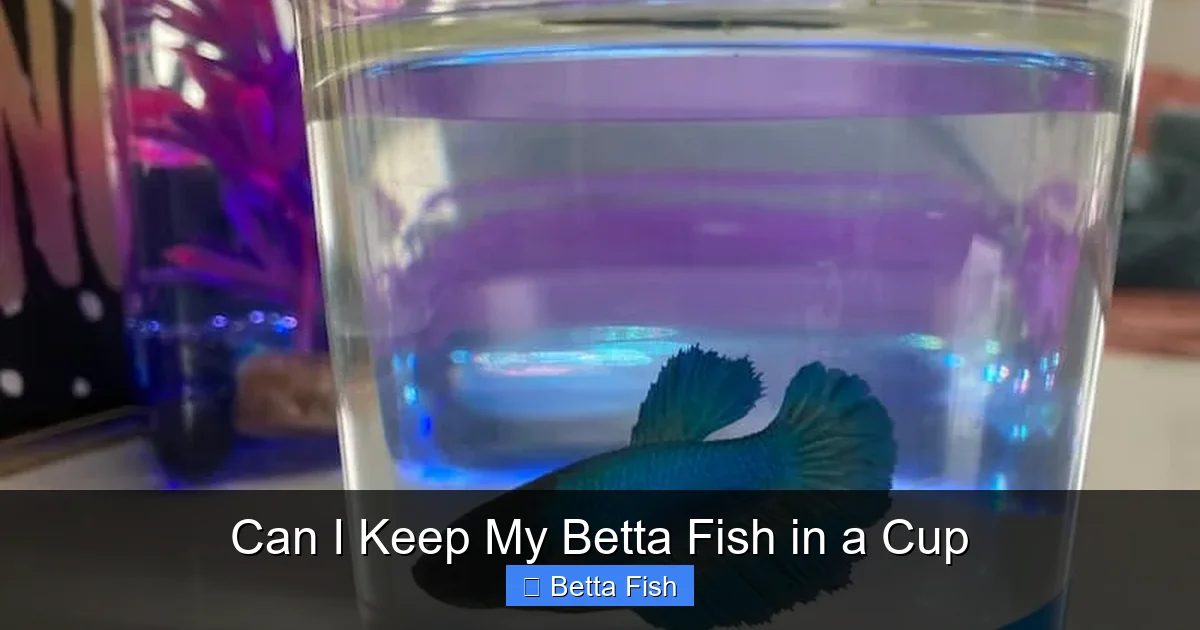
A typical pet store cup holds about 8 to 16 ounces of water. That is less than a pint. Imagine spending your entire life in a space the size of a coffee mug. You could not walk, stretch, or move around. That is what life in a cup is like for a betta.
Bettas are active fish. In the wild, they patrol territories that span several feet. They love to swim, explore, and investigate their surroundings. In a cup, they can barely turn around. This lack of movement leads to muscle atrophy, lethargy, and boredom.
2. No Filtration Means Toxic Water
One of the biggest dangers of a cup is the complete lack of filtration. Fish produce waste in the form of ammonia. In a filtered tank, beneficial bacteria break down ammonia into less harmful substances. In a cup, there is no filter and nowhere for beneficial bacteria to grow.
Ammonia builds up fast in a small volume of water. Even a small amount of waste can make the water toxic within hours. This burns your betta’s gills, damages its fins, and stresses its organs. Without a water change every single day, the ammonia levels can become lethal.
If you want to understand more about how filtration and bowl setups compare, check out our guide on whether betta fish can live without a filter.
3. Unstable Water Temperature
Betta fish are tropical. They come from the warm waters of Thailand, Cambodia, and Vietnam. They need a stable water temperature between 76°F and 82°F (24°C to 28°C) to stay healthy.
A cup of water has almost no thermal mass. That means the temperature swings wildly with the room. If the air conditioning kicks on, the water gets cold. If the sun hits the cup, it gets too warm. These rapid temperature changes are incredibly stressful for your fish and can lead to shock or illness.
4. No Enrichment or Stimulation
Bettas are surprisingly intelligent and curious fish. They recognize their owners, they interact with their environment, and they enjoy exploring. A bare cup with nothing in it offers zero mental stimulation.
In a proper tank, bettas enjoy swimming through plants, resting on leaves, and investigating decorations. Without any of this, a betta in a cup becomes stressed and depressed. Yes, fish can experience something analogous to depression. A bored betta is an unhappy betta.
5. Shortened Lifespan
A well-cared-for betta fish can live 3 to 5 years, and sometimes even longer. A betta kept in a cup, however, may only live a few months to a year. The constant stress, poor water quality, and lack of proper nutrition take a massive toll on their body.
If your betta died shortly after you brought it home, the conditions it was kept in, including being housed in a cup, may have already caused irreversible damage. Learn more about why betta fish sometimes die within a week.
What Does a Betta Fish Actually Need?
The Right Tank Size
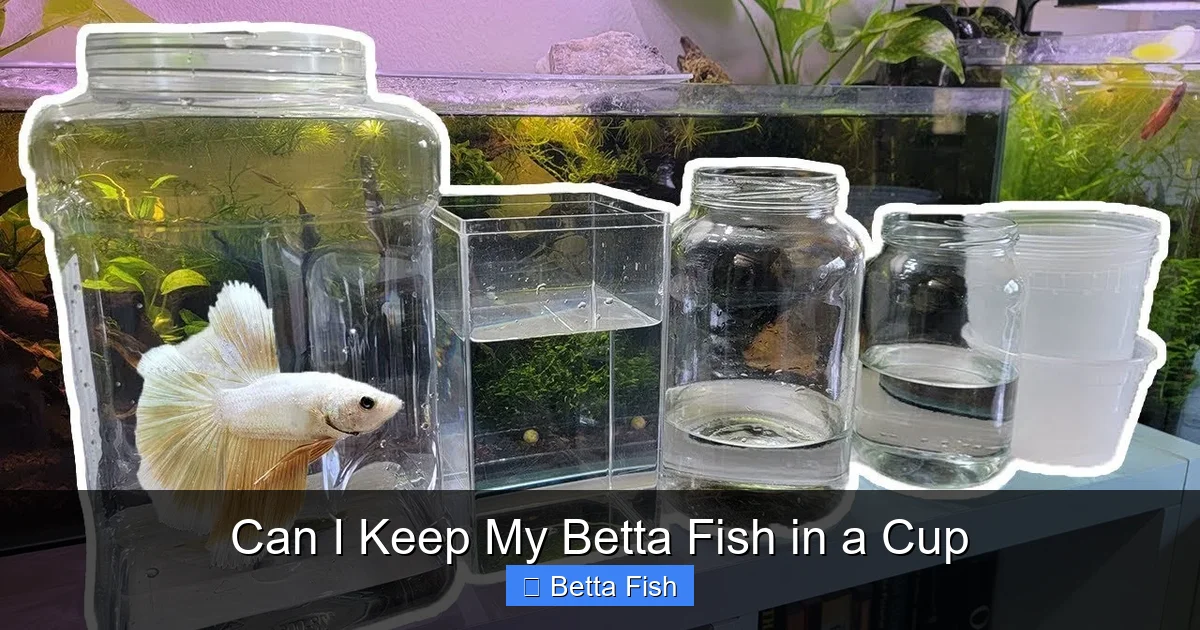
The absolute minimum tank size for a betta fish is 5 gallons. Yes, you will see people recommending 2.5-gallon tanks or even bowls, but 5 gallons is the size that truly allows a betta to thrive. A 5-gallon tank gives your fish enough room to swim, helps maintain stable water parameters, and is much easier to care for than a tiny container.
Many people assume that a bigger tank is harder to maintain. The opposite is actually true. Larger volumes of water are more stable. Temperature stays consistent longer, toxins are diluted, and you do not have to do water changes as frequently. A 5-gallon tank is the sweet spot between manageable size and a healthy environment for your betta.
If you are considering a bowl instead of a tank, read our article on whether betta fish can live in a small bowl to understand the risks involved.
A Reliable Heater
Since bettas are tropical fish, a heater is not optional. It is essential. You need an adjustable aquarium heater that can keep the water between 76°F and 82°F. A good rule of thumb is 5 watts per gallon, so for a 5-gallon tank, a 25-watt heater works well.
Place the heater near the filter output so the warm water circulates evenly throughout the tank. Always use a separate thermometer to monitor the temperature. Do not rely on the heater’s built-in dial alone, as they are often inaccurate.
A Gentle Filter
Bettas do not like strong water flow. In the wild, they live in slow-moving or still water like rice paddies and shallow ponds. A powerful filter will push your betta around the tank and cause stress.
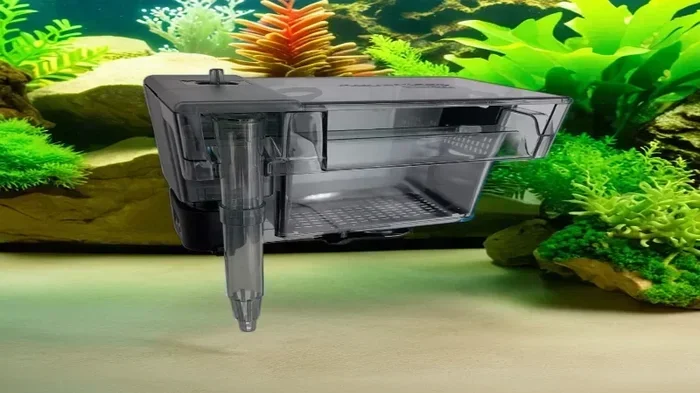
Look for a filter with an adjustable flow, or use a sponge filter, which provides gentle filtration and is perfect for betta tanks. The filter keeps the water clean, houses beneficial bacteria, and helps oxygenate the water.
Proper Substrate and Decorations
Your betta’s tank should feel like home. Use a soft substrate like sand or smooth gravel. Add live or silk plants for your betta to hide in and explore. Avoid plastic plants with sharp edges, as they can tear your betta’s delicate fins.
Include a cave or a betta hammock (a leaf that sits near the surface). Bettas love to rest near the surface because of their labyrinth organ. A hiding spot makes your fish feel secure and reduces stress.
Regular Water Changes
Even with a filter, you need to perform regular water changes. For a 5-gallon tank, a 25% water change once a week is a good routine. Use a gravel vacuum to remove debris from the substrate.
Always treat tap water with a water conditioner before adding it to the tank. Chlorine and chloramines in tap water are harmful to fish. If you are unsure about your water source, read our guide on using tap water for betta fish.
A Balanced Diet
Bettas are carnivores. They need a protein-rich diet. High-quality betta pellets should be the staple of their diet. Supplement with frozen or live foods like bloodworms, brine shrimp, or daphnia a few times a week.
Feed your betta 2 to 3 pellets, twice a day. Do not overfeed. Excess food decays in the tank and pollutes the water. A betta’s stomach is about the size of its eye, so it does not take much to fill it up.
When Is It Okay to Keep a Betta in a Cup?
There are a few situations where temporarily placing a betta in a cup is acceptable. The key word here is temporary.
- During transport: When you bring a betta home from the store, it will be in a cup or bag. This is fine for the ride home, which should be as short as possible.
- During tank cleaning: If you need to deep clean your betta’s tank, you can temporarily place the fish in a clean container with some of the tank water. This should only last an hour or two.
- Hospital or quarantine: If your betta is sick and needs to be isolated for treatment, a temporary container can work as a hospital tank. But it should still be as large as possible and have clean, conditioned water.
In all these cases, the cup is a short-term solution, never a permanent home.
How to Set Up a Proper Betta Tank on a Budget
One reason people keep bettas in cups is the assumption that a proper tank setup is expensive. It is not. Here is a basic budget breakdown for a proper 5-gallon betta setup:
Visual guide about Can I Keep My Betta Fish in a Cup
Image source: petspre.com
- 5-gallon tank: $10 to $15 (often available at discount stores or secondhand)
- Sponge filter: $5 to $8
- Air pump: $5 to $8 (to run the sponge filter)
- Adjustable heater: $10 to $15
- Water conditioner: $5 to $8 (lasts for many months)
- Betta pellets: $5 to $8 (lasts for months)
- Thermometer: $3 to $5
Total cost: roughly $43 to $67. That is a one-time investment that will keep your betta healthy for years. Many of these items, like the tank and equipment, last for a very long time with proper care.
When you compare this to the cost of repeatedly replacing bettas that die from living in poor conditions, the proper setup is actually the more economical choice.
Signs Your Betta Is Unhappy in a Cup
Even if you are planning to upgrade your betta’s home soon, it helps to know the signs of stress and unhappiness. Watch for these warning signals:
Visual guide about Can I Keep My Betta Fish in a Cup
Image source: bettasource.com
- Clamped fins: Your betta holds its fins close to its body instead of fanning them out.
- Loss of color: A stressed betta may become pale or dull.
- Lethargy: Your fish sits at the bottom or floats at the top and barely moves.
- Refusing to eat: A betta that will not eat is a betta in trouble.
- Frequent hiding: While bettas do like hiding spots, a fish that never comes out is stressed.
- Fin deterioration: Ragged, torn, or melting fins can be a sign of stress or poor water quality.
If you notice any of these signs, it is time to improve your betta’s living conditions immediately. For more details, read our article on how to tell if your betta fish is happy.
The Ethical Side of Betta Care
There is an important ethical question at the heart of this topic. Just because something is common does not make it right. The practice of keeping bettas in cups has been normalized by the pet industry, but that does not mean it is in the best interest of the animal.
Visual guide about Can I Keep My Betta Fish in a Cup
Image source: bettasource.com
As pet owners, we have a responsibility to provide the best possible care for the animals in our homes. Betta fish are living, sentient creatures that can experience stress, pain, and discomfort. They deserve a life that allows them to express their natural behaviors, not one confined to a tiny cup.
Choosing to set up a proper tank is not just about keeping your fish alive. It is about giving it a good life. A betta in a proper tank will display vibrant colors, active swimming, curious behavior, and a personality that will genuinely surprise you.
Conclusion
So, can you keep your betta fish in a cup? Technically, you can for a very short time. But you absolutely should not as a long-term living arrangement. A cup is a temporary holding container, not a home.
Visual guide about Can I Keep My Betta Fish in a Cup
Image source: i.ytimg.com
Your betta deserves a heated, filtered tank of at least 5 gallons. It deserves clean water, a balanced diet, and an environment that lets it swim, explore, and thrive. The good news is that setting up a proper betta tank is affordable, straightforward, and incredibly rewarding.
When you see your betta flaring its gills, building a bubble nest, or excitedly swimming to the front of the tank when you approach, you will know you made the right choice. Give your betta the home it deserves, and you will be rewarded with a beautiful, healthy companion for years to come.
Frequently Asked Questions
How long can a betta fish survive in a cup?
A betta fish can survive in a cup for a few days to a couple of weeks, but this is not a humane or healthy long-term arrangement. The water quality deteriorates rapidly, and the fish experiences significant stress that weakens its immune system.
Why do pet stores keep betta fish in cups?
Pet stores use cups because male bettas are extremely territorial and will fight if housed together. Cups are a cost-effective way to keep many bettas separated in a small space. It is a business decision, not a reflection of what is best for the fish.
What is the minimum tank size for a betta fish?
The minimum recommended tank size for a betta fish is 5 gallons. While bettas can survive in smaller spaces, a 5-gallon tank provides enough room to swim, helps maintain stable water parameters, and significantly improves the fish’s quality of life.
Do betta fish need a heater in their tank?
Yes, betta fish absolutely need a heater. They are tropical fish that require a stable water temperature between 76°F and 82°F (24°C to 28°C). Without a heater, the water temperature can fluctuate and cause stress, illness, or even death.
Can a betta fish live in a bowl instead of a tank?
While bettas are sometimes kept in bowls, bowls are not ideal. They are typically too small, lack proper filtration, and make it difficult to maintain a stable temperature. A 5-gallon tank with a heater and filter is always a better choice for a betta’s long-term health.
How do I know if my betta is stressed from living in a cup?
Signs of stress in bettas include clamped fins, loss of color, lethargy, refusal to eat, and hiding constantly. If your betta shows these behaviors, it is a clear sign that its environment is inadequate and needs to be upgraded to a proper tank as soon as possible.