Can Bettas Be Mixed with Other Fish

Can bettas be mixed with other fish? Yes, but it requires careful planning. While bettas are known for their aggression, especially males, they can coexist with certain peaceful, non-threatening species in a properly sized and decorated tank. Success depends on choosing the right tank mates, providing enough space, and closely monitoring behavior during the introduction phase.
Key Takeaways
- Bettas can live with other fish — but only with carefully selected, peaceful species that don’t resemble bettas or compete for territory.
- Male bettas are more aggressive than females, making them harder to pair with tank mates. Female bettas are generally more tolerant of community living.
- Tank size matters enormously — a minimum of 20 gallons is recommended for a betta community tank to reduce territorial disputes.
- Avoid fin-nippers and flashy fish — species like tiger barbs, guppies, and other brightly colored fish often trigger aggression in bettas.
- Bottom-dwellers and small schooling fish are typically the best tank mates, including corydoras, neon tetras, and kuhli loaches.
- Always have a backup plan — be ready to separate fish immediately if aggression occurs, as betta attacks can be fatal.
- Heavily planted tanks reduce conflict — plants, caves, and decorations break up sight lines and give all fish places to hide and establish their own space.
📑 Table of Contents
- Can Bettas Be Mixed With Other Fish? A Complete Guide
- Understanding Betta Fish Behavior
- Best Tank Mates for Betta Fish
- Fish to Avoid With Bettas
- Setting Up a Successful Betta Community Tank
- How to Introduce New Fish to Your Betta
- What to Do When Things Go Wrong
- Frequently Asked Questions About Betta Tank Mates
- Final Thoughts: Can Bettas Really Live With Other Fish?
Can Bettas Be Mixed With Other Fish? A Complete Guide
If you’ve ever stared at your beautiful betta fish swimming alone in a tank and thought, “Doesn’t he look lonely?” — you’re not alone. It’s one of the most common questions new and experienced fish keepers ask. The short answer is yes, bettas can be mixed with other fish. But the long answer? Well, that’s a lot more complicated and a lot more interesting.
Bettas, also known as Siamese fighting fish, have earned their reputation for a reason. Male bettas, in particular, are territorial and aggressive. In the wild, they defend small patches of water against rivals. That instinct doesn’t disappear just because they’re living in your living room aquarium. However, with the right approach, the right tank mates, and a little patience, you can absolutely create a peaceful community tank that includes a betta.
In this guide, we’ll walk you through everything you need to know about mixing bettas with other fish. We’ll cover which species work, which ones to avoid, how to set up your tank for success, and what to do when things go wrong. Let’s dive in.
Understanding Betta Fish Behavior
Why Are Bettas So Aggressive?
To understand whether bettas can live with other fish, you first need to understand why they behave the way they do. Bettas belong to the Osphronemidae family and are native to the shallow rice paddies, ponds, and slow-moving streams of Southeast Asia. In these environments, resources like food and shelter can be limited, so bettas evolved to be fiercely territorial.
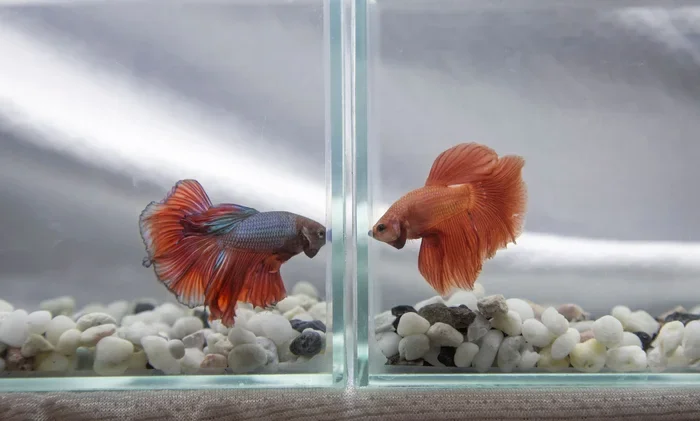
Male bettas are the most aggressive. They will flare their gills, spread their fins, and attack anything they perceive as a threat — especially other male bettas. This is why you should never house two male bettas together. They will fight, often to the death. Female bettas are generally less aggressive, though they can still be territorial, especially in smaller spaces.
Here’s the thing that surprises many people: bettas aren’t aggressive toward all fish. They’re aggressive toward fish that look like them or compete for the same space. A betta might completely ignore a small, dull-colored fish that stays at the bottom of the tank while attacking a bright, flowing-finned fish that swims at the same level. Understanding this distinction is the key to choosing successful tank mates.
Male vs. Female Bettas: Does It Matter?
Absolutely. If you’re planning a community tank, the sex of your betta makes a big difference. Male bettas can be kept with other fish, but they require more careful selection of tank mates and a larger tank. They’re more likely to see other fish as intruders and react aggressively.
Female bettas, on the other hand, tend to be more social and less territorial. They can sometimes even be kept together in groups called “sororities,” though that comes with its own set of challenges. If you’re a beginner looking to create a community tank, starting with a female betta might give you a better chance of success.
Best Tank Mates for Betta Fish
Bottom-Dwelling Fish
Some of the best companions for bettas are fish that occupy a completely different level of the tank. Since bettas tend to claim the middle and upper regions as their territory, bottom-dwellers often go unnoticed and unbothered.
Corydoras catfish are one of the most popular choices. These small, peaceful fish spend their time scavenging along the substrate, minding their own business. They’re social, so keep them in groups of at least five or six. They won’t bother your betta, and your betta will likely ignore them entirely.
Kuhli loaches are another excellent option. These eel-like fish are shy, nocturnal, and spend most of their time hiding in plants and decorations. They’re about as far from a betta’s “rival” as you can get. A group of three to five kuhli loaches can make a wonderful addition to a betta community tank.
Small Schooling Fish
Small, fast-moving schooling fish can also work well with bettas. The key is choosing species that are peaceful, not brightly colored, and quick enough to avoid a betta if a chase occurs.
Neon tetras are a classic choice. They’re small, fast, and tend to stay in the middle-to-upper region of the tank in a tight school. Their blue and red coloring is subtle enough that most bettas don’t see them as a threat. Keep them in a school of at least six to reduce stress and encourage natural schooling behavior.
Ember tetras are even smaller and less flashy than neons, making them another solid option. Harlequin rasboras are slightly larger but equally peaceful and tend to keep to themselves. All of these species are fast enough to dart away if your betta decides to investigate.
Invertebrates as Tank Mates
Don’t overlook invertebrates when planning your betta community. Shrimp can live with betta fish, though there’s always a risk that a particularly aggressive betta might see smaller shrimp as a snack. Larger species like Amano shrimp and ghost shrimp tend to fare better than tiny cherry shrimp.
Mystery snails and nerite snails are virtually bulletproof tank mates — literally. Their hard shells protect them from any betta that might try to pick a fight. They also help keep your tank clean by eating algae, which is a nice bonus.
Fish to Avoid With Bettas
Fin-Nipping Species
This is a big one. Some fish are natural fin-nippers, and a betta’s long, flowing fins are like a red flag to a bull. Tiger barbs are probably the most notorious fin-nippers in the aquarium hobby. They will relentlessly chase and bite your betta’s fins, causing stress, injury, and potentially fatal infections.
Other species to watch out for include serpae tetras, black skirt tetras, and some types of barbs. Even if these fish are peaceful in other contexts, a betta’s fins are simply too tempting.
Brightly Colored or Long-Finned Fish
Bettas are visual creatures. They react to what they see. A fish with bright colors, large fins, or a body shape similar to another betta is likely to trigger an aggressive response. This means you should avoid keeping bettas with guppies (especially fancy guppies with large tails), endler’s livebearers, angelfish, and other betta species.
Male guppies are particularly problematic. Their bright colors and flowing tails look almost identical to a rival betta in your betta’s eyes. Many fish keepers have learned this the hard way after introducing guppies to a betta tank and watching the chaos unfold.
Aggressive or Territorial Species
It seems obvious, but it’s worth stating: don’t put your betta with other aggressive fish. Cichlids, oscars, red-tailed sharks, and aggressive gouramis are all poor choices. These fish are territorial and will compete with your betta for space, leading to constant stress and fighting.
Setting Up a Successful Betta Community Tank
Tank Size and Shape
If you’re serious about keeping bettas with other fish, you need to think big. A 5-gallon tank is fine for a solo betta, but for a community setup, you should aim for at least 20 gallons. A 20-gallon long tank is ideal because it provides more horizontal swimming space and more room for territories to form without overlap.
The extra space gives your betta room to establish a territory without feeling like every other fish is invading it. It also gives tank mates room to escape if your betta gets feisty. Think of it this way: in a small apartment, everyone’s always in each other’s way. In a big house, everyone can have their own space.
Plants, Decorations, and Hiding Spots
A bare tank is a recipe for disaster. Bettas and their tank mates need places to hide, explore, and retreat to when they feel stressed. Live plants are the best option because they provide natural cover, improve water quality, and make the tank feel more like a natural habitat.
Great plant choices include Java fern, Anubias, Hornwort, and Amazon swords. Floating plants like duckweed or frogbit are also excellent because bettas love to rest near the surface, and the floating plants give them a sense of security.
Add caves, driftwood, and rock formations to create additional hiding spots. The goal is to break up sight lines throughout the tank so that no single fish can see the entire tank at once. This dramatically reduces territorial behavior.
Water Parameters and Filtration
Bettas prefer warm, clean water with a temperature between 76°F and 82°F and a pH of around 6.5 to 7.5. Most of the recommended tank mates thrive in similar conditions, which makes compatibility easier. However, you’ll need a good filtration system to keep the water clean, especially with more fish producing more waste.
One important note: bettas don’t like strong water flow. They come from slow-moving waters and can struggle against a powerful filter current. Use a sponge filter or adjust your filter’s output to create a gentle flow. This also benefits many of the peaceful, small fish that make good betta tank mates.
How to Introduce New Fish to Your Betta
The Acclimation Process
Rushing introductions is one of the biggest mistakes you can make. When you bring home new tank mates, take your time. Float the bag in the tank for 15 to 20 minutes to equalize the temperature, then slowly add small amounts of tank water to the bag over the next 30 minutes. This helps the new fish adjust to your water chemistry gradually.
Before adding the new fish, consider rearranging some decorations in the tank. This disrupts your betta’s established territory and puts all the fish on more equal footing. It’s a simple trick that can make a surprising difference.
Monitoring Behavior
The first 48 to 72 hours are critical. Watch your tank closely during this period. Some initial flaring and chasing is normal — your betta is establishing boundaries. But if you see relentless chasing, nipping, clamped fins on the other fish, or visible injuries, you need to intervene immediately.
Keep a net and a separate container ready at all times. If things go south, you need to be able to separate the fish quickly. A betta can seriously injure or kill a smaller fish in a matter of minutes.
Feeding Strategies
Competition for food can trigger aggression. Make sure you’re feeding your fish in a way that ensures everyone gets their share. Scatter food across different areas of the tank, or feed the betta on one side while dropping sinking pellets for bottom-dwellers on the other side. A well-fed betta is generally a less aggressive betta.
What to Do When Things Go Wrong
Recognizing Problem Signs
Even with the best planning, sometimes a betta just won’t accept tank mates. Watch for these warning signs:
- Your betta constantly chases or attacks other fish
- Tank mates are hiding and won’t come out to eat
- Fish have torn fins, missing scales, or visible wounds
- Your betta is flaring non-stop and won’t calm down
- Other fish are showing signs of stress (pale color, rapid breathing, loss of appetite)
If you see any of these signs, don’t wait and hope things improve. They usually don’t. Separate the fish immediately.
Having a Backup Plan
Every betta keeper who attempts a community tank should have a backup plan. This means having a second tank, a breeder box, or at minimum a large container ready to house fish that need to be separated. It’s not a sign of failure — it’s responsible fish keeping.
Some bettas are simply too aggressive to live with others, and that’s okay. Your betta can live a perfectly happy, healthy life alone. A solo betta in a well-decorated, properly maintained tank is far better off than a betta in a community tank where it’s constantly stressed or stressing others.
Frequently Asked Questions About Betta Tank Mates
Can I Keep Two Bettas Together?
Male bettas should never be kept together. They will fight aggressively, and one or both will likely be seriously injured or killed. Female bettas can sometimes be kept in groups of five or more (called a sorority), but this requires a large, heavily planted tank and careful monitoring. It’s not recommended for beginners.
How Many Tank Mates Can a Betta Have?
There’s no magic number. It depends on your tank size, your betta’s personality, and the species you’re adding. In a 20-gallon tank, a betta could comfortably live with a school of six to eight small tetras and a group of five corydoras. But every betta is different. Start with a few tank mates and add more slowly, watching behavior at each stage.
Will My Betta Be Lonely Without Tank Mates?
No. Bettas are not social fish. They don’t get lonely the way humans or even some other fish species do. In the wild, they live solitary lives except during breeding. A betta with a well-decorated tank, clean water, proper food, and the occasional interaction with you will be perfectly content on its own.
Final Thoughts: Can Bettas Really Live With Other Fish?
So, can bettas be mixed with other fish? The answer is a cautious yes. With the right tank mates, a large enough aquarium, plenty of plants and hiding spots, and careful monitoring, you can create a beautiful community tank centered around your betta.
But here’s the honest truth: not every betta is suited for community life. Some are simply too aggressive, too territorial, or too stressed by the presence of other fish. And that’s perfectly fine. There’s nothing wrong with keeping a betta solo. In fact, for many betta keepers, it’s the best option.
If you do decide to try a community tank, start slow. Do your research. Choose peaceful, non-threatening species. Give everyone plenty of space. And always, always be ready to separate fish if things don’t work out. Your fish’s safety and well-being should always come first.
The journey of keeping bettas with other fish can be incredibly rewarding. Watching different species coexist in a beautifully planted tank is one of the great joys of the aquarium hobby. Just remember: patience, preparation, and a willingness to adapt are your best tools for success.
Frequently Asked Questions
Can betta fish live with other fish in a small tank?
It’s not recommended. Small tanks (under 10 gallons) increase territorial aggression and leave no room for tank mates to escape. For a community setup, you need at least 20 gallons to give all fish enough space to establish their own territories.
What is the easiest fish to keep with a betta?
Corydoras catfish are widely considered the easiest and safest tank mates for bettas. They stay at the bottom of the tank, are peaceful, and generally ignore bettas entirely. A group of five or six corydoras in a 20-gallon tank is a great starting point.
Can bettas live with goldfish?
No. Goldfish and bettas have completely different temperature and water requirements. Goldfish prefer cooler water (around 65-72°F) while bettas need warm water (76-82°F). Goldfish also produce a lot of waste and grow too large for most betta setups.
How do I know if my betta is too aggressive for tank mates?
Watch for relentless chasing, flaring, nipping, or attacking other fish. If your betta won’t calm down after a few days or if other fish are showing signs of stress or injury, your betta is likely too aggressive for a community tank and should be kept alone.
Can female bettas live with other fish more easily than males?
Generally, yes. Female bettas tend to be less territorial and aggressive than males, making them somewhat better candidates for community tanks. However, individual personality still varies, and some female bettas can be just as aggressive as males.
Do bettas get along with snails and shrimp?
Usually, yes. Mystery snails and nerite snails are excellent tank mates because their hard shells protect them. Larger shrimp like Amano shrimp can also work, though some bettas may see smaller shrimp as food. Always monitor interactions during the first few days.