Can Betta Fish Live with Goldfish
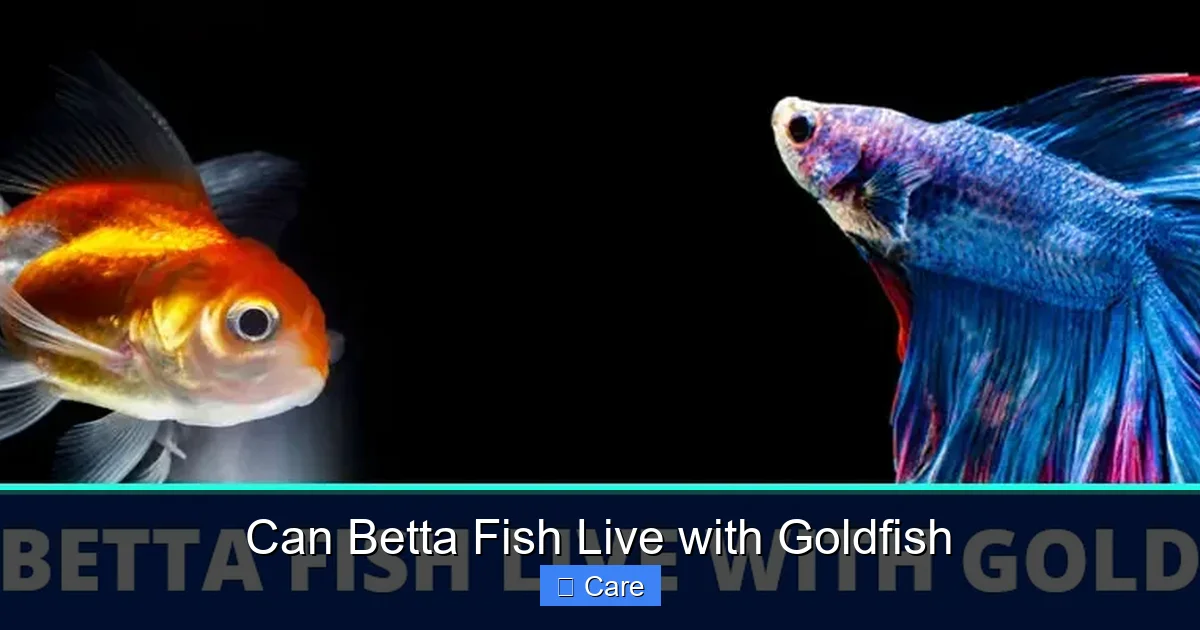
No, betta fish and goldfish should never be housed together. Their fundamental needs are opposites: bettas require warm, still water while goldfish need cool, highly-oxygenated water with powerful filtration. Furthermore, bettas are aggressive and will attack the slow-moving goldfish, whose flowing fins are a prime target. Goldfish also produce massive amounts of waste, quickly polluting the water and harming the sensitive betta. Attempting this mix leads to stress, disease, and often the death of one or both fish. The only safe approach is to keep them in completely separate, properly equipped tanks.
Key Takeaways
- Opposite Temperature Needs: Bettas require warm water (78-80°F/25-27°C), while goldfish thrive in cool water (65-72°F/18-22°C). There is no safe compromise temperature for both.
- Incompatible Water Conditions: Goldfish are incredibly messy “dirty” fish that produce huge amounts of ammonia. Bettas need pristine, still water. A filter strong enough for goldfish will create a current that stresses a betta.
- Aggression & Fin-Nipping: Male bettas are famously territorial and will flare and attack any fish with long, flowing fins, like fancy goldfish. Even a “peaceful” betta may relentlessly chase and stress a goldfish.
- Disease Transmission Risk: These fish come from completely different pathogen environments. Mixing them can introduce diseases to which one species has no immunity.
- Size & Speed Mismatch: Many fancy goldfish are slow and clumsy, making them easy targets for a curious or aggressive betta. Common goldfish grow huge (12+ inches) and will eventually see a small betta as food.
- No Safe Exceptions: There are no known goldfish varieties or individual bettas that can reliably cohabitate long-term. Claims of success are usually temporary before aggression or water quality fails.
- Separate Tanks are Mandatory: The only way to successfully keep both species is in individual, species-specific setups that meet their unique biological and behavioral needs.
📑 Table of Contents
- The Alluring but Dangerous Idea: Betta and Goldfish Together
- 1. The Unbridgeable Temperature Chasm
- 2. A Clash of Temperaments: Aggression vs. Docility
- 3. Water Quality: A Battle of Filtration Needs
- 4. The Inevitable Health & Disease Catastrophe
- 5. What About “Exceptions”? Debunking the Myths
- 6. The Only Right Way: Proper, Separate Setups
- Conclusion: A Hard “No” Backed by Science
The Alluring but Dangerous Idea: Betta and Goldfish Together
It’s a common fantasy for new aquarium hobbyists: the stunning, flowing fins of a betta fish gracefully swimming alongside the cheerful, chubby goldfish. They’re the two most recognizable fish in the hobby, often sold side-by-side at pet stores. The image seems perfect—a beautiful, peaceful community tank. But this pairing is, in reality, one of the most dangerous and ill-advised combinations in fishkeeping. Can betta fish live with goldfish? The definitive, science-backed answer is no. The reasons are not based on opinion but on the core, non-negotiable biology and behavior of these two completely different animals. This isn’t about a grumpy betta or an unusually active goldfish; it’s about a fundamental clash of their very existence. Let’s break down, in detail, every single reason why this combination is a recipe for disaster, stress, and often, death.
Why the Question Even Arises?
The confusion is understandable. Both fish are often kept in small, inadequate containers like bowls at stores, creating a false equivalence. They are both marketed as “beginner” fish. You might hear anecdotes from friends or see misleading videos online showing them “peacefully” coexisting for a few days or weeks. These short-term observations are dangerously misleading. They ignore the slow-burn effects of chronic stress, deteriorating water parameters, and the inevitable escalation of territorial behavior. True fish compatibility is measured in months and years, not days, and by the long-term health and vitality of every inhabitant.
1. The Unbridgeable Temperature Chasm
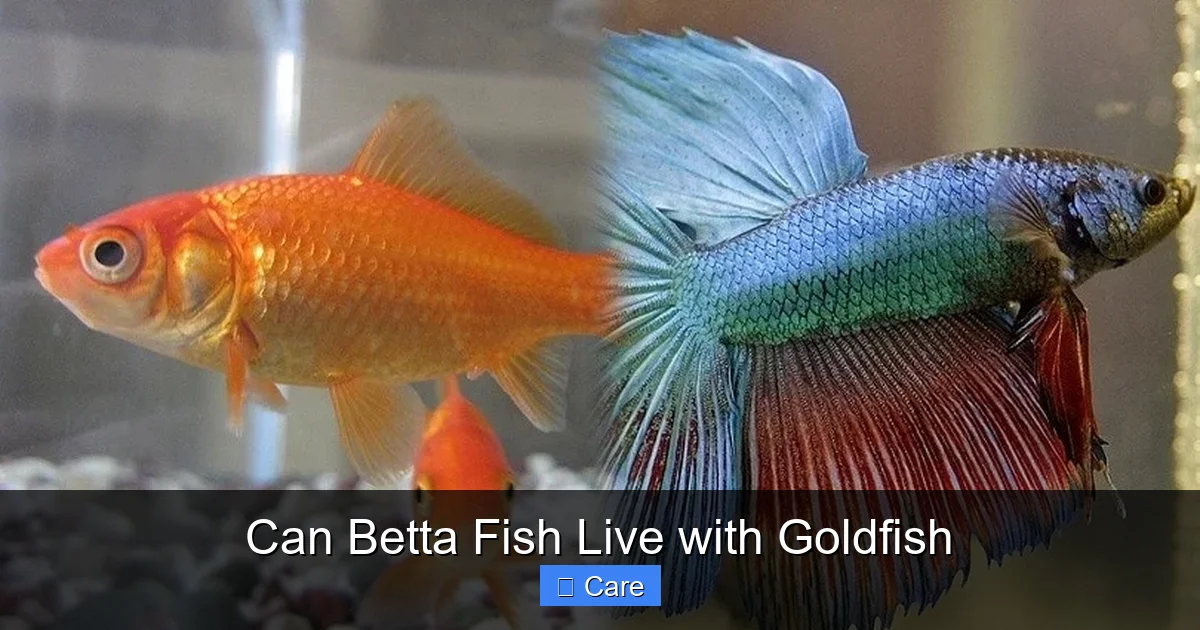
This is the single most absolute and non-negotiable reason these fish cannot live together. Their optimal temperature ranges are not just different; they are opposites.
Visual guide about Can Betta Fish Live with Goldfish
Image source: hepper.com
The Tropical Betta: A Fish of Warm, Stagnant Waters
Betta splendens, the Siamese fighting fish, is a tropical species native to the shallow, slow-moving rice paddies, marshes, and stagnant puddles of Southeast Asia. These waters are warm year-round, typically between 78°F and 80°F (25-27°C). A stable temperature in this range is critical for a betta’s metabolism, immune function, and overall vitality. They are extremely sensitive to cold. Water below 75°F (24°C) will cause their metabolism to slow, making them lethargic, prone to diseases like fin rot, and shortening their lifespan. They require an aquarium heater to maintain this tropical warmth consistently.
The Cold-Water Goldfish: A Fish of Temperate Lakes & Streams
Goldfish (Carassius auratus) are native to the cool, temperate freshwater lakes and streams of Asia. They are cold-water fish, thriving in temperatures between 65°F and 72°F (18-22°C). Their metabolism is designed for cooler water. While they can survive in warmer water for a time, it causes them significant stress. Water consistently above 75°F (24°C) accelerates their metabolism, leading to hyperactivity, increased waste production, and a severely compromised immune system. In warm water, goldfish are far more susceptible to diseases like Swim Bladder Disorder and Dropsy. They do not need a heater; in fact, in many climates, they may need a chiller for long-term health in summer.
The Fatal “Compromise” Temperature
Is there a middle ground? Let’s look at the overlap: 72°F to 75°F (22-24°C). For the betta, this is the absolute bottom of their safe range, bordering on dangerously cold. It will suppress their immune system and activity. For the goldfish, this is the warm upper limit, causing metabolic stress and increased waste output. You are not finding a happy medium; you are choosing a temperature that is suboptimal and chronically stressful for both fish simultaneously. A stressed fish is a sick fish. There is no healthy temperature that serves both species.
2. A Clash of Temperaments: Aggression vs. Docility
Beyond temperature, the behavioral mismatch is stark and violent. You are mixing a territorial, aggressive predator with a slow, peaceful, and food-motivated scavenger.
Visual guide about Can Betta Fish Live with Goldfish
Image source: housedpet.com
The Betta: A Solitary Territorial Warrior
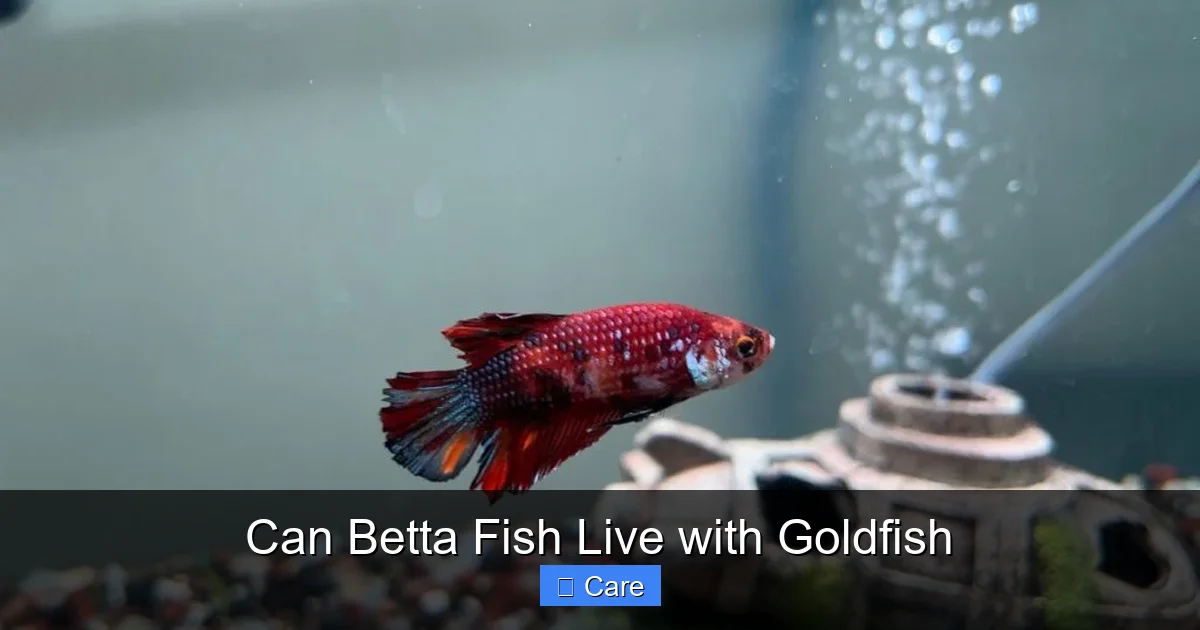
Male bettas earned the name “Siamese fighting fish” for a reason. They are highly territorial, especially towards other fish with long, flowing fins, which they perceive as rival males. Their aggression is instinctual and often triggered by movement, color, or fin shape. In a community tank, a betta will establish a “territory” (often a plant or decoration) and will flare (spread their gills dramatically) and chase any intruder that enters it. This constant chasing causes immense stress to the other fish, leading to exhaustion, loss of appetite, and physical damage from bites or from crashing into decorations while fleeing. While some female bettas or very calm male bettas may seem tolerant initially, the stress of living with an incompatible species almost always triggers aggression eventually.
The Goldfish: A Slow-Moving Target with Tasty Fins
Goldfish, especially the fancy varieties like Orandas, Ranchus, or Veiltails, are the opposite of aggressive. They are slow, methodical swimmers with elaborate, flowing fins that drift beautifully through the water. To a betta, these fins are an irresistible target—they look exactly like a rival male betta. The goldfish’s slow, deliberate movements are also seen as non-threatening or “weak” by a predator, potentially triggering a chase instinct. The goldfish has virtually no defensive behavior. It will simply try to flee, but its body shape and finnage make it a poor swimmer. Prolonged chasing leads to the goldfish hiding constantly, not eating, and eventually succumbing to stress or physical injury. Furthermore, goldfish are notorious “fin-nippers” themselves in some cases, but they are no match for a determined betta’s bite.
The Size Problem: From Snack to Predator
We must also consider size. A full-grown fancy goldfish can reach 6-8 inches. A common goldfish (Comet, Shubunkin) routinely exceeds 12 inches and is a powerful, fast swimmer. A betta maxes out around 2-3 inches. A large, active common goldfish is not a potential fin-nicking victim; it is a potential predator. Goldfish have no teeth, but they use their powerful suction mouths to gravel-sift. A curious or hungry large goldfish may try to “taste” or suck on a small betta, causing fatal injury or swallowing it whole. The betta, in this scenario, is simply outmatched and outgunned.
3. Water Quality: A Battle of Filtration Needs
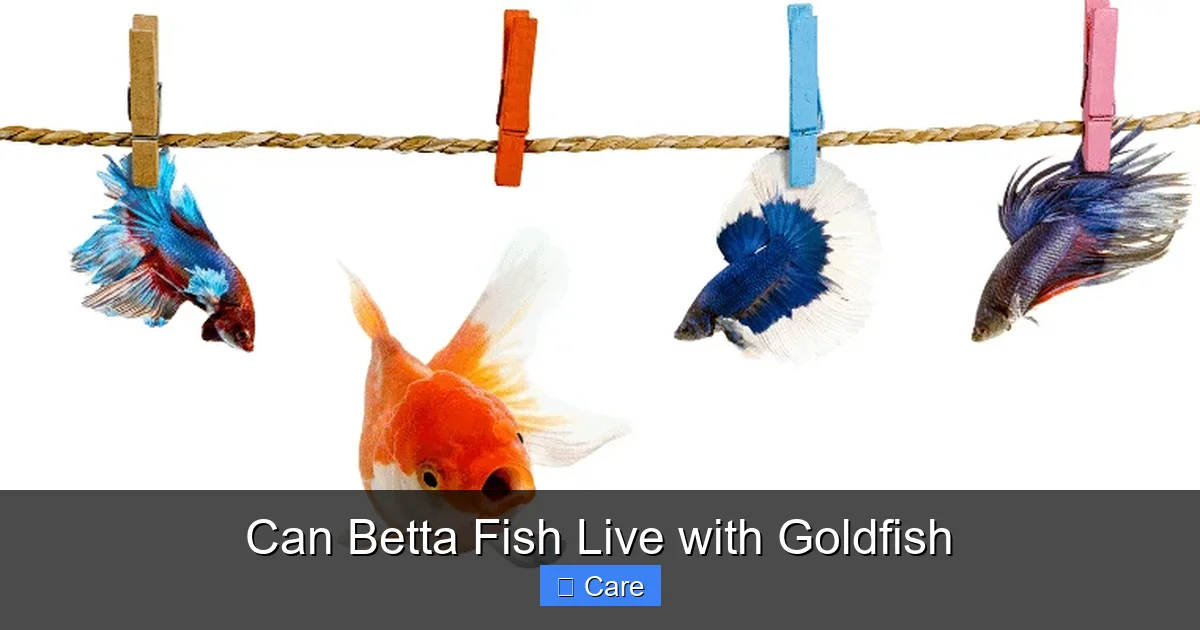
This is a silent killer in this tank pairing. The two species have wildly different bioloads (the amount of waste they produce) and corresponding filtration requirements.
Visual guide about Can Betta Fish Live with Goldfish
Image source: aquariumsphere.com
The Goldfish: A Waste-Producing Machine
Goldfish are often called “dirty” fish for a scientific reason: they produce an enormous amount of ammonia-rich waste relative to their size. This is due to their physiology—they lack a true stomach and have a long, inefficient digestive tract, resulting in constant excretion. A single fancy goldfish requires robust filtration (often rated for 2-3 times the tank volume) and frequent, large water changes (25-50% weekly) to keep ammonia and nitrite at zero. Nitrates must be kept very low (<20 ppm). Inadequate filtration for goldfish leads to rapid water poisoning.
The Betta: A Sensitive Inhabitant of Still Waters
Bettas, coming from stagnant natural habitats, are adapted to low-oxygen, still water. They are also labyrinth fish, meaning they breathe atmospheric air from the surface. This makes them less reliant on high water oxygenation from a filter current than goldfish are. However, they are extremely sensitive to ammonia and nitrite. Even tiny spikes in these toxins—levels that a hardy goldfish might partially tolerate—can burn a betta’s delicate fins and gills, leading to fatal poisoning. Bettas thrive in calm water; a strong filter current needed for goldfish causes them constant stress, exhaustion, and can damage their long, flowing fins.
The Unsolvable Filtration Equation
To properly keep a goldfish, you need a powerful filter with a high flow rate. To properly keep a betta, you need a gentle filter with a very low flow rate, often baffled or adjusted to create minimal movement. You cannot have both in the same tank. A filter strong enough for the goldfish will create a current that stresses and exhausts the betta. A filter gentle enough for the betta will be utterly insufficient for the goldfish’s massive bioload, leading to toxic ammonia build-up that will slowly poison the betta. You are choosing between suffocating the betta with waste or battering it with current. Neither is acceptable.
4. The Inevitable Health & Disease Catastrophe
Mixing these two creates a perfect storm for health problems, compounding the issues of stress, poor water, and injury.
Stress is the Gateway to Disease
Chronic stress from cold water, aggression, poor water quality, and constant chasing suppresses the immune system of both fish. A suppressed immune system cannot fight off common aquarium pathogens like Ichthyophthirius multifiliis (Ich), Flavobacterium columnare (Columnaris), or Aeromonas spp. (causing hemorrhagic septicemia). The first visible sign of disease is often the point of no return because the underlying stressors have already weakened the fish beyond recovery.
Injuries Become Infected
If a betta bites a goldfish’s fins, or a large goldfish accidentally bumps or sucks on a betta, it creates open wounds. In a tank with high ammonia (from the goldfish) or poor water quality, these wounds quickly become infected. Fin rot, caused by bacteria, is a common and often fatal complication. The combination of a physical injury and a toxic environment is devastating.
Pathogen Soup: Different Worlds, Different Bugs
Goldfish and bettas have evolved in completely separate parts of the world with different sets of parasites and bacteria. Their immune systems are adapted to their local pathogens. Introducing them to each other is like exposing a population with no immunity to a new virus. A disease that is a minor inconvenience to a hardy goldfish could be lethal to a betta, and vice-versa. Quarantine practices are essential when adding any new fish, but mixing species from such disparate origins dramatically increases this risk.
5. What About “Exceptions”? Debunking the Myths
You may have seen videos or heard stories of bettas and goldfish living together. Let’s examine these supposed exceptions critically.
The “It Worked For Me” Fallacy
These stories usually involve a very small, young fancy goldfish (like a baby Ranchu) and a particularly docile betta, in a *very large* tank (often 50+ gallons) with abundant hiding places and perfect water maintenance. Even in this best-case scenario, it is a ticking time bomb. As the goldfish grows, it becomes a bigger target or even a threat. The betta’s temperament can change with maturity. The bioload increases as the goldfish grows, making water quality harder to maintain. The “success” is often measured in months or a year before a problem arises. True compatibility is a lifelong state, not a temporary truce.
The Divider or “Divided Tank” Idea
Using a solid divider to separate the two fish in one tank is a physical solution to aggression, but it does nothing to solve the temperature and water quality incompatibility. You are still trying to maintain one temperature for two species with opposite needs and one filtration system for two wildly different bioloads. It simply doesn’t work. The divider only prevents visual and physical contact, but the water chemistry and temperature remain a compromised, stressful mess for one or both inhabitants.
The “Coldwater Betta” Myth
Some claim there are “coldwater bettas.” This is a misnomer. While bettas can *survive* in cooler water for a while, they will not *thrive*. Their colors will be duller, their activity lower, and their lifespan shortened. Keeping a betta at goldfish temperatures is not an option; it is animal neglect.
6. The Only Right Way: Proper, Separate Setups
The good news is that both bettas and goldfish are wonderful, rewarding pets when given the correct environment. The path to success is not mixing them, but providing them with ideal, species-specific homes.
The Ideal Betta Tank
A single male betta (or a sorority of females) needs a minimum of 5 gallons, but 10 gallons or more is significantly better. The tank must have a secure lid (bettas jump!). It requires a gentle filter with an adjustable flow or a baffled outflow to create minimal current. A reliable aquarium heater is non-negotiable, set to 78-80°F (25-27°C). Water changes of 25-50% weekly are essential. Provide abundant silk or live plants (like Anubias, Java Fern) for resting and hiding, and smooth decorations without sharp edges that could tear fins. Tank mates, if any, must be carefully chosen: peaceful, cool-temperature, non-fin-nipping species like ember tetras, khuli loaches, or snails, in a tank of appropriate size.
The Ideal Goldfish Tank
Goldfish are not bowl fish. A single fancy goldfish needs a minimum of 20 gallons, and each additional goldfish requires at least 10 more gallons. A single common/comet goldfish needs a minimum of 30 gallons, with 50+ gallons being better. They need a powerful filter rated for at least double the tank volume to handle their waste. Water changes are massive: 25-50% weekly is the bare minimum. They prefer cooler water, so a heater is not needed (unless in a very warm climate). Provide a smooth substrate (sand or large gravel) to prevent them from ingesting small stones while foraging. Decorations should be sturdy, as goldfish will move or knock over lightweight items. They are social and should be kept in groups of at least 2-3.
The Joy of Dedicated Tanks
By setting up two appropriate tanks, you get to appreciate each fish’s unique beauty and behavior without stress. You can watch your betta build a bubble nest or flare playfully at its reflection. You can see your goldfish root around for food or interact with its school. Both will live longer, healthier, more vibrant lives. The initial cost and space of two tanks is a small price to pay for the wellbeing of your pets and the joy of responsible fishkeeping.
Conclusion: A Hard “No” Backed by Science
So, can betta fish live with goldfish? After examining the complete picture—from the irreconcilable temperature war and the violent behavioral mismatch to the unsolvable filtration crisis and the guaranteed health risks—the answer is a definitive and uncompromising no. This is not a matter of opinion or anecdotal luck. It is a matter of fundamental biology. You cannot compromise on temperature without harming one fish. You cannot satisfy the filtration needs of one without harming the other. You cannot prevent the aggression of a betta towards a slow, finned goldfish in the long term. You cannot avoid the disease risks of mixing species from opposite sides of the world.
The desire to create a beautiful, mixed-species community is a noble one, but it must be guided by knowledge, not wishful thinking. The most beautiful and ethical community tank is one where every single inhabitant can thrive according to its natural design. For the betta, that means warm, still waters. For the goldfish, that means cool, clean, well-oxygenated waters with plenty of space to forage. These two worlds cannot and should not be merged. The kindest, most responsible, and ultimately most successful thing you can do as a fish keeper is to provide each of these magnificent creatures with their own perfect, tailored home. In doing so, you ensure not just their survival, but their flourishing, vibrant life for years to come.
Frequently Asked Questions
Can I put a betta and a goldfish together if I have a very large tank?
No. While a larger tank provides more space, it does not solve the core issues of opposite temperature requirements, incompatible filtration needs, or the betta’s inherent aggression towards the goldfish’s fins. The fundamental biological clash remains regardless of tank size.
What should I do if I already have a betta and goldfish together?
Immediately separate them into two different, properly set up tanks. Observe both fish closely for signs of stress (clamped fins, lethargy, hiding), injury (torn fins), or disease (spots, cotton-like growth, fraying). Be prepared to treat any issues that arise from their incompatible living conditions.
Are there any goldfish varieties that might work with a betta?
No. All goldfish varieties—fancy and common—are cold-water fish with high bioloads and slow, finned bodies that trigger betta aggression. There are no exceptions to this rule. Even a small, fast-moving wild-type goldfish like a Baby Comet is still a cold-water fish and will suffer in a betta’s warm tank.
Can I use a tank divider to safely keep a betta and goldfish in the same system?
While a divider prevents physical contact and aggression, it does not solve the temperature conflict or the water quality conflict. The goldfish’s waste will still pollute the water the betta swims in, and you cannot set one temperature that is healthy for both. It is not a safe or ethical solution.
Why do some pet stores keep bettas and goldfish in the same section or even the same tanks?
Pet stores prioritize sales and high turnover, not long-term fish health. They often keep bettas in small, warm cups and goldfish in large, cool community tanks separately. If you see them together, it’s usually a temporary holding situation that is not meant to be permanent. They are not a model for proper home aquarium care.
Is there any way to compromise on temperature for these two fish?
No. Any temperature that is safe for a goldfish (below 75°F/24°C) is dangerously cold for a betta and will suppress its immune system. Any temperature that is safe for a betta (78-80°F/25-27°C) is dangerously warm and metabolically stressful for a goldfish. A “compromise” temperature will chronically stress and harm both fish, leading to poor health and a shortened lifespan.