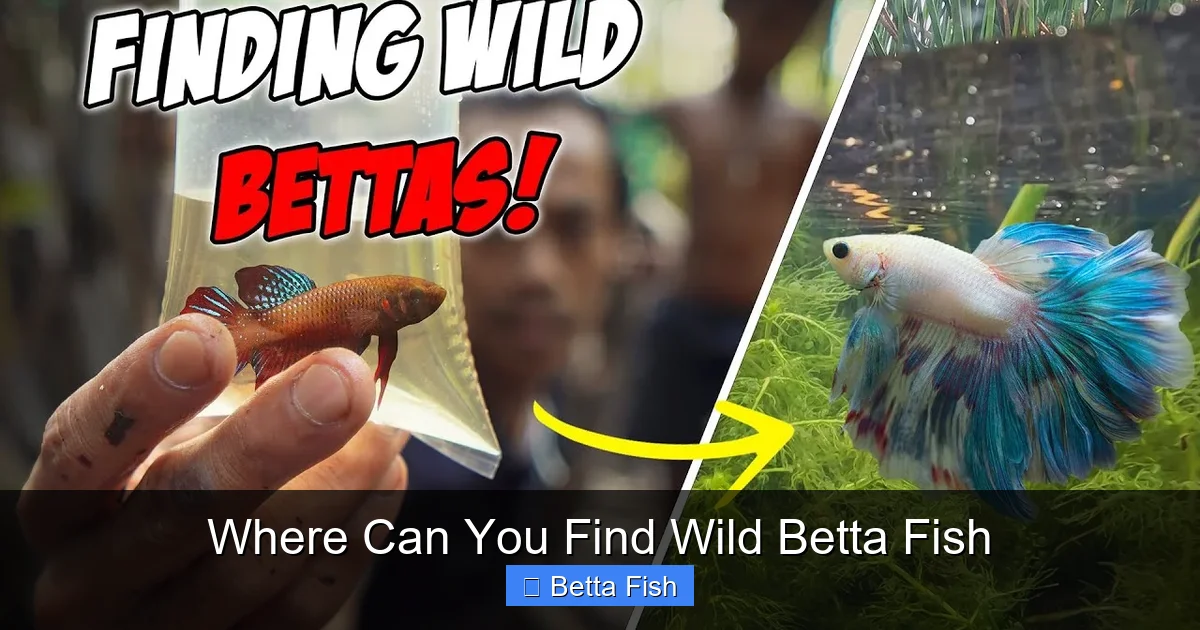
Where Can You Find Wild Betta Fish
Wild betta fish, the vibrant ancestors of pet store bettas, are native exclusively to the shallow, tropical waters of Southeast Asia. Their natural habitats span Thailand, Cambodia, Vietnam, Laos, and parts of Malaysia and Indonesia, where they face significant threats from habitat loss and illegal collection. Ethically appreciating them means supporting conservation, understanding legal protections, and recognizing that true “wild bettas” are not typical aquarium pets.
So you’ve fallen in love with the flowing fins and fiery personalities of betta fish. Maybe you’ve watched a viral video of a wild betta building its bubble nest in a muddy puddle and wondered, “Where can I find one of these incredible creatures in their natural home?” It’s a fantastic question, one that leads from the glass tank on your desk deep into the steaming jungles and flooded rice fields of Southeast Asia. But finding a wild betta isn’t like finding a shell on the beach. It’s a journey into a specific, fragile ecosystem, governed by ecology, law, and ethics. This guide will take you there. We’ll map their exact territories, describe the unique waters they call home, explain the serious legal and conservation landscape, and ultimately show you the most responsible ways to connect with these amazing fish in the wild.
Key Takeaways
- Exclusive Native Range: Wild betta fish (Betta splendens and its relatives) are indigenous only to the continental and island regions of Southeast Asia, primarily Thailand, Cambodia, Vietnam, Laos, and parts of Malaysia and Indonesia.
- Habitat Specialists: They thrive in slow-moving or stagnant, shallow waters like rice paddies, floodplain plains, peat swamps, and leaf-littered forest streams, which are often warm, acidic, and low in dissolved oxygen.
- Legal Protections Exist: International trade in wild-caught Betta splendens is regulated under CITES Appendix II, requiring permits. Many local countries also have laws protecting wildlife and habitats, making unpermitted collection illegal.
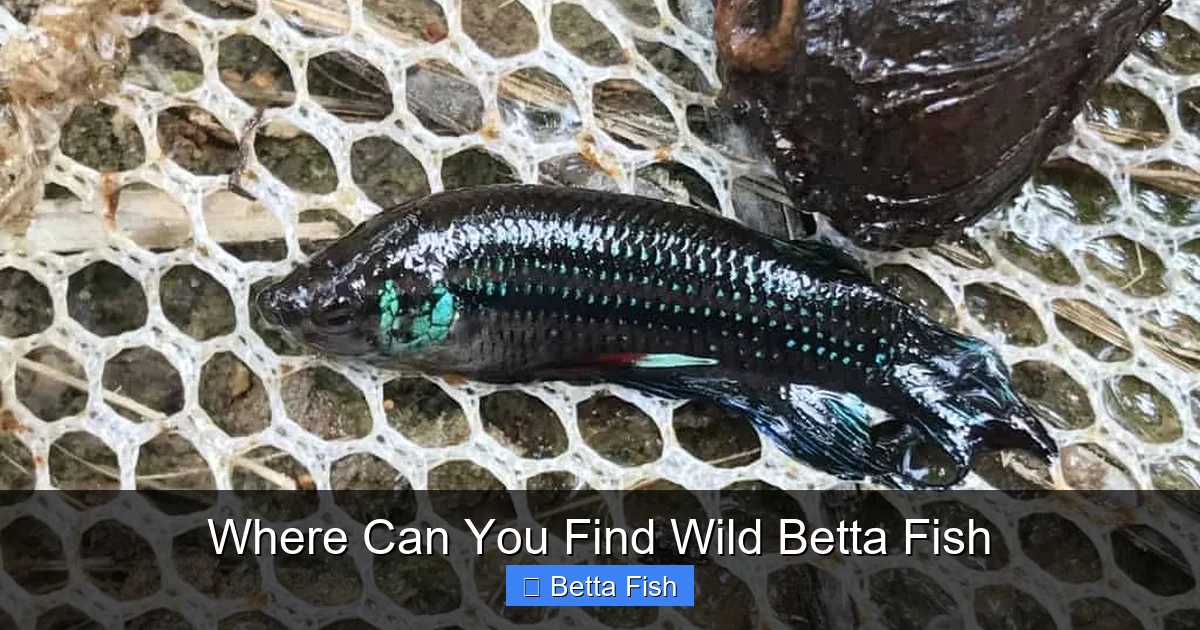
- Domesticated vs. Wild: The common “betta” in pet stores is a centuries-domesticated strain. True wild bettas have shorter fins, more subdued coloration for camouflage, and are extremely sensitive to water conditions and stress.
- Major Threats: Their primary threats are habitat destruction (especially from palm oil and rubber plantations), pollution from agricultural runoff, and over-collection for the international aquarium trade.
- Ethical Sourcing is Key: Reputable breeders who work with “wild-type” bettas raise generations in captivity. The ethical choice is to support these breeders or captive conservation programs, not to seek wild-caught specimens as pets.
- Appreciation Through Conservation: The best way to “find” and enjoy wild bettas is by supporting in-situ conservation efforts, visiting ethical aquariums with native species exhibits, or learning about their natural behaviors through documentary research.
📑 Table of Contents
- The Cradle of the Betta: Southeast Asia’s Unique Waterworlds
- The Map: Geographic Distribution by Country
- The Law and the Ethics: Why You Can’t Just Go Catch One
- Conservation in Crisis: The Threats to Wild Populations
- How to Responsibly “Find” Wild Betta Fish: A Guide for the Enthusiast
- Conclusion: The Wild Betta as an Ambassador
The Cradle of the Betta: Southeast Asia’s Unique Waterworlds
To understand where to find wild betta fish, you must first understand the world that shaped them. The betta’s genius, its famous labyrinth organ that allows it to gulp air, is an evolutionary masterstroke for survival in a very particular type of environment. These are not the clear, flowing streams of your typical mountain river. Wild bettas are the monarchs of the stagnant, shallow, and often oxygen-poor waters that blanket the lowland regions of Southeast Asia.
The Seasonal Engine: Monsoons and Floodplains
The entire geography of betta habitat is dictated by the monsoon cycle. During the brutal dry season (roughly November to April), water bodies shrink into isolated, warm, and heavily vegetated puddles, ponds, and the last remnants of streams. Here, bettas are packed into tiny refuges, surviving by breathing atmospheric air and enduring high temperatures. Then, the rains come. The monsoons (May to October) transform the landscape. Rivers overflow, flooding vast plains—the famous floodplains. This seasonal flooding is the betta’s highway and nursery. What were isolated puddles become one immense, shallow, murky lake stretching for miles across former forests and fields. Betta fish disperse into this new aquatic universe, feeding, breeding, and their young growing in the relative safety of the flooded vegetation. This cycle of confinement and expansion has defined their behavior, their territoriality, and their very biology.
The Signature Habitats: Rice, Peat, and Palm Swamps
Within this monsoonal framework, you’ll find wild bettas in a few key habitat types:
- Rice Paddies: This is the iconic image. The flooded, terraced rice fields of Thailand and Vietnam are perfect betta habitats. They are shallow, still, heavily vegetated with rice plants and weeds, and teem with insect life. However, modern agricultural practices—heavy pesticide use and rapid water drainage—have made many of these fields ecological traps.
- Peat Swamp Forests: These are the most pristine and biodiverse betta habitats. Found in areas like the lowlands of Sumatra and Borneo (Malaysia/Indonesia), these forests have water that is stained dark brown by tannins from decaying leaves and wood. The water is soft, very acidic (pH can be as low as 4.0), and crystal clear despite the color. The leaf litter is a complex microhabitat full of infusoria and microorganisms that betta fry feed on.
- Blackwater Streams & Ditches: Slow-moving, muddy-bottomed streams and man-made drainage ditches that cut through farmland or forest edges. These are often bordered by dense vegetation like Pandanus palms or tall reeds, providing crucial cover from predators like birds and larger fish.
- Forest Pools & Temporary Ponds: Small, ephemeral pools that form in depressions in the forest floor. These are critical for breeding, as they often lack fish predators, though they may dry completely.
The common thread? Shallow depth (often less than 20 cm / 8 inches), heavy overhead cover from aquatic or riparian plants, dark or stained water, and a substrate of mud, silt, or leaf litter. You will not find them in fast currents, open water, or deep, clear lakes.
The Map: Geographic Distribution by Country
Now, for the specific “where.” The wild betta’s range is a patchwork tied to these specific habitats across Mainland and Maritime Southeast Asia. The center of diversity and the best-studied region is Thailand.
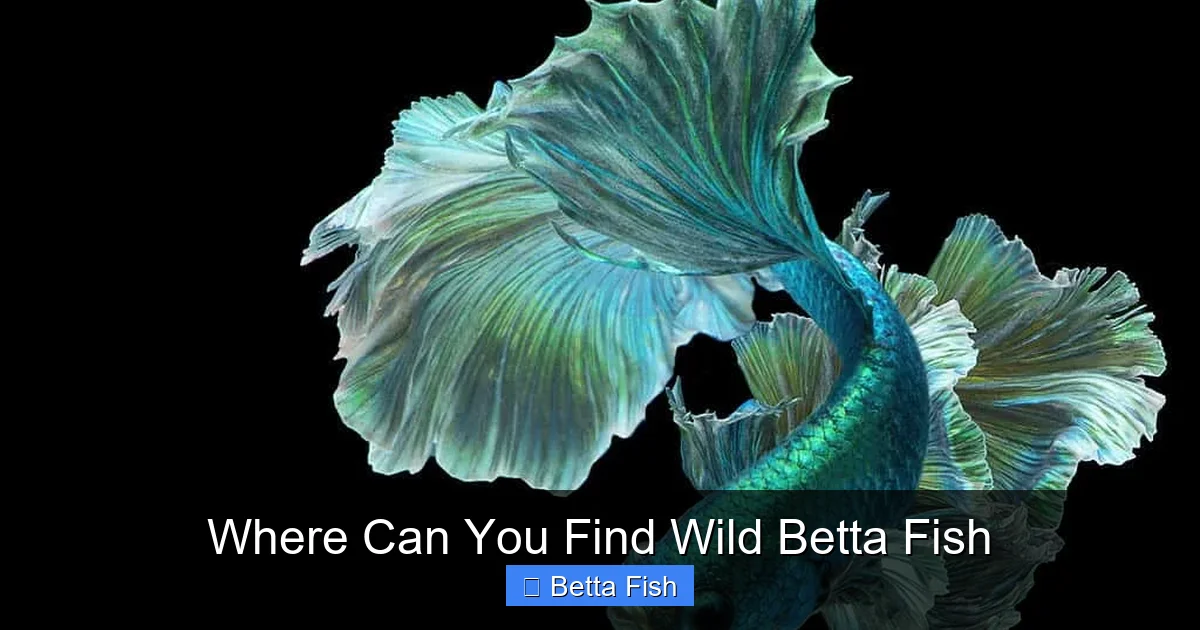
Visual guide about Where Can You Find Wild Betta Fish
Image source: a-z-animals.com
Thailand: The Heartland
Thailand is the undisputed epicenter for wild betta research and distribution. The Chao Phraya and Mae Klong river basins, along with the lowlands of the Malay Peninsula, are packed with betta populations. Key provinces include:
- Central Thailand: The floodplains around Bangkok and the Chao Phraya delta, though heavily impacted by urbanization and agriculture.
- Nakhon Si Thammarat & Surat Thani: On the Malay Peninsula, these southern provinces host numerous distinct populations in peat swamps and forest streams.
- Kanchanaburi: Western Thailand, near the Myanmar border, has some well-protected forest streams.
In Thailand, the local name for the betta is pla kat khwai (“fighting fish”), a testament to their historic cultural significance. Many of the color and fin mutations we see in the aquarium trade originated from bettas collected from these very waters over a century ago.
Cambodia & Vietnam: The Eastern Neighbors
Directly east of Thailand, the Mekong River and its vast Tonle Sap floodplain system in Cambodia are huge betta territories. The great lake, Tonle Sap, expands dramatically in the wet season, flooding surrounding forests—prime betta country. In Vietnam, the Mekong Delta (Mỹ Tho, Cà Mau) is a massive area of rice paddies and canal systems where bettas are common. The central highlands also have isolated populations in smaller streams.
Laos & Myanmar (Burma): The Gaps and Frontiers
Laos has confirmed populations, particularly in the floodplain areas of the Mekong in the south. Myanmar has a huge, very poorly surveyed coastline and river systems. It is almost certain that wild bettas exist along the Malay Peninsula portion of Myanmar and in the Irrawaddy delta, but decades of political isolation have meant little scientific fieldwork. It’s a frontier for potential discovery.
Malaysia & Indonesia: The Island Populations
Here, the story gets more complex. On the Malay Peninsula (Peninsular Malaysia), bettas are found in the northern states like Perlis and Kedah, near the Thai border. The situation in Indonesia and Malaysian Borneo (Sarawak, Sabah) is different. These islands are home to a stunning array of related species from the Betta genus—like Betta imbellis (the peaceful betta), Betta fusca, and many others. They inhabit the same blackwater peat swamps. So, while Betta splendens itself may not be native to Borneo, finding a “wild betta” there is highly likely—you’d just be looking at a different, often equally beautiful, species.
What About Singapore or the Philippines?
Singapore has no native betta populations; any found are escaped or released pets. The Philippines is home to its own unique Betta species, like Betta smaragdina (the Emerald Betta), found in the island of Mindanao. They are not Betta splendens, but they are wild bettas in the broader sense.
The Law and the Ethics: Why You Can’t Just Go Catch One
This is the most critical section. The idea of traveling to Thailand and netting a wild betta from a rice paddy is a romantic fantasy that is, in reality, illegal and deeply harmful. Here’s why.
Visual guide about Where Can You Find Wild Betta Fish
Image source: a-z-animals.com
CITES and International Permits
The Convention on International Trade in Endangered Species of Wild Fauna and Flora (CITES) lists Betta splendens in Appendix II. This does not mean it’s endangered, but that its trade could become a threat. This means:
- Any international shipment of wild-caught bettas requires an export permit from the country of origin and an import permit for the destination country.
- These permits are granted only to authorized, regulated operations that can prove the collection is sustainable and not harming the population.
- For the average person, obtaining these permits is impossible. Buying a “wild betta” online or in a speciality shop without verifiable CITES documentation is almost certainly supporting the illegal wildlife trade.
National and Local Laws
Within the source countries, wildlife is protected by national acts. In Thailand, for example, the Wildlife Conservation and Protection Act restricts the collection of native species from national parks and protected areas without a specific research or commercial permit. Collecting from private land requires landowner permission. Simply put, you cannot legally collect wild bettas as a tourist or hobbyist.
The Ethical Quandary: Why Wild-Caught Pets Are a Bad Idea
Even if you could legally catch one, it’s an ethically poor choice for the fish:
- Extreme Stress: The journey from a quiet peat swamp to a glass box is traumatic. Wild bettas are not adapted to captivity’s parameters, diet, or pathogens. Mortality rates are often very high.
- Ecological Impact: Removing a breeding adult, especially a male with a nest, can collapse a local micro-population. You are not taking one fish from an infinite ocean; you are taking it from a limited, connected pond system.
- Disease Introduction: Wild fish can carry parasites or diseases unknown to the captive-bred population, potentially causing outbreaks if introduced.
The only truly ethical “wild betta” in the aquarium hobby comes from captive-bred, F1 or F2 generations from founders collected decades ago under permit and now maintained by dedicated breeders. These fish carry the wild aesthetic but are acclimated to life in captivity.
Conservation in Crisis: The Threats to Wild Populations
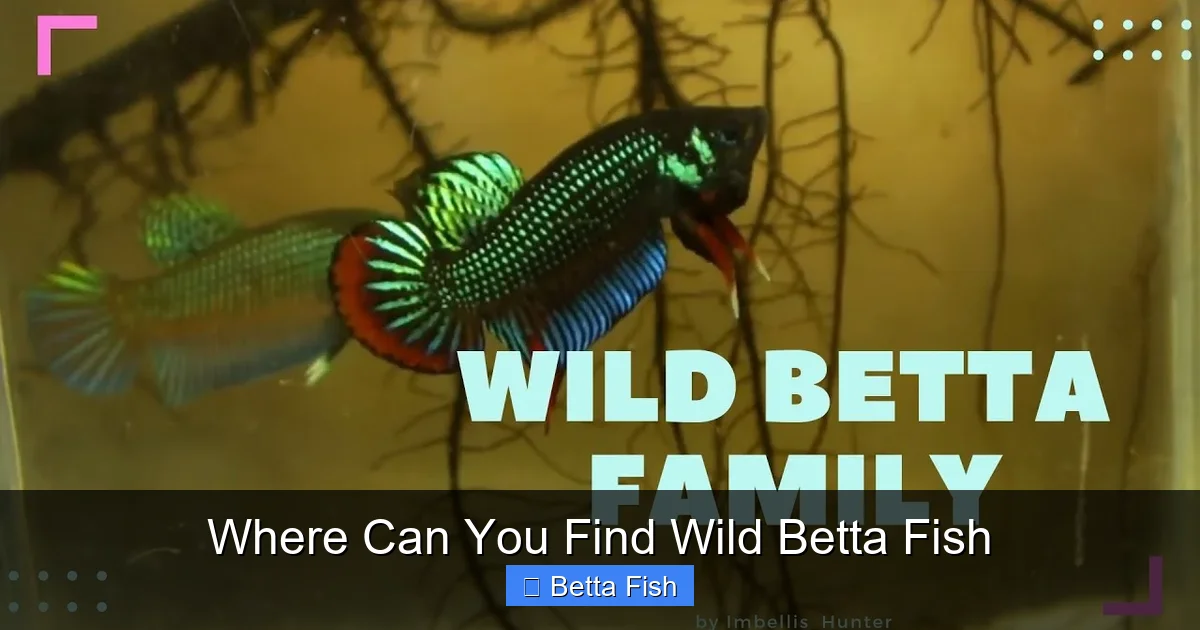
So if we can’t collect them, what’s the big worry? The wild betta’s natural habitats are disappearing at an alarming rate, and with them, the genetic diversity and behavioral authenticity of the species.
Visual guide about Where Can You Find Wild Betta Fish
Image source: i.ytimg.com
Habitat Loss: The Palm Oil and Rubber Onslaught
The #1 threat is the wholesale conversion of lowland forest and wetland for agriculture. Vast tracts of peat swamp forest in Sumatra and Borneo are cleared for palm oil plantations. This is catastrophic. Peat swamp forests are biodiversity hotspots and massive carbon stores. When drained and burned, they release immense CO2 and destroy the unique blackwater ecosystem. Similarly, in Thailand and Cambodia, forest is cleared for rubber plantations and other crops. The shallow, shaded, leaf-littered waters bettas need are replaced by straight, sun-baked drainage canals with no cover.
Pollution and Water Degradation
Agricultural runoff—fertilizers and pesticides—is a silent killer. Pesticides like organophosphates are directly toxic to fish and destroy the insect larvae and microfauna bettas feed on. Fertilizers cause algal blooms that deplete oxygen at night, suffocating fish. In urbanizing areas, sewage and industrial effluent pollute waterways, altering pH and introducing toxins.
Over-Collection for the Trade (A Historical and Current Issue)
While less of a threat now due to CITES regulations and the dominance of captive breeding, localized over-collection can still occur. Unscrupulous collectors, sometimes working for the “wild-type” specialty market, may deplete a specific pool or ditch. Combined with habitat loss, this can fragment populations and reduce genetic diversity.
Climate Change: The Slow Burn
Rising global temperatures affect everything. Altered rainfall patterns can disrupt the critical monsoonal flood cycle. Droughts may prolong the dry season, stranding bettas in shrinking, overheating pools. Sea-level rise could saltify coastal freshwater habitats.
How to Responsibly “Find” Wild Betta Fish: A Guide for the Enthusiast
Given the legal and conservation realities, what can a betta enthusiast actually do? You shift your goal from “capturing” to “observing, supporting, and understanding.”
1. Support In-Situ Conservation Projects
This is the most impactful action. Donate to or volunteer with organizations working on the ground in Southeast Asia. Examples include:
- Projects focusing on peat swamp forest restoration in Indonesia and Malaysia (e.g., projects by Borneo Orangutan Survival Foundation that also protect habitat).
- Local Thai or Cambodian wildlife NGOs that work on wetland conservation and community education.
- Aquarium hobbyist conservation funds like the IUCN’s Freshwater Fish Specialist Group or the American Livebearer Association’s conservation grants, which sometimes fund fieldwork on betta habitats.
Your money helps protect the forests and rice paddies where bettas live.
2. Visit Ethical Public Aquariums and Research Institutions
Major aquariums in Southeast Asia (like the Siam Ocean World in Bangkok or the Aquaria KLCC in Malaysia) and in the West (like the Steinhart Aquarium in San Francisco or the London Zoo) often have excellent exhibits on Southeast Asian freshwater biodiversity. They may display wild-caught or wild-type bettas in a context that tells their story—their habitat, their behavior, and their conservation status. This is a legal, educational, and stress-free way to see a wild betta’s authentic form and colors.
3. Purchase Responsibly from Captive Breeders of Wild-Types
If you desire an aquarium fish that resembles its wild ancestor, seek out specialist breeders who explicitly work with captive-propagated lines of wild-type bettas (e.g., Thai “Giant” or “Dragon” types that have more natural finnage, or breeders of species like Betta imbellis). Ask them directly about the lineage. Reputable ones will proudly state their fish are generations removed from the wild and were not recently imported. This supports a sustainable captive population and reduces demand for illegal wild collection.
4. Engage in Citizen Science and Education
If you are a researcher or highly dedicated hobbyist with scientific collaboration, opportunities exist for permitted fieldwork. This is not for tourists. It involves partnering with a university or research institute, obtaining research visas and collection permits from the host country’s authorities, and following strict ethical protocols. For the rest of us, you can contribute by learning everything about betta natural history and sharing that knowledge. Correct misconceptions: “No, my pet betta is not from a puddle in Thailand; it’s a domesticated fish with hundreds of years of breeding behind it. The wild ones look different and live in fragile habitats.”
5. Advocate for Sustainable Products
As a consumer, you can pressure corporations. Avoid products containing unsustainable palm oil. Look for RSPO (Roundtable on Sustainable Palm Oil) certification, though this has its critics, it’s a start. Support brands and retailers committed to deforestation-free supply chains. By reducing demand for products that destroy peat swamps, you help protect betta habitat indirectly.
Conclusion: The Wild Betta as an Ambassador
The question “Where can you find wild betta fish?” has a literal answer: in the shallow, warm, tea-colored waters of the Mekong and Chao Phraya basins, in the peat swamps of Borneo and Sumatra, in the flooded fields of Cambodia. But the deeper answer is more nuanced. You find them at the intersection of stunning biodiversity and profound vulnerability. You find them in the stories of the people who share their landscape, in the scientific papers documenting their decline, and in the conservation projects fighting to save their homes. The true location of the wild betta is not a pin on a map you can drop a pin on, but a state of awareness. It’s understanding that the flamboyant fish in your tank is a domesticated ambassador for a wild, tenacious, and threatened creature. To “find” it, you don’t need a net and a permit. You need curiosity, respect for the law, and a commitment to protecting the strange, beautiful, muddy puddles of Southeast Asia that are its only true home. The next time you look at your betta, imagine it not in your decorated tank, but in a sun-dappled rice field, gulping air from the surface, building a nest of bubbles under a broad leaf. That image is the real prize. Protect that image, and you’ve found the wild betta.
Frequently Asked Questions
Is it legal to collect and keep wild betta fish as pets?
No. Wild betta fish are protected under international (CITES) and national laws in their native countries. Collecting them without specific government-issued research or commercial permits is illegal. Furthermore, removing them from their habitat is ecologically damaging and the fish often suffer high mortality in captivity due to stress and incompatible conditions.
How are wild betta fish different from the bettas I see in pet stores?
Wild bettas (Betta splendens) are the natural, undomesticated form. They have much shorter fins, more subdued olive-brown or grey coloration with faint iridescence for camouflage, and are far more sensitive to water quality. Pet store bettas are the result of over 600 years of selective breeding for long, flowing fins and vibrant, solid colors, making them genetically and behaviorally distinct from their wild ancestors.
Can I buy a “true” wild betta fish legally for my aquarium?
It is virtually impossible and unethical for a hobbyist to legally obtain a recently wild-caught Betta splendens. The only ethical source is from a captive-bred lineage that has been in the aquarium hobby for generations (F1, F2, etc.). Reputable specialty breeders who work with “wild-type” lines sell these fish. They are not wild-caught but carry the aesthetic of the wild form.
What is the biggest threat to wild betta fish populations today?
The single greatest threat is habitat destruction, primarily from large-scale conversion of lowland forests and wetlands for agriculture, especially palm oil and rubber plantations. This destroys the shallow, vegetated, blackwater habitats they depend on. Pollution from agricultural chemicals and climate change-induced alterations to the monsoon cycle are also severe, growing threats.
Are wild betta fish endangered?
The IUCN Red List currently classifies Betta splendens as “Vulnerable” at the species level, meaning it is facing a high risk of extinction in the wild. However, this status can vary locally. Some populations are stable in protected areas, while others in heavily deforested regions may be locally extinct. Their close relatives in the Betta genus have an even higher proportion of threatened species due to their extremely limited ranges.
How can I help protect wild betta fish if I can’t visit their habitat?
You can help by: 1) Supporting conservation NGOs that protect Southeast Asian wetlands and peat swamps. 2) Choosing to buy captive-bred fish from ethical breeders and avoiding any seller claiming to sell “freshly wild-caught” specimens. 3) Educating yourself and others about the difference between domestic and wild bettas and their conservation plight. 4) Advocating for sustainable palm oil and reducing consumption of products linked to deforestation.