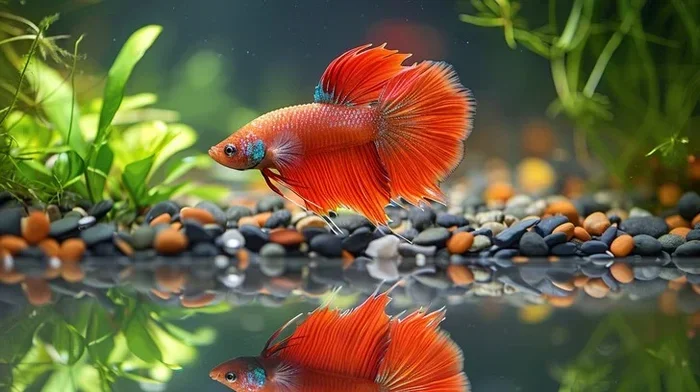
Can a Male Betta Fish Live with a Female Safely

Many aquarium owners ask can a male betta fish live with a female without causing harm or stress. While it is possible under specific conditions, mixing them requires careful planning, proper tank size, and constant observation. This guide explains the risks, ideal setup, and safe practices to help you make the right choice for your fish.
Key Takeaways
- Tank size matters: A spacious aquarium of at least 20 gallons gives both fish room to establish territories and reduces aggression.
- Watch for breeding behavior: Males and females should only share a tank temporarily for breeding, and the female must be removed afterward.
- Monitor aggression closely: Male bettas are naturally territorial, and females can also show stress or fight back if conditions are poor.
- Provide plenty of hiding spots: Live plants, caves, and smooth decorations help the female escape and lower overall tension.
- Never house them long-term without supervision: Continuous cohabitation often leads to injury, chronic stress, or death.
- Consider safer tank mates instead: Peaceful, fast-moving species or bottom dwellers are usually better choices for community tanks.
- Separate immediately if needed: If you see chasing, fin nipping, or hiding, move the fish to different tanks right away.
📑 Table of Contents
- Can a Male Betta Fish Live with a Female Safely
- Understanding Betta Behavior Before Mixing Them
- When Can a Male and Female Betta Share a Tank
- Tank Size and Setup Requirements
- Warning Signs That They Should Be Separated
- Safer Alternatives to Male-Female Cohabitation
- Expert Tips for Introducing Bettas Safely
- Conclusion
Can a Male Betta Fish Live with a Female Safely
If you are planning to mix bettas, you probably want a clear answer fast. The short version is that can a male betta fish live with a female safely depends on your goals, your tank setup, and how closely you watch them. These fish are beautiful, but they are also famous for their strong personalities. A male betta will often see another fish as a rival, especially if the tank is too small or too bare. A female can handle some company better than a male, but she still needs calm water, good hiding places, and a peaceful environment.
Many beginners assume that all bettas can share a tank like community fish. That idea causes problems quickly. Bettas are not typical schooling fish. They do best when their space, water quality, and tank mates match their temperament. If you are thinking about keeping a male and female together, you need to know when it works, when it fails, and what signs tell you to separate them. This article walks you through the whole process in simple terms.
You will learn about behavior, tank size, breeding situations, safe decor, warning signs, and better alternatives. By the end, you should feel confident about whether this pairing makes sense for your aquarium. If you are still exploring general compatibility, you may also find it helpful to read about can a male betta live with a female betta fish before you make a final decision.
Understanding Betta Behavior Before Mixing Them
Bettas are often described as aggressive, but that label is not the full story. Their behavior is usually driven by territory, stress, and breeding instincts. A male betta wants to protect his space. He may flare, chase, or nip when he feels threatened. A female betta can be calmer, but she is not automatically peaceful either. She may still defend a hiding spot or become stressed if she is chased too often.
Male Betta Temperament
Male bettas are the ones most people picture when they think of bright, flowing fins. They are also the ones most likely to act territorial. In the wild, males guard nesting areas and react strongly to rivals. In a tank, that same instinct can turn into constant chasing if the setup is poor. Even a well-decorated tank may not stop a highly aggressive male.
A male may tolerate a female for a short period, especially if you are trying to breed them. Outside of that situation, long-term sharing is risky. If you want to understand how males behave with other species, it can help to compare different scenarios, such as can you keep a male betta with other fish. That context shows why careful selection matters so much.
Female Betta Temperament
Female bettas are usually less flashy, but they still have clear preferences. They can live in groups under the right conditions, though even that setup requires space and monitoring. A female placed with a male may seem calm at first, but her reaction can change quickly if the male becomes persistent. Stress may show up as faded color, loss of appetite, or hiding.
If you are considering other combinations, it is worth looking at related questions like can you put a female betta fish with a male. Those details help explain why gender is only one part of the compatibility puzzle.
When Can a Male and Female Betta Share a Tank
There are a few situations where a male and female may share water safely. The key word is may. Even in the best case, you should stay alert and ready to separate them. The most common reason to pair them is breeding. Another possible reason is a very large, well-planted tank with careful monitoring. Neither situation is a guarantee.
Breeding as a Temporary Setup
Breeding is the most realistic reason to put a male and female together. Even then, the process should be controlled. You usually introduce the female carefully, watch the male’s reaction, and remove her once spawning is complete. The male may guard eggs, but he can also become aggressive toward the female after breeding. That is why timing matters.
If you are new to breeding, do not treat it like a casual tank experiment. Prepare a separate breeding tank, learn the signs of courtship, and have a backup plan if aggression starts. If you want a broader overview of pairing males and females, you can also check can you place a male and female betta fish together for more context on how delicate this process can be.
Non-Breeding Cohabitation Risks
Keeping them together outside of breeding is much harder. A male may constantly pursue the female. She may never feel secure. Over time, that stress can weaken her immune system and make her prone to illness. The male can also exhaust himself by chasing and flaring. In a small tank, the problem gets worse because there is no room to escape.
If you are wondering about other fish in the same tank, you might also explore can you put other fish with a female betta. That topic shows how important tank mates and space are when you are thinking about shared aquariums.
Tank Size and Setup Requirements
If you are trying to make a shared tank work, the environment must do a lot of the heavy lifting. Space gives fish a chance to avoid each other. Plants and decor give them places to rest and hide. Good water quality keeps stress lower. A cramped, empty tank is a bad idea for almost any betta pairing.
Why Space Matters
A larger tank gives both fish more swimming room and more territory to divide. It also helps water stay stable. In a tiny tank, temperature and water quality can shift quickly, which adds stress. More stress usually means more aggression. A bigger aquarium does not solve every problem, but it gives you a better starting point.
For many hobbyists, the first question is simply whether the tank is big enough for two fish with strong personalities. If you are comparing options, you may want to read can you keep a male betta with other fish to see why space and setup are such important parts of compatibility.
Plants, Hiding Spots, and Layout
A well-planned tank should include live or soft artificial plants, gentle flow, and a few hiding areas. Smooth decorations are better because sharp edges can tear fins. The layout should break up lines of sight so the fish do not feel exposed all the time. If the female can move from one area to another without being chased every step, the situation is more manageable.
A simple layout also makes it easier for you to watch behavior. You want to see where each fish spends time and whether one fish is always being pushed into a corner. If the tank is cluttered in a messy way, it becomes harder to notice problems early.
Warning Signs That They Should Be Separated
Even if you set everything up carefully, things can still go wrong. The best thing you can do is watch the fish daily. Behavior changes faster than many people expect. A pairing that looks fine in the morning may become stressful by the afternoon. If you notice repeated trouble, do not wait for injuries to appear.
Chasing, Flaring, and Hiding
Chasing is the most obvious warning sign. Some brief interest may happen during introduction, but constant chasing is not normal. Flaring gills and spreading fins can show aggression. If the female spends most of the day hidden, she is likely stressed. A fish that stops eating or fades in color is also telling you something is wrong.
It is better to separate early than to regret waiting too long. If you are unsure whether the male is being too aggressive, compare what you see with other common compatibility questions, such as can male betta fish live with any other fish. That broader view can help you judge whether the issue is the pairing or the setup.
Injury and Stress Symptoms
Physical signs matter too. Torn fins, scraped scales, and sluggish movement are serious red flags. Stress can also show up as clamped fins, frequent hiding, or breathing heavily. If the female is injured, she may need time in a separate tank to recover. If the male is constantly aggressive, he may be unsuitable for any shared setup.
When in doubt, act quickly. A small separation tank can prevent a bad situation from becoming a dangerous one.
Safer Alternatives to Male-Female Cohabitation
If your goal is a community tank, there are often better options than pairing a male and female betta together. Some fish are calmer, some stay out of the way, and some are less likely to trigger territorial behavior. The right choice depends on your tank size, water conditions, and the betta’s personality.
Other Peaceful Tank Mates
Many keepers do better with small, fast-moving fish that stay in different zones of the tank. Bottom dwellers and shy species can sometimes work if the tank is large enough and the betta is calm. Snails and shrimp are also common choices, though even those are not guaranteed safe. A betta with a strong hunting instinct may still bother smaller creatures.
If you want to compare possibilities, you can look at articles like can male betta fish live with tetras or can male betta fish live with snails. These topics help show how different species may fit into a betta tank in very different ways.
When a Single Betta Setup Works Best
Sometimes the best community is a single betta with a well-decorated tank and maybe one carefully chosen tank mate. That setup can be easier to manage and less stressful for the fish. A lone male betta often thrives when he has clean water, warm temperatures, and enough enrichment. A female can also do well in a peaceful environment without the pressure of a persistent male.
If you are still deciding, it may help to review can a female betta fish live with other fish. That information can guide you toward choices that are less risky than a male-female pairing.
Expert Tips for Introducing Bettas Safely
If you do decide to try a male and female together, a careful introduction can improve your chances. The goal is to reduce shock and give the fish time to adjust. Rushing the process usually creates more problems than a slow, steady approach.
Step-by-Step Introduction
Start by making sure the tank is ready. Check the temperature, filtration, and water quality before adding any new fish. If possible, use a tank that is already cycled and stable. Then introduce the fish in a controlled way, keeping a close eye on the first interactions. Many keepers use a divider at first so the fish can see each other without full contact.
After removal of the divider, watch for calm curiosity rather than immediate aggression. If the male immediately attacks the female, that is a bad sign. If both fish seem tense but not violent, keep monitoring closely. Be ready to separate them if needed.
Ongoing Monitoring and Backup Plans
Even after a successful introduction, the situation can change. Feeding time, water changes, and tank rearrangements can all affect behavior. Keep observing the fish every day. Have a separate tank or container ready in case you need to move one fish quickly. It is much easier to prepare in advance than to scramble during an emergency.
If you want to explore how males behave with different companions, you may also find it useful to read can you put other fish in with a male betta. That can help you understand the bigger picture of male betta compatibility.
Conclusion
So, can a male betta fish live with a female safely? The honest answer is that it can work in limited situations, but it is not a simple yes. Breeding is the clearest reason to pair them, and even then the arrangement should be temporary and closely supervised. For everyday cohabitation, the risks are often higher than many beginners expect. A large tank, gentle setup, and constant observation can improve the odds, but they do not remove the risk entirely.
If you want a peaceful aquarium, it is usually smarter to choose a well-planned single betta setup or a carefully selected community tank. Watch your fish closely, respect their territory, and separate them the moment trouble starts. That approach gives your bettas the best chance to stay healthy, calm, and beautiful.
Frequently Asked Questions
Can a male betta fish live with a female betta fish long term?
Usually no. Long-term cohabitation is risky because males are territorial and females can become stressed or injured. It is safer to keep them together only briefly for breeding and then separate them.
What tank size is best if I want to keep a male and female together?
A larger tank is strongly recommended, with plenty of plants and hiding spots. More space gives the female room to escape and reduces the chance of constant chasing. Even then, close monitoring is still necessary.
How do I know if the female betta is stressed?
Common signs include hiding, faded color, clamped fins, loss of appetite, and spending most of the time away from the male. If you see these signs, she may need to be moved to a separate tank.
Can a male betta kill a female betta?
Yes, that can happen if the male is highly aggressive or if the tank is too small and bare. Injuries and severe stress can become serious quickly, so early separation is important.
Is breeding the only safe reason to pair a male and female betta?
Breeding is the most common safe reason, but even then the pairing should be temporary and carefully managed. Outside of breeding, the risks often outweigh the benefits.
What are better tank mate options for a betta fish?
Peaceful, fast-moving fish, some bottom dwellers, snails, and shrimp are often considered, but success depends on the betta’s temperament and the tank setup. It is best to research each species and introduce new tank mates slowly.