Will a Male and Female Betta Fish Fight
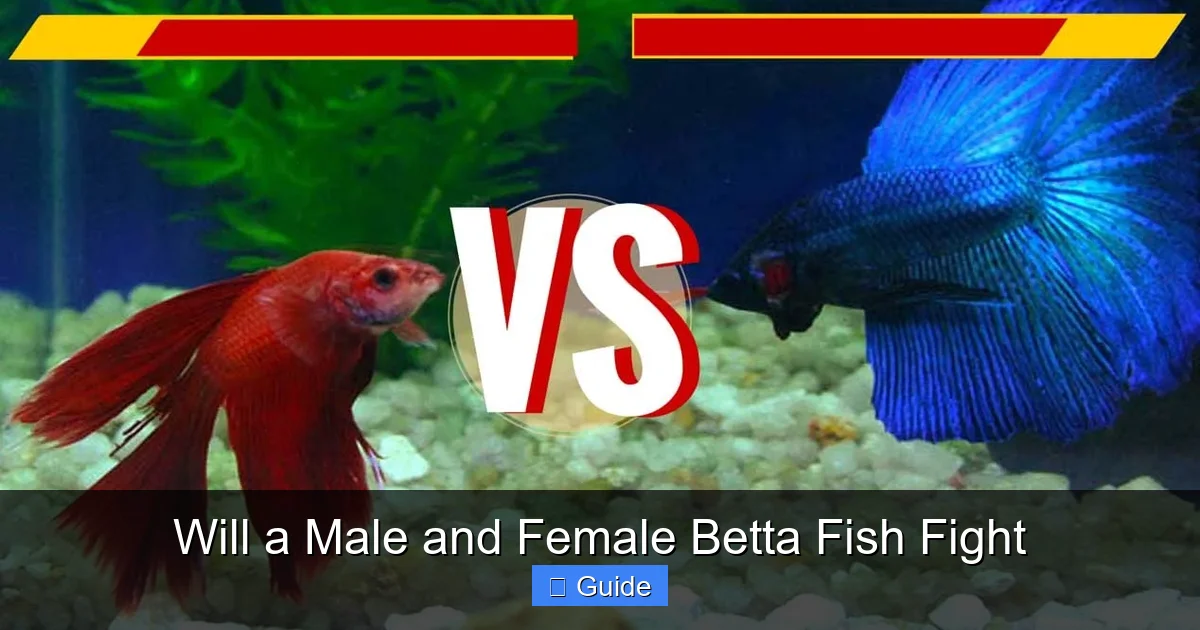
Yes, a male and female betta fish can and will fight, but the context is everything. Their famous aggression is primarily directed at other males, yet introducing a female requires extreme caution due to hormonal triggers and territorial disputes. While brief, supervised cohabitation for breeding is possible, permanent housing together is almost always a recipe for injury or death. Understanding their natural behaviors and setting up a proper environment are critical to preventing a fight.
Key Takeaways
- Aggression is their baseline: Betta splendens are genetically bred for aggression, and this trait is present in both males and females, especially when housed together.
- Breeding is a temporary exception: A male and female can be placed together for spawning under strict, monitored conditions, but they must be separated immediately afterward.
- Permanent cohabitation is dangerous: The belief that a “pair” can live together long-term is a myth; sustained proximity leads to relentless stress and violence.
- Tank setup is non-negotiable: For any introduction, a large, planted tank (20+ gallons) with visual barriers is essential to reduce immediate territorial clashes.
- Observation is critical: You must watch for flaring, chasing, and fin-nipping from the very first moment; these are precursors to a full-blown fight.
- Females can be aggressive too: While less famously so than males, female bettas will establish hierarchies and can be highly territorial with each other and with males.
- Legal and ethical responsibility: As a pet owner, providing species-appropriate housing is a duty; improper housing that leads to injury can have consequences outlined in many terms and conditions of pet ownership.
📑 Table of Contents
- Introduction: The Truth About Betta Aggression
- The Roots of Aggression: It’s in Their DNA
- Breeding vs. Permanent Cohabitation: A Critical Distinction
- Creating a Safe Temporary Tank: The Breeding Setup
- Reading Betta Body Language: The Warning Signs
- What About Female Betta Sororities?
- Conclusion: The Responsible Owner’s Path
Introduction: The Truth About Betta Aggression
So, you’re wondering, will a male and female betta fish fight? It’s one of the most common questions in the aquarium hobby, and the answer is a definitive, cautionary yes, they absolutely can. Often sold as solitary, decorative fish in tiny cups, the Betta splendens has a reputation for fierce solitary behavior. But what happens when you try to pair a male with a female? The popular image of a beautiful, peaceful male building a bubble nest while a graceful female lays her eggs is a snapshot of a single, intense moment in their lives—not a sustainable lifestyle. This guide will cut through the myths and give you the unvarnished truth about male and female betta interactions, the rare circumstances under which they can be together, and why, in almost every case, keeping them apart is the only safe choice.
We’ll explore the roots of their aggression, the critical difference between breeding and cohabitation, and provide you with a clear, actionable framework for making decisions about your bettas. Whether you’re a new owner or a seasoned hobbyist, understanding these dynamics is fundamental to the health and safety of these magnificent, misunderstood fish.
The Roots of Aggression: It’s in Their DNA
To understand if a male and female betta fish will fight, we must first understand where their aggression comes from. Bettas are not just casually territorial; they are the product of centuries of selective breeding for combat. Known as “Siamese Fighting Fish,” males were historically pitted against each other in matches, with the victor being the one that refused to flee. This genetic predisposition for aggression doesn’t vanish in the presence of a female; it simply manifests differently.

Visual guide about Will a Male and Female Betta Fish Fight
Image source: c8.alamy.com
Hormones and Hierarchy
Both male and female bettas possess strong hormonal drives. A male betta’s entire existence is geared toward attracting a mate and defending his chosen territory—a patch of water he believes is ideal for a bubble nest. A female, while often less flamboyantly colored, carries her own hierarchy instincts. In the wild, female bettas live in loose groups with a pecking order. When placed in a confined tank with a male, she is not a passive participant. She may initially be receptive to his courtship display, but she can also challenge his authority or become stressed by his persistent attention. This dynamic creates a volatile cocktail where either fish can initiate conflict.
Territory is Everything
The betta’s world is defined by territory. A male will meticulously choose a spot—often under a leaf or near the water’s surface—to build his bubble nest. He will defend this area fiercely from any intruder, regardless of gender. If a female enters this space without the correct, submissive signals during a precise courtship window, the male will perceive her as an invader and attack. Conversely, a female may claim a specific hiding spot or plant as her own and will Aggressively defend it if the male approaches. In a small tank with no escape routes, every square inch is contested territory, making a fight almost inevitable.
Breeding vs. Permanent Cohabitation: A Critical Distinction
This is the most important section in this entire guide. The single biggest reason for the confusion around male and female betta fish fighting is the failure to distinguish between a temporary breeding tank and a permanent community tank. They are entirely different scenarios with opposite outcomes.

Visual guide about Will a Male and Female Betta Fish Fight
Image source: i.ytimg.com
The Courtship Dance and the Bubble Nest
When a conditioned male betta is ready to spawn, he will build a bubble nest at the water’s surface. This is his invitation. When a receptive female is introduced to his tank (note: she is placed in a separate container within his tank or in a divider tank first), he will perform a dramatic courtship dance. He will flare his gills, spread his fins, and lead her to the nest. The female, if ready, will darken in color and develop vertical breeding bars. This dance can last hours or even days. During this specific, hormonally-charged period, the male is often tolerant, even protective, of the female as she approaches the nest to release eggs and the male fertilizes them and retrieves them to his bubble nest.
The Inevitable Shift: Post-Spawn Aggression
Once spawning is complete, the male’s entire mindset changes. His sole focus becomes guarding the eggs in the bubble nest. The female, having completed her biological role, is now just another potential threat to his clutch. It is a universal truth that a male betta will almost always攻击 (gōngjī – attack) the female immediately after spawning. In the wild, the female’s job is done, and she would leave of her own accord. In a tank, there is nowhere to go. The male will chase her relentlessly, often nipping her fins severely. If she is not removed within minutes, she will be injured or killed. This is not optional; it is a biological imperative for the male. Therefore, the idea of a male and female living together after spawning is not just risky—it is a guaranteed path to disaster.
Creating a Safe Temporary Tank: The Breeding Setup
If your goal is to attempt breeding, you must set up a temporary, controlled environment to minimize the risk of a fight before spawning even begins. The phrase “will a male and female betta fish fight” during courtship is answered by: possibly, yes, if the setup is wrong or one fish is not receptive. Here is how to stack the deck in favor of a peaceful courtship.

Visual guide about Will a Male and Female Betta Fish Fight
Image source: pangovet.com
Tank Size and Environment Are Non-Negotiable
Forget the idea of using a 5-gallon tank. For any introduction, you need a minimum of 20 gallons. This sounds excessive for two small fish, but it is crucial. The large volume dilutes the male’s territorial aggression and gives the female ample space to escape his attention if she feels overwhelmed. The tank must be heavily planted, both with live plants (like Java fern, Anubias, and floating plants like hornwort or water sprite) and artificial silk plants. Plants provide visual barriers, breaking lines of sight and creating safe zones. Add driftwood, rock caves, and other decor to create a complex geography. A bare tank is a boxing ring; a complex tank is a neighborhood where they might avoid each other.
The Divider Method: The Safest Introduction
The single safest way to introduce a pair is using a solid divider in a large tank. Place the male on one side and the female on the other for at least 24-48 hours. This allows them to see and react to each other without physical contact. You can observe their behavior. If the male flares aggressively at the divider constantly and the female hides or flares back, it may not be a compatible pair. If their displays are more curious or mild, you can consider removing the divider during a specific time of day when you are home to supervise closely. Never simply drop the female into the male’s established tank without this acclimation period.
Reading Betta Body Language: The Warning Signs
Before a full fight erupts, a betta will give clear signals. Knowing these is key to preventing injury. You must be a constant, observant presence during any introduction.
Flaring: Aggression or Courtship?
Flaring—where a betta extends its gill covers and flares its fins to appear larger—is the primary display. The context is everything. A male might flare gently while swimming in a loop near a female, which can be part of courtship. However, a hard, sustained flare directed at the female, especially if accompanied by a rigid body and rapid movement toward her, is a clear threat. The female may flare back in defiance, which is a major red flag indicating she will not be a passive recipient and a fight is imminent.
Chasing, Nipping, and Fin-Biting
Once flaring escalates, chasing begins. The aggressor (often the male, but not always) will relentlessly pursue the other fish around the tank. This is stressful and exhausting for the chased fish. The next, dire step is nipping. You’ll see the aggressor dart in and take a quick bite out of the other’s fins. This is the point of no return. Fin-nipping leads to torn, ragged fins, which can quickly lead to fatal infections like fin rot. If you see any nipping, you must separate the fish immediately.
Hiding, Lethargy, and Loss of Color
Not all signs are aggressive. The victim will show signs of extreme stress. Constant hiding at the top of the water column or in the back corners, clamped fins (held tightly against the body), lethargy, and fading color are all cries for help. A stressed betta has a weakened immune system and is susceptible to disease. If your female (or even a submissive male) is displaying these behaviors, the introduction has failed and must be ended.
What About Female Betta Sororities?
This article focuses on male-female pairs, but it’s worth touching on female-only groups, as the principles of aggression apply. Will female betta fish fight? Yes, absolutely. While less explosively aggressive than males, females will establish a strict pecking order in a group, known as a sorority. This process involves chasing and sparring for the first few days as they sort out their hierarchy. A properly set up sorority tank (20+ gallons, 5+ females, heavy planting) can sometimes stabilize, but it is inherently risky. Individual personalities vary wildly, and a “bully” can torture or kill a more submissive tankmate. It is not a beginner’s setup. Importantly, a male should never be added to a female sorority. His presence will cause chaos, as he will see all the females as potential mates or intruders, leading to constant harassment and fighting.
Conclusion: The Responsible Owner’s Path
So, to return to the core question: will a male and female betta fish fight? The answer is a resounding yes, with the narrow exception of a brief, intensely supervised breeding period in a properly equipped tank. The romanticized vision of a betta “pair” swimming peacefully together for life is one of the most pervasive and dangerous myths in fishkeeping. It leads to unnecessary suffering, injury, and death for these beautiful creatures.
As a responsible betta owner, your primary duty is to provide a stress-free, appropriate environment. For 99% of hobbyists, this means keeping your male and female bettas in separate, well-filtered, heated, and enriched tanks for their entire lives. They are stunning solitary animals that thrive when their territorial needs are met without challenge. If you are drawn to the experience of breeding, commit to extensive research, invest in the proper large-scale setup, and understand that your role is that of a temporary mediator, with the inevitable and necessary outcome of permanent separation post-spawn. The joy of betta ownership comes from appreciating their individual personalities and stunning beauty in a setting that honors their wild, aggressive nature, not from forcing them into a social structure that contradicts their very biology. Always remember, proper animal care is paramount; details on general care standards and ownership responsibilities can be found in comprehensive terms and conditions guides for pet ownership.
Frequently Asked Questions
Can a male and female betta fish live together peacefully?
No, they cannot live together peacefully long-term. While a brief, supervised introduction for breeding is possible, permanent cohabitation will inevitably lead to aggression, injury, or death due to their territorial and hormonal nature.
How do I safely introduce a male and female betta for breeding?
Use a large (20+ gallon), heavily planted tank with a solid divider first. Place each fish on opposite sides for 24-48 hours to acclimate. Only remove the divider for short, supervised sessions when the male is building a bubble nest and both show receptive behavior. Have a separate hospital tank ready to remove the female immediately after spawning.
What should I do if my male and female bettas start fighting?
Separate them immediately using a net or by removing one fish to a hospital tank. Do not wait to see if it resolves. Fighting causes physical injury and severe stress, which can lead to infection or death. Once separated, do not attempt to reintroduce them.
Are female betta fish less aggressive than males?
Generally, females are less explosively aggressive than males, but they are still bettas. Females will establish dominance hierarchies and can be fiercely territorial, especially in small spaces. They can and will fight with each other and with males if given the opportunity.
How long can a male and female betta stay together after spawning?
Only a few minutes. The male must be removed from the female or she must be removed from his tank the moment she drops the eggs and the male has retrieved them to his bubble nest. His instinct to guard the eggs will trigger immediate aggression toward the female.
What tank size is needed if I attempt to breed bettas?
A minimum of 20 gallons is strongly recommended for the introduction tank. This provides enough space for the female to escape the male’s constant attention, reduces territorial pressure, and allows for dense planting to create visual barriers and break lines of sight.