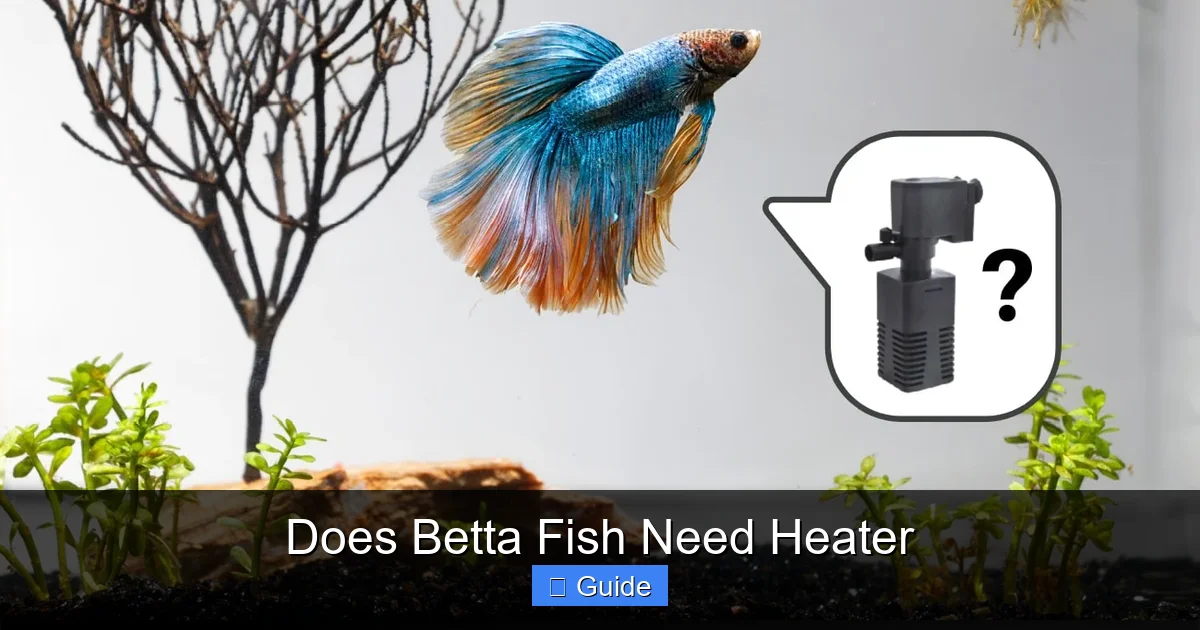
Does Betta Fish Need Heater
Yes, a heater is absolutely essential for a pet betta fish’s long-term health and happiness. Native to the tropical waters of Southeast Asia, bettas require a stable water temperature between 78-80°F (25.5-26.5°C). Without a heater, their metabolism slows, immune system weakens, colors fade, and they become susceptible to deadly diseases like fin rot. Room temperature is almost never sufficient or consistent enough. A small, reliable aquarium heater is not optional—it’s a fundamental piece of equipment for responsible betta ownership.
You’ve probably seen them. Those beautiful, flowing-finned betta fish in tiny cups or bowls at the pet store, seemingly content without any equipment. It’s a powerful image that has led to one of the most persistent and harmful myths in the aquarium hobby: that betta fish are low-maintenance pets that can thrive in a small vase at room temperature. This myth has sentenced countless bettas to slow, stressful lives. The truth, backed by their biology and natural history, is crystal clear: if you are asking “does betta fish need heater,” the definitive answer is yes. A reliable aquarium heater is not a luxury for a betta; it is a fundamental requirement for its welfare. This guide will dismantle the misconceptions, explain the critical science behind temperature, and provide you with the practical knowledge to give your betta the warm, stable home it deserves.
Key Takeaways
- Betta fish are tropical fish: Their natural habitat in Thailand’s warm, shallow waters dictates their need for consistently warm water between 78-80°F (25.5-26.5°C).
- Temperature directly controls metabolism: Cold water slows their bodily functions, leading to lethargy, poor digestion, constipation, and a severely weakened immune system.
- Stability is as important as the temperature itself: Fluctuations of more than 1-2 degrees cause immense stress, making heaters with thermostats crucial, not just heat-only pads.
- Signs of a cold betta are clear: Look for lethargy, clamped fins, loss of appetite, faded colors, and hiding. These are cries for help, not just a “calm” personality.
- The “heaterless betta” myth is dangerous: While a betta might survive for weeks or months without a heater in a warm room, it is living in chronic stress and will have a shortened, unhealthy life.
- Choosing the right heater matters: For a standard 5-gallon betta tank, a 25-50 watt adjustable submersible heater with a guard is the safest, most reliable choice.
- Proper setup prevents accidents: Always use a thermometer to verify temperature, fully submerge the heater, and acclimate the fish to the new temperature slowly to avoid thermal shock.
📑 Table of Contents
- The Tropical Truth: Understanding the Betta’s Natural Habitat
- The Domino Effect: How Cold Water Sabotages Betta Health
- Choosing the Right Heater: A Buyer’s Guide for Betta Keepers
- Proper Setup and Maintenance: Ensuring Your Heater Works Correctly
- Debunking the Myths: “But My Betta Survived Without One!”
- Special Considerations and Troubleshooting
The Tropical Truth: Understanding the Betta’s Natural Habitat
To understand why a heater is non-negotiable, we must first travel to the betta’s (Betta splendens) native home: the tropical floodplains, shallow rice paddies, and slow-moving streams of central Thailand. These are not chilly environments. They are warm, humid, and bathed in the relentless sun of Southeast Asia. Water temperatures in these habitats consistently sit between 75°F and 85°F (24°C and 29°C), with little daily or seasonal variation in the shallow, sun-heated pools where they live.
This is the environmental blueprint hardwired into the betta’s physiology. Over millennia, they evolved as tropical fish. Their enzymes, metabolic processes, immune function, and even the vibrant pigments in their fins are all optimized to operate at a specific, warm temperature range. When we remove them from this environment and place them in a glass box in a climate-controlled home, we become responsible for replicating those key parameters. The single most important parameter we control is temperature. A betta in a tank without a heater is living in a perpetual state of environmental mismatch, a constant low-grade stressor that compromises every aspect of its health.
It’s Not Just About “Warmth”: The Critical Role of Stability
Many people think, “My house is 72°F, that’s warm enough.” This thinking misses two crucial points. First, 72°F is often too cold for a betta’s optimal function. Second, and more importantly, it ignores the principle of stability. In their natural habitat, the water temperature changes very slowly. The shallow water heats evenly during the day and cools gradually at night. In our homes, the temperature can swing dramatically. Air conditioning kicks on at night, heating systems cycle during the day, and a draft from a window or door can cause a rapid drop in tank water temperature.
These fluctuations are a major source of stress. A betta’s body is not designed to constantly adjust its internal chemistry to a shifting external temperature. Chronic stress from temperature swings suppresses the immune system, making the fish vulnerable to opportunistic pathogens like Aeromonas and Pseudomonas bacteria, which cause fin rot and dropsy. A quality heater with a built-in thermostat doesn’t just add heat; it maintains a rock-solid, consistent temperature within 1 degree of the set point, mimicking the stable conditions of the betta’s wild home. This stability is arguably as important as the actual temperature number itself.
The Domino Effect: How Cold Water Sabotages Betta Health
So what exactly happens inside a betta when the water is too cold? It’s a cascade of failures across multiple bodily systems. Understanding this chain reaction makes it clear why a heater is an act of preventative medicine.
Visual guide about Does Betta Fish Need Heater
Image source: fishkeepingguide.net
Slowed Metabolism and Digestive Chaos
As an ectotherm (cold-blooded animal), a betta’s metabolic rate is directly tied to its surrounding water temperature. In cold water, everything slows down. Digestion grinds to a halt. Food sits in the digestive tract for too long, leading to constipation, bloating, and a condition known as “Swim Bladder Disorder” (SBD), where the fish struggles to maintain buoyancy and may float upside down or sink to the bottom. A constipated betta is a miserable betta. Furthermore, a slowed metabolism means less energy for basic functions, swimming, and interacting with its environment. Your once-active, curious betta becomes a listless, bottom-dwelling statue.
Immune System Collapse and Disease Susceptibility
The immune system is incredibly energy-intensive. When the temperature drops, the body diverts energy away from immune surveillance to maintain core functions. This creates a window of vulnerability. Harmful bacteria and parasites that are always present in the aquarium (often at low, harmless levels) can now proliferate unchecked. The classic diseases of a cold-stressed betta are fin rot (frayed, decaying fins), velvet (a gold-dust-like parasite), and ich (white spots). These are not “just” cosmetic issues; they are systemic infections that, in a stressed fish, can become fatal very quickly. You are essentially disarming your betta’s internal defense system by keeping it cold.
Faded Colors and Lethargy: The Visible Signs
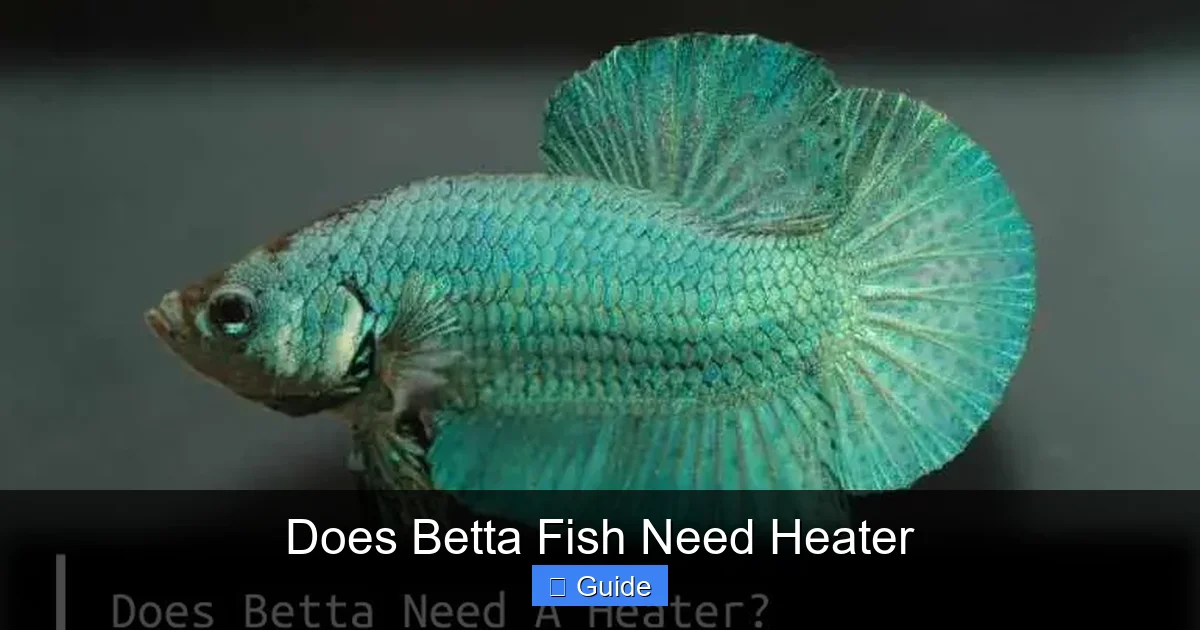
Betta fish are famous for their spectacular colors. Those brilliant reds, blues, and iridescent hues are produced by pigment cells called chromatophores. These cells are sensitive to temperature and overall health. In cold water, blood flow to the skin and fins decreases, and the fish’s overall stress response can cause chromatophores to contract or become less active. The result is a noticeable dulling, fading, or “washing out” of color. The vibrant fish you brought home can look muted and gray. Coupled with lethargy—spending all day motionless at the bottom or top of the tank, clamped fins (held tightly against the body instead of flowing), and a refusal to eat—these are the classic, unmistakable visual cues that your betta is suffering from the cold. It is not “just sleeping”; it is suffering from hypothermia.
Choosing the Right Heater: A Buyer’s Guide for Betta Keepers
Not all heaters are created equal. For a betta tank, safety, reliability, and precision are paramount. A cheap, faulty heater can be as dangerous as no heater at all, causing lethal temperature spikes or failing entirely. Here’s what to look for.
Visual guide about Does Betta Fish Need Heater
Image source: aquariumnexus.com
Type: Submersible vs. Immersible (Hang-On-Tank)
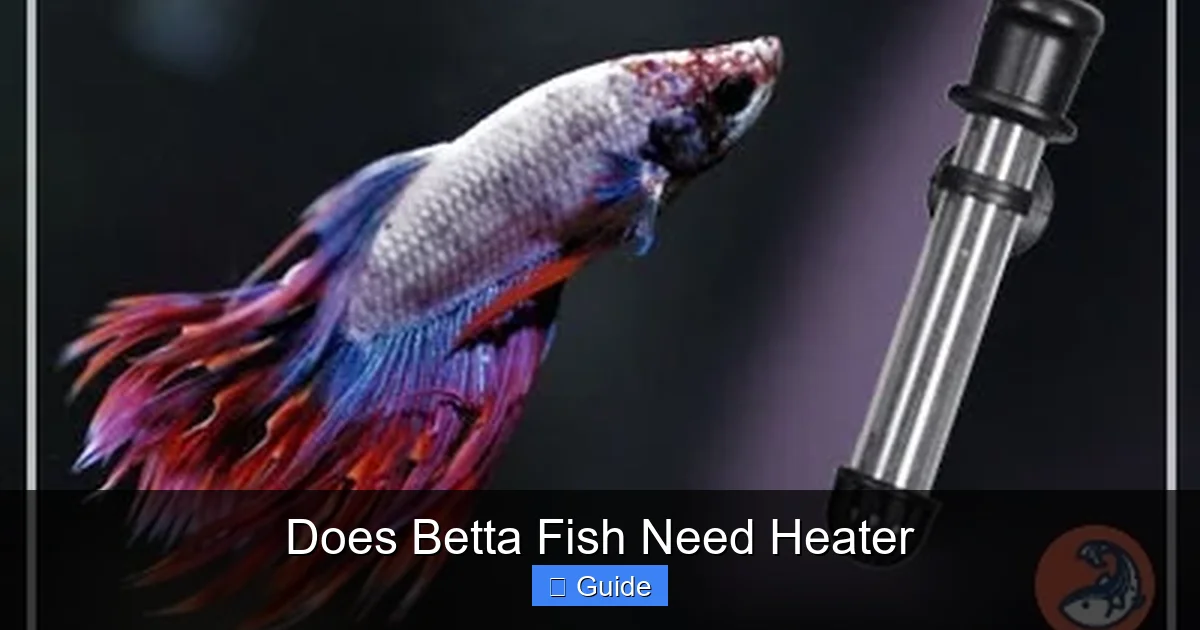
For a betta tank, a fully submersible heater is the gold standard. It sits completely underwater, usually near the filter output to ensure even heat distribution. They are more efficient and less prone to “dry-fire” (burning out if accidentally run out of water) than older immersible (hang-on-tank) models. Avoid preset heaters that cannot be adjusted; your tank’s ambient temperature and volume require precise calibration.
Sizing and Wattage: The 5-Watt Per Gallon Rule (With a Caveat)
A common rule is 5 watts of heating power per gallon of water. For a standard 5-gallon betta tank, this points to a 25-watt heater. However, this is a general guideline. Consider your ambient room temperature. If your home is consistently cool (below 70°F), you may need a slightly more powerful heater (e.g., 50 watts for a 5-gallon tank) to overcome the heat loss. Conversely, in a very warm room, a smaller heater might suffice. The key is a heater with an adjustable thermostat that you can set to your target 78-80°F and let it do its job without constant, maxed-out effort.
Essential Safety Features: Guards and Auto-Shutoff
Betta fish have long, flowing fins. A heater element that is exposed can cause severe burns if a curious betta brushes against it. Therefore, a heater guard (a plastic cage around the heating element) is a mandatory safety feature. Do not purchase a heater without one. Additionally, look for heaters with an “auto-shutoff” or “thermal cutout” feature. This is a secondary safety mechanism that completely powers down the heater if it somehow exceeds a safe internal temperature, preventing a potential fire or tank boil-over.
Recommended Brands and Models
Stick with reputable aquarium brands known for reliability and accuracy. Models like the Eheim Jager, Fluval Submersible, and Aqueon Pro are industry standards for a reason. They have precise thermostats, durable construction, and essential safety features. Read recent reviews to check for any widespread model-specific issues. Investing in a $25-$40 quality heater is a one-time cost that protects a $10-$50 fish and provides years of trouble-free service.
Proper Setup and Maintenance: Ensuring Your Heater Works Correctly
Buying the right heater is only half the battle. Incorrect installation and neglect can render it useless or dangerous.
Visual guide about Does Betta Fish Need Heater
Image source: thewittyfish.com
The Critical First Step: The Thermometer
Never, ever trust the built-in thermostat of a heater without verification. You must have an independent, accurate aquarium thermometer. A simple, reliable glass stick-on thermometer or a digital probe thermometer is essential. Place it on the opposite side of the tank from the heater to get a true average water temperature reading. Use it to set your heater’s dial. Set it to 78°F, wait 4-6 hours, and check the thermometer. Adjust as needed. Your goal is a stable reading between 78-80°F, verified by your separate thermometer.
Placement and Submersion
Position the heater near a water current, like the output of your filter. This helps distribute the heat evenly throughout the tank, preventing hot spots. Ensure the heater is fully submerged according to the manufacturer’s instructions. Most have a minimum water line indicator. Running a heater out of the water is a surefire way to destroy it and creates a major fire risk. Also, ensure there is enough clearance around the heater for water circulation; don’t bury it in sand or wedged tightly into decorations.
The Acclimation Process: Avoid Thermal Shock
When you first introduce your betta to the heated tank, or if you’re adjusting the temperature, you must do so gradually. A sudden temperature change of more than 2-3 degrees can cause thermal shock, damaging the fish’s internal organs. If your betta is coming from a cooler store cup, float its bag or cup in the heated tank for 15-20 minutes to equalize temperature, then slowly add small amounts of tank water to the bag over another 15 minutes before releasing the fish. When setting a new heater, adjust the thermostat by no more than 1 degree per hour until you reach your target.
Monthly Checks and Long-Term Care
Make heater checks part of your monthly tank maintenance routine. Visually inspect for any cracks in the glass tube or damage to the cord. Verify the temperature with your thermometer. Clean any algae or mineral deposits from the heater’s surface (unplug it first!) with a vinegar solution if needed, as buildup can insulate the element and cause overheating. A good heater will last for years, but they are not indestructible. Have a backup plan (like a small battery-powered air pump for oxygenation during a power outage) and be prepared to replace it if it shows any signs of malfunction.
Debunking the Myths: “But My Betta Survived Without One!”
This is the most common and frustrating objection. “I had a betta in a unheated bowl for a year and it was fine!” Let’s unpack this.
The Difference Between “Surviving” and “Thriving”
Survival is not the same as thriving. A betta kept at 70°F might survive for months or even a year. But during that entire time, its immune system is operating at a fraction of its capacity. It is living in a state of chronic, low-grade stress. Its growth is stunted, its colors are muted, it is more prone to disease from any minor water quality issue, and its overall lifespan is significantly shortened. You are not seeing a healthy betta; you are seeing a betta enduring a suboptimal existence. The goal of pet ownership is to allow an animal to thrive, express natural behaviors, and live a full, healthy life. A heater is the primary tool to achieve that for a betta.
The “Warm Room” Fallacy
Human comfort temperatures (68-72°F) are not tropical fish temperatures. Furthermore, room temperature is not constant. It drops at night when the thermostat goes down. It varies from room to room. It is not a reliable, stable heat source. Relying on ambient room temperature is essentially gambling with your betta’s health, subjecting it to daily temperature swings it cannot tolerate. A heater provides the consistency that a room never can.
Historical Context vs. Modern Knowledge
The “betta in a vase” image comes from a time when the understanding of fish welfare was extremely limited. It was a marketing gimmick, not a husbandry recommendation. Just as we now know that goldfish need massive tanks, not bowls, we now know that bettas need heated, filtered, appropriately-sized tanks. Clinging to outdated, cruel practices in the name of “it worked before” is not an argument; it’s a refusal to advance our knowledge and improve animal welfare. Modern aquarium science is clear: tropical fish need tropical temperatures.
Special Considerations and Troubleshooting
There are a few specific scenarios betta owners often ask about regarding heating.
Small Tanks and “Nano” Setups
For tanks under 2.5 gallons, finding a small, safe heater can be challenging. However, the need for heat does not diminish with tank size. A 1-gallon tank will lose heat even faster than a 5-gallon tank due to its higher surface-area-to-volume ratio. Look for heaters specifically designed for “nano” tanks or small desktop aquariums (often 25-50 watt models with a small profile). The same rules apply: fully submersible, with a guard, and used with a separate thermometer. A 2.5-5 gallon tank is the absolute minimum recommended size for a betta, and it makes heating and maintaining stable water parameters much easier.
Power Outages and Emergency Heating
In colder climates, a winter power outage can be an emergency for a tropical tank. Have a plan. For short outages (a few hours), a well-insulated tank (with blankets or styrofoam) can retain heat. For longer outages, battery-powered air pumps can help with gas exchange, but they do not provide heat. Some aquarists use chemical hand warmers (like HotHands) wrapped in a plastic bag and floated in the tank as a temporary emergency heat source, but this is a last resort and must be monitored carefully. The best defense is a reliable home power supply or a small generator for prolonged outages in very cold regions.
Combining Heaters and Filters
Some internal filters come with a built-in heater (a “heater-filter combo”). These can be space-saving but have significant drawbacks. The heater element is often not as powerful or precise as a dedicated heater. More importantly, if the filter fails or is cleaned, the heating function is compromised. They also make it harder to position the heater optimally for circulation. For a betta tank, a separate, dedicated heater is always the superior choice for reliability, control, and safety.
Frequently Asked Questions
Can a betta fish live without a heater?
It might survive for a period in a very warm room, but it will be in chronic stress, with a weakened immune system, faded colors, and a shortened lifespan. Long-term health and thriving absolutely require a heater to maintain 78-80°F.
What is the ideal water temperature for a betta fish?
The ideal and safe range is 78-80°F (25.5-26.5°C). This temperature optimizes their metabolism, immune function, and color vibrancy. Temperatures above 82°F for extended periods can also cause stress and oxygen depletion.
What size heater do I need for my betta tank?
For a standard 5-gallon betta tank, a 25-50 watt fully submersible, adjustable heater with a guard is ideal. The exact wattage depends on your room temperature; cooler rooms may require the higher wattage to maintain temperature efficiently.
Are betta tank heaters safe?
Modern, quality heaters from reputable brands are very safe when used correctly. Always choose a heater with a guard to prevent fin burns, ensure it is fully submerged, use a separate thermometer to verify temperature, and perform regular maintenance checks.
What are the signs my betta is too cold?
Key signs include lethargy (staying at the bottom or top), clamped fins (held tightly), loss of appetite, faded or dull colors, and frequent hiding. These are not just personality traits; they are clear indicators of thermal stress.
Can I use a heat mat or pad instead of a heater?
No. Heat mats are designed for reptile terrariums and are unsafe for aquariums. They can cause dangerous hot spots, crack glass tanks, and provide uneven, uncontrollable heating. Only an aquarium-specific submersible heater should be used in water.