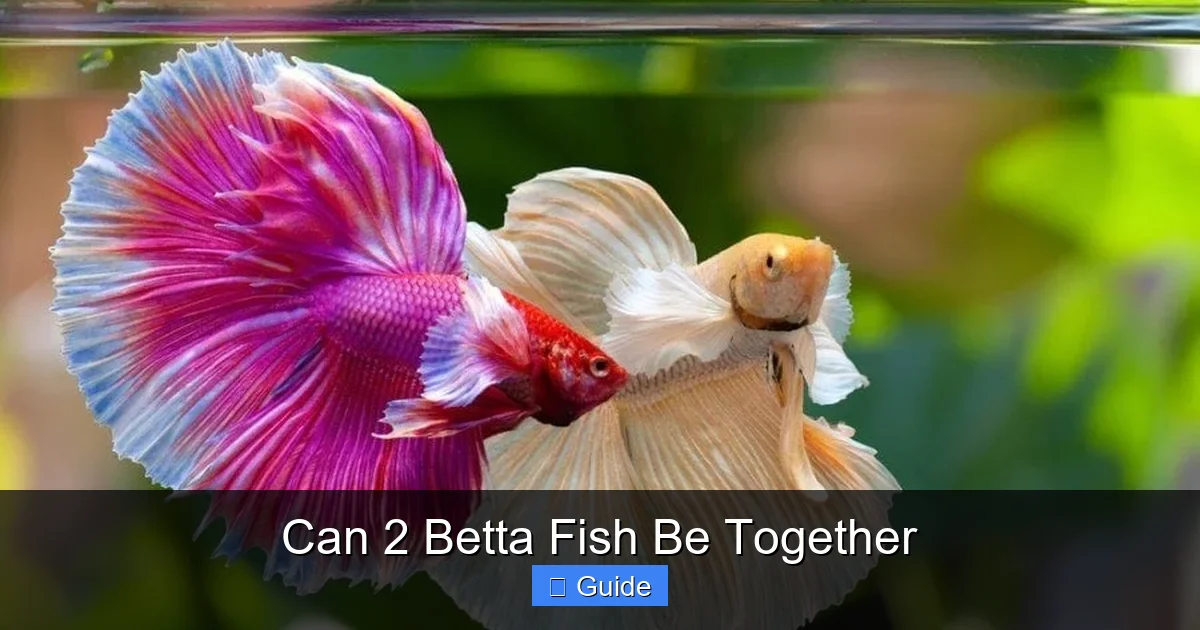
Can 2 Betta Fish Be Together
Betta fish, especially males, are famously solitary and aggressive due to their fighting heritage. Keeping two male bettas together is almost always a recipe for injury or death. Female bettas *can* sometimes be housed in carefully managed groups called sororities, but this requires a large, heavily planted tank and constant monitoring. For most betta owners, providing a species-only tank with optimal conditions is the safest and kindest choice.
So you’ve got that stunning, flowing-finned betta fish, the jewel of your living room aquarium. He (or she) mesmerizes you with their graceful glides and vibrant colors. And then, a thought creeps in: “He looks a little lonely. Should I get him a friend?” It’s a natural, compassionate question. The answer, however, is one of the most debated and misunderstood topics in the fish-keeping world. The short, blunt answer for male betta fish is almost always a hard no. For females, it’s a cautious, highly conditional maybe. Let’s dive deep into the complex, fascinating, and often brutal reality of the question: Can 2 Betta Fish Be Together?
To understand betta behavior, we must first understand their history. The betta splendens we keep as pets is a descendant of the wild betta, a relatively peaceful surface-dweller from the shallow, slow-moving waters of Thailand’s rice paddies. Centuries of selective breeding for combat—a practice once as common as cockfighting—drastically altered their temperament. Modern bettas, particularly the flashy males with their enormous fins, are genetically wired for territorial aggression. This isn’t a matter of training or personality in the way we think of a dog; it’s a primal instinct. When another male enters what they perceive as their territory, the fight response is immediate and often fatal. So, when we ask can 2 betta fish be together, we’re primarily asking if we can override thousands of years of instinct. The answer for males is that we cannot, and we shouldn’t try.
Key Takeaways
- Male Betta Aggression is Instinctual: Two male bettas (Siamese fighting fish) will almost certainly fight to the death due to centuries of selective breeding for aggression. They must be kept alone.
- Female Sororities Are Possible but Complex: A group of 4-6 female bettas *can* coexist in a large, densely planted tank (minimum 40+ gallons) to disperse aggression, but it requires expert-level setup and observation.
- Tank Size is Non-Negotiable: For any multi-betta attempt, the rule is “bigger is better.” A sorority needs a tank of at least 40 gallons, often 55+, with dimensions that provide ample horizontal swimming space and visual barriers.
- Hiding Spots and Territory are Essential: Heavy planting (live or silk), driftwood, rock caves, and floating plants are critical to break lines of sight and allow subordinate fish to escape a dominant betta’s attention.
- Constant Monitoring is Required: Even in a perfect setup, betta personalities vary. Owners must watch for signs of bullying (torn fins, hiding, loss of appetite) and be prepared to separate fish immediately.
- Most Bettas Prefer Solitude: The vast majority of bettas, regardless of gender, are happier and healthier as the sole fish in their tank, reducing stress and the risk of disease.
- Alternative Tank Mates are Often a Better Choice: If you want a community tank, choose peaceful, fast-moving, non-flashy fish from cooler water regions that won’t nip at a betta’s long fins.
📑 Table of Contents
The Unyielding Reality of Male Betta Aggression
Let’s address the most common scenario head-on. You have a beautiful male betta. You think, “Maybe if the tank is huge, he won’t notice another one.” Or, “I saw a video online of two males in a divided tank.” This is where wishful thinking meets harsh biological truth. Male bettas are not just territorial; they are obsessed with defending their space from any perceived rival, especially another male with similar colors and flowing fins.
The “Fight or Flight” That’s Only “Fight”
In the wild, a betta’s aggression is a resource-guarding mechanism. They defend a small patch of vegetation, a bubble nest, or a food source. In the confines of an aquarium, the entire tank becomes that resource. The moment a second male is introduced, the betta’s entire biology shifts. Flaring (gilling out their opercula and spreading their fins to look larger) is the first warning. If the intruder doesn’t retreat, this escalates to biting, fin-nipping, and full-scale combat. These fights can last for hours, with fish locking jaws and tearing flesh. Injuries are severe: fins are shredded, scales are lost, and internal damage is common. Death from stress or infection following a fight is the typical outcome. There is no “alpha” that submits and then they become friends. The goal is elimination. This is why the definitive answer to can 2 male betta fish be together is a resounding no. The risk is 100% and the consequence is often fatal.
The Divided Tank: A False Sense of Security
Many aquarists attempt a “divided tank,” using a solid divider (not mesh, which allows fin-nipping through the holes) to separate two males in one aquarium. While this prevents physical contact, it does not eliminate stress. The bettas will constantly see each other as a threat through the divider. This leads to chronic stress—flaring 24/7, loss of color, loss of appetite, and a suppressed immune system. A stressed betta is a sick betta, prone to diseases like fin rot or ich. The divider creates a permanent state of psychological warfare. It is not a humane or healthy long-term solution. If you want two male bettas, they require two separate, cycled, fully equipped tanks. Period.
The Nuanced World of Female Betta Sororities
If male bettas are the lone wolves of the fish world, female bettas are… complicated. They can exhibit aggression, but it’s often less lethal and more about establishing a pecking order. This opens the door to the concept of the betta sorority—a group of female bettas living together. However, “can be together” does not mean “should be together casually.” A successful sorority is a sophisticated, high-maintenance project that is the opposite of a beginner setup.
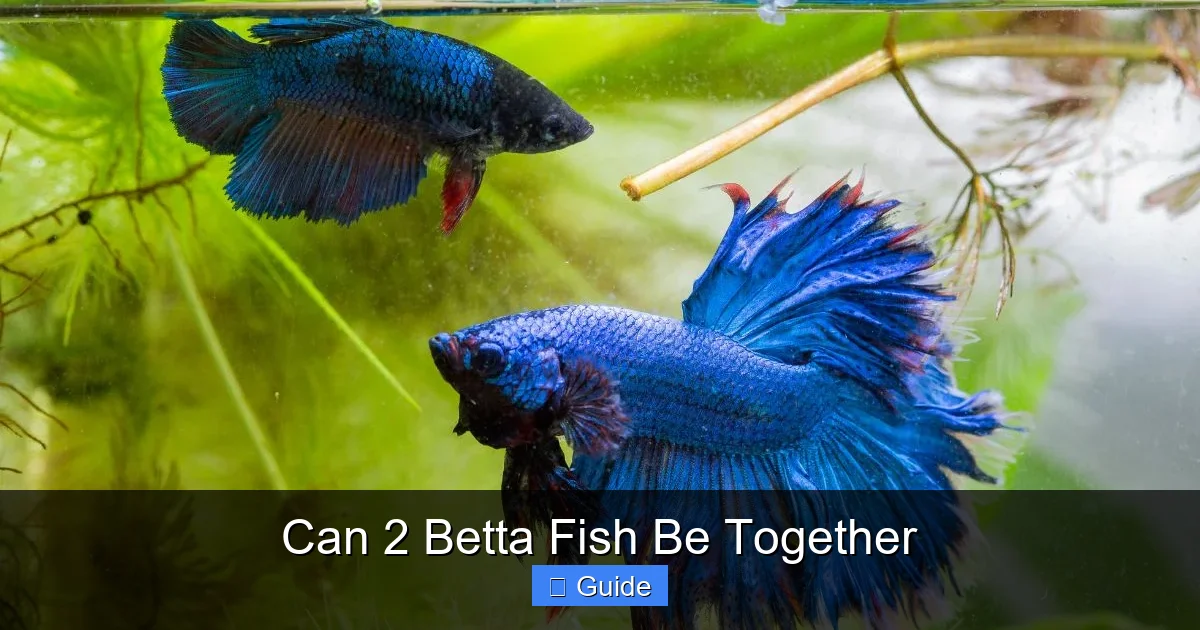
Visual guide about Can 2 Betta Fish Be Together
Image source: housedpet.com
Why a Sorority is Not a Simple “Yes”
The key to a sorority is numbers and space. In a small tank, a dominant female will relentlessly bully a single subordinate, leading to stress and death. In a very large tank with a proper group size, aggression is dispersed. The theory is that with 4-6 females, any one fish isn’t the sole target. The hierarchy forms quickly (often within 24-48 hours of introduction), and once established, it stabilizes. But this requires immense space. The absolute minimum tank size for a sorority is 40 gallons, and many experienced keepers recommend 55 gallons or more. Why? To provide enough horizontal territory and visual barriers so a bullied fish can genuinely get away. A 10-gallon tank with three females is a guaranteed disaster.
The Critical Elements of a Successful Sorority Setup
If you are an experienced aquarist considering this challenge, your setup must be impeccable. First, tank size and dimensions: A long, wide tank (like a 40-gallon breeder) is far superior to a tall, narrow one. Bettas are surface-oriented and need horizontal room. Second, heavy planting is non-negotiable. You must create a dense jungle. Use live plants like Java fern, Anubias, Amazon swords, and floating plants like frogbit or duckweed. Silk plants are an acceptable alternative. The goal is to break every line of sight. There should be no clear swimming lane from one end of the tank to the other. Third, hardscaping for hides. Driftwood, rock caves, and PVC tubes provide instant bolt-holes. Fourth, all-female sorority. Never, ever mix males and females long-term. Breeding is a temporary, supervised event, not cohabitation. Finally, simultaneous introduction. All sorority members should be added to the freshly set-up, empty tank at the same time. Introducing a new female to an established group is a death sentence for the newcomer.
The Ideal Betta Tank: A Species-Only Paradise
For 99% of betta owners, the answer to can 2 betta fish be together is no. This is excellent news! It means your focus can be on creating the single best possible environment for your one betta. A betta kept alone in a properly sized, heated, filtered, and decorated tank will live 3-5 years, often more, displaying its full personality and vibrant colors. It will learn to recognize you, perform for food, and explore its domain without the constant stress of a rival.
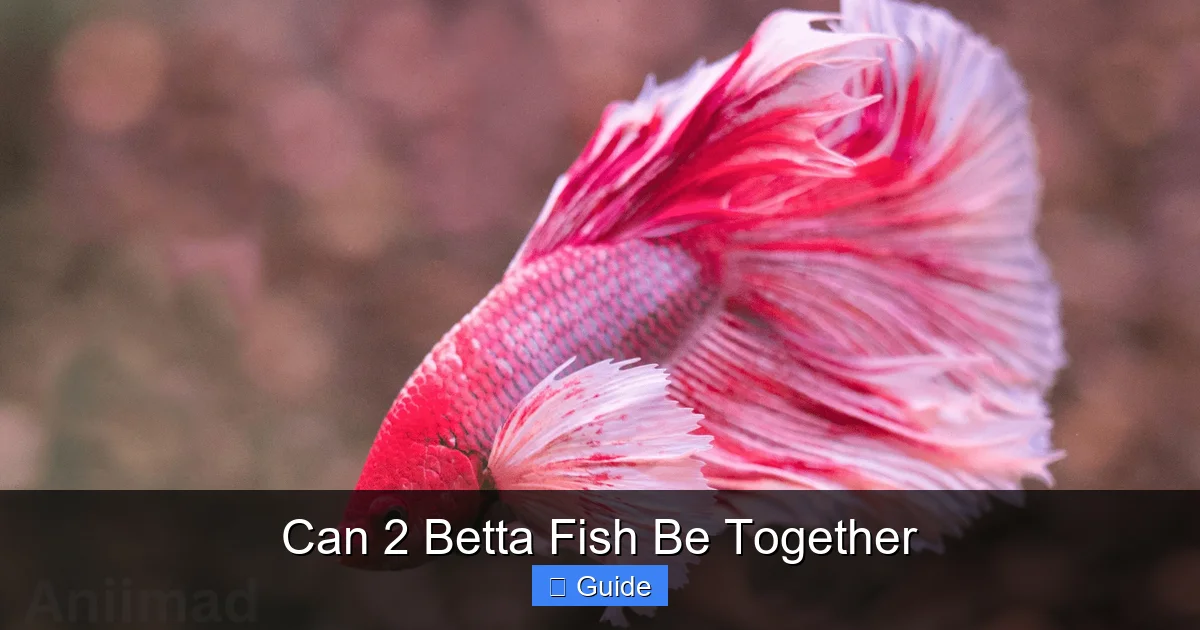
Visual guide about Can 2 Betta Fish Be Together
Image source: aniimad.com
Tank Size and Water Parameters: The Foundation
Ditch the tiny vase or bowl. A single betta deserves a minimum of a 5-gallon tank, but 10 gallons is the true starting point for a happy, healthy fish. This provides stable water parameters (ammonia, nitrite, nitrate) and room to swim. A filter is essential—choose a gentle flow or baffle the intake/output to protect those delicate fins. A heater is non-negotiable; bettas are tropical fish requiring a stable 78-80°F (25.5-26.5°C). A secure lid is also crucial; they are infamous jumpers. Cycle the tank fully before adding your betta to establish beneficial bacteria that process waste.
Decor: More Than Just Pretty
Decor in a betta tank serves three purposes: aesthetic, enrichment, and security. Provide a variety of hiding spots: caves, dense plant clusters, and the underside of broad leaves (like a betta leaf hammock, which they often use for resting near the surface—they are labyrinth fish that gulp air). Use a soft, fine-grained substrate like sand or smooth gravel to protect their fins. Avoid sharp edges on decorations. Floating plants arefantastic; they reduce stress by providing cover from above, mimicking their natural habitat, and are often used for bubble-nesting males. The goal is to make your betta feel like the king (or queen) of a vast, complex, and safe kingdom.
Can Bettas Have Other Fish as Tank Mates?
This is the other side of the can 2 betta fish be together coin. If not another betta, can they have other fish? The answer is yes, but with extreme caution and strict criteria. A betta’s tank mates must be:
- Peaceful and Non-Territorial: No other fish that will claim the top of the tank or nip fins.
- Fast and Nimble: To dart away if the betta gets curious or aggressive.
- Prefers Cooler Water: Many good candidates are from temperate zones (78°F is warm for them, but tolerable).
- Dull-Colored with Short Fins: Bright reds or blues and long, flowing fins (like guppies or fancy tail guppies) are seen as rivals and will be attacked.
Potential Tank Mate Candidates
Excellent choices include small schools of neon tetras (in a 10+ gallon tank), harlequin rasboras, ember tetras, and certain types of Corydoras catfish (like pygmy or habrosus corys, which stay small and are bottom feeders). Kuhli loaches are also great, being eel-like and nocturnal. Always add the betta to a fully cycled, established community tank last, and have a backup plan (a separate hospital tank) to remove any fish that are being bullied or is bullying the betta. Observe for 24-48 hours after introduction. Never house a betta with fish that have similar body shapes or long, flowing fins. This is not a guarantee of peace, but a careful selection process.
Common Mistakes and Deadly Misconceptions
The aquarium world is full of well-meaning but dangerous myths that directly answer can 2 betta fish be together with a reckless “yes.” Let’s debunk them.
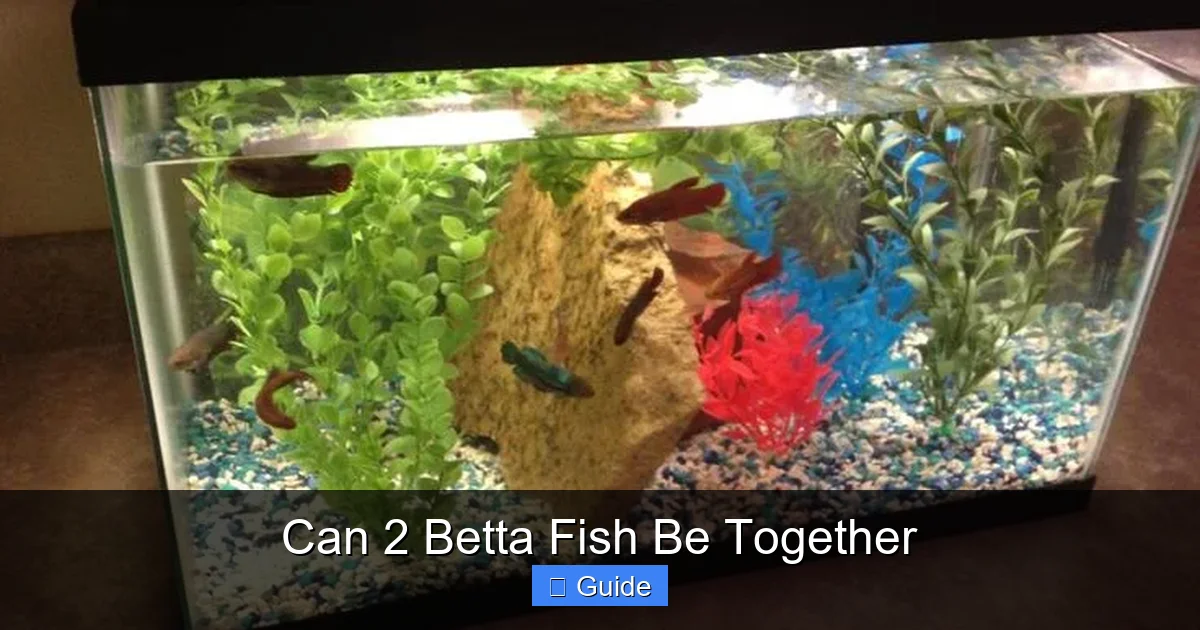
Visual guide about Can 2 Betta Fish Be Together
Image source: i.pinimg.com
“They Just Need to Get Used to Each Other”
This is perhaps the most dangerous myth. “Acclimating” bettas by placing them in jars side-by-side before introduction does not reduce aggression; it heightens it. It teaches them to associate the other’s presence with a territorial threat. The mirror test (placing a mirror to see a betta flare) is a stress test, not a training exercise. You cannot “train” away this instinct. You can only manage it by removing the trigger—the other betta.
“My Two Males Were Fine for a Week!”
This is a classic. The owner sees no immediate fighting and thinks they’ve succeeded. What’s happening is a tense, silent standoff. The dominant betta is asserting control through constant flaring and chasing from a distance, causing immense chronic stress to the subordinate. The subordinate will hide, eat less, and its immune system will crash. Within weeks, it will likely succumb to disease like fin rot or dropsy. The “peace” is an illusion of subjugation, not harmony.
“She’s a Female, So She’s Not Aggressive”
Female bettas can and do flare and fight. While they may not fight to the death as quickly as males, they will bully, nip fins, and stress each other to the point of death in an undersized tank. A single female betta in a sorority can become a tyrant. Their aggression is real and must be respected with the same rigorous tank requirements as for males.
Conclusion: The Kindest Choice is Often the Loneliest
So, after all this, what is the final answer to can 2 betta fish be together? For the beloved, flamboyant male betta, the answer is a definitive, protective no. His genetics and history make cohabitation with his own kind an act of cruelty, not companionship. For females, the answer is a qualified, expert-level only under perfect, large-scale conditions. For the vast majority of hobbyists, this means your betta should be the sole finned resident of his or her aquarium.
This is not a failure of your ability to provide friendship; it is a success in providing appropriate, species-specific care. By giving your betta a spacious, clean, decorated, and solitary tank, you are honoring its nature. You are allowing it to live without the constant, hair-trigger stress of territorial warfare. You will see its true personality—its curiosity, its laziness, its playful begging for food—unclouded by fear and adrenaline. You are not depriving it of a friend; you are freeing it from a lifelong enemy. In the world of bettas, solitude is not loneliness; it is peace. And that is the greatest gift you can give your aquatic companion.
Frequently Asked Questions
Can I keep a male and female betta together?
No, not long-term. Males and females will fight, and the male may see the female as an intruder or attempt to breed constantly, causing severe stress. They should only be together briefly for controlled breeding under expert supervision, then separated immediately.
What is the minimum tank size for a female betta sorority?
The absolute minimum is a 40-gallon tank, with 55 gallons or more being strongly recommended. This provides enough space and horizontal territory to disperse aggression and allow subordinate fish to establish their own spaces away from dominants.
Can I keep my betta with other fish like guppies or neon tetras?
It depends. Bettas may attack guppies because of their bright colors and long fins (which look like rival males). They can sometimes coexist with small, fast, peaceful schooling fish like neon tetras or harlequin rasboras in a tank of 10+ gallons, but there are no guarantees. Always have a backup tank ready to separate any fish that are bullied or bullying.
How can I tell if my bettas are fighting or just flaring?
Flaring is a display (gills out, fins spread) used to intimidate. It can be a warning sign. Fighting involves physical contact: biting, chasing that doesn’t stop, and fin-nipping. Any physical contact that results in torn fins, missing scales, or one fish being constantly chased and hiding is fighting and requires immediate separation.
What are the signs that a betta sorority is failing?
Look for a fish that is consistently hiding and not coming out for food, a fish with torn or shredded fins, a fish that is lethargic and clamped (fins held tightly to the body), or a fish that is being relentlessly chased by others to the point of exhaustion. These indicate unacceptable stress and the need to rehome or separate the affected fish.
My betta seems bored alone. Should I risk a tank mate?
A bored betta is often just a normal betta resting. Enrich its environment instead of risking another fish. Add floating plants, a betta hammock, safe decorations to explore, and vary its diet. A well-stimulated, stress-free solitary betta is far healthier and lives longer than one in a constant state of low-grade conflict with a tank mate.