Can 2 Betta Fish Be in the Same Tank
The short answer is: it’s extremely risky and generally not recommended, especially for male bettas. While female bettas *can* sometimes be kept in a carefully managed “sorority” tank, male bettas are almost always solitary. Success requires a large, heavily planted tank, meticulous planning, and constant monitoring. For 99% of hobbyists, keeping bettas in separate tanks is the only safe and ethical choice to prevent injury, stress, and death.
So you’ve fallen in love with the flowing fins and vibrant personality of the betta fish (Betta splendens). You have a beautiful tank, but maybe you’re thinking, “Wouldn’t it be nice if my betta had a friend?” It’s a common and understandable question. The image of two stunning bettas gliding peacefully together is compelling. But here’s the crucial, often heartbreaking truth: for the vast majority of bettas, living with a conspecific (another betta) is a life of stress, injury, and often a premature death. The phrase “can 2 betta fish be in the same tank” doesn’t have a simple yes or no answer. It exists in a complex, risky gray area defined by biology, environment, and a huge dose of luck. This guide will dive deep into the realities of betta cohabitation, separating myth from fact, and providing you with the knowledge to make a safe, ethical decision for your aquatic pets.
We’ll start with the absolute basics: the betta’s notorious reputation. Then, we’ll explore the two potential scenarios—male pairings (almost always a hard “no”) and female sororities (a delicate “maybe”). We’ll cover the absolute minimum tank requirements, the meticulous setup process, and the relentless monitoring required. Most importantly, we’ll discuss why, for 99% of hobbyists, the only responsible answer to “can 2 betta fish be in the same tank” is to keep them apart, and we’ll provide excellent, stress-free alternatives. Your goal as a keeper is to provide a thriving, peaceful life, not a gladiatorial arena.
Key Takeaways
- Male bettas are virtually always solitary: Their intense territorial aggression makes cohabitation with other males (and often females) a near-certain fight.
- Female betta sororities are possible but advanced: They require a minimum 20+ gallon tank, 5+ females, dense planting, and expert-level observation skills.
- Tank size is non-negotiable: A “community” or sorority tank must be significantly larger than a single betta’s home to establish territories and dilute aggression.
- Aggression can be subtle and fatal: Stress from constant chasing or fin-nipping weakens immune systems, leading to disease and death even without visible injuries.
- Divided tanks are the safest “shared” setup: Using a solid, sealed divider allows visual and chemical separation while sharing filtration and heating.
- Never impulse-pair bettas: Introducing two bettas without weeks of research, tank preparation, and a robust emergency plan is a recipe for disaster.
- Alternative tankmates are species-specific: If a single betta has companions, they must be peaceful, fast, and non-flamboyant (e.g., neon tetras, corydoras) in a properly sized tank.
📑 Table of Contents
- The Betta’s Fierce Biology: Understanding the “Siamese Fighting Fish”
- The “Maybe” Scenario: The Female Betta Sorority
- The “Hard No” Scenario: Male Betta Cohabitation
- The Risks: Why This Isn’t a Gamble You Want to Take
- The Safe, Stress-Free Alternatives to “Can 2 Betta Fish Be in the Same Tank?”
- Step-by-Step: If You Proceed with a Sorority Anyway
- Conclusion: Prioritizing Welfare Over Aesthetics
The Betta’s Fierce Biology: Understanding the “Siamese Fighting Fish”
To understand why cohabitation is so fraught, you must first understand the animal. The betta’s common name, “Siamese Fighting Fish,” isn’t a marketing gimmick; it’s a historical fact. In 19th-century Thailand (formerly Siam), bettas were bred for aggression and pitted in fights much like roosters. While modern ornamental bettas have been selectively bred for color and finnage, that underlying genetic drive for territorial aggression—especially in males—remains powerfully intact.
The Role of Sex: A World of Difference
The single most critical factor is the sex of your betta. Male bettas are the epitome of territorial solitude. They have evolved to guard a small patch of water (a “bubble nest” territory) fiercely from any rival male. This instinct is hardwired. They will flare (expand their gills and fins to appear larger) at their own reflection, a hand in the tank, or another male. Putting two males together, even in a massive tank, is virtually guaranteeing a fight to the death or severe injury. There is no “buddy system” for male bettas.
Female bettas, while still territorial, have a different social structure in the wild. They can form loose groups, or “sororities,” in large, resource-rich environments. This is the *only* scenario where cohabitation has a theoretical basis. However, it’s crucial to understand that this is a product of vast space and abundant hiding spots. A 5-gallon tank is not a vast space. It’s a tiny arena where escape is impossible. Female aggression is also highly variable; some individuals are calm, while others are as fierce as any male. A sorority is not a guaranteed peaceful community; it’s a carefully managed hierarchy that can collapse at any time.
Stress: The Silent Killer
Even if you don’t see a full-blown fight, the mere presence of another betta causes chronic stress. A stressed betta will:
- Have a weakened immune system, succumbing to diseases like fin rot or ich.
- Lose its vibrant color and appetites.
- Hide constantly, never displaying its natural curiosity.
- Build poor-quality bubble nests (for males) or exhibit abnormal behaviors.
This constant state of “fight or flight” is a miserable existence. The goal of fishkeeping is to minimize stress, not introduce a relentless, inescapable source of it. The question isn’t just “will they fight?” but “is this life worth living for them?” Often, the answer is no.
The “Maybe” Scenario: The Female Betta Sorority
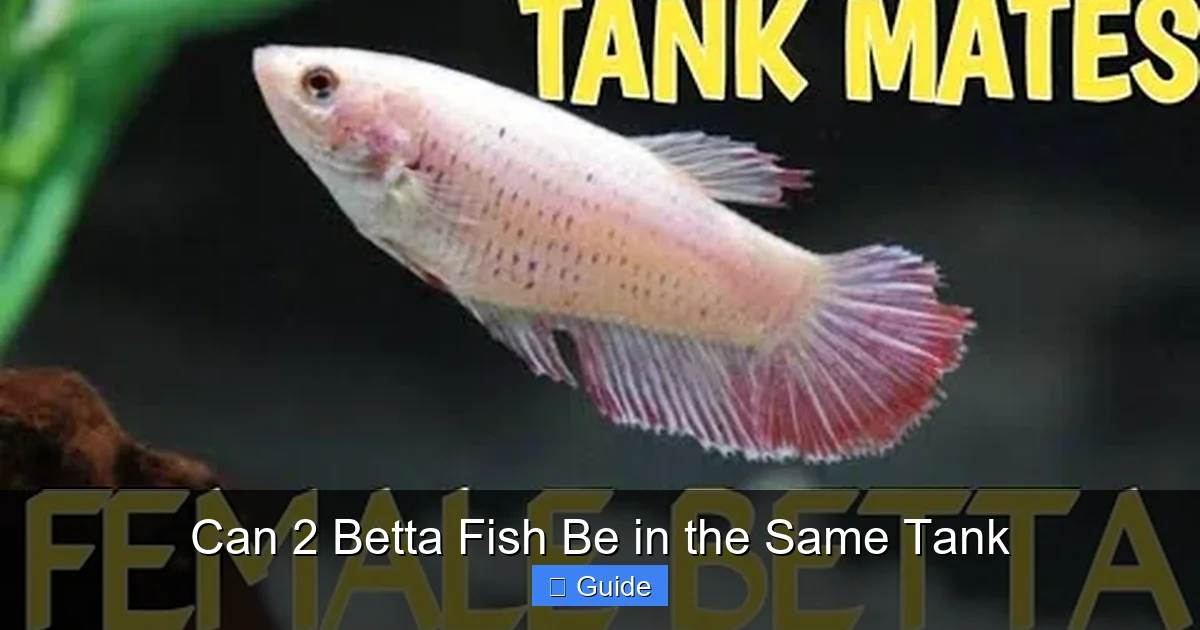
If you are determined to attempt keeping multiple bettas together, the *only* remotely viable path is a female sorority. But you must abandon any notion of keeping just two females. A sorority requires a critical mass to distribute aggression. The recommended minimum is five females. With only two, one will be the permanent, stressed victim of the dominant one. With five or more, aggression is spread across the group, and a pecking order can establish with less severe targeting.
Visual guide about Can 2 Betta Fish Be in the Same Tank
Image source: acaquarium.com
Tank Size: The Absolute, Non-Negotiable Baseline
For a sorority, forget anything under 20 gallons (long or breeder style). A 29-gallon or larger is strongly preferred and dramatically increases success rates. Why so big?
- Territory Dilution: In a large tank, a dominant female can claim one end, and others can find territories elsewhere. In a 10-gallon, there is no “elsewhere.”
- Line of Sight Breaks: You need the ability to place decorations, plants, and wood so that no betta has a continuous, unobstructed view of another. This breaks the constant visual stimulation that triggers flaring and chasing.
- Water Parameter Stability: More water volume means toxins from stress or injury are diluted, and water quality is easier to maintain, which is critical for vulnerable, stressed fish.
Aquascaping for Peace: It’s All About Hiding
The tank must look like a jungle, not an aquarium. Your goal is to eliminate open sightlines. Use:
- Dense, tall plants: Live plants like Cryptocoryne, Amazon Swords, Java Fern, and Anubias attached to driftwood create vertical walls. Fake plants can work if they are extremely bushy.
- Driftwood and rock formations: Create caves, overhangs, and broken lines of sight. Multiple small caves are better than one large one, to prevent a single betta from blocking access.
- Open swimming areas: While you want hiding spots, you also need one or two open areas for the fish to swim. The hiding spots should border these areas.
Imagine a maze where a betta can turn a corner and suddenly find itself face-to-face with another. That’s what you’re trying to prevent.
The Introduction Process: A Delicate Dance
You do not just drop five females in together. The standard, safer method is a “divided introduction.”
- Quarantine: Quarantine all new bettas for at least 2-4 weeks in separate tanks to ensure they are disease-free.
- Acclimate: Float all females in the sorority tank (in their bags or containers) for 15-20 minutes to equalize temperature.
- Divide and Conquer: Use a solid, watertight divider (like a piece of acrylic or a commercial tank divider) to split the large tank into sections. Place one female in each section. Leave them like this for 24-48 hours. They can see each other but not interact physically.
- Remove Dividers One-by-One: After a day or two, remove the divider between the two calmest-looking females. Observe intently for 15-30 minutes. If they flare and chase but don’t make contact, you may leave them. If there is violent chasing, nipping, or locking jaws, re-divide immediately. Wait another day and try a different pair. The goal is to eventually have all five in the main tank together, but this process can take a week or more and may fail. Be prepared to permanently re-divide or re-home a particularly aggressive individual.
The “Hard No” Scenario: Male Betta Cohabitation
Let’s be unequivocally clear: You should never intentionally place two male bettas in the same tank, full stop. There are no exceptions for a “special” tank or “calm” males. The instinct is too strong, and the consequences are too severe.
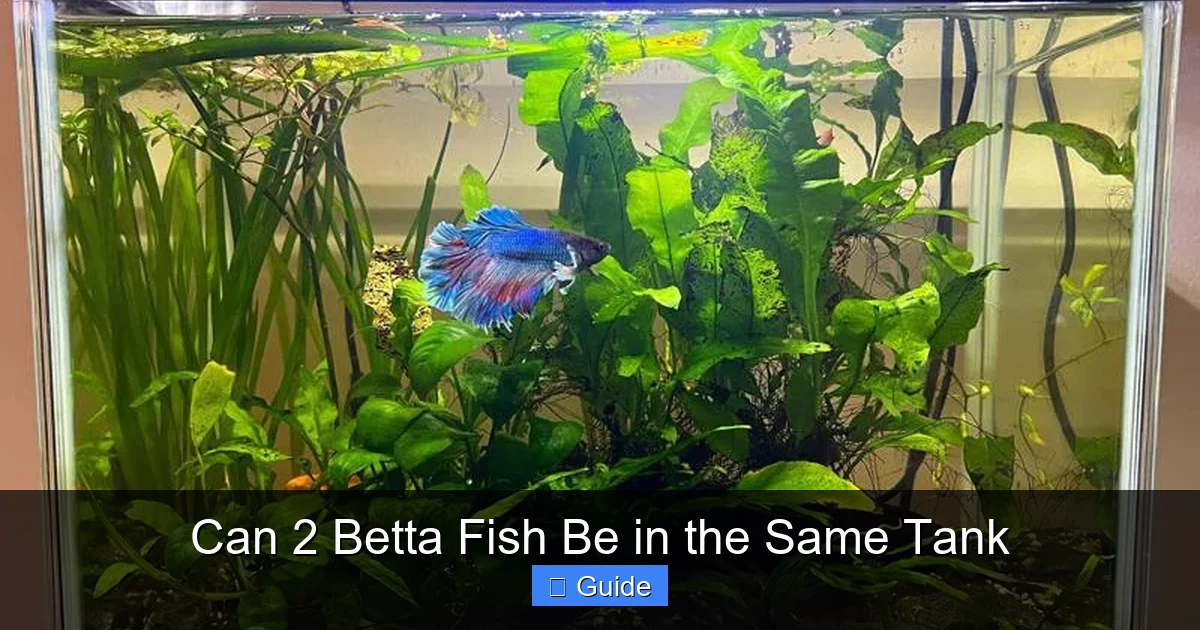
Visual guide about Can 2 Betta Fish Be in the Same Tank
Image source: ouraquariumlife.com
The Myth of the “Community Tank” with a Male Betta
A common misconception is that a male betta can live with other fish. He absolutely can—but only with other species, and only in a properly sized, planted, and decorated tank. The confusion arises because people think “community tank” means “with other bettas.” It does not. A male betta can be a community tank *inhabitant*, but he must be the only betta. Suitable tankmates are small, fast, schooling fish like neon tetras or harlequin rasboras (in a school of 6+), or bottom-dwellers like corydoras catfish or kuhli loaches. These fish occupy different areas of the tank and are not flashy fin-nippers that trigger the betta’s aggression. The tank must still be a minimum of 10 gallons, but preferably 20, to provide enough space for everyone.
What About a Male and a Female?
This is another dangerous myth. The only time a male and female should ever be together is for intentional, supervised breeding in a dedicated, stripped-down tank. Outside of that, the male will see the female as an intruder in his territory and harass her relentlessly. The female, if not ready to spawn, will be stressed and injured. Do not attempt this.
The Risks: Why This Isn’t a Gamble You Want to Take
Even with a female sorority, you are managing risk. The potential outcomes are severe:
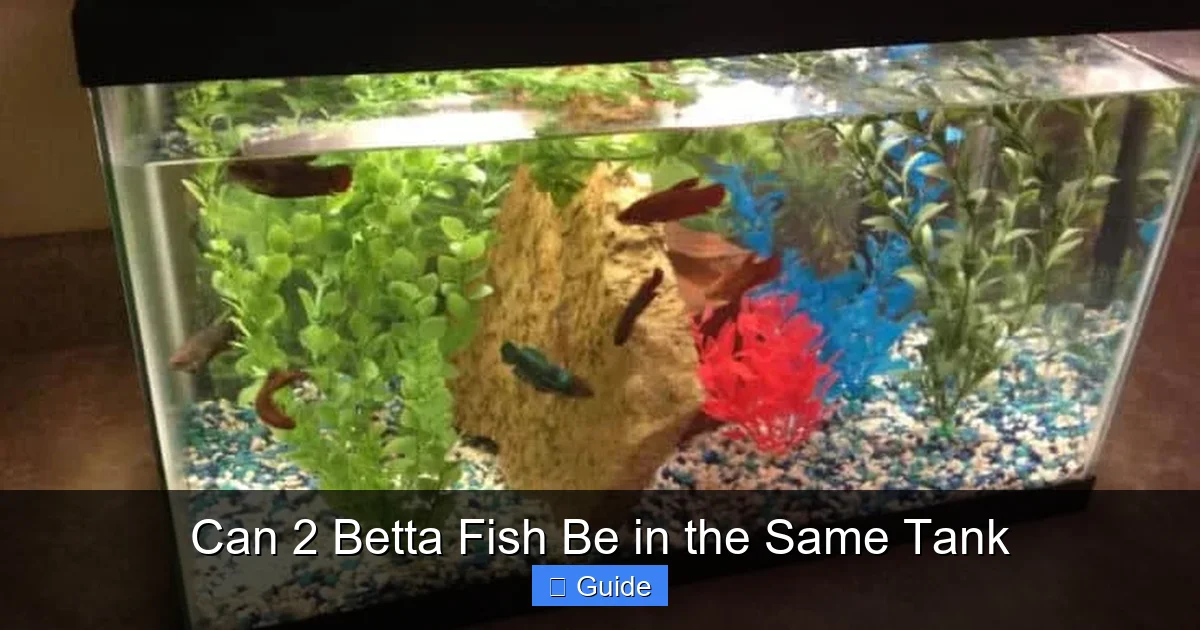
Visual guide about Can 2 Betta Fish Be in the Same Tank
Image source: tankarium.com
- Physical Injury: Betta fights involve flaring, biting, and locking jaws. Fins are shredded (a condition called “fin rot” can quickly follow), scales are lost, and bodies are wounded. These injuries are gateways to fatal infections.
- Chronic Stress and Disease: As mentioned, a constantly chased fish is a immunosuppressed fish. It is a ticking time bomb for velvet disease, ich, dropsy, or internal parasites.
- Sudden Death: A dominant betta can literally scare a subordinate to death through relentless harassment, even without physical contact.
- The “Tank Crash”: A severely stressed or injured betta can die quickly, fouling the water and causing a spike in ammonia that can kill the other, healthier tank inhabitants.
- The Ethical Burden: You are responsible for every life in that tank. Watching a fish you love be terrorized daily because you wanted a “pair” is a heavy emotional toll.
The Safe, Stress-Free Alternatives to “Can 2 Betta Fish Be in the Same Tank?”
So you want more than one betta? You have excellent, low-risk options that provide beauty and interest without the terror of cohabitation.
The Divided Tank: The Best of Both Worlds
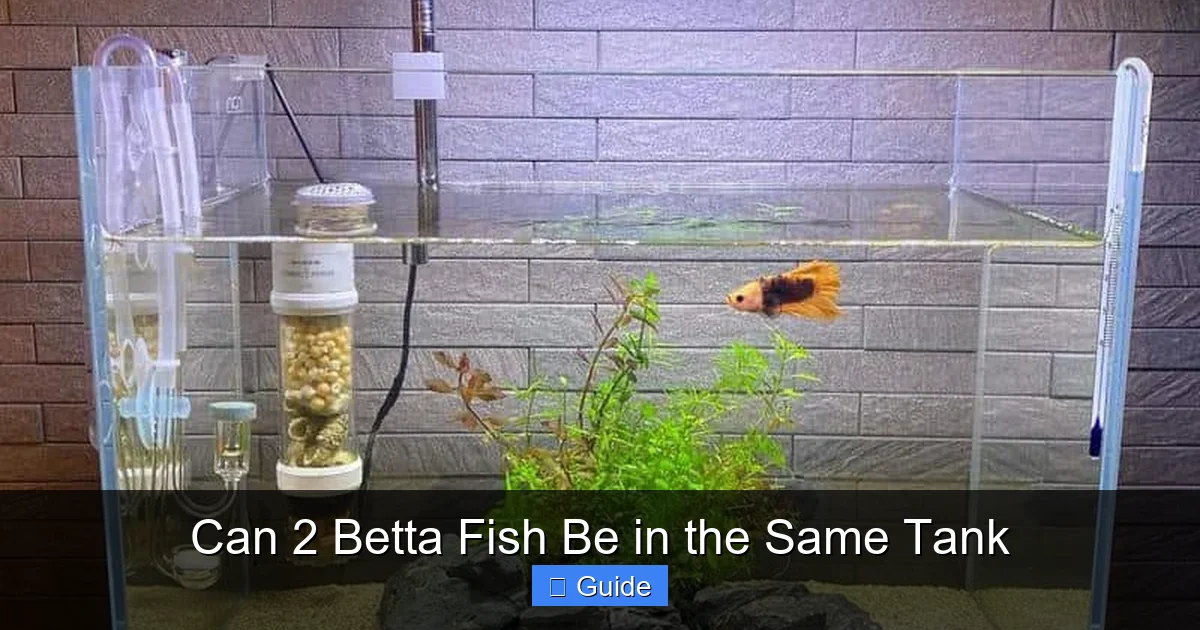
This is the ultimate solution. Use a large tank (20+ gallons) with a solid, watertight divider that seals from top to bottom. You can have two (or more) bettas on either side, each with their own heater, filter intake, and decor. They share the same water column for filtration and heating efficiency, but they cannot see or interact with each other. This is the only way to safely house multiple bettas in one physical tank. Commercial dividers exist, or you can have an acrylic sheet custom-cut. Ensure there are no gaps at the top or bottom.
The “Betta Shelf” or Multiple Tanks
Embrace the single-betta-per-tank philosophy. A 5-gallon tank is the absolute minimum for a single betta, but a 10-gallon is significantly better. Set up a row of these tanks on a sturdy shelf or rack. You can create stunning, individual aquascapes for each fish. This is the hobbyist’s dream: total control over each fish’s environment, no risk of aggression, and easy quarantine of sick fish. It’s also easier to maintain water quality in several smaller tanks than in one very large, complex sorority.
Carefully Chosen Community Tankmates (for a Single Betta)
If your goal is a lively tank, give your male or female betta a community of peaceful, fast, non-flashy fish. The betta will be the majestic centerpiece, and the other fish will add movement and interest without triggering aggression. Research is key: avoid long-finned fish (like guppies or fancy mollies) which look like rival bettas, and avoid bright, slow fish. Good candidates include:
- Schooling fish: Neon Tetras, Ember Tetras, Black Neon Tetras, Harlequin Rasboras (in groups of 8+).
- Bottom dwellers: Corydoras Catfish (in groups of 5+), Kuhli Loaches, Bristlenose Plecos (small varieties).
- Shrimp: Ghost Shrimp or Amano Shrimp (Cherry Shrimp may be eaten).
Always add the tankmates first, let them establish their school, and then add the betta last to reduce territorial claims.
Step-by-Step: If You Proceed with a Sorority Anyway
For the experienced hobbyist who understands the risks and has the resources, here is a condensed checklist. Do not skip steps.
- Tank: 29+ gallons, long/breeder style.
- Filtration: A strong, adjustable filter (like a hang-on-back or canister) with a spray bar or pre-filter sponge to reduce current. Flow must be gentle.
- Heating: A reliable, adjustable heater (300W for 29g). Maintain 78-80°F.
- Aquascape: 50%+ of the tank must be filled with dense planting (live is best) and hardscape to break lines of sight. Create at least 5-6 distinct “caves” or hiding zones.
- Stocking: Acquire 5-7 young, similarly-sized females from a reputable source. Avoid obvious “plakat” (short-finned) females, as they are often more aggressive.
- Quarantine: Quarantine all fish separately for 4+ weeks.
- Introduce: Use the divided method described above. Be prepared for the process to take 1-2 weeks.
- Monitor: For the first month, watch the tank for 30+ minutes daily. Look for: one fish hiding in a corner all day, missing scales, torn fins, or one fish being relentlessly chased. Have a “plan B” tank ready to isolate any victim or aggressor immediately.
- Feed Strategically: Feed in multiple locations to prevent one dominant female from guarding all food.
Conclusion: Prioritizing Welfare Over Aesthetics
The question “can 2 betta fish be in the same tank” reveals a desire for companionship, both for the fish and the keeper. But our role as caretakers is to interpret that desire through the lens of the animal’s true nature. The betta’s beauty is matched by its fierce independence and territorial spirit. Forcing it into a cohabitative situation it is not evolutionarily designed for is not a kindness; it’s a profound failure of our responsibility.
The ethical, safe, and successful path is almost always to house bettas separately. Whether through divided tanks, a collection of single-species tanks, or a properly stocked community with a single betta as the star, you can create a stunning aquatic display that honors the betta’s majestic nature without subjecting it to a life of fear and violence. Invest your time and resources into providing one betta with a perfect, enriched, peaceful home. That single, thriving, colorful fish displaying its natural behaviors is a far greater reward than the gamble of a sorority that could end in tragedy. Choose the path of certainty and compassion. Your betta will show its gratitude in vibrant colors and confident displays, every single day.
Frequently Asked Questions
Can I keep two male betta fish together if the tank is huge?
No. Even in a 100-gallon tank, two male bettas will almost certainly find each other and fight. Their territorial aggression is innate and not diluted by space. A huge tank only provides more room for a losing fish to be chased until it dies of stress or injury.
What is the smallest tank for a female betta sorority?
The absolute minimum is a 20-gallon long tank, but this is high-risk. A 29-gallon or larger is strongly recommended to provide enough territory and line-of-sight breaks for 5+ females to establish a stable hierarchy.
How can I tell if my bettas are fighting or just flaring?
Flaring is a display (gills and fins expanded) often with no contact, used to intimidate. Fighting involves rapid, directed chasing, biting, mouth-locking, and physical contact that results in torn fins or missing scales. Any sustained chasing that prevents a fish from resting or eating is a form of bullying and must be intervened upon.
What should I do if my bettas start fighting?
Have a hospital/quarantine tank ready immediately. Use a net to separate the aggressor and the victim into separate containers with tank water. Assess injuries. The victim will need pristine water, possibly an antibacterial soak (like methylene blue), and a stress-free recovery tank. The aggressor may need to be permanently re-homed or kept in a divided system.
Can a male betta live with other fish?
Yes, a male betta can often live with peaceful, fast, non-flashy community fish like neon tetras or corydoras catfish in a 10+ gallon tank. The key is choosing species that don’t resemble a betta (long, flowing fins) and won’t nip at his fins. Always add the betta last to an established school.
How do I set up a divided tank for two bettas?
Use a large tank (20+ gallons) and a solid, watertight divider that seals at the top and bottom with silicone or a tight-fitting frame. Each side needs its own heater (or a long heater spanning the divider), and filter intakes/outputs should be positioned to create circulation on both sides. Decorate each side identically with plants and hiding spots to provide equal territory.