Are Betta Fish Hermaphrodites

Betta fish are not hermaphrodites; they have distinct male and female sexes. Their gender is set at birth and cannot change, which influences behavior, breeding, and tank setup. Understanding these differences helps you provide the right environment and avoid costly mistakes.
Key Takeaways
- Betta fish have fixed sexes: Males and females are born with separate reproductive organs and cannot switch.
- Physical clues reveal gender: Look for fin size, body shape, and the presence of an ovipositor in females.
- Hermaphroditism is rare in the wild: Only a few related species show it, never the common Siamese fighting fish.
- Sex affects tank dynamics: Males are aggressive toward each other, while females can coexist in groups with care.
- Breeding requires a male‑female pair: Proper conditioning, water parameters, and a spawning mop are essential.
- Know the myths: Misidentifying sex often leads to fighting or failed breeding attempts.
- Helpful resources: Learn more about betta behavior, care, and compatibility on our site.
📑 Table of Contents
- Introduction: Why the Question Matters
- 1. The Biology Behind Betta Sexes
- 2. How to Tell If Your Betta Is Male or Female
- 3. Implications for Tank Setup
- 4. Breeding Betta Fish: What You Need to Know
- 5. Common Misconceptions and How to Avoid Them
- 6. Why Knowing the Answer Improves Your Betta Journey
- Conclusion
Introduction: Why the Question Matters
If you’ve ever stared at a bright, flowing betta and wondered, “are betta fish hermaphrodites?” you’re not alone. New hobbyists love these little warriors for their colors, but the mystery of their gender can be confusing. Getting the answer right isn’t just trivia—it changes how you set up a tank, choose tank mates, and plan breeding.
In this friendly, step‑by‑step guide we’ll clear up the science, show you how to tell males from females, and explain what the answer means for everyday care. Think of it as a chat over coffee with a fellow fish lover, only packed with facts you can trust.
1. The Biology Behind Betta Sexes
1.1 Fixed male and female systems
Betta fish (Betta splendens) belong to the family Osphronemidae. Like most vertebrates, they have separate sex chromosomes that determine gender at fertilization. Males develop testes, females develop ovaries, and these organs stay that way for life. There is no natural mechanism for a betta to become a functional hermaphrodite.
Visual guide about Are Betta Fish Hermaphrodites
Image source: aquariadise.com
1.2 What hermaphroditism means
Hermaphroditism is the ability to possess both male and female reproductive parts, either simultaneously or sequentially. It’s common in some fish families (e.g., clownfish, hamlets) but not in the genus Betta. Occasionally, a rare genetic mutation can produce intersex individuals, but they are sterile and not the norm.
1.3 Why the myth started
People often confuse the “gender‑fluid” behavior of some tropical fish with true hermaphroditism. Betta males display flamboyant fins and aggressive displays, while females can be less showy. When a quiet fish suddenly becomes bold, owners may think a sex change occurred. In reality, stress, water quality, or a misidentified fish are the usual culprits.
2. How to Tell If Your Betta Is Male or Female
2.1 Visual clues
- Fin size and shape: Males have long, flowing fins that can double the body length. Females have shorter, more rounded fins.
- Body depth: Females are generally deeper‑bodied, especially when gravid (full of eggs).
- Ovipositor: Look for a tiny, pointed tube behind the vent in mature females; it’s used to release eggs.
2.2 Behavioral hints
Males are territorial. They flare their gills, flare their fins, and may attack their reflection. Females are less likely to flare at reflections but can become aggressive toward other females if space is limited.

Visual guide about Are Betta Fish Hermaphrodites
Image source: light.fish
2.3 Using a reputable source
Our guide on how to tell if betta fish are male or female offers photos and a checklist to double‑check your identification.
3. Implications for Tank Setup
3.1 Single‑male tanks
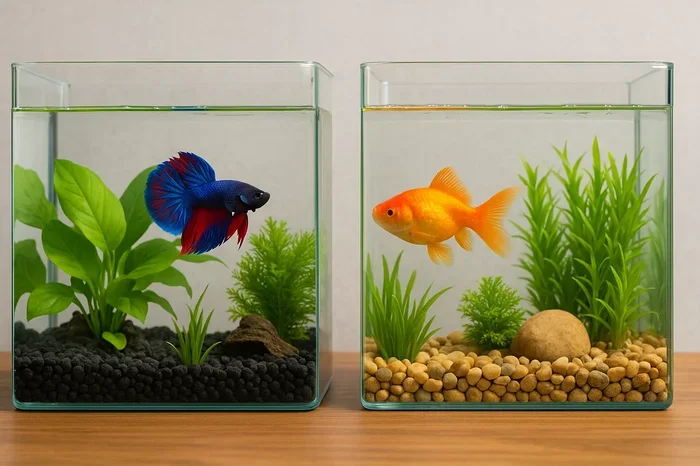
Because males are aggressive toward each other, a single male should live alone or be separated by a solid barrier. This is why many hobbyists keep a single male in a 5‑gallon tank with plants and a lid.

Visual guide about Are Betta Fish Hermaphrodites
Image source: aquariadise.com
3.2 Female‑only communities
Females can be housed together in groups of three to five if the tank is spacious (at least 10 gallons) and contains plenty of hiding spots. This reduces stress and mimics their natural “sweeping” behavior.
3.3 Mixed‑sex breeding tanks
When you want to breed, a male‑female pair needs a separate breeding tank with soft water (pH 6.5‑7.0), a temperature of 78‑80 °F, and a spawning mop. The male builds a bubble nest, and the female deposits eggs into it.
4. Breeding Betta Fish: What You Need to Know
4.1 Conditioning your pair
Feed both fish high‑quality live or frozen foods (brine shrimp, daphnia) for a week before spawning. This boosts fertility and encourages the male to build a strong bubble nest.
4.2 The spawning process
- Place the male in the breeding tank with a pre‑made bubble nest.
- Introduce the female in a transparent container for a “courtship” period.
- When the male flares and the female opens her vent, release her into the tank.
- The male wraps the female, fertilizes the eggs, and gathers them in the nest.
- Remove the female after 30 minutes to prevent aggression.
4.3 Raising the fry
Fry need infusoria or microworms for the first days, then can graduate to newly hatched brine shrimp. Keep water quality pristine; even a small ammonia spike can be fatal.
5. Common Misconceptions and How to Avoid Them
5.1 “My betta changed sex after a month”
This never happens. If behavior changes, check water parameters, look for disease, or verify you didn’t misidentify the fish initially.
5.2 “All bettas are aggressive, so I need a big tank”
Male aggression is directed at other males, not at the tank size per se. A well‑decorated 5‑gallon tank meets a single male’s needs. For community setups, read our article on are betta fish easy to care for for more tips.
5.3 “I can keep a male and a female together forever”
After spawning, the male may become aggressive toward the female. It’s safest to separate them once eggs are deposited.
6. Why Knowing the Answer Improves Your Betta Journey
Understanding that betta fish are not hermaphrodites empowers you to make smarter choices. You’ll avoid costly fights, improve breeding success, and create a more harmonious aquarium. It also deepens your appreciation for the fascinating natural history of these tiny warriors.
Whether you’re a beginner wondering about gender or an experienced breeder fine‑tuning a setup, the key is to observe, learn, and apply proven practices. Happy fishkeeping!
Conclusion
So, are betta fish hermaphrodites? No—they have distinct, unchanging male and female sexes. This simple fact shapes everything from tank arrangement to breeding strategies. By recognizing gender cues, respecting each sex’s needs, and following reliable care guidelines, you’ll enjoy healthier, more vibrant bettas for years to come.
Frequently Asked Questions
Are there any betta species that are hermaphroditic?
No known Betta species exhibit true hermaphroditism. Some related gourami species can be intersex, but they are not true bettas.
Can a male betta become female if stressed?
Stress can change behavior, but it cannot change a male’s sex. If a male appears less aggressive, check water quality or health issues.
How can I be sure I have a male or female betta?
Look for fin length, body depth, and the presence of an ovipositor. Our detailed guide on how to tell if betta fish are male or female provides pictures and a checklist.
Do female bettas ever fight each other?
Yes, especially in small tanks. Provide plenty of plants and hiding spots, and keep groups to three‑five females in a 10‑gallon tank to reduce aggression.
What water conditions help breeding?
Soft water (pH 6.5‑7.0), temperature 78‑80 °F, and low water flow encourage a male to build a bubble nest and successfully raise fry.
Where can I learn more about betta behavior?
Check out our article on are betta fish nocturnal for insights into daily activity patterns and how they affect tank setup.