Where Betta Fish Live
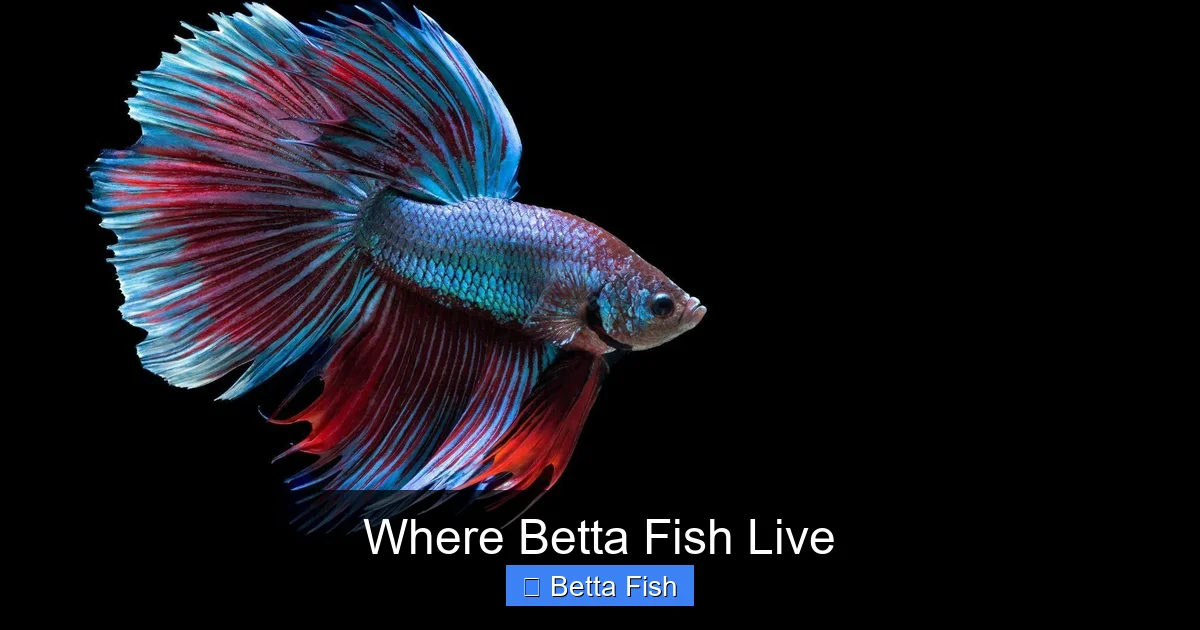
Betta fish, or Siamese fighting fish, are native to the shallow, warm waters of Southeast Asia. In the wild, they thrive in rice paddies, slow-moving streams, and floodplains with dense vegetation. For captive bettas, replicating this environment with warm, clean water, hiding spots, and a gentle filter is crucial for their health and vibrant display. Understanding their natural habitat is the first step to providing exceptional care.
Key Takeaways
- Wild Origins: Betta fish are native to the tropical regions of Southeast Asia, including Thailand, Cambodia, Vietnam, and Malaysia.
- Natural Habitat: In the wild, they live in shallow, stagnant or slow-moving waters like rice paddies, marshes, and floodplain ditches, often with heavy plant cover.
- Water Conditions: They require warm water (76-82°F / 24-28°C), a neutral to slightly acidic pH (6.5-7.5), and pristine water quality with minimal ammonia and nitrites.
- Tank Setup: A suitable captive habitat includes a heated tank (minimum 5 gallons), a gentle filter, soft substrate, and abundant live or silk plants for security.
- Solitary Nature: Male bettas are fiercely territorial and must be housed alone. Female bettas can sometimes be kept in carefully managed sorority groups.
- Labyrinth Organ: They possess a specialized organ allowing them to breathe atmospheric air, so they must have access to the water’s surface.
- Diet: They are carnivorous micro-predators, requiring a high-protein diet of quality pellets, frozen, or live foods like brine shrimp.
📑 Table of Contents
- The Wild World of the Betta: More Than a Pretty Face
- Southeast Asian Heartland: The Geographic Origins
- Anatomy of a Wild Habitat: Rice Paddies, Marshes, and Ditches
- Water Chemistry: The Invisible Blueprint
- Designing the Perfect Captive Habitat: From Wild to Tank
- Temperature and Climate: The Non-Negotiable Warmth
- Behavior and Social Needs: The “Fighting” in Fighting Fish
- Lifespan and Wellness: A Long-Term Commitment
The Wild World of the Betta: More Than a Pretty Face
When you gaze at the flowing fins and brilliant colors of a betta fish in a small cup at a pet store, it’s easy to forget this dazzling creature has a rich, wild history. The question of where betta fish live is fundamental to understanding them. The betta, or Betta splendens, is not a creature of vast oceans or deep rivers. Its story is intimately tied to the lush, humid, and seasonally flooded landscapes of Southeast Asia. This is not just trivia; it is the blueprint for their survival. Their entire physiology, from their famous labyrinth organ to their aggressive temperament, evolved to solve the specific problems of their native environment. By exploring their wild homes, we unlock the secrets to keeping them thriving in our aquariums. They are not merely decorative objects but complex animals with deep-rooted needs that we, as caregivers, are responsible for meeting.
Common misconceptions abound. The image of a betta living happily in a tiny, unfiltered vase is a persistent myth that directly contradicts their natural requirements. In reality, the wild habitats of bettas, while often shallow, are dynamic ecosystems with complex water chemistry, abundant natural food sources, and crucial hiding places. Replicating these conditions in captivity is an act of respect and scientific curiosity. It moves us from simply owning a fish to providing a sanctuary. This article will journey from the muddy rice paddies of Thailand to your living room aquarium, translating wild wisdom into practical, actionable care guidelines. We will answer the core question—where betta fish live—in exhaustive detail, covering geography, ecology, water science, and tank design.
Southeast Asian Heartland: The Geographic Origins
The definitive answer to where betta fish live begins with a map. The wild Betta splendens is indigenous to the central and northern regions of Thailand, extending into the neighboring countries of Cambodia, Laos, Vietnam, and the southern tip of Myanmar (Burma). Their native range is closely associated with the Chao Phraya and Mekong river basins. These are not remote, pristine wildernesses. Instead, they are the agricultural and human heartlands of Southeast Asia, where bettas have lived alongside people for centuries. Their native Thai name, “plakat,” which means “biting fish,” hints at their long-recognized feisty nature, historically used in gambling matches akin to rooster fighting.
Visual guide about Where Betta Fish Live
Image source: 1.bp.blogspot.com
A Tale of Two Bettas: Wild vs. Domesticated
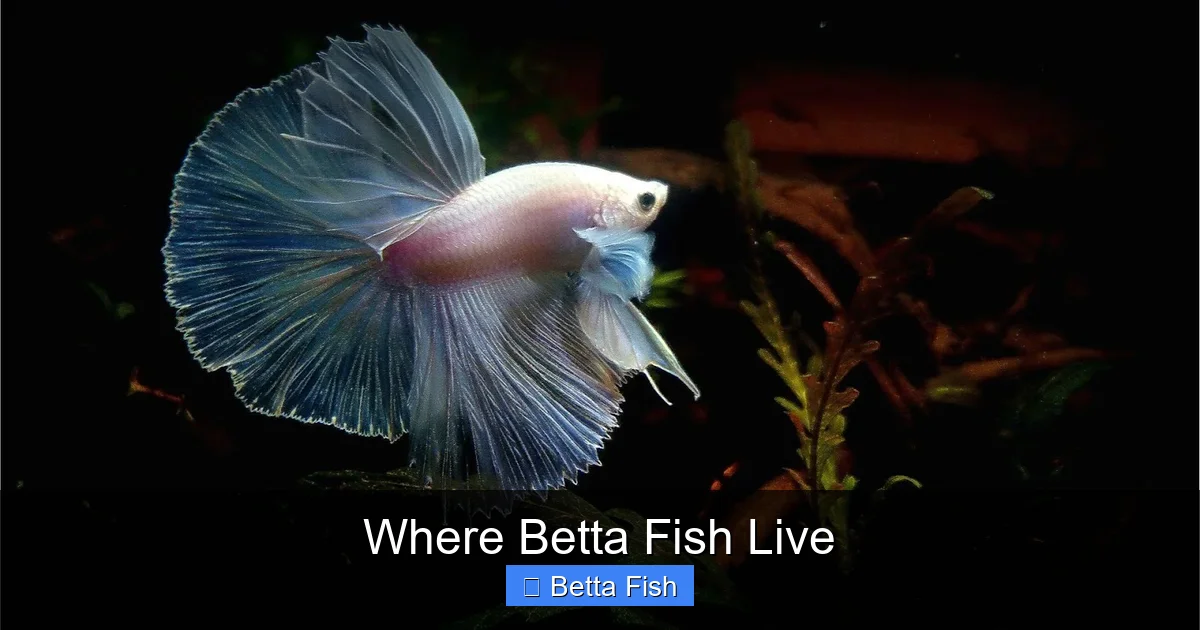
It is critical to distinguish between the wild-type betta and its flamboyant domesticated cousins. The wild betta, often called the “Siamese fighting fish” in its natural state, is typically a drab green, brown, or grey with short, unremarkable fins. Its colors are a form of camouflage among the murky waters and dense vegetation. The brilliant reds, blues, and flowing, frilly fins of pet store bettas are the result of over a century of intense selective breeding in captivity. These domesticated strains have lost much of the wild fish’s hardiness and are entirely dependent on human care. Therefore, when we discuss where betta fish live in the wild, we are describing the habitat that shaped the species’ genetics, which all modern bettas, regardless of color, still carry within them.
The Seasonal Rhythm of Life
The environment bettas evolved in is not static. It is defined by dramatic monsoon cycles. During the rainy season, vast low-lying floodplains, rice paddies, and shallow ditches fill with water, creating a sprawling, interconnected network of shallow habitats. Betta fish, with their labyrinth organ, are uniquely adapted to survive in these oxygen-poor waters. They can gulp air from the surface, an essential survival trait during the hot, dry season when their habitats shrink into isolated, warm, and stagnant puddles. This seasonal cycle dictates their entire life history—breeding during the floods when food is abundant and territory is plentiful, and enduring the harsh, crowded conditions of the dry season. This history explains their extreme territoriality: a small, shrinking puddle is a life-or-death resource to be defended fiercely.
Anatomy of a Wild Habitat: Rice Paddies, Marshes, and Ditches
So, what exactly does a wild betta’s home look like? Think less of a clear, sparkling stream and more of a warm, tea-colored, vegetated backwater. Their primary habitats are:

Visual guide about Where Betta Fish Live
Image source: buildyouraquarium.com
- Rice Paddies: These flooded agricultural fields are a quintessential betta home. The water is shallow (often just a few inches to a foot deep), warm, slow-moving or stagnant, and filled with the roots and leaves of rice plants. The water is often tannin-stained from decomposing plant matter, creating a soft, acidic environment.
- Marshes and Swamps: Permanently or seasonally wet areas with dense emergent vegetation like reeds, sedges, and water hyacinths. The water is calm, dark, and thick with organic material.
- Slow-Moving Streams and Ditches: The margins of larger streams, where the current is negligible and backed up by vegetation, provide similar conditions. They avoid any areas with significant current or fast flow.
- Floodplain Pools: Isolated depressions in the forest floor that fill with water during the monsoon. These can become extremely warm and low in oxygen, perfect for a fish that breathes air.
The unifying characteristics are shallow depth, warm temperature, still or very slow water, heavy vegetation, and soft, acidic water chemistry from decaying leaves and soil (tannins). Visibility is often poor due to the tannins and suspended particles, so bettas rely more on movement and lateral line sensing than on clear sight.
The Vital Role of Vegetation
Dense plant cover is non-negotiable in a wild betta’s world. It serves multiple, life-sustaining purposes. First, it is the primary source of security. Betta fish are prey for birds, snakes, and larger fish. A tangle of roots, stems, and floating leaves provides endless hiding spots and a complex three-dimensional space to navigate. Second, plants are the foundation of their food web. They harbor a universe of microorganisms, insect larvae (like mosquitoes), tiny crustaceans (like daphnia), and worms—the natural diet of a betta. Third, plants act as natural water filters, absorbing nitrates and other waste products. They also provide crucial shade, moderating water temperature and blocking harsh sunlight. In captivity, replicating this dense, leafy environment with live plants (like Java fern, Anubias, Cryptocoryne) or silk alternatives is one of the single most important things you can do for a betta’s wellbeing.
Water Chemistry: The Invisible Blueprint
Understanding where betta fish live means understanding the chemistry of their water. Wild betta habitats are not like tap water. The key parameters are:
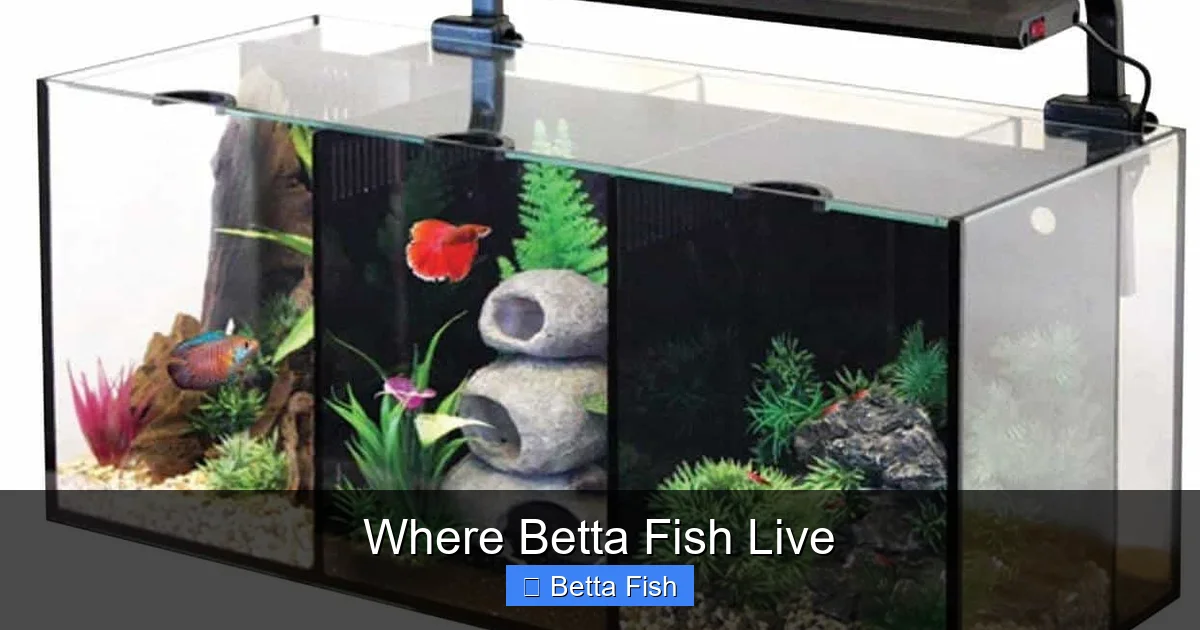
Visual guide about Where Betta Fish Live
Image source: petpad.net
- Temperature: Consistently warm. The tropical sun heats shallow water rapidly. Expect a range of 75°F to 85°F (24°C to 29°C) in the wild, with daily peaks often higher.
- pH: Soft and acidic. The constant input of tannins from decaying leaves and vegetation creates a low pH, typically between 6.0 and 7.5. The water is also very soft, meaning it has low mineral content (low GH and KH).
- Ammonia & Nitrite: Ideally zero. In a vast, natural system with dense plants and a balanced ecosystem, toxic waste is rapidly absorbed. However, in a small, isolated dry-season puddle, these toxins can spike, which is part of why bettas are so hardy—they can tolerate poor conditions better than many fish, but they do not *thrive* in them.
- Water Movement: Minimal. There is no current. Water movement is created only by light breezes or the occasional insect landing. A strong filter current would exhaust and stress a betta, as it is not built for swimming against flow.
For the captive betta, the goal is to replicate these parameters as closely as possible. This means a reliable aquarium heater is mandatory, not optional. It means using a filter with an adjustable, gentle flow, or baffling the output. It means understanding that while bettas are tough, they live longest and show the best colors in stable, clean, warm, and slightly acidic water. Water test kits are essential tools for any betta keeper, allowing you to monitor this invisible blueprint.
The Labyrinth Organ: An Evolutionary Masterpiece
The single most important anatomical adaptation explaining where betta fish live is the labyrinth organ. This is a folded, vascularized structure located in a chamber above the gills. It allows the betta to extract oxygen directly from the air. This is why you will always see a betta swim to the surface to take a gulp of air. This organ is a direct response to living in warm, stagnant, oxygen-depleted water. It is a survival mechanism that lets them thrive where other, more “modern” fish would suffocate. In captivity, this has two critical implications: 1) The water surface must be accessible and free of obstructions (no tight-fitting lids without air gaps, no a thick layer of duckweed blocking the entire surface). 2) They cannot survive out of water, but they *must* have access to atmospheric air. Never block their route to the surface.
Designing the Perfect Captive Habitat: From Wild to Tank
Armed with knowledge of the wild betta’s home, designing their tank becomes a exercise in ecological translation. The question is no longer just where betta fish live, but how we translate that into a glass box in our homes. The foundation is size. The ubiquitous “betta bowl” is a crime against their biology. A minimum of 5 gallons is the absolute starting point for a single male betta. This volume provides stable water parameters, enough space for a proper heater and filter, and room for enrichment. Larger is always better.
The Essential Components
Every element of the tank should serve a purpose rooted in their wild needs.
- Heater & Thermometer: Non-negotiable. Maintain 78-80°F (25.5-26.5°C). Use a reliable heater with a thermostat and a separate thermometer for verification.
- Gentle Filtration: A filter is essential for cycling the tank (establishing beneficial bacteria) and removing debris. Choose a sponge filter (air-driven, creates gentle flow and surface agitation) or a hang-on-back/internal filter with the flow rate turned down and the output baffled with a sponge or pre-filter.
- Substrate: Soft, sand or fine-gravel substrate is best. Avoid sharp edges that can damage their delicate fins. Darker substrates often make colors pop and feel more natural.
- Plants & Hiding Spots: This is the soul of the tank. Use a mix of rooted plants (like Amazon swords, Cryptocoryne) and epiphytes (Java fern, Anubias) attached to driftwood or rock. Floating plants (like frogbit or hornwort) are fantastic for providing shade and security. Add caves, PVC pipes, or terracotta pots for additional cover. The tank should be lush, with open swimming space near the top.
- Lighting: Moderate. If using live plants, research their needs. For silk plants, a simple LED hood is fine. Avoid intense, bare bulbs that create glare and heat spots.
- Lid: Use a lid with air gaps to prevent jumps (bettas are notorious jumpers) while ensuring surface access.
Water Changes and Maintenance
Replicating the clean, tannin-stained water of a rice paddy does not mean neglecting maintenance. In a small, closed system like an aquarium, waste accumulates rapidly. A proper tank cycle (establishing nitrogen-cycle bacteria) is the first step. Once cycled, perform weekly water changes of 25-50%, vacuuming the substrate to remove detritus. Use a dechlorinator to treat tap water. The goal is stable, pristine water parameters that match the natural temperature and pH range. The gentle, tea-colored tint of the wild can be mimicked with natural tannins from Indian almond leaves or driftwood, which also have mild antimicrobial and pH-stabilizing properties.
Temperature and Climate: The Non-Negotiable Warmth
If there is one single point that answers where betta fish live most directly for captive care, it is this: they live in the tropics. They are tropical fish, period. The idea that they can live in a cold office or a chilly room is a lethal myth. Their metabolism, immune function, and digestion are all optimized for warm water. Below 74°F (23°C), their immune system becomes severely compromised, making them susceptible to diseases like Ich and velvet. Their digestion slows, leading to constipation and swim bladder issues. They become lethargic and lose their vibrant colors.
An aquarium heater is not an accessory; it is a piece of life-support equipment. Invest in a quality heater from a reputable brand, sized correctly for your tank. Place it near a water current (like the filter output) to distribute heat evenly. Always use a separate thermometer to verify the actual water temperature, as heater dials can be inaccurate. In the summer, if your room overheats, you may need to use a fan to cool the water surface or move the tank to a cooler location. The goal is a stable, consistent temperature within the 76-82°F (24-28°C) range, mimicking the steady warmth of their equatorial homeland without the dangerous spikes and drops that occur in a small, unheated bowl.
Behavior and Social Needs: The “Fighting” in Fighting Fish
The name “Siamese fighting fish” comes from the historical practice of pitting males against each other in staged fights, a tradition that still exists in parts of Thailand today. This extreme aggression is a direct product of their wild ecology. In the cramped, resource-limited conditions of the dry season, a male betta’s territory—a small patch of dense vegetation—is his entire world. It contains his nest (a bubble nest he builds at the surface), his food source, and his potential mates. Any other male entering this space is a direct threat to his genetic survival, and he will fight to the death to defend it. This is not a personality flaw; it is an evolutionary imperative.
Housing: Alone is Best
For the vast majority of hobbyists, this means one male betta per tank. Never house two male bettas together. They will fight. Female bettas, while less aggressively territorial, can still be finicky and establish hierarchies. A “sorority” tank (5+ females in a heavily planted 20+ gallon tank) is possible for very experienced keepers, as it mimics a loose, female-dominated population in the wild where space is vast. But for a beginner, a single betta in a species-only tank is the safest, happiest, and most stress-free arrangement.
Tank Mates: Careful Selection Only
The question of tank mates is complex. In the wild, a betta’s territory is shared with tiny, non-threatening fish and shrimp that occupy different niches. The rule for captive companions is: choose peaceful, fast-moving, short-finned, non-nippy fish that occupy different swimming levels. Good candidates include small schooling fish like neon tetras (in a group of 6+), harlequin rasboras, or corydoras catfish (which are bottom feeders). Avoid fish with long, flowing fins (like guppies, which bettas may see as rival males) or brightly colored fish (which may trigger aggression). Always have a backup plan, as individual betta personalities vary wildly. Introduce tank mates to a cycled, well-planted tank before adding the betta, so he claims an already-occupied territory. Observe closely for signs of stress or chasing.
Lifespan and Wellness: A Long-Term Commitment
So, where betta fish live in terms of lifespan? In the wild, their life is likely short, perhaps 1-2 years, due to predation, disease, and seasonal habitat loss. In captivity, with proper care that mimics their wild habitat, they can live 3-5 years, with some reliably reaching 6 or 7. This makes them a serious, long-term pet commitment. Their wellness is a direct reflection of their environment. A betta living in a warm, clean, planted 10-gallon tank with a proper diet will be active, curious, display his fins fully, and live a long life. A betta in a cold, dirty, tiny cup will be listless, clamped, prone to disease, and die prematurely.
Common health issues are almost always environmental. Fin rot and velvet are often triggered by poor water quality and stress. Constipation and swim bladder disorder stem from a poor diet (overfeeding dried foods) and cold water. Dropsy is a symptom of severe internal organ failure, often from long-term poor conditions. Prevention is always better than cure, and prevention is simply providing the habitat their ancestors evolved to need: warm, clean water, security, and a proper diet. Regular observation is key. Know what a healthy, active betta looks like—alert, with fins held high, eating eagerly, and exploring its territory. Any deviation from this baseline is a signal to check water parameters and temperature first.
Frequently Asked Questions
Can betta fish live in a bowl without a filter or heater?
No. While bettas are famously hardy, a bowl is far too small to maintain stable water quality or temperature. They require a heated tank of at least 5 gallons and a gentle filter to thrive and live a full, healthy life.
Can I keep a male betta with other fish?
Yes, but with extreme caution. Male bettas are solitary and territorial. Tank mates must be carefully chosen—peaceful, fast-moving, short-finned species that won’t provoke aggression. Always have a backup tank to separate them if fighting occurs.
How long do betta fish live in captivity?
With proper care—including a heated, filtered tank of adequate size, clean water, and a good diet—betta fish commonly live 3-5 years, with some reaching 6 or 7 years.
Are betta fish from the wild endangered?
Wild Betta splendens are currently listed as “Vulnerable” by the IUCN due to habitat loss from pollution, agricultural development, and the destruction of wetlands in Southeast Asia.
Why do betta fish need warm water?
Betta fish are tropical fish native to warm Southeast Asian waters. Their metabolism, immune system, and digestion function optimally between 76-82°F (24-28°C). Cold water suppresses their immune system, slows digestion, and leads to lethargy and disease.
What do betta fish eat in the wild?
In the wild, bettas are carnivorous micro-predators. They eat insects, insect larvae (like mosquitoes), tiny crustaceans (zooplankton, daphnia), and worms that live among the aquatic vegetation.