How to Tell When a Betta Fish Is Sick
Knowing how to tell when a betta fish is sick can save your fish’s life. Common warning signs include loss of appetite, clamped fins, color fading, and unusual swimming behavior. This guide walks you through every symptom, disease, and treatment option so you can act fast and keep your betta healthy.
Your betta fish is more than just a pretty face in a tank. These colorful creatures are active, curious, and full of personality. But sometimes, they get sick. And when they do, they can’t tell you what’s wrong. That’s why how to tell when a betta fish is sick is one of the most important skills every betta owner needs to learn.
Spotting the early signs of illness can mean the difference between a quick recovery and a tragic loss. A healthy betta fish has bright colors, a hearty appetite, and flowing fins that move gracefully through the water. When something goes wrong, the changes are usually noticeable — if you know what to look for.
In this guide, we’ll walk you through every sign, symptom, and scenario you might face. Whether you’re a first-time betta owner or a seasoned hobbyist, this article will give you the confidence to act fast. Let’s dive in and make sure your fish stays happy and healthy.
Key Takeaways
- Early detection matters: Catching sick betta fish symptoms early gives your fish the best chance of recovery.
- Physical signs are obvious: Look for color changes, clamped fins, bloating, and visible spots or lesions.
- Behavior changes are red flags: Lethargy, hiding, and loss of appetite often signal illness before physical symptoms appear.
- Common diseases are treatable: Ich, fin rot, and swim bladder disease respond well to prompt treatment.
- Prevention is easier than cure: Clean water, proper feeding, and low stress keep betta fish healthy long-term.
📑 Table of Contents
- Common Signs Your Betta Fish Is Sick
- Physical Symptoms to Watch For
- Behavioral Changes That Signal Illness
- Common Betta Fish Diseases and Their Symptoms
- How to Respond When Your Betta Fish Gets Sick
- Preventing Illness in Your Betta Fish
- Common Mistakes to Avoid
- Expert Insights on Betta Fish Health
- Conclusion
Common Signs Your Betta Fish Is Sick
The first step in helping a sick betta is recognizing the warning signs. Betta fish are good at hiding pain, which is a survival instinct. But there are clear indicators that something is off. Here are the most common sick betta symptoms to watch for.
Loss of Appetite
A betta fish that stops eating is a betta fish in trouble. Healthy bettas are eager eaters. They’ll come to the surface and grab food within seconds. If your fish ignores food for more than two days, that’s a red flag. Loss of appetite can point to many betta fish diseases, from mild stress to serious infection.
Fading or Darkening Color
One of the most visible betta fish health indicators is color. A vibrant betta has rich reds, deep blues, and bright greens. When illness strikes, colors often fade. Some fish turn pale white, while others darken significantly. This betta fish color change happens because the body diverts energy away from pigmentation to fight off disease.
Clamped Fins
Healthy bettas hold their fins open and flowing. When a fish clamps its fins tightly against its body, it’s a distress signal. Clamped fins can indicate pain, infection, or poor water conditions. It’s one of the most recognizable betta fish stress signs and should never be ignored.
Physical Symptoms to Watch For
Beyond behavior, there are physical symptoms that are hard to miss. Regular observation of your fish’s body will help you catch problems early. Here’s what to look for during your daily tank check.
White Spots or Salt-Like Grains
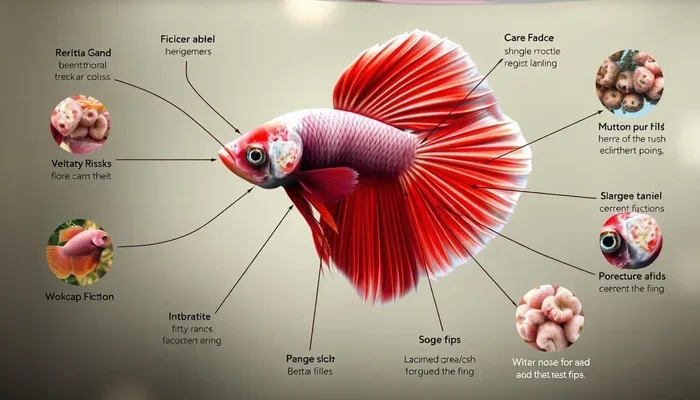
White spots on the body and fins are a classic sign of betta fish ich. This parasitic disease is extremely common and highly contagious. The spots look like grains of salt or sugar sprinkled on the fish. Ich spreads quickly, so early treatment is essential. If you notice these spots, check out our guide on how to treat ich on a betta fish for step-by-step treatment instructions.
Ragged or Rotting Fins
Fin rot is another frequent problem. The edges of the fins look frayed, torn, or discolored. In severe cases, the fins actually recede. Fin rot is usually caused by bacteria thriving in poor water conditions. It’s painful for the fish and can spread rapidly if left untreated.
Bloating and Swollen Belly
A swollen belly on a betta fish is alarming. Bloating can result from overfeeding, constipation, or a serious internal infection. Sometimes the scales stick out, giving the fish a pinecone-like appearance. This condition, called dropsy, is often fatal if not caught early. A betta fish bloating issue that persists for more than a day warrants immediate attention.
Labored Breathing
Watch how your betta breathes. Rapid or shallow breathing at the surface is a sign of distress. Healthy bettas breathe calmly and steadily. Labored breathing can indicate low oxygen levels, ammonia poisoning, or gill damage. Check your water parameters right away if you notice this symptom.
Behavioral Changes That Signal Illness
Betta fish behavior tells you a lot about their well-being. These fish are active and engaging when healthy. Any sudden shift in behavior deserves your attention.
Lethargy and Inactivity
A healthy betta explores its tank, builds bubble nests, and interacts with its surroundings. A sick betta often becomes lethargic. It may rest on the gravel, hover in one spot, or float motionlessly. While bettas do sleep, prolonged inactivity is not normal. If your fish seems unusually tired, consider how to tell when a betta fish is sick and start checking for other symptoms.
Hiding and Avoiding Interaction
Betta fish are curious by nature. They like to swim through plants, explore caves, and interact with their environment. A fish that suddenly hides behind decorations or stays in corners is likely feeling unwell. This betta fish behavior change is often one of the first signs owners notice.
Erratic Swimming Patterns
Swimming sideways, in circles, or struggling to stay upright are all abnormal. These erratic movements can signal swim bladder disease, neurological issues, or severe stress. If your betta can’t maintain a normal swimming position, don’t wait — take action immediately.
Common Betta Fish Diseases and Their Symptoms
Understanding specific diseases helps you diagnose and treat problems faster. Here’s a quick look at the most common illnesses affecting betta fish.
| Disease | Key Symptoms | Severity |
|---|---|---|
| Ich (White Spot Disease) | White spots, scratching against objects, rapid breathing | Moderate |
| Fin Rot | Ragged fins, discoloration, receding fin edges | Mild to Severe |
| Swim Bladder Disease | Floating upside down, sinking to bottom, bloating | Moderate |
| Dropsy | Swollen belly, pinecone scales, lethargy | Severe |
| Fungal Infection | White cotton-like growths on body or fins | Mild to Moderate |
| Velvet Disease | Gold or rust-colored dust on skin, clamped fins | Moderate to Severe |
Each disease requires a different approach. For instance, ich is treated with temperature changes and medication, while fin rot often responds to improved water quality alone. If you’re unsure about what’s affecting your fish, learning how to tell if your betta fish is sick through symptom matching is a great starting point.
When Illness Signals a Dying Fish
Sometimes, sickness goes too far. A betta fish that is dying may show extreme color loss, complete loss of appetite, and inability to swim. If your fish is lying on the bottom and unresponsive, the situation is critical. Our article on how can you tell if a betta fish is dying provides detailed guidance on recognizing end-stage symptoms and making difficult decisions.
How to Respond When Your Betta Fish Gets Sick
Once you’ve identified that your fish is sick, quick action is key. Here’s a practical step-by-step approach to help your betta recover.
- Isolate the fish. Move the sick betta to a quarantine tank if possible. This prevents the spread of disease to other fish and makes treatment easier.
- Check water parameters. Test ammonia, nitrite, nitrate, and pH levels. Poor water quality is the leading cause of betta fish illness. Clean water is the foundation of recovery.
- Raise the temperature slightly. A warm bath (around 80-82°F) can boost the fish’s immune system and speed up treatment for certain parasites.
- Administer appropriate treatment. Use medication based on the diagnosed condition. Salt baths, antibiotics, and anti-parasitic treatments each target different problems.
- Monitor closely. Watch for improvements or worsening symptoms over 48 to 72 hours. Adjust treatment as needed.
For hands-on care tips, our guide on how to help a betta fish that is sick covers practical treatment methods in detail.
Quick Tips for Sick Betta Care
- Never use tap water directly — always condition it first.
- Don’t overmedicate. Follow dosage instructions carefully.
- Keep the tank clean with regular partial water changes.
- Avoid loud noises and sudden movements near the tank.
- Feed high-quality food in small amounts to avoid digestive issues.
Preventing Illness in Your Betta Fish
The best medicine is prevention. A healthy environment keeps betta fish disease at bay and promotes a long, vibrant life. Here’s how to set your fish up for success.
Maintain Clean Water
Water quality is the single most important factor in betta health. Test your water weekly, perform partial water changes every week, and use a gentle filter. Ammonia and nitrite levels should always read zero. Nitrate should stay below 20 ppm. Clean water prevents most common infections and parasites.
Feed a Balanced Diet
Overfeeding is one of the biggest mistakes new betta owners make. Feed your betta two to three pellets twice a day, supplemented with frozen or live food occasionally. A proper diet supports strong immunity and prevents betta fish bloating and digestive problems.
Reduce Stress
Stressed fish get sick more easily. Avoid keeping your betta in a tank smaller than 5 gallons, and never house two male bettas together. Provide hiding spots and gentle tank mates. A calm environment promotes betta fish health and vibrant color.
Regular Observation
Spend a few minutes each day watching your fish. Notice any changes in behavior, appetite, or appearance. Catching betta fish warning signs early makes treatment far more effective. Think of it as a daily health check — just like brushing your teeth.
Learning how to tell when a betta fish is sick is a skill that pays off for years. It gives you the power to protect your fish and enjoy their beauty for a long time.
Common Mistakes to Avoid
Even well-meaning owners make mistakes that can make illness worse. Here are the most common ones to avoid.
- Ignoring early signs. Waiting too long to act gives diseases time to progress. Early intervention is always more effective.
- Using the wrong medication. Treating ich with antibiotics won’t work. Make sure you match the treatment to the disease.
- Doing a full water change during treatment. This can remove medication and shock the fish. Stick to partial changes.
- Overcrowding the tank. Even in a community tank, too many fish increase stress and disease transmission.
- Neglecting water temperature. Cold water weakens the betta’s immune system and slows recovery.
By avoiding these pitfalls, you create a safer environment for your betta and give yourself a better chance of catching problems early.
Expert Insights on Betta Fish Health
Veterinary experts and experienced aquarists agree on one thing: observation is everything. The more time you spend watching your betta, the better you’ll understand its normal behavior. Any deviation from the norm becomes immediately noticeable.
Dr. Jessie Sanders, a certified aquatic veterinarian, emphasizes that most betta illnesses stem from environmental factors, not genetics. “Water quality, diet, and stress management account for the vast majority of fish health issues,” she notes. This means you have enormous control over your fish’s well-being through simple daily care.
Another expert insight: don’t panic at the first sign of trouble. Many betta fish diseases are treatable when caught early. Even serious conditions like ich and fin rot respond well to consistent, proper treatment. Stay calm, diagnose accurately, and act decisively.
If you’re ever unsure about your fish’s condition, our article on how can I tell if my betta fish is sick offers additional diagnostic tips that complement this guide.
Conclusion
Knowing how to tell when a betta fish is sick is one of the most valuable skills you can develop as a fish owner. From recognizing physical symptoms like clamped fins and color fading to spotting behavioral changes like lethargy and hiding, every sign matters. The sooner you catch illness, the better your chances of successful treatment.
Remember to keep the water clean, feed wisely, and observe your fish daily. Prevention goes a long way. But when sickness does strike, you now have the knowledge to respond quickly and effectively. Your betta fish depends on you for its health and happiness. With the information in this guide, you’re ready to be the best caretaker your fish could ask for.
Stay attentive, stay proactive, and enjoy the rewarding experience of keeping a healthy, vibrant betta fish.
Frequently Asked Questions
What are the first signs that my betta fish is sick?
The first signs are usually behavioral. Your betta may stop eating, become lethargic, or hide more than usual. Physical signs like clamped fins, color fading, and white spots often follow shortly after. Catching these early betta fish warning signs gives you the best chance of a full recovery.
Can a sick betta fish recover on its own?
Mild cases of stress or minor infections sometimes resolve with improved water quality and proper feeding. However, most diseases require active treatment. Don’t rely on self-recovery — intervene early for the best results. Learn how to tell when a betta fish is sick so you can act before the condition worsens.
How do I know if my betta fish has ich?
Ich appears as tiny white spots on the body and fins that look like grains of salt. Your fish may scratch against objects and breathe rapidly. It’s a common parasitic infection that responds well to temperature adjustment and medication. Check out our guide on how to treat ich on a betta fish for effective treatment steps.
What water parameters are most important for betta fish health?
Ammonia and nitrite should always be zero. Nitrate should stay below 20 ppm. pH should be between 6.5 and 7.5. Temperature should be kept steady at 78-80°F. Maintaining these parameters dramatically reduces the risk of betta fish illness and promotes a long, healthy life.
Should I quarantine a sick betta fish?
Yes, quarantine is highly recommended. Moving a sick fish to a separate tank prevents the spread of disease to other fish. It also makes treatment easier and less stressful for the sick fish. A quarantine tank doesn’t need to be large — even a 5-gallon tank works well for recovery.
How can I prevent my betta fish from getting sick?
Keep the water clean with regular partial changes, feed a balanced diet in appropriate amounts, and maintain stable temperature and pH. Reduce stress by providing a spacious tank with hiding spots. Regular observation helps you catch betta fish stress signs before they develop into full-blown illness. Prevention is always easier and more effective than treatment.