How Do You Determine the Sex of a Betta Fish

Figuring out how do you determine the sex of a betta fish is easier than most people think. Male and female bettas have clear differences in body shape, fin length, color intensity, and behavior. This guide walks you through every visual and behavioral clue so you can confidently identify whether your betta is male or female.
If you have ever stared at a betta fish and wondered whether it is a boy or a girl, you are not alone. Many fish owners find betta fish gender identification confusing at first. The good news is that males and females look quite different once you know what to look for.
Whether you are a beginner or a seasoned aquarist, learning how to sex your betta helps you make better care decisions. It also matters if you plan to breed them or keep multiple fish together. How do you determine the sex of a betta fish? The answer lies in a few simple physical and behavioral traits.
In this guide, we break down every sign you need to know. From fin length to body shape to the famous egg spot, you will learn it all. By the end, you will feel confident identifying any betta’s gender in seconds.
Key Takeaways
- Body shape is the biggest clue: Females are rounder and wider, especially when carrying eggs.
- Males have longer, flowing fins: Their caudal and ventral fins stretch far beyond the body.
- The egg spot tells the story: Females have a small white spot on their underside called an ovipositor.
- Color intensity differs: Males typically display brighter, more vivid colors than females.
- Behavior reveals gender too: Males flare and build bubble nests; females tend to be less aggressive.
- Age matters: Sex differences become more obvious as bettas mature past 2 to 3 months old.
📑 Table of Contents
- Why Knowing the Sex of Your Betta Fish Matters
- The Physical Differences Between Male and Female Betta Fish
- The Egg Spot and Other Key Markers
- Behavioral Differences Between Male and Female Betta Fish
- How Age Affects Your Ability to Determine Sex
- Common Mistakes When Sexing Betta Fish
- Quick Tips for Sexing Your Betta Fish
- How to Use This Knowledge for Better Betta Care
- Conclusion
Why Knowing the Sex of Your Betta Fish Matters
Some people think identifying a betta fish‘s gender does not matter. But it actually plays a big role in how you care for your fish. Males and females have different needs, different temperaments, and different appearances.
For example, you should never house two male bettas together. They will fight, sometimes to the death. On the other hand, a male and female can live together under the right conditions, especially during breeding. Knowing the sex helps you set up the right tank environment from day one.
If you want to breed bettas, sexing them correctly is essential. You need one male and one female for successful spawning. Without proper identification, breeding attempts will fail or cause unnecessary stress. How do you determine the sex of a betta fish accurately? Keep reading to find out.
The Physical Differences Between Male and Female Betta Fish
The easiest way to tell a male from a female is by looking at the body. Physical traits give you clear clues that work for most bettas. Let us break this down section by section.
Body Shape and Size
Female bettas tend to have a rounder, wider body shape. Their belly looks fuller, especially when they are carrying eggs. A female betta fish often appears plumper from above compared to a male.
Males, on the other hand, have a more streamlined and elongated body. They look sleek and torpedo-shaped. However, a well-fed male can also look somewhat rounded, so body shape alone is not enough. You need to combine this clue with others.
In terms of overall size, both sexes are similar. Adult bettas typically grow to about 2.5 to 3 inches long. But the way their body distributes weight differs noticeably between the two genders.
Fin Length and Shape
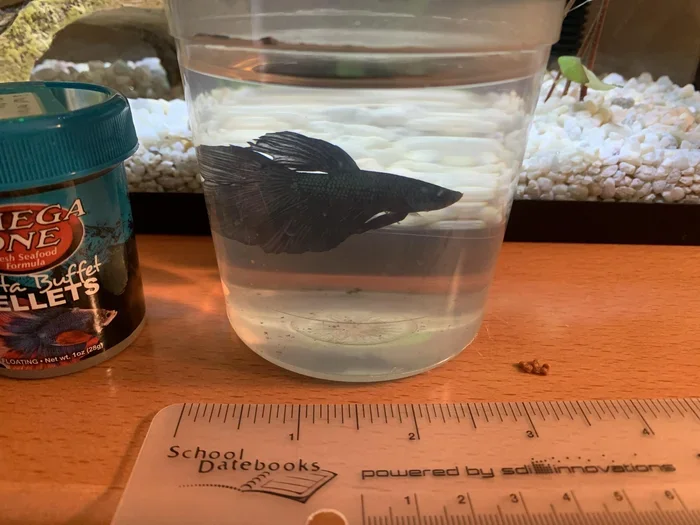
This is probably the most obvious difference. Male bettas have significantly longer fins than females. Their dorsal fin, caudal fin, and ventral fins all stretch far beyond the body. Some male fins can be twice the length of the fish itself.
Females have much shorter, more compact fins. Their fins sit close to the body and look neat and tidy. If you see a betta with long, flowing fins that trail behind it, you are almost certainly looking at a male.
The fin shape also differs. Males tend to have more dramatic fin edges and more elaborate patterns. Females keep things simpler and more practical. This difference exists because males use their long fins to impress females during mating displays.
Color Intensity and Patterns
Male bettas are the showboats of the fish world. They display brighter, more intense colors than females. Think deep blues, vivid reds, and rich greens that seem to glow under aquarium lights.
Females usually have more muted, duller colors. Their hues are softer and less saturated. This is not always the case, but it holds true for the majority of bettas. When a female is ready to breed, her colors may become slightly more vivid, especially around the bars on her body.
Color intensity is one of the fastest ways to guess the gender. But remember, some female bettas can still be quite colorful. Always cross-check with other signs before making a final call.
The Egg Spot and Other Key Markers
One of the most reliable ways to determine the sex of a betta is by looking for the egg spot. This tiny white or pale dot sits on the underside of the fish, near the belly area. It is also called the ovipositor.
Only females have a visible egg spot. It is where the eggs will exit the body during spawning. If you see this small dot, you are looking at a female betta fish. The egg spot is usually easier to spot on lighter-colored bettas than on dark-colored ones.
Males do not have an egg spot. Instead, their underside looks smooth and uniform. This single marker can save you a lot of guessing. Just make sure your lighting is good and you are looking at the right angle.
The Beard and Flaring Behavior
Males have a small membrane behind their gills that is often called the beard. When a male betta flares its gills, this beard becomes visible. It makes the fish look much larger and more intimidating. Females also flare, but their beard is much smaller and less noticeable.
Flaring is a behavior where a betta spreads its gills and fins wide. Males do this more frequently, especially when they see another male or a mirror reflection. Females flare too, but usually in response to a threat or during courtship with a male.
If you see a betta flaring at its reflection, there is a very good chance it is a male. This territorial behavior is one of the strongest clues for identifying gender.
Behavioral Differences Between Male and Female Betta Fish
Beyond physical traits, behavior gives you important hints about a betta’s sex. Fish behavior can be surprisingly telling once you know what to watch for.
Bubble Nest Building
Male bettas are famous for building bubble nests. These are clusters of tiny bubbles that float on the water surface. A male creates a bubble nest to prepare for fertilizing eggs during breeding.
If you see a cluster of bubbles floating at the top of the tank, you almost certainly have a male. Females do not build bubble nests. So this is one of the easiest behavioral clues to identify gender.
Not all males build bubble nests all the time, though. Some build them regularly, while others do so only when they feel ready to breed. Tank conditions, temperature, and the presence of a female can all influence this behavior.
Aggression Levels
Male bettas are significantly more aggressive than females. They are known as “Siamese fighting fish” for a reason. Males will flare at other males, chase tank mates, and generally defend their territory fiercely.
Females can be aggressive too, but usually less so. They can even be kept in small groups called sororities under the right setup. A group of female bettas tends to be calmer and more social than a single male.
If your betta constantly flares at anything that moves, it is likely a male. A more peaceful, curious fish is more likely to be female. Of course, individual personality also plays a role, so use behavior as a supporting clue rather than your only evidence.
How Age Affects Your Ability to Determine Sex
Sexing a betta fish becomes much easier once the fish reaches sexual maturity. Young bettas under 2 months old often look very similar regardless of gender. The differences start to show up clearly around 2 to 3 months of age.
At a young age, both males and females have short fins and dull coloring. As they mature, males develop longer fins, brighter colors, and more pronounced behavioral traits. Females begin to show their rounder body shape and egg spot more clearly.
If you are trying to sex a very young betta, patience is key. Wait a few weeks and observe the fish again. The differences will become more obvious as the fish grows. How do you determine the sex of a betta fish in a young fish? Focus on body shape and the egg spot, as these develop earlier than fin length.
Common Mistakes When Sexing Betta Fish
Even experienced fish keepers sometimes make mistakes when identifying betta gender. Here are the most common errors to avoid.
- Relying on just one clue: Using only fin length or only color can lead to wrong conclusions. Always combine multiple signs.
- Assuming all females are dull: Some female bettas are quite colorful, especially certain breeding strains.
- Confusing a full belly with being female: A male betta can look round too if it is well-fed or constipated.
- Not checking the egg spot carefully: The egg spot is small and can be hard to see on dark-colored fish.
- Ignoring age: Trying to sex a juvenile betta before differences appear will lead to confusion.
Take your time and observe your fish over several days. Look at the whole picture rather than fixating on one trait. The more you practice, the easier it becomes.
Quick Tips for Sexing Your Betta Fish
- Look at the body shape first. A wider, rounder belly usually means female.
- Check for the egg spot on the underside. If you see it, you have a female.
- Observe fin length. Long, flowing fins point to a male.
- Watch for bubble nest building. Only males do this.
- Note the color intensity. Brighter, bolder colors usually belong to a male.
- Look at the overall behavior. More aggressive and territorial fish are typically male.
- Use good lighting and a clean tank to make observation easier.
Following these steps will help you confidently determine the sex of any betta fish. If you are still unsure, try comparing your fish to reference photos of known males and females. Over time, you will develop an eye for the differences.
How to Use This Knowledge for Better Betta Care
Now that you know how to identify the sex of your betta, you can use this information to improve care. Males and females have slightly different needs that you can tailor to.
For male bettas, a tank with gentle water flow and plenty of hiding spots works best. They appreciate open swimming space but also need places to retreat. A 5-gallon tank is the minimum for a single male, though larger is always better.
Female bettas can be kept in groups, but the tank needs to be larger to reduce territorial tension. A group of females needs at least a 10-gallon tank with plenty of plants and decorations to break up lines of sight. Always research proper tank setup before adding multiple females together.
If you plan to breed your bettas, understanding the sex of each fish is the first critical step. You will also need to learn about breeding behavior, water parameters, and fry care. But that is a topic for another day.
Proper feeding also plays a role in keeping your bettas healthy and making gender identification easier. A well-fed betta displays its true colors and body shape more clearly. For feeding schedules and diet tips, check out our guide on how often you need to feed a betta fish to keep your fish in top condition.
Conclusion
Determining the sex of a betta fish is a skill that every owner should develop. Once you know what to look for, it becomes second nature. How do you determine the sex of a betta fish? By checking body shape, fin length, color intensity, the egg spot, and behavior patterns.
Males have longer fins, brighter colors, and a more aggressive personality. Females are rounder, have a visible egg spot, and tend to be calmer. No single clue is foolproof, but combining several signs gives you a confident answer every time.
Take your time, observe your fish regularly, and enjoy the process of learning more about your betta. Whether you are keeping one fish or building a whole community tank, understanding gender makes you a better fish keeper. You now have all the tools you need to identify any betta’s sex with ease.
For more tips on caring for your betta, explore our resources on how to care for a betta fish and taking care of betta fish water quality. These guides will help you create the best possible home for your fish.
Frequently Asked Questions
Can you determine the sex of a baby betta fish?
It is very difficult to sex a baby betta. The differences between male and female bettas are not fully developed until the fish is about 2 to 3 months old. At a young age, both sexes look similar with short fins and dull coloring. Wait until your betta matures before trying to identify its gender.
What is the egg spot on a betta fish?
The egg spot, also called the ovipositor, is a small white or pale dot on the underside of a female betta. It is where eggs exit the body during spawning. Only female bettas have this spot, making it one of the most reliable gender indicators.
Do female betta fish build bubble nests?
No, bubble nest building is a behavior exclusive to male bettas. Males create these clusters of bubbles at the water surface to prepare for fertilizing eggs. If you see a bubble nest in your tank, you have a male betta.
Can you keep a male and female betta together?
Yes, but only under the right conditions. A male and female can be housed together temporarily for breeding or in a well-planted tank with enough space. However, they should always be monitored closely, as aggression can still occur. Never house two males together.
Are male or female betta fish more colorful?
Male bettas are generally more colorful than females. They display brighter, more vivid hues of blue, red, green, and purple. Females tend to have softer, more muted colors, though some females can still be quite striking depending on the breed.
How long does it take to sex a betta fish accurately?
With practice, you can sex a betta in just a few minutes. Experienced fish keepers can identify gender almost instantly by checking body shape and fin length. New owners may need a few days of observation to feel confident in their identification.