Can Betta Fish Live with Other Fish Yahoo Answers

Can betta fish live with other fish? The short answer is yes, but it depends on the betta’s temperament, tank size, and the species you choose. While male bettas are famously territorial, many can coexist peacefully with the right tank mates in a properly set up aquarium. This guide breaks down everything you need to know about keeping betta fish with other fish, based on real experiences shared across Yahoo Answers and expert advice.
Key Takeaways
- Bettas are territorial by nature: Male betta fish are known for their aggression, especially toward fish with bright colors or long fins that resemble other bettas.
- Yes, bettas can live with other fish: With the right tank mates, proper tank size, and careful planning, many bettas thrive in community tanks.
- Tank size matters a lot: A minimum of 10 gallons is recommended when keeping bettas with other fish to reduce territorial behavior.
- Choose peaceful, non-aggressive tank mates: Species like corydoras catfish, neon tetras, and mystery snails are popular and proven choices.
- Avoid fin-nippers and flashy fish: Tiger barbs, guppies, and other brightly colored fish often trigger aggression in bettas.
- Monitor behavior closely: Even with the best planning, some bettas simply do not tolerate tank mates and need to live alone.
- Female bettas are generally more social: Female bettas can sometimes be kept in groups called sororities, though this requires careful management.
📑 Table of Contents
- Introduction: Can Betta Fish Really Live With Other Fish?
- Understanding Betta Fish Temperament
- What Yahoo Answers Users Say About Betta Tank Mates
- Best Tank Mates for Betta Fish
- Setting Up the Perfect Community Tank
- Signs of Trouble: When to Separate Fish
- Special Considerations for Different Betta Types
- Conclusion: Making the Right Choice for Your Betta
Introduction: Can Betta Fish Really Live With Other Fish?
If you have ever typed “can betta fish live with other fish Yahoo Answers” into a search bar, you are definitely not alone. This is one of the most common questions new and experienced fish keepers ask. Betta fish, also known as Siamese fighting fish, are some of the most popular freshwater aquarium fish in the world. Their stunning colors and flowing fins make them irresistible. But there is a lot of confusion about whether they can share a tank with other fish.
The truth is not a simple yes or no. It depends on many factors. These include the individual betta’s personality, the size of your tank, and the type of fish you want to add. Some bettas are surprisingly chill and will ignore their tank mates completely. Others will attack anything that moves. Understanding your betta’s nature is the first step toward building a peaceful community tank.
In this article, we will explore everything you need to know about keeping betta fish with other fish. We will look at what Yahoo Answers users have shared, what experts recommend, and how you can set up your tank for success. Whether you are a beginner or a seasoned aquarist, this guide will help you make the best decision for your betta.
Understanding Betta Fish Temperament
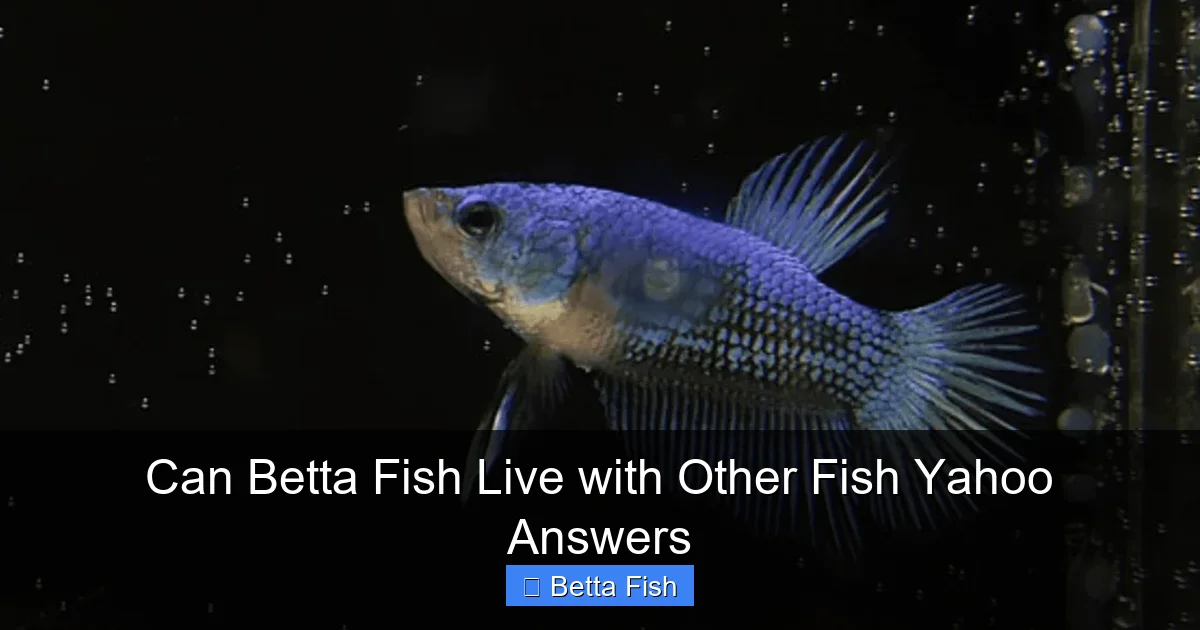
Visual guide about Can Betta Fish Live with Other Fish Yahoo Answers
Image source: aniimad.com
Why Are Bettas So Aggressive?
Betta fish earned their nickname “Siamese fighting fish” for a reason. In the wild, male bettas defend small territories in shallow rice paddies and slow-moving streams. They evolved to fight off rival males to protect their space and breeding grounds. This instinct is deeply hardwired into their behavior, even in captivity.
Male bettas are especially aggressive toward other males. They will flare their gills, spread their fins, and attack any fish they perceive as a threat. This is why you should never keep two male bettas in the same tank. The result is almost always injury or death for one or both fish.
Not All Bettas Are the Same
Here is something many people overlook. Not every betta has the same level of aggression. Some bettas are naturally more laid-back. They might ignore other fish entirely. Others are extremely territorial and will attack anything that enters their space. It really comes down to the individual fish.
Female bettas tend to be less aggressive than males. In fact, female bettas can sometimes be kept together in groups called sororities. However, even sororities require careful planning, a large tank, and constant monitoring. It is not something beginners should attempt without research.
How to Read Your Betta’s Mood
Before you even think about adding tank mates, spend time observing your betta. Watch how they react to their reflection in the glass. A betta that constantly flares and attacks its mirror image is likely to be more aggressive. A betta that shows mild interest but quickly loses interest may be a better candidate for a community tank.
Also, pay attention to how your betta eats and swims. A healthy, well-fed betta in a properly sized tank is generally calmer than one kept in a small bowl with poor water conditions. Environment plays a huge role in behavior.
What Yahoo Answers Users Say About Betta Tank Mates
The Most Common Responses
If you browse through Yahoo Answers threads about betta fish and tank mates, you will find a wide range of opinions. Some users swear that their bettas live happily with neon tetras, corydoras, and even shrimp. Others share horror stories of bettas killing every fish introduced to the tank.
The most common advice from experienced Yahoo Answers contributors includes the following tips. First, always have a backup plan. Keep a separate tank or divider ready in case things go wrong. Second, introduce new fish slowly and monitor the betta’s reaction for at least a week. Third, avoid fish with bright colors or long flowing fins, as these trigger the betta’s aggression.
Real Experiences From the Community
One popular Yahoo Answers thread featured a user who kept a male betta with six neon tetras in a 20-gallon tank. The betta completely ignored the tetras for over a year. Another user reported that their betta attacked and killed a guppy within hours of introduction. The difference? The guppy had bright, flowing fins that looked too much like another betta.
Another common theme in Yahoo Answers discussions is the importance of tank size. Users with larger tanks (15 gallons or more) reported far fewer aggression problems than those trying to keep bettas in small 5-gallon setups. Space gives fish room to establish their own territories and avoid conflict.
What the Experts Agree On
While Yahoo Answers is full of personal anecdotes, the expert consensus aligns with many of the community’s observations. Veterinarians and experienced aquarists agree that bettas can live with other fish under the right conditions. The key factors are tank size, proper hiding spots, and choosing the right species.
Experts also emphasize that every betta is different. Just because someone else’s betta gets along with tetras does not guarantee yours will. Always be prepared to separate fish if aggression occurs. Having a quarantine tank or tank divider on hand is a smart move.
Best Tank Mates for Betta Fish
Top Fish Species That Work Well
Choosing the right tank mates is the most critical step. You want fish that are peaceful, fast enough to avoid a grumpy betta, and not flashy enough to trigger aggression. Here are some of the best options that have been proven to work in community tanks with bettas.
Corydoras catfish are one of the most popular choices. They are peaceful bottom dwellers that stay out of the betta’s way. They also help clean up leftover food, which keeps the tank cleaner. A group of six corydoras is ideal since they are social and prefer to be in schools.
Neon tetras are another excellent option. They are small, fast, and tend to stay in the middle of the tank while bettas prefer the top. Their subtle coloring does not usually trigger aggression. Keep them in groups of at least six for best results.
Harlequin rasboras are calm, mid-level swimmers that get along well with bettas. They are not brightly colored enough to provoke aggression, and their peaceful nature makes them ideal community fish.
For a more detailed breakdown of compatible species, check out our guide on what other fish can live with betta fish.
Invertebrates as Tank Mates
Fish are not the only option. Many invertebrates make fantastic betta tank mates. Mystery snails are a top choice. They are peaceful, help clean algae, and their hard shells protect them from curious bettas. Most bettas will investigate a snail once and then lose interest.
Amano shrimp and cherry shrimp can also work, though there is some risk. Bettas may see smaller shrimp as food, especially if the betta is particularly hungry or aggressive. Larger shrimp like Amano shrimp are generally safer. Always provide plenty of hiding spots like plants and caves for shrimp to retreat to.
African dwarf frogs are another option, though they have their own care requirements. They are peaceful and occupy a different part of the tank than bettas. However, they can be slow eaters, so make sure they are getting enough food.
Fish to Avoid at All Costs
Just as important as knowing what to add is knowing what to avoid. Some fish are almost guaranteed to cause problems in a betta tank.
Tiger barbs are notorious fin nippers. They will chase and bite your betta’s beautiful fins, causing stress and potential infection. Never keep tiger barbs with bettas.
Guppies are another risky choice. Their bright colors and flowing tails look too much like another betta. Many bettas will attack guppies on sight.
Other betta fish should never be kept together, especially males. Even female bettas require careful management in sororities. For more on this topic, read our article about whether betta fish can live with other betta fish.
Goldfish are also a bad match. They require cooler water than bettas, produce a lot of waste, and have very different care needs. Learn more in our article about whether a goldfish can live with a betta fish.
Setting Up the Perfect Community Tank
Tank Size and Layout
Tank size is arguably the most important factor when keeping bettas with other fish. A small tank increases stress and aggression because there is simply not enough space for fish to establish separate territories.
The minimum recommended tank size for a betta community is 10 gallons. However, 20 gallons or larger is even better. A larger tank gives every fish room to swim, hide, and avoid conflict. It also makes water parameters more stable, which benefits all inhabitants.
When setting up the tank, create plenty of visual barriers. Use live or silk plants, rocks, and decorations to break up sight lines. This prevents the betta from seeing the entire tank as its territory. Dense planting along the sides and back of the tank is especially helpful.
Water Parameters and Conditions
Bettas are tropical fish that thrive in warm water between 76 and 82 degrees Fahrenheit. They prefer slightly acidic to neutral water with a pH between 6.5 and 7.5. When choosing tank mates, make sure they can tolerate the same temperature and pH range.
Consistent water quality is essential. Perform regular water changes of about 25% weekly. Use a water conditioner to remove chlorine and chloramines. A good filter is important, but make sure the current is not too strong. Bettas prefer calm water and can struggle against powerful filters.
Introducing New Fish Safely
The introduction process can make or break a community tank. Never just dump new fish into your betta’s home. Instead, follow these steps for a smooth transition.
First, rearrange the tank decorations before adding new fish. This disrupts the betta’s established territory and makes the environment feel “new” to everyone. It reduces the betta’s instinct to defend its space.
Second, add the new fish in a way that allows them to acclimate. Float the bag in the tank for 15 to 20 minutes to equalize temperature. Then slowly add small amounts of tank water to the bag over 30 minutes before releasing the fish.
Third, monitor the tank closely for the first few days. Watch for signs of aggression like chasing, flaring, or nipping. If the betta is relentlessly attacking a tank mate, be ready to separate them immediately.
Signs of Trouble: When to Separate Fish
Recognizing Aggression Early
Even with the best planning, sometimes things do not work out. Knowing the warning signs of aggression can help you act fast before any fish get hurt.
Flaring is the most obvious sign. When a betta flares, it spreads its gills and fins to look bigger. Occasional flaring is normal, but constant flaring directed at a specific fish is a red flag.
Chasing is another warning sign. If your betta is actively pursuing another fish around the tank, intervention may be needed. Brief curiosity is fine, but relentless chasing causes stress and exhaustion.
Nipping is a serious problem. If you see your betta biting another fish’s fins, or if another fish is nipping at your betta, separate them immediately. Fin damage can lead to infections and other health issues.
What to Do When Aggression Occurs
If aggression becomes a problem, do not panic. There are several steps you can take before giving up on the community tank entirely.
First, try adding more hiding spots and plants. Sometimes a few extra decorations can reduce tension by giving fish places to retreat.
Second, consider using a tank divider. This allows the betta and other fish to share the same water while staying physically separated. It is a good temporary solution while you figure out next steps.
Third, if the aggression does not stop, permanently separate the fish. Your betta may simply be a solitary fish, and that is perfectly okay. Many bettas live long, happy lives alone. For more information on keeping male bettas with other fish, visit our article on whether male betta fish can live with other fish.
Special Considerations for Different Betta Types
Male vs. Female Bettas
As mentioned earlier, male and female bettas have different social tendencies. Males are generally more aggressive and territorial. They are the ones most commonly kept alone. However, some males do well in community tanks with the right setup.
Females are typically less aggressive and more tolerant of other fish. They can sometimes be kept in groups, though this requires a larger tank (at least 20 gallons) and careful monitoring. Female betta sororities are not recommended for beginners because hierarchies can shift and aggression can flare up unexpectedly.
Plakat vs. Veil Tail Bettas
The type of betta also matters. Plakat bettas have short tails and are generally more active and aggressive. They are faster swimmers and may be more likely to chase tank mates.
Veil tail bettas have long, flowing fins that make them slower swimmers. They are often less aggressive than plakats but can be targets for fin-nicking fish. Their long fins also make them more vulnerable to injury.
Halfmoon, crown tail, and double tail bettas fall somewhere in between. Each variety has its own temperament tendencies, but individual personality is always the biggest factor.
Conclusion: Making the Right Choice for Your Betta
So, can betta fish live with other fish? The answer is a cautious yes. With the right tank mates, a properly sized aquarium, and careful observation, many bettas can thrive in community settings. However, it is not a guarantee. Every betta is unique, and what works for one may not work for another.
The best approach is to do your research, set up the tank properly, and always have a backup plan. Start with proven tank mates like corydoras catfish or neon tetras. Monitor behavior closely during the first few weeks. And most importantly, be willing to separate fish if things do not work out.
Keeping a betta fish is a rewarding experience, whether they live alone or with tank mates. The key is understanding their needs and respecting their nature. By following the tips in this guide, you will be well on your way to creating a beautiful, peaceful aquarium that both you and your fish will enjoy.
Frequently Asked Questions
Can betta fish live with other fish in a 5-gallon tank?
A 5-gallon tank is too small for a betta to share with other fish. The limited space increases stress and aggression. If you want a community tank, upgrade to at least 10 gallons, though 20 gallons is even better for multiple fish.
What is the best tank mate for a betta fish?
Corydoras catfish are widely considered one of the best tank mates for bettas. They are peaceful, stay at the bottom of the tank, and do not trigger aggression. Neon tetras and mystery snails are also excellent choices.
Can two betta fish live together?
Two male bettas should never live together. They will fight, often to the death. Female bettas can sometimes be kept in groups called sororities, but this requires a large tank and careful management.
Why is my betta attacking its tank mates?
Your betta may be attacking tank mates due to territorial instincts, stress, or incompatible species. Brightly colored fish or those with long fins often trigger aggression. Try adding more hiding spots or consider separating the fish.
Can betta fish live with guppies?
Guppies are generally not recommended as betta tank mates. Their bright colors and flowing tails resemble another betta, which often triggers aggression. Some bettas may tolerate guppies, but the risk is high.
How do I introduce new fish to my betta’s tank?
Rearrange the tank decorations first to disrupt the betta’s territory. Then acclimate the new fish by floating the bag for 15-20 minutes and slowly adding tank water. Release the fish and monitor closely for several days for signs of aggression.