How to Breed Koi Betta Fish

Discover the complete guide to breeding koi betta fish, from choosing the right parents to raising tiny fry. Follow simple, proven steps and avoid common pitfalls for a successful breeding experience.
Key Takeaways
- Proper tank preparation: A 20‑gal dimly lit breeding tank with fine sand and live plants mimics the natural spawning environment.
- Conditioning matters: High‑quality protein foods and gradual water changes boost fertility and vigor.
- Accurate gender identification: Males display longer, brighter fins and a broader head; females have fuller bellies.
- Spawning cues: Temperature rise to 78‑80°F and a 12‑hour light cycle trigger courtship and bubble nest building.
- Fry care basics: Use infusoria or microworms for the first week, then transition to finely crushed flakes.
- Monitor health closely: Early detection of dropsy or fin rot prevents loss of delicate fry.
- Patience and consistency: Successful breeding often requires several attempts and careful observation.
📑 Table of Contents
Introduction: Why Breed Koi Betta Fish?
If you’ve ever admired the vivid orange, white, and black patterns of koi betta fish, you know they’re more than just pretty tank mates. Breeding these beauties lets you preserve stunning color combos, experiment with new varieties, and enjoy the rewarding cycle of life under your care. Unlike standard Siamese fighting fish, koi bettas have a distinctive “koi” pattern that many hobbyists prize for its resemblance to ornamental koi carp.
In this friendly guide, we’ll walk you through every phase of the process—selecting healthy parents, creating the perfect environment, encouraging spawning, and raising the tiny fry. Think of it as a chat over coffee, with plenty of practical tips and real‑world examples to keep you confident.
1. Preparing the Perfect Breeding Tank
Size and Shape
A 20‑gallon long tank is ideal. It provides enough space for a male to build a sturdy bubble nest while keeping the water volume manageable for regular testing. Avoid square tanks; a longer shape lets the pair swim freely and reduces stress.
Filtration and Flow
Use a gentle sponge filter or a low‑flow hang‑on‑back (HOB) unit. The water should be calm—no strong currents that could disrupt the bubble nest. A flow rate of 2‑3 gph per gallon works well.
Substrate and Décor
Cover the bottom with fine sand or smooth river rocks. Add live plants such as Java moss or Amazon sword to give the male extra material for nest building. A few floating leaves (e.g., Indian lotus) also create a natural feel.
Lighting and Temperature
Keep lighting dim, using a 12‑hour on/off cycle. Raise the temperature slowly to 78‑80°F (25‑27°C) over 24 hours—this mimics the early summer warmth that triggers spawning in the wild.
Water Quality
Maintain a pH of 6.8‑7.2 and keep ammonia and nitrite at 0 ppm. Perform a 25 % water change 24 hours before introducing the pair. For detailed tank‑setup steps, see our guide on how to set up betta fish tank.
2. Choosing and Conditioning Your Breeding Pair
Spotting the Right Male
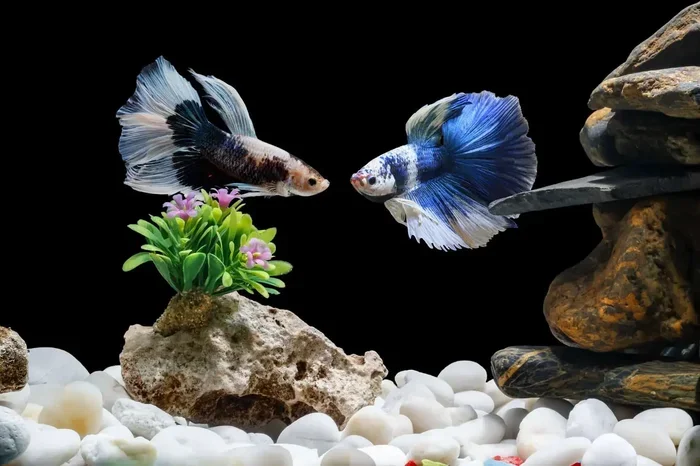
Male koi bettas are the show‑stoppers. Look for long, flowing fins, a bright “koi” pattern, and a broad, flattened head. Males also display a more aggressive, territorial demeanor.

Visual guide about How to Breed Koi Betta Fish
Image source: img95.699pic.com
Identifying a Healthy Female
Females are slightly plumper, especially when ripe with eggs. Their fins are shorter and their coloration, while still beautiful, is generally less intense. For a deeper dive into gender identification, check out how to tell the gender of a betta fish.
Conditioning Diet
Feed both fish high‑protein foods for 2‑3 weeks before breeding. Offer a mix of frozen bloodworms, brine shrimp, and quality betta pellets. Supplement with a small amount of boiled egg yolk once a week to boost egg production.
Acclimation Process
Move the fish into the breeding tank gradually. Use the bag‑drip method over 30‑45 minutes to avoid shock. Keep the water parameters identical to their home tank during acclimation.
3. Initiating Courtship and Spawning
Triggering the Mood
Once both fish are settled, increase the temperature by 2°F and extend the light period to 14 hours. The male will start flaring his fins and building a bubble nest at the water surface.

Visual guide about How to Breed Koi Betta Fish
Image source: act-upload.hoyoverse.com
Understanding Bubble Nests
A healthy nest looks like a fluffy, white mound of bubbles, often anchored to plant leaves. If the nest collapses, gently tap the glass to encourage the male to rebuild.
The Mating Dance
The male will perform a “ritual dance,” swimming in tight circles and displaying his fins. The female responds by vertical “spawning” posture, releasing eggs as the male releases milt. Expect 30‑100 eggs per spawning session.
Post‑Spawning Care
Immediately after spawning, remove the female to prevent her from eating the eggs. The male will guard the nest for 2‑3 days, tending to the eggs and keeping the water surface clean.
4. Raising the Fry: From Eggs to Juveniles
Egg Development
Eggs hatch in 24‑36 hours at 78°F. They appear as tiny black dots attached to the nest. The male continues to guard them until the fry become free‑swimming.
First Feeding – Infusoria
When the fry absorb their yolk sacs (about 3‑4 days), start feeding infusoria. You can culture infusoria using a small jar of lettuce water left in sunlight for 2‑3 days.
Transition to Microworms
After a week, introduce microworms (available at most pet stores). Feed 2‑3 times daily, ensuring the fry can chase and consume them easily.
Water Maintenance for Fry
Perform 10‑15 % water changes daily using pre‑conditioned water at the same temperature. Use a fine mesh net to avoid sucking up the tiny fry.
Preventing Disease
Maintain spotless water to avoid outbreaks of dropsy or fin rot. If you notice any fry with bloated bellies or discolored fins, act quickly—see our article on how to treat dropsy in betta fish for emergency steps.
5. Growing Juveniles to Show‑Ready Adults
Feeding Schedule
From 2‑weeks old, feed crushed high‑quality betta pellets twice daily. Supplement with baby brine shrimp 2‑3 times per week for extra protein.
Tank Transition
When the fry reach ½ inch, move them to a larger community tank with gentle filtration. Keep them in groups of at least six to reduce aggression.
Color Development
Bright “koi” patterns often intensify after the first month. Provide a varied diet and stable water conditions to encourage optimal coloration.
Selective Breeding Tips
To enhance specific patterns, keep detailed records of each pair’s traits. Choose the most vibrant offspring for future breeding cycles.
Conclusion: Your Journey as a Koi Betta Breeder
Breeding koi betta fish is a blend of science, patience, and a dash of artistry. By setting up the right environment, conditioning your fish, and caring for the delicate fry, you’ll experience the joy of watching these miniature works of art grow. Remember, every successful spawn teaches you something new—so keep notes, stay observant, and enjoy the colorful results of your dedication.
Frequently Asked Questions
What temperature is best for breeding koi betta fish?
Maintain 78‑80°F (25‑27°C) during conditioning and spawning. A gradual rise of 2°F helps trigger courtship behavior.
How can I tell if my betta fish is a male or female?
Males have longer, brighter fins and a broader head, while females are shorter‑finned with a fuller belly, especially when ready to spawn.
Do I need a separate tank for the fry?
Initially, the breeding tank doubles as a fry nursery. Once the fry are free‑swimming and larger than ½ inch, move them to a larger, gently filtered tank.
What should I feed the fry during their first week?
Start with infusoria, then transition to microworms after 5‑7 days. These tiny foods are easy for the fry to capture and digest.
How often should I change water in the breeding tank?
Perform 10‑15 % daily water changes with pre‑conditioned water at the same temperature to keep the environment pristine for eggs and fry.
Can I breed koi bettas without a bubble nest?
The male’s bubble nest is essential for egg protection. If the nest collapses, gently tap the glass to encourage rebuilding before spawning.