How to Tell the Gender of a Betta Fish
Want to know if your betta is male or female? Look for the tell‑tale fins, size differences, and subtle behavior patterns. This guide walks you through each clue so you can identify gender with confidence and keep your fish thriving.
Key Takeaways
- Fin shape matters: Males have long, flowing fins; females sport shorter, more rounded ones.
- Body size clues: Males are usually larger and more robust than females.
- Spot the “egg spot”: A small dark dot on the female’s ventral side is a reliable indicator.
- Behavior tells a story: Aggressive flaring is typical of males; schooling and nesting are female traits.
- Age influences visibility: Young bettas show fewer differences—wait until they’re 3‑4 months old.
- Use a gentle net and good lighting: Clear views prevent stress and reveal details.
- Know when to seek help: If you’re unsure, a vet or experienced hobbyist can confirm gender.
📑 Table of Contents
- Introduction: Why Knowing Betta Gender Matters
- 1. Physical Differences You Can See
- 2. Behavioral Signs That Reveal Gender
- 3. Age and Development: When Differences Appear
- 4. Practical Steps to Identify Your Betta’s Gender
- 5. Common Mistakes and How to Avoid Them
- Conclusion: Confidently Identify and Care for Your Betta
Introduction: Why Knowing Betta Gender Matters
Betta fish are famous for their dazzling colors and dramatic fins. Whether you’re a first‑time keeper or a seasoned hobbyist, the first question most owners ask is, “Is this a male or a female?” The answer isn’t just trivia—it affects tank setup, feeding, breeding plans, and even the fish’s overall health.
Male bettas are the show‑offs of the aquarium world. They flare, build bubble nests, and love a bit of rivalry. Female bettas, on the other hand, are more social, often thriving in small groups called sororities. Getting the gender right helps you avoid unnecessary fights, choose the right community, and enjoy the unique personalities each sex brings.
1. Physical Differences You Can See
1.1. The Fin Factor
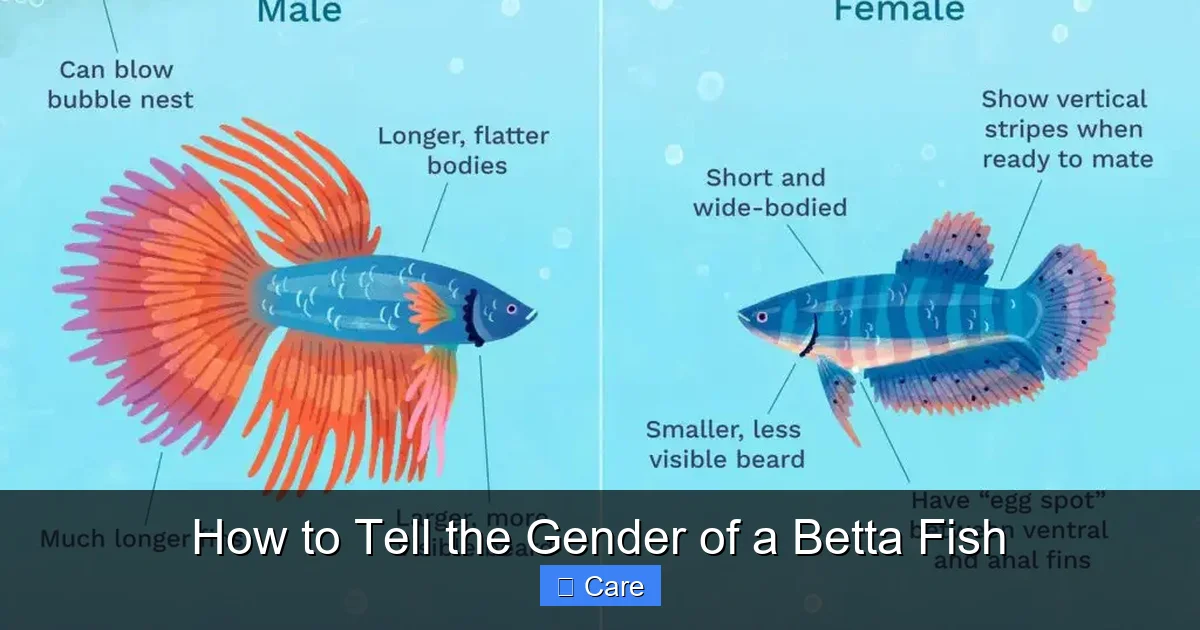
The most obvious clue is the fins. Male bettas, sometimes called “Siamese fighting fish,” grow extravagant, flowing fins that can reach several inches long. Look for:

Visual guide about How to Tell the Gender of a Betta Fish
Image source: i0.wp.com
- Long, pointed dorsal fin: It often looks like a sail.
- Broad, flowing caudal (tail) fin: Often fan‑shaped or veil‑like.
- Elongated anal fin (the “egg‑spot” area): In males, this fin is more pronounced and may have a darker edge.
Females have shorter, more rounded fins. Their dorsal and tail fins are still beautiful but lack the dramatic length of a male’s.
1.2. Body Shape and Size
Male bettas tend to be slightly larger and bulkier, especially when fully grown (about 2.5‑3 inches from nose to tail). Females usually stay a bit smaller, around 2‑2.5 inches, and have a more streamlined silhouette.
1.3. The “Egg Spot” (Ovipositor)
One of the most reliable visual markers is the tiny dark spot located on the underside of the female’s belly, just behind the pelvic fins. This is the ovipositor, where eggs would be released during spawning. Males may have a faint spot, but it’s generally lighter and less defined.
1.4. Color Intensity
While both sexes can be vivid, males often display brighter, more saturated colors—especially during breeding season. Females may have softer hues, though this is not a hard rule.
2. Behavioral Signs That Reveal Gender
2.1. Aggression and Flare Response
Male bettas are territorial. If you place a mirror near the tank, a male will flare his gills, spread his fins, and display a puffed‑up “show‑off” posture. Females may flare, but it’s usually less intense and shorter in duration.

Visual guide about How to Tell the Gender of a Betta Fish
Image source: cafishvet.com
2.2. Bubble Nest Building
Only males build bubble nests on the water surface. Watch for a cluster of tiny, white bubbles forming a raft. If you see this, you’re definitely looking at a male.
2.3. Social Dynamics
Females are more tolerant of other bettas. In a sorority tank, you’ll notice females swimming together, sharing space, and occasionally engaging in gentle “fin‑tapping” behavior. Males will quickly become aggressive if housed with other males.
2.4. Feeding Habits
During breeding, males become more protective of food near the nest, while females may become more selective, often feeding near the bottom. Observing who dominates the feeding spot can give clues, but it’s less reliable than visual cues.
3. Age and Development: When Differences Appear
3.1. Juvenile Stage (0‑2 Months)
Very young bettas look almost identical. Their fins are short, and the egg spot hasn’t formed yet. Patience is key—wait until they’re at least 3‑4 months old before making a call.

Visual guide about How to Tell the Gender of a Betta Fish
Image source: buildyouraquarium.com
3.2. Pre‑Adulthood (2‑4 Months)
At this stage, males start to develop longer fins and a slightly bulkier body. The first hints of a bubble nest may appear, especially if water temperature rises above 78°F (25.5°C).
3.3. Full Adult (4+ Months)
By six months, most physical differences are clear. The egg spot on females is fully visible, and males will have unmistakable fin length and bubble‑nest behavior.
4. Practical Steps to Identify Your Betta’s Gender
4.1. Set Up Proper Lighting
Good lighting is essential. Use a bright, white LED that mimics natural daylight. Avoid harsh glare; a diffuser works well.
4.2. Use a Gentle Net
Gently lift the betta with a soft mesh net. This lets you view the underside without stressing the fish. Keep handling brief—no more than 10 seconds.
4.3. Observe From Multiple Angles
Place the tank on a stable surface and view the fish from the side, top, and front. Look for fin length, the egg spot, and overall body shape.
4.4. Perform a Mirror Test
Hold a small mirror (or a piece of reflective glass) near the water surface. A male will react aggressively within seconds, flaring his fins and gills. A female’s reaction is milder or absent.
4.5. Check for Bubble Nests
After a few days of stable temperature (78‑80°F), look at the water surface. If you see a neat cluster of bubbles, you have a male.
4.6. Record Your Observations
Keep a simple log: date, temperature, observed traits, and any behavior notes. Over time, patterns become clear and help confirm gender.
5. Common Mistakes and How to Avoid Them
5.1. Relying on One Trait Alone
Some owners declare gender based solely on fin length. Remember, genetics, diet, and water conditions can affect fin growth. Use a combination of clues.
5.2. Misidentifying Young Fish
Calling a 1‑month‑old betta “male” can lead to future aggression if you later add a true male. Wait until the fish is at least 3‑4 months old.
5.3. Ignoring Stress Signs
If the fish shows signs of stress—clamped fins, loss of appetite, or faded colors—stop handling and let it recover before re‑examining.
5.4. Not Considering Species Variations
Some fancy bettas (e.g., half‑moon, crowntail) have naturally shorter fins, making gender harder to spot. In these cases, the egg spot and bubble nest become critical clues.
Conclusion: Confidently Identify and Care for Your Betta
Knowing the gender of your betta fish isn’t just a party trick—it’s a cornerstone of responsible fishkeeping. By watching fin shape, body size, the tiny egg spot, and behavior like bubble‑nest building, you can tell male from female with ease. Remember to be patient with young fish, use gentle handling, and keep a simple observation log. With these tools, you’ll create the perfect environment for your betta, whether you’re planning a solo showpiece, a peaceful sorority, or a breeding project.
Enjoy the process, share your discoveries with fellow hobbyists, and most importantly, give your betta the love and care it deserves. Happy flaring!
Frequently Asked Questions
How can I tell the gender of a betta fish without a mirror?
Look for fin length, body size, the presence of an egg spot on the underside, and whether a bubble nest is being built. Males have longer fins and build nests; females have a noticeable dark spot near the vent.
Do all male bettas build bubble nests?
Yes, male bettas naturally create bubble nests when the water temperature is warm (78‑80°F) and they are ready to breed. Females never build nests.
Can a female betta have long fins?
Some fancy varieties, like half‑moon females, can have relatively long fins, but they are usually less flowing and lack the dramatic edge of a male’s fins.
What if I still can’t tell the gender after a month?
Wait another few weeks as the fish matures. By 4‑5 months most physical differences become clear. You can also consult a vet or an experienced breeder for a second opinion.
Is it safe to keep a male and female together?
Only for short breeding periods under close supervision. After spawning, males become aggressive and may harm the female, so they should be separated once eggs are laid.
Why does my betta’s color change when I try to identify its gender?
Betta fish often become more vibrant when stressed or excited. A mirror test or handling can cause temporary color intensification, which is normal and not a gender indicator.