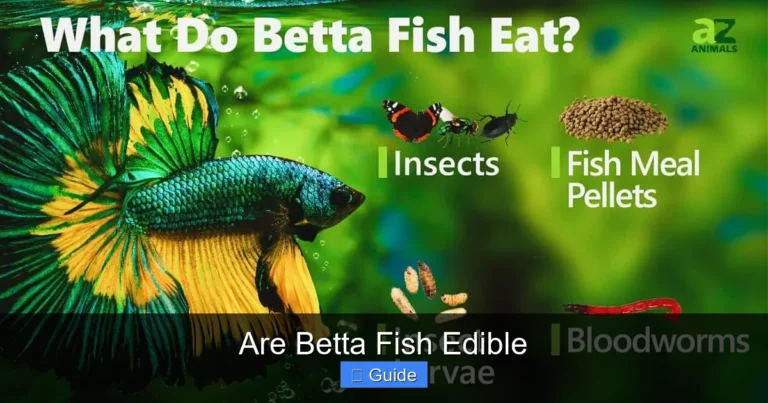
Will Betta Fish Eat Goldfish
No, you should never house a betta fish with a goldfish. Betta fish are carnivorous, aggressive predators with specific warm water needs, while goldfish are cold-water, messy omnivores. The combination leads to almost certain stress, injury, or death for the goldfish from fin-nipping, and poor health for both due to incompatible water parameters. Understanding their fundamental biological and behavioral differences is crucial for providing proper care and ensuring the long-term health and safety of both species separately.
So, you’ve got a beautiful, flashy betta fish with its flowing fins and a curious, chubby little goldfish. They’re both classic aquarium pets, right? They must get along. Unfortunately, this is one of the most common and dangerous misconceptions in fishkeeping. The short, blunt answer to the question will betta fish eat goldfish is: they won’t typically eat them whole like a snack, but they will almost certainly attack them with devastating consequences. Mixing these two species is a recipe for disaster, stress, and likely the death of the goldfish. This guide will dismantle the myth and explain, in detail, why these two fish are fundamentally incompatible, what the real risks are, and how to be a responsible pet owner for each.
Key Takeaways
- Fundamental Biology Conflict: Bettas are tropical, carnivorous surface-dwellers with a labyrinth organ for breathing air; goldfish are cold-water, heavy-bodied omnivores that produce massive amounts of waste. Their core needs are diametrically opposed.
- Aggression is a Guarantee: Bettas, especially males, are fiercely territorial. Any fish with flowing fins, like a fancy goldfish, is seen as a rival to be attacked, leading to relentless fin-nipping and potential fatal injury.
- Water Parameters are Incompatible: Bettas require warm water (78-80°F/25.5-26.5°C) and pristine, stable conditions. Goldfish thrive in cooler water (65-75°F/18-24°C) and are notoriously hard on water quality. You cannot safely compromise for both.
- Goldfish are Not “Tough” Enough: The myth that goldfish can “handle” a betta is false. Fancy goldfish are slow, clumsy, and their elaborate fins are an irresistible target. Even hardier common goldfish will suffer from chronic stress and injury.
- Size is Not a Deterrent: A betta will attack a goldfish many times its size due to territorial instinct, not hunger. The betta’s aggression is about defending space, not necessarily eating the other fish, but the damage it causes is lethal regardless.
- Stress Kills Both: The constant tension in a shared tank suppresses the immune system of both fish. The betta remains in a perpetual state of alert, and the goldfish lives in fear, making both susceptible to disease like fin rot or ich.
- Safe Alternatives Abound: For a betta, peaceful, tropical, non-finned community fish like neon tetras (in a large enough school) or harlequin rasboras are suitable. Goldfish should always be kept in species-only tanks with ample filtration.
📑 Table of Contents
- The Core Conflict: Why Bettas and Goldfish Are Biologically Opposites
- The Aggression Factor: Betta Behavior Explained
- Debunking the Myths: “But My Betta is Calm” or “The Goldfish is Bigger”
- The Real Risks: What Actually Happens in a Shared Tank
- Creating the Right Home: Perfect Tankmates for Each Species
- What To Do If You Already Have Them Together
- Conclusion: Responsible Fishkeeping Means Saying “No”
The Core Conflict: Why Bettas and Goldfish Are Biologically Opposites
To understand why this combination fails, we must first look at the basic biology and evolutionary history of each fish. They come from entirely different worlds, adapted to survive in vastly different environments. Forcing them to share a tank is like expecting a desert lizard and a polar bear to thrive in the same habitat—it simply ignores their most basic needs.
Betta Fish: The Tropical, Air-Breathing Predator
The betta fish, or Siamese fighting fish, hails from the shallow, slow-moving rice paddies and stagnant puddles of Thailand and Southeast Asia. This environment is warm (often 80°F+), has low oxygen content, and is rich in vegetation at the surface. This led to a key adaptation: the labyrinth organ. This specialized structure allows bettas to gulp air from the surface and extract oxygen, making them incredibly tolerant of poor water conditions compared to many fish. However, this also makes them obligate surface feeders. In the wild, their diet consists of insects, insect larvae (like mosquito wrigglers), and small crustaceans that fall onto the water’s surface. They are, by nature, carnivores. Their long, flowing fins are not for graceful swimming but are secondary sexual characteristics used in displays to intimidate rivals and attract mates. This is crucial: those beautiful fins are a direct challenge to another betta.
Goldfish: The Cold-Water, Waste-Producing Omnivore
Goldfish (Carassius auratus) are domesticated descendants of a wild carp from temperate, cool freshwater streams and lakes in Asia. Their entire physiology is built for cooler water, typically between 65-75°F (18-24°C). They are powerful, heavy-bodied swimmers with a high metabolic rate that produces an enormous amount of waste—specifically ammonia—through both their gills and digestive system. This is why goldfish are infamous for requiring massive filtration and frequent water changes; they are bio-load heavy. Their digestive system is long and complex, designed to process plant matter, algae, and small invertebrates. They are true omnivores with a tendency toward herbivory. Their fancy varieties (Orandas, Telescope eyes, Ranchus) have been selectively bred for exaggerated features like huge heads, fluid-filled sacs, and drooping, telescope vision—traits that make them slow, clumsy, and utterly defenseless in a confrontation.
The Water Parameter Chasm
This is the most technical but absolute reason for incompatibility. The ideal temperature ranges barely overlap, and compromising is fatal.
- Betta Temperature: 78-80°F (25.5-26.5°C). Below 76°F, their immune system weakens, and they become lethargic.
- Goldfish Temperature: 65-75°F (18-24°C). Sustained temperatures above 78°F severely stress goldfish, accelerate their metabolism (leading to more waste and a shorter lifespan), and can cause oxygen depletion.
You cannot set a tank to 72°F and have both be happy. The betta will be sluggish and prone to disease; the goldfish will be stressed and overheating. There is no safe middle ground.
The Aggression Factor: Betta Behavior Explained
Even if you could magically solve the temperature issue, the betta’s behavior would immediately doom the goldfish. The aggression of a betta, particularly a male, is not a matter of personality but of genetics and instinct.

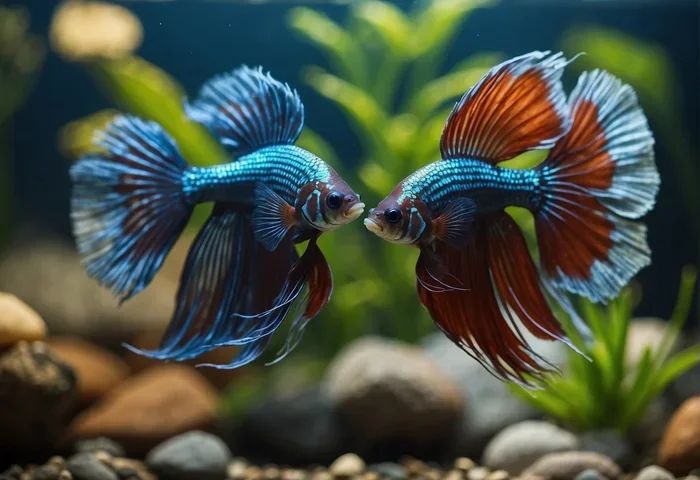
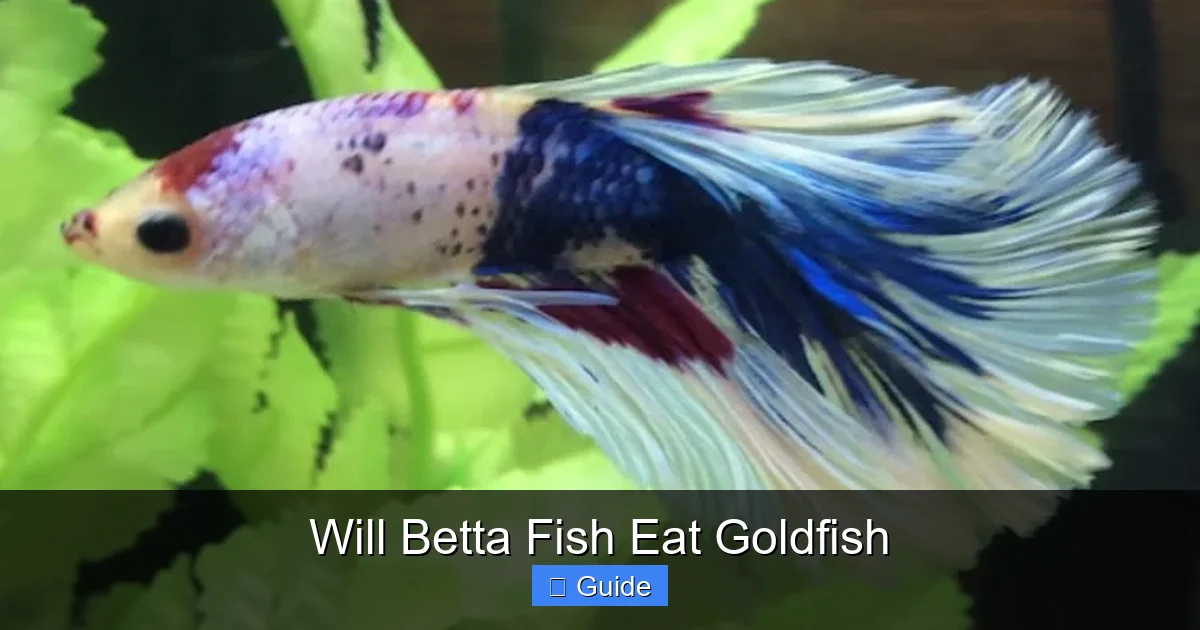
Visual guide about Will Betta Fish Eat Goldfish
Image source: petfood.guide
Territoriality and the “Moving Target” Instinct
Bettas are solitary by nature. In the wild, a male stakes out a small territory (a clump of plants or a root system) and defends it vigorously from other male bettas. Any fish that enters this space is a trespasser. In a tank, the entire aquarium is the betta’s territory. A goldfish, with its slow, meandering, bottom-dwelling nature, will inevitably wander into the betta’s personal space, especially if the betta is claiming a corner or a plant. The betta perceives this as an invasion.
The Trigger: Flowing Fins and Slow Movements
What sets a betta off more than anything is the sight of another fish with large, flowing fins. The betta’s own fins are its pride and its weapon. A fancy goldfish with a massive, frilly tail or a veiltail is essentially a walking, swimming insult to the betta’s masculinity. The betta’s instinct is to attack and nip at these fins to assert dominance. Furthermore, the goldfish’s slow, almost “floating” movements trigger a predatory response. Bettas are ambush predators; slow-moving targets are easy prey. The goldfish is not fast enough to escape a determined betta’s lunge.
Gill Flaring and Biting: The Attack Sequence
You will see the warning signs clearly. The betta will flare its gills (making its head look larger), extend its fins to their maximum, and often change to a darker, more intense color. It will then dart at the goldfish, taking quick bites out of its fins and tail. These bites are not gentle nips; they are surgical removals of fin tissue. The result is fin rot, a bacterial infection that sets in on the torn, ragged fin edges. This infection can spread rapidly and is often fatal. Even if the goldfish survives the initial attacks, it will live in a constant state of fear, hiding at the bottom, which leads to further health decline.
Debunking the Myths: “But My Betta is Calm” or “The Goldfish is Bigger”
Every time this topic comes up in online forums, a handful of well-meaning but dangerously misinformed stories surface. Let’s address them head-on.
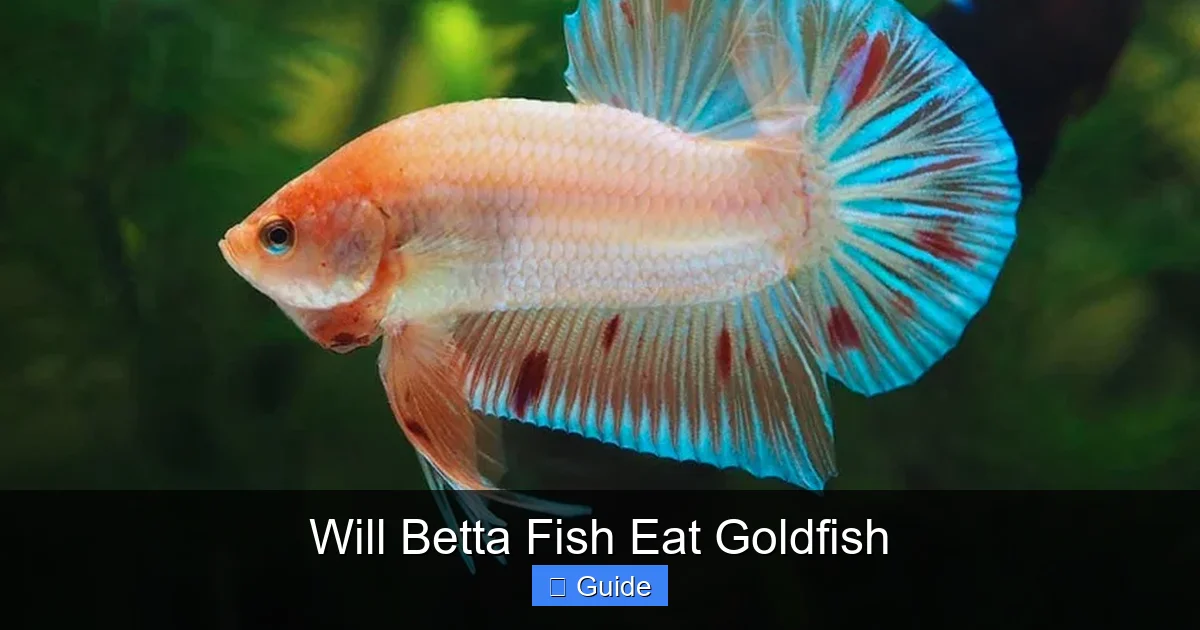
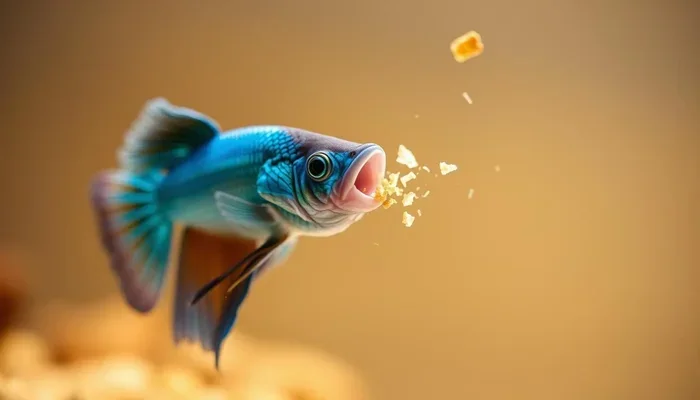
Visual guide about Will Betta Fish Eat Goldfish
Image source: thegoldfishtank.com
Myth 1: “I had a betta and a goldfish together for a year with no problems.”
This is the most insidious myth because it’s based on anecdote, not science. What likely happened:
- The betta wasn’t truly a betta: It might have been a female betta, which are generally less aggressive (though not guaranteed safe).
- The goldfish was a single, common variety: A common comet or shubunkin goldfish is faster and less fin-cluttered than a fancy variety. It might have been able to stay out of the betta’s way.
- The tank was too small to establish territory: In a very small tank, the betta may not have been able to establish a distinct territory to defend, or the goldfish was so stressed it was constantly hiding and the betta ignored it.
- Chronic stress was invisible: The goldfish was likely living with a suppressed immune system, its lifespan shortened, even if it appeared “fine.” The betta was also stressed by the constant presence of another fish in its space.
This is not a success story; it’s a story of delayed consequences. It’s playing Russian roulette with your pets’ health.
Myth 2: “A larger goldfish will eat the betta.”
While a large, common goldfish *could* physically swallow a small betta, this is highly improbable. Goldfish are not predatory in that sense. Their mouths are designed for scavenging and grazing. The real danger is not the goldfish eating the betta; it’s the betta relentlessly attacking the goldfish. The goldfish’s size does not deter the betta’s territorial aggression. A 1-inch betta will charge a 6-inch goldfish if it feels its space is being invaded. The goldfish is simply too big and clumsy to effectively retaliate or escape constant harassment.
Myth 3: “I can use a tank divider.”
A solid divider is the only way to physically keep them in the same tank system without direct contact. However, this still does not solve the water parameter incompatibility. You would be forcing the betta to live in warmer water it needs while the goldfish side is cooler, or vice-versa. You would also be maintaining a single filtration and heating system for two incompatible bioloads. It’s an expensive, complicated, and ultimately pointless workaround that creates more problems than it solves. Separate tanks are the only ethical and practical solution.
The Real Risks: What Actually Happens in a Shared Tank
Let’s walk through the likely, grim sequence of events if you ignore all advice and place these two together.
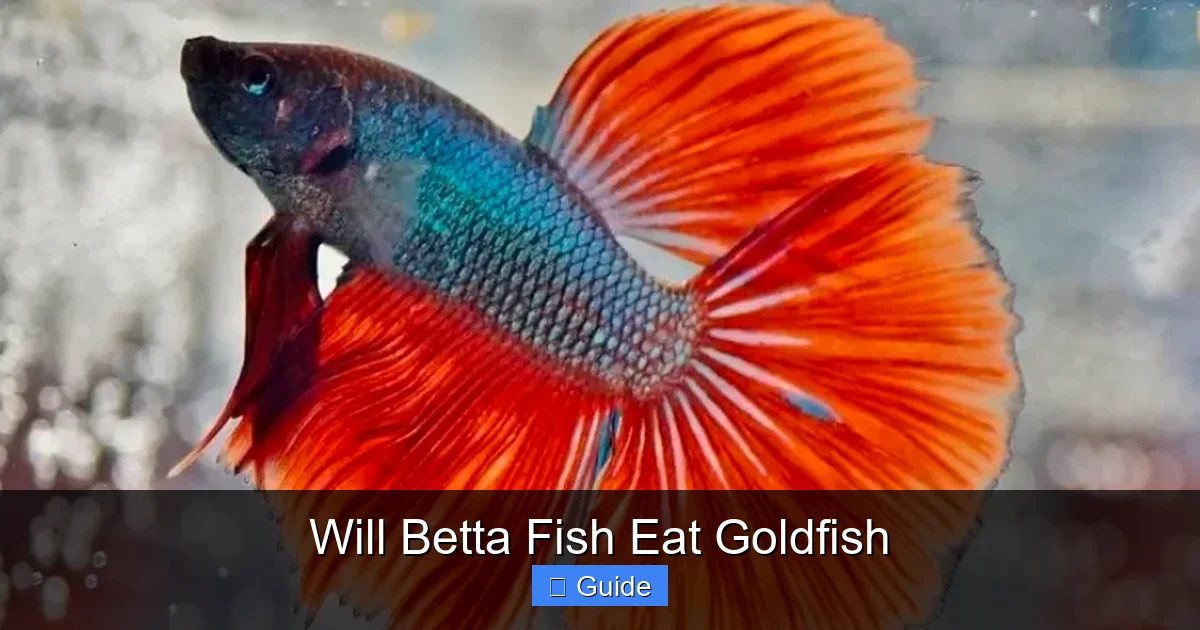
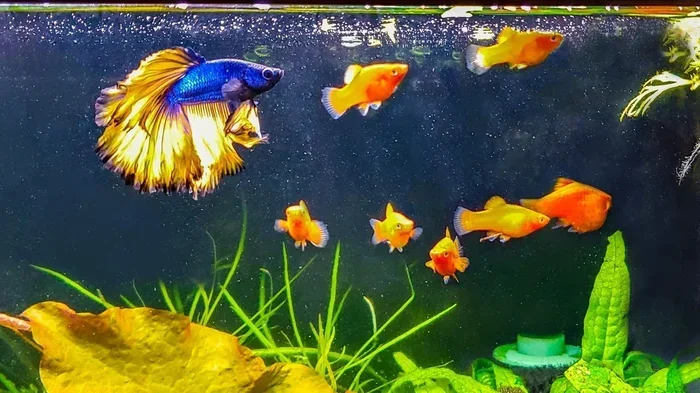
Visual guide about Will Betta Fish Eat Goldfish
Image source: thegoldfishtank.com
Day 1-3: The Initial Assessment
The betta immediately notices the goldfish. It will likely flare, chase, and nip at the goldfish’s fins on sight. The goldfish, confused and slow, will try to swim away but is no match for the betta’s speed and agility. The goldfish may hide at the bottom, under decorations, or behind filters.
Week 1-2: Physical Damage and Stress
The goldfish’s fins begin to show signs of damage. Rips, tears, and missing chunks become visible. This is the perfect entry point for fin rot, a bacterial infection. You might see a white, gray, or red fuzzy margin on the damaged fin tissue. The goldfish stops eating as much due to stress and its impaired swimming ability (damaged fins make it hard to navigate). Its colors may fade. The betta remains in a constant state of agitation, flaring at the goldfish whenever it moves, which suppresses its own immune system.
Week 3-4: Systemic Failure
Fin rot spreads. The goldfish becomes listless, floats erratically (a sign of swim bladder issues from stress or poor water quality), and may clamp its fins tightly against its body. Ammonia spikes from the goldfish’s waste (already high) combined with the betta’s stress-induced reduced appetite (leading to decaying food) create a toxic environment. Both fish are now immunocompromised. Secondary infections like ich (white spot disease) or dropsy (a symptom of organ failure) become highly likely.
The Inevitable Outcome
The goldfish is the first to go, succumbing to a combination of physical injury, fin rot, and systemic poisoning from poor water. The betta, having lived in chronically poor water conditions (due to the goldfish’s massive waste load overwhelming the filter) and constant stress, will soon follow with a similar fate. You have not created a community; you have created a toxic, stressful environment that killed two pets. The financial cost of two tanks, proper filters, and heaters is far less than the emotional cost and potential vet bills for a sick fish.
Creating the Right Home: Perfect Tankmates for Each Species
The good news is that both bettas and goldfish can be wonderful, fascinating pets when housed correctly with appropriate companions.
For Your Betta: The Tropical Community Tank
A single male betta (or a sorority of 5+ females in a heavily planted 20+ gallon tank) can thrive with peaceful, tropical community fish. The key rules:
- No long, flowing fins: Avoid guppies, fancy mollies, or any fish with a betta-like silhouette.
- No bright colors that mimic a betta: Avoid other very colorful, aggressive fish.
- Choose peaceful, fast-moving, schooling fish: Ideal candidates are small groups (6-8) of neon tetras, ember tetras, harlequin rasboras, or celestial pearl danios. These fish occupy the middle and top levels, are fast enough to evade a curious betta, and being in a school makes them confident.
- Add peaceful bottom dwellers: A small group of corydoras catfish or khuli loaches are excellent. They occupy the bottom, are armored, and are completely ignored by bettas.
- Tank Size is Critical: A minimum of 10 gallons for a betta with a few tankmates, 20+ gallons for a community. More space dilutes the betta’s territorial focus.
- Heavily Planted: Live plants (like java fern, anubias, cryptocorynes) or silk plants provide essential hiding spots and break lines of sight, reducing stress for all fish.
Example Setup: A 20-gallon long tank with a heater set to 78°F, a gentle sponge filter (betta’s delicate fins hate strong flow), 8 ember tetras, 4 pygmy corydoras, and a single male betta. This is a stable, beautiful, and safe community.
For Your Goldfish: The Cold-Water, Spacious Kingdom
Goldfish are social and should be kept in groups of at least 2-3. Their needs are simple but demanding: massive water volume and powerful filtration.
- Tank Size: This cannot be overstated. A single common/comet goldfish needs a minimum of 75 gallons when fully grown (12+ inches). Fancy goldfish need a minimum of 30 gallons for the first, plus 10-20 gallons for each additional. A 40-gallon breeder is the absolute bare minimum for a pair of fancy goldfish. They will quickly outgrow a 10-gallon bowl or a 20-gallon “starter” tank.
- Filtration: You need a filter rated for at least 2x, preferably 4x, the tank’s water volume. Canister filters are excellent. Goldfish produce a staggering amount of ammonia.
- No Heaters: They prefer cooler water. A heater is not needed and is dangerous if it malfunctions.
- Tankmates: Other goldfish are the only safe choice. Their temperature and bioload needs are identical. Do not mix fancy and common/comet varieties; the faster, more agile commons will outcompete the fancies for food. Do not add tropical fish, plecos (which need warmer water), or other cold-water species like weather loaches (which need even cooler water and different conditions).
- Substrate and Décor: Avoid sharp gravel that can damage their delicate barbels (whiskers). Use fine sand or smooth, large gravel. Provide open swimming space. Goldfish are active swimmers and diggers.
Example Setup: A 125-gallon tank with a large canister filter, a sand substrate, and a small group of 3 fancy oranda goldfish. This gives them room to grow, swim, and forage without fouling the water too quickly.
What To Do If You Already Have Them Together
If you are reading this and have a betta and a goldfish currently sharing a tank, you must act immediately. Every day together is a day of suffering and increased risk of death.
The Immediate Separation Protocol
- Prepare a Separate Hospital Tank: Get a second tank or a large, clean food-safe container (like a Rubbermaid tote) ready. For the goldfish, this needs to be at least 20 gallons if it’s a fancy variety, filled with dechlorinated water at the correct temperature (around 72°F for a fancy, 68°F for a common). For the betta, a 5-gallon tank with a heater set to 78°F and a sponge filter is the minimum.
- Test Your Water: Use a liquid test kit (like API Freshwater Master Test Kit) to check ammonia, nitrite, and nitrate levels in the shared tank. You will likely find toxic levels of ammonia.
- Move the Goldfish First: Using a net, gently transfer the goldfish to its new, properly set-up, cooler tank. Do not reuse the water from the toxic shared tank.
- Move the Betta Second: Then, transfer the betta to its new, properly heated tank. Again, use clean, treated water.
- Do Not Reintroduce: There is no “trying again.” The stress of the initial cohabitation has already damaged their relationship and health. The only safe path is permanent separation.
Treating the Aftermath
Both fish will need care to recover.
- For the Goldfish: Its fins are likely torn. Perform daily 25% water changes in its new tank to keep parameters pristine. Add a safe antibacterial like Methylene Blue or a commercial fin rot treatment to the water to help prevent infection. Ensure it has easy-to-eat food (like high-quality sinking pellets or peeled peas) as it may be stressed and not swimming well to the surface.
- For the Betta: Its stress levels will plummet once the goldfish is gone. Ensure its new tank is warm, clean, and has plenty of plants/hiding spots. Feed high-quality betta pellets and occasional frozen foods (daphnia, brine shrimp) to boost its immune system. Monitor for signs of illness like clamped fins or lethargy.
The shared tank must be completely emptied, cleaned with vinegar (not soap!), and restocked as either a dedicated betta tank or a dedicated goldfish tank. Do not attempt to put any other fish in it until the cycle is re-established and stable.
Conclusion: Responsible Fishkeeping Means Saying “No”
The dream of a beautiful, diverse community tank is powerful. But true responsible fishkeeping is rooted in understanding and respecting the natural history and biological needs of the animals in our care. The question will betta fish eat goldfish is ultimately the wrong question. The real question is: can two animals with opposite evolutionary paths, opposite dietary needs, opposite temperature requirements, and opposite temperaments ever thrive together? The answer, resoundingly, is no.
Choosing to keep a betta means committing to a warm, pristine, planted nano or medium tank with peaceful, fast-moving tropicals. Choosing to keep a goldfish means committing to a vast, cool, heavily-filtered pond-like environment with its own kind. These are not compromises; they are the specific, non-negotiable requirements for welfare. By providing the correct environment for each species, you move from being a pet owner to a true caretaker. You ensure your betta flares its fins in health and your goldfish prospers for a decade or more. Don’t gamble with their lives for a visually appealing but fundamentally flawed idea. Keep them separate, and enjoy the unique beauty of each species in its perfect, intended home.
Frequently Asked Questions
Will a betta fish definitely attack a goldfish?
Almost certainly, yes. Betta aggression is a strong genetic instinct. Any fish with flowing fins or slow movements, like a fancy goldfish, is a prime target. While a betta might ignore a very fast, common goldfish in a huge tank, the risk of stress and injury is always extremely high and not worth taking.
What about a female betta and a goldfish? Is that safer?
Slightly, but not safe. Female bettas are less aggressive than males but can still be territorial and nippy, especially in small tanks. They may still harass a slow-moving goldfish. The fundamental water parameter conflict remains unchanged, making the pairing unviable.
Can I use a very powerful filter to handle the goldfish’s waste in a betta tank?
No. While a strong filter helps, it doesn’t change the temperature requirement. You cannot have one tank at 72°F for a goldfish and 78°F for a betta simultaneously. The waste issue is also a factor of bioload, not just filtration; the goldfish’s sheer mass produces too much ammonia for a small betta tank’s biofilter to handle long-term.
What is the absolute smallest tank I could theoretically keep them in together?
There is no safe tank size. Even in a 100-gallon tank, the temperature incompatibility and the betta’s relentless territorial aggression would cause the goldfish severe stress and physical harm. Size does not override biology and behavior.
Are there any fish that can live with both bettas and goldfish?
No single species can thrive in both the warm, soft, acidic water a betta needs and the cool, hard, alkaline water a goldfish needs. The conditions are mutually exclusive. You must choose one biotope (tropical or cold-water) and stock it accordingly.
My goldfish is huge and the betta is tiny. Won’t the betta be scared?
Size does not intimidate a betta. They regularly challenge fish much larger than themselves due to their territorial drive. The betta will still dart in and nip at the goldfish’s fins. The goldfish’s size may make it harder to catch, but the constant harassment causes immense stress and the fin damage will still occur.