Can Betta Fish Lay Eggs Without a Male
Yes, a female betta fish can physically produce and release eggs without the presence of a male. However, these eggs will be unfertilized and will never develop into fry. This natural process, often triggered by environmental factors, can sometimes lead to a serious health condition called egg binding if the eggs are not expelled properly. Understanding this cycle is crucial for the proper care of any female betta, whether kept alone or in a breeding setup.
Key Takeaways
- Egg Production vs. Fertilization: Female bettas produce eggs as part of their natural cycle, but a male is required for external fertilization. Eggs laid solo are infertile and non-viable.
- Egg Binding is a Critical Risk: The primary danger of a female laying eggs without a male is the potential for egg binding, a painful and potentially fatal blockage.
- Triggers are Environmental: Egg production can be stimulated by factors like warm water, frequent water changes, the presence of other females, or even seeing their own reflection.
- Unfertilized Eggs Must Be Removed: To prevent water quality crashes and fungal growth, any unfertilized eggs must be promptly siphoned out of the tank.
- Signs of Readiness: A female ready to spawn will develop a noticeable egg spot (ovipositor) near her ventral fin and may appear plump or “bloated.”
- No Parental Care: Without a male to tend a bubble nest, any eggs—fertilized or not—will be ignored and will inevitably die or be eaten by the female.
📑 Table of Contents
- Understanding Betta Fish Reproduction: Separating Fact from Fiction
- The Female Betta’s Egg Production Cycle
- Egg Binding: The Silent and Serious Threat
- The Role of the Male: Why He’s Non-Negotiable for Fry
- What Happens to Unfertilized Eggs? A Necessary Cleanup
- Common Misconceptions and Final Recommendations
Understanding Betta Fish Reproduction: Separating Fact from Fiction
One of the most common and understandable questions in the betta fish world is, can betta fish lay eggs without a male? The answer is a definitive yes, but the full story is filled with crucial biological details and important care implications that every betta owner must know. It’s a topic wrapped in myth, often stemming from the mistaken belief that egg-laying automatically means pregnancy or that fry will appear. In reality, the process is a fundamental part of a female betta’s physiology, completely separate from the act of reproduction itself.
Think of it this way: a female betta’s body is like a factory that periodically produces a batch of raw materials (eggs). For a product (fry) to be made, a specialist (the male) must come in, activate the process (fertilization), and then provide the specialized nursery (the bubble nest) for development. If the specialist never arrives, the raw materials simply go to waste, and if they aren’t disposed of properly, they can cause a factory shutdown (egg binding). This guide will walk you through every stage of this process, from the subtle signs of egg development to the urgent steps needed if your female betta becomes egg-bound.
The Fundamental Biology: Ovulation vs. Spawning
To grasp why a female betta can lay eggs alone, we must distinguish between two key events: ovulation and spawning. Ovulation is the internal, hormonal process where the female’s body matures and releases a clutch of eggs into her oviduct. This is an involuntary, cyclical event driven by genetics and environmental cues. Spawning is the external, behavioral event where the male and female interact, the female releases the eggs, and the male simultaneously fertilizes them as they fall into his bubble nest. A female can absolutely complete the first step (ovulation and subsequent egg release) without ever engaging in the second.
The Female Betta’s Egg Production Cycle
Female bettas, like many egg-laying fish, do not have a menstrual cycle like mammals. Instead, they are spawners, meaning they produce eggs in batches, or clutches, in response to specific environmental stimuli. This cycle can occur roughly every 2-4 weeks under optimal conditions, though it varies greatly by individual fish, age, and health. A young, healthy female in prime condition may show signs of readiness more frequently.

Visual guide about Can Betta Fish Lay Eggs Without a Male
Image source: petfishonline.com
What Triggers Egg Development?
Several common tank conditions can act as triggers, fooling a female betta’s body into thinking it’s time to spawn, even if no male is present:
- Warm, Stable Water Temperature: A consistent temperature in the upper range of their comfort zone (78-80°F or 25.5-26.5°C) mimics the warm, shallow tropical waters of their native Thailand where breeding occurs.
- Frequent Water Changes: Large, clean water changes, especially with slightly cooler water, can simulate the rainy season—a classic trigger for many tropical fish to spawn.
- Presence of Other Females: In a sorority tank, the social hierarchy and constant activity can stimulate hormonal responses in subordinate females.
- Visual Stimulation: Seeing another betta (even its own reflection in a glass wall) can initiate courtship behaviors and hormonal shifts.
- High-Quality, Protein-Rich Diet: A diet abundant in high-quality pellets, frozen or live foods (like brine shrimp or bloodworms) provides the necessary nutrients for egg development.
It’s important to note that these triggers are general environmental cues. A female betta living a quiet, solitary life in a stable tank may still produce eggs on her own internal schedule, though it may be less frequent.
Recognizing the “Egg Spot” and Physical Changes
The most visible sign that a female betta is carrying eggs is the development of a small, white or pale yellow protrusion called the ovipositor or “egg spot.” This is located on the underside of her body, just in front of her ventral (anal) fin. It’s not an egg itself, but the opening through which she will expel the eggs. Along with this, her abdomen may appear slightly swollen, rounded, or “bloated.” This is not necessarily fat; it’s the mass of developing eggs. The body often takes on a more symmetrical, pear-like shape from above, rather than the lean profile of a non-cycling female. Some females may also display more frantic swimming, “flaring” at reflections, or a loss of appetite as they become biologically preoccupied.
Egg Binding: The Silent and Serious Threat
This is the most critical section of our discussion. Can betta fish lay eggs without a male? Yes, but if the eggs are not successfully expelled, they can become retained inside the female’s body. This condition is known as egg binding (or dystocia) and it is a veterinary emergency. The retained eggs will continue to absorb fluid and swell, putting immense pressure on the internal organs. The fish becomes progressively more constipated, her body distends unnaturally, and she will eventually die from organ failure or a severe internal infection if not treated.

Visual guide about Can Betta Fish Lay Eggs Without a Male
Image source: animalshq.com
Symptoms of Egg Binding
Early detection is vital. Watch for these progressive signs:
- Severe, Distended Bloating: The swelling is extreme, often looking like a golf ball or marble is stuck inside her. The scales may even begin to protrude (pineconing) in advanced cases due to internal pressure.
- Lethargy and Clamped Fins: She will be extremely inactive, resting at the bottom or on plants, with fins held tightly against her body.
- Loss of Appetite: Complete refusal of food.
- Labored Breathing: Gasping at the surface or rapid gill movement due to pressure on the swim bladder.
- Constipation: No fecal matter is produced for several days.
Important Distinction: A female carrying a normal, healthy clutch of eggs will be slightly plump but active, alert, and may still eat. Egg binding involves extreme, painful distension and clear signs of illness.
Immediate Treatment Steps for Egg Binding
If you suspect egg binding, time is of the essence. Follow this protocol:
- Isolate: Gently net the female into a separate, bare hospital tank (2.5-5 gallons) with clean, warm water (80-82°F or 27-28°C). This reduces stress and allows for precise treatment and observation.
- Fast: Withhold food for 24-48 hours to clear any digestive blockage that might be compounding the issue.
- Epsom Salt Bath: This is the primary first-aid treatment. Add 1 tablespoon of pure Epsom salt (magnesium sulfate) per 5 gallons of hospital tank water. Magnesium sulfate acts as a muscle relaxant and can help ease the passage of the egg mass. Let the fish soak for 15-30 minutes daily for 2-3 days. Ensure the salt is pure Epsom salt with no additives or fragrances.
- Increase Water Flow Gently: A very gentle filter output or airstone can create mild water movement that sometimes stimulates the fish’s natural expulsion reflexes.
- Consult an Aquatic Vet: If there is no improvement within 48 hours of Epsom salt treatment, seek professional help. An experienced aquarist or veterinarian may be able to perform a manual expression (a very delicate procedure) or prescribe medications to address secondary infections.
Never try to physically squeeze or massage the fish yourself. This can cause fatal internal injuries.
Prevention: The Best Cure
Preventing egg binding is always preferable to treating it. For the solitary female betta:
- Stable Environment: Avoid unnecessary, drastic environmental changes that repeatedly trigger her cycle. Maintain consistent temperature and perform regular, moderate water changes (25% weekly) instead of occasional large ones.
- Dietary Management: Feed a high-quality, balanced diet, but avoid overfeeding with excessive protein “treats” that can over-stimulate egg production. Include fiber-rich foods like daphnia, which also acts as a natural laxative.
- Provide Hiding Spots and Plants: Live or silk plants give her a sense of security and can reduce stress-induced hormonal spikes.
- Manage Reflections: If she is constantly flaring at her reflection in the glass, consider using a background on the outside of the tank or a light diffuser to break up the reflection.
The Role of the Male: Why He’s Non-Negotiable for Fry
While a female can lay eggs solo, the male betta’s role in actual reproduction is elaborate, precise, and absolutely essential for any chance of the eggs developing into live fry. His involvement begins long before the eggs are ever released.
Visual guide about Can Betta Fish Lay Eggs Without a Male
Image source: theaquaadvisor.com
The Meticulous Construction of the Bubble Nest
The male betta’s first and most important task is to build a bubble nest. This is not a随机 collection of bubbles; it is a carefully constructed architecture made of air bubbles coated with his saliva, which gives it stability and longevity. He builds it at the water’s surface, often under a leaf, a piece of décor, or in a corner of the tank. The quality and size of the nest are a direct indicator of his health, vigor, and readiness to spawn. A sloppy or small nest may cause a discerning female to reject him. The nest serves as the incubator and nursery for the fertilized eggs and, later, the free-swimming fry.
The Spawning Embrace and Fertilization
When a gravid female approaches the male’s nest, he performs an elaborate courtship dance. If she is receptive, they engage in the iconic “spawning embrace.” The male wraps his body tightly around the female, often turning her upside down. In this position, she releases a small cluster of 10-30 eggs. Simultaneously, the male releases his sperm (milt) to fertilize the eggs externally as they fall. This embrace is repeated many times over the course of several hours until all hundreds of eggs are released and fertilized. The male’s instinct is then to immediately and diligently gather any eggs that sink and carefully place them into the protective bubble nest. The female’s role is essentially complete at the moment of release; she is often driven away or even attacked by the male afterward, as her presence is now a threat to the eggs.
What Happens to Unfertilized Eggs? A Necessary Cleanup
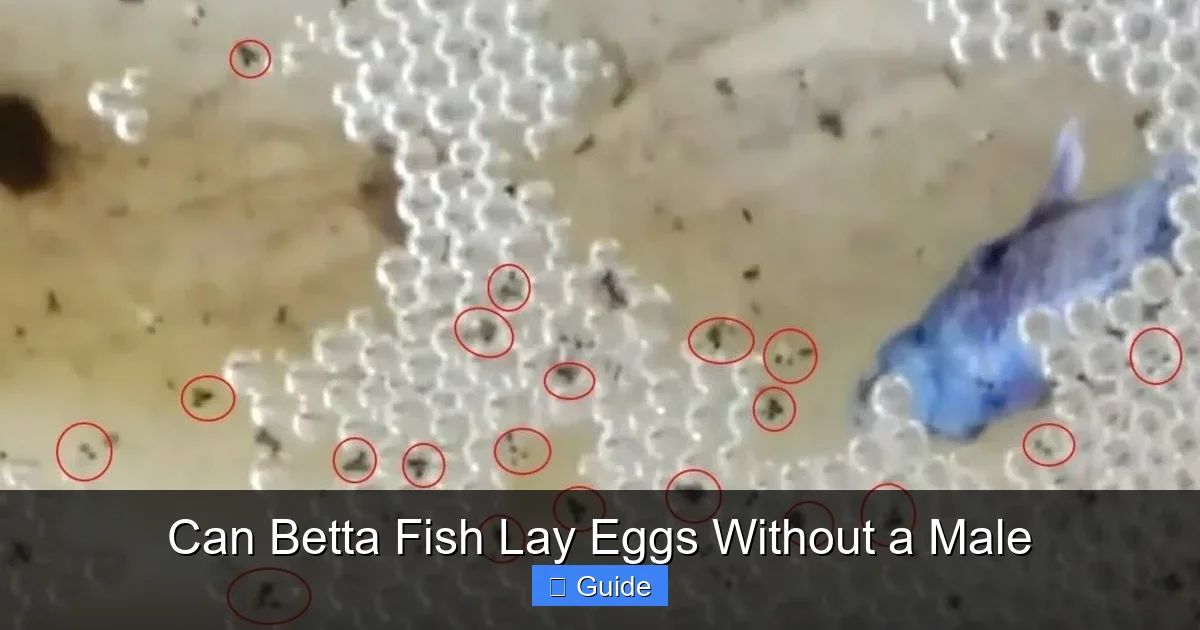
If a female betta releases eggs in a tank without a male, those eggs are 100% unfertilized. They will appear as tiny, white or clear spheres, about 1mm in diameter. Without fertilization, they have no developmental potential. However, they do not just harmlessly disappear. They will begin to decompose within hours, rapidly fouling the water with ammonia and promoting the growth of fuzzy white fungus. This poses a significant health risk to the female and any other tank inhabitants.
Identifying and Removing Unfertilized Eggs
Unfertilized eggs are often slightly smaller and more opaque than fertilized ones, which may have a faint amber or tan tint and a small black speck (the developing embryo) inside after a few hours. However, the safest assumption is that any eggs laid without a male present are non-viable and must be removed. You should perform a thorough examination of the tank—checking plants, décor, and the substrate—within a few hours of noticing them. Use a small gravel vacuum or a turkey baster to gently siphon them out. A partial water change (25-30%) immediately afterward is also highly recommended to remove any microscopic particles and dilute any waste products.
The Female’s Instinct (or Lack Thereof)
In the absence of a male and a bubble nest, the female betta has no inherent parental drive to care for the eggs. She may ignore them, or more likely, she may see them as food and eat them. This is a natural, survival-based behavior and not something to be judged. It is simply another reason why unfertilized eggs in a community or solitary tank are a bio-load issue that must be managed by the owner.
Common Misconceptions and Final Recommendations
Let’s clear up some persistent myths that cause confusion for betta keepers.
Myth: “My female betta is pregnant and will have babies.”
Fact: She is not pregnant; she is gravid with eggs. Pregnancy implies internal development of live young, which is not how bettas reproduce. Without fertilization by a male, the process ends with the expulsion of infertile eggs. No babies will ever appear.
Myth: “If I get a male, he will fertilize the eggs she already has.”
Fact: This is biologically impossible. The eggs must be fertilized externally at the exact moment of release. Sperm cannot penetrate the female’s body to fertilize eggs already stored in her oviduct. Introducing a male to a female who is already visibly gravid is extremely risky. The male may become aggressive, and the female may be stressed and unresponsive, leading to failed spawning or injury. Proper conditioning and simultaneous readiness are key for successful breeding.
Final Word: Responsible Ownership Means Understanding Her Cycle
So, can betta fish lay eggs without a male? The definitive answer is yes, and it’s a normal, recurring part of her life. Your responsibility as an owner is to recognize the signs, understand the risks—especially the grave danger of egg binding—and know how to respond. For the vast majority of bettas kept as solitary pets, this means being prepared to clean up unfertilized eggs and, most importantly, knowing the signs of egg binding and having Epsom salt on hand for immediate treatment. If you ever wish to attempt breeding, it requires extensive research, proper conditioning of both fish, a dedicated spawning tank, and a commitment to raising hundreds of fry. For the average keeper, the goal is simply to ensure your beautiful female betta lives a long, healthy, and egg-binding-free life.
Frequently Asked Questions
Can a female betta fish lay eggs every month?
Yes, a healthy female betta can potentially produce a clutch of eggs every 2-4 weeks, depending on her age, diet, and water conditions. However, frequent triggering of this cycle without a male to spawn with increases her risk of developing egg binding.
What do betta fish eggs look like?
Betta eggs are tiny, spherical, and about the size of a grain of sand. Unfertilized eggs are usually white or clear. Fertilized eggs develop a small black speck (the embryo’s eye) inside and may take on a light amber color within 24 hours. They are typically stuck to the underside of a bubble nest or scattered on plants and tank surfaces.
How can I tell if my betta is egg-bound versus just bloated from overeating?
Egg binding causes extreme, hard swelling that feels like a marble is inside, often accompanied by lethargy, clamped fins, and a lack of feces. Digestive bloating from overeating is usually softer, the fish remains active, and the bloating subsides with fasting. When in doubt, treat for constipation first with a fast and daphnia, but if severe swelling persists, suspect egg binding and initiate Epsom salt treatment.
What should I do with the eggs if my female lays them alone?
You must promptly remove all unfertilized eggs from the tank using a siphon or turkey baster. Follow up with a partial water change to maintain water quality. Do not attempt to hatch them; they will never develop and will only pollute the water and risk fungal growth.
Will a female betta eat her own eggs?
Yes, almost certainly. Without a male to guard the nest and a maternal instinct to protect, the female will likely view the eggs as a food source. This is natural behavior and is another reason why unfertilized eggs in a tank without a male must be removed immediately.
Can I prevent my female betta from ever producing eggs?
You cannot completely stop her natural biological cycle, but you can significantly reduce its frequency. Maintain very stable water parameters and temperature, avoid overfeeding high-protein foods, and minimize large, sudden water changes or other environmental stressors that act as spawning triggers. However, occasional egg production is normal and cannot be entirely prevented.