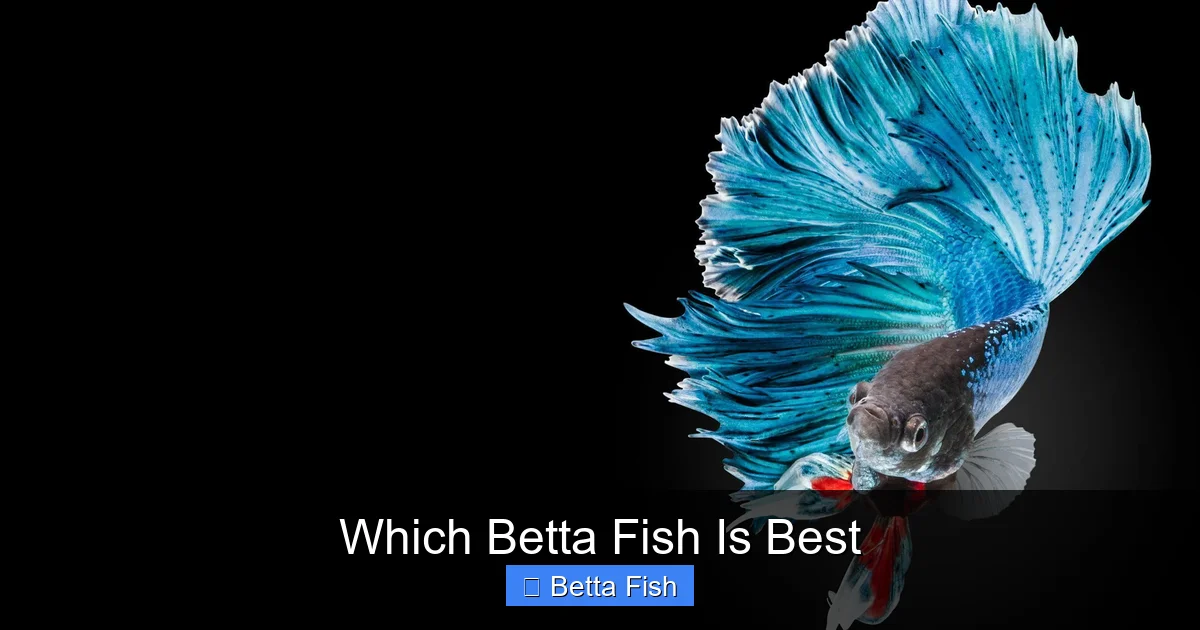
Which Betta Fish Is Best
There is no single “best” betta fish for everyone. The ideal choice depends entirely on your experience level, tank size, and what you value most—vibrant color, flowing fins, or a peaceful personality. A “best” betta is one whose specific needs you can confidently meet for a 3-5 year commitment. Focus on matching the fish to your capabilities, not just its looks.
Key Takeaways
- No Universal “Best”: The best betta is the one that best matches your specific tank setup, experience, and goals, not a one-size-fits-all answer.
- Tank Size is Non-Negotiable: The absolute minimum is 5 gallons, but a 10+ gallon tank is strongly recommended for most types and for any tank mates.
- Personality Trumps Pretty Fins: A betta’s temperament (peaceful vs. aggressive) is more critical for community tank success than its fin type or color.
- Halfmoons are High-Maintenance: While stunning, Halfmoon bettas require excellent water quality, low-flow filters, and gentle tank mates due to their delicate fins.
- Source Matters Immensely: Reputable breeders or stores provide healthier, hardier bettas with known genetics compared to big-box retailers.
- Observe Before You Buy: Watch a potential betta for active swimming, flaring, and healthy fins. Avoid fish that are listless, clamped, or torn.
- Long-Term Commitment: Properly cared for bettas live 3-5+ years. Your “best” choice is one you are prepared to care for long-term.
📑 Table of Contents
- Debunking the Myth: Is There Really a “Best” Betta Fish?
- The Foundational Pillar: Your Betta’s Tank Setup
- Matching Personality to Tank: Temperament is Key
- Color, Fin, and Type: Aesthetics vs. Practicality
- Sourcing Your Betta: Where to Find the “Best” Fish
- Your Long-Term Commitment: Care is the True “Best”
- Conclusion: Your “Best” Betta Awaits
Debunking the Myth: Is There Really a “Best” Betta Fish?
Walk into any pet store or scroll through online marketplaces, and you’ll be greeted by a kaleidoscope of betta fish. There are the regal Halfmoons with fins that fan out a full 180 degrees. There are the spiky, punk-rock Crowntails. The elegant, flowing Veiltails. The vibrant, multi-colored Koi. With so many breathtaking varieties, it’s a natural question to ask: which betta fish is best?
Here’s the honest truth, and it’s the most important lesson in this entire guide: there is no single “best” betta fish. The concept of “best” is entirely subjective and hinges on one critical factor: you. The best betta for a seasoned aquarist with a heavily planted 20-gallon community tank is not the best betta for a beginner setting up their first aquarium in a small desk space. The best betta is a perfect match—a fish whose specific genetic traits, care requirements, and temperament align perfectly with your experience level, available space, budget, and personal aesthetic preferences. Choosing incorrectly is the first step toward stress, illness, and heartbreak. Choosing correctly sets the stage for a rewarding, years-long relationship with one of the most intelligent and charismatic aquarium inhabitants you can own. This article will dismantle the myth of a universal “best” and instead give you the framework to find your best betta.
Why the “Best” Question is the Wrong Question to Ask
Asking “which betta fish is best?” is like asking “which car is best?” without telling us if you need to drive a family of six on dirt roads or commute alone in a city. The answer changes instantly. We need to reframe the question to: “Which betta fish is best for me?” This shift in perspective moves the focus from the fish’s inherent traits to the compatibility between fish and owner. A stunning, rare Halfmoon from a premium breeder might be the “best” in terms of beauty, but if you place it in a 2-gallon bowl with a strong filter current, it will quickly become stressed, its fins will shred, and it will likely perish. That makes it a terrible choice for you. Conversely, a hardy, common Plakat (short-finned) betta might be the “best” choice for a beginner with a 5-gallon tank because its robust nature and active swimming style make it resilient to the minor mistakes we all make while learning.
The Foundational Pillar: Your Betta’s Tank Setup
Before you even glance at a betta, you must have its home ready. The tank is not an accessory; it is the bedrock of its health and happiness. Your tank setup directly dictates which types of bettas you can successfully keep. This is the single most common point of failure for new betta owners.
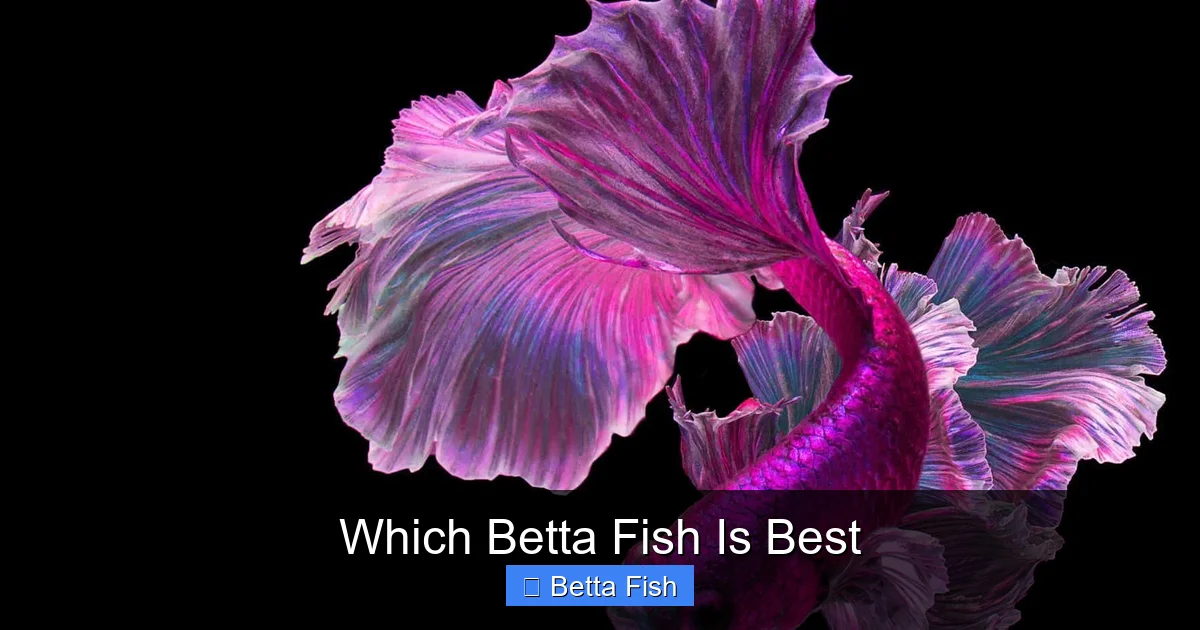
Visual guide about Which Betta Fish Is Best
Image source: aquariadise.com
The Absolute Minimum: 5 Gallons is the New Baseline
For years, the myth of the “betta in a bowl” persisted. Science and experience have thoroughly debunked this. A 5-gallon (19-liter) tank is the absolute bare minimum for a single betta. Why? Stability. In a tiny volume of water, toxins like ammonia build up rapidly from the fish’s waste, causing deadly spikes. Temperature and pH fluctuate wildly. There is no room for error. A 5-gallon tank, while still small, provides a critical buffer. It allows for a proper filter and heater to function effectively, dilutes waste, and gives the fish space to explore. However, “minimum” does not mean “ideal.” For most people, a 10-gallon (38-liter) tank is the true starting point for a happy, healthy betta. The extra water volume means even greater stability, more room for gentle décor, and opens the door to carefully selected, small, peaceful tank mates.
Essential Equipment: Heater and Filter are Not Optional
Bettta fish are tropical fish. They require a consistent water temperature between 76-82°F (24-28°C). A reliable, adjustable aquarium heater is mandatory. A common mistake is using a heater too powerful for the tank size, which can cause rapid, dangerous temperature swings. Always choose a heater rated for your specific tank volume. Filtration is equally vital. A filter is not just for removing debris; it houses beneficial bacteria that detoxify the fish’s waste (the nitrogen cycle). For bettas with long, flowing fins (like Halfmoons or Veiltails), you must choose a filter with an adjustable, low flow setting. Strong currents exhaust them and damage their delicate fins. Sponge filters are an excellent, gentle option for smaller betta tanks.
The Perfect Environment: Plants, Hiding Spots, and Open Space
In the wild, bettas inhabit shallow, densely vegetated waters like rice paddies and slow-moving streams. They are ambush predators that rely on plants for cover, shade, and to build bubble nests. Replicate this in your aquarium. Use live plants (like Java fern, Anubias, or floating Salvinia) if possible—they improve water quality and provide the best texture. High-quality silk or soft plastic plants are a fine alternative. Avoid rough, plastic plants with sharp edges—they will tear a betta’s fins. Provide multiple hiding spots: caves, driftwood, and dense plant thickets. This gives the betta a sense of security and reduces stress. However, also leave a clear swimming area at the top. Bettas are labyrinth fish (they breathe air from the surface) and need unobstructed access to the water’s surface to gulp air.
Matching Personality to Tank: Temperament is Key
This is the section that separates informed hobbyists from impulse buyers. A betta’s personality—its aggression level—is arguably more important than its color when deciding which one is best for your situation. Bettas are famously called “Siamese Fighting Fish” for a reason. Males are highly territorial and will fight to the death with other male bettas. But their aggression doesn’t stop there. Some males are “fin-nippers” who will relentlessly nip at the flowing fins of tank mates. Others are more docile and can sometimes coexist with the right companions. Understanding this spectrum is crucial.
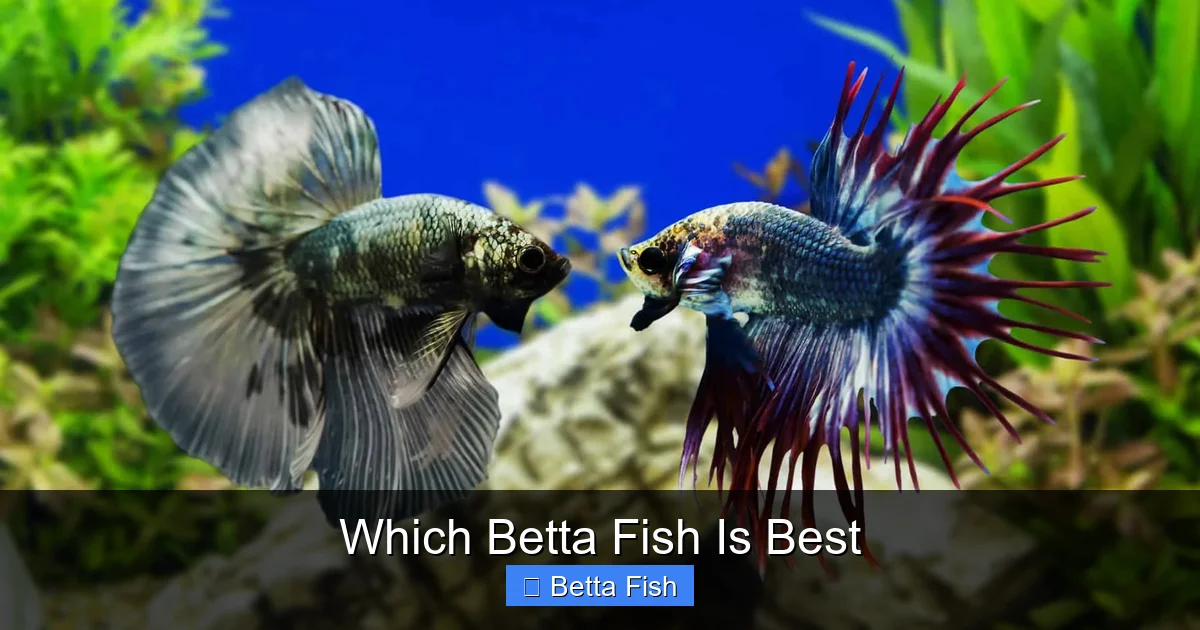
Visual guide about Which Betta Fish Is Best
Image source: bettasource.com
The Solitary Betta: The Safest Choice for All
For 100% certainty and zero risk of aggression, keep your betta alone. A single betta in a properly sized, decorated tank is a spectacular display. It will claim the entire space as its kingdom, build bubble nests, and display its colors and fins to their fullest. This is the absolute best choice for beginners, for those with smaller tanks (5-10 gallons), and for anyone who wants a guaranteed peaceful community. You eliminate the complex variables of compatibility and can focus all your care on one fish. Many of the most beautiful bettas—especially the large-finned varieties—are kept this way precisely because their delicate nature makes them poor candidates for community life.
Community Tank Considerations: The “Peaceful” Betta Myth
The idea of a “peaceful” or “community” betta is a spectrum, not a guarantee. Some bettas are simply less reactive and can tolerate other fish. Success depends on a strict checklist:
- Tank Size: 10+ gallons is the starting point. More space is always better.
- Tank Mates: Choose small, fast, non-nippy, schooling fish that occupy different tank levels. Good candidates include small rasboras (like Chili or Harlequin), neon tetras (in a large school), or Corydoras catfish. Avoid long-finned, slow-moving fish (like fancy guppies) which look like rival bettas.
- Introduction Order: Add the betta last to an established community. This allows the other fish to claim their territories first, making the betta the “newcomer” and often reducing its defensive aggression.
- Observation: Watch closely for the first 48 hours. Flaring (gills spreading) is normal initial behavior. Chasing, fin-nipping, or one fish being constantly harassed means the betta must be rehomed.
Remember: a betta’s tolerance can change with mood, age, or hormones. There are no guarantees.
Color, Fin, and Type: Aesthetics vs. Practicality
This is the fun part! The visual diversity of bettas is staggering. But every stunning aesthetic choice comes with practical implications for care and suitability. Let’s break down the main categories.
Visual guide about Which Betta Fish Is Best
Image source: infoanimales.net
Fin Types: The Trade-Off Between Beauty and Robustness
- Plakat (PK): Short, stocky fins that end near the body. This is the “original” wild-type form. Plakats are the hardiest, most active, and most aggressive of all bettas. They are powerful swimmers with excellent muscle tone. They are less prone to fin rot and snagging. For a beginner wanting a betta in a community tank, a Plakat is often the best practical choice due to their resilience. Their aesthetic is more “sporty” than “elegant.”
- Veiltail (VT): Long, flowing single tail that drapes like a veil. The most common type in big-box stores. They are beautiful but prone to fin damage and snagging on décor. Their long fins make them slower and more vulnerable to nipping from tank mates. They require a very low-flow filter and a tank free of sharp edges. Temperament varies widely.
- Halfmoon (HM): The pinnacle of betta beauty for many. When the male flares, his tail forms a perfect 180-degree semi-circle. They are breathtaking but also the most delicate. Their massive fins are heavy, making swimming laborious. They are highly susceptible to fin rot if water quality dips even slightly. They are almost always kept as single specimens. They are not for beginners or for community tanks.
- Double Tail (DT): Characterized by two distinct tail lobes, giving the appearance of two tails. They are genetically prone to swim bladder issues due to their body shape, which can affect buoyancy. They require extra care and monitoring. A stunning but high-maintenance choice.
- Crowntail (CT): Fins with extended, spiky rays that look like a crown or a comb. They are very popular for their dramatic, edgy look. The rays can be brittle and prone to breaking. They are generally more active and hardy than Halfmoons but less so than Plakats. A good middle-ground for those who want long fins but more activity.
Color and Pattern: Genetics Over “Type”
Color is a matter of personal preference, but some patterns have care implications.
- Solid Colors: (Red, Blue, Yellow, White) Classic and often very vibrant.
- Multicolored/Marble: Bettas with patches of different colors. Some “Koi” bettas are marbled and may change color throughout their lives.
- Butterfly: A distinct color division on the fins, often with a contrasting body color. Stunning but the color edges can be sensitive.
- Dragon Scale: Thick, metallic, scale-like scales that give a armored appearance. Very popular. Note: the heavy scaling can sometimes impair vision if it grows over the eyes (known as “diamond eye”).
Choose a color that makes your heart sing! You’ll be looking at this fish every day. Just remember that vibrant colors are often a sign of good health and genetics, while dull or faded colors can indicate stress or illness.
Sourcing Your Betta: Where to Find the “Best” Fish
Where you acquire your betta is just as important as which type you choose. The source determines the fish’s initial health, genetic hardiness, and the support you can get.
The Big-Box Store: Convenience with High Risk
Pet stores like PetSmart or PetCo are where most people first see bettas. The appeal is undeniable: low price and easy access. However, the conditions are often poor. Bettas are typically shipped as tiny juveniles in tiny, heated cups, stacked in rows. Many arrive already stressed, sick with fungal or bacterial infections, or with torn fins. They are often underfed and kept in dirty water. You are playing a lottery with the fish’s health. If you choose this route, be a meticulous inspector. Look for a fish that is active, alert, with fully extended, undamaged fins and no spots, fuzz, or clamped posture. Be prepared to quarantine the new arrival for 2-4 weeks in a separate hospital tank before introducing it to your main display, to prevent introducing disease.
Local Fish Store (LFS): The Better Middle Ground
A dedicated local fish store (not a big chain) is often a much better source. The staff usually has more knowledge, and the fish are often sourced from better wholesalers or local breeders. You can often ask about the fish’s history. The tanks are typically better maintained. You have a much higher chance of getting a healthy, vibrant betta. Build a relationship with the store owner/manager; they can become a valuable resource. This is an excellent option for beginners seeking a healthier, hardier fish without the premium price of a breeder.
The Reputable Breeder: The Gold Standard
If your budget allows and you are serious about a specific, high-quality type (like a show-grade Halfmoon or a rare color), seek out a reputable online or local breeder. These are enthusiasts who breed bettas for specific traits, health, and vigor. They raise their fish in pristine conditions, feed high-quality foods, and practice rigorous culling (removing weak fish from the breeding pool). The fish are healthier, hardier, and have better genetics than mass-produced stock. You can often get detailed information about the fish’s lineage, age, and health. While more expensive (often $50-$200+), you are paying for quality, ethics, and a direct line to expert advice. For anyone asking “which betta fish is best?” and wanting the answer to be “the healthiest and most beautiful,” this is the path.
Your Long-Term Commitment: Care is the True “Best”
You’ve chosen your type, set up your tank, and sourced a beautiful fish. The final piece of the “best” puzzle is your unwavering commitment to its care. The “best” betta in the world will fail in poor conditions. The “best” owner makes even a common store betta thrive for years.
The Daily and Weekly Ritual
- Feeding: Once or twice daily, feed only what the betta can consume in 2-3 minutes (typically 2-3 pellets or a few frozen foods like brine shrimp). Overfeeding is the #1 cause of poor water quality and constipation.
- Water Testing: Use a liquid test kit (not strips) to monitor ammonia, nitrite, nitrate, and pH weekly. This is non-negotiable. A cycled tank should have 0 ammonia/nitrite and nitrates below 20 ppm.
- Water Changes: Perform a 25-50% water change weekly using a gravel vacuum to remove detritus. Never remove more than 50% at once. Always treat tap water with a dechlorinator that also detoxifies ammonia and nitrite (like Seachem Prime). Match the temperature closely.
Health Monitoring and Prevention
Observe your betta daily. Know its normal behavior: how it swims, where it rests, its appetite. Changes are the first sign of trouble.
- Fin Rot: Fins appear shredded, blackened, or frayed. Caused by poor water quality. Cure with improved water and medication like Methylene Blue or Furan-2.
- Ich (White Spot Disease): Tiny white salt-like grains on the body and fins. Highly contagious. Requires treatment with heat (raising temp to 86°F) and medication like Ich-X.
- Swim Bladder Disorder: Fish floats upside down, sinks, or swims erratically. Often caused by overfeeding or constipation. Fast for 3 days, then feed a cooked, skinned pea.
Prevention through pristine water quality and a proper diet is 90% of the battle.
Conclusion: Your “Best” Betta Awaits
So, which betta fish is best? The answer now lies in your hands. The best betta is the one whose needs you can fully understand and meet. It’s the Plakat that will thrive in your 10-gallon community with your school of neon tetras. It’s the majestic Halfmoon that will be the solo star of your meticulously planted, filtered 15-gallon “nature aquarium.” It’s the resilient Veiltail from your trusted local store that will bring you joy for four years with consistent, simple care. The “best” betta is not a trophy or a status symbol. It is a living creature whose welfare is your responsibility. By investing in the proper tank setup first, by honestly assessing your goals and experience, by choosing a type whose temperament and finnage suit your environment, and by sourcing from the best place you can afford, you are not just buying a fish. You are beginning a partnership. You are choosing the best betta for you, and in doing so, you give yourself the best chance at one of the most rewarding experiences in the aquarium hobby.
Frequently Asked Questions
Can I keep a male and female betta together?
No. Male and female bettas should never be kept together long-term. They are extremely aggressive toward each other. Temporary introduction for breeding purposes requires expert supervision and separate conditioning tanks, and is not recommended for beginners.
Can my betta live with other fish?
Yes, but only under strict conditions: a 10+ gallon tank, peaceful, fast, non-nippy tank mates, and careful observation. Many bettas, especially long-finned types, are best kept alone. Always have a backup plan (a separate tank) to rehome the betta or its tank mates if aggression occurs.
How often should I feed my betta?
Once or twice daily, offering only what it can eat in 2-3 minutes. A diet of high-quality betta pellets supplemented occasionally with frozen or live foods (like daphnia or brine shrimp) is ideal. Fast your betta one day a week to aid digestion.
What is the average lifespan of a betta fish?
With excellent care—including a proper tank size, clean water, and a good diet—betta fish commonly live 3-5 years, and many reach 6 or even 7 years. A fish living in a small, poorly maintained bowl may only live 1-2 years.
Why is my betta’s fin looking torn or ragged?
The most common cause is poor water quality (ammonia/nitrite spikes). It could also be fin-nipping from a tank mate, snagging on sharp décor, or fin rot (a bacterial/fungal infection). First, test your water and perform a large water change. Ensure your filter flow is gentle and décor is smooth. If damage worsens, medication may be needed.
Do betta fish need a filter and heater?
Absolutely. A heater is mandatory to maintain a stable tropical temperature (76-82°F). A filter is essential to cycle the tank and remove toxins. Without these, the fish will live in a toxic, unstable environment that severely shortens its life and causes constant stress.