Where Does Betta Fish Poop Come Out
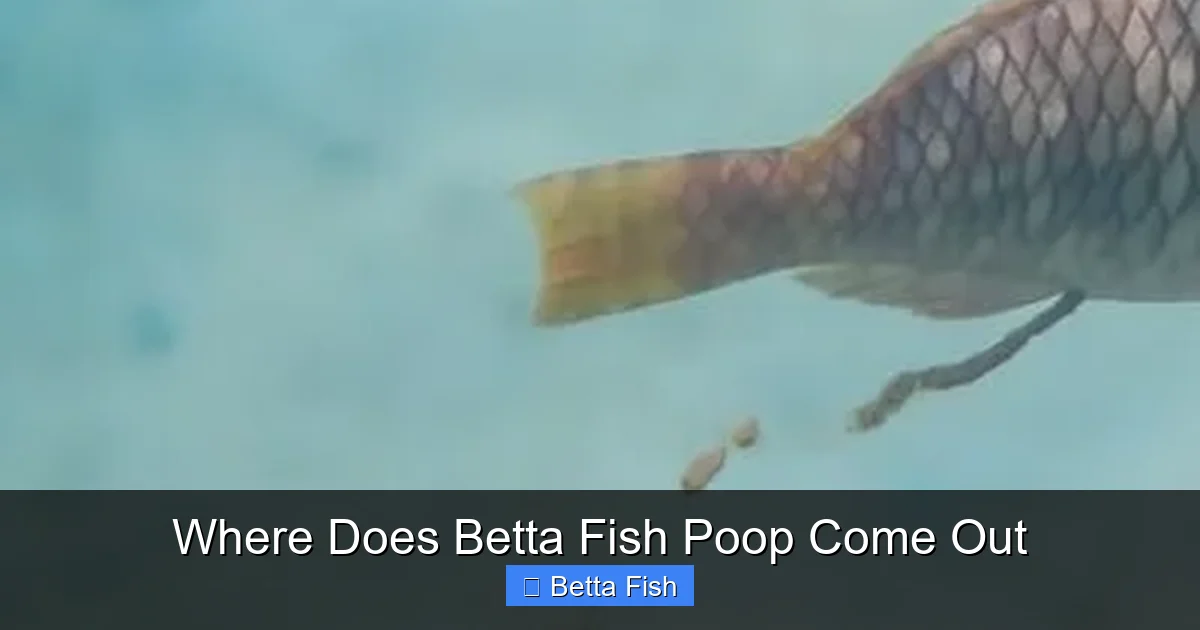
Betta fish expel waste through a single multipurpose opening called the cloaca, located just behind the anal fin. This opening also handles reproduction and urine. Monitoring the appearance, frequency, and location of your betta’s poop is a crucial, non-invasive health check. Changes in waste can signal diet issues, constipation, or internal infections, making it a vital daily observation for any betta keeper.
So, you’ve got a beautiful betta fish, with its flowing fins and vibrant colors, gliding gracefully through its aquatic home. You feed it carefully, maintain the water, and admire its personality. But then, a question might bubble up from the depths of curiosity (or perhaps a moment of tank-side observation): where does all that stuff come out? It’s a perfectly natural question for a pet owner to ask. Understanding the “where” and the “what” of your betta’s waste is not just about satisfying curiosity; it’s a fundamental pillar of responsible fish care and a powerful tool for monitoring your betta’s internal health. This article will dive deep into the precise anatomy, demystify the appearance of betta poop, and equip you with the knowledge to become a waste-interpreting expert, ensuring your Siamese fighting fish lives a long, healthy life.
Key Takeaways
- The Cloaca is Key: Betta fish, like most fish, have a cloaca—a single vent for digestive, urinary, and reproductive waste—located posterior to the anal fin.
- Health is in the Poop: The color, consistency, frequency, and amount of betta poop are direct indicators of digestive health and diet quality.
- Normal vs. Abnormal: Healthy betta poop is typically brown or dark tan, short to medium in length, and sinks moderately. Stringy white poop, constipation, or excessive mucus are red flags.
- Tank Setup Matters: Bare-bottom tanks or fine substrate make waste observation easiest. Heavily planted or gravel tanks can hide waste, requiring closer inspection.
- Diet is Primary: Overfeeding, low-quality food, or lack of fiber/fat are the most common causes of abnormal waste patterns in bettas.
- Cleanliness is Prevention: Regular tank maintenance and prompt removal of uneaten food are critical to prevent ammonia spikes from decomposing waste and maintain water quality.
- Observation is a Habit: Making a daily habit of checking your betta’s waste during feeding is the simplest, most effective proactive health screening you can perform.
📑 Table of Contents
- The Precise Location: Unpacking the Betta’s Cloaca
- The Tell-Tale Signs: Interpreting Healthy vs. Unhealthy Betta Poop
- The Tank Environment’s Role: Seeing and Managing the Waste
- Proactive Care: Feeding and Maintenance for Optimal Waste
- Special Cases: Breeding Bettas and Waste Observation
- Conclusion: Your Betta’s Poop is a Conversation
The Precise Location: Unpacking the Betta’s Cloaca
Let’s start with the geography. Betta fish, like the vast majority of bony fish (teleosts), do not have separate exits for different bodily functions. Instead, they possess a single, multipurpose opening. This anatomical feature is called the cloaca (pronounced “klo-AH-kuh”).
What Exactly is a Cloaca?
Think of the cloaca as a communal chamber and exit. It’s the endpoint for three major bodily systems:
- The Digestive Tract: Solid waste (feces) from the intestines passes through here.
- The Urinary System: Liquid waste (urine) from the kidneys is also expelled via the cloaca. In fish, urine is typically very dilute and mixed with the feces.
- The Reproductive System: During spawning, both eggs and sperm are released through this same opening.
This all-in-one design is highly efficient from an evolutionary and physiological standpoint, minimizing bodily openings and potential points of infection or injury.
Finding the Cloaca on Your Betta
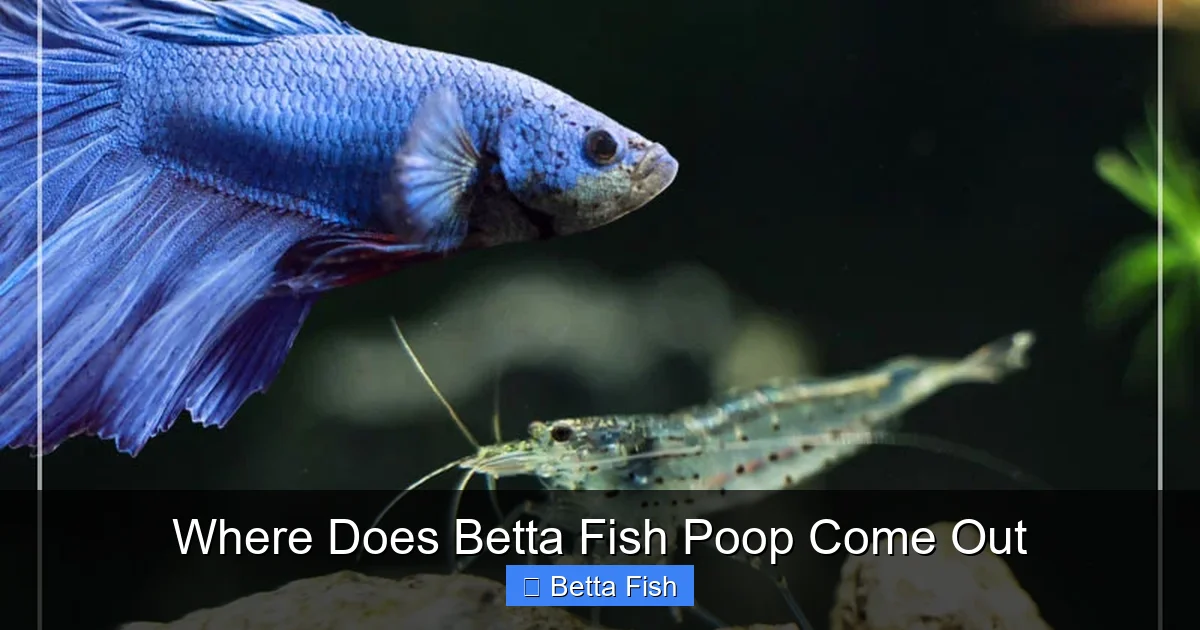
Visually identifying the cloaca on a betta fish is straightforward once you know where to look. It appears as a very small, often slightly raised or puckered, circular or oval opening. Its location is consistently just behind (posterior to) the anal fin. The anal fin is the single fin on the underside of the fish, located roughly midway between the pectoral fins (side fins) and the tail (caudal fin).
On a male betta, you might also see the tiny, white opening of the breeding barbel (or gonopodium) just in front of the anal fin, but the cloaca itself is distinctly behind it. On females, the ovipositor (the tube for laying eggs) is also located near this region but is separate from the cloacal opening. For our purposes, watch the area immediately trailing the anal fin for the expulsion of waste.
The Tell-Tale Signs: Interpreting Healthy vs. Unhealthy Betta Poop
Now that we know where it comes out, we need to become experts on what we’re looking at. Your betta’s poop is a daily report card on its digestive health. Observing it is one of the most valuable, non-invasive diagnostic tools you have.
Visual guide about Where Does Betta Fish Poop Come Out
Image source: i.ytimg.com
Characteristics of Normal, Healthy Betta Waste
Healthy betta poop has several consistent characteristics:
- Color: Typically ranges from medium brown to a dark tan or olive green. The exact shade depends heavily on its recent diet. If you feed high-quality pellets with spirulina or vegetable content, you may see more greenish hues. A diet rich in brine shrimp or bloodworms might lean toward a darker red-brown.
- Consistency & Form: It should be semi-solid, holding a defined shape (often short and thick, or slightly longer and stringy) rather than being a mushy blob or pure liquid. It should not be hard, pellet-like balls (a sign of constipation) or a fine, sandy substance.
- Length: Usually about the length of the betta’s body or slightly shorter, though this can vary. Very long, trailing strings can indicate overfeeding or a gut issue.
- Buoyancy: It should sink. Betta feces are denser than water. If you see waste floating persistently, it could indicate trapped air (from gulping at the surface) or a very unusual consistency, which warrants attention.
Practical Tip: The best time to observe waste is during or immediately after a feeding. Bettas typically poop within 20-60 minutes after eating. A healthy betta will have a small, well-formed bowel movement once or twice a day.
Warning Signs: When Betta Poop Signals a Problem
Deviations from the norm are your first clue that something is off. Here’s what to watch for:
1. Stringy White or Clear Poop
This is the most common and alarming sign. Stringy, white, clear, or mucus-like feces are rarely normal. This usually indicates one of three issues:
- Internal Parasites: Such as Hexamita or Spironucleus. The body is shedding intestinal lining and mucus, which appears white and stringy. Often accompanied by lethargy and loss of appetite.
- Severe Constipation: While constipation usually produces hard, dark pellets, extreme cases can lead to a “blockage” where only mucus is passed.
- Bacterial Infection: A systemic infection affecting the gut can cause this symptom.
Action: Isolate the betta, fast for 24-48 hours, then offer a cooked, skinned pea (dethroned and de-seeded). If no improvement in 2-3 days, consider a course of antiparasitic medication (e.g., Metronidazole) after consulting a vet or experienced resource.
2. Excessive Amounts or Very Long Trails
If your betta is producing copious amounts of long, trailing waste after every feeding, it’s almost always a sign of overfeeding. Their digestive tracts are short. Excess food passes through undigested. This quickly fouls the water and can lead to constipation or bloat.
Solution: Reduce feeding portions. A betta’s stomach is roughly the size of its eye. Feed 2-3 high-quality pellets once or twice a day, or a small portion of frozen or live food. Any food not eaten in 2-3 minutes should be siphoned out.
3. Red or Blood-Tinged Poop
This is less common but serious. It can indicate internal bleeding, a severe bacterial infection (like hemorrhagic septicemia), or physical trauma to the digestive tract. This requires immediate quarantine and veterinary attention.
4. Lack of Poop (Constipation)
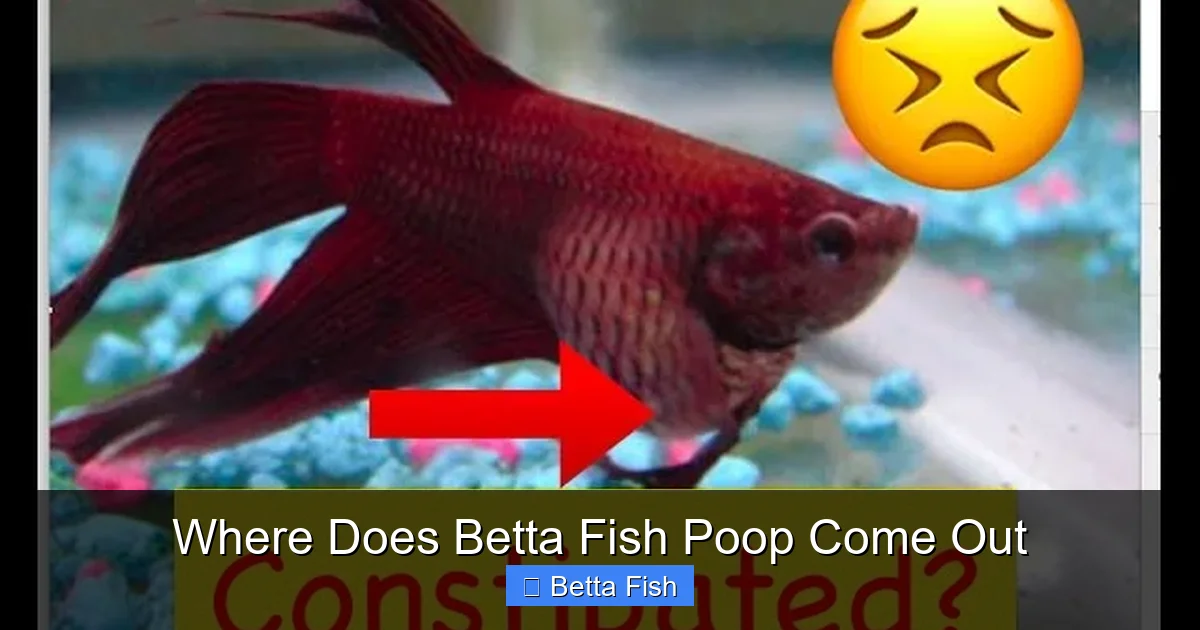
If your betta eats normally but produces no waste for several days, it is likely constipated. Look for a swollen, “puffy” abdomen, lethargy, and a loss of appetite. This is usually due to a diet too low in fiber and too high in protein/fat (e.g., only frozen foods) or dehydration.
Solution: The classic remedy is the cooked pea. Soak a frozen pea, cook it until soft, remove the skin, and mash a tiny piece (1/4 to 1/2 pea for a betta). Offer this once. The fiber acts as a laxative. Ensure your betta is well-hydrated; a clean, warm tank with pristine water is essential.
The Tank Environment’s Role: Seeing and Managing the Waste
Your aquarium’s setup dramatically affects how easily you can monitor waste and how quickly problems arise from it.
Visual guide about Where Does Betta Fish Poop Come Out
Image source: bettafishworld.com
Substrate Choice and Waste Visibility
This is a huge practical factor:
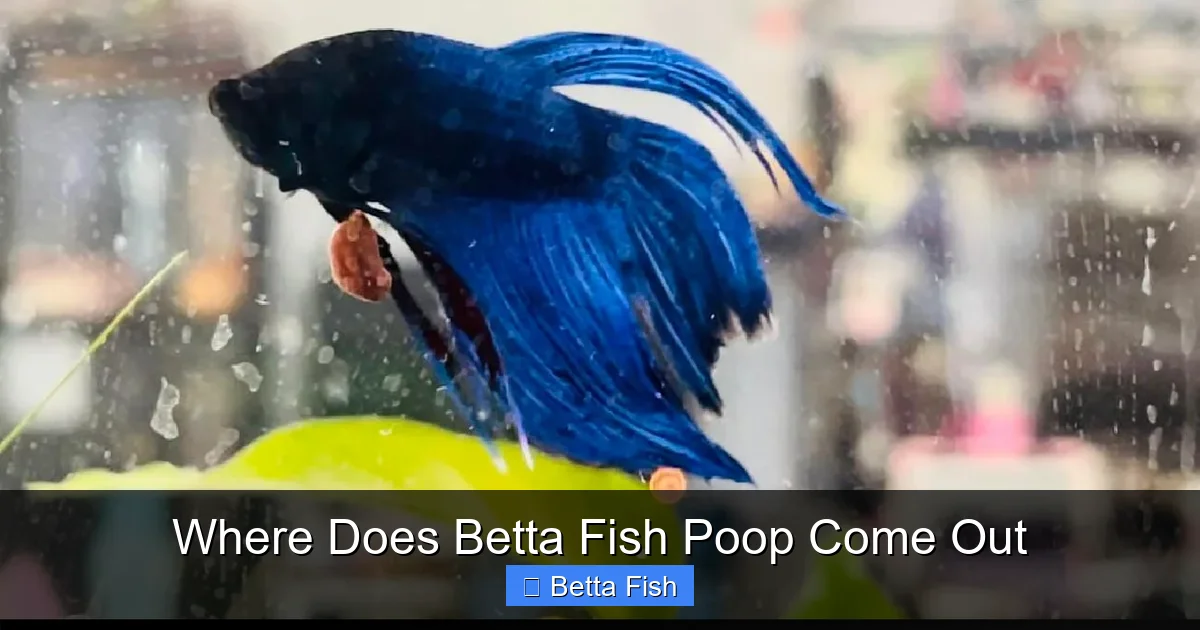
- Bare-Bottom / Glass Tanks: The gold standard for betta observation. Waste is clearly visible on the glass bottom, making it impossible to miss. You can easily siphon it during water changes. This is highly recommended for new betta keepers or those closely monitoring health.
- Fine Sand: Waste can get buried but is often still visible on top. Requires gentle vacuuming to avoid stirring up too much sand.
- Gravel (especially dark or large): The biggest challenge. Waste easily falls between stones and becomes invisible. This creates a major “out of sight, out of mind” problem, allowing ammonia-producing debris to accumulate unnoticed. If using gravel, you must vacuum thoroughly during every water change.
- Heavily Planted (with soil/substrate): Waste can get caught in plant roots or buried in soil. Observation is difficult, and cleaning requires careful plant maintenance.
Filtration and Water Flow
Betta fish originate from shallow, stagnant waters. They are not strong swimmers and prefer very gentle flow. A filter that is too powerful will:
- Stress the betta, causing it to hide and not eat properly.
- Blow waste particles into the filter media, hiding them from your view and potentially causing a clog that reduces filter efficiency.
- Make it hard for the betta to reach the surface for air (they are labyrinth fish).
Ideal Setup: Use a sponge filter (air-driven, provides gentle flow and bio-filtration) or a hang-on-back/internal filter with the flow directed away from the betta’s resting spots or baffled with a sponge. The goal is clear water movement, not a current.
The Critical Link: Waste, Ammonia, and the Nitrogen Cycle
Here’s why this all matters beyond just the betta’s gut. All fish waste (feces and urine) contains ammonia, which is lethally toxic to fish. In a cycled tank, beneficial bacteria convert this ammonia first to nitrite (also toxic) and then to nitrate (less toxic, removed by water changes).
If you have an overfed betta producing excessive waste, or if you cannot see and remove waste buried in gravel, you are dumping massive amounts of ammonia into your tank. This can overwhelm the beneficial bacteria, leading to an ammonia spike. Symptoms of ammonia poisoning (gasping, clamped fins, redness at the base of fins) are often misdiagnosed as other diseases. The root cause is frequently poor waste management from overfeeding or inadequate cleaning.
Proactive Care: Feeding and Maintenance for Optimal Waste
Prevention is infinitely better than cure. By optimizing diet and tank maintenance, you directly control the quality and quantity of your betta’s waste, and by extension, its health and water quality.
Visual guide about Where Does Betta Fish Poop Come Out
Image source: buildyouraquarium.com
Feeding for Healthy Digestion: It’s Not Just About Pellets
A varied, high-quality diet is non-negotiable for a healthy betta and healthy poop.
- Base Diet: Use a high-quality betta pellet as the staple (1-2 pellets per day). Look for brands with whole ingredients (e.g., whole fish, shrimp, squid) and minimal fillers (wheat flour, soybean meal). Good pellets will swell slightly but not explode.
- Fiber is Essential: In the wild, bettas consume insects and larvae, which have chitin (fiber). In captivity, a lack of fiber causes constipation. Include fiber sources 1-2 times a week: a tiny piece of skinned, cooked pea; a small piece of deshelled daphnia; or a commercial “fiber boost” food.
- Frozen/Freeze-Dried Treats: Brine shrimp, bloodworms, and mysis shrimp are excellent for protein and enrichment. Always thaw and rinse frozen foods to remove preservative liquid. Feed these sparingly (2-3 times a week max) as they are low in fiber.
- Avoid: Flakes (most bettas won’t eat them, they pollute water quickly), generic “tropical fish” food (nutritionally inadequate), and live foods (risk of parasites unless home-grown).
The Fast Day: Consider fasting your betta one full day per week (e.g., every Sunday). This gives its digestive system a rest, mimics natural feeding patterns where food isn’t always abundant, and helps prevent constipation and bloating.
Cleaning Routines: Targeting Waste Removal
Your cleaning routine must explicitly target solid waste.
- Daily: During feeding, glance at the tank floor. If you see uneaten pellets or obvious waste strands, remove them with a turkey baster or pipette. This is the single most effective daily habit you can build.
- Weekly Water Change (25-50%): This is mandatory. Use a gravel vacuum (python, suction bulb) to siphon debris from the substrate. If you have bare bottom, wipe the glass with an algae pad or magnetic cleaner to remove any film or waste stuck to the sides. The goal is to physically remove particulate waste, not just dilute it.
- Filter Maintenance: Rinse filter media (sponges, bio-balls) in the old tank water you just removed during the water change. Never use tap water, as it kills beneficial bacteria. Only replace media if it’s falling apart.
Remember: You are not just changing water; you are performing a targeted waste extraction operation.
Special Cases: Breeding Bettas and Waste Observation
Breeding bettas introduces a new layer to waste observation, as the female’s body undergoes significant changes.
The Gravid Spot and Egg-Bound Females
A healthy, ready-to-spawn female betta will develop a prominent white or pink “gravid spot” on her abdomen, just in front of the anal fin. This is her ovipositor and egg-bearing area. As she fills with eggs, her abdomen will become noticeably rounder and heavier.
An egg-bound female is one that has retained eggs due to stress, poor water conditions, or no male present to induce spawning. This is a medical emergency. She will appear severely bloated, often with scales protruding (pineconing). She may also exhibit stringy white poop due to the immense internal pressure and stress on her digestive system. Treatment involves placing her in a hospital tank with very warm, clean water (82-84°F), Epsom salts (1 tsp per gallon) to reduce swelling, and potentially gentle massage by an experienced keeper. Veterinary intervention may be needed.
Post-Spawn Waste in Bubble Nesters
After a successful spawn, the male betta will tend the bubble nest. The female, if not removed, may eat her own eggs and will also produce waste. It is critical to remove the female after spawning, as the male will often become aggressive and may kill her. Any waste in the breeding tank should be meticulously removed to protect the fragile eggs and fry from ammonia spikes.
Conclusion: Your Betta’s Poop is a Conversation
So, where does betta fish poop come out? The definitive, anatomical answer is the cloaca, a small but mighty multipurpose opening located just behind the anal fin. But the real, practical answer is this: it comes out as a constant stream of information. Every small, brown pellet or strange, white string is your betta trying to tell you something about its internal world. It’s a conversation you must learn to listen to.
By understanding the normal baseline—the right color, consistency, and frequency—you empower yourself to spot the deviations that signal trouble. You connect the dots between the food you offer, the waste you see, and the water quality you maintain. This isn’t morbid fascination; it’s the cornerstone of proactive, enlightened pet ownership. It transforms routine tank maintenance from a chore into a daily wellness check. The next time you see that little cloud of waste drifting down, you won’t just see mess. You’ll see data. You’ll see health. And you’ll see the beautiful, simple biology of your betta fish, working perfectly in harmony with its environment, as long as you provide it. Keep observing, keep learning, and enjoy the clarity that comes with truly knowing your aquatic friend.
Frequently Asked Questions
Is it normal for betta fish poop to stick to their body?
Not typically. While a betta might accidentally brush against its own waste, poop that consistently sticks to its fins or body is often a sign of constipation or poor digestive function. The waste may be abnormally sticky or stringy. Check the diet for adequate fiber and reduce overfeeding.
How often should a betta fish poop?
A healthy betta on a proper diet will usually produce a small amount of solid waste once or twice a day, typically within an hour after feeding. Missed days or excessive, constant pooping can both indicate dietary issues or health problems.
What does it mean if my betta’s poop is long and stringy?
Long, trailing poop is most commonly caused by overfeeding. The betta’s short digestive tract cannot process large volumes of food efficiently. Reduce the amount of food per feeding. If it’s white or clear and stringy, it’s a major red flag for internal parasites or severe infection.
My betta’s poop is white and stringy. What should I do?
This is a serious symptom, often indicating internal parasites or a severe bacterial infection. Start by fasting the betta for 24-48 hours. Then, offer a tiny piece of cooked, skinned pea. If there’s no improvement within 2-3 days, or if the betta shows lethargy or loss of appetite, you will likely need to treat with an antiparasitic medication like Metronidazole. Quarantine the fish immediately.
Can betta fish poop make them sick?
The poop itself doesn’t make the betta sick, but the ammonia it releases as it decomposes absolutely can. If waste is allowed to accumulate in the tank—especially in gravel or under decorations—it breaks down into toxic ammonia, poisoning the fish and compromising its immune system. This is why diligent tank cleaning is directly linked to disease prevention.
Should I remove betta fish poop from the tank?
Yes, absolutely. You should remove any visible solid waste daily with a siphon or turkey baster. During your weekly water change, thoroughly vacuum the entire substrate to extract buried debris. This is a non-negotiable part of tank maintenance to prevent ammonia spikes and maintain pristine water quality for your betta’s health.