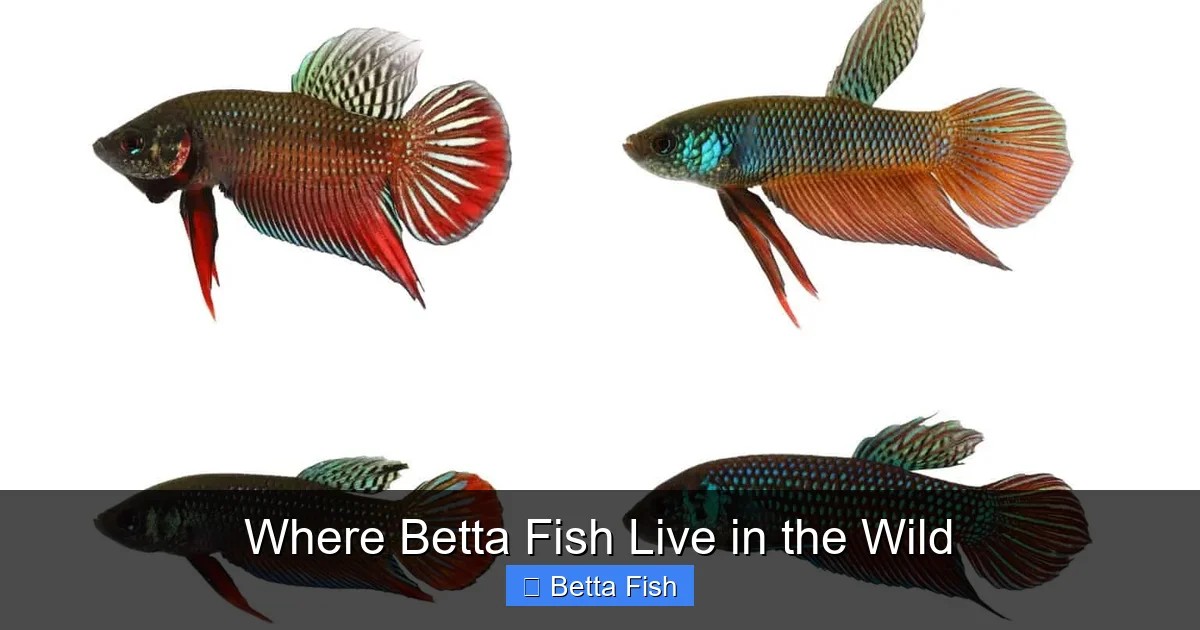
Where Betta Fish Live in the Wild
Contrary to popular belief, wild betta fish are not from tiny, isolated puddles. They are native to the tropical regions of Southeast Asia, thriving in shallow, slow-moving bodies of water like rice paddies, swamps, and the vegetated margins of streams. These habitats are characterized by warm, soft, slightly acidic water and dense plant cover. Understanding their true wild environment is crucial for providing proper care, as it explains their famous labyrinth organ for breathing air and their need for secure, planted tanks. Their survival is increasingly threatened by habitat loss, making responsible ownership essential.
Key Takeaways
- Native Range: Wild bettas (Betta splendens) originate from the tropical river basins of Thailand, Cambodia, Vietnam, and parts of Malaysia and Indonesia.
- True Habitat: They inhabit shallow, slow-moving or stagnant waters like rice paddies, marshes, swamps, and the densely vegetated edges of streams and ponds—not isolated puddles.
- Water Parameters: Their natural waters are warm (75-85°F / 24-29°C), soft, slightly acidic to neutral (pH ~5.0-7.0), and often tannin-stained from decaying vegetation.
- Key Adaptation: The labyrinth organ allows them to breathe atmospheric air, a vital adaptation for surviving in oxygen-poor waters and during dry seasons.
- Seasonal Dynamics: Their habitat undergoes dramatic wet-dry cycles, forcing bettas to travel over land or burrow into mud to survive the dry season.
- Misconception Alert: The “puddle” myth is harmful; wild bettas live in complex ecosystems with abundant cover, which explains their need for plants and hiding spots in captivity.
- Conservation Status: Wild populations are threatened by habitat destruction (palm oil, pollution, drainage), making captive breeding the only ethical source for pet bettas.
📑 Table of Contents
- The Native Kingdom: Tracing the Betta’s Wild Roots
- The True Habitat: Shallow Waters and Dense Vegetation
- Water Chemistry: The Soft, Warm, and Tannin-Stained World
- The Lifesaving Labyrinth: An Adaptation for Survival
- Seasonal Rhythms: The Wet-Dry Cycle of Life
- Debunking the “Puddle” Myth and Other Misconceptions
- Conservation in the Wild: A Fragile Future
- Conclusion: From Wild Roots to Home Aquariums
The Native Kingdom: Tracing the Betta’s Wild Roots
When you picture a betta fish, you might imagine a vibrant, flowing creature trapped in a solitary vase on a desk. This pervasive image, however, is a profound misunderstanding of the betta’s true nature and origin. To truly understand these mesmerizing fish, we must journey to the tropical heart of Southeast Asia. The betta fish you see in pet stores, almost exclusively Betta splendens, is a domesticated descendant of wild populations native to the continental river basins of Thailand, Cambodia, Vietnam, and the Malay Peninsula. Their indigenous names, like plakat in Thailand (meaning “biting fish”), hint at their historical notoriety for aggression, not their environmental needs.
This region is defined by a monsoon climate, with a scorching hot, dry season from roughly November to April, followed by a torrential, life-bringing rainy season from May to October. This dramatic cyclical pattern is the single most important factor shaping where betta fish live in the wild. Their entire existence is a testament to adaptation within this dynamic landscape. They are not creatures of permanent, isolated water bodies; they are specialists of the floodplain ecosystem, thriving in the ephemeral and seasonal wetlands that blanket the lowlands during the rains. Understanding this native range is the first step in debunking the cruel myth of the “vase betta” and appreciating the complex environmental cues that govern their behavior and physiology.
The True Habitat: Shallow Waters and Dense Vegetation
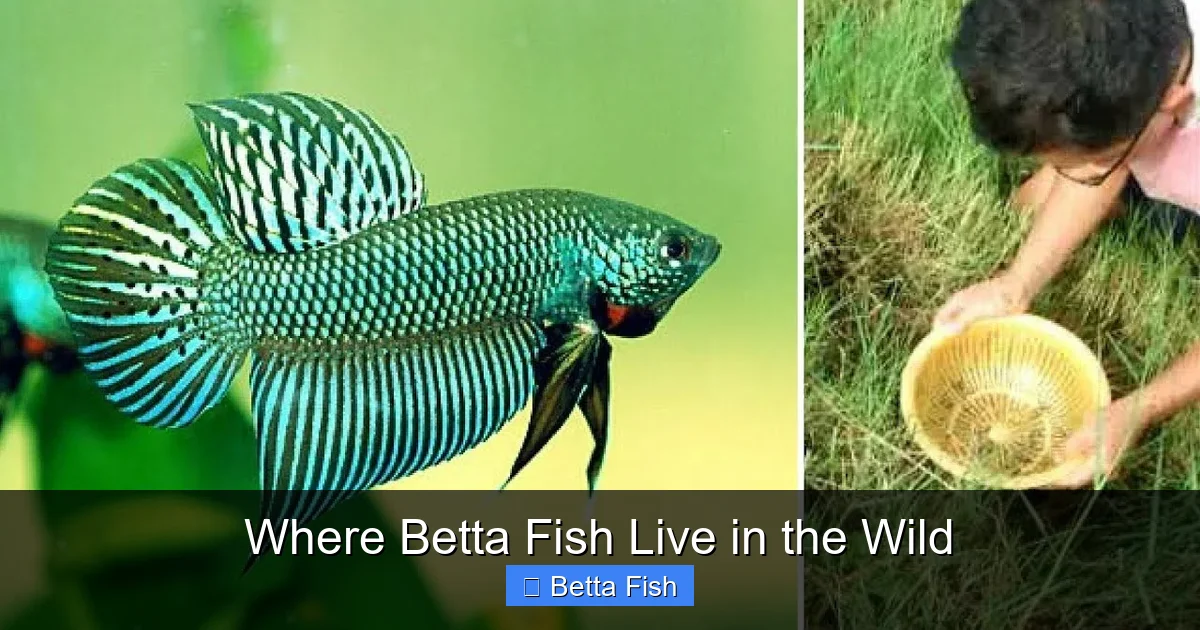
So, if not in puddles, where exactly do wild bettas live? They are habitat specialists of the shallow zone. Their preferred domains are the slow-moving or stagnant margins of larger water bodies. Think of the muddy, tea-colored edges of a meandering lowland river, where the current is negligible. Imagine the flooded fields of a rice paddy during the monsoon, a vast, shallow plain of water stretching to the horizon. Picture a secluded swamp or marsh, choked with aquatic plants, where the water is still and warm. These are the quintessential betta habitats.
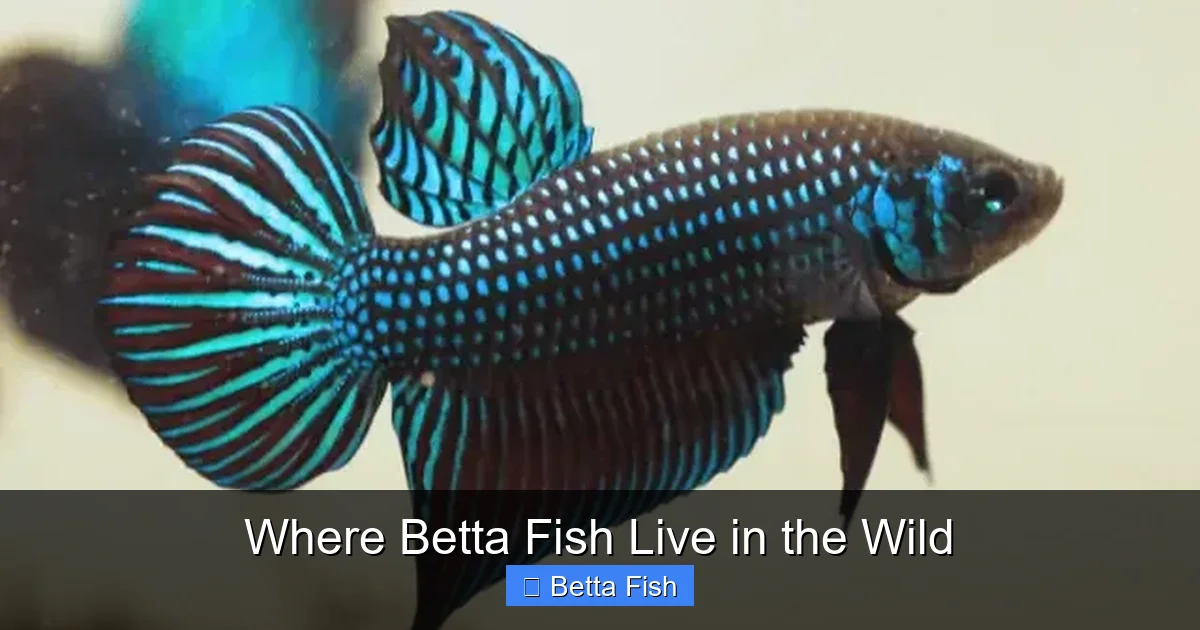
Visual guide about Where Betta Fish Live in the Wild
Image source: japanesefightingfish.org
The Architecture of Safety: Plants, Leaf Litter, and Roots
What unites all these habitats is an overwhelming abundance of three-dimensional cover. Wild bettas are supremely visual and territorial. In a habitat choked with floating plants like water hyacinth or duckweed, dense emergent reeds, submerged mosses, and tangled root systems, a male can establish a small, defensible territory. This cover is non-negotiable for their survival. It provides:
- Security from predators: Birds, snakes, and larger fish are constant threats. Dense vegetation offers endless hiding places.
- Breeding sites: Males build their iconic bubble nests among the overhanging leaves or floating plant roots, anchoring them to a secure substrate.
- Foraging grounds: The micro-ecosystem within the plants hosts insects, larvae, and zooplankton—the betta’s natural diet.
- Water quality modulation: Plants absorb nitrates, and decaying leaf litter (especially from tannin-rich trees like the Indian almond or peat moss areas) releases humic acids that soften water and lower pH, creating the slightly acidic, soft water conditions they evolved in.
The substrate is typically fine silt or mud, often covered in a layer of decomposing leaf litter. This “blackwater” environment is stained a dark tea color by tannins, which has antimicrobial properties and helps regulate the fish’s endocrine system. The water is typically very still, with almost no current, a critical point for their long, flowing fins which are not built for fighting currents.
Water Chemistry: The Soft, Warm, and Tannin-Stained World
The physical parameters of a betta’s wild home are specific and differ from typical municipal tap water. Replicating these conditions as closely as possible in captivity is a direct nod to their evolutionary history.
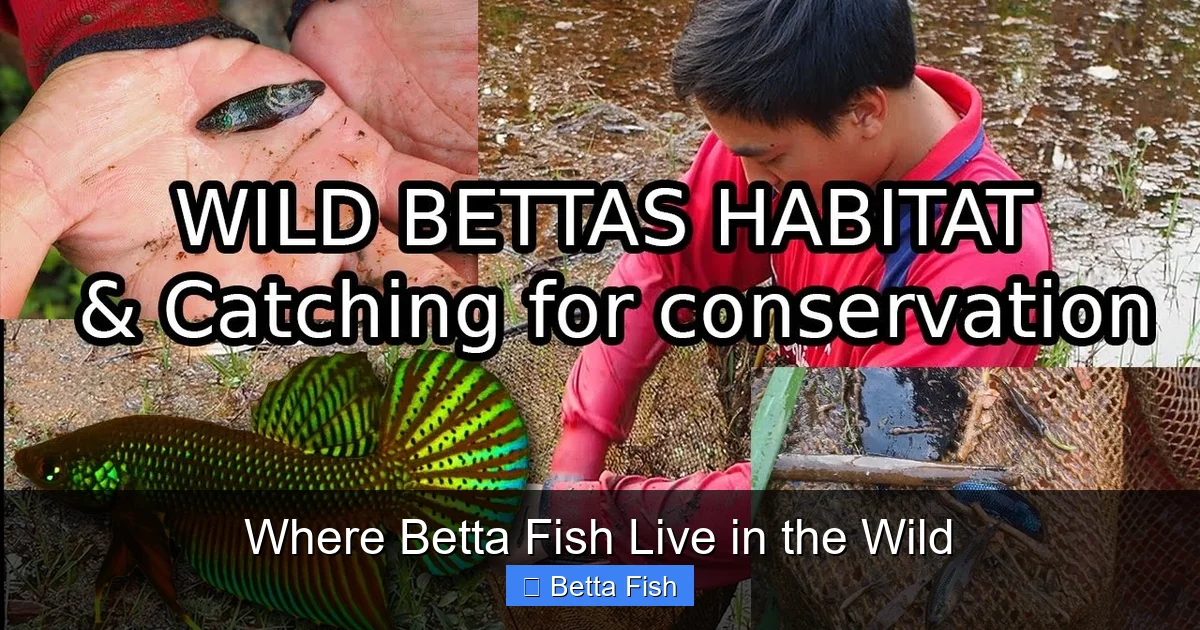
Visual guide about Where Betta Fish Live in the Wild
Image source: i.ytimg.com
Temperature: A Tropical Constant
Bettas are equatorial fish. The waters they inhabit are consistently warm, rarely dipping below 75°F (24°C) even at night, and often soaring to 85-90°F (29-32°C) under the tropical sun during the day. This thermal stability is why they are so sensitive to cold water in captivity; their metabolism is designed for warmth. A reliable aquarium heater is not a luxury but a necessity for their long-term health and immune function.
pH and Hardness: The Importance of Soft Water
The constant influx of rainwater, decaying organic matter, and the lack of hard limestone geology in many of their lowland habitats results in very soft water. General hardness (GH) is typically low, and carbonate hardness (KH) is minimal. The pH tends to be slightly acidic, ranging from about 5.0 to a neutral 7.0, largely buffered by the tannins and humic acids from the forest floor. This soft, acidic environment is crucial for their delicate skin and fin membranes and plays a role in their breeding physiology. In hard, alkaline tap water, bettas can become stressed, more prone to diseases like fin rot, and may fail to spawn.
Tannins and “Blackwater”
The iconic dark, amber hue of their natural habitat comes from tannins. These are organic compounds leached from decaying leaves, wood, and soil. In the aquarium, this is replicated using Indian almond (ketapang) leaves, peat moss (used with caution in filters), or driftwood. Tannins have mild antifungal and antibacterial properties, can help reduce stress, and are believed to mimic the natural conditions that have shaped the betta for millennia. While not strictly required for survival, providing some tannin staining is a highly beneficial practice that aligns with their wild biology.
The Lifesaving Labyrinth: An Adaptation for Survival
The most famous feature of the betta fish is undoubtedly its labyrinth organ. This specialized structure, a folded piece of vascularized bone located above the gills, allows the betta to gulp air from the surface and extract oxygen directly. It is a supreme evolutionary adaptation that explains where betta fish live in the wild and how they survive there.
Visual guide about Where Betta Fish Live in the Wild
Image source: i.ytimg.com
Why Breathe Air? The Oxygen-Poor Challenge
The stagnant, warm, plant-choked waters bettas call home are often severely depleted in dissolved oxygen. Decomposition of organic matter consumes oxygen, and warm water holds less of it than cold water. The labyrinth organ is a direct response to this environmental pressure. It allows bettas to thrive in conditions that would suffocate most other fish. You will often see your pet betta rising to the surface for a gulp of air—this is not a sign of distress but a perfectly normal, vital behavior rooted in millions of years of evolution.
The Dry Season Strategy: Burrowing and Overland Travel
This adaptation becomes a matter of life and death during the harsh dry season. As the monsoons retreat, the shallow ponds and flooded fields evaporate and shrink. The water becomes even warmer and more oxygen-poor, and predator concentration increases in the remaining pools. Here, the labyrinth organ provides the key to survival. Wild bettas have been observed doing two remarkable things:
- Burrowing into damp mud: They can bury themselves in the cool, moist mud at the bottom of a drying pool, secreting a mucous cocoon to prevent desiccation. They remain in a state of torpor, breathing air through a small hole in the mud, until the rains return.
- Overland migration: On humid nights, they have been known to “walk” short distances (up to several meters) over wet land to reach a new water body, using their pectoral fins and body undulations. This is a desperate but effective survival strategy.
These behaviors underscore their incredible resilience. It is precisely this “toughness” that led to the tragic misconception that they are disposable pets for tiny containers. In reality, their adaptations are for surviving periodic catastrophe, not for thriving in permanent, cramped, oxygen-poor conditions. A proper tank with clean, warm water and surface access is a minimum requirement for their welfare.
Seasonal Rhythms: The Wet-Dry Cycle of Life
The life of a wild betta is a direct reflection of the monsoon calendar. The dry season is a time of scarcity, stress, and survival. Water bodies shrink, temperatures climb, and food becomes scarce. Bettas become lethargic, hide in the deepest, coolest mud, or seek refuge in any remaining permanent water hole. Their color may dull as a stress response.
Then, the first rains come. The transformation is immediate and explosive. The dry land floods, creating a vast network of new, shallow habitats. Nutrient-rich silt is stirred up, and a boom of insect life—mosquitoes, midges, beetles—hatches, providing a feast. This is the breeding season. Males, invigorated by the cooler, oxygen-rich rainwater and abundant food, establish territories around a plant root or leaf. They build their bubble nests, often doubling or tripling in size in a single night, and begin their mesmerizing courtship displays. Females, plump with eggs, select the most robust males with the best nests. Spawning occurs, and the male tends the nest with fierce devotion until the fry are free-swimming.
This cycle explains many captive behaviors. The seasonal flare-up of aggression in males is linked to this innate breeding rhythm. The preference for still water and surface plants for nest-building is hardwired. Even their preference for slightly acidic, soft water mimics the tannin-rich floodwaters of the rainy season. When we keep bettas, we are essentially creating a permanent, stable “rainy season” for them. Disrupting this stability—with cold shocks, poor water quality, or a lack of security—is akin to forcing them into an eternal dry season, causing chronic stress.
Debunking the “Puddle” Myth and Other Misconceptions
The most pervasive and damaging myth about bettas is that they naturally live in “small puddles” or “rice paddy ditches,” and therefore are happy in tiny cups or vases. This is a dangerous oversimplification that has caused immense suffering.
The “Puddle” vs. The “Flooded Plain”
A temporary, isolated puddle that evaporates in a week is a death trap. It is not a habitat; it is a trap. The habitats bettas occupy are part of a vast, interconnected floodplain system. During the rainy season, the entire lowland landscape becomes a shallow sea. A “rice paddy” is not a small ditch; it is a flooded field, often hectares in size, connected to other paddies, streams, and swamps. This network provides options for movement, refuge, and genetic diversity. A betta’s territory in this expanse might be a patch of water hyacinth no larger than a dinner plate, but it is surrounded by a continuum of similar habitat, not an isolating desert. The “puddle” myth confuses a temporary, fatal trap with a seasonal, dynamic wetland.
Aggression: A Territorial, Not Universal, Trait
Another common belief is that bettas are constantly, universally aggressive. In the wild, males are fiercely territorial around their breeding nest. Outside of the breeding season and outside of a defended patch of plants, they are relatively peaceful. They are not hunting predators; they are ambush predators that sit camouflaged among plants and strike at passing insects. Their aggression is a resource-defense behavior, not a mindless rage. This is why two male bettas can sometimes be kept together in a very large, heavily planted tank (a “sorority” for females is more common), as each can establish a territory without constant visual confrontation. The famous fighting strains were selectively bred for hyper-aggression, a trait exaggerated far beyond the wild-type behavior.
The “Low-Maintenance” Fallacy
Their air-breathing ability and tolerance for poor conditions are survival mechanisms, not indicators of low needs. They are tolerant of bad water, not happy in it. In the wild, the sheer volume of water, constant dilution from rain, and natural filtration by plants and biofilms maintain water quality. In a small, unfiltered container, ammonia builds up rapidly, causing burns, stress, and disease. Their hardiness is a reason to respect their biology, not to neglect it.
Conservation in the Wild: A Fragile Future
Despite their iconic status, wild populations of Betta splendens are not currently listed on the IUCN Red List as threatened, largely due to a lack of comprehensive data. However, scientists and conservationists are deeply concerned about their future. The very habitats that shaped them are under unprecedented assault.
Threats to Their Homeland
The biggest threat is habitat destruction and degradation. The fertile lowlands of Thailand and Cambodia are being rapidly converted for agriculture, particularly for palm oil plantations. This involves draining wetlands, clearing riparian vegetation, and polluting waterways with pesticides and sediment. Urbanization and infrastructure development also fragment and destroy these delicate ecosystems. Pollution from agricultural runoff and untreated sewage degrades water quality, making it unsuitable for sensitive species like the betta. The collection of wild bettas for the international aquarium trade, while regulated, can also pose a localized threat if not done sustainably, though the vast majority of pet bettas are now captive-bred.
The Role of the Captive Hobbyist
This is where the informed betta keeper becomes a conservation advocate. By choosing a captive-bred betta from a reputable breeder or store, you are not supporting wild collection. More importantly, by understanding and replicating their wild needs—warm, clean, planted tanks—you are practicing a form of conservation through education. You become an ambassador for the species, correcting the “vase betta” myth whenever you see it. Supporting organizations that work to protect Southeast Asian wetlands, like specific projects focused on the Mae Klong or Chao Phraya river basins, is another direct way to help. The survival of the wild betta is intrinsically linked to the survival of its complex, threatened habitat. Our appreciation for the fish must extend to a respect for the ecosystem that created it.
Conclusion: From Wild Roots to Home Aquariums
The journey to understand where betta fish live in the wild reveals a story of remarkable adaptation, not of minimalist survival. It is a story of lush, warm, plant-filled wetlands shaped by the rhythm of monsoons. It is a story of a fish equipped with a fascinating labyrinth organ to endure dry spells, not a fish designed for a tiny, static vase. The wild betta’s world is one of vibrant complexity, seasonal abundance, and intricate territoriality. Every flowing fin, every surface gasp for air, every bubble nest built under a broad leaf is a direct legacy of this wild heritage.
As keepers, our responsibility is to honor this legacy. This means providing a tank that mimics the security of dense plants, the warmth of a tropical sun, the softness of tannin-stained water, and the clean, still surface they need to breathe. It means rejecting the outdated myths that have plagued this species for too long. By seeing the betta not as a decorative object for a cup, but as a descendant of the resilient, beautiful fish navigating the seasonal floods of Southeast Asia, we elevate its care from mere maintenance to stewardship. We ensure that whether in the wild or in our homes, the betta can thrive as it was always meant to—a jewel of the shallow waters, a survivor, and a spectacular example of nature’s ingenuity.
Frequently Asked Questions
What kind of water do bettas live in naturally?
Wild bettas live in warm, soft, slightly acidic to neutral water that is often stained dark with tannins from decaying leaves and wood. The water is very still or slow-moving and heavily vegetated.
What is the natural temperature range for wild bettas?
Their native habitats are tropical, with water temperatures consistently between 75°F and 85°F (24°C to 29°C), rarely dropping below 75°F even at night.
What do bettas eat in the wild?
Wild bettas are carnivorous micro-predators. Their diet consists of insects and larvae that fall on the water’s surface, zooplankton, small crustaceans, and occasionally tiny fish fry. They are ambush hunters.
Why are bettas so aggressive in the wild?
Male bettas are territorial, primarily around their bubble nests during the breeding season. Their aggression is a resource-defense behavior to protect eggs and fry, not a constant state. In non-breeding contexts, they are more peaceful.
What is the minimum tank size for a betta based on its wild habitat?
While a single betta can survive in a small container, its wild habitat is a vast, vegetated wetland. The absolute minimum for long-term welfare is 5 gallons (19 liters), but larger is always better to allow for proper heating, filtration, and swimming space.
Are wild betta fish endangered?
While not officially listed as endangered, their natural wetland habitats in Southeast Asia are severely threatened by agricultural development (like palm oil), pollution, and drainage. Captive breeding has relieved pressure on wild populations, but habitat loss remains a significant long-term threat.