When Are Betta Fish Ready to Mate
Betta fish are ready to mate when they reach sexual maturity (around 4-6 months), display clear physical and behavioral signs, and are provided with optimal environmental conditions. Males build bubble nests, females develop vertical stripes and a rounded abdomen, and water parameters must be ideal. Successful breeding requires careful observation, patience, and proper conditioning of both fish before introducing them.
Key Takeaways
- Age is the first indicator: Bettas are typically ready to breed between 4-6 months of age, with males often maturing slightly later than females.
- Physical signs differ by sex: Look for a male’s vibrant colors and flared gills, and a female’s vertical “breeding bars” (stripes) and plump, egg-filled abdomen.
- The male’s bubble nest is a primary signal: A dedicated male will build a cluster of bubbles at the water’s surface, signifying he is in breeding condition and ready to attract a female.
- Water conditions are non-negotiable: Slightly warmer water (78-80°F / 25.5-26.5°C), pristine quality, and a low water level are critical environmental triggers for mating behavior.
- Conditioning is essential: Both fish should be fed a high-protein diet of live or frozen foods (like brine shrimp) for 2-4 weeks prior to introduction to ensure peak health and fertility.
- Readiness is a combination of factors: No single sign is enough. True mating readiness is confirmed when biological age, physical development, environmental triggers, and conditioning all align simultaneously.
- Patience prevents disaster: Introducing a pair too early or in poor condition often leads to aggression, injury, or failed spawning. Always observe for multiple consistent signs before attempting to breed.
📑 Table of Contents
- The Delicate Dance of Betta Breeding: An Introduction
- The Biological Clock: Understanding Sexual Maturity in Bettas
- Reading the Signs: Physical Indicators of Breeding Condition
- The Environmental Trigger: Crafting the Perfect “Rainy Season”
- The Male’s Masterpiece: The Bubble Nest as a Declaration of Intent
- The Critical Preparation: Conditioning Before the Big Introduction
- Putting It All Together: The Final Readiness Checklist and Common Pitfalls
The Delicate Dance of Betta Breeding: An Introduction
So, you’ve got a beautiful Betta splendens, with its flowing fins and regal posture, and you’re wondering about the next step: breeding. It’s a fascinating process, but one that hinges on one crucial question: when are Betta fish ready to mate? Unlike many fish that spawn readily, Bettas are sophisticated, deliberate breeders with specific biological and environmental requirements. Getting the timing wrong is the single most common reason for failed breeding attempts, injured fish, or tragic losses. This isn’t just about age; it’s about reading a complex language of physical changes, behavioral cues, and environmental signals. Your Betta fish are ready to mate when their entire being—from their vibrant scales to their instinctual nest-building—says they are prepared for the energy-intensive, and potentially dangerous, ritual of reproduction. This guide will decode that language, giving you the clear, actionable knowledge to recognize true readiness and set the stage for a successful, safe spawning event.
Think of Betta breeding readiness as a perfect storm. It occurs when a fish has reached physical sexual maturity, is exhibiting specific courtship behaviors, is housed in water that mimics its natural tropical habitat during the rainy season, and is in peak nutritional condition. Rushing any part of this equation is like trying to bake a cake with cold ingredients—it simply won’t rise. We will walk through each component of this storm, from the subtle stripes on a female’s body to the masterful bubble architecture of a male, so you can move from hopeful observer to confident, prepared breeder.
The Biological Clock: Understanding Sexual Maturity in Bettas
Before we discuss the obvious signs, we must establish the foundation: age. A Betta fish is not ready to mate the moment you bring it home from the store. Its body needs time to develop fully functional reproductive organs and accumulate the necessary energy reserves. This period is known as sexual maturity.
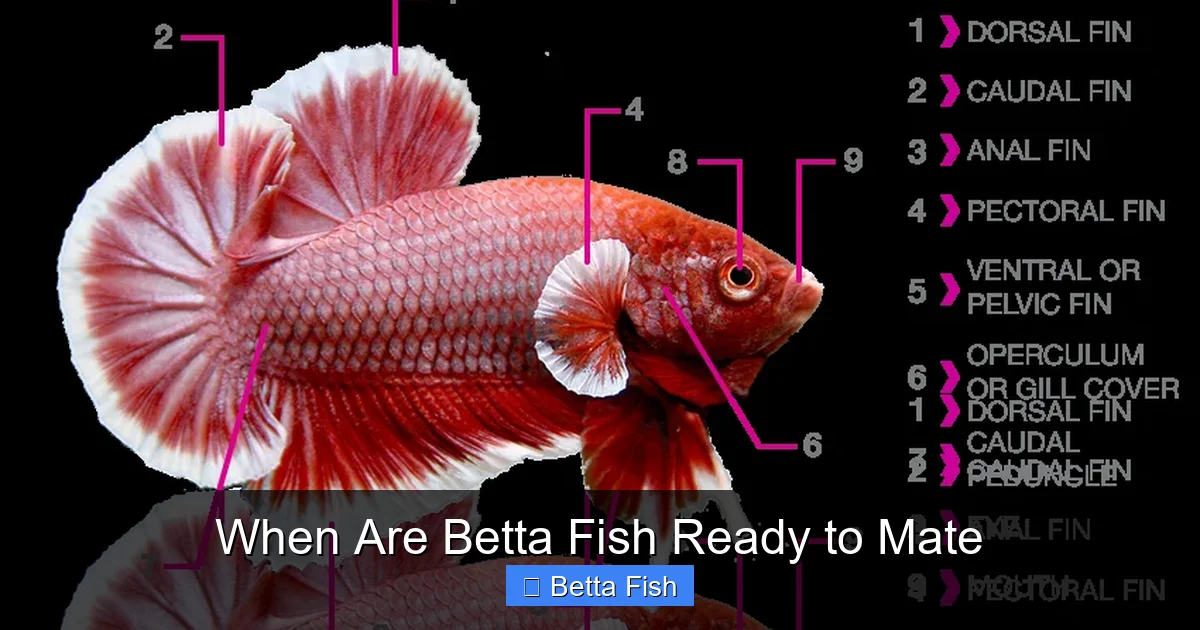
Visual guide about When Are Betta Fish Ready to Mate
Image source: nippyfish.net
Typical Age Ranges for Readiness
On average, Betta fish are ready to mate between 4 and 6 months of age. This is a general guideline, not a strict rule. Several factors influence this timeline:
- Genetics & Lineage: Fish from reputable breeder lines, selected for vigor and early maturation, may be ready closer to the 4-month mark. Pet store Bettas, often from mass-bred stocks, may take longer, sometimes up to 7 or 8 months.
- Sex: Females often reach sexual maturity slightly earlier than males, sometimes by a few weeks. However, males take longer to develop their full, adult finnage and vibrant colors, which are part of their courtship display.
- Health & Nutrition: A fish raised on a poor diet or in suboptimal water conditions will have its maturation delayed. Consistent, high-quality care accelerates development.
Attempting to breed a Betta younger than 4 months is almost always a mistake. Their bodies are not fully developed, they lack the energy for the prolonged spawning process, and they are far more likely to be injured or stressed. Patience is your first and most important tool. Wait for that 4-month marker at a minimum, and preferably until you see the secondary signs we’ll discuss next.
Reading the Signs: Physical Indicators of Breeding Condition
Once your Betta has hit the appropriate age, its body will begin broadcasting its reproductive status through visible, tangible changes. These signs differ significantly between males and females, a phenomenon known as sexual dimorphism. Learning to identify these is the core of answering when Betta fish are ready to mate.
Visual guide about When Are Betta Fish Ready to Mate
Image source: japanesefightingfish.org
The Male Betta: A Show of Color and Construction
The male is the more flamboyant of the species, and his readiness is often more obvious. You are looking for two primary things: a transformation in appearance and a specific behavior.
- Vibrant, Intense Coloration: A male in breeding condition will often “color up,” meaning his existing colors become dramatically richer, deeper, and more iridescent. A pale blue might become a metallic turquoise; a dull red may become a fiery crimson. This is driven by hormonal changes and is meant to attract a female. If your male has been somewhat dull and suddenly looks like a jewel, take note.
- Flared Gills and Opercula: You’ll see his gill covers (opercula) and the underlying gill filaments flared outward more frequently, even without another fish present. This is a display of vigor and health.
- Extended Finnage: His fins, especially the caudal (tail) and dorsal fins, may become fuller and more flowing as he reaches peak condition.
However, the most definitive behavioral sign is…
The Female Betta: Subtle Stripes and a Rounded Form
Females are less ostentatious, but their signs are equally clear if you know what to look for. The female’s readiness is communicated through two main physical cues:
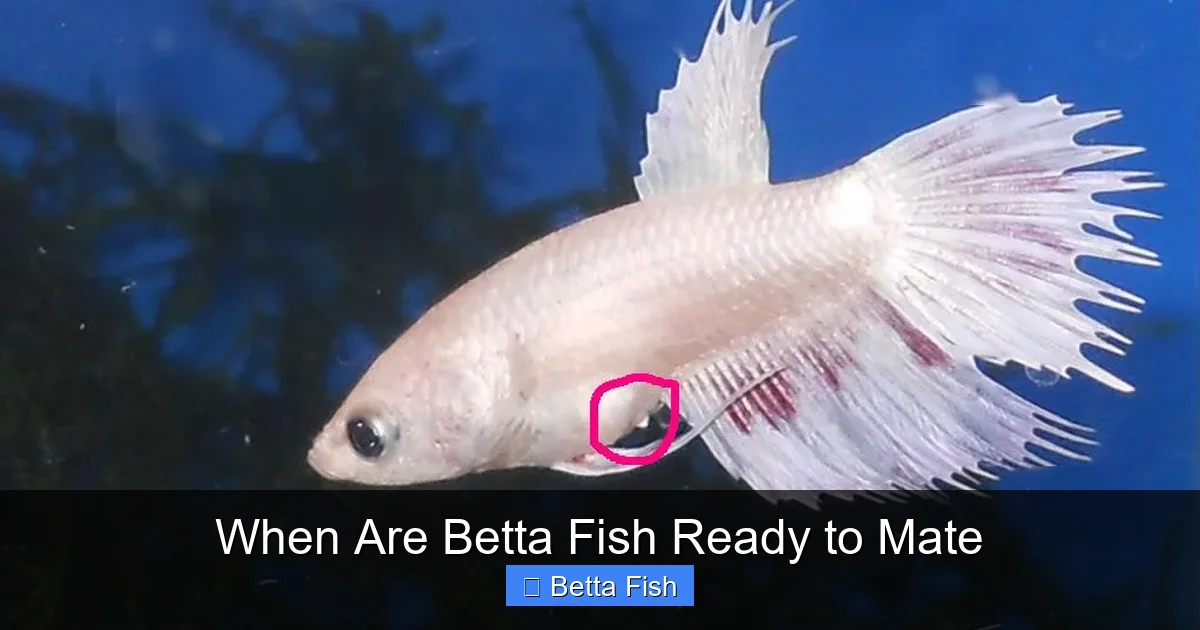
- The Development of Vertical “Breeding Bars” or “Stripes”: This is the classic sign. As a female becomes sexually receptive, she will develop 5-6 faint, vertical brown or grayish stripes along the length of her body. These are not always stark white; they can be subtle. They are a hormonal signal indicating she is full of eggs and ready to release them. Not all females display these prominently, but their appearance is a very strong positive indicator.
- A Pronounced, Rounded Abdomen: Her belly will become visibly fuller and more egg-shaped, not just from fat but from the developing ova (eggs) inside. This should be a firm, rounded look, not a soft bloat from constipation. When viewed from above, her body shape will appear more oval than the slender, torpedo shape of a non-breeding female.
A female may also show slightly more submissive or “flirty” behavior, such as gently wagging her body when near a male’s bubble nest, but the physical cues are more reliable.
The Environmental Trigger: Crafting the Perfect “Rainy Season”
In the wild, Betta fish spawn during the heavy rainy season. The rain floods their shallow, isolated pools, creating new, soft, slightly acidic water and triggering a massive bloom of insect life (food). The drop in water level and the sudden abundance of conditions signal that it’s time to reproduce. We must replicate these key environmental triggers in our tanks. Your Betta fish will not be ready to mate, no matter their physical condition, if the tank environment is wrong.

Visual guide about When Are Betta Fish Ready to Mate
Image source: petshun.com
Water Temperature: The Warmth of Life
Temperature is paramount. The spawning trigger is a stable, warm temperature. Aim for 78-80°F (25.5-26.5°C). This is slightly warmer than the standard 76-78°F many Bettas are kept at. Use a reliable aquarium heater and a precise thermometer. A consistent temperature in this range stimulates metabolism and hormone production. Fluctuations or temperatures below 76°F will suppress breeding behavior.
Water Level and Quality: Mimicking the Flood
This is a critical and often overlooked step. Lower the water level in the breeding tank to just 4-6 inches deep. This serves two purposes: it makes it easier for the male to build his bubble nest at the surface without it breaking, and it mimics the shallow, isolated pools where Bettas naturally spawn. The water must be impeccably clean. Perform a 25-50% water change daily in the breeding tank leading up to introduction. Ammonia or nitrite spikes will halt all breeding activity immediately and poison the fish. Use a gentle filter (like a sponge filter) to maintain clarity without creating strong currents that would destroy a bubble nest.
pH and Hardness: Soft and Slightly Acidic
Natural Betta habitats have soft, slightly acidic water. Aim for a pH between 6.5 and 7.2. If your tap water is very hard (high in minerals) or alkaline, you may need to use reverse osmosis (RO) water mixed with mineral additives or natural materials like Indian Almond Leaves to gently lower pH and soften the water. This is a more advanced parameter but one that can make a significant difference in encouraging spawning.
The Male’s Masterpiece: The Bubble Nest as a Declaration of Intent
When a male Betta is truly ready to mate, he begins one of the most fascinating behaviors in the aquarium hobby: bubble nest building. This is not a casual activity; it is a labor-intensive declaration of his readiness and a direct invitation to a female. The presence of a substantial, well-constructed bubble nest is one of the single strongest indicators that a male is ready to mate.
What Does a “Good” Bubble Nest Look Like?
It’s more than just a few bubbles. A dedicated male will work for hours, sometimes days, constructing a nest that can be:
- Large: Spanning several inches in diameter, sometimes covering a corner of the tank or a significant portion of the surface.
- Thick: A dense mat of bubbles, often layered, that looks sturdy and substantial. It may incorporate small pieces of plant matter, debris, or even a leaf if present, which helps bind it together.
- Well-Organized: The nest will have a distinct shape—circular, oval, or against the side of the tank. It won’t just be a scattered cluster.
You will see the male surfacing, taking a gulp of air, and expelling it through his labyrinth organ (a special breathing organ) coated in mucus, creating a bubble. He then meticulously places and arranges these bubbles.
The Nest is an Invitation, Not a Guarantee
A male building a bubble nest is in a heightened state of reproductive readiness. However, he may build nests even without a female present, simply as a sign of good health and condition. The true test comes when a suitably conditioned female is introduced. If she is ready, she will show interest in the nest—inspecting it, swimming underneath it. The male will then intensify his displays. If she is not ready or the conditions are off, she may ignore or even destroy the nest, and the male may become aggressive. Therefore, the bubble nest is a necessary but not sufficient condition. It tells you the male is ready; you must still confirm the female’s readiness through her physical signs and her reaction to him.
The Critical Preparation: Conditioning Before the Big Introduction
You’ve identified a 5-month-old male with vibrant colors and a huge bubble nest. You’ve found a female with prominent breeding bars and a rounded belly. The water is warm and clean. Are you ready? Not yet. The final, non-negotiable step is conditioning.
What is Conditioning?
Conditioning is the process of feeding your prospective breeding pair a nutrient-dense, high-protein diet for a period of 2-4 weeks prior to their introduction. The goal is to pack their bodies with the essential nutrients—proteins, fats, vitamins—required for gamete (sperm and egg) production, energy for the spawning ritual, and post-spawning recovery. A fish fed only pellets or flake food is like an athlete trying to run a marathon on a fast-food diet. It simply won’t perform.
The Ideal Conditioning Diet
Rotate a variety of the following foods, feeding 2-3 times daily:
- Live Foods (Gold Standard): Brine shrimp (newly hatched or adult), daphnia, microworms. Live foods stimulate natural hunting instincts and are packed with nutrients.
- Frozen Foods (Excellent Alternative): Frozen brine shrimp, bloodworms, daphnia. These are nearly as nutritious as live, convenient, and parasite-free.
- High-Quality Pellets: Use these as a base, but choose a premium brand with high protein content (at least 40%).
Observe your fish during conditioning. They should become more active, their colors more vibrant, and their bodies more robust. The female’s abdomen should become noticeably fuller and rounder. This is the final confirmation that their bodies are ready for the immense physiological task of reproduction. Never skip the conditioning period. It is the difference between a successful spawn and a weak, failed attempt or a sick fish.
Putting It All Together: The Final Readiness Checklist and Common Pitfalls
So, when are Betta fish ready to mate? Let’s synthesize. Your pair is ready when the following checklist is complete:
- Age: Both fish are at least 4-6 months old.
- Male Signs: Vibrant colors, flared gills, and a large, well-constructed bubble nest.
- Female Signs: Visible vertical breeding bars (not all, but common) and a firm, rounded, egg-filled abdomen.
- Environment: Breeding tank at 78-80°F, pristine water quality, 4-6 inch water level, soft/slightly acidic parameters.
- Conditioning: Both fish have been on a high-protein diet (live/frozen foods) for 2-4 weeks and are in excellent, robust physical condition.
When all these boxes are checked, you can cautiously introduce the female to the male’s tank (or the male to the female’s tank, but the male’s tank is preferable as he has already built his nest there).
What If the Signs Are Mixed?
What if the male has a great nest but the female’s bars are faint? What if the female is plump but the male isn’t building? Wait. It is far better to wait an extra week and allow nature to take its course than to force the issue. A mismatched pair is a recipe for disaster. The male may see a non-receptive female as an intruder and attack. The female may not release eggs, leading to frustration and aggression. If the female is not ready, she may eat the male’s bubble nest in defiance. Patience is the breeder’s greatest virtue.
The Role of the “Spawning Tank”
Always use a dedicated, bare-bottom spawning tank (5-10 gallons is ideal). It should have no substrate (to keep eggs from sinking and fouling), a few floating plants or a spawning mop for the female to take cover under, and the heater and sponge filter positioned to minimize water movement at the surface (to protect the nest). This controlled environment is for the introduction, courtship, and spawning only. After the eggs are laid and the male is tending them, the female must be removed immediately to prevent her from eating the eggs or being attacked by the male. The male will guard the nest until the fry (babies) are free-swimming, at which point he too must be removed.
Conclusion
The question “when are Betta fish ready to mate?” has a nuanced, multi-layered answer. It is a convergence of biological readiness (age), clear physical and behavioral signals (color, stripes, bubble nests), and a meticulously prepared environment that simulates their natural breeding season. Rushing this process is the most common and costly mistake new breeders make. By learning to read your fish’s bodies—the male’s brilliant display and architectural feat, the female’s subtle stripes and rounded form—and by respecting the need for proper conditioning and water parameters, you move from simply hoping for spawn to intelligently facilitating it. Remember, in the world of Betta breeding, observation is your best tool. Watch your fish, understand their language, and only when all the signs align in harmony will you witness the breathtaking, ancient dance of the Betta spawning embrace.
Frequently Asked Questions
How old should Betta fish be before I try to breed them?
Betta fish should be at least 4-6 months old before breeding. This ensures they have reached full sexual maturity and have the physical size and energy reserves necessary for the demanding spawning process. Breeding them younger often leads to failed spawns, injury, or significant stress.
My male Betta built a huge bubble nest. Is he definitely ready to mate?
A large, well-constructed bubble nest is a very strong sign that your male is in breeding condition and ready to attract a female. However, it is not a guarantee on its own. The female must also show clear signs of readiness (breeding bars, rounded abdomen), and the water parameters must be optimal. The nest is an invitation; you must still confirm all other factors are correct.
Do all female Bettas show breeding stripes?
No, not all female Bettas display the classic vertical “breeding bars” or stripes. While it is a common and reliable sign in many females, some may only show very faint stripes or none at all. In these cases, you must rely more heavily on the other primary sign: a firm, noticeably rounded, egg-filled abdomen. Always look for a combination of signs.
How long should I condition my Bettas before attempting to breed?
You should condition both the male and female with a high-protein diet of live or frozen foods (like brine shrimp or daphnia) for a minimum of 2 weeks, though 3-4 weeks is ideal. This period allows their bodies to build up the necessary fat and nutrient reserves for gamete production and the energy-intensive spawning ritual.
What should I do if the female destroys the male’s bubble nest?
If the female actively attacks and destroys the bubble nest, it is a clear sign she is not yet receptive to the male. This can happen if she is not physically ready, if the water conditions are poor, or if she is simply stressed. Immediately remove the female from the tank. Return her to her own separate tank, re-check all your water parameters, and allow both fish to rest and recover. Try the introduction again in a week or two after further conditioning.
Can I breed my Betta fish in a community tank?
No, you should never attempt to breed Bettas in a community tank. The spawning process is stressful and involves specific behaviors that other fish will disrupt. The male needs a quiet, controlled environment to build and tend his bubble nest, and the female needs places to escape his initial chasing. A dedicated, bare-bottom spawning tank is essential for safety and success.