Male Betta splendens are inherently the most aggressive betta fish, selectively bred for centuries for combat. Within this group, Plakat (short-finned) varieties often display the highest intensity of aggression due to their athletic build and historical fighting lineage. Wild-type Bettas and some females can also be territorial, but male domesticated Bettas, especially Halfmoons with large fins, are most prone to fin-nipping and tankmate aggression. Understanding these differences is crucial for proper housing and preventing stress or injury.
So, you’re thinking about getting a Betta fish. You’ve seen them in tiny cups at the store, those brilliantly colored jewels with flowing fins that look like living silk. They’re stunning. But then you hear the whispers, the old nickname: “Siamese Fighting Fish.” A knot of concern forms. Just how aggressive are these beautiful creatures, and which ones are the worst offenders? It’s a critical question for any potential Betta owner, because the answer dictates everything—from your tank setup to your choice of tankmates. Let’s pull back the curtain on Betta aggression, separating myth from biological reality, and pinpoint exactly which Bettas are most likely to turn a peaceful community tank into a warzone.
First, a foundational truth: all Betta splendens possess a capacity for aggression. It’s in their DNA. They are, by nature, solitary, territorial fish. But not all aggression is created equal, and not all Bettas express it with the same intensity or for the same reasons. The “most aggressive” title doesn’t go to a specific color—a red Betta isn’t meaner than a blue one. It doesn’t go to a specific “breed” in the dog sense. Instead, aggression in Bettas is a complex cocktail of genetics, sex, fin type, and individual personality. To understand which Bettas are most aggressive, we need to look at these factors not in isolation, but in combination.
Key Takeaways
- Male Betta splendens are the pinnacle of aggression: Centuries of selective breeding for fighting have hardwired male domesticated Bettas for high territoriality and aggression toward other males.
- Plakat Bettas often exhibit the most “active” aggression: Their shorter, stronger fins and athletic bodies make them relentless chasers and more capable of physical confrontation than long-finned varieties.
- Aggression extends beyond male vs. male: Betta fish can be aggressive toward tankmates with flowing fins (like guppies), similar body shapes, or even their own reflection.
- Wild-type and female Bettas have different aggression profiles: Wild Bettas are aggressive but more focused on territory; females can be hierarchal but are generally less explosively aggressive than males.
- Tank setup is a primary aggression modifier: A spacious, well-planted tank with clear visual barriers significantly reduces stress and territorial disputes in aggressive betta fish.
- Aggression is a spectrum, not a guarantee: Individual personality plays a massive role; some male Bettas are docile, while some females can be surprisingly feisty.
- Never judge a Betta by its fins alone: While long fins can trigger fin-nipping in others, a “gorgeous” Halfmoon can be just as aggressive as a Plakat; fin type is not a reliable indicator of temperament.
📑 Table of Contents
- The Unquestionable Champion: Male Domesticated Betta splendens
- Within the Male Ranks: Plakats vs. Halfmoons—The Aggression Spectrum
- The Wild Card: Wild-Type Bettas
- The Often-Overlooked Factor: Female Bettas
- Beyond the Betta: Aggression Toward Tankmates
- Managing the Monster: Practical Strategies for Aggressive Bettas
- Conclusion: Knowledge is the Ultimate Peacekeeper
The Unquestionable Champion: Male Domesticated Betta splendens
If we’re handing out a gold medal for “Most Aggressive Betta Fish,” it goes, without contest, to the male domesticated Betta splendens. This isn’t an opinion; it’s a matter of historical fact and selective pressure. For over a millennium, Bettas have been bred in Southeast Asia for fighting. While modern pet Bettas are far removed from the brutal, to-the-death matches of the past, the genetic predisposition for extreme territorialism and male-on-male aggression has been deeply ingrained and actively encouraged by breeders seeking the most dramatic colors and fin displays.
The Fighting Legacy: Why Males Are Hardwired for War
Male Bettas were the stars of the arena. Their job was to confront another male, to flare their gills, extend their fins, and engage in a test of endurance and will. The loser was the one who retreated first. This selective breeding for “gameness”—the willingness to persist in a confrontation—has left modern male Bettas with a hair-trigger response to perceived threats. Their world is divided into: my territory, potential rival, and everything else. Any fish that enters their visual space, especially one with similar body shape or long, flowing fins (which they may interpret as a rival’s display), is immediately categorized as a “potential rival.”
This is why the cardinal rule of Betta keeping exists: never house two male Bettas together. It’s not a suggestion; it’s a guarantee of a fight that will almost certainly result in severe injury or death for one or both fish. Their aggression is not playful or social; it is a deeply rooted, life-or-death territorial imperative. Even a divider in a tank is often not enough, as the stress of constant visual contact with a rival can lead to chronic stress, color fading, and immune suppression.
The “Dueling” Phenotype: How We Recognize Aggression
When a male Betta perceives a threat, it performs a ritualized display known as “flaring.” The gill covers (opercula) expand outward, making the fish look wider and more formidable. The fins, especially the caudal (tail) and dorsal fins, are fully extended to their maximum size. The body becomes rigid, and the fish may slowly approach the intruder. This is a warning. If the “intruder” (be it another Betta, a reflection, or a tankmate) does not retreat, the displaying Betta may escalate to chasing, nipping, and biting. This behavior is most pronounced in male Bettas because their entire biology—from their larger, more colorful fins used for display to their more pronounced beard (the iridescent patch under the gills)—is designed for this very purpose of intimidation and combat.
Within the Male Ranks: Plakats vs. Halfmoons—The Aggression Spectrum
All male Bettas are aggressive, but within that category, there’s a significant spectrum. The key differentiator is often fin type and body conformation, which is directly tied to their breeding history.
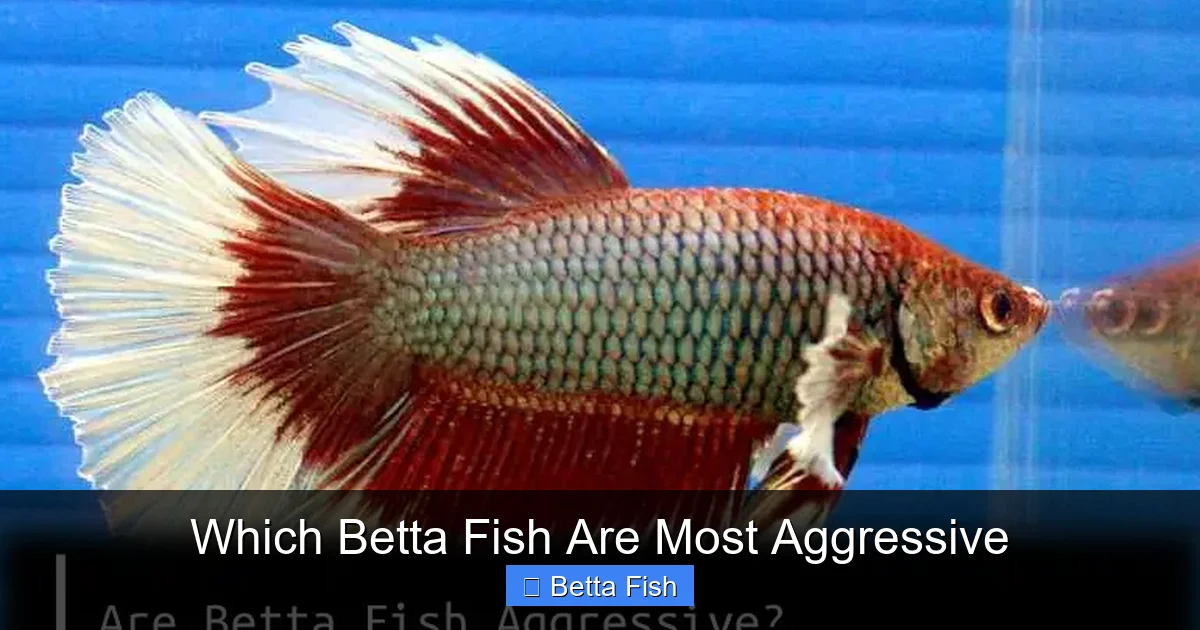
Visual guide about Which Betta Fish Are Most Aggressive
Image source: fishkeepingguide.net
Plakat (PK): The Athletic Assassin
Plakat Bettas, with their short, muscular fins and robust, torpedo-shaped bodies, are frequently cited as the most relentlessly active and physically aggressive of all domesticated varieties. Why? Because they look the most like their wild ancestors and the original fighting strains. Their short fins mean less drag in the water. They are powerful swimmers built for speed and bursts of energy. When a Plakat decides to chase, it does so with impressive agility and endurance. They are less likely to get their fins torn in a tussle and more capable of delivering a damaging bite.
Their aggression is often described as more “working dog” versus the “show dog” aggression of long-finned varieties. They are constantly on the move, patrolling their territory with purpose. A Plakat in a community tank is a high-risk proposition. While any male Betta can be a problem, the Plakat’s athleticism makes it a more effective and persistent pursuer. Their aggression is less about the dramatic, static flaring display and more about constant, active patrolling and swift retaliation against any intruder that crosses their invisible boundary line.
Halfmoon (HM) & Other Long-Finned Varieties: The Flare-Focused Fighter
Halfmoon Bettas, with their spectacular 180-degree caudal fin spread, are the iconic image of a pet Betta. Their aggression is no less real, but it can manifest differently. The sheer weight and size of their fins make them less agile swimmers. They often rely more heavily on the dramatic flaring display to intimidate rivals from a distance. Their goal is to make the intruder back down without a chase, conserving energy and protecting those delicate, expensive-looking fins.
However, this does not mean they are safer tankmates. In fact, their long, flowing fins can be a major liability. They are prime targets for fin-nipping from other fish, and they are also prone to fin-nipping themselves, especially if bored or stressed. A Halfmoon might flare at a slow-moving guppy with a long tail, see the tail as a rival’s fin, and take a nip. Furthermore, if challenged, a Halfmoon will absolutely fight, but its style is more about posturing and less about sustained pursuit. That said, a determined Halfmoon can still be a formidable bully in a small tank.
Other long-finned types like the Rosetail, Feathertail, or Dumbo (with large pectoral fins) follow a similar pattern. Their aggression is high, but their physical style is more about show than go. The exception proves the rule: a very large, heavily finned Betta can be so encumbered that it is less of a threat, but this is not the norm and comes with its own health risks (fin rot, fatigue).
The Wild Card: Wild-Type Bettas
When we talk about “most aggressive,” we must distinguish between domesticated show Bettas and their wild cousins, Betta splendens as they exist in the rice paddies and shallow streams of Thailand. Wild-type Bettas (often sold as “Wilds” or “Thai Bettas”) are arguably more instinctively aggressive and territorial than their domesticated counterparts, but the expression of that aggression is different.
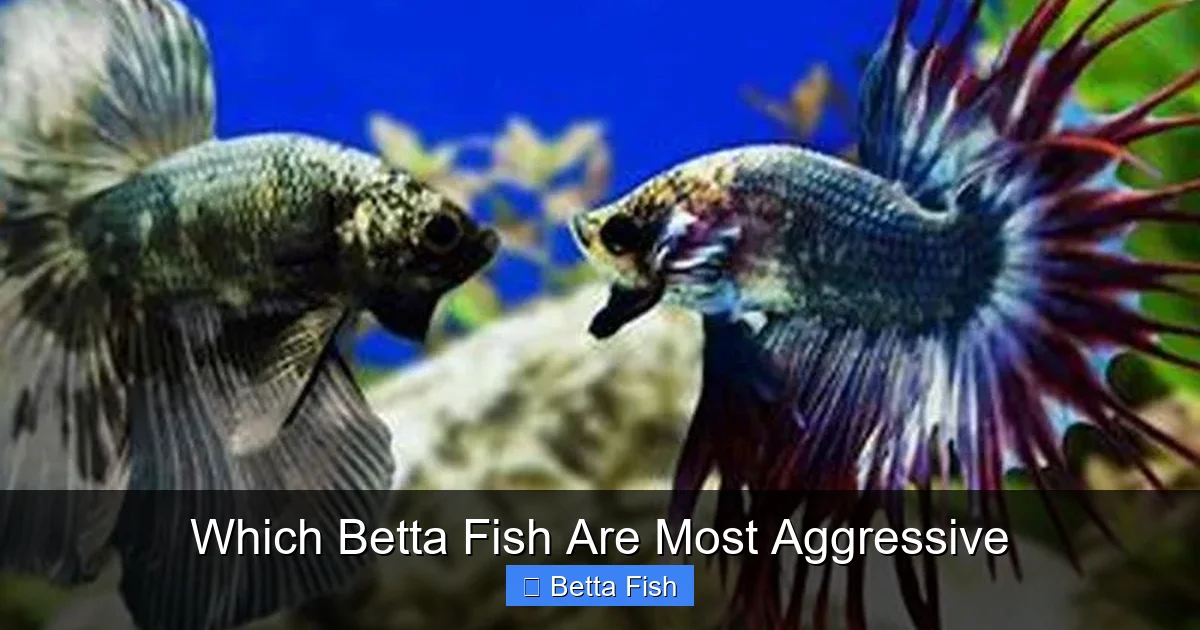
Visual guide about Which Betta Fish Are Most Aggressive
Image source: diyseattle.com
Instinct Over Pageantry
Wild Bettas are built for survival in a compact, resource-scarce environment. Their aggression is not for show; it’s for securing a prime patch of leaf litter or a bubble nest site. They are less likely to have the exaggerated flaring displays of a domestic Betta (though they still flare) and more likely to engage in immediate, decisive skirmishes to defend a bubble nest or a hiding spot. Their coloration is often more subdued—greens, browns, reds—serving as camouflage rather than a billboard.
They are also, in many ways, smarter and more aware of their environment. A Wild Betta might be less reactive to a distant fish but explosively aggressive if another fish enters its specific, chosen micro-habitat. Their aggression is often more focused and strategic. They are also generally hardier and more active, which can translate to a lower tolerance for poor water conditions caused by the stress of cohabitation. Housing a Wild-type Betta is a commitment to an exceptionally well-researched, heavily planted, and spacious biotope-style tank. They are not for beginners and are often considered more “feisty” on a consistent basis than even the most aggressive domestic male.
The Often-Overlooked Factor: Female Bettas
For years, the conventional wisdom was: “Female Bettas can be kept together in a ‘sorority.’” This is true, but it comes with a massive, flashing asterisk that many new hobbyists miss. Female Bettas are not peaceful. They are hierarchical, territorial, and capable of significant aggression.
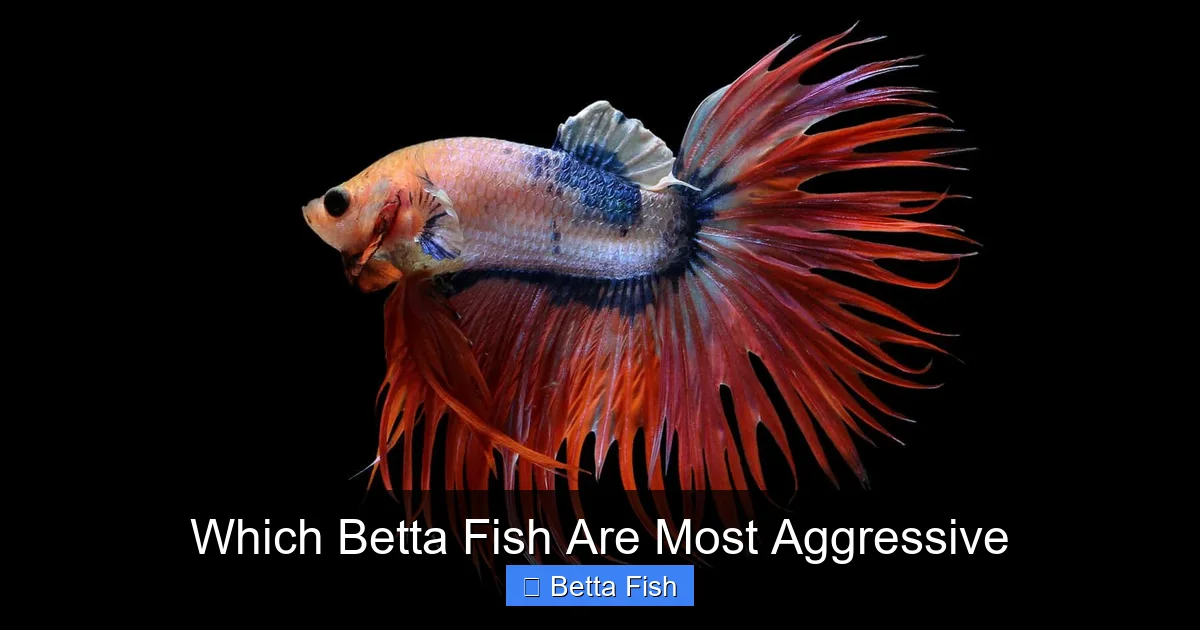
Visual guide about Which Betta Fish Are Most Aggressive
Image source: bettasource.com
The Sorority Reality: Structured Bullying
A properly set up female Betta sorority (minimum 5-6 females in a heavily planted 20+ gallon tank) works on the principle of establishing a pecking order. The aggression is dispersed among a larger group, preventing one fish from being singled out and killed. However, the process of establishing that hierarchy is brutal. There will be flaring, chasing, and nipping. Some females will be permanently marked with torn fins. The “alpha” female will claim the best spots—the warmest area near the heater, the prime floating plants for bubble nesting.
Individual females can be shockingly aggressive. Some will flare at their own reflection constantly. Some will attack any fish that dares to enter their claimed sector of the tank. The misconception that females are “nice” leads to people housing a single female Betta with other community fish, assuming she’ll be fine. This is a gamble. While many female Bettas are less explosively aggressive than males, a particularly dominant or territorial female can be just as problematic, bullying slow, long-finned tankmates or relentlessly chasing other fish.
The Maternal Fury
If you are breeding Bettas, the maternal aggression of a female guarding a bubble nest or her eggs is absolute and terrifying. She will attack anything that moves, including the male Betta, with lethal intent. This is a specialized, short-term, but extreme form of aggression driven by reproductive instinct.
Beyond the Betta: Aggression Toward Tankmates
An “aggressive Betta” is often defined by its interactions with other fish. This is where the nuances of Betta psychology become critical. A Betta might not constantly flare at its own reflection but could become a relentless bully to a specific tankmate. The triggers are specific.
The Fin-Nipping Problem
Bettas are visually driven. Long, flowing fins are interpreted as either a rival’s display or, in some cases, as food. Fish with elaborate fins—male guppies, fancy goldfish, some angelfish, and long-finned tetras—are the most common victims of Betta fin-nipping. The Betta sees the undulating fin and may take a curious or aggressive nip. This can lead to shredded fins, stress, and secondary infections for the victim. It’s a one-sided relationship; the Betta is rarely damaged in return. Avoid pairing aggressive Bettas with any fish that has fins that trail or flow dramatically.
The Body Shape & Color Trigger
Fish that resemble Bettas are a major red flag. This includes other anabantoids like Gouramis (especially Dwarf Gouramis, who can be feisty themselves) and Paradise Fish. The similar body shape—laterally compressed, with a flowing dorsal fin—is a direct challenge to a Betta’s territorial instincts. Putting them together is asking for a fight. Brightly colored fish can also trigger aggression, as the Betta may perceive the color as a rival’s flaring display.
The “Anything That Moves” Bully
Some Bettas, particularly very active Plakats or highly strung individuals, will simply chase anything that moves in their territory. Fast-moving, schooling fish like Zebra Danios or Harlequin Rasboras can sometimes outmaneuver a Betta, but the constant stress of being chased is terrible for the school and can lead to the Betta exhausting itself. The ideal tankmate for a potentially aggressive Betta is something that is: 1) Fast and agile enough to evade if needed, 2) Non-territorial and not prone to fin-flaring itself, 3) Inhabits a different area of the water column (top vs. mid/bottom). Good candidates include certain types of Corydoras catfish, Kuhli loaches, and small, quick rasboras like the Phoenix Rasbora, but even these are not guaranteed safe with a highly aggressive individual.
Managing the Monster: Practical Strategies for Aggressive Bettas
So you have, or are considering, a Betta from one of these more aggressive categories. Does that mean you’re doomed to a single-fish tank? Not necessarily, but it means you must be a strategic, attentive, and well-equipped Betta keeper. Managing aggression is about environment, observation, and contingency planning.
Tank Size is Non-Negotiable
The single biggest mistake is a small tank. The “Betta in a bowl” myth is dangerously wrong. For any Betta, but especially an aggressive one, a minimum of 5 gallons is the absolute starting point. For a Plakat or a Wild-type that is a hyper-active patroller, 10 gallons is a much safer and more humane beginning. Space dilutes territorial boundaries. In a 2.5-gallon tank, the entire volume is “my territory.” In a 10-gallon tank, the Betta might only claim a third of it, leaving other areas relatively safe for tankmates. More space allows for the creation of distinct territories with plants, wood, and decor.
The Power of Plants and Structure
You cannot have too many plants, caves, and visual barriers. The goal is to break up constant line-of-sight. A Betta should not be able to see the entire length of the tank from one perch. Use tall plants (like Amazon swords or Vallisneria) to create vertical walls. Use floating plants (like water lettuce or frogbit) to diffuse light and create a sense of overhead security—Bettas feel safer with something above them. Provide hollow logs, ceramic caves, and dense thickets of stem plants (like Rotala or Ludwigia). These create “no-go” zones for the Betta and safe havens for other fish. A well-planted tank is not just pretty; it’s a functional tool for aggression management.
The “Mirror Test” and Observation Period
Before adding any tankmate, you must know your Betta. Start with the mirror test. Hold a small mirror to the side of the tank. A fierce, sustained flare (more than a few seconds) followed by a charge is a red flag. A brief flare and then disinterest is more promising. But the real test is a controlled introduction. Use a clear divider in a separate tank or a breeder box inside the main tank. Place the potential tankmate on the other side. Observe for 24-48 hours. Does the Betta constantly posture and flare? Does it try to get over/through the divider? Or does it largely ignore the other fish after an initial check? The latter is a good sign. The former is a hard pass. Never just drop a new fish in and hope for the best.
Always Have a Plan B
Even with the best planning, you may be wrong about your Betta’s temperament. You must have a backup plan before you add any tankmate. This means a fully cycled, filtered, heated hospital or “quarantine” tank ready to receive the Betta if it becomes a bully, or the other fish if they are being harassed. Be prepared to separate them immediately at the first sign of persistent chasing (more than a few minutes a day) or any nipping/fin damage. It is better to have a lonely but healthy Betta than a stressed, injured community.
Conclusion: Knowledge is the Ultimate Peacekeeper
So, which Betta fish are most aggressive? The answer is a specific profile: a male, domesticated, Plakat-type Betta, especially one with a strong lineage or a particularly dominant personality. Wild-types follow closely behind due to their raw, instinct-driven territoriality. Long-finned show males are equally aggressive genetically but may express it through more flaring and less chasing. Females are a separate, unpredictable category of hierarchical aggression.
But this knowledge is not meant to scare you away from Bettas. It’s meant to empower you. Aggression is not a moral failing in a Betta; it is a biological reality. By understanding its sources—sex, genetics, fin type, and individual will—you can make intelligent choices. You can select a Betta (perhaps a less extreme Halfmoon or a carefully observed female) whose personality might be more compatible with a community. You can build an environment—spacious, complex, and barrier-filled—that respects its territorial needs and minimizes stress. You can choose tankmates with wisdom, avoiding fin-flashers and look-alikes.
The most beautiful, thriving Betta tank is not one where the Betta is “tame,” but one where its natural behaviors are accommodated and its aggression is rendered unnecessary. You create a world so rich with space and hiding places that there is no need to defend a tiny patch of sand. You provide tankmates that don’t trigger its ancient fighting instincts. In doing so, you move from fighting against the Betta’s nature to working with it. And in that balance, you find the true peace—for your Betta, for its tankmates, and for you as a keeper who understands the fiery, fascinating heart of this incredible fish.
Frequently Asked Questions
Can I keep two male Betta fish together if they are from a “peaceful” variety?
No. The genetic aggression in male Betta splendens is too strong, regardless of fin type or color. Even seemingly docile males can turn on each other without warning. A divided tank is the only safe way to house multiple males.
Are Wild Betta fish more aggressive than regular pet Bettas?
They are often more instinctively territorial and less prone to the “flaring display” of domestic Bettas, opting for quicker, more direct confrontations. Their aggression is typically more focused on defending a specific micro-habitat like a leaf or bubble nest, making them highly intolerant of tankmates in their space.
What are the first signs that my Betta is becoming aggressive toward a tankmate?
Look for persistent flaring (gills extended) directed at a specific fish, constant chasing that forces the other fish to hide constantly, and visible damage like torn or frayed fins on the tankmate. Occasional, brief chases can be normal, but sustained behavior is a problem.
My Betta flares at its own reflection constantly. Is this aggression a problem?
Yes, this is a sign of stress and frustration. The Betta perceives its reflection as a rival and cannot win the confrontation, leading to chronic stress. This can weaken its immune system. Use a background on the tank glass to eliminate the reflection or provide more plants to block line-of-sight to the glass.
Can a Betta’s aggression change over time?
Yes. A young Betta may be more skittish. As it matures and establishes a territory (often around 4-6 months), its territorial aggression can become more pronounced. Changes in the tank environment, water parameters, or health can also cause a usually peaceful Betta to become more irritable and aggressive.
What is the absolute safest tankmate for an aggressive male Betta?
There is no guaranteed “safe” tankmate for a known aggressive male Betta. The safest option is always a species-only tank. If you attempt community housing, the best candidates are fast, agile, non-territorial bottom-dwellers like a small school of Pygmy Corydoras in a large, heavily planted tank, but even this carries risk and requires careful observation.

