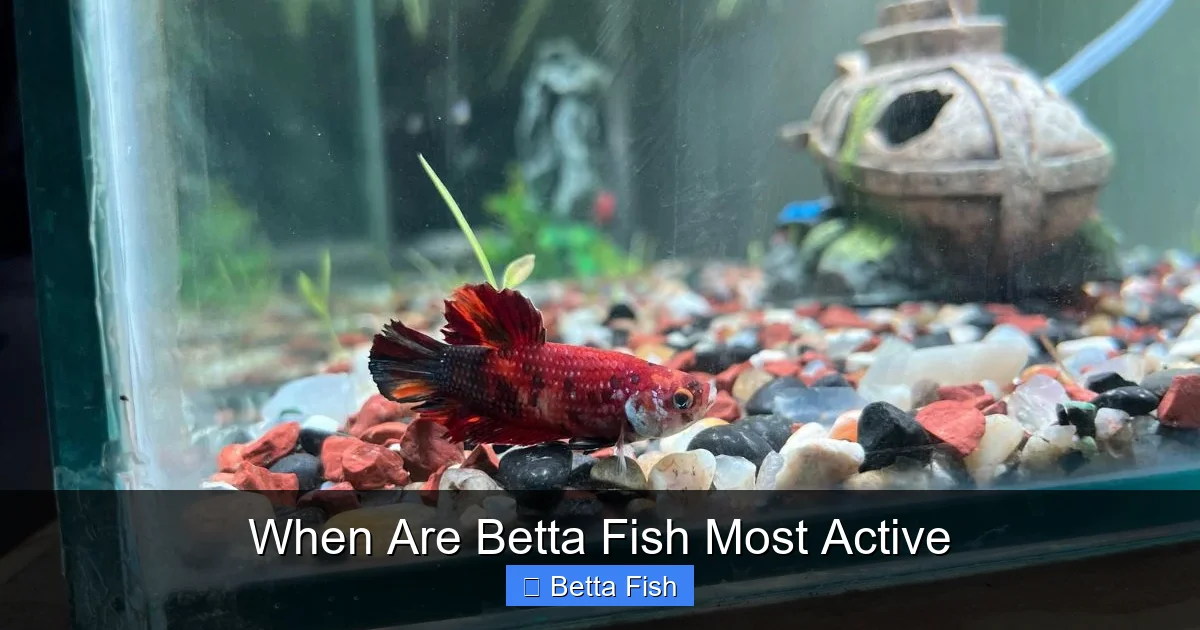
When Are Betta Fish Most Active
Betta fish are primarily diurnal, meaning they’re most active during daylight hours. Their peak activity typically occurs in the morning after lights-on and in the late afternoon. Understanding these patterns is crucial for proper feeding, enrichment, and health monitoring. Factors like lighting quality, tank environment, and individual personality significantly influence their energy levels throughout the day.
Have you ever sat quietly by your betta fish tank, watching your vibrant little companion, and wondered, “What’s going on in that mind? When is he actually awake and fun to watch?” You’re not alone. One of the most common questions new and experienced betta owners ask is about their fish’s activity patterns. Understanding when betta fish are most active isn’t just about satisfying curiosity—it’s a cornerstone of providing excellent care. It helps you schedule feedings, choose the best times for interaction or observation, and, most importantly, spot potential health problems before they become serious. Let’s dive deep into the daily rhythm of the magnificent Betta splendens.
Key Takeaways
- Peak Activity Windows: Betta fish are generally most active during the morning (first few hours after lights-on) and late afternoon, with a midday lull being common.
- Light is the Primary Driver: Their activity cycle is tightly linked to a consistent light-dark cycle. Sudden or poor lighting disrupts their natural rhythm.
- Feeding Triggers Excitement: Betta fish often show increased activity around their regular feeding times, anticipating food.
- Tank Setup Matters: A stimulating environment with plants, hiding spots, and gentle water flow encourages more natural exploration and activity.
- Health Directly Impacts Activity: Lethargy or unusual hyperactivity can be key early signs of stress, illness, or poor water quality.
- Individual Personalities Vary: Some bettas are naturally more energetic “show-offs,” while others are more reserved; observe your specific fish.
- Temperature is Critical: As tropical fish, bettas are sluggish in cold water (below 75°F/24°C) and most active in their optimal range of 78-80°F (25-27°C).
📑 Table of Contents
- Understanding the Betta’s Natural Rhythms: A Diurnal Heritage
- The Daily Activity Cycle: Morning Flare to Evening Wind-Down
- Environmental Triggers: What Drives (or Dampens) Activity?
- Health, Age, and Water: The Non-Negotiables
- Observing and Interpreting Your Betta’s Unique Behaviors
- Optimizing the Schedule: Practical Tips for Owners
- Conclusion: Embracing the Betta’s Rhythm
Understanding the Betta’s Natural Rhythms: A Diurnal Heritage
To know when a betta is most active, we must first look at its wild origins. The betta fish hails from the shallow, slow-moving waters of rice paddies, marshes, and floodplains in Southeast Asia. In this environment, the daily cycle of the sun dictates nearly everything. Betta fish are classified as diurnal creatures, meaning their period of greatest activity coincides with the daylight hours.
The Wild Cycle vs. The Tank Cycle
In the wild, a betta’s morning begins as the sun rises over the water. The warming light stimulates their metabolism. This is prime time for patrolling their small territory, hunting for insects or larvae that land on the water’s surface, and performing their spectacular, flaring displays to ward off rivals. As the sun reaches its peak and the water warms, they often seek shade under floating leaves or plants to avoid overheating and predators, leading to a natural midday rest period. Activity picks up again in the late afternoon as temperatures moderate, before winding down for the night.
Our aquarium bettas retain this innate biological clock, or circadian rhythm. Even if born in captivity for generations, the genetic programming for a day-active cycle remains strong. Therefore, the most straightforward answer to when are betta fish most active is: during the illuminated part of their 24-hour cycle, with distinct peaks at the start and end of the “day.”
The Daily Activity Cycle: Morning Flare to Evening Wind-Down
So, what does a typical “betta day” look like in your living room? Let’s break it down hour by hour, assuming a standard 10-12 hour light cycle.

Visual guide about When Are Betta Fish Most Active
Image source: wallpapers.com
The Morning Rush (First 2-4 Hours After Lights-On)
This is often the absolute peak activity window for your betta. As the aquarium lights turn on (or the room brightens), it’s like an alarm clock for your fish. You’ll likely observe:
- Patrolling: A vigorous swim around the perimeter of the tank, checking boundaries. This is a territorial behavior.
- Flaring: The iconic gill and fin flaring. This can be a display of dominance, excitement, or even mild irritation. They might flare at their own reflection, a passing movement, or a tank mate.
- Bubble Nest Building (Males): If your male betta is in breeding condition, the morning is a prime time for him to gather air bubbles at the water’s surface and construct his bubble nest. This is a busy, purposeful activity.
- Surface Gulping: Since they are labyrinth fish (they breathe air from the surface), you’ll see them rise to the top for a gulp of air, often accompanied by a quick swim.
Practical Tip: This is the ideal time to feed your betta. Their metabolism is kicking into high gear, and they will be most enthusiastic about food. It’s also the best time for brief, gentle interaction if your betta is tame, as they are alert and curious.
The Midday Lull (Late Morning to Mid-Afternoon)
Don’t be alarmed if your betta seems to “disappear” or become very still during the middle of the day. This is a completely normal part of their cycle, mirroring the wild siesta. They will often:
- Rest on a plant leaf, a hammock, or the tank bottom.
- Position themselves in a shaded area, away from direct light.
- Sleep. Yes, bettas sleep! They don’t have eyelids, so they rest with their eyes open, often in a horizontal position or nestled in decor. This is not a sign of illness if they are otherwise healthy and alert at other times.
The Evening Revival (2-3 Hours Before Lights-Off)
As the day’s heat dissipates and light levels begin to drop (even before the tank lights turn off), many bettas experience a second wind. Activity often increases during this period. You might see renewed patrolling, playful darting, and more flaring. This is another excellent opportunity for observation and the last chance for a satisfying feeding before their overnight rest.
Nighttime: Rest and Recharge
Once the tank lights are off, bettas settle down for their primary rest period. They find a secure spot and remain relatively motionless for several hours. Some bettas, especially in tanks with blue “moonlight” LED bulbs, may show slight movement, but true activity ceases. If your betta is hyperactive throughout the night, constantly swimming or bumping into things, it’s a red flag for possible stress, poor water quality, or a neurological issue.
Environmental Triggers: What Drives (or Dampens) Activity?
While the internal clock is powerful, the environment you provide can dramatically amplify or suppress your betta’s natural activity. Think of yourself: you’re more energetic in a comfortable, stimulating room than in a dark, boring box. It’s the same for your fish.

Visual guide about When Are Betta Fish Most Active
Image source: tropicflow.com
The Paramount Importance of Lighting
We cannot stress this enough: light is the single most important external regulator of a betta’s activity cycle. Inconsistency here causes the most confusion for your fish.
- Consistency is Key: Use a simple outlet timer for your aquarium light. Aim for a consistent 10-12 hour “day” and 12-14 hour “night.” Never leave the light on 24/7. The constant light stresses fish and promotes algae growth.
- Intensity Matters: Harsh, bright light can stress a betta, especially if there are no shaded retreats. Use a moderate-intensity LED or fluorescent bulb. Floating plants like Salvinia or Duckweed are excellent for creating dappled, natural light conditions.
- Sunrise/Sunset Simulation: Some advanced timers offer a gradual ramp-up and dim-down of light. This mimics nature beautifully and can reduce stress, leading to more natural activity patterns.
Tank Size and Enrichment: A Stimulating Home
A betta in a barren, tiny cup will be lethargic simply because there’s nothing to do. A betta in a well-set-up 5+ gallon tank has room to explore.
- Plants (Live or Silk): These are non-negotiable for a happy, active betta. They provide resting spots, hiding places, and gentle currents to swim through. A betta will be more active, exploring plant leaves and stems.
- Hiding Spots: Caves, bamboo stalks, or ceramic pots give a sense of security. A secure betta is a more confident, and therefore more active, betta. They’ll patrol more when they know they can retreat.
- Gentle Water Flow: Bettas come from still waters. A filter outlet should be gentle or baffled. Strong currents exhaust them and force them to hide, reducing all activity.
- Tank Mates (Carefully Chosen): The presence of peaceful, compatible tank mates like certain snails or shy schooling fish (in a large enough tank) can stimulate mild curiosity and patrol behavior. However, aggressive or fin-nipping tank mates will cause stress and hiding.
Health, Age, and Water: The Non-Negotiables
No discussion of activity is complete without addressing the fundamentals of health. A perfectly healthy betta on a proper schedule will show clear activity patterns. Deviations from that pattern are often the first symptom of a problem.

Visual guide about When Are Betta Fish Most Active
Image source: buildyouraquarium.com
Temperature: The Metabolic Engine
Betta fish are tropical. Their body temperature and metabolism are directly tied to the water temperature. The optimal range is 78-80°F (25-27°C).
- Below 75°F (24°C): Metabolism slows drastically. Your betta will become sluggish, lethargic, and may stop eating. It will appear “sleepy” all the time, not just during the normal lull.
- Above 82°F (28°C): Metabolism speeds up too much, leading to stress, rapid breathing, and eventually a suppressed immune system. They may become frantic or hyperventilate.
- Solution: Always use an adjustable, reliable aquarium heater with a thermometer to maintain a stable temperature. This is the #1 way to ensure consistent, healthy activity.
Water Quality: The Invisible Killer of Energy
Toxic ammonia, nitrite, or high nitrate levels from poor tank maintenance will poison your betta’s system. The first and most obvious sign is a dramatic drop in activity. A betta that was once a eager patroller becomes a listless huddle at the bottom or top of the tank. Cloudy eyes, clamped fins, and rapid gill movement paired with lethargy are a medical emergency.
- Maintenance Routine: For a filtered 5+ gallon tank, perform a 25-50% water change weekly. Test water parameters (ammonia, nitrite, nitrate, pH) regularly with a liquid test kit. Clean the substrate during water changes.
Age and Life Stage
A young, juvenile betta (under 6 months) is often a ball of energy, constantly flaring and exploring. As they mature (1-2 years), activity may become more “purposeful” and less frantic. A senior betta (3+ years) will naturally slow down, resting more frequently. Adjust your expectations based on age, but any sudden, dramatic change in an adult betta’s activity level warrants investigation into water quality and health.
Observing and Interpreting Your Betta’s Unique Behaviors
Now you know the general rules. But your betta is an individual. The real expert on your fish is you, through careful observation. Start a mental (or physical!) log of your betta’s daily routine.
What “Normal” Active Behavior Looks Like
During peak times, a healthy, active betta should:
- Swim with purposeful, fluid movements (not jerky or off-balance).
- Show interest in your presence at the glass (some will follow you).
- Respond to feeding with eager anticipation.
- Flare occasionally (this is not aggression, it’s communication).
- Rest in a variety of spots, not always the same one.
Red Flags: When Activity Patterns Signal Trouble
Here’s where your knowledge pays off. Changes from the baseline are critical.
- Chronic Lethargy: Spending all day at the bottom or top of the tank, not moving unless disturbed. This points to poor water quality, incorrect temperature, or illness like dropsy or velvet.
- Constant, Frantic Swimming: Swimming erratically, rubbing against objects (flashing), or darting to the surface repeatedly. This often indicates water quality issues (ammonia poisoning), parasites, or severe stress.
- Loss of Appetite During Peak Time: If your betta ignores food during the morning rush, something is wrong. Stress or disease is the likely culprit.
- Hiding 24/7: While some bettas are shy, constant hiding, even during active periods, suggests the tank is too bare, water is poor, or tank mates are causing fear.
- Lying on its side: This is almost always a sign of a severe problem like swim bladder disorder, advanced dropsy, or neurological damage. Requires immediate attention.
Optimizing the Schedule: Practical Tips for Owners
Armed with this knowledge, you can now create an environment and routine that maximizes your betta’s health and natural activity. This is the fun part—becoming a betta behaviorist!
Mastering the Light Schedule
Get a basic outlet timer. Set your tank light to turn on 1-2 hours before you typically wake up, and turn off 1-2 hours after you go to bed. This gives you a window to enjoy their morning peak activity. Ensure there is a clear, shaded area under a plant or decor so they can escape the light if they choose.
Strategic Enrichment and Feeding
Use their active periods wisely.
- Feed during the two peaks: Morning and early evening. This aligns with their natural hunting instincts.
- Use feeding as enrichment: Instead of just dropping pellets, use a feeding ring or train them to follow your finger for food. You can occasionally offer a live or frozen treat like daphnia during peak activity to provide mental stimulation.
- Rotate decor: Every few weeks, gently rearrange plants and ornaments (avoiding the filter). This creates a “new” environment to explore, sparking curiosity and activity.
- Target training: Bettas are smart. You can use a target (like a colored plastic lid on a stick) and reward them with a food pellet when they touch it. This is fantastic mental exercise during their active hours.
The Art of Observation
Dedicate 10-15 minutes during the morning and evening peaks to just watch. No tapping, no prodding. Just observe. You’ll learn the nuances of your betta’s personality—how he patrols, what corner he likes to flare from, how he interacts with his bubble nest. This quiet observation is the single best tool for detecting the earliest signs of a problem.
Conclusion: Embracing the Betta’s Rhythm
So, when are betta fish most active? The answer is beautifully clear: they follow a diurnal rhythm, with morning and late afternoon as their prime time for exploration, display, and feeding. This pattern is a gift to us as owners. It gives us predictable windows to connect with our fish, to marvel at their beauty and personality, and to perform the essential tasks of care.
By providing a consistent light cycle, a stimulating and properly heated tank, and pristine water quality, you are not just keeping a fish alive—you are allowing its ancient, wild rhythms to flourish on your countertop. You are creating the conditions for that stunning morning flare, that curious patrol of the plant leaves, and that peaceful evening rest. The most rewarding part of betta ownership is learning to read these rhythms. When you do, you move from being just a caretaker to a true observer of a fascinating, small-scale natural world. Watch closely, adjust your care to support their cycle, and you will be rewarded with the vibrant, active companion that makes the betta fish such a legendary pet.
Frequently Asked Questions
Are betta fish active at night?
No, betta fish are diurnal and should be largely inactive and resting during the nighttime hours when the tank lights are off. Occasional movement to change sleeping spots is normal, but constant nighttime activity is a sign of stress, poor water quality, or incorrect lighting (e.g., a bright blue “moonlight” bulb left on all night).
How can I tell if my betta is bored or just resting?
A resting betta will be still but alert when approached, resume normal activity during peak daylight hours, and rest in varied spots. A bored betta in an under-stimulating tank may show signs like repetitive glass surfing (constantly swimming up and down the tank walls), lethargy outside of normal rest periods, or a lack of interest in food. The solution is to add more plants, hiding spots, and occasional enrichment.
Does tank lighting affect when my betta is active?
Absolutely. Lighting is the primary external cue for a betta’s circadian rhythm. An inconsistent or 24-hour light cycle will confuse and stress your fish, leading to disordered activity patterns. Always use a timer to provide a consistent 10-12 hour photoperiod with a clear dark period for proper rest.
Do younger or older bettas have different activity levels?
Yes. Juvenile bettas (under 6 months) are often very energetic and constantly flaring. Prime adult bettas (1-2 years) have strong, consistent activity during peak times. Senior bettas (3+ years) naturally slow down and will rest more frequently, though they should still show periods of alertness and interest during the day.
What time should I feed my betta to match its active periods?
Feed your betta during its two natural activity peaks: once in the morning (within 1-2 hours of the tank lights turning on) and once in the early evening (2-3 hours before the lights turn off). This aligns with their wild hunting instincts and ensures they are most eager to eat.
My betta is always lethargic. Is it just sleepy?
Chronic lethargy—being listless and motionless during the day’s active hours—is almost never normal. First, check your water temperature (must be 78-80°F) and test water parameters for ammonia/nitrite. Poor water quality or incorrect temperature is the most common cause. If those are perfect, lethargy is a primary symptom of many internal diseases and requires consultation with an aquatic veterinarian or careful research into symptoms like clamped fins, bloating, or spots.