Can Molly Fish Live with Betta

Yes, mollies can sometimes live with bettas, but it’s a high-risk pairing that requires meticulous planning and a large, well-decorated tank. Success depends heavily on the individual betta’s temperament, the molly’s group size, and providing abundant visual barriers. A minimum 30-gallon tank is non-negotiable, and even then, constant monitoring is essential. This guide details the specific conditions needed and warns of the significant challenges involved.
Key Takeaways
- It’s a Conditional “Yes”: Mollies and bettas can cohabit, but it’s not a guaranteed peaceful community. The betta’s personality is the single biggest variable.
- Tank Size is Paramount: A minimum of 30 gallons is required to provide enough space for territories and reduce stress. Smaller tanks drastically increase aggression.
- Mollies Must Be in a Group: Keep at least 4-6 mollies (more females than males) to diffuse the betta’s attention and prevent the mollies from being targeted as a single individual.
- Dense Aquascaping is Non-Negotiable: Use heavy planting, driftwood, rocks, and tall decorations to create constant visual barriers and break lines of sight.
- Water Parameters Must Match: Both species need stable, warm water (78-82°F), but mollies are harder and require some salt tolerance and slightly higher pH/hardness.
- Never Introduce a Betta to an Established Molly Group: The betta should be the last fish added to the tank to prevent it from claiming the entire space as its territory from day one.
- Have a Backup Plan: Always have a separate, cycled hospital tank ready to instantly remove either fish if signs of persistent bullying or stress appear.
📑 Table of Contents
- Introduction: The Allure and the Anxiety of Mixing Species
- Understanding the Players: Betta & Molly Temperament 101
- The Core Challenge: Mismatched Social & Spatial Needs
- Creating a Viable Habitat: The Non-Negotiables for Success
- The Step-by-Step Protocol for Introduction
- When Things Go Wrong: Recognizing Failure & Alternatives
- Conclusion: A High-Stakes Experiment, Not a Sure Thing
Introduction: The Allure and the Anxiety of Mixing Species
So, you’ve got a beautiful, solitary betta fish—a Siamese fighting fish with flowing fins and a bold personality. You love its character, but you dream of a livelier community tank. Then you see the energetic, social molly fish, with its active swimming and cheerful disposition. The question inevitably bubbles up: can molly fish live with betta? It’s a common and understandable query for aquarists wanting to combine two popular, colorful species. The short answer is: sometimes, under very specific conditions. This is not a beginner-friendly pairing, nor is it a set-and-forget community. It’s a calculated risk that demands respect for both animals’ natural behaviors and a commitment to providing an optimal environment. In this comprehensive guide, we’ll dissect the temperaments, needs, and practical strategies that determine whether this colorful combination will thrive or end in disaster.
Understanding the Players: Betta & Molly Temperament 101
Before we even think about water parameters or tank size, we must understand the innate behavioral drivers of each fish. Assuming they’ll just “get along” is the fastest way to a stressed tank and possibly a dead fish.
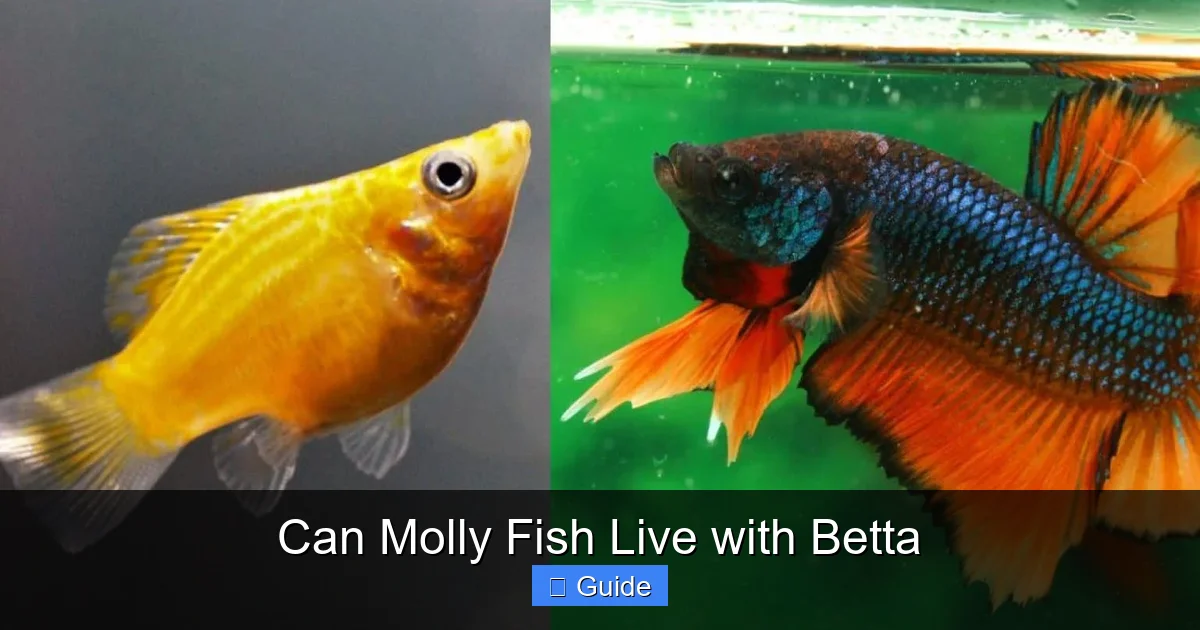
Visual guide about Can Molly Fish Live with Betta
Image source: aquamovement.com
The Betta: A Solitary Territorialist
The betta fish (Betta splendens), especially the males, are products of centuries of selective breeding for aggression. In the wild, they are solitary creatures that defend small territories—a patch of plants or a fallen leaf—from rival males. Their famous “flaring” (gilling out their gill covers) is a territorial and defensive display. Key traits to remember:
- Innate Aggression: They are prone to seeing other fish with long, flowing fins or bright colors as rivals. This is a hardwired instinct, not a personality flaw.
- Slow, Graceful Swimmers: Bettas are built for short bursts in shallow, stagnant water. They are not built to outpace fast, hyperactive tankmates.
- Surface Dwellers: They prefer the top half of the water column, breathing atmospheric air from the surface via their labyrinth organ.
While some bettas are mellow “gentlemen,” others are relentless fin-nippers and bullies. You must know your specific betta’s personality.
The Molly: A Social, Active Schooler
Mollies (members of the Poecilia genus, like the common black molly or sailfin molly) are the opposite in social structure. They are:
- Highly Social & Schooling: They are a shoaling species, meaning they are genetically driven to be in groups. A lone molly is a stressed molly.
- Active, Mid-to-Top Swimmers: They are constantly on the move, foraging and exploring the entire water column.
- Livebearers: They give birth to free-swimming fry, which can lead to population explosions if not managed.
Their active nature and tendency to dart can be misread by a betta as aggression or harassment, triggering a defensive response. Furthermore, their own curiosity might lead them to investigate the betta’s bubble nest or territory, which is a huge risk.
The Core Challenge: Mismatched Social & Spatial Needs
The fundamental conflict in a betta-molly tank is a battle between solitude versus community and defensive stillness versus active exploration.

Visual guide about Can Molly Fish Live with Betta
Image source: i.pinimg.com
A betta wants a defined, relatively calm space it can call its own. A school of mollies wants open swimming space to perform their social behaviors. When you place a hyperactive school in a betta’s perceived territory, the betta feels invaded. The mollies’ constant movement can be perceived as a threat. Conversely, if the tank is too small, the betta has no room to establish a separate territory and will constantly clash with the mollies that have nowhere to go.
This mismatch means that even in a large tank, the betta’s stress levels can remain high because its “personal space” is perpetually violated by the active mollies. The mollies, in turn, can become stressed by the betta’s constant flaring and chasing, leading to hiding, loss of color, and weakened immune systems. The most common failure point is the betta fixating on one particular molly—often a flashy male—and relentlessly chasing it until it becomes exhausted and dies.
Creating a Viable Habitat: The Non-Negotiables for Success
If you are determined to try this mix after observing your betta’s calm demeanor in a community already, you must build a tank that gives both species what they need. This is not about compromise; it’s about providing parallel environments within one system.
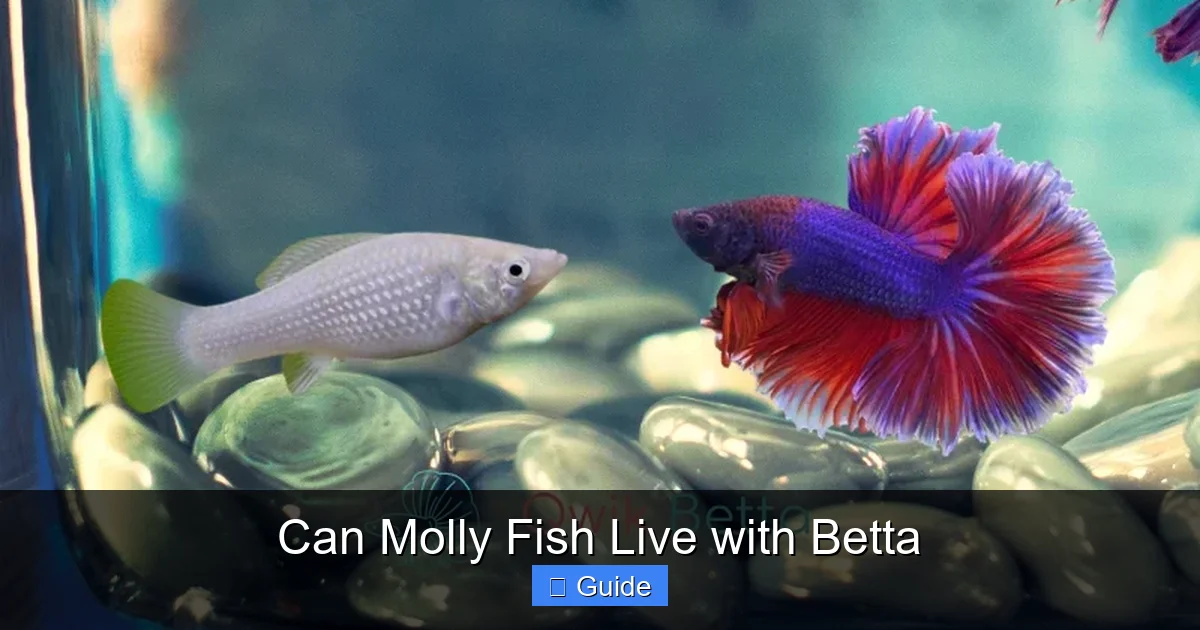
Visual guide about Can Molly Fish Live with Betta
Image source: qwikbetta.com
Tank Size: Bigger is Not Just Better, It’s Essential
Forget the 5- or 10-gallon “nano” tanks. A minimum of 30 gallons (long or breeder style) is the absolute starting point. Ideally, aim for 40 gallons or more. Why such a large volume?
- Dilution of Aggression: In a large space, the betta’s territory is a small fraction of the total area. The mollies can easily swim out of its “bubble” and into areas the betta rarely patrols.
- Swimming Space: Mollies need horizontal space to school and swim. A long 30-gallon provides this better than a tall 30-gallon.
- Stable Water Parameters: More water means parameters (ammonia, nitrite, nitrate, pH) are more stable, which is critical for sensitive bettas and the hardier but still-stress-sensitive mollies.
Aquascaping: The Art of the Visual Barrier
This is your most powerful tool. You must prevent the betta from having a constant, unobstructed view of the mollies. The goal is to create a “broken line of sight.”
- Heavy Planting: Use dense, tall plants like Amazon swords, Vallisneria, or Cryptocorynes along the back and sides. Floating plants like duckweed or water lettuce are incredibly effective at breaking the surface view, which is where bettas often patrol.
- Hardscape: Driftwood (like mopani or manzanita), large lava rocks, and slate formations create caves, overhangs, and tunnels. Position these to divide the tank into distinct zones.
- Vertical Dimension: Use tall decorations (spider wood, tall rock structures) so the betta can patrol a “top” territory while mollies swim at mid-levels around the structures.
- Avoid Open Sand Plains: An open, empty tank is a boxing ring. Fill it with visual complexity.
Water Parameters: Finding the Middle Ground
This is a tricky one. Bettas prefer softer, slightly acidic water (pH 6.5-7.5, low GH/KH). Mollies, however, are native to brackish coastal waters and prefer harder, more alkaline water (pH 7.5-8.5, moderate to high GH/KH).
- The Compromise: You must aim for a stable, middle-ground pH of 7.5-7.8 and a moderate hardness. Use aragonite sand or crushed coral in the filter to gently buffer pH and hardness upwards for the mollies without shocking the betta.
- Temperature: Both thrive in warm water. Set your heater to a steady 78-80°F (25.5-26.5°C). Avoid temperatures above 82°F, which can stress mollies and accelerate a betta’s metabolism (making it more active/aggressive).
- Water Quality: This is universal. Zero ammonia, zero nitrite. Keep nitrate below 20ppm with regular water changes (25-30% weekly). A strong filter is a must for the active mollies, but use a pre-filter sponge or adjust flow to be gentle for the betta’s long fins.
The Step-by-Step Protocol for Introduction
How you introduce these fish is as important as the tank itself. Rushing this process is a recipe for failure.
Step 1: Cycle the Tank Fully
Set up your 30+ gallon tank with all the plants, hardscape, and filtration. Fully cycle it for 4-6 weeks to establish a robust biological filter. Test water daily until ammonia and nitrite are zero and nitrate is manageable.
Step 2: Add the School First
This is critical. Introduce your school of 4-6 mollies (preferably a 1:3 or 1:4 male-to-female ratio to minimize male harassment) to the fully cycled, established tank first. Let them acclimate and establish their own loose pecking order and swimming patterns for 2-3 weeks. They will claim areas of the tank, but in a group, they are less likely to be singled out.
Step 3: The Betta’s Arrival
After the mollies are settled, it’s time for the betta. Use the drip acclimation method over 1-2 hours to match water parameters perfectly.
- Use a Tank Divider First: Ideally, place a solid divider (like a plastic mesh or acrylic sheet) in the tank for the first 24-48 hours. This allows the betta and mollies to see each other but not interact. Observe their reactions. If the betta immediately flares and attacks the divider, and the mollies are visibly terrified, this is a major red flag.
- The First Release: If reactions are mild (curiosity, slight flaring that subsides), carefully release the betta into the tank. Do not drop it in; use a cup to lower it and let it swim out.
- Initial Observation Period: Spend the next few hours watching. Some initial flaring and chasing is normal as the betta establishes its boundaries. The key is whether the mollies can easily escape and the betta gives up the chase after a few minutes.
Step 4: The 72-Hour Watch
The first three days are the most critical. Watch for:
- Betta Behavior: Is it patrolling a specific area? Does it chase mollies relentlessly the moment they enter “its” zone? Does it spend all its time flaring at a specific molly?
- Molly Behavior: Are they swimming freely and schooling? Or are they constantly hiding in plants/corners, clamped fins, breathing rapidly? Are any being isolated and targeted?
- Signs of Stress: Faded colors, loss of appetite (in either fish), rapid gill movement, lethargy.
When Things Go Wrong: Recognizing Failure & Alternatives
Despite your best efforts, the pairing may simply not work. This is not a failure of your skills; it’s respecting the animals’ instincts.
Red Flags That Mean Immediate Separation
- Relentless Chasing: The betta chases one or more mollies constantly, not just in brief bursts. The chased molly cannot rest, eat, or swim freely.
- Fin Nipping: You see torn, ragged fins on any molly. Bettas have teeth and will nip.
- Mollies Hiding 24/7: If your active, social mollies are invisible for more than a day, stress is severe.
- Betta Exhaustion or Injury: If the betta is constantly flaring and chasing to the point of exhaustion (sitting at the bottom, gasping), or if it gets nipped back by a school of mollies (they can bite too), the dynamic is toxic.
At the first persistent sign of these behaviors, have your hospital tank ready and move one fish out immediately. Do not hope they’ll “work it out.” They won’t.
Better Tankmate Alternatives for Betta Fish
If your betta is too aggressive or your tank isn’t large enough, consider these generally safer, more compatible community options for a betta (in a properly sized, decorated tank):
- Small, Peaceful Tetras: Neon tetras, ember tetras (in groups of 8+). They are fast, stay in a school, and occupy the middle column.
- Rasboras: Harlequin rasboras or chilli rasboras are excellent, active schooling fish.
- Corydoras Catfish: A small school (5+) of pygmy corydoras or habrosus corys are peaceful bottom-feeders that clean up and ignore the betta.
- Snails & Shrimp: Nerite snails, mystery snails, and amano shrimp are often ignored and provide cleanup. (Note: some bettas may still hunt shrimp).
For a molly, a species-only tank with a large group (8+) in a 30+ gallon tank is often its happiest and healthiest environment.
Conclusion: A High-Stakes Experiment, Not a Sure Thing
So, can molly fish live with betta? The honest answer is that it sits on a spectrum from “possible with immense effort” to “highly discouraged.” It is one of the more challenging betta pairings due to the profound mismatch in social structure and activity levels. The decision to attempt it should not be made lightly. It requires a significant investment in a large, heavily planted tank, a pre-formed school of mollies, and vigilant, daily observation. Your primary goal is not to create a “perfect community” but to provide a habitat where both species can exhibit natural behaviors free from chronic stress and violence. For every aquarist who succeeds with this mix, another has learned the hard way that their betta was too aggressive or their tank too small. If you have a large tank, a calm betta, and are prepared to intervene at a moment’s notice, you can try. But if your tank is under 30 gallons, or if your betta has ever shown aggression toward other fish, please choose a more compatible tankmate. The welfare of both fish is far more important than the aesthetic of a mixed-species display. Sometimes, the most beautiful tank is the one where each fish thrives in its own ideal, stress-free world—even if that world is shared only with its own kind.
Frequently Asked Questions
What size tank do I need for a betta and mollies?
A minimum of 30 gallons is absolutely required, with 40+ gallons being strongly recommended for the best chance of success. Smaller tanks (like 10 or 20 gallons) do not provide enough space for territories and will almost certainly lead to aggression and stress.
How many mollies should I keep with my betta?
You must keep a school of at least 4-6 mollies, preferably with more females than males (a 1:3 or 1:4 male-to-female ratio). A large school helps diffuse the betta’s attention and prevents any single molly from being singled out for relentless chasing.
My betta is flaring at the mollies constantly. Is this normal?
Initial flaring and brief chasing for the first few hours after introduction can be normal territory establishment. However, if the flaring and chasing become constant, relentless, and prevent the mollies from swimming freely or eating, this is severe aggression. You must separate the fish immediately.
Can I use salt with mollies and a betta?
Mollies benefit from and can tolerate a low level of aquarium salt (1 tablespoon per 5 gallons). Bettas, however, are not brackish fish and do not require salt. While they can tolerate very low, occasional doses, consistently salted water can harm a betta’s labyrinth organ over time. It’s best to avoid routine salt additions in a mixed-species tank with a betta.
Should I add the betta first or the mollies first?
Always add the mollies first. Let the school of mollies establish itself in the fully cycled, decorated tank for 2-3 weeks. Then, add the betta last. This way, the betta is entering an established territory of the mollies, not the other way around, which can reduce its instinct to claim the entire tank.
What’s the biggest reason this pairing fails?
The most common reason for failure is a tank that is too small and lacks sufficient visual barriers. A betta in a 10-gallon tank with a single molly has nowhere to go and will see the molly as an invader 24/7. The second most common reason is an overly aggressive betta with a poor temperament, regardless of tank size. You must know your betta’s personality before attempting this mix.