What Betta Fish Can Live Together
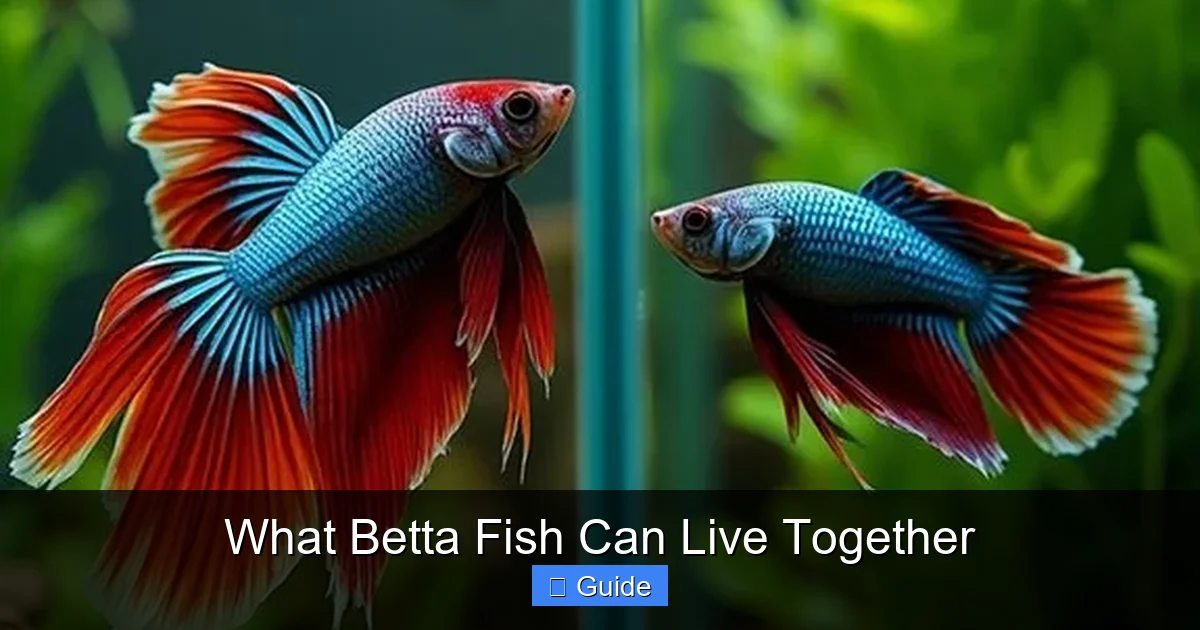
Male Betta fish are almost always solitary and must be housed alone due to their extreme aggression towards other males. Female Bettas can sometimes live in carefully managed groups called sororities, but this requires significant space and expertise. For community tanks, choose peaceful, fast-moving, or schooling fish from cooler water regions, and always have a backup plan. Success depends on the individual Betta’s temperament, a properly sized and planted tank, and a meticulous introduction process. Never assume compatibility; observation is key.
So, you’ve fallen in love with the flowing fins and vibrant colors of a Betta fish. You’ve set up a beautiful tank, and now you’re wondering: can my Betta have friends? It’s one of the most common questions in the aquarium hobby, and the answer is both simple and incredibly complex. The short answer is: it depends entirely on the individual Betta, the tank setup, and the species you choose. This guide will walk you through everything you need to know to make an informed, safe decision for your aquatic pets. We’ll debunk myths, explore the science behind Betta aggression, and give you a clear roadmap for potential tank mates, if you choose to pursue it.
Key Takeaways
- Male Betta fish are solitary: A single male Betta (or a single female) should be the sole Betta in any aquarium. They are genetically programmed to view other Bettas, especially males, as lethal rivals.
- Female Betta sororities are advanced: Groups of 4-6 female Bettas can coexist in a large, heavily planted tank (minimum 40 gallons), but this setup is prone to aggression and requires expert-level monitoring and multiple escape options.
- Choose tank mates carefully: Ideal companions are peaceful, fast-swimming, or schooling fish from cooler water temperatures (76-78°F). They must have opposite activity patterns and not resemble Bettas (long fins, bright colors).
- Tank size and setup are non-negotiable: A minimum of 10 gallons is required for a single Betta with mates, with 20+ gallons strongly recommended for a community. The tank must be heavily planted with visual barriers and defined territories.
- The Betta’s personality rules: Some Bettas are naturally more aggressive or docile. You must observe your specific Betta’s behavior before and after introducing any tank mate and be prepared to separate them instantly.
- Never house two male Bettas together: “Fighting fish” is not a nickname. Two males will fight to the death, often within minutes, regardless of tank size. The only exception is a professional, divided breeding setup.
- invertebrates are often the safest bet: Shrimp (like Amano or Cherry) and snails (Nerite, Mystery, Ramshorn) are usually excellent, low-maintenance companions that occupy a different ecological niche and are generally ignored.
📑 Table of Contents
- Understanding Betta Fish Behavior: The Science of Aggression
- The Golden Rule: Male Betta Fish are Solitary
- Female Betta Sororities: A High-Risk, High-Reward Setup
- Best Tank Mates for Betta Fish: The Safe List
- Species to Avoid: The Danger List
- The Perfect Tank Setup: It’s All About the Environment
- Conclusion: Is It Worth the Risk?
Understanding Betta Fish Behavior: The Science of Aggression
Before we even talk about other fish, we must understand our Betta. The Betta splendens, or Siamese Fighting Fish, earned its name for a reason. For over a millennium, they were bred in Thailand for their aggression in combat matches. This history has hardwired them with strong territorial instincts, particularly in males. Their famous “flaring” behavior—gills flared, fins spread, body stretched—is a clear threat display. In the wild, they are largely solitary, defending small territories of plants and debris. They are not schooling fish.
The Labyrinth Organ and Its Implications
Bettas possess a unique respiratory organ called the labyrinth. This allows them to breathe atmospheric air from the surface. This adaptation means they are accustomed to warm, stagnant, low-oxygen waters where surface access is critical. This also influences their behavior: they are top- and mid-level swimmers, constantly patrolling the water’s surface for both air and potential intruders. Any tank mate must not be a constant surface dweller that could trigger the Betta’s territorial instincts.
Male vs. Female: A Critical Difference
While both sexes can be aggressive, the intensity and purpose differ dramatically. Male Bettas are almost universally intolerant of other male Bettas. Their aggression is driven by a need to defend territory and compete for mates. Female Bettas, while still territorial, have a more established social hierarchy in the wild. This is why female-only groups (sororities) are a possibility, though still risky. A single female can often be just as assertive and beautiful as a male and is frequently a better candidate for a community tank setup, provided she has a strong personality.
The Golden Rule: Male Betta Fish are Solitary
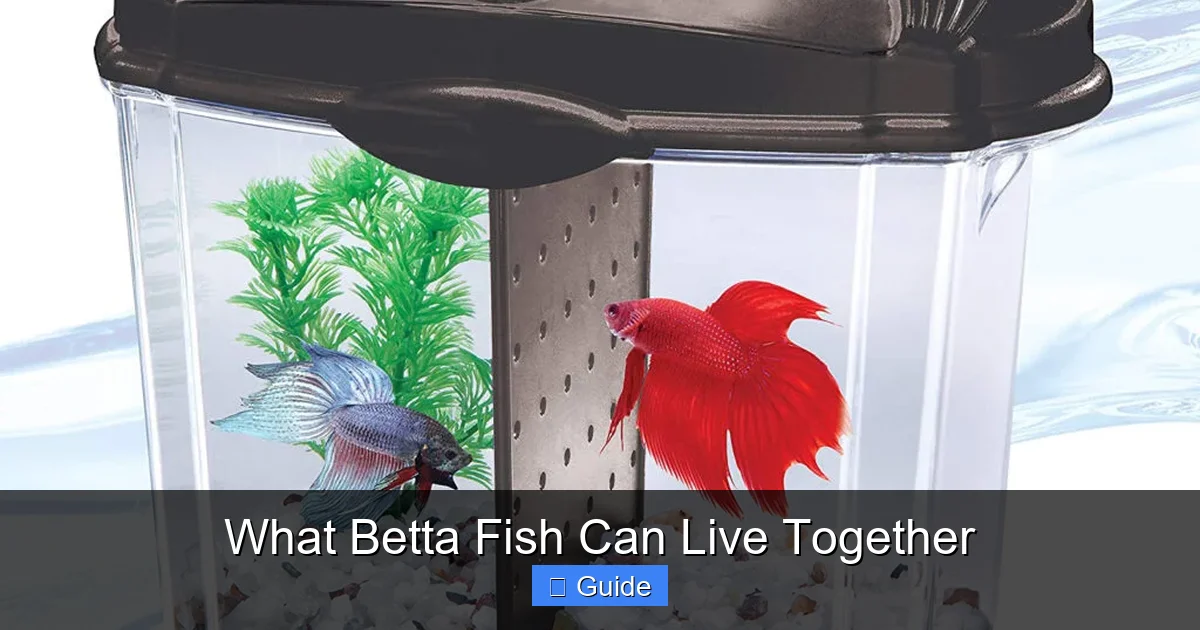
Let’s state this unequivocally: You should never, under any circumstances, house two male Betta fish in the same tank. This is not a debate. It is a recipe for disaster. They will fight. One will be severely injured or killed, often very quickly. The myth that a larger tank or “peaceful” varieties (like halfmoon or plakat) will get along is false and has led to countless fish deaths. The only exception is a professionally divided breeding tank with a solid, water-tight separator that prevents any visual or physical contact.
Visual guide about What Betta Fish Can Live Together
Image source: pickedbyfish.com
What about a male Betta with other fish? This is where we enter the realm of possibility, but with extreme caution. A male Betta can live with certain other species, but it is not guaranteed. His personality is the ultimate deciding factor. Some males are laid-back “lap dogs” of the fish world; others are relentless, attacking any creature with a flowing fin. You must know your Betta.
Ideal Tank Mate Criteria for a Male Betta
When selecting potential companions, you are looking for fish that check most of these boxes:
- Peaceful and Non-Territorial: They should not fight back or establish territories near the Betta’s chosen spot.
- Prefers Different Water Levels: Bottom-dwellers (like Corydoras catfish) or fast, mid-level schooling fish that don’t linger at the surface are best.
- No Long, Flowing Fins or Bright Colors: The Betta will likely see these as rival males. Avoid fancy guppies, fancy goldfish, or other Bettas.
- Hardy and Fast: They need to be able to evade a sudden Betta charge. Slow, fancy fish are sitting ducks.
- Prefers Cooler Temperatures: Bettas like 78-80°F. Finding mates that thrive at 76-78°F reduces stress for everyone.
Female Betta Sororities: A High-Risk, High-Reward Setup
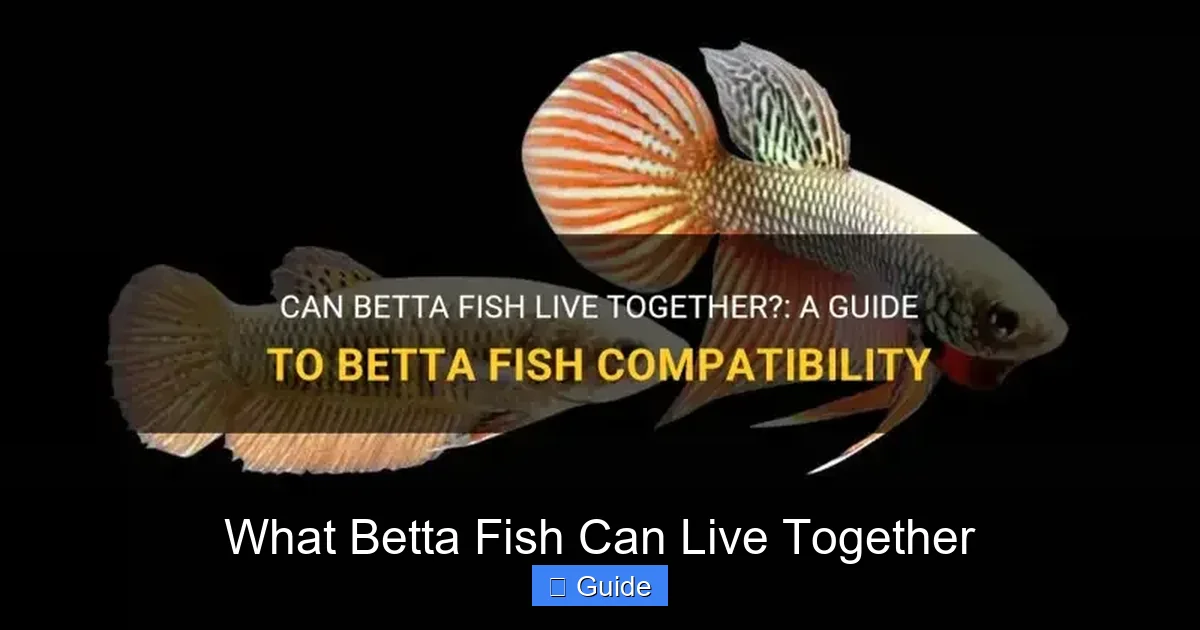
This is the most misunderstood and misadvised topic in Betta keeping. A sorority is a group of 4-6 female Bettas living together. It is not for beginners. It is not a guaranteed peaceful display. It is a dynamic, often tense social experiment that requires a massive tank and constant vigilance.
Visual guide about What Betta Fish Can Live Together
Image source: petshun.com
The Absolute Requirements for a Sorority
If you are an experienced aquarist considering this, you must follow these rules without exception:
- Tank Size: Minimum 40 gallons, but 55+ is vastly safer. This provides enough space for each fish to establish a personal territory without constant conflict.
- Heavy Planting and Decor: The tank must be a jungle. Use live plants (like Java fern, Anubias, Cryptocoryne) and artificial plants to create dense visual barriers. Every Betta needs to be able to get out of sight of the others at all times. Provide multiple hides, caves, and driftwood.
- Introduction Method: All females must be added to the empty tank simultaneously. Adding a new female to an established sorority is a death sentence for the newcomer. They establish a pecking order on day one.
- Backup Plan: You must have at least two, preferably three, fully cycled quarantine tanks ready to house any fish that is being relentlessly bullied or injured.
Even with perfect setup, sororities can collapse overnight. Be prepared for this. For 99% of hobbyists, keeping a single female Betta in a species tank or community is a far safer and more rewarding choice.
Best Tank Mates for Betta Fish: The Safe List
Assuming you have a single Betta (male or female) in a properly sized (10+ gallons), cycled, and planted tank, here are your most reliable companion categories. Always introduce tank mates to the tank before adding the Betta, if possible. This allows the other fish to claim their spaces and become “the environment” rather than “intruders” to the Betta.

Visual guide about What Betta Fish Can Live Together
Image source: articles.hepper.com
Invertebrates: The Low-Maintenance Champions
Shrimp and snails are the number one recommended companions for a reason. They occupy a completely different niche.
- Amano Shrimp (Caridina multidentata): Large (2+ inches), hardy, excellent algae eaters. They are too big to be seen as food and are generally ignored.
- Ghost/Glass Shrimp (Palaemonetes spp.): Very affordable and transparent, making them less likely to trigger aggression. Great cleanup crew.
- Nerite Snails: The best algae-eaters that won’t overpopulate your tank (they require brackish water to breed). Their hard shells protect them from curious Bettas.
- Mystery/Apple Snails: Large, peaceful, and interesting to watch. They may be investigated but are usually left alone.
Caution: Smaller shrimp like Cherry Shrimp (Neocaridina) may be seen as a snack, especially by a more aggressive Betta. A well-fed Betta in a heavily planted tank might ignore them, but losses are possible.
Peaceful schooling fish from cooler waters
These fish add movement and color without threatening the Betta’s dominance.
- Kuhli Loaches (Pangio kuhlii): Perfect! They are eel-like, nocturnal bottom-dwellers that burrow in the substrate. The Betta rarely even sees them during the day.
- Harlequin Rasboras (Trigonostigma heteromorpha): A classic choice. They are active, peaceful mid-schoolers that prefer the same water parameters and stay in groups of 6+.
- Ember Tetras (Hyphessobrycon erythrostigma): Tiny, fiery orange fish that school beautifully in the mid-water column. Their small size and speed make them good evaders.
- Celestial Pearl Danios (Danio margaritatus): Also called Galaxy Rasboras. Stunning, active, and thrive in cooler, well-oxygenated water. Keep in groups of 6+.
- White Cloud Mountain Minnows (Tanichthys albonubes): Extremely hardy, peaceful, and active. They prefer cooler water (72-74°F), which can be a benefit if your room is on the cooler side. They are a truly excellent, underrated Betta companion.
Other excellent candidates
- Corydoras Catfish: The quintessential bottom-feeder. Keep in groups of 5+ of the same species (Pygmy, Panda, Bronze). They are social, gentle, and constantly foraging, completely ignoring the Betta above.
- African Dwarf Frogs (Hymenochirus boettgeri): A true amphibian companion. They are fully aquatic, peaceful, and occupy the bottom. They require similar water conditions. Important: Ensure your Betta does not try to eat the frog’s dangling legs; this is rare but possible. Feed the frog separately.
- Bristlenose Plecostomus (Ancistrus sp.): A small, armored pleco. They are algae eaters and mostly nocturnal. Get a young one (they grow to 4-5 inches) and ensure your tank is large enough (20+ gallons).
Species to Avoid: The Danger List
This list is just as important as the safe list. These fish are either guaranteed to cause stress, injury, or death.
- Any other Betta fish: Including females in a sorority if you lack the proper setup. This cannot be stressed enough.
- Fancy Guppies: Their long, flowing fins are a direct challenge to a Betta. The Betta will attack and likely kill the guppy.
- Fancy Goldfish: Different temperature requirements (goldfish are coldwater), and they produce massive amounts of waste. Their flowing fins are also a target.
- Other Gouramis (Dwarf, Pearl, Kissing): They are related, look similar, and have labyrinth organs. They will almost certainly clash over territory and surface dominance.
- Tiger Barbs, Serpae Tetras, or other fin-nippers: These fish are notorious for nipping at the long, flowing fins of Bettas, causing severe stress and infection.
- Large, aggressive Cichlids (like Oscars, Jack Dempseys): They will either bully the Betta or see it as food.
- Any fish with similar body shape or coloration: The Betta may perceive it as a rival. This includes some other species of small, colorful fish.
- Slow, long-finned fish: Like fancy varieties of Angelfish or any fish that can’t quickly escape a charge.
The Perfect Tank Setup: It’s All About the Environment
You can have the “safest” list of fish, but if your tank is a barren, open prison, your Betta will be stressed and territorial. The environment is your most powerful tool for success.
Tank Size: Bigger is Always Better
The single biggest mistake is a 5-gallon “Betta tank” with tank mates. This is cruel and dangerous. A single Betta needs at least 5 gallons to be healthy. For any tank mate, you must start at 10 gallons and go up from there. A 20-gallon long tank is the ideal starting point for a small community. The extra horizontal space provides more distinct territories and dilutes the Betta’s focus.
Plants, Plants, and More Plants
Live plants are not just decoration; they are security. They break lines of sight, provide resting spots, and improve water quality. A Betta feels safest when he can hide. Use a mix of:
- Floating plants: (Duckweed, Frogbit, Salvinia) These are crucial. They shade the tank, reduce the Betta’s focus on the surface (his territory), and give him a canopy to rest under. Use a floating ring or breeding box to keep them from covering the entire surface if needed for gas exchange.
- Tall background plants: (Amazon Swords, Vallisneria) Create a lush back wall.
- Mid-ground and foreground plants: (Anubias, Java Fern tied to driftwood; Cryptocoryne; Dwarf Sagittaria) Provide structure at various levels.
If live plants are too daunting, use high-quality silk plants. Avoid plastic plants with sharp edges that can tear Betta fins.
Essential Equipment and Decor
- Secure Lid: Bettas are jumpers. A tight-fitting lid is mandatory.
- Gentle Filtration: A sponge filter is ideal for a Betta tank—it provides biological filtration with almost no current. If using a hang-on-back or canister filter, use a spray bar or pre-filter sponge to diffuse the flow. Bettas hate strong currents.
- Multiple Hiding Spots: Provide caves (ceramic or stone), driftwood tunnels, and PVC pipes. Each fish needs a place to retreat.
- Substrate: Sand or fine-grained gravel is best. Avoid sharp edges that can damage their delicate fins.
The Introduction Protocol: Patience is Everything
Never just drop a new fish into the tank. Follow this process:
- Quarantine: Any new fish should be quarantined for 4-6 weeks in a separate tank to check for diseases before introducing to your main display.
- Rearrange the Tank: Before adding the Betta to a tank with existing residents, do a major decor rearrangement. This disrupts existing territories and forces everyone to re-establish boundaries, reducing the Betta’s focus on attacking a specific “intruder’s” spot.
- The Bag Method: Float the sealed bag in the tank for 15-20 minutes to equalize temperature. Then, slowly add small amounts of tank water to the bag over 30 minutes to acclimate the fish to your water parameters.
- Use a Breeding Box: For the first 24-48 hours, place the new fish (or the Betta) in a clear divider or breeding box inside the main tank. This allows visual acclimation without physical contact. Observe closely for extreme flaring or posturing.
- Release at Night: Turn off the lights and release the fish just before you go to bed. This reduces initial confrontation and gives them a night to settle.
- Monitor Obsessively for 72 Hours: The first three days are critical. Watch for chasing, flaring, nipped fins, or one fish hiding constantly. Have a net and a backup tank ready to remove any aggressor or victim immediately.
Conclusion: Is It Worth the Risk?
The desire to give your Betta a friend comes from a good place—we want our pets to be happy. But for a Betta, happiness is often found in peace, space, and control over a territory. The safest, most stress-free life for a Betta is almost always a species-only tank. A single, well-cared-for Betta in a planted 10-gallon tank will be a vibrant, interactive centerpiece. If you crave a community aquarium, consider starting with a peaceful community of other species first, and then carefully introducing a proven, docile Betta as a potential addition—never the other way around.
If you do decide to try a community, you are accepting a significant responsibility. You must be a detective, observing behaviors daily. You must be a mediator, ready to separate combatants. You must be a zookeeper, providing an environment that mimics the complex, plant-filled world they evolved in. For many, the joy of watching a Betta peacefully coexist with a school of tiny rasboras or a colony of shrimp is worth the effort. For others, the heartbreak of a lost fish is a lesson learned the hard way. Arm yourself with knowledge, start with the most robust tank setup you can manage, and always, always have a Plan B.
Frequently Asked Questions
Can two female Betta fish live together?
Yes, but only in a specific setup called a sorority, which requires a minimum 40-gallon heavily planted tank with 4-6 females introduced simultaneously. This is an advanced, high-risk setup prone to aggression and is not recommended for beginners.
What is the absolute minimum tank size for a Betta with tank mates?
10 gallons is the absolute bare minimum for a single Betta with compatible tank mates like shrimp or a single Corydoras. For any schooling fish (tetras, rasboras) or to have a realistic chance at peace, a 20-gallon long tank is strongly recommended.
Can a Betta fish live with shrimp?
Yes, many Bettas will coexist peacefully with larger shrimp like Amano or Ghost shrimp. However, smaller shrimp like Cherry shrimp may be seen as food and could be eaten, especially by a more aggressive or hungry Betta. There are no guarantees.
How do I know if my Betta is aggressive towards tank mates?
Signs of aggression include constant flaring (gills extended), chasing other fish relentlessly, nipping at fins, and forcing other fish into corners or out of hiding. If you see this, you must separate the Betta immediately to prevent injury or death.
What should I do if my Betta starts fighting with his tank mates?
Have a backup quarantine tank ready. Immediately remove the Betta using a net or a cup. Place him in the separate tank to let his stress hormones subside. You can then try re-introducing him later using the full introduction protocol, but often a Betta that has shown aggression is not a candidate for a community tank and should be housed alone.
Are there any Betta breeds that are less aggressive?
While some individual Bettas have more docile personalities, there is no scientifically proven “less aggressive” breed. Plakat (short-finned) Bettas are sometimes thought to be less aggressive because they are closer to the wild-type form, but this is not a rule. You must judge each Betta as an individual.