How to Tell Betta Fish Age
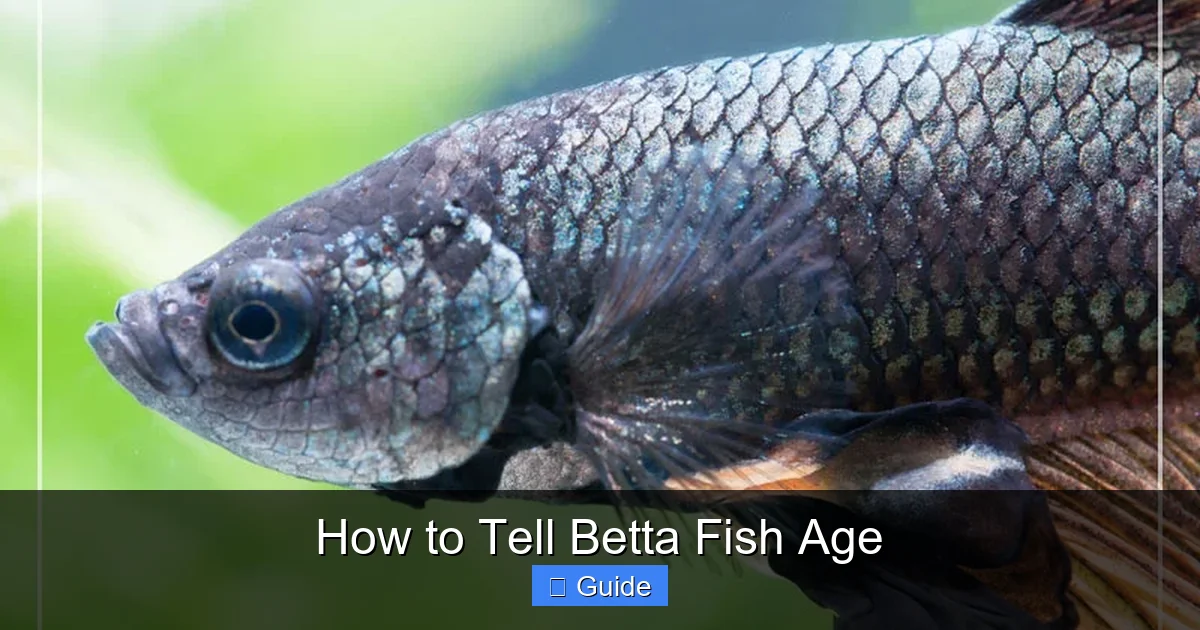
Determining a betta’s exact age is challenging, but several observable traits provide strong clues. Fin development is the most reliable indicator, with adult bettas showcasing long, flowing fins. Color vibrancy often peaks in prime adulthood (1-2 years) before gradual fading. Size and body shape also shift with age, while behavioral changes like reduced activity signal senior years. Remember, tank history and breeder records offer the most accurate age data when available.
Ever watched your betta fish glide gracefully through the water and wondered, “How old are you, exactly?” You’re not alone. For many betta owners, the age of their shimmering companion is a bit of a mystery. Unlike dogs or cats, betta fish don’t come with birth certificates. Figuring out how to tell betta fish age is a blend of keen observation, understanding their natural lifecycle, and a touch of detective work. While you’ll never get a precise “birthday,” you can become remarkably skilled at estimating whether your betta is a spry juvenile, a vibrant adult, or a dignified senior.
This guide will walk you through every visible clue, from the tips of their fins to their behavioral quirks. We’ll separate fact from fiction, debunk common myths, and give you a practical framework for age assessment. By the end, you’ll look at your betta with new insight, better understanding the life stage they’re in and how to tailor their care accordingly. Let’s dive into the fascinating world of betta fish aging.
Key Takeaways
- Fin Morphology: Juvenile bettas have shorter, rounded fins; adults develop elaborate, flowing finnage that can indicate age range.
- Color Vibrancy Timeline: Colors are often brightest between 1-2 years of age, with fading or muted tones appearing in older fish (3+ years).
- Size & Body Condition: Bettas grow rapidly in the first 6-12 months. Senior fish may become slimmer despite similar length due to muscle loss.
- Behavioral Shifts: Young bettas are highly active and flare constantly. Adults are more territorial; seniors show lethargy and reduced responsiveness.
- Tank History is Key: A documented purchase date or breeder hatch date is the only certain way to know age. All visual estimates are educated guesses.
- Environmental Impact: Poor water quality, nutrition, and stress can accelerate physical aging, making a fish appear older than its chronological age.
- Gender Differences: Males often have more dramatic fin and color development, but females age similarly; size differences are minor in later life.
📑 Table of Contents
- Fin Development: The Most Reliable Age Indicator
- Coloration: A Vibrant Timeline
- Size and Body Proportions
- Behavioral Shifts Through the Lifespan
- The Critical Role of Tank History and Documentation
- Debunking Common Myths About Betta Age
- Putting It All Together: A Practical Framework
- Conclusion: Embrace the Mystery, Cherish the Stage
Fin Development: The Most Reliable Age Indicator
When learning how to tell betta fish age, your first and most powerful tool is a close look at the fins. Fin development is arguably the single most consistent and telling indicator of a betta’s life stage. The transformation from a juvenile’s neat, compact fins to an adult’s spectacular, flowing display is dramatic and follows a fairly predictable timeline, especially in males.
The Juvenile Fin Profile: Short & Functional
Young bettas, typically under 3-4 months old, have fins that are noticeably shorter, rounder, and more compact. Their priority at this stage is growth and strength, not showmanship. A juvenile male’s caudal fin (tail) might only be slightly longer than his body, and the dorsal and anal fins will have a modest, almost “tidy” appearance. The edges are usually smooth and unbroken. In females, this juvenile fin state persists longer, as they never develop the extreme fin lengths of males, but you’ll still see a transition from a very short, neat fin to a fuller, more developed one by about 6 months.
Practical Tip: If you can, compare your betta to photos of known juveniles. Look for a “stubby” tail and fins that don’t trail significantly behind the body. A betta with fins that are less than 1.5 times its body length is very likely under 6 months old.
The Adult Fin Spectacle: Length, Flow, and Fragility
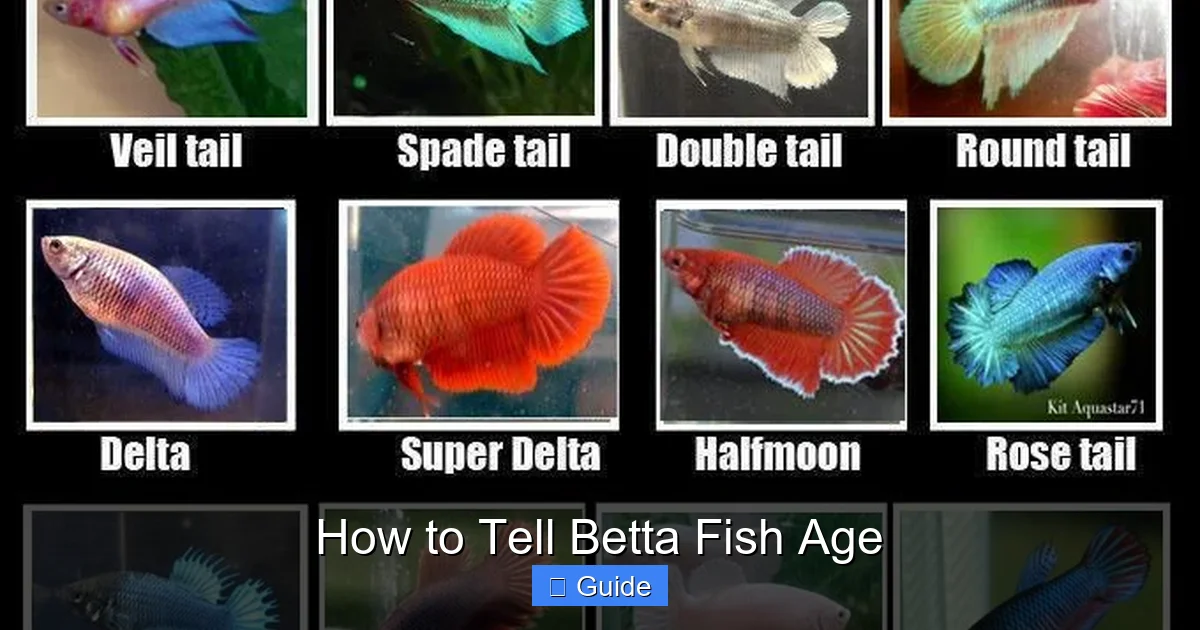
As a betta approaches sexual maturity (around 4-6 months for males, slightly later for females), a hormonal trigger initiates spectacular fin growth. This is the hallmark of a betta in its prime. The fins become dramatically longer, flowing, and elaborate. In popular varieties like the Halfmoon, the caudal fin should open to a full 180-degree semi-circle and can be 3-4 times the body length. Veiltails have long, sweeping single-lobed tails. Crowntails feature extended fin rays that create a spiky, comb-like edge.
The fins of a prime adult are the “wow” factor, but they come at a cost: they are incredibly fragile. You’ll often see minor tears, splits, or fraying on the edges of a fully mature male’s fins, simply from normal movement, tank decor, or occasional flaring. This wear-and-tear is actually a good sign it’s an adult. A perfectly pristine, long-finned betta is either very carefully housed or potentially younger than it looks.
Senior Fin Changes: Wear, Thinning, and Clamping
As bettas enter their senior years (typically 3.5-4+ years), their magnificent fins begin to tell the story of time. The most common sign is increased fin rot or fraying that doesn’t heal quickly. The long, delicate edges become more tattered. The overall fin mass may appear thinner or less full, as the base of the fin loses some of its lush tissue. You might also notice the fins are held closer to the body (clamped) more often, a sign of reduced energy or chronic, low-grade discomfort common in aging fish. The vibrant, energetic flaring of an adult male diminishes, so the fins are used less aggressively.
Example: A 5-year-old Halfmoon male might have a tail that still spans wide but looks “lacy” and uneven, with several permanent splits. His dorsal fin, once a proud sail, might droop slightly and lack the rigid, erect posture of his youth.
Coloration: A Vibrant Timeline
Betta fish are famous for their jewel-like colors, and these colors are a surprisingly good age indicator. However, the relationship is nuanced: color can both intensify and fade with age, depending on the stage and the individual fish’s genetics.

Visual guide about How to Tell Betta Fish Age
Image source: i.ytimg.com
The “Color Explosion” of Youth
Many bettas, especially those from reputable breeders, are sold as juveniles (around 3-4 months old) at what is often their least colorful stage. Their full color potential hasn’t fully developed. You might buy a pale, silvery-blue fish that, over the next 2-3 months, “explodes” into a brilliant red, blue, or multi-colored specimen. This rapid color development is a sign of a fish entering its prime. If your betta’s color has dramatically enriched in the first few months you’ve had it, it was likely a younger fish when you brought it home.
Prime Adulthood: Peak Brilliance (1-2 Years)
This is the golden window for betta coloration. Between approximately 1 and 2.5 years of age, a healthy betta in good conditions will exhibit its maximum color saturation, iridescence (those shifting blues and greens), and pattern definition. The colors are deep, even, and “clean.” Marbling patterns (if the fish is genetically a marble) are active and changing. This is the visual peak of their lifespan.
The Gradual Fade of Senior Years
After the prime, a slow but noticeable dulling often occurs. The vibrant red may turn a rustier brick red. Deep blues can become a muted slate. Iridescent scales might lose some of their shimmer. This isn’t a sudden bleaching; it’s a subtle washing out. Additionally, older males may develop a “beard”—a darker, often brownish or blackish patch under the gill covers—which becomes more pronounced with age. Stress from poor water quality accelerates this fading dramatically, so a dull older fish in a pristine tank is aging naturally; a dull young fish is likely stressed or ill.
Important Caveat: Some bettas, particularly those with strong genetic marbling (like the Koi strain), continue to change color throughout their lives. A Koi betta might gain new color patches at 4 years old, making age estimation via color alone very difficult. For solid-colored fish, the fade is a more reliable senior indicator.
Size and Body Proportions
While not as precise as fin or color analysis, overall size and body shape provide helpful corroborating evidence when learning how to tell betta fish age.

Visual guide about How to Tell Betta Fish Age
Image source: i.ytimg.com
Growth Spurts in the First Year
Bettas experience most of their lifetime growth in the first 12 months. A hatchling is tiny, barely visible. By 3 months, they are typically 1.5-2 inches long (including fins). By 6 months, they are near their full adult size. A betta that is still noticeably small (under 1.5 inches total length) at 8 months old may have been stunted by poor early care. Conversely, a robust 2.5-inch betta is likely at least 8-10 months old and possibly older.
Gender Differences in Mature Size
Males generally grow slightly larger and more robust than females, with fuller bodies to support their longer fins. A large, heavy-bodied male with fins is likely a mature adult (1+ year). A smaller, slimmer fish with shorter fins could be a female or a younger male. However, size is highly variable based on genetics and nutrition, so it’s a secondary clue at best.
The Slenderization of Older Bettas
In senior bettas (4+ years), you may observe a gradual loss of body condition. Even if the fish’s length (nose to tail tip) remains similar, the body can become slimmer, more streamlined, or even slightly concave behind the head. This is due to age-related muscle atrophy and a potential decline in appetite or metabolism. A once-plump betta that starts to look “skinny” despite eating is a strong sign of advanced age or concurrent health issues common in old age.
Practical Example: Your betta has always been a solid, grape-like shape. At age 4, you notice its profile is more of a teardrop than a grape, with a less pronounced belly. This physical change aligns with senior metabolic shifts.
Behavioral Shifts Through the Lifespan
A betta’s personality and daily routine are a living diary of its age. Watching how it interacts with its environment is a powerful, non-invasive aging tool.
Visual guide about How to Tell Betta Fish Age
Image source: i.pinimg.com
Energetic Juveniles vs. Calm Adults
Baby and juvenile bettas are often hyperactive. They are constantly exploring, zooming from one end of the tank to the other, and may flare at their own reflection with relentless enthusiasm. As they mature into adults (6 months – 2.5 years), their energy becomes more focused and territorial. They establish a “home base” (a plant, a cave) and patrol it. They still flare at intruders but with more deliberate, showy displays rather than frantic darting. The adult is confident and purposeful in its movements.
Breeding Behavior as an Age Marker
If you have a male betta that builds bubble nests, that’s a clear sign of sexual maturity, which typically begins around 4-6 months. A prolific, consistent bubble-nester is likely in his prime breeding years (1-2.5 years). As males age, bubble-nesting frequency and size often decline. A senior male might still make a small, half-hearted nest occasionally, or stop entirely. For females, the receptivity to males and the intensity of breeding bars (vertical stripes) will peak in their first 1-2 years of sexual maturity.
The Lethargy of Senior Bettas
The most consistent behavioral sign of a senior betta (3.5+ years) is a general slowing down. You’ll find your betta resting more frequently, often in one spot for hours. The eager morning greeting at the glass may diminish. Flaring becomes rare. They may be less interested in food or take longer to find it. This isn’t necessarily illness—it’s a natural decline in metabolic rate and energy. However, any sudden increase in lethargy at any age is a red flag for disease.
Observation Tip: Spend 5 minutes each day just watching your betta’s baseline activity. Note how many times it patrols, how it reacts to you, and where it rests. Changes over months are your best age clues.
The Critical Role of Tank History and Documentation
All the visual clues in the world are still just educated guesses. The only definitive answer to “how to tell betta fish age” comes from documentation. This is why responsible breeders and advanced hobbyists keep records.
Why Breeder Records Matter
If you purchased your betta from a reputable breeder (not a chain pet store), they often have the exact hatch date. They track spawning dates and raise fry in controlled conditions. A breeder can tell you your betta is precisely “14 months old.” This information is invaluable for understanding its life stage, potential breeding window, and establishing a baseline for health monitoring. It removes all guesswork.
Estimating Age in Rescue or Pet Store Bettas
This is the reality for most owners. Bettas from large pet stores are often 3-6 months old when sold, having been shipped from commercial farms where they were raised in cups. However, they may have spent an unknown amount of time in the store. A betta adopted from a rescue might be any age. In these cases, you must rely entirely on the physical and behavioral indicators we’ve discussed. Combine all clues: fin length, color state, size, and behavior. A small fish with very short fins and pale color is likely under 4 months. A large, brilliantly colored fish with long, slightly frayed fins is probably 1.5-2.5 years. A large but slender, faded fish with worn fins is likely a senior (4+).
Environmental Factors That Mimic Aging
This is the crucial caveat. A betta kept in poor conditions—cold water, ammonia spikes, a poor diet—will age prematurely. Its colors will fade faster, its fins may become ragged from constant stress and minor infections, and it will become lethargic long before its biological time. Before concluding your betta is a senior, honestly assess its water parameters and diet. A well-cared-for 3-year-old can look like a 5-year-old in subpar conditions. Conversely, a pristine environment can help a betta reach 5-6 years, with its “senior” characteristics appearing later.
Debunking Common Myths About Betta Age
As with any topic, misinformation abounds. Let’s clear up the biggest myths about determining betta fish age.
Myth: Size Equals Age
False. While growth happens early, a betta’s ultimate size is determined primarily by genetics and early nutrition. A genetically small betta in excellent care might only reach 1.5 inches, while a large-genotype betta can hit 2.5 inches. A 1-inch betta is not necessarily a juvenile; it could be a full-grown, stunted female. Size alone is a poor indicator without context.
Myth: All Bettas Follow the Same Timeline
False. The “1 year = adult, 3 years = senior” rule is a rough average. Genetics play a huge role. Some bettas, particularly those from strong, long-lived lines, remain vibrant and active into their 5th year. Others, especially those with significant inbreeding or from poor stock, may show aging signs at 2.5 years. Gender also plays a role; females often live slightly longer on average but have less dramatic fin changes to observe.
Myth: You Can Accurately Count Growth Rings
False. Unlike some reptiles or fish with otoliths (ear bones), betta fish do not have visible, countable growth rings on their scales or bones that can be read without harming them. This is a persistent myth with no scientific basis for bettas.
Myth: A Betta That Flares a Lot Is Young
Mostly False. Flaring is a sign of territoriality and aggression, not necessarily youth. A mature, confident adult male will flare beautifully and powerfully. A juvenile might flare erratically and frequently due to insecurity. A senior male flares less due to lower energy. Flare frequency is more about personality and current stimulus than a direct age meter.
Putting It All Together: A Practical Framework
So, how do you synthesize all this information? Think of it as a holistic assessment, like a veterinarian would do. Don’t rely on a single clue.
- Step 1: Assess the Fins. Are they short and neat (juvenile), long and flowing with minor wear (adult), or long but significantly frayed/thinned (senior)?
- Step 2: Evaluate the Color. Is it developing, at peak saturation, or faded/dulled? Note any “beard” development.
- Step 3: Check Size & Body. Is it small and growing? Full-sized and robust? Full-sized but slimming?
- Step 4: Observe Behavior. Hyperactive explorer? Confident territory-patroller? Lethargic and resting often?
- Step 5: Consider Context. What do you know about its past? Pet store? Breeder? Rescue? What are its water conditions like?
A betta with long, slightly frayed fins, brilliant color, robust size, and confident patrolling is almost certainly a prime adult (1-3 years). A small fish with stubby fins, pale color that’s rapidly improving, and frantic energy is a juvenile (under 6 months). A full-length fish with very tattered fins, faded color, a slender body, and low activity is a senior (4+ years). The middle ground, where traits mix, is the most common and represents the transition zones between life stages.
Conclusion: Embrace the Mystery, Cherish the Stage
Learning how to tell betta fish age is less about pinning down a specific number and more about understanding the chapter of life your fish is currently writing. It’s a skill that deepens your connection and informs your care. A juvenile needs optimal nutrition for growth. An adult thrives with space to display those glorious fins. A senior benefits from pristine, warm water and easily digestible foods.
While you may never know if your betta is 2 years and 4 months old or 3 years and 1 month old, you can confidently say, “My betta is in the vibrant prime of its life,” or “My betta is enjoying its golden years.” That knowledge is empowering. It helps you appreciate the now. That dazzling fin display is a privilege of adulthood. That calm, watchful presence is the wisdom of a senior. Each stage is beautiful in its own way. So keep observing, keep caring, and enjoy the unique journey of the betta fish in your care, mystery and all.
Frequently Asked Questions
Can I determine my betta’s exact age?
No, not without documentation from a breeder. All visual methods provide an estimated age range based on physical and behavioral development. The only certain way is to know the hatch date.
Do wild bettas age differently than captive ones?
Yes. Wild bettas face predation, disease, and environmental stress, so their average lifespan is shorter (often 1-2 years). Captive bettas in optimal conditions can live 3-5+ years, with their physical aging appearing at a different chronological pace.
Do male and female bettas show age differently?
The core aging process is similar, but males are easier to age due to their dramatic fin and color changes. Females have shorter fins and less intense color, so size, body condition, and behavioral shifts become more important indicators for them.
Can poor water quality make my betta look older than it is?
Absolutely. Chronic stress from ammonia/nitrite, improper temperature, or constant fin nipping accelerates color fading, causes fin damage, and induces lethargy—all signs that mimic senior age. Always rule out water quality issues first.
What’s the best age to buy a betta if I want a long-term companion?
Look for a vibrant, active fish with well-developed but not overly tattered fins. This often indicates a betta in its prime (10-18 months old). Avoid very small, pale, or lethargic fish, as they may be juveniles with poor start or already stressed/ill.
Can an older betta (4+ years) still breed successfully?
It’s possible but increasingly unlikely. Male bubble-nesting frequency and quality decline, and sperm viability drops. Females may become less receptive and produce fewer, lower-quality eggs. Breeding is best attempted during a betta’s prime (1-2.5 years).