How to Treat Betta Fish Wounds
How to treat betta fish wounds requires quick action and the right approach. Whether your betta has a cut, fin tear, or open sore, timely care can prevent serious infection and speed up healing. This guide covers simple first aid steps you can do at home, from cleaning the injury to creating a healing-friendly tank environment.
How to treat betta fish wounds starts with understanding what caused the injury and how serious it is. Betta fish are beautiful and hardy, but they can get hurt easily. Sharp decorations, rough handling, or aggressive tank mates are common culprits. The good news is that most minor wounds heal well with simple home care. This guide gives you everything you need to help your betta recover safely and quickly.
When you first notice a wound on your betta, it is normal to feel concerned. Fish cannot tell us when they hurt, so you have to watch for clues. Clamped fins, loss of appetite, or hiding more than usual can all signal pain. The faster you respond, the better the outcome will be. Let us walk through the full process of caring for a wounded betta step by step.
Key Takeaways
- Act fast: Early treatment of betta fish wounds prevents infection and reduces healing time significantly.
- Use aquarium salt: A proper salt bath is one of the most effective and safe home treatments for minor wounds.
- Know when to see a vet: Deep wounds, signs of infection, or non-healing injuries need professional attention.
- Prevention is key: Removing sharp decor and reducing tank stress lowers the risk of future injuries.
- Monitor daily: Regular observation helps you catch wounds early and track the healing progress of your betta fish.
- Keep water clean: Poor water quality slows wound healing and increases the chance of infection in betta fish.
📑 Table of Contents
Understanding Betta Fish Wounds
Types of Wounds Bettas Can Get
Betta fish wounds come in different forms. Each type needs a slightly different approach. Knowing the wound type helps you choose the right treatment.
- Fin tears and splits: These are very common. They look like ragged edges on the fins and usually heal well with basic care.
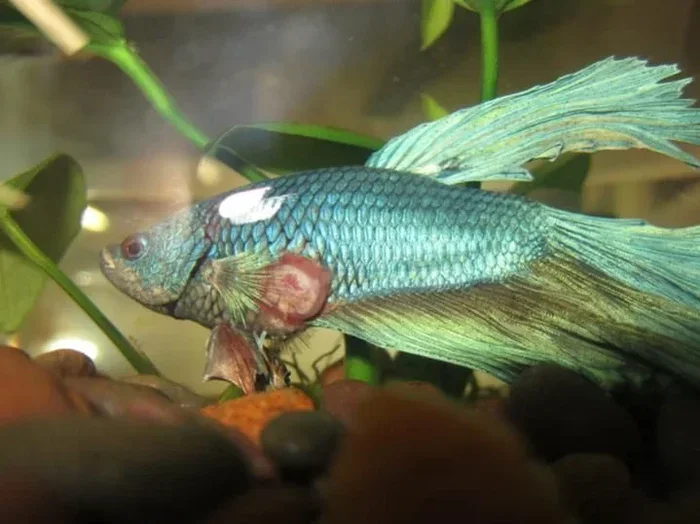
- Open cuts or gashes: These happen from sharp objects in the tank. They need careful cleaning to avoid infection.
- Open sores or ulcers: These look like red, raw spots on the body. They often signal an underlying infection.
- Scale damage or bruising: Caused by physical impact. The skin may look swollen or discolored.
Signs That Your Betta Has a Wound
Not all wounds are easy to spot at first. Bettas are good at hiding pain. Watch for these warning signs every day during tank checks.
- Fins clamped close to the body instead of flowing open
- Redness or swelling around a specific area
- Visible cuts, tears, or missing scales
- Loss of appetite or refusing food
- Lethargy and spending more time hiding
- Flashing or rubbing against tank objects
- White spots or fuzzy patches near the wound
If you notice any of these signs, act quickly. Early betta fish wound treatment makes a huge difference in recovery time.
Common Causes of Wounds in Betta Fish
Tank Decorations and Sharp Objects
Sharp rocks, rough plastic plants, and broken decorations are the top cause of betta injuries. Bettas have long, flowing fins that can snag easily. Always check your tank setup for anything that could cut or tear.
- Remove any sharp-edged rocks or driftwood
- Replace plastic plants with soft silk alternatives
- Check for rough seams on caves or ornaments
- Smooth out any sharp edges with aquarium-safe sandpaper
Aggressive Tank Mates and Handling
Betta fish are known for being territorial. Housing them with aggressive fish can lead to chasing and biting injuries. Even well-meaning handling during tank cleaning can cause accidental harm.
- Never house bettas with fin-nipping species like tiger barbs
- Use a soft net when moving your betta
- Avoid tapping on the glass or making sudden movements near the tank
- If your betta seems stressed, consider how to treat a stressed betta fish to address the root cause
How to Treat Betta Fish Wounds at Home
Step 1: Isolate and Examine the Wound
The first thing you should do is move your betta to a separate hospital tank. This keeps the wound clean and reduces stress from other fish. Use a small container with gentle water from the main tank.
Next, examine the wound closely. Look at the size, depth, and color. Minor surface wounds are easy to treat at home. Deep gashes or wounds with exposed tissue need more careful attention. Take note of any unusual colors like yellow or green pus, which can signal infection.
Step 2: Clean the Wound Properly
Cleaning is the most important step in treating betta fish wounds. Use a mild saline solution made from aquarium-safe salt and dechlorinated water. Gently dab the wound with a soft cotton swab dipped in the solution. Do not scrub or rub hard.
For fin tears, a gentle rinse in clean water often works fine. The goal is to remove debris and bacteria without causing more damage to delicate tissue.
Step 3: Apply Treatment and Create a Healing Environment
After cleaning, you have several treatment options. One of the most effective methods is an aquarium salt bath. Salt helps draw out toxins, reduces swelling, and creates a hostile environment for bacteria. If you are new to salt baths, check out a detailed guide on how to salt bath betta fish for step-by-step instructions.
You can also use a diluted betta-safe antibacterial solution. Avoid using human medications unless specifically recommended by a fish vet. Some commercial fish wound treatments work well for minor injuries. Always follow the dosage instructions carefully.
While your betta heals, keep the hospital tank water warm and clean. A temperature around 78 to 80 degrees Fahrenheit supports the healing process. Use a sponge filter to keep the water moving without creating strong currents that tire your fish.
Quick Tips for Wound Care
- Perform daily 20 percent water changes in the hospital tank
- Feed your betta easily digestible food to maintain strength during recovery
- Keep the tank dimly lit to reduce stress and encourage rest
- Handle your betta as little as possible during the healing period
- Observe the wound daily for any changes in size or color
Comparing Home Remedies vs. Commercial Treatments
When deciding how to treat your betta, you may wonder whether home remedies or store-bought products work better. Here is a simple comparison to help you decide.
| Treatment Method | Best For | Pros | Cons |
|---|---|---|---|
| Aquarium Salt Bath | Minor cuts, fin tears, early-stage wounds | Safe, cheap, easy to use, no chemicals | Not effective for deep or severe wounds |
| Commercial Antibacterial Drops | Open wounds with infection risk | Targeted formula, fast-acting | Can be costly, may contain harsh chemicals |
| Honey or Aloe Vera (Diluted) | Surface-level scrapes and mild irritation | Natural, soothing, promotes tissue repair | Limited scientific backing for fish use |
| Veterinary Prescribed Ointment | Deep wounds, severe infections, ulcers | Most effective, professionally formulated | Requires vet visit, higher cost |
For most owners, starting with an aquarium salt bath is the safest first step. It addresses the core needs of wound healing aquarium fish without introducing harsh substances to the water.
When to Seek Veterinary Help for Wounded Bettas
Warning Signs That Need Immediate Attention
Not every wound can be treated at home. Some situations require professional care. Watch for these red flags that mean it is time to call a fish vet.
- The wound is deep and shows visible muscle or bone
- You notice yellow, green, or foul-smelling discharge
- The wound is not improving after 3 to 5 days of home treatment
- Your betta stops eating completely for more than two days
- The wound is rapidly getting larger or spreading
- Your fish shows signs of systemic illness like bloating or labored breathing
These symptoms often point to a serious betta fish infection that needs targeted medication. If you suspect your betta has developed an infection, look into how to treat ich on a betta fish as a related concern, since bacterial and parasitic infections often overlap in wounded fish.
Early intervention by a professional can save your betta’s life. Do not wait too long before seeking help. Fish vets can prescribe antibiotics, anti-inflammatory treatments, and advanced wound care that goes beyond what home remedies offer.
The Betta Fish Healing Process
What to Expect During Recovery
Understanding how betta fish heal helps you set realistic expectations. Most minor wounds start showing improvement within 3 to 5 days of proper treatment. Fin tears usually regrow within 2 to 4 weeks, depending on the severity.
Deeper wounds take longer. The body first forms a protective layer over the injury, then slowly rebuilds damaged tissue. This tissue regeneration fish process requires good nutrition and clean water. Be patient and consistent with your care routine.
Tips to Speed Up Healing
You can do several things to support your betta’s recovery and boost the healing process.
- Maintain pristine water quality: Test ammonia, nitrite, and nitrate levels daily. Poor aquarium water quality is the number one enemy of wound healing.
- Provide a warm, stable environment: Keep the temperature steady between 78 and 80 degrees Fahrenheit. Temperature swings stress the immune system.
- Offer high-quality nutrition: Feed live or frozen foods like brine shrimp and bloodworms. Protein-rich food supports cell repair and tissue regeneration.
- Reduce stress factors: Keep the tank in a quiet area away from loud noises and bright lights. Stress weakens the immune response and slows recovery.
- Monitor closely: Check the wound every day. Take photos to track progress and spot any warning signs early.
Remember that every betta heals at its own pace. Some fish bounce back in days, while others need weeks of careful attention. What matters most is that you stay consistent with the care routine.
Preventing Wounds in Your Betta Fish Tank
Setting Up a Safe Aquarium Environment
The best way to treat a wound is to prevent one from happening in the first place. A well-designed tank setup removes most common injury risks.
- Choose soft silk plants over sharp plastic ones
- Use smooth, rounded rocks and driftwood pieces
- Avoid decorations with rough seams or exposed wires
- Keep the tank size appropriate for your betta’s needs
- Add gentle filtration that does not create strong suction
Daily Habits That Reduce Injury Risk
Small daily habits make a big difference in keeping your betta safe and healthy.
- Always use a soft, fine-mesh net when handling your betta
- Wash your hands before reaching into the tank to remove oils and bacteria
- Do not chase your betta around the tank during cleaning
- Feed gently and avoid overfeeding, which can lead to bloating and stress
- Quarantine new fish before adding them to the main tank to prevent fights
Taking these preventive steps shows that you care about your betta’s long-term well-being. A safe, stress-free environment is the foundation of good betta fish care and healthy wound recovery.
Conclusion
How to treat betta fish wounds comes down to three things: quick action, proper cleaning, and a supportive healing environment. Most minor wounds respond well to home treatment with aquarium salt baths and clean water. Deeper injuries or signs of infection need professional veterinary attention.
Prevention always beats treatment. Set up your tank with smooth decorations, handle your betta gently, and monitor water quality daily. These habits keep your betta healthy and reduce the chance of injuries. With patience and consistent care, your wounded betta can recover fully and return to its vibrant, active self.
Frequently Asked Questions
Can betta fish wounds heal on their own?
Minor surface wounds and small fin tears can heal on their own if the water is clean and conditions are stable. However, deeper wounds or those showing signs of infection need active treatment. Always monitor the wound closely and intervene if it does not improve within a few days.
How long does it take for a betta fish wound to heal?
Healing time depends on the wound type and severity. Minor cuts and fin tears usually heal within 1 to 3 weeks. Deeper wounds or those with infection can take 4 to 6 weeks or longer. Consistent care and clean water speed up the process significantly.
Should I use aquarium salt for betta fish wounds?
Yes, aquarium salt is one of the safest and most effective treatments for minor betta fish wounds. It helps reduce swelling, fights bacteria, and supports the natural healing process. Always use aquarium-specific salt and follow proper dosage guidelines to avoid harming your fish.
Can I use over-the-counter antibiotic ointment on my betta?
It is best to avoid human antibiotic ointments unless a fish veterinarian recommends them. Some ingredients can be harmful to bettas and may disrupt tank water chemistry. Stick to fish-specific treatments or consult a vet for serious wounds.
How do I know if a betta fish wound is infected?
Signs of infection include redness spreading around the wound, yellow or green discharge, foul smell, and swelling. Your betta may also stop eating and become lethargic. If you notice these symptoms, seek treatment promptly to prevent the infection from worsening.
Is it normal for betta fish fins to tear?
Minor fin tears are fairly common and usually not a serious concern. They can happen from snagging on decorations or rough handling. With proper care and clean water, most fin tears heal completely and the fins regrow over time.