How to Train a Female Betta Fish
Training a female betta fish is easier than most people think. With patience, the right environment, and positive reinforcement, your female betta can learn tricks, follow your finger, and even respond to her name. This guide walks you through every step of the training process, from setting up the ideal tank to mastering reward-based techniques that actually work.
Training a female betta fish might sound surprising. Many people assume bettas are too stubborn or simple to learn anything. But the truth is, female bettas are smart, curious creatures with a surprising capacity for learning. Once you understand their behavior and set the right conditions, you can teach them tricks, build a deeper bond, and turn tank time into an engaging experience for both you and your fish.
This guide covers everything you need to know about how to train a female betta fish. From understanding their natural behavior to mastering reward-based techniques, you will find practical steps you can start using today. Whether you are a first-time betta owner or have kept fish for years, this guide will help you unlock your female betta’s hidden potential.
Training a female betta is not about turning her into a circus performer. It is about enriching her life, strengthening your connection, and enjoying the process together. Let us dive in.
Key Takeaways
- Female bettas are intelligent and capable of learning: With consistent training, they can master tricks and respond to cues.
- The right tank setup makes training easier: Clean water, proper temperature, and a stress-free environment are essential.
- Positive reinforcement works best: Use food rewards and gentle encouragement to build trust and encourage learning.
- Bonding comes before training: Spend time with your betta before starting any structured training sessions.
- Short, frequent sessions yield the best results: Keep training to 5-10 minutes per day to avoid stressing your fish.
- Avoid common mistakes like overfeeding and forcing tricks: These can harm your betta’s health and willingness to learn.
📑 Table of Contents
Understanding Your Female Betta’s Behavior
Before you start any training, you need to understand how female bettas think and behave. Every successful training journey begins with knowing your fish.
What Makes Female Bettas Different from Males
Female bettas have distinct personalities compared to males. While male bettas are famous for their long fins and aggressive displays, females tend to be calmer and more social. They often explore their environment more actively, which makes them naturally more receptive to training.
Female bettas also live longer in community tanks. This means they are used to observing and reacting to their surroundings. That curiosity is a huge advantage when it comes to training a female betta fish. They are already wired to notice changes and respond to stimuli.
If you are new to female bettas, consider reading How To Know Female Betta Fish to help you confirm the sex and understand the behavioral differences.
Signs Your Betta Is Ready to Learn
Not every fish is ready to train at the same time. Look for these signs that your female betta is in the right headspace for learning:
- She swims actively around the tank: A lethargic fish is not a training candidate.
- She responds to movement near the tank: If she watches your hand or follows movement, she is paying attention.
- She eats eagerly: A healthy appetite signals that she is comfortable and stress-free.
- She flares occasionally: This shows awareness and alertness, not aggression.
If your betta shows these signs, she is ready to begin. If not, focus on reducing stress first before introducing training.
Setting Up the Right Environment for Training
Training does not happen in a vacuum. The environment your betta lives in directly affects her ability to learn. A stressed fish will not engage with training. A comfortable fish will thrive.
Tank Conditions That Support Learning
Start with the basics. Your female betta needs a tank that meets her physical and emotional needs. Here is what you should aim for:
- Tank size: At least 5 gallons. Larger tanks provide more stimulation and space to move.
- Temperature: Keep the water between 76 and 82 degrees Fahrenheit. Use a reliable heater to maintain consistency.
- Filtration: A gentle filter keeps water clean without creating strong currents that stress your betta.
- Enrichment: Add plants, caves, and open swimming areas. A stimulating environment encourages natural behaviors that form the foundation for training.
For more details on creating a great home for your betta, check out How To Set Up A Fish Tank For Betta Fish.
How Water Quality Affects Training
This is something many fish owners overlook. Poor water quality makes bettas sluggish, sick, and uninterested in anything, including training. Clean water supports a healthy, alert fish.
Test your water parameters regularly. Ammonia and nitrite should always be at zero. Nitrate should stay below 20 ppm. Perform partial water changes weekly, and always use dechlorinated water.
If you want to dive deeper into this topic, read How To Take Care Of A Betta Fish Water for a complete water care guide.
Quick Tip: Before each training session, check the water temperature. Bettas are more active and responsive in warm, stable water. Cold water makes them sluggish and less interested in learning.
Essential Training Techniques for Female Bettas
Now that the environment is set, let us talk about the actual training methods. These techniques are simple, effective, and based on positive reinforcement.
Using Food as a Reward
Food is the most powerful motivator for bettas. Use high-quality betta pellets or frozen bloodworms as training rewards. The key is to use small portions so your betta stays hungry and motivated during sessions.
Here is how to use food rewards effectively:
- Choose a specific treat: Use the same reward every time so your betta associates it with training.
- Feed before sessions: A slightly hungry betta is an eager betta. Offer a small meal before training, not a full one.
- Reward immediately: Give the treat within seconds of the desired behavior. Timing matters a lot.
- Use tiny portions: Break pellets into small pieces. You want rewards that are bite-sized and quick to consume.
Over time, your betta will start associating specific actions with rewards. This is the foundation of all betta training.
Target Training Basics
Target training is one of the simplest and most effective ways to start training your female betta. A target can be a small stick, a pen cap, or even your fingertip.
Follow these steps:
- Step 1: Hold the target near your betta’s line of sight.
- Step 2: Move the target slowly. When your betta follows it, reward her immediately.
- Step 3: Repeat this daily for 5 to 10 minutes.
- Step 4: Gradually increase the distance and complexity of the movement.
Within a week or two, most female bettas will follow a target reliably. This is a great first trick that builds confidence for more advanced training.
Positive Reinforcement and Consistency
Consistency is the secret sauce of betta training. Use the same cues, the same rewards, and the same routine every day. Bettas are creatures of habit, and they thrive on predictability.
Never punish your betta for not performing. Punishment creates fear and stress, which destroys the trust you are trying to build. If your betta is not responding, take a break and try again later. Training a female betta fish is a patience game, not a pressure game.
Common Tricks You Can Teach Your Female Betta
Once your betta understands the basics of following a target and responding to rewards, you can start teaching specific tricks. Here are some of the most popular and achievable ones.
Following Your Finger
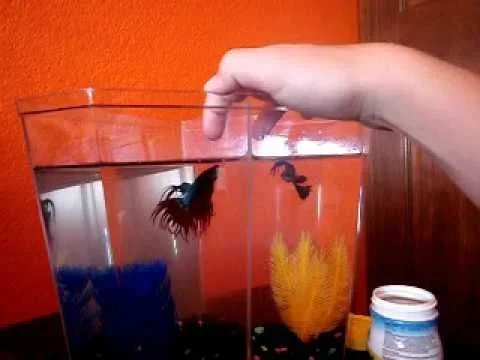
This is the most classic betta trick, and it is also one of the easiest. Simply place your finger on the outside of the tank and move it slowly. Most female bettas will follow your finger with their eyes and body.
Reward her every time she follows. Over time, she will anticipate the reward and follow more eagerly. You can even teach her to follow your finger from one side of the tank to the other.
Swimming Through a Hoop
This trick requires a small hoop or ring that you can hold in the water. Start by holding the hoop near the surface. Use your target stick to guide your betta through it. Reward her immediately when she passes through.
Gradually raise the hoop higher and make it slightly larger as your betta improves. Some female bettas can learn to swim through hoops within two to three weeks of practice.
Responding to a Signal or Cue
You can teach your betta to respond to a specific sound or visual cue. Tap the glass gently before feeding, and over time, your betta will associate the sound with food. Eventually, she will swim to the front of the tank when she hears the tap.
This trick is not just impressive. It is also practical. It helps you know your betta is hungry and ready to eat.
If you want to explore more trick-training possibilities, you can also read about Can You Train A Betta Fish To Do Tricks for additional ideas and inspiration.
Hand Feeding
Hand feeding is not technically a trick, but it is one of the most rewarding bonding experiences you can share with your female betta. Start by placing food near your hand in the water. Be still and patient. Eventually, your betta will work up the courage to eat from your fingers.
This builds enormous trust and makes future training sessions much easier. A betta that trusts you will always be more willing to engage and learn.
Building Trust and Bonding During Training
Training is not just about tricks. It is about building a relationship with your fish. The training process itself is where the real magic happens.
Why Bonding Comes First
Before you ask your betta to do anything, she needs to trust you. A betta that is afraid of your presence will not engage with training. Spend time simply sitting near the tank, talking softly, and letting your betta get used to you.
For more on this topic, check out How To Grow A Bond With Your Betta Fish. That article covers bonding techniques in greater detail.
Reading Your Betta’s Body Language
Understanding what your betta is telling you is crucial during training. Here are some key body language signals to watch for:
- Flaring and clamped fins: These are signs of stress or fear. Stop training and give your betta space.
- Bright colors and active swimming: These indicate a happy, engaged betta ready to learn.
- Refusing food: If your betta ignores treats, she may be stressed or overfed. End the session and try again later.
- Following your finger eagerly: This is a sign of interest and willingness to participate.
Always respect what your betta is telling you. Forcing training on a stressed fish will backfire and set your progress back significantly.
Training Sessions: How Long and How Often
Keep training sessions short and sweet. Five to ten minutes per day is ideal. Bettas have short attention spans, and longer sessions will exhaust them mentally and physically.
Aim for one session per day at the same time. This creates a routine that your betta will come to recognize and anticipate. Consistency is more important than duration.
Common Training Mistakes to Avoid
Even the most enthusiastic betta owners make mistakes. Here are the most common ones and how to avoid them.
Overfeeding During Training
It is tempting to give your betta too many treats during training. But overfeeding leads to bloating, constipation, and other health issues. Stick to small, measured portions. A good rule of thumb is to offer no more than two or three tiny pieces per session.
Pushing Too Hard Too Fast
Every betta learns at her own pace. Some pick up tricks in days. Others take weeks. Do not compare your betta to others or push her beyond her comfort zone. If a trick is not working, go back to basics and reinforce the fundamentals.
Ignoring Health Issues
If your betta suddenly stops responding to training, check her health first. Illness, poor water quality, and stress can all kill your training progress. Address health concerns before returning to training sessions.
For common health issues, see How To Treat Ich On A Betta Fish to keep your training partner healthy and happy.
Inconsistent Cues and Rewards
Changing the signal, the reward, or the routine confuses your betta. Pick a method and stick with it. Your betta will learn faster and respond more reliably when there is consistency in your approach.
Conclusion
Training a female betta fish is one of the most rewarding things you can do as a fish owner. It challenges the misconception that bettas are simple, uninteresting pets. Female bettas are curious, intelligent, and capable of learning when given the right environment, consistent techniques, and plenty of patience.
Start with a clean, comfortable tank. Build trust through bonding and gentle interaction. Use positive reinforcement with food rewards. Keep sessions short and enjoyable. And above all, respect your betta’s limits and pace.
Whether you want to teach your betta to follow your finger, swim through hoops, or simply respond to your presence, the journey matters just as much as the destination. Enjoy every moment of the process, and you will find that training your female betta brings you closer together in ways you never expected.
Start today. Your female betta is smarter than you think, and she is ready to learn.
Frequently Asked Questions
How long does it take to train a female betta fish?
Most female bettas can learn basic tricks within two to four weeks of consistent daily training. However, every fish is different. Some learn faster, and others need more time. The key is patience and consistency.
Can female bettas learn tricks like male bettas?
Yes, female bettas can learn many of the same tricks as males. In fact, females are often more responsive to training because they tend to be calmer and more curious. Tricks like following your finger, swimming through hoops, and responding to cues work well for both sexes.
What is the best reward for training a female betta?
Small pieces of high-quality betta pellets or frozen bloodworms make the best rewards. Use something your betta loves but in tiny portions so she stays motivated without being overfed.
Is it possible to overtrain a female betta fish?
Yes, overtraining can stress your betta and harm her health. Keep sessions to five to ten minutes per day. If your betta seems tired or disinterested, stop the session and try again the next day.
Do female bettas recognize their owners?
Many female bettas do recognize their owners over time. They learn to associate their owner’s presence with feeding and positive interactions. Regular bonding time and consistent care help build this recognition.
Can I train multiple female bettas together?
Training multiple females together is possible but more challenging. Each betta has a different attention span and learning pace. It is best to train them individually first, then gradually introduce group sessions if they are comfortable in the same tank.