How to Betta Fish Tank

Setting up a betta fish tank is easier than most people think. This guide walks you through every step, from choosing the right tank size to cycling your water and keeping your betta healthy. You will learn the best practices for betta fish tank maintenance, decoration, and daily care so your fish thrives for years.
So you want to set up a betta fish tank? Great choice! Betta fish are some of the most colorful and fascinating freshwater fish you can keep at home. They have flowing fins, bright personalities, and they really stand out in a well-designed tank. But here is the thing many beginners miss — a betta needs more than just a bowl of water and a few pebbles.
Setting up a betta fish tank properly means thinking about tank size, water temperature, filtration, cycling, and decoration. Each of these pieces plays a big role in keeping your fish healthy and happy. In this guide, we will walk you through every step in plain language, so you feel confident no matter your experience level. By the end, you will know exactly how to build a home your betta will love.
Key Takeaways
- Choose at least a 5-gallon tank: Betta fish need space to swim and stay healthy, not just a tiny bowl.
- Cycle your tank before adding your betta: Cycling removes harmful toxins like ammonia and nitrite from the water.
- Keep the water warm: Betta fish thrive in water between 76°F and 82°F, so a heater is essential.
- Clean regularly but gently: Weekly partial water changes keep the tank clean without stressing your fish.
- Add plants and hiding spots: Decorations and live plants reduce stress and make your betta feel safe.
- Test water parameters often: Monitoring pH, ammonia, and nitrate levels prevents health problems early.
📑 Table of Contents
Why a Proper Betta Fish Tank Setup Matters
A lot of people think betta fish can live in tiny cups or vases. That is a myth. In the wild, bettas live in warm, slow-moving waters in Southeast Asia. They need stable water conditions and room to explore. A proper betta fish tank setup mimics their natural habitat and keeps stress levels low. Stressed fish get sick more easily and have shorter lifespans.
When you set up your tank the right way from day one, you avoid common problems like ammonia spikes, temperature swings, and bacterial infections. A well-planned betta fish tank also makes daily care simpler and more enjoyable. Your fish will be more active, display better colors, and even build bubble nests when they feel safe.
Betta Tank Size: Bigger Is Always Better
The minimum tank size for a single betta is 5 gallons. Some people try to keep bettas in 1-gallon tanks, but that is really too small. A 5-gallon tank gives your fish enough room to swim and creates a more stable environment. Larger tanks also make it easier to maintain steady water parameters.
If you want to keep more than one betta, you will need a bigger tank and a divider. Bettas are territorial, especially males. They will fight other males to the death. A betta fish tank of 10 gallons or more gives you more flexibility for aquascaping and community tank planning.
How to Set Up Your Betta Fish Tank
The setup process is straightforward, but each step matters. Rushing through it can cause problems later. Here is the step-by-step process for a successful betta fish tank setup.
Step 1: Choose Your Tank and Location
Pick a spot away from direct sunlight and drafty areas. Sunlight causes algae to grow out of control, and temperature swings stress your fish. Place the tank on a sturdy, level surface. A filled 5-gallon tank weighs about 60 pounds, so make sure your furniture can handle the weight.
Next, rinse your tank with plain water. Do not use soap or detergent. Even a tiny residue can be deadly to fish. Set the tank in place and make sure it is level before adding anything else.
Step 2: Add Substrate and Decorations
Spread a thin layer of aquarium gravel or sand across the bottom. Rinse it thoroughly in a bucket before adding it to the tank. Substrate gives beneficial bacteria a place to colonize, which is essential for a healthy betta fish tank.
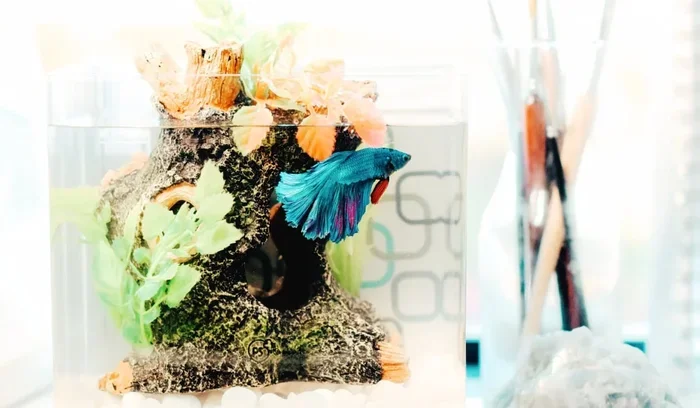
After the substrate, add your decorations. Smooth rocks, driftwood, and caves make great hiding spots. Bettas love places to rest and explore. You can also add silk or live plants. Just avoid sharp plastic decorations that can tear their delicate fins. If you want a natural look, check out our guide on how to decorate your betta fish tank for creative ideas.
Step 3: Install Equipment
Now it is time to add your heater and filter. A betta fish tank heater should be adjustable and set to 78°F. Bettas are tropical fish and need warm water to stay healthy. Choose a filter with gentle flow, because bettas do not like strong currents. Sponge filters work great for betta tanks.
Step 4: Fill with Water and Add Conditioner
Fill the tank slowly with room-temperature water. Use a plate or plastic bag to cushion the water flow so you do not disturb the substrate. Add a water conditioner to remove chlorine and chloramine from tap water. These chemicals are harmful to fish even in small amounts.
Step 5: Cycle the Tank Before Adding Your Betta
Cycling is the most important step. It builds beneficial bacteria that break down toxic ammonia and nitrite. A cycled betta fish tank is a safe betta fish tank. You can cycle with or without fish, but fishless cycling is safer and recommended for beginners. Learn more about the cycling process in our guide on how to cycle a betta fish tank. This process usually takes 4 to 6 weeks.
Once your tank is fully cycled and water parameters are stable, you can safely add your betta. Use a thermometer to confirm the temperature is in the ideal range before introducing your fish.
Water Temperature and Parameters for Betta Fish
Betta fish are tropical creatures that need warm, stable water. The ideal temperature range is between 76°F and 82°F. Anything below 74°F can make your betta sluggish and more prone to illness. A quality aquarium heater keeps the temperature steady around the clock.
Beyond temperature, you also need to watch your water parameters. Here is a quick reference table for ideal betta fish tank water conditions:
| Parameter | Ideal Range | Why It Matters |
|---|---|---|
| Temperature | 76°F – 82°F | Betta fish are tropical and need warmth |
| pH Level | 6.5 – 7.5 | Prevents stress and chemical burns |
| Ammonia | 0 ppm | Even low levels are toxic |
| Nitrite | 0 ppm | Harmful to fish gills and health |
| Nitrate | Under 20 ppm | High levels cause health issues over time |
| Water Hardness | 3 – 4 dKH | Soft to moderately hard water is best |
Test your water at least once a week using a liquid test kit. Test strips are convenient but less accurate. Keeping a log of your water parameters helps you spot trends and catch problems early.
Betta Fish Tank Maintenance and Cleaning
Once your betta fish tank is set up, maintenance becomes part of your routine. The good news is that a well-cycled tank is easier to maintain than most people expect. Consistency is the key to success.
Weekly Water Changes
Plan to do a 25% to 30% water change every week. Use a gravel vacuum to remove debris from the substrate while siphoning out old water. Always treat new water with conditioner before adding it to the tank. Match the temperature of the new water to the tank water to avoid shocking your fish.
If you are new to water changes and want a detailed walkthrough, our article on how to clean a betta fish tank covers the process step by step with helpful tips.
Filter Maintenance
Rinse your filter media in tank water once a month. Never use tap water, because the chlorine will kill beneficial bacteria. Replace filter media only when it falls apart. Keeping some old media helps maintain the bacterial colony in your tank.
Feeding Your Betta Properly
Feed your betta small amounts twice a day. High-quality pellets should make up the bulk of their diet. You can add frozen or live foods like brine shrimp and bloodworms as treats. Overfeeding is one of the most common mistakes new betta keepers make. Uneaten food rots in the water and raises ammonia levels fast.
Decorating Your Betta Fish Tank
A well-decorated tank does more than look pretty. It reduces stress and gives your betta a sense of security. Bettas in barren tanks often feel exposed and anxious, which can lead to hiding, loss of color, and poor appetite.
Best Plants for Betta Tanks
Live plants are the best choice for a betta fish tank. They absorb nitrates, produce oxygen, and create a more natural environment. Some great options include java fern, anubias, and amazon sword. These plants are hardy and do not require intense lighting.
If you prefer artificial plants, choose silk versions with soft leaves. Avoid plastic plants with rough edges that can damage betta fins. Live plants also give your tank a lush, vibrant look that artificial plants cannot match.
Adding Hiding Spots and Open Swimming Space
Balance is important. Provide enough hiding spots with caves, caves, and plants, but also leave open areas for swimming. Bettas like to patrol their territory, so they need room to move. A few smooth rocks and a couple of plants on each side create a nice layout.
For more detailed decoration ideas and inspiration, visit our guide on how to decorate your betta fish tank. It covers themes, plant arrangements, and creative setups for all skill levels.
Common Betta Fish Tank Mistakes to Avoid
Even experienced fish keepers make mistakes sometimes. Here are the most common errors people make with their betta fish tank and how to avoid them.
- Using too small a tank: A 1-gallon tank is not enough. Betta fish need at least 5 gallons for a stable environment.
- Skipping the cycle: Adding a betta to an uncycled tank exposes them to toxic ammonia. Always cycle first.
- Overfeeding: Excess food pollutes the water quickly. Feed only what your betta can eat in two minutes.
- Using a strong filter: Powerful filters create currents that tire bettas out. Choose a gentle sponge filter.
- Placing the tank in direct sunlight: Sunlight causes algae blooms and temperature spikes that stress your fish.
- Ignoring water changes: Even with a filter, waste builds up over time. Regular water changes are non-negotiable.
Expert Tips for a Thriving Betta Fish Tank
Here are some pro tips that make a real difference in the long-term health of your betta.
First, always acclimate your betta slowly when introducing them to a new tank. Float the bag in the tank for 15 to 20 minutes, then gradually mix tank water into the bag over another 15 minutes. This process reduces shock and helps your fish adjust to the new environment.
Second, consider adding a tank lid. Betta fish are known jumpers, and they can leap out of open tanks. A secure lid also helps maintain humidity and keeps dust out of the water.
Third, observe your betta daily. Watch for changes in behavior, appetite, or color. Catching problems early gives you the best chance to address them quickly. A healthy betta will be active, curious, and display vibrant colors.
If you ever need to move your betta to a different tank, our guide on how to transfer betta fish to a new tank walks you through the safe and stress-free process.
Conclusion
Setting up a betta fish tank is a rewarding experience that anyone can enjoy. From choosing the right tank size and cycling the water to maintaining proper temperature and keeping things clean, each step builds a healthy home for your fish. The key is patience and consistency. Take your time, follow the steps in this guide, and your betta will thrive.
Remember that a happy betta is an active, colorful betta. Give them space, warm water, clean conditions, and a few places to explore. In return, you will get a beautiful companion that brings life and color to your home. Start your betta fish tank journey today and enjoy every moment of it.
Frequently Asked Questions
What size tank does a betta fish need?
A single betta fish needs at least a 5-gallon tank. While some people keep bettas in smaller bowls, a 5-gallon tank provides stable water conditions and enough room for your fish to swim comfortably. Larger tanks are even better for long-term health.
How often should I clean my betta fish tank?
You should do a 25% to 30% water change every week. In addition, check your filter monthly and rinse the media in old tank water. Regular maintenance prevents ammonia buildup and keeps your betta healthy and active.
Do betta fish need a heater?
Yes, betta fish are tropical and need a heater. The ideal temperature range is 76°F to 82°F. Without a heater, room temperature water can drop too low, causing your betta to become sluggish and more vulnerable to illness.
Can I keep two betta fish in the same tank?
Two male bettas should never be housed together. They will fight and can seriously injure or kill each other. Female bettas can sometimes be kept in small groups called sororities, but this requires a larger tank of at least 10 gallons with plenty of hiding spots.
How do I cycle a betta fish tank?
Cycling a betta fish tank means building beneficial bacteria that convert toxic ammonia into less harmful nitrate. The fishless cycling method is recommended. Add a source of ammonia, test water parameters regularly, and wait until ammonia and nitrite read zero before adding your fish. This process takes about 4 to 6 weeks.
What do betta fish eat?
Betta fish thrive on high-quality pellets specifically formulated for bettas. You can supplement their diet with frozen or live foods like brine shrimp and bloodworms as occasional treats. Feed small amounts twice a day and avoid overfeeding to keep the water clean.