How Often to Feed Betta Fish
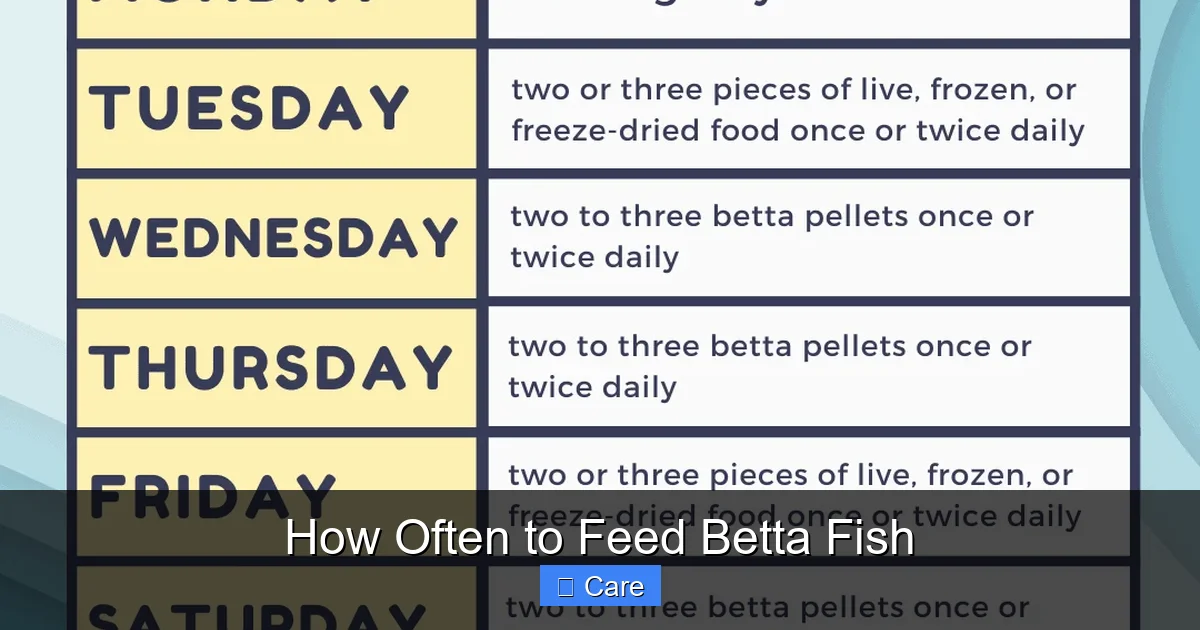
Feeding your betta fish correctly is crucial for its health and longevity. The general rule is to feed adult bettas once or twice daily, offering only what they can consume in 2-3 minutes. Overfeeding is the most common mistake, leading to serious health issues like constipation, swim bladder disease, and poor water quality. Always prioritize high-quality, carnivore-appropriate foods and consider implementing a weekly fasting day to support digestion.
Key Takeaways
- Feed Adults 1-2 Times Daily: A consistent schedule of once or twice a day is ideal for most adult bettas, aligning with their natural foraging behavior and slow metabolism.
- Portion Size is Critical: A meal should be no larger than the betta’s eye (or 2-3 pellets). When in doubt, underfeed. Uneaten food must be removed immediately.
- Fasting is Beneficial: Skipping one meal per week (a 24-hour fast) helps clear the digestive system and can prevent or alleviate constipation and swim bladder issues.
- Bettas are Strict Carnivores: Their diet must be primarily animal-based protein. Avoid fillers like wheat, soy, and corn common in many generic fish foods.
- Food Type Matters: Use high-quality pellets or frozen foods (brine shrimp, daphnia) as staples. Live foods are risky due to parasite transmission.
- Water Temperature Influences Metabolism: Warmer water (78-80°F/25-27°C) increases metabolic rate slightly, but does not justify feeding more than the recommended small portions.
- Observe Your Individual Fish: Some bettas may be more or less active. Adjust slightly based on your fish’s body condition—it should have a gentle taper from head to tail, not a rounded belly.
📑 Table of Contents
- The Art and Science of Feeding Your Betta
- Understanding the Betta Digestive System: More Than a Tiny Stomach
- Factors That Influence Your Betta’s Feeding Schedule
- Determining the Perfect Portion Size: The “Eyeball Method”
- Food Types and Creating a Nutritional Balance
- The Non-Negotiable Practice: Scheduled Fasting
- Common Feeding Mistakes and How to Avoid Them
- Conclusion: Feeding as a Pillar of Holistic Care
The Art and Science of Feeding Your Betta
Welcome to the definitive guide on one of the most common—and most misunderstood—aspects of betta fish care. If you’ve ever wondered, “How often should I really feed my betta?” you’re not alone. The answer is deceptively simple but surrounded by a cloud of outdated advice and well-meaning myths. Getting this right isn’t just about preventing a bulging belly; it’s about mimicking the betta’s natural biology, preventing devastating diseases, and maintaining a pristine aquatic environment. In the wild, the magnificent Siamese fighting fish (Betta splendens) is a surface-dwelling predator in the shallow, warm rice paddies and slow-moving streams of Southeast Asia. It doesn’t have a constant buffet of food. Instead, it survives on a sporadic diet of insects, larvae, and tiny crustaceans that land on the water’s surface. This fundamental truth—that bettas are opportunistic carnivores adapted to feast-or-famine cycles—is the cornerstone of proper feeding. This article will move beyond the simplistic “twice a day” mantra to give you a deep, practical understanding of frequency, portion, food quality, and the vital role of fasting. By the end, you will be equipped with the confidence to nourish your betta for a long, healthy, and vibrant life.
Understanding the Betta Digestive System: More Than a Tiny Stomach
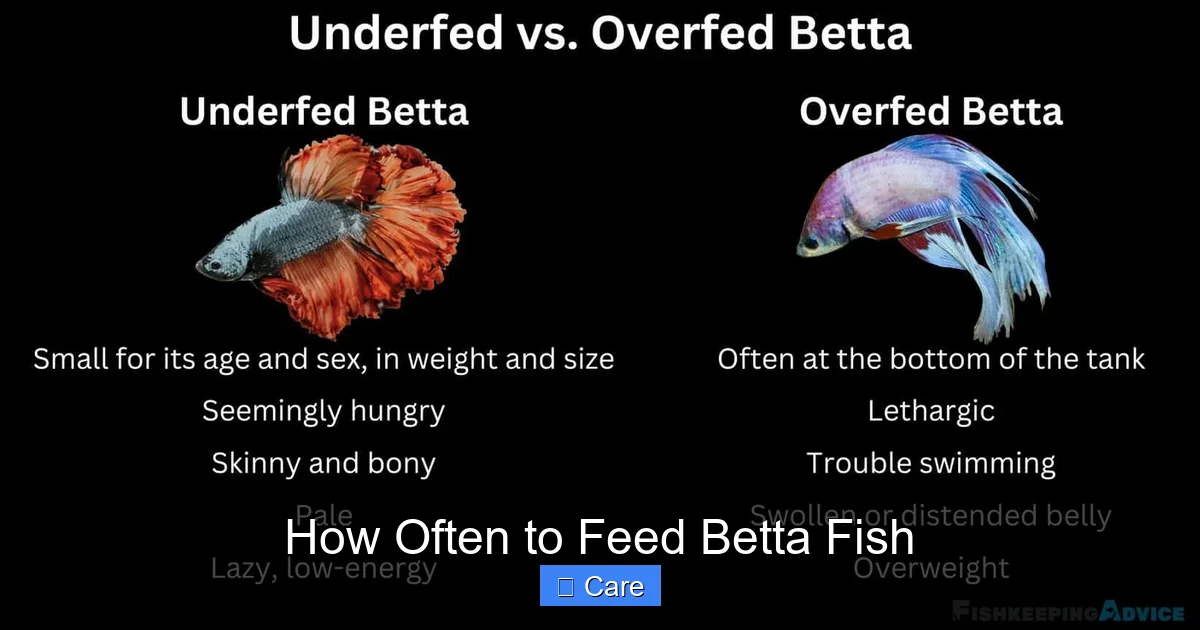
To grasp how often to feed betta fish, we must first understand what’s happening inside that beautiful, flowing body. Bettas have a very short, simple digestive tract, typical of carnivores. This means food passes through them quickly, but it also means they are not designed to process large volumes of plant matter or carbohydrates. Their stomach is roughly the size of their eye when fully expanded—a crucial visual guide we’ll return to.
Visual guide about How Often to Feed Betta Fish
Image source: fishkeepingadvice.com
The Carnivore’s Short Gut
Herbivorous fish, like some plecos, have long, complex intestines full of fermenting bacteria to break down tough plant cellulose. A betta’s gut is not built for this. When you feed a betta foods high in fillers (wheat, corn, soy—common in many cheap pellets), that undigested material sits in their system, fermenting and causing gas, constipation, and potentially leading to the dreaded swim bladder disorder. The swim bladder is a gas-filled organ that helps the fish control its buoyancy. Inflammation or pressure from a constipated gut can displace it, causing the fish to float upside down, sink, or struggle to swim. Therefore, food composition is inseparable from feeding frequency. You cannot feed a low-quality, high-carbohydrate diet frequently without risking chronic digestive stress.
Metabolism and the “Famine” Adaptation
Bettas have a slow metabolism relative to their size. In their natural habitat, a successful hunt might provide a substantial meal, followed by days with little to no food. Their bodies are efficient at storing and utilizing energy from these meals. This is why they can easily go a day or two without eating without negative effects—and why daily feeding, while standard, is not an absolute biological necessity for an adult fish in a stable environment. In fact, this adaptation makes them surprisingly resilient to occasional missed feedings but exquisitely vulnerable to consistent overfeeding.
Factors That Influence Your Betta’s Feeding Schedule
While the standard advice of once or twice daily is a great starting point, several key factors can fine-tune this recommendation for your specific betta and setup.
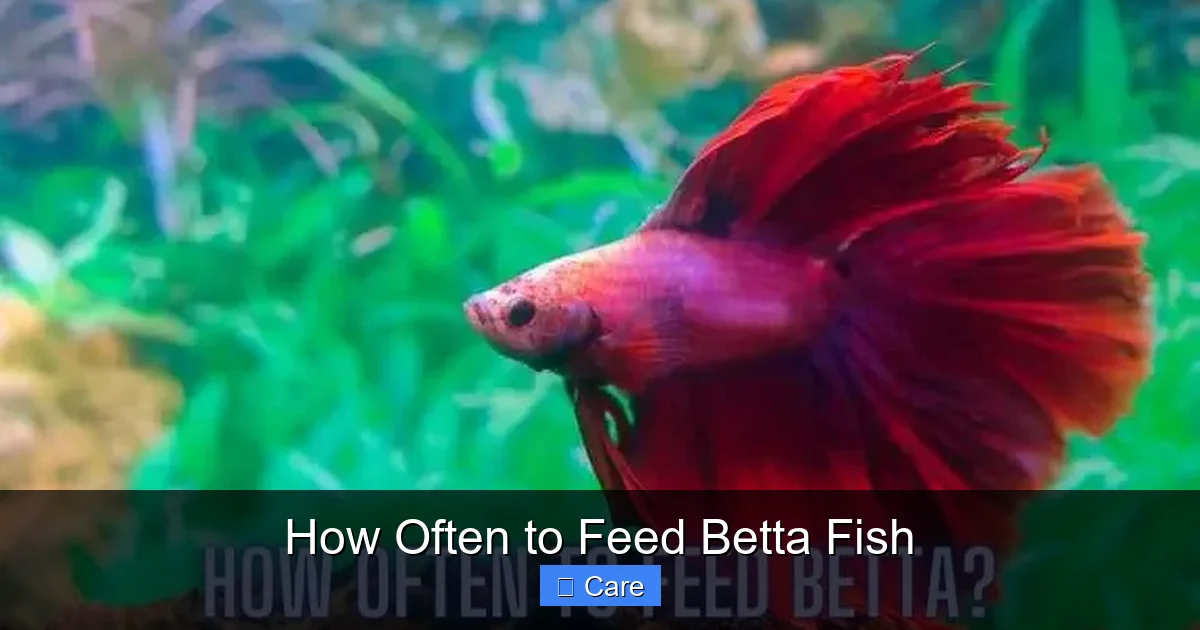
Visual guide about How Often to Feed Betta Fish
Image source: fishkeepingguide.net
Age and Life Stage
A young, growing betta fry has vastly different nutritional needs than a mature adult. Fry (0-3 months): These tiny fish have rapid metabolisms and require feeding 2-4 times daily with appropriately sized foods (infusoria, newly hatched brine shrimp, microworms). They are building tissue and need constant fuel. Juveniles (3-6 months): As they grow, you can gradually reduce to twice daily feedings. Adults (6+ months): For a healthy adult in a heated, filtered tank, once daily feeding is often perfectly sufficient and is a excellent practice for long-term health. Many keepers successfully feed only 5-6 days a week. Elderly bettas may have a further reduced appetite and metabolism; feed once daily or even every other day, monitoring their body condition closely.
Tank Temperature
Temperature is a direct dial on a fish’s metabolic rate. The ideal range for a betta is 78-80°F (25-27°C). At the lower end of this range (78°F), metabolism is slower. At the higher end (80°F), it’s slightly faster. However, this does not mean you should feed more at 80°F. The difference is marginal. The critical point is that if your tank is consistently below 76°F, your betta’s metabolism will slow significantly, and feeding once daily may be too much. Conversely, if you keep your betta in an unheated room where the temperature fluctuates or drops, their digestive system will be sluggish, making them more prone to constipation from even small meals. A stable, appropriate temperature is a prerequisite for a predictable feeding schedule.
Activity Level and Individual Personality
Some bettas are energetic, curious swimmers who seem perpetually “on.” Others are more sedentary, content to lounge on a leaf. A highly active betta may burn slightly more calories, but the adjustment to feeding is minimal. The key is to feed based on body condition, not behavior. A begging betta is a conditioned response; they learn that you approaching the tank means food. This does not mean they are hungry. Learn to ignore the “food dance” and stick to your schedule. The ultimate judge is your fish’s physique. You should be able to see a gentle, straight line from the back of the head, down the spine, to the tail base. There should be no pronounced, rounded belly when viewed from above.
Tank Conditions and Water Quality
This is a massive, often overlooked factor. In a perfectly cycled, filtered, and regularly maintained tank, uneaten food is removed quickly by the filter or by you. In a poorly maintained, unfiltered “bowl” environment, any uneaten food decomposes instantly, fouling the water with ammonia and nitrites. In such a setup, the act of feeding itself is a major water pollutant. Therefore, the frequency and amount must be strictly controlled to avoid a toxic spike. A clean, filtered tank with weekly water changes can handle the minor debris from a proper feeding much better. Your feeding schedule must be designed in tandem with your maintenance schedule.
Determining the Perfect Portion Size: The “Eyeball Method”
Frequency is only half the equation. The other, equally important half is how much you feed at each sitting. This is where most owners, especially new ones, go wrong. We tend to overestimate. The solution is a simple, foolproof visual guide.
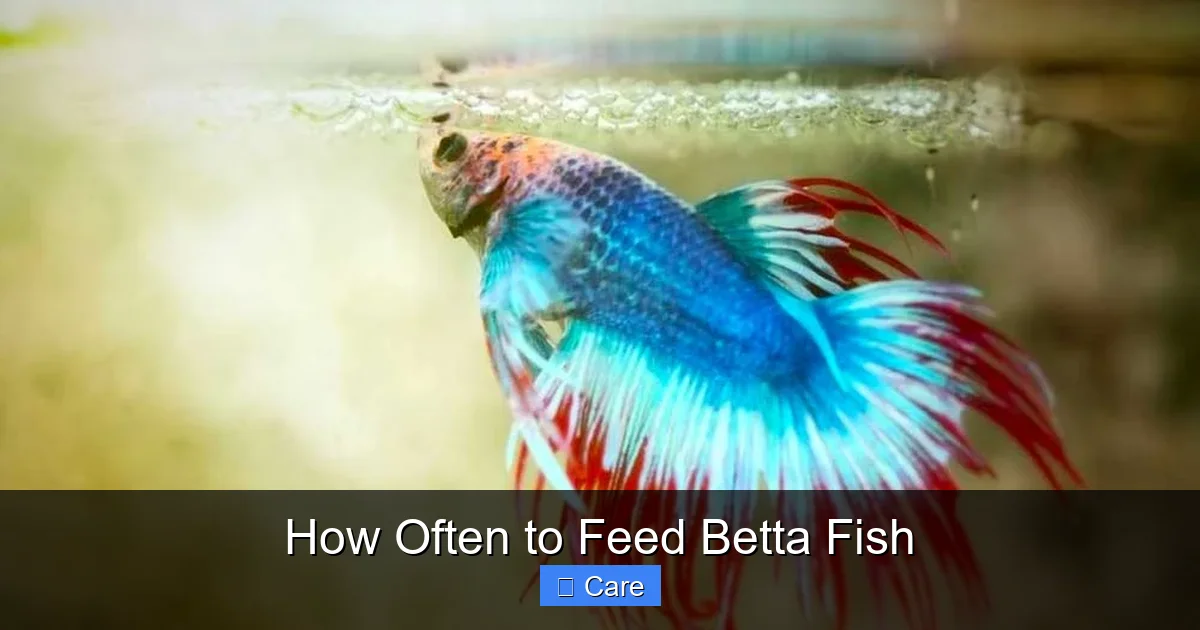
Visual guide about How Often to Feed Betta Fish
Image source: lovefishtank.com
The Golden Rule: Match the Eye
Take a look at your betta’s eye. The diameter of that eye is roughly the maximum volume of food your betta’s stomach can comfortably hold. This applies to pellet-fed bettas. For larger foods like frozen bloodworms or brine shrimp, you are looking at a portion of about 2-3 individual pieces for an adult betta. This is not a daily total; it is the amount for one meal. If you feed once daily, that’s the day’s total. If you feed twice, split that eyeball-sized portion in half. This method works for all but the largest, most giant bettas (which are rare).
Why “What They Can Eat in 2-3 Minutes” is Misleading
You’ve likely heard the advice: “Feed only what they can eat in 2-3 minutes.” This is problematic because a betta will often continue to chase, nip, and “hunt” food particles long after its stomach is full, especially if food is floating. It’s a natural foraging instinct. They might eat every pellet you drop within 2 minutes, only to become constipated hours later. The 2-3 minute rule encourages overfeeding. Instead, pre-measure the portion (using the eye method), drop it in, and immediately observe. If all food is gone in 30 seconds, that’s perfect. If any pellets remain after 1 minute, you’ve fed too much. Those leftovers must be netted out.
Practical Examples with Common Foods
- High-Quality Pellets (e.g., New Life Spectrum, Omega One): For a standard adult betta, start with 3-4 small pellets (or 2 larger ones) once daily. If your betta is particularly small, start with 2. If very large, 4 might be acceptable. Adjust based on the eye method and body condition.
- Frozen Foods (Brine Shrimp, Bloodworms, Daphnia): Thaw a small cube. A adult betta needs about a pinch, roughly the size of a pea, of the thawed food. This is often just a few strands from the corner of the cube. These are treats and should not be daily staples for most; use 2-3 times a week.
- Live Foods (Microworms, Vinegar Eels): These are excellent for fry but can be used sparingly for adults. A small drop of a concentrated culture is enough. The risk of introducing parasites or diseases makes many experienced keepers avoid them for adults.
- Freeze-Dried Foods: These should be pre-soaked in tank water for 5-10 minutes to expand before feeding. This prevents them from expanding in the betta’s gut and causing impaction. Feed a tiny pinch—no more than 2-3 pieces.
Food Types and Creating a Nutritional Balance
Knowing how often to feed is moot if the food itself is inappropriate. A proper betta diet is not just about frequency; it’s about building a weekly nutritional profile.
The Staple: High-Quality Pellets
A premium betta pellet should be your dietary foundation. Look for these on the label: primary ingredient should be a whole animal protein (e.g., whole fish, shrimp meal, krill meal). Avoid pellets where “wheat flour,” “soybean meal,” or “corn gluten meal” are in the top three ingredients. Good brands will list fish/shrimp meal first and have protein content of 40% or higher. Pellets are convenient, nutritionally complete (if good quality), and help maintain water quality when fed properly. They should constitute 60-70% of the diet.
The Variety: Frozen and Freeze-Dried Foods
This is where you provide enrichment and mimic the variety of a wild diet. Frozen brine shrimp (preferably Hatchling or Artemia) are a fantastic, easily digestible staple. Frozen daphnia is excellent for its mild laxative effect, great for preventing constipation. Frozen bloodworms are a high-protein treat that bettas love but should be fed no more than once a week due to their high fat and chitin content, which can be hard to digest. Freeze-dried versions of these are acceptable if pre-soaked. These foods should make up 30-40% of the diet, rotated.
The Treats and The Avoid List
Occasional treats like a tiny piece of cooked, unseasoned shrimp or a couple of blanched, de-shelled peas (for constipation relief) are fine. However, there is a long list of foods to never feed: lettuce, cucumbers, carrots (betas cannot digest plant matter), bread, generic tropical fish flakes (fillers), and especially live foods from unknown sources (tubifex worms are notorious parasite carriers). Stick to reputable, frozen, or high-quality pellet sources.
The Non-Negotiable Practice: Scheduled Fasting
This is the secret weapon of expert betta keepers and the practice most likely to prevent digestive disease. Implementing a weekly fast is not cruel; it is biologically sound and highly beneficial.
Why Fasting Works
Think of your betta’s digestive system as a highway. If you constantly dump cars (food) onto it, traffic jams (constipation) occur. A fast is like a scheduled road closure that allows the system to completely clear out any residual waste, undigested material, and gas. It gives the entire digestive tract a rest. For a betta prone to bloating or with a history of swim bladder issues, a 24-hour fast once a week is therapeutic. Even for a perfectly healthy betta, it’s a preventive measure. It also helps you assess your betta’s true appetite and body condition. If your fish is truly hungry on fast day, you may be underfeeding slightly. If it shows no change, your portions are likely correct.
How to Implement a Fast
Choose a day that works for your routine—many choose Sunday as a “no-feed” day to start the week clean. On this day, simply do not feed your betta. Provide normal lighting and observe. They will be fine. Resume your normal (small) feeding schedule the next morning. Some keepers prefer a 36-hour fast (skip one evening and the following morning). The key is consistency. Make it a predictable part of the weekly cycle. If your betta is very young (under 4 months) or very old/sick, consult a vet before fasting, but for the average healthy adult, it is highly recommended.
Common Feeding Mistakes and How to Avoid Them
Let’s consolidate the pitfalls into clear, actionable warnings.
Mistake 1: Overfeeding (The #1 Killer)
This causes a cascade of problems: constipation, swim bladder disease, fatty liver degeneration, and rapid water degradation from excess waste and decaying food. Solution: Adopt the “eyeball method” religiously. Feed less than you think you should. It is always better to underfeed by a tiny bit than to overfeed. Your betta will not starve.
Mistake 2: Feeding Low-Quality, High-Carb Foods
Cheap pellets are packed with fillers that bettas cannot digest, leading to chronic digestive inflammation and bloating. Solution: Invest in one high-quality pellet brand. Read the ingredient list. The first ingredient must be an animal protein source.
Mistake 3: Not Removing Uneaten Food
That pellet that sinks to the bottom and is ignored will rot within hours, spiking ammonia and nitrite levels. Solution: Use a fine mesh net to remove any uneaten food within 5-10 minutes of feeding. This is non-negotiable for tank health.
Mistake 4: Inconsistent Schedule
Feeding randomly at different times can confuse your betta and make it harder to monitor intake and health. Solution: Pick 1-2 times a day (e.g., 8 AM and 6 PM, or just 8 AM) and stick to it like clockwork. This creates routine for both you and the fish.
Mistake 5: Ignoring Body Condition
Feeding the same amount regardless of your betta’s weight leads to obesity or malnutrition. Solution: Look at your betta from above once a week. You should see a sleek profile. If the area between the gill covers and the start of the dorsal fin looks rounded or “chubby,” reduce the portion slightly. If the fish looks thin or skeletal, increase portion marginally and check for illness.
Conclusion: Feeding as a Pillar of Holistic Care
Mastering how often to feed betta fish is a journey into understanding your pet’s evolutionary history
Frequently Asked Questions
What is how often to feed betta fish?
how often to feed betta fish is an important topic with many practical applications.