How Long Can a Betta Fish Live Without Food
A healthy betta fish can typically survive 1-2 weeks without food, but this is not a safe or recommended practice. While their slow metabolism allows for short fasts, prolonged starvation causes severe stress, weakens their immune system, and leads to organ failure. This survival timeframe is a biological limit, not a guideline. Responsible ownership means consistent, appropriate feeding and having a reliable plan for short absences. Never use “survival time” as a reason to neglect your betta’s dietary needs.
So, you’re planning a weekend getaway, or maybe you’ve simply forgotten to feed your majestic betta fish for a day or two. A little voice in your head might whisper: “How long can a betta fish live without food, really?” It’s a common question, born from a mix of curiosity and maybe a touch of guilt. The answer, like so much in fishkeeping, is nuanced. It’s not just about a raw number of days; it’s about understanding the delicate biology of your Siamese fighting fish and the profound difference between surviving and thriving. Let’s dive deep into the science, the risks, and the responsible practices that ensure your betta lives a long, vibrant life—which, with proper care, can be 3 to 5 years, not just a few weeks of struggle.
First, let’s establish the baseline. Under ideal, laboratory-grade conditions—perfect water parameters, pristine temperature, zero stress—a healthy adult betta might physically persist for 10 to 14 days without a single meal. This is an extreme upper limit, a testament to their hardy, predatory nature evolved in the shallow, sometimes food-scarce waters of Thailand. But here is the crucial, non-negotiable truth: this is not a target. Using this two-week figure as a benchmark for your care is like saying a human could survive two weeks without water, so it’s okay to withhold it. It’s a biological limit, not a standard of care. Every day beyond a short, 3-4 day fast is a day of internal erosion, weakening your fish and shortening its potential lifespan. Our goal is to understand this limit so we can never test it.
Key Takeaways
- Survival vs. Health: A betta *might* live 10-14 days without food, but this causes cumulative internal damage and is not humane.
- Metabolic Advantage: Bettas’ wild instincts and slow metabolism allow for occasional short fasts (3-4 days), which can even aid digestion.
- Starvation is a Slow Killer: The body first consumes fat reserves, then muscle tissue, leading to organ shutdown and extreme vulnerability to disease.
- Water Quality is Paramount: A clean tank is more critical than a missed feeding. Poor water causes exponentially more harm than a short fast.
- Plan for Absences: Never rely on a betta’s ability to survive alone. Use an automatic feeder or trusted pet sitter for trips longer than 3 days.
- Observe Your Fish: Learn your betta’s normal behavior and appetite. Sudden changes are a red flag, whether from overfeeding or underfeeding.
- Consistency is Care: The cornerstone of betta health is a stable routine: clean water, proper diet, and consistent feeding schedules.
📑 Table of Contents
- The Betta’s Biology: Built for Intermittent Feasts
- The Critical Timeline: What Happens Day-by-Day Without Food
- The Real Enemy: It’s Not Just the Lack of Food
- Practical Scenarios: What To Do Instead of “Waiting It Out”
- Proper Feeding: The Antidote to Starvation Worries
- Conclusion: Commitment Over Curiosity
The Betta’s Biology: Built for Intermittent Feasts
To understand why bettas can *technically* go without food for a while, we need to look at their wild heritage. Bettas are labyrinth fish, meaning they have a special organ that allows them to breathe atmospheric air. This adaptation for oxygen-poor, stagnant water is paired with a metabolism that is notoriously slow, especially compared to more active fish. In their natural habitat—rice paddies, slow-moving streams, and shallow pools—meals are not guaranteed. A betta might eat a few insects, some larvae, or a tiny crustacean one day, then go several days without a significant meal. Their bodies are efficient at conserving energy.
Energy Conservation Mode: The Metabolic Switch
When food is absent, a betta’s body initiates a clear survival sequence. First, it taps into readily available energy stores: glycogen in the liver and muscles. This lasts for a day or two. Once those are depleted, the betta begins to metabolize fat reserves. You might notice your fish looking slightly slimmer or less “full” after a 4-5 day fast. This is normal fat consumption. The critical danger begins when fat stores are exhausted. The body then starts breaking down muscle protein for energy. This is catabolism, and it’s destructive. The fish loses muscle mass, including vital organ tissue, becomes severely weakened, and its immune system collapses. This process is slow, painful, and irreversible at a certain point.
Why Their Slow Metabolism is a Double-Edged Sword
This slow burn is why bettas are often touted as “low-maintenance” or good for beginners. They don’t need constant feeding like a goldfish. However, this characteristic is easily misunderstood. It means they are forgiving of an occasional missed feeding—say, you forget one day—but it does not mean they are indestructible. Their low energy output means they require fewer calories, but those calories must be high-quality and consistently supplied to maintain bodily functions, color, fin growth, and immune health. A betta in a spacious, planted, heated tank with pristine water will have a slightly higher metabolic rate (and thus slightly higher food needs) than a stressed betta in a tiny, cold bowl, but neither should be purposefully starved.
The Critical Timeline: What Happens Day-by-Day Without Food
Let’s break down the hypothetical timeline of a betta deprived of food. This isn’t a suggestion to try it, but a roadmap of the escalating consequences so you understand the urgency of proper care.
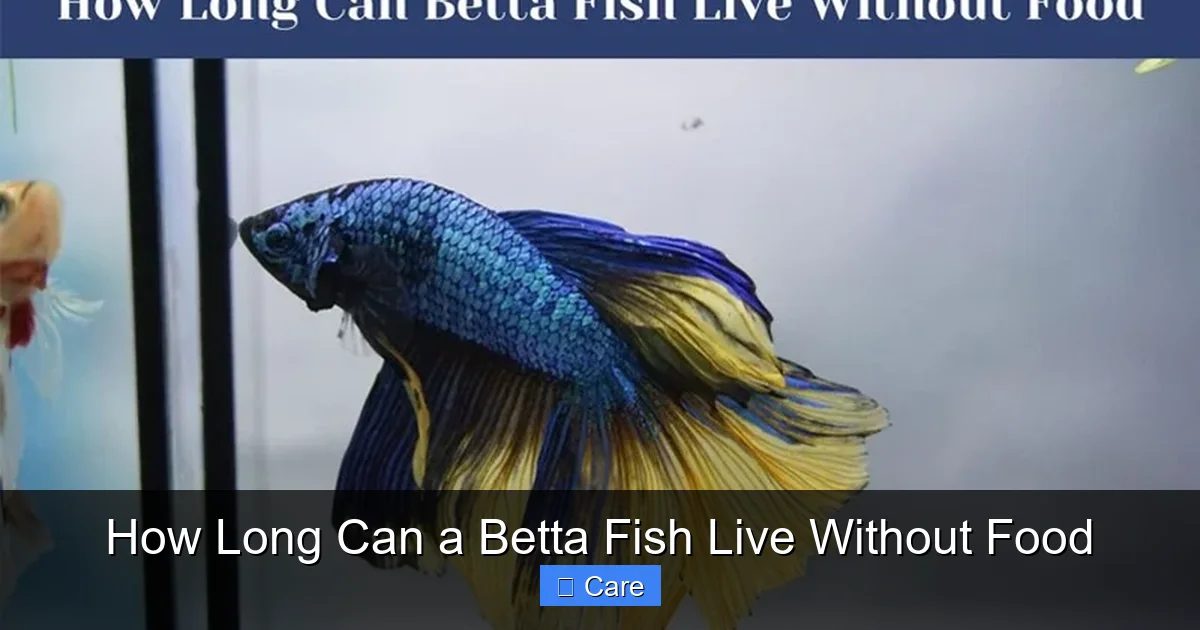
Visual guide about How Long Can a Betta Fish Live Without Food
Image source: fishtanksetups.com
Days 1-3: The “Okay” Fasting Period
This is generally considered a safe, stress-free fast for a healthy betta. Many experienced keepers intentionally fast their bettas for 1-2 days every 10-14 days to aid digestion, especially if they suspect constipation (a common issue from overfeeding). During this period, the fish uses its glycogen stores and may rest more. Water quality is the dominant factor in health. A clean, warm tank during this fast poses minimal risk. This is the window for a brief, unplanned absence.
Days 4-7: Entering the Danger Zone
By day 4, fat metabolism is in full swing. The betta will become noticeably less active, conserving every ounce of energy. You might see it resting more at the bottom or near the surface (to access air). Its vibrant colors may dull slightly as the body prioritizes core functions over pigment maintenance. The immune system, which requires consistent energy and nutrients, begins to falter. The fish is now living on borrowed time. Any pre-existing health issue, a minor water parameter fluctuation, or a sudden temperature drop can tip it into a full-blown illness that a well-fed betta could have fought off. This is the absolute maximum length for any responsible “vacation fast.”
Days 8-10: Severe Starvation and Organ Stress
At this stage, protein catabolism has almost certainly begun. The betta is literally consuming its own muscle and organ tissue to survive. Its body is wasting away. Fins may appear ragged not from rot, but from simple nutritional deficiency. Movement is labored. The fish is profoundly immunocompromised, a sitting duck for opportunistic infections like Columnaris or fungal infections. The liver and kidneys, working overtime to process the toxins from tissue breakdown, begin to fail. Recovery, if food is reintroduced, is difficult and often incomplete. Permanent damage is likely.
Days 10-14+: The Point of No Return
This is a death spiral. The betta is in a state of severe cachexia (wasting). It cannot maintain basic bodily functions. Breathing becomes strained. It may lose the ability to swim normally, drifting listlessly. Death from multi-organ failure is imminent. Even if you finally feed it at this point, its digestive system may have atrophied, and it may be too weak to eat. The damage is done. This is not a “survival story”; it’s a chronicle of suffering.
The Real Enemy: It’s Not Just the Lack of Food
Focusing solely on the calendar days without food misses the bigger picture. The condition of the water during the fast is arguably more important than the fast itself.
Visual guide about How Long Can a Betta Fish Live Without Food
Image source: fishtanksetups.com
The Ammonia Time Bomb
Every moment, your betta is excreting waste (ammonia) through its gills and skin. In a cycled, filtered tank, beneficial bacteria convert this toxic ammonia. But if you stop feeding, you stop adding new food waste to the system, which is good. However, the betta’s own metabolic waste continues. If you are not performing water changes, ammonia can still build up from the fish’s respiration and excretion, especially in an uncycled or small bowl. A starving, weakened fish is even more susceptible to ammonia poisoning. A clean, stable environment can support a longer, less damaging fast than a dirty one.
Temperature’s Role in Metabolism
Betras are tropical fish, requiring a consistent water temperature of 78-80°F (25.5-26.5°C). Their metabolism is directly tied to temperature. A betta kept at a chilly 72°F will have an even slower metabolism, potentially stretching the “survival” time but also being more prone to other diseases like dropsy. A betta in the optimal temperature range has a healthy, active metabolism that *needs* fuel. Letting it go without food while warm is a faster, more aggressive form of starvation. Never lower the temperature to “slow down” its hunger—this is cruel and immunosuppressive.
The Stress Factor
Starvation is a massive stressor. Chronic stress releases cortisol, which further suppresses the immune system. If your betta is already stressed by loud noises, aggressive tank mates (like certain snails or shrimp that might harass it), poor water quality, or a boring, barren tank, its ability to withstand a food shortage plummets. A stress-free, enriched environment provides a tiny buffer, but not a license to skip meals.
Practical Scenarios: What To Do Instead of “Waiting It Out”
Knowing the risks, let’s address real-life situations where you might be tempted to see how long your betta can last.
Visual guide about How Long Can a Betta Fish Live Without Food
Image source: report-e.com
The Weekend Getaway (3-4 Days)
For a healthy adult betta in a well-maintained, cycled tank, a 3-day weekend is generally the absolute limit of a safe, unplanned fast. Here’s the protocol: Do a 25-50% water change the day before you leave to ensure pristine conditions. Ensure the heater is functioning perfectly and the tank is away from direct sunlight or drafts. Do not add extra food before you leave, thinking it will last—it will only decay and foul the water. Upon your return, offer a small, easily digestible meal (like a few soaked daphnia or a crushed pellet). Monitor closely for any signs of constipation or bloating.
The Extended Vacation (1+ Weeks)
Never, under any circumstances, leave a betta alone for more than 4 days without a feeding plan. The “vacation block” or “weekend feeder” blocks sold in stores are often misunderstood. They are typically made of compressed food that can foul the water alarmingly quickly in a small betta tank, leading to dangerous ammonia spikes. They are not recommended for betta bowls or small tanks. Your best options are:
- An Automatic Fish Feeder: This is the gold standard. Invest in a reliable, battery-operated feeder. Program it to dispense 1-2 pellets once daily (or every other day). Test it extensively before your trip.
- A Trusted Friend or Pet Sitter: Give clear, written instructions: “Feed 3-4 pellets once daily. Do not overfeed. Check that the fish is moving and alert.” Show them how to do a quick water top-off if evaporation is high.
- A “Betta-Sitter” Service: Some professional pet sitters specialize in fish. This can be worth the cost for peace of mind.
Forgetting a Feeding (1-2 Days)
Relax. Your betta will be absolutely fine. In fact, it’s better to miss a feeding than to overfeed, which is a leading cause of betta death due to constipation, swim bladder disorder, and water pollution. Simply resume your normal feeding schedule the next day. Use this as a reminder to set a daily alarm or incorporate feeding into your morning routine.
Your Betta Isn’t Eating (Loss of Appetite)
This is a critical symptom, not a question of how long it can go without food. A betta refusing food for more than 2-3 days is a major red flag. The cause is almost always:
- Poor Water Quality: The #1 reason. Test for ammonia, nitrite, nitrate, and pH.
- Incorrect Temperature: Below 76°F, metabolism slows, and appetite vanishes.
- Stress: From tank mates, lighting, location, or recent changes.
- Illness: Internal parasites, dropsy, fin rot, or severe constipation.
- Boredom with Diet: Try a high-quality frozen food like daphnia or brine shrimp as an appetite stimulant.
Your focus must shift from “how long can it last” to “what is wrong that it won’t eat.” Address the root cause immediately.
Proper Feeding: The Antidote to Starvation Worries
The best way to never worry about your betta starving is to establish a perfect feeding routine. This is proactive care.
The “Less is More” Philosophy
Overfeeding is the single most common mistake. A betta’s stomach is roughly the size of its eye. A proper meal is 2-3 high-quality pellets or 3-4 bloodworms, once daily. Some keepers feed every other day, mimicking natural feast/famine cycles. You should see a slight bulge in the belly after feeding that disappears within 24 hours. Any leftover food must be immediately siphoned out.
Dietary Variety is Non-Negotiable
Pellets should be the staple (choose brands with whole fish or shrimp as the first ingredient), but they are not a complete diet. Supplement 2-3 times a week with:
- Frozen Foods: Daphnia (excellent for digestion), brine shrimp, mysis shrimp. Thaw in a dish of tank water first.
- Live Foods (Occasionally): Microworms or vinegar eels for fry/pickiness, but beware of introducing parasites.
- Blanched Vegetables: A tiny piece of pea (hulled) or zucchini for fiber, especially if constipation is an issue.
Variety ensures a broad spectrum of vitamins, minerals, and amino acids, building a robust immune system that can better handle minor stresses, including a brief, unintentional fast.
Feeding for Lifelong Health
Think of food as medicine. A nutrient-rich diet builds strong fins, brilliant colors, and a resilient body. A poor, monotonous diet leads to faded colors, frayed fins, and a fish that succumbs to the first hint of trouble. Your feeding schedule is your primary tool for disease prevention. Combine this with weekly 25% water changes, stable temperature, and a stimulating environment (plants, caves, a gentle filter flow), and you are providing the foundation for that 3-5 year lifespan.
Conclusion: Commitment Over Curiosity
So, how long can a betta fish live without food? The technical answer is up to two weeks. The ethical, responsible, and loving answer is: “It shouldn’t have to.” Your betta is a living commitment, not an experiment in endurance. Its ability to survive short scarcity is a fascinating evolutionary quirk, but it is our duty as caretakers to ensure that scarcity never happens due to our neglect. We provide consistent, high-quality nutrition not just to fill its belly, but to fuel its immune system, maintain its magnificent colors, and support its active, curious personality. That vibrant flash of blue or red, that curious watchfulness as you approach the tank, that gentle flare at its reflection—these are the rewards of diligent care. Let the “2-week survival fact” serve only as a stark reminder of how quickly things can go wrong. Instead, let your focus be on the daily ritual: the measured pinch of food, the observation of a healthy appetite, the satisfaction of a thriving life in your care. That is the true measure of a betta keeper.
Frequently Asked Questions
Can I leave my betta fish alone for a week if I feed it before I go?
No. A betta should not be left alone for a full week. Even with a heavy pre-vacation feeding, the food will pollute the water within days, and the fish will still be without fresh nutrients after 2-3 days. You must arrange for an automatic feeder or a pet sitter for any trip longer than 3-4 days.
Is it okay to fast my betta fish once a week for its health?
Yes, a controlled 24-hour fast once a week or every other week is a common and beneficial practice for many bettas. It gives their digestive system a rest and can help prevent constipation. However, this should be part of a consistent routine with high-quality feeding on other days, not a substitute for regular meals.
My betta isn’t eating. How long can it go without food before I should be worried?
A betta refusing food for more than 2-3 days is a definite cause for concern and investigation. The priority is not how long it can starve, but diagnosing why it won’t eat. Immediately test your water quality and temperature. Check for signs of illness (clamped fins, spots, bloating). Loss of appetite is a symptom, not a condition in itself.
Do betta fish need to be fed every day?
Healthy adult bettas do well with one small meal per day. Many experienced keepers successfully feed every other day, which more closely mimics a natural feeding pattern and reduces the risk of overfeeding and constipation. The key is consistency and portion control, not necessarily daily feeding.
What are the first physical signs of starvation in a betta?
Early signs include reduced activity, resting more than usual, and a slightly thinner, less “filled” body profile. As starvation progresses, you’ll see significant muscle wasting (a sunken appearance behind the head), dulled colors, ragged fins from nutrient deficiency, and extreme lethargy. The fish will become cursorily thin and may have difficulty swimming.
Can poor water quality mimic the effects of starvation?
Absolutely. Poor water quality (high ammonia/nitrite) causes immense stress, suppresses the immune system, and can lead to a loss of appetite, effectively causing a starvation-like state. A betta in bad water will weaken and die much faster than one in pristine water that is simply not being fed. Always prioritize water quality above all else.