How Many Betta Fish Fin Types
There are over 12 recognized betta fish fin types, each with unique shapes and patterns that make them stand out. From the elegant veil tail to the dramatic halfmoon, understanding these fin types helps you choose the right fish and provide better care. This guide breaks down every major betta fish fin type in simple, easy-to-understand terms.
Betta fish are some of the most beautiful creatures you can keep in a home aquarium. Their flowing fins and vibrant colors make them stand out from other fish. But did you know there are many different betta fish fin types? Each type has its own unique shape, size, and style. In this guide, we will walk you through every major fin type you will encounter.
Whether you are a beginner or a seasoned hobbyist, understanding betta fish fin types helps you appreciate these fish even more. It also helps you provide better care. Long fins need different tank setups than short fins. Some fin types are more delicate and prone to damage. By the end of this article, you will know exactly what makes each type special.
We will cover everything from the most common fin types to the rarer ones that breeders work hard to develop. You will learn how to identify your fish, what to look for when choosing a new betta, and how to keep those fins healthy and vibrant. Let us dive right in.
Key Takeaways
- There are at least 12 distinct betta fish fin types recognized by breeders and fish enthusiasts worldwide.
- Each fin type has unique characteristics like tail shape, fin length, and ray branching that set it apart.
- Plakat and veiltail are the most common fin types found in pet stores and home aquariums.
- Fin health directly affects appearance, so proper tank care and nutrition are essential for maintaining beautiful fins.
- Some fin types are more prone to damage than others, especially long-finned varieties like the halfmoon.
- Identifying your betta’s fin type is easier than most people think once you know what to look for.
- Understanding fin genetics helps breeders produce healthy and stunning fish with desirable traits.
📑 Table of Contents
What Are Betta Fish Fin Types?
Betta fish fin types refer to the different shapes and structures of fins that exist within the species. Betta fish, also known as Siamese fighting fish, have been selectively bred for centuries. Breeders focused on specific traits like fin length, tail shape, and ray branching. Over time, this selective breeding produced the wide variety of fin types we see today.
Each fin type has a distinct genetic blueprint. This means the traits are passed down from parent fish to their offspring. Some fin types are dominant, while others are recessive. Understanding this helps breeders plan their pairing strategies. It also helps hobbyists identify what they have in their tanks.
The main categories of betta fish fin types are based on tail shape and fin length. Within each category, there can be further variations. For example, the crown tail has different levels of webbing reduction. The halfmoon has a specific spread angle requirement. These details matter to breeders and show enthusiasts who compete in fish shows.
How Many Betta Fish Fin Types Exist?
So how many betta fish fin types are there exactly? The answer depends on who you ask. Official breed standards recognize around 12 to 15 distinct types. However, if you include all the sub-variants and crossbreeds, the number can go much higher. For the purpose of this guide, we will focus on the most widely recognized and popular types.
Here is a quick overview of the major categories:
- Veil Tail – The most common and classic type
- Crowntail – Known for its spiky, reduced webbing
- Halfmoon – Famous for its perfect 180-degree tail spread
- Plakat – The short-finned, wild-type variety
- Double Tail – Features a split caudal fin
- Rosetail – Has heavily branched rays creating a rose-like shape
- Combtail – A mix between crowntail and other types
- Delta Tail – Triangle-shaped tail that does not reach 180 degrees
- Super Delta – A wider delta that approaches 180 degrees
- Elephant Ear – Also called Dumbo Ear, with large pectoral fins
- Spade Tail – Tail tapers to a point like a spade
- Halfmoon Plakat – Combines the short fins of plakat with the halfmoon spread
Each of these types has its own charm and appeal. Some are easier to care for than others. Let us explore each one in detail.
Veil Tail
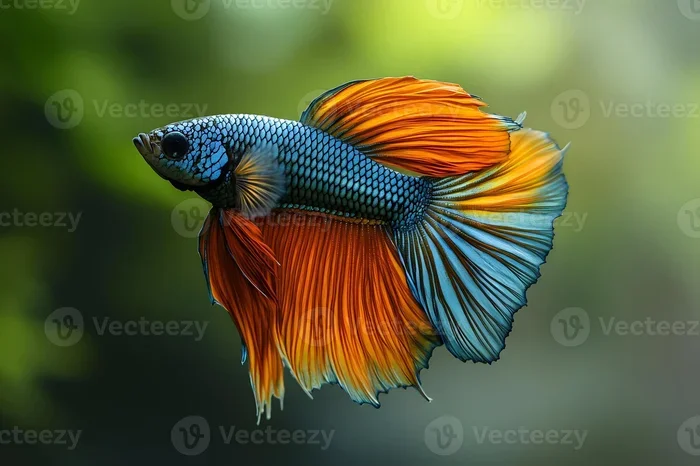
The veil tail is the most recognizable and widely available betta fish fin type. You will find veil tails in almost every pet store. The tail fin hangs down like a beautiful curtain or veil, which is how it got its name. The anal and dorsal fins are also long and flowing.
Veil tails are hardy and beginner-friendly. Their long fins do require some extra attention to tank setup. Sharp decorations can tear delicate fins. However, they are generally easy to keep healthy. This is the fin type most people picture when they think of a betta fish.
Crowntail
The crowntail is one of the most popular betta fish fin types among experienced hobbyists. The name comes from the spiky appearance of the tail fins. The webbing between the rays is significantly reduced, making each ray look like a crown point.
Crowntails come in many colors and patterns. The reduced webbing gives them a unique, dramatic look. They are slightly hardier than other long-finned varieties because the fins are not as heavy. When choosing a crowntail, look for even ray branching and vibrant coloration.
Halfmoon
The halfmoon betta is famous for its spectacular tail spread. When the tail is fully fanned out, it forms a perfect semicircle of 180 degrees. This makes them look absolutely stunning in a well-planted tank.
Halfmoons require more careful tank management. Their large fins can make swimming slightly more difficult. They are also more prone to fin damage. If you are interested in this type, make sure your tank has smooth decorations and gentle filtration. A sponge filter is ideal for halfmoon bettas. These fish are often the stars of local fish shows because of their dramatic appearance.
Plakat
The plakat fin type is the closest to wild bettas. They have short fins that are similar to the original Siamese fighting fish. Plakats are energetic swimmers and very active compared to their long-finned cousins.
Many people love plakats because they are hardy and less prone to fin problems. Their short fins do not snag on decorations as easily. Plakats also have a more natural, streamlined look. Some breeders have developed fancy plakat varieties with vibrant colors and patterns. If you want a betta that looks wild but still has beautiful coloring, the plakat is a great choice.
Double Tail
The double tail is a fascinating betta fish fin type where the caudal fin is split into two distinct lobes. This gives the fish a unique and eye-catching appearance. Double tails often have a wider body to support their genetic makeup.
Caring for a double tail requires extra attention to water quality. Their split tail can sometimes trap waste more easily. Regular water changes are essential. Double tails are also prone to swim bladder issues because of their body shape. Despite these challenges, they are beloved by many hobbyists for their distinctive look.
Rosetail and Super Delta
The rosetail is a heavily branched variety where the fin rays split multiple times, creating a ruffled, rose-like appearance. These fish are absolutely breathtaking but require expert care. Their dense fins can restrict movement and make swimming difficult.
The super delta is a variation of the delta tail that spreads close to 180 degrees but does not quite reach the perfect semicircle of a halfmoon. Super deltas offer a nice balance between the dramatic halfmoon and the narrower delta shape. Both of these types are popular among breeders who appreciate their unique fin structures.
How to Identify Your Betta Fish Fin Type
Identifying your betta fish fin type is easier than you might think. Start by looking at the tail fin shape. Is it long and flowing like a veil? Is it spiky like a crowntail? Does it spread into a perfect half-circle?
Next, check the fin length. Short fins usually mean a plakat or double tail variant. Long, flowing fins point to veil tail, halfmoon, or rosetail. Also look at the pectoral fins. If they are unusually large and round, your fish might be an elephant ear or dumbo ear variety.
Here are some quick tips for identification:
- Look at the tail spread angle – Does it reach 180 degrees or less?
- Check the webbing – Is it fully present or significantly reduced?
- Observe fin length – Short fins suggest plakat, long fins suggest veiltail or halfmoon
- Examine the tail shape – Is it pointed, rounded, split, or spiky?
- Watch how the fish swims – Long fins may cause slower, more graceful movement
Once you know your fish’s fin type, you can tailor its care accordingly. This is especially important for long-finned varieties that need extra protection from tank hazards.
What Causes Different Fin Types in Betta Fish?
The different betta fish fin types exist because of selective breeding over many generations. In the wild, bettas have relatively short fins. This helps them swim efficiently and navigate their natural habitats in Southeast Asian rice paddies and slow-moving streams.
Breeders in Thailand and other countries started selecting fish with specific fin traits. They chose fish with longer fins, wider spreads, or unique shapes. Over decades, these traits became more pronounced. Today, we have dozens of distinct fin types that barely resemble their wild ancestors.
Genetics play a huge role in determining fin type. Some traits are dominant, meaning they appear when only one parent carries the gene. Other traits are recessive and require both parents to carry the gene. This is why responsible breeders carefully plan their pairings. They want to produce healthy fish with the desired fin characteristics.
It is also worth noting that fin type does not affect a betta fish’s personality or general care needs. All bettas need clean water, proper diet, and a suitable tank environment. However, fin type does influence the specific setup requirements. For example, a plakat needs less decoration padding than a halfmoon.
Caring for Different Betta Fish Fin Types
While all bettas share basic care requirements, different betta fish fin types have slightly different needs. Understanding these differences helps you provide the best possible environment for your fish.
For long-finned varieties like veiltails and halfmoons, tank setup is critical. Use smooth gravel or sand as substrate. Avoid sharp plastic decorations or rough rocks that can tear delicate fins. A sponge filter is much safer than a hang-on-back filter with strong intake tubes. Bettas are also sensitive to fin rot, which can damage their beautiful fins. Keeping water parameters stable helps prevent fin-related diseases.
Short-finned types like plakats are more forgiving. They can handle slightly stronger water flow and are less likely to snag fins on decorations. However, they still need clean water and a well-maintained tank. All bettas benefit from regular water changes and a balanced diet.
If your betta does experience fin damage, the good news is that most fin types can recover. Bettas can regrow fins over time with proper care and clean water. For more information on helping your betta recover from fin issues, check out our guide on betta fish fin loss treatment.
Feeding also plays a role in fin health. A diet rich in protein and nutrients supports fin growth and overall vitality. Offer high-quality pellets as the staple, supplemented with frozen or live foods like brine shrimp and bloodworms. For feeding guidelines, visit our page on how many times a day to feed a betta fish.
Common Fin Problems and How to Spot Them
No matter what betta fish fin type you have, fin problems can occur. The most common issues include fin rot, fin tearing, and fin curling. Knowing the signs early helps you treat problems quickly and effectively.
Fin rot is a bacterial or fungal infection that causes fins to look ragged, discolored, or frayed. It often starts at the edges and works inward. Poor water quality is the most common cause. If you notice signs of fin rot, act quickly. You can learn how to address this condition in our article on how to fix fin rot on betta fish.
Fin tearing usually happens from physical damage. Sharp decorations, strong filter intakes, or aggressive tankmates can cause tears. Most tears heal on their own in clean water. However, repeated tearing can lead to infection.
Fin curling can be a sign of poor water parameters or genetic issues. Some curling is normal in certain fin types, especially as fish age. If the curling is sudden or severe, test your water immediately and make adjustments as needed.
For more details on preventing and treating fin damage, read our piece on whether betta fish fins grow back after fin rot. And if you are wondering whether a betta can lose part of its tail and survive, check out can my betta fish lose some of its tail fin.
Final Thoughts
Understanding betta fish fin types adds a whole new layer of appreciation for these stunning fish. From the classic veiltail to the dramatic halfmoon, each type has its own beauty and charm. Whether you are a hobbyist, a breeder, or just someone who loves aquariums, knowing your fin types makes the experience more rewarding.
Remember that every fin type deserves proper care and attention. Provide clean water, a safe tank environment, and a nutritious diet. Your betta will reward you with vibrant colors and healthy, flowing fins. The world of betta fish is incredibly diverse, and exploring all the different fin types is one of the most enjoyable parts of keeping these magnificent fish.
Take the time to observe your fish closely. Learn to identify its specific fin type and cater to its needs. With the right knowledge and a little effort, you can keep happy, healthy bettas that bring joy to your home for years to come.
Frequently Asked Questions
How many betta fish fin types are there in total?
There are at least 12 widely recognized betta fish fin types, with many more sub-variants and crossbreeds. The exact number depends on the breed standards used by different organizations and breeders. The 12 main types cover the vast majority of bettas you will encounter in pet stores and breeding programs.
Which betta fish fin type is the easiest to care for?
The plakat and veiltail are generally the easiest fin types to care for. Plakats have short fins that resist damage, and veiltails are hardy and adaptable. Both types tolerate minor fluctuations in water parameters better than more delicate varieties like the halfmoon or rosetail.
Can different betta fish fin types be kept together?
No, bettas should generally be kept alone in separate tanks. Male bettas are highly territorial and will fight, regardless of fin type. Female bettas can sometimes be kept in small groups called sororities, but this requires careful planning and adequate space.
Do betta fish fin types affect their lifespan?
Fin type does not directly affect lifespan. All bettas typically live 3 to 5 years with proper care. However, some long-finned varieties may be slightly more susceptible to stress and disease if their tank environment is not well maintained.
Are there rare betta fish fin types that I should know about?
Yes, several rare types exist, including the double tail crown tail, the crown halfmoon, and the rosetail plakat. These are often bred by specialty breeders and can be quite expensive. They are prized for their unique combinations of fin traits and color patterns.
What is the most expensive betta fish fin type?
The halfmoon and rosetail varieties, especially in rare color combinations, tend to be the most expensive. Show-quality specimens with perfect fin symmetry and vivid colors can command very high prices among collectors and breeders. Plakats are generally the most affordable option in most pet stores.