Do Betta Fish Need Filtration
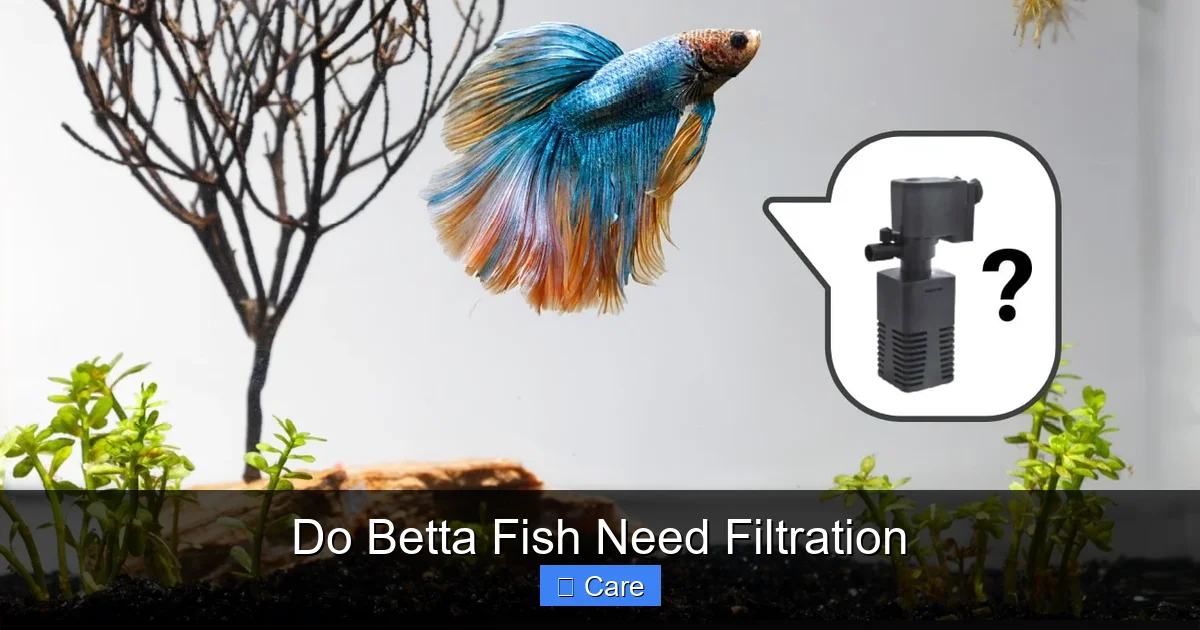
Contrary to popular belief, bettas absolutely require proper filtration to thrive long-term. A filter mimics their natural habitat, removes toxins, and stabilizes water conditions—making it a non-negotiable component of responsible betta care. Without one, even in a heated tank, your betta faces chronic stress and health risks.
Key Takeaways
- Filtration is essential, not optional: A filter is a fundamental piece of equipment for a healthy betta tank, directly impacting longevity and well-being.
- It detoxifies lethal ammonia: Beneficial bacteria in the filter convert toxic fish waste (ammonia) into less harmful substances, preventing poisoning.
- It provides crucial oxygenation: Water movement at the surface promotes gas exchange, adding vital oxygen and removing carbon dioxide.
- It stabilizes the aquatic environment: Filters prevent drastic water chemistry swings and help maintain a consistent temperature, reducing stress.
- Gentle flow is critical: Bettas are weak swimmers with large fins; choose a filter with an adjustable, low-flow setting or use modifications.
- Proper maintenance is part of the deal: Cleaning must be done correctly (rinse in old tank water, not tap) to preserve beneficial bacteria colonies.
- Plants complement but do not replace filtration: Live plants aid in nutrient uptake but cannot handle the biological load or oxygenate water like a mechanical filter.
📑 Table of Contents
- The Betta’s Natural Habitat: More Than Just a Puddle
- Why Filtration is Non-Negotiable for Betta Health
- Types of Filters: Finding the Perfect Match for Your Betta
- Setting Up a Betta-Safe Filtration System
- Maintenance Matters: Keeping Your Filter Effective
- When Filtration Isn’t Enough: Complementary Care Practices
- Conclusion: Filtration is Foundational Care
The Betta’s Natural Habitat: More Than Just a Puddle
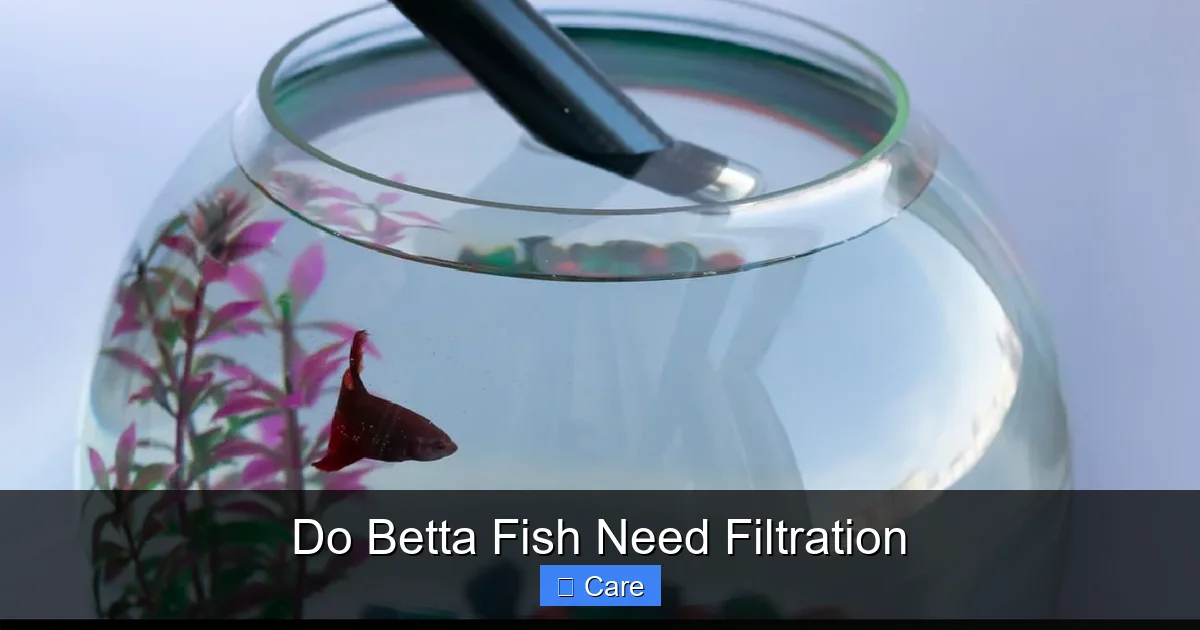
Let’s start by busting a major myth right out of the gate. The image of a betta fish—also known as a Siamese fighting fish—happily living in a tiny, stagnant vase or a small, unfiltered bowl is one of the most pervasive and harmful misconceptions in the aquarium hobby. This idea likely stems from two things: their historical sale in small cups at pet stores and their unique ability to breathe atmospheric air via a labyrinth organ. The logic goes, “They can breathe air, so they don’t need clean water.” This is dangerously wrong. To understand why filtration is absolutely critical, we must first look at where bettas come from.
Bettas are native to the shallow, slow-moving waters of Thailand, Cambodia, Vietnam, and parts of Malaysia. Think of rice paddies, sluggish streams, and murky floodplain ponds. These are not sterile, crystal-clear potholes. They are complex, biologically active ecosystems. They are filled with decaying plant matter, microorganisms, beneficial bacteria, and, importantly, a natural water turnover. Rain fills them, plants filter them, and water slowly seeps or evaporates. The key is that this environment is cycled. Waste products from fish and other animals are broken down by bacteria and absorbed by plants. There is a constant, natural process of filtration happening on a large scale. A tiny, isolated bowl has zero of this natural capacity. It is a sealed, finite system where toxins accumulate rapidly.
The labyrinth organ is a brilliant evolutionary adaptation that allows bettas to survive in low-oxygen, stagnant water by gulping air from the surface. It is a survival mechanism, not a sign that they prefer or thrive in poor conditions. In the wild, they use this ability to endure temporary droughts when water levels drop and oxygen depletes. In your home aquarium, that same organ means they are forced to constantly swim to the surface to breathe, a stressful and energy-draining behavior if the water is poor. Providing clean, oxygen-rich water means they don’t have to rely on that desperate air-gasping behavior as often. So, the question isn’t “Can they technically survive without a filter?” but rather, “Should we subject them to a chronically toxic environment when we have the means to prevent it?” The answer is a resounding no.
Why Filtration is Non-Negotiable for Betta Health
Now that we’ve established that a betta’s natural home is a filtered ecosystem, let’s break down the concrete, scientific reasons why a filter in your aquarium is not a luxury—it’s a cornerstone of life support. A filter does three primary jobs: mechanical, chemical, and biological filtration. For a betta tank, biological filtration is the most critical, but all three work together to create a stable, healthy home.
Visual guide about Do Betta Fish Need Filtration
Image source: bettacarefishguide.com
The Invisible Killer: Ammonia Toxicity 101
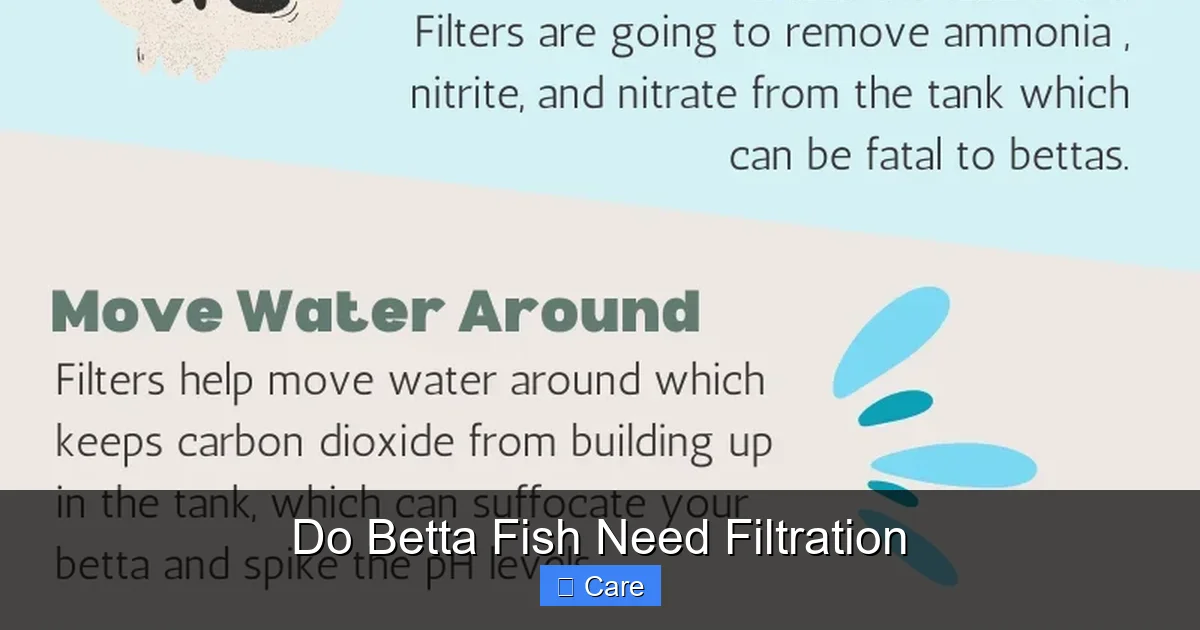
Every time your betta eats, breathes, or excretes waste, it releases ammonia (NH3/NH4+) into the water. Ammonia is a silent, colorless, and extremely toxic poison. Even at low parts per million (ppm), it burns a fish’s gills, damages internal organs, suppresses the immune system, and causes immense stress. In an unfiltered, small volume of water, ammonia levels can spike to lethal concentrations within 24-48 hours after a feeding. This is the primary reason “bowl bettas” have such short, miserable lifespans. They are essentially living in their own concentrated toilet.
This is where biological filtration, powered by beneficial bacteria, becomes your betta’s best friend. These bacteria colonies (primarily Nitrosomonas and Nitrobacter) colonize the filter media (sponges, ceramic rings, bio-balls). They perform the nitrogen cycle: first converting toxic ammonia into nitrite (still very toxic), and then another bacteria colony converts nitrite into nitrate (much less toxic). Nitrate can then be managed through regular water changes. Without this bacterial process occurring in a filter, ammonia and nitrite will accumulate unchecked. You cannot see it, taste it, or smell it until it’s too late and your betta is showing symptoms like clamped fins, lethargy, red inflamed gills, or gasping at the surface.
The Oxygen Connection
While bettas can breathe air, they still absorb oxygen through their gills from the water. Stagnant water has very little dissolved oxygen (DO). A filter creates water movement, which dramatically increases the surface area of the water in contact with the air. This gas exchange is vital: oxygen enters the water, and carbon dioxide (the fish’s exhaled waste gas) is released. Low DO levels force your betta to rely more heavily on its labyrinth organ, which is energetically costly and a clear sign of distress. Proper filtration ensures your betta can breathe easily through its gills, reducing stress and promoting normal activity. Furthermore, the oxygen is also crucial for the beneficial bacteria in your filter to thrive and perform their detoxifying work efficiently. It’s a symbiotic relationship.
Water Stability and Stress Reduction
Fish are creatures of habit. In the wild, the parameters of their environment—temperature, pH, hardness—change very slowly. In a tiny, unfiltered bowl, a single cup of tap water (with its different chemistry) or a piece of decaying food can cause a massive, instant swing. These fluctuations are a primary source of chronic stress for fish. A stressed fish has a weakened immune system, making it susceptible to diseases like fin rot, ich, and velvet.
A properly cycled filter helps create a stable ecosystem. The massive surface area of the filter media houses bacteria that act as a buffer, consuming sudden surges of ammonia before they can spike. The water movement also helps to distribute heat evenly from your heater, preventing hot and cold spots. It prevents a stagnant layer of film on the surface, which can impede gas exchange. Ultimately, a filtered tank provides a consistent, predictable environment. Your betta can relax, display its natural behaviors (flaring, exploring, building bubble nests), and live a long, healthy life.
Types of Filters: Finding the Perfect Match for Your Betta
Not all filters are created equal, and for a betta, the choice is crucial. The wrong filter—typically one with a strong current—can be as harmful as no filter at all. Bettas have long, flowing fins and are not powerful swimmers. A strong current exhausts them, makes it difficult to rest, and can even damage their delicate fins. The goal is to find a filter that provides excellent biological filtration with a gentle, adjustable flow. Here are the top contenders, ranked from most recommended to situational.
Visual guide about Do Betta Fish Need Filtration
Image source: buildyouraquarium.com
Sponge Filters: The Gold Standard
For a single betta in a tank of 10 gallons or less, a sponge filter is almost always the ideal choice. It consists of an air pump that pushes air through tubing into a porous sponge. The rising bubbles create a gentle current and draw water through the sponge’s pores. The sponge itself is a massive, perfect home for beneficial bacteria.
- Pros: Extremely gentle flow (often no current at all at the surface). Inexpensive, easy to clean (just squeeze the sponge in old tank water), and provides superb biological filtration. The air bubbles also add surface agitation for oxygenation. Safe for fry and shrimp if you ever want a community tank.
- Cons: Offers no mechanical filtration for large debris (though the sponge catches some). Requires a separate air pump, which adds a small amount of noise. Aesthetics—the sponge and airline are visible.
- Tip: Use a smaller, low-profile sponge or a double-suction cup sponge to keep it tidy in the tank. You can also place it behind decor to hide it.
Hang-On-Back (HOB) Filters with Adjustable Flow
HOB filters sit on the back rim of the tank and hang over the edge. They are powerful and offer excellent mechanical (sponges/foam), chemical (carbon), and biological (bio-media) filtration in one unit. The key for bettas is finding a model with a very low, adjustable flow setting.
- Pros: Good for slightly larger betta setups (10-20 gallons). Easy to maintain with cartridge-style media. Provides strong surface agitation. Can be hidden well with plants.
- Cons: Even on low settings, the outflow can be too strong for some bettas. The water return can create a splashing noise. Requires careful positioning to avoid a direct current hitting the fish.
- Tip: Always deflect the flow! Use a pre-filter sponge (a small cylindrical sponge that fits over the intake), direct the outflow nozzle toward the tank wall or a plant, or create a “waterfall” barrier with a piece of plastic craft mesh or live plants to diffuse the current.
Internal Power Filters (Submersible)
These filters sit inside the tank, usually near the substrate. They are compact and often come with adjustable nozzles.
- Pros: No spillover risk like HOBs. Often quieter. Good for tanks where a HOB isn’t an option.
- Cons: Can take up valuable swimming space. The intake is often very close to the outflow, creating a powerful jet that must be carefully aimed away from the betta. Less surface agitation than HOBs or sponge filters.
- Tip: Choose a model with a large, round intake to prevent a betta’s fins from being sucked in. Always use the lowest setting and point the outflow toward the tank’s long wall or a large decoration.
What to AVOID:
- Undergravel Filters: Create strong upward currents from the lift tubes, which are terrible for bettas. Also difficult to clean properly and can become clogged with waste trapped under the plate.
- Canister Filters: Generally overkill for a single betta and expensive. Their return flow is often very strong and requires significant deflecting.
- “Betta-specific” mini filters: Many of these are gimmicks with insufficient media capacity and woefully inadequate flow control. They are often more marketing than substance.
Setting Up a Betta-Safe Filtration System
Choosing the filter is step one. Installing and preparing it correctly is just as important. A new filter is a sterile piece of plastic. It has no beneficial bacteria. If you add it to your tank and put your betta in immediately, the filter will not protect your fish from its own waste. You must cycle the filter.
Visual guide about Do Betta Fish Need Filtration
Image source: fishkeepedia.com
The Nitrogen Cycle: Your Filter’s Training Period
Cycling is the process of establishing a robust colony of beneficial bacteria *inside your filter media*. You are creating the living, biological component that will detoxify your tank. This process takes 4-6 weeks. Here’s the simplified version:
- Set up your fully equipped tank: Add your chosen filter, heater (bettas need 78-80°F/25.5-26.5°C), substrate, and any decorations. Fill with dechlorinated water.
- Add an ammonia source: This can be a few drops of pure ammonia, a piece of shrimp/food (which will rot), or, most humanely, by adding a small number of “feeder” fish like a few tiny white clouds (though this isn’t necessary). The goal is to get a measurable ammonia reading (2-4 ppm).
- Test and wait: Use a liquid test kit (like API Freshwater Master Test Kit). Over the next few weeks, you will see: Ammonia peaks and then drops as bacteria consume it. Then Nitrite will spike as the second bacteria colony grows. Finally, Nitrate will appear and rise, while Ammonia and Nitrite drop to zero. Once you can add 2-4 ppm of ammonia and have it convert to nitrate within 24 hours with zero ammonia or nitrite reading, your tank is cycled.
Crucially: During the cycle, do not change the filter media. Do not rinse it in tap water (which kills bacteria). If the flow reduces, swish it gently in a bucket of old tank water during a water change. Once cycled, your filter is now a living bioreactor. You can now safely add your betta.
Flow Modification: A Must-Do Step
Even with a “low-flow” filter, you will likely need to modify the output. The goal is to eliminate any visible current in the main body of the tank. Your betta should be able to rest in one spot without being pushed around.
- Pre-Filter Sponge: Slip a small, porous sponge over the filter intake. This reduces suction and protects fins. It also adds more surface area for bacteria.
- Deflect the Output: Aim the nozzle directly at the tank’s glass wall. The water will flow down the glass with minimal disturbance. Alternatively, aim it into a dense thicket of live or silk plants.
- Create a Barrier: Place a piece of plastic craft mesh, a decorative rock, or a cluster of plants between the filter output and the main swimming area.
- Use a Sponge Filter: This is often the simplest solution, as its flow is inherently gentle and diffuse.
Observe your betta. If it is constantly being pushed, hiding, or has torn fin edges, your flow is too high. Adjust until it can swim calmly and rest at mid-level or the surface without effort.
Maintenance Matters: Keeping Your Filter Effective
A filter is not a “set it and forget it” device. Proper maintenance is what keeps the beneficial bacteria alive and the filter functioning optimally. The biggest mistake new owners make is cleaning the filter too aggressively or with the wrong water.
What to Do (and Never Do) During Cleaning
NEVER: Rinse your filter media (sponge, ceramic rings, bio-balls) under tap water. Chlorine and chloramine in tap water will instantly kill the beneficial bacteria you’ve worked hard to cultivate. Also, don’t replace all your media at once. This is like performing open-heart surgery on your tank’s life support system—you’ll crash the cycle.
DO:
- Clean your filter every 4-6 weeks, or when you notice a significant reduction in flow.
- Use old tank water (from a water change) to gently squeeze and rinse sponge media. Swish ceramic bio-media in the bucket of old tank water to remove large debris.
- Only replace one piece of media at a time, and only if it’s physically disintegrating. Replace it with new media that has been rinsed in old tank water, and ideally, seed it by squeezing some old sponge gunk onto it to transfer bacteria.
- Clean the filter intake tube and impeller (the little propeller inside) if they get clogged with algae or debris. Again, use a soft brush and old tank water.
- Reassemble and restart the filter. You may need to prime it (get the water moving through it) by pouring some tank water into it.
Remember, the brown, gunk-filled sponge is good. That’s your bacteria colony. You want to remove the *debris* (fish poop, uneaten food) but preserve the *biofilm*.
Integrating Water Changes
Filtration is not a substitute for water changes. It handles the conversion of ammonia/nitrite, but nitrate (the end product) still accumulates. High nitrate stresses fish and promotes algae growth. In a betta tank, you should perform a 25-50% water change weekly. Use a gravel vacuum to remove waste from the substrate. This dilutes nitrate, removes other dissolved organics, and replenishes trace minerals. Always treat new water with a dechlorinator and match the temperature closely to the tank.
When Filtration Isn’t Enough: Complementary Care Practices
While a filter is the backbone of your tank’s ecosystem, it works best when supported by other good practices. Think of it as a team: the filter is the cleanup crew, but you are the manager.
The Substrate and Decor: More Than Just Pretty
Use a substrate that won’t harm your betta. Smooth gravel or sand is ideal. Avoid sharp edges that can tear their delicate fins. Include plenty of hiding spots—silk plants, live plants (like Anubias, Java Fern, Marimo moss balls), and caves. These reduce stress by giving your betta places to explore and retreat to. Live plants are fantastic supplements; they absorb nitrates and other nutrients, provide additional surface area for bacteria, and help oxygenate the water. But they are a supplement, not a replacement for a filter. A heavily planted tank with a betta and no filter is still a risky experiment in a small volume.
Feeding and Stocking: Less is More
Overfeeding is the #1 cause of filter overload and water quality crashes. Bettas have stomachs the size of their eye. Feed them once or twice a day, only what they can consume in 2-3 minutes (usually 2-3 pellets). Remove any uneaten food immediately. A bloated betta is a constipated betta, and decaying food spikes ammonia. Also, respect the bioload. A single betta in a 5-gallon tank is a different proposition than a betta in a 2.5-gallon “bowl.” The smaller the water volume, the faster toxins accumulate, and the more critical a powerful, appropriate filter becomes. Always aim for a minimum of 5 gallons for a single betta. It gives a more stable environment and makes filtration much more effective.
Conclusion: Filtration is Foundational Care
So, do betta fish need filtration? The science, their natural history, and basic aquatic chemistry all give a definitive, evidence-based answer: Yes, absolutely. Providing a filter is not about spoiling a fish that can “survive” in a cup. It’s about providing the basic, minimum standard of care that allows a creature to thrive, not just endure. A filter mimics the essential processes of their wild home: it removes lethal toxins like ammonia, it oxygenates the water, and it creates the stable, clean environment that supports a strong immune system and natural behaviors. Choosing the right filter—a gentle sponge or a carefully deflected HOB—and maintaining it properly through regular, bacteria-safe cleaning and weekly water changes, is the single most important thing you can do for your betta’s long-term health and happiness. It transforms your aquarium from a temporary holding cell into a thriving, sustainable ecosystem. Your betta, with its vibrant colors, active personality, and years of life ahead, will thank you for it.
Frequently Asked Questions
Can a betta fish truly survive without a filter?
Technically, a betta can survive for a period in an unfiltered container, but it will be under constant stress from accumulating ammonia and poor oxygen levels. This “survival” is not thriving and leads to a severely shortened lifespan, often just 1-2 years instead of 5-7+. A filter is essential for long-term health.
What is the absolute best type of filter for a betta?
A sponge filter is widely considered the best and safest option for most single betta setups (5-10 gallons). It provides superb biological filtration with a completely gentle flow, poses no risk of fin damage, and is easy to maintain. For larger tanks, a Hang-On-Back (HOB) filter with a strong adjustable flow setting and proper deflection is an excellent alternative.
How strong should the water flow from my betta’s filter be?
The flow should be so gentle that there is no visible current in the main body of the tank. Your betta should be able to swim in any direction and remain stationary without being pushed. You should not see plants or decorations swaying. If your betta is constantly being buffeted or hiding behind objects, the flow is too strong and must be modified with a pre-filter sponge, by deflecting the output, or by switching filter types.
How often and how should I clean my betta’s filter?
Clean your filter every 4-6 weeks, or when you notice a drop in water flow. Never use tap water, as it kills beneficial bacteria. Instead, dump some old tank water from a water change into a bucket and gently squeeze/rinse the sponge media in it. Swish ceramic bio-media in the same bucket. Only clean what’s necessary to remove debris; the brown gunk on the sponge is your beneficial bacteria. Never replace all media at once.
If I have a lot of live plants, can I skip the filter?
No. While live plants are a fantastic complement that help absorb nitrates, they cannot handle the biological load of a fish’s ammonia output on their own, especially in a small tank. They also do not provide the consistent surface agitation for oxygenation that a filter does. Plants + filter = optimal setup. Plants alone = an uncycled, unstable system that will eventually poison your betta.
Is a filter necessary for a small “nano” betta tank (under 5 gallons)?
Yes, and it’s arguably more critical. Smaller water volumes experience dramatic, rapid swings in water chemistry. A filter provides essential biological filtration to process ammonia and stabilize the environment, making a small tank far safer. In a nano tank, a very small, low-flow sponge filter is the only responsible choice to maintain water quality and the betta’s health.