Can You Put Female and Male Betta Fish Together

Putting female and male betta fish together is generally unsafe and strongly discouraged outside of controlled breeding scenarios. Their natural aggression, especially in males, leads to violent fights, severe injury, or death. While temporary pairing for spawning is possible, it requires expert supervision and immediate separation afterward. For their long-term health and safety, bettas are best kept as solitary fish in appropriately sized, decorated tanks.
Key Takeaways
- Extreme Aggression is the Norm: Male and female bettas are both territorial and will likely fight, causing fin nipping, injuries, or death.
- Breeding is the Only Exception: Pairing is only viable under strict, monitored conditions for spawning, after which they must be separated immediately.
- Females are Not “Nice”: While less aggressive than males, female bettas can still be territorial and may fight each other or a male.
- Tank Size Does Not Solve the Problem: Even in large aquariums, bettas will seek each other out and fight; space does not override their instinct.
- Stress is a Silent Killer: The mere presence of an opposite-sex betta causes chronic stress, weakening their immune system and leading to disease.
- Sororities are for Females Only: A group of 4+ female bettas *can* sometimes coexist in a large, heavily planted tank, but this is not an option with a male present.
- Solitary Housing is Best Practice: A single betta in a properly set-up 5-gallon (or larger) tank with enrichment is the safest, healthiest, and most recommended approach.
📑 Table of Contents
- Can You Put Female and Male Betta Fish Together?
- Understanding Betta Fish Behavior and Instinct
- The Very Real Risks of Keeping a Male and Female Betta Together
- The Breeding Exception: A Controlled, Temporary Process
- Better Alternatives: How to Humanely House Multiple Bettas
- Best Practices for Betta Success: What to Do Instead
Can You Put Female and Male Betta Fish Together?
So, you’ve got a beautiful, flowing male betta with his stunning fins, and perhaps you’re thinking about getting him a girlfriend. Or maybe you’ve heard about betta sororities and wonder if a male and female duo could work. It’s a logical question, but the answer is a firm and important no, you should not put female and male betta fish together for permanent cohabitation. The short, dramatic history of the betta fish—nicknamed the “Siamese fighting fish”—is a clear warning sign. Their entire reputation is built on aggression, and mixing sexes almost always ends in disaster.
This isn’t just old wives’ tales from pet store lore. It’s based on their innate biology and behavior. In the wild, male bettas are solitary guardians of tiny territories, like a single puddle or leaf pile. They will fiercely defend this space from any other male, and yes, from females too, except for a brief, intense period when a female is ready to spawn. The idea of a peaceful, mixed-sex betta tank is a myth that can lead to torn fins, infections, and dead fish. Let’s dive deep into the why, the rare exception, and what you should do instead to provide a great life for your betta.
Understanding Betta Fish Behavior and Instinct
To grasp why cohabitation is so dangerous, you need to understand the betta’s natural programming. Their behavior is driven by millennia of evolution in the shallow, resource-scarce waters of Southeast Asia. Every action is about survival and reproduction.
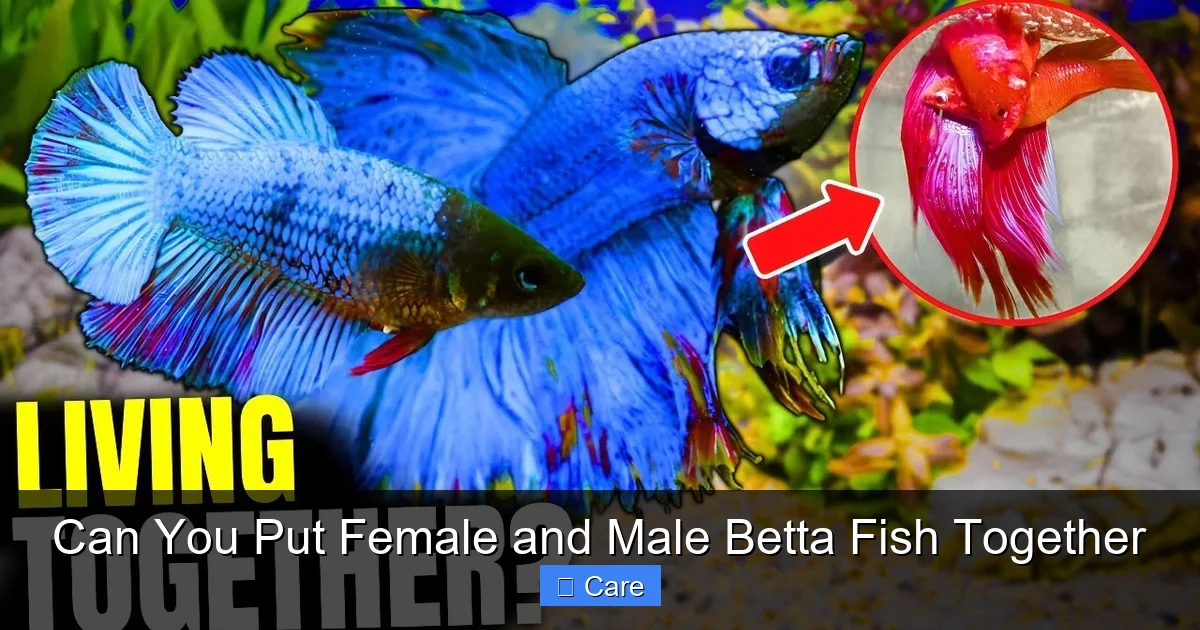
Visual guide about Can You Put Female and Male Betta Fish Together
Image source: i.ytimg.com
The Legacy of the Fighting Fish
Betta splendens were originally bred for aggression. For centuries, people in Thailand and Malaysia would stage fights between males, betting on the outcome. This selective breeding for toughness and territoriality has deeply ingrained these traits in the modern aquarium betta. While today’s hobby fish are much less aggressive than their fighting ancestors, the core instincts remain. A male betta’s first reaction to seeing another betta—male or female—is to flare his gills, spread his fins, and assess a threat. This is not a social greeting; it’s a prelude to combat.
Gender Differences in Temperament
There’s a common misconception that female bettas are “calm” or “peaceful.” This is only partially true and highly misleading.
- Male Bettas: They are the epitome of territorial aggression. They will attack any fish that resembles a betta—long, flowing fins, bright colors—or simply invades their perceived space. Their aggression is proactive and relentless.
- Female Bettas: Females are generally less flamboyant and can be slightly less aggressive towards other species. However, they still possess strong territorial instincts. In a group (a sorority), they establish a pecking order through posturing and occasional sparring. Crucially, a female will still see a male as an intruder or a threat, and a male will see a female as either a mate or an enemy to be driven from his territory. Their interactions are rarely peaceful.
The key takeaway is that both sexes are equipped to fight. The male’s flashy display is just a more obvious warning sign. A female might appear to “back down” more readily, but she will still defend her spot, and a persistent male will not tolerate her presence.
The Very Real Risks of Keeping a Male and Female Betta Together
Let’s be brutally clear about what happens when you ignore this advice. The consequences are not minor squabbles; they are life-threatening.
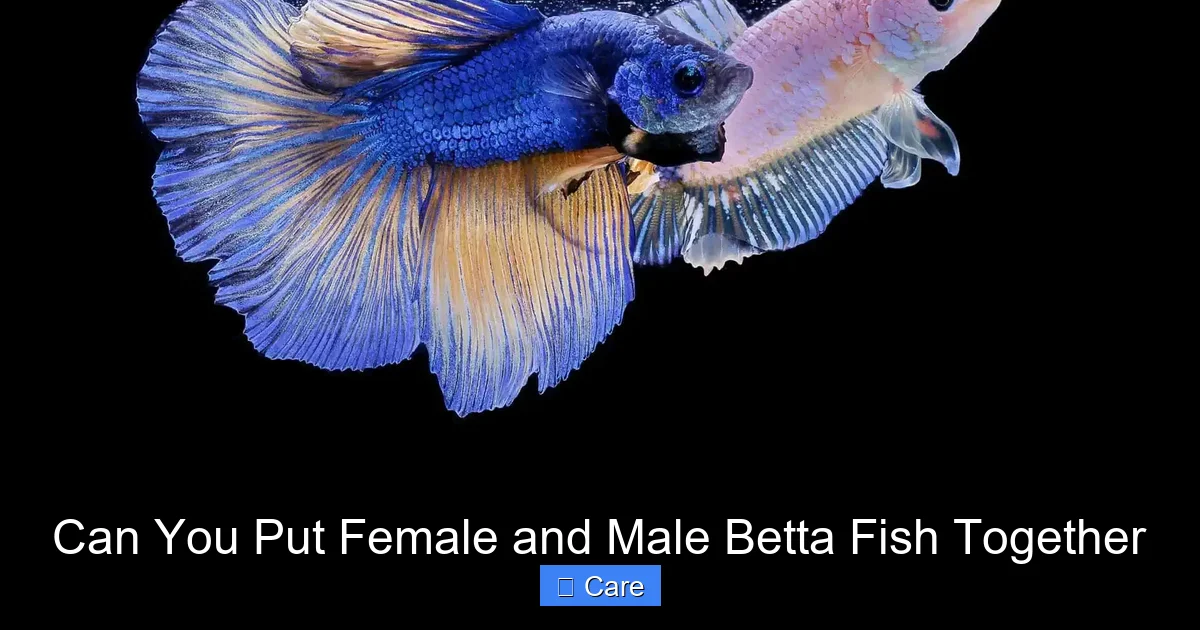
Visual guide about Can You Put Female and Male Betta Fish Together
Image source: bettasource.com
Fighting and Physical Injury
The moment a male and female betta are placed in the same tank, the clock starts ticking. The male will immediately display, flaring his gills and fins to appear larger. The female may respond with submissive behavior (darkening in color, hiding) or with her own display if she feels cornered. This escalation can happen in minutes.
- Fin Nipping and Tearing: Bettas have strong, sharp teeth. They will bite each other’s fins, causing shredded, ragged fins that look like torn silk. This is not only painful but opens the door to infections like fin rot.
- Body Damage: Fights can escalate to biting the body, scales, and eyes. You may see missing scales, open sores, or damaged eyes.
- Exhaustion and Death: A prolonged fight is a severe physical exertion. Bettas can die from sheer exhaustion after a battle, even if they seem to “win.”
Chronic Stress and Compromised Health
Even if they don’t physically fight, the constant stress of living with an opposite-sex betta is devastating. A stressed betta will:
- Hide constantly and refuse to eat, leading to malnutrition.
- Produce excessive slime coat, making them look pale and slimy.
- Have a severely weakened immune system, becoming susceptible to common diseases like velvet, ich, or dropsy.
- Lose their vibrant colors and appear dull and faded.
This is a slow, painful death sentence. The fish is essentially living in a state of perpetual fear, which is a profoundly inhumane situation for a pet owner to create.
The Breeding Exception: A Controlled, Temporary Process
There is one single scenario where a male and female betta are intentionally housed together: for the purpose of breeding. This is not a permanent arrangement and is a complex, hands-on process that even experienced breeders approach with caution.

Visual guide about Can You Put Female and Male Betta Fish Together
Image source: bettasource.com
The Bubble Nest and Courtship
In the wild, a male builds a bubble nest at the water’s surface. In captivity, a conditioned male will do the same in his tank. The female is then introduced to his tank only when he is actively building or guarding his nest and she is full of eggs ( visibly plumper). This introduction is a tense dance. The male will display aggressively, and the female may respond with receptive, vertical “barring” (dark vertical stripes).
The Spawning Act and Immediate Separation
If the female is ready, she will approach the bubble nest. The male will wrap his body around her, and she will release eggs while he releases sperm—this is the “spawn.” This can happen multiple times in a session. The critical rule: the female must be removed from the male’s tank immediately after spawning is complete, usually within 24 hours. Left together, the male’s aggression will turn on the exhausted female. He may see her as an egg-eater or simply an intruder now that the mating is done. He will kill her. The male stays to guard and tend the bubble nest and fry (the baby bettas). The female is returned to her own tank to recover.
Breeding bettas is a specialized hobby requiring separate grow-out tanks for the fry, live or frozen foods, and meticulous water management. It is not a recommended solution for someone simply wanting two bettas in one tank.
Better Alternatives: How to Humanely House Multiple Bettas
If you love bettas and want more than one, you have safe, ethical options. They just don’t involve mixing males and females.
The Sorority Tank (Females Only)
A betta sorority is a group of four or more female bettas kept together in a large, heavily planted tank. The theory is that with enough space and hiding places, no single female can dominate a territory completely, and aggression is spread out and diluted.
- Tank Size: Absolute minimum is 20 gallons, but 29+ gallons is much safer.
- Aquascaping is Non-Negotiable: You need dense planting (live plants are best), multiple tall decorations, driftwood, and caves to break lines of sight. Every betta must be able to claim a personal territory and hide from the others.
- Simultaneous Introduction: All females should be added to the empty, fully decorated tank at the same time. This prevents any one fish from claiming the entire tank as its own before others arrive.
- Close Monitoring: Watch for bullying. A particularly aggressive individual may need to be removed and re-homed. Sororities can and do fall apart.
This is an advanced setup with a high risk of failure. It is not for beginners. For a first-time multi-betta attempt, a single male with carefully chosen tank mates is a far safer bet.
The Community Tank with a Single Male Betta
This is the most common and successful way to have a betta with other fish. A single male (or female) betta can coexist with certain peaceful, fast-moving, non-flashy tank mates in a properly sized tank (5+ gallons).
- Ideal Tank Mates: Small schooling fish like neon tetras (in a 10+ gallon tank), harlequin rasboras, or ember tetras. They are fast, stay in the mid to upper levels, and have plain bodies that don’t trigger the betta’s aggression. Bottom-dwellers like kuhli loaches or small corydoras catfish are also excellent, as they occupy a different niche.
- Never Add: Other long-finned, colorful fish (guppies, fancy guppies, other bettas), fish with similar body shapes (some gouramis), or slow, long-finned fish like angelfish or fancy goldfish.
- Always Quarantine: Any new fish should be quarantined before introduction to prevent disease.
- Provide Hiding Spots: The betta needs his own territory with a cave or dense plants to retreat to.
For detailed guidance on compatible species, you must research thoroughly. Our terms and conditions page outlines the general responsibility of owners to provide appropriate environments, which includes researching compatible tank mates.
Best Practices for Betta Success: What to Do Instead
If you’re reading this and realizing your plan won’t work, don’t worry. The best thing you can do for your betta is to provide an excellent solitary home.
The Perfect Solo Setup
Forget the tiny bowl. A single betta thrives in a minimum 5-gallon tank, but bigger is always better (10+ gallons is ideal). This volume provides stable water conditions and room to explore.
- Heater: Bettas are tropical fish requiring a constant 78-80°F (25.5-26.5°C). A small, adjustable heater is essential.
- Filter: Use a gentle filter with a flow that doesn’t blast the fish. Sponge filters are excellent. Clean water is paramount for health.
- Substrate and Décor: Use soft sand or fine gravel to protect their delicate fins. Provide silk or live plants (like java fern, anubias, or marimo moss balls), caves, and driftwood. These offer security and stimulation.
- Lighting: A regular day/night cycle is important. Avoid harsh, constant light.
Enrichment and Observation
A bored betta can become depressed or destructive. Enrich their environment:
- Use a mirror for a few minutes a day to let them flare (this is exercise, not for permanent cohabitation).
- Introduce a floating betta log or leaf pad for resting at the surface.
- Vary the décor occasionally to provide new exploration opportunities.
- Feed a high-quality pellet diet supplemented with occasional frozen or live foods like daphnia or brine shrimp.
Observe your betta daily. A healthy, happy betta will be active, curious, have fully extended fins, and display vibrant colors. Any signs of lethargy, clamped fins, loss of appetite, or torn fins are red flags for stress or illness.
Frequently Asked Questions
Can a male and female betta ever live together peacefully?
No. There is no documented case of a male and female betta forming a peaceful, long-term bond. Their natural instincts will always lead to conflict. The only time they are together is for a carefully managed, brief breeding session.
What about putting a male betta with a sorority of females?
This is a guaranteed disaster. The male will see the group of females as a territory to conquer or a harem to defend. He will attack the females relentlessly, causing severe stress and injury. The females will also see him as a threat. Never mix a male with a sorority.
How can I tell if my bettas are fighting or just playing?
They are not playing. Flaring (gills and fins expanded), chasing, and nipping are signs of aggression. If you see any fish with torn fins, hiding and not eating, or obvious wounds, they are fighting. Even if no physical damage is visible yet, the stress from constant chasing is harmful.
Is a bigger tank a solution for keeping a male and female together?
No. While a larger tank provides more space, it does not eliminate territorial instincts. Bettas will actively seek each other out. A larger tank might slightly delay a confrontation, but it will happen. It also makes it harder to intervene and separate them if a fight breaks out.
What should I do if I accidentally put a male and female betta together and they start fighting?
Act immediately. Have a backup tank or large container ready with cycled, heated water. Use a net to carefully separate one fish (usually the more aggressive one) into the separate tank. Do not use your hands. Monitor both fish closely for injuries and treat any wounds with a mild antiseptic like aquarium salt or a commercial fin rot treatment. Be prepared for potential long-term stress effects.
Can two female bettas live together without a sorority?
It is not recommended. A pair of female bettas will almost always establish dominance, leading to one bullying the other. The submissive fish will live in constant fear, stress, and likely suffer health problems. Sororities only work with 4+ females in a very large, complex environment to distribute aggression.