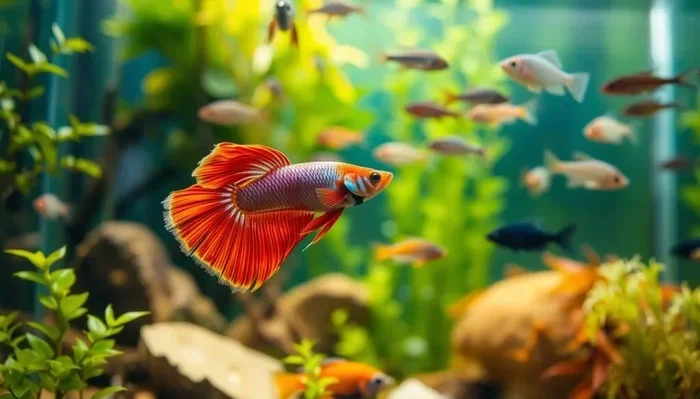
Can Betta Fish Be Kept Together

So, can betta fish be kept together? The answer depends on gender, tank size, and setup. Keeping betta fish together is possible but comes with real risks. Male bettas are highly territorial and usually cannot share a tank, while females sometimes form peaceful groups. The right betta fish tank mates and a well-planned aquarium make all the difference. This guide covers everything you need to know to keep your bettas healthy and happy.
Can betta fish be kept together? This is one of the most common questions new fish keepers ask. The short answer is: it depends. Male bettas are famous for their fiery tempers, and housing two males in the same tank is almost always a bad idea. Female bettas, on the other hand, can sometimes live together in what hobbyists call a sorority tank. But even then, success is never guaranteed.
Whether you are a beginner or a seasoned aquarist, understanding betta fish behavior is the key to keeping them healthy. In this guide, we will walk through everything you need to know. We will cover male and female dynamics, tank setup tips, compatible tank mates, and common mistakes to avoid. By the end, you will know exactly how to approach keeping bettas in the same aquarium safely.
Key Takeaways
- Male bettas should almost never be kept together: Their territorial aggression leads to fights and serious injury.
- Female bettas can sometimes live in groups: A sorority setup with 5 or more females works under the right conditions.
- Tank size matters enormously: A minimum of 10 gallons per betta is essential for reducing stress and conflict.
- Tank layout and hiding spots are critical: Plenty of plants and decorations break up sightlines and reduce aggression.
- Not all fish make good betta tank mates: Choose peaceful species that won’t nip fins or trigger territorial behavior.
- Watch for warning signs of aggression: Flaring, chasing, and fin nipping mean you need to separate fish immediately.
📑 Table of Contents
Understanding Betta Fish Behavior
Betta fish, also known as Siamese fighting fish, are naturally territorial. In the wild, they live in shallow rice paddies and slow-moving streams in Southeast Asia. Because of this environment, they have evolved to defend their space fiercely. This instinct does not disappear just because they live in a glass tank at home.
Male bettas are the most aggressive of the two sexes. They flare their gills, spread their fins, and attack anything that looks like a rival. Even their own reflection in the glass can trigger an aggressive response. Female bettas are generally less aggressive, but they still have a pecking order within their group. Understanding this natural behavior is the first step toward making good housing decisions.
Why Are Male Bettas So Aggressive?
Male bettas have been selectively bred for centuries to be aggressive. In some Asian countries, people historically held betta fights, much like cockfighting. While this practice is now illegal in most places, the genetic trait remains strong in pet store bettas. A male betta sees another male as a direct threat to his territory and his life.
This aggression is not just a mood swing. It is a deep survival instinct. When two males are placed in the same tank, the stress alone can weaken their immune systems. Fin damage, missing scales, and exhaustion are common outcomes. In the worst cases, one fish may kill the other. This is why the rule “never house two male bettas together” is so important.
Can Male Betta Fish Be Kept Together?
The honest answer is no. Keeping two male bettas in the same tank is extremely risky and strongly discouraged by experienced fish keepers. Even in large tanks with heavy planting, male bettas can still sense each other and become stressed. The resulting fights can be deadly.
Some people claim they have successfully kept two males together, but these cases are rare exceptions. They usually involve very large tanks, elaborate hiding spots, and constant monitoring. For the average hobbyist, the risk far outweighs any potential reward. If you want to keep multiple male bettas, the safest approach is to give each one their own tank.
You might wonder about why can male betta fish be together in some rare cases. The truth is that even when it seems to work, the fish are often stressed and unhappy. Stress shortens their lifespan and makes them more prone to disease. A happy, healthy betta needs space and security.
What About Female Bettas Together?
Female bettas can sometimes live together, but it requires careful planning. A group of female bettas is called a sorority. The general recommendation is to keep at least five to six females together. This number helps distribute aggression so no single fish becomes the constant target of bullying.
In a sorority setup, you will likely see some flaring and chasing. This is normal and expected. What you need to watch for is whether the aggression escalates to the point of injury. If one fish is constantly hiding, losing color, or has torn fins, the group dynamics are not working. Be prepared to remove the aggressor or move the victim to a separate tank.
Can Male and Female Betta Fish Be Kept Together?
This is a more nuanced question than it might seem at first glance. Housing one male and one female betta together is sometimes possible, but it is never risk-free. The success of a male-female pairing depends heavily on the tank setup, the temperament of each fish, and a bit of luck.
Many experienced aquarists recommend keeping males and females in separate tanks. If you do decide to attempt a mixed pair, a large tank of at least 20 gallons is essential. You also need plenty of plants and decorations to break up lines of sight. The idea is to make the tank feel large enough that neither fish feels trapped or overly threatened.
Breeding is another scenario where male and female bettas are placed together temporarily. During breeding, the male builds a bubble nest and the pair interacts closely. However, once the breeding is complete, the female must be removed immediately. The male becomes very protective of the eggs and may attack the female if she stays too long.
If you are exploring options for keeping a female and male betta fish together, always monitor them closely during the first few days. Signs of trouble include constant flaring, chasing, and physical damage. Have a backup plan ready in case separation becomes necessary.
Setting Up a Tank for Multiple Bettas
If you are determined to keep bettas together, the tank setup is everything. A poorly designed aquarium will lead to stress, aggression, and disease no matter how peaceful your fish are. Here are the key factors to consider.
Tank Size Requirements
The general rule of thumb is a minimum of 10 gallons per betta fish. For a sorority of five females, you would need at least a 50-gallon tank. For a male-female pair, a 20-gallon long tank works well. The extra space allows each fish to establish its own territory without constantly bumping into the other.
Small tanks are tempting because they take up less room and cost less, but they are a recipe for disaster with bettas. In a cramped space, there is nowhere for a subordinate fish to escape. Every encounter becomes a confrontation. Give your fish room to breathe, both literally and figuratively.
Plants and Decorations
Live plants are your best friend when keeping multiple bettas together. They break up sightlines, create natural barriers, and provide hiding spots that reduce stress. Java moss, Amazon sword plants, and Anubias are excellent choices. They are hardy, grow well in betta-friendly conditions, and look beautiful.
Decorations like caves, driftwood, and ceramic pots also serve as territory markers. Each betta will claim a favorite spot, and having multiple hiding places ensures that no single fish dominates the entire tank. Arrange your décor so that no one fish can see another fish for long stretches without a visual barrier in between.
Water Parameters and Maintenance
Clean water is essential for any aquarium, but it is especially important when keeping multiple bettas. Ammonia and nitrite levels should always read zero, and nitrate should stay below 20 ppm. Perform regular water changes of 25 to 30 percent each week.
Betta fish prefer warm water between 76 and 82 degrees Fahrenheit. A reliable heater and thermometer are non-negotiable. Sudden temperature swings cause stress, which in turn triggers aggression. Stable water parameters create a calm environment where your fish are less likely to lash out at each other.
Choosing the Right Tank Mates for Bettas
If you want a community tank that includes bettas, choosing the right companions is critical. Not every fish species gets along with bettas. Some fish are too nippy, too large, or too boisterous for a betta’s peaceful nature.
Good Tank Mates for Bettas
Peaceful, small fish that occupy different levels of the tank tend to work best. Here are some solid options:
- Neon tetras: They stay in the upper and middle levels and generally leave bettas alone.
- Corydoras catfish: These bottom-dwellers are peaceful and add activity without bothering bettas.
- Ghost shrimp: Inexpensive, hardy, and unlikely to provoke aggression.
- Snails: Nerite snails and mystery snails are great algae eaters that keep to themselves.
- Kuhli loaches: These nocturnal fish stay hidden during the day and rarely interact with bettas.
Always research any potential tank mate before adding them to your betta tank. Some fish that seem peaceful on paper can become troublemakers in a small aquarium. Observe new additions closely during the first week and be ready to separate them if problems arise.
Fish to Avoid With Bettas
Certain fish species are known to cause problems with bettas. Avoid these at all costs:
- Goldfish: They produce too much waste and grow too large for most betta setups.
- Guppies with bright fins: Male guppies can trigger a betta’s aggression because they look like rival bettas.
- Tiger barbs: They are fin nippers and will tear up a betta’s long, flowing fins.
- Cichlids: Even small cichlids tend to be too aggressive for a peaceful betta tank.
If you are curious about whether guppies and bettas can coexist, check out our detailed guide on keeping female bettas with guppies for more specific advice on this popular combination.
Common Mistakes When Keeping Bettas Together
Even well-intentioned fish keepers make mistakes that lead to disaster. Learning from other people’s errors can save you a lot of heartache and wasted money. Here are the most common pitfalls to avoid.
Underestimating the Tank Size
This is the number one mistake beginners make. A 5-gallon tank might be fine for a single betta, but it is far too small for two fish. Overcrowding leads to territorial disputes, poor water quality, and stressed fish. Always err on the side of more space rather than less.
Skipping the Quarantine Period
New fish can carry diseases and parasites that spread quickly in a closed system. Quarantine new additions in a separate tank for at least two weeks before introducing them to your main aquarium. This simple step can save your entire fish population from a devastating outbreak.
Ignoring Warning Signs
Many fish keepers notice aggression early on but choose to ignore it, hoping things will improve on their own. They do not. Flaring, chasing, and fin nipping almost always get worse over time. If you see these signs, act immediately. Separate the aggressor or rearrange the tank decor to reset territorial boundaries.
Overfeeding
Overfeeding is a subtle but serious problem. Excess food decomposes in the water, raising ammonia levels and degrading water quality. Stressed fish eat less, which leads to more competition at feeding time. Feed small amounts twice a day and remove any uneaten food after five minutes.
Expert Tips for a Peaceful Betta Community
Creating a harmonious betta community takes patience and attention to detail. Here are some expert-level tips that can make a real difference in your aquarium.
First, introduce fish to the tank at the same time whenever possible. Adding a new fish to an established tank can trigger territorial behavior from the resident fish. When all the fish enter the tank together, they are more likely to establish a balanced hierarchy from the start.
Second, use a mirror test carefully. Some hobbyists briefly show a mirror to a betta to satisfy its territorial instincts. However, this should be done sparingly and never for more than a few minutes. Prolonged mirror exposure causes chronic stress that weakens the fish over time.
Third, observe your fish daily. Spend a few minutes each morning watching how they interact. Catching problems early gives you the best chance to intervene before anyone gets hurt. Keep a simple log of behavior changes, feeding patterns, and water test results. This habit pays off enormously over time.
Finally, accept that not every combination will work. Sometimes you do everything right and the fish still do not get along. This is not a failure. It is just the reality of keeping territorial fish. Being willing to separate fish when needed shows maturity and respect for the animals in your care.
Conclusion
So, can betta fish be kept together? The answer is yes, but with important caveats. Male bettas should almost always be kept alone. Female bettas can form sororities under the right conditions. Male-female pairs are possible but require careful monitoring and a spacious tank. The key to success lies in preparation, observation, and a willingness to adapt.
Remember that every betta has its own personality. Some are docile, while others are fiercely territorial. Getting to know your individual fish is just as important as following general guidelines. With the right tank setup, compatible tank mates, and attentive care, you can create a beautiful aquarium where your bettas thrive.
Start small, do your research, and never be afraid to make changes if something is not working. Your fish will thank you for it. Happy fish keeping!
Frequently Asked Questions
Can two male betta fish ever live in the same tank?
In almost all cases, no. Male bettas are highly territorial and will fight, often to the death. Even in large tanks with heavy planting, the stress of cohabitation usually leads to injury or illness. It is best to keep each male betta in his own separate tank.
How many female bettas can you keep together?
A sorority of five to six female bettas is the most commonly recommended group size. This number helps distribute aggression so that no single fish becomes the constant target. Always provide at least 10 gallons per fish and plenty of hiding spots to break up territories.
What is the best tank size for keeping bettas together?
A minimum of 20 gallons is recommended for a male-female pair, and at least 50 gallons for a female sorority of five or more. Larger tanks give fish more space to establish territories and reduce the chances of constant confrontation.
Can betta fish live with other species of fish?
Yes, bettas can sometimes live with peaceful tank mates like neon tetras, corydoras catfish, and snails. However, avoid aggressive or fin-nipping species. Always research any potential companion carefully and monitor interactions closely during the first few weeks.
How do you know if your bettas are getting along?
Signs of a peaceful betta community include fish swimming freely, eating normally, and displaying natural colors. Warning signs include constant flaring, chasing, torn fins, and one fish hiding excessively. If you notice persistent aggression, separate the fish immediately.
Is it better to keep bettas alone or in groups?
For male bettas, keeping them alone is almost always the safest choice. Female bettas can sometimes thrive in groups, but it requires a well-planned tank with adequate space and hiding spots. Consider your experience level and the specific needs of your fish before deciding.