Can You Trim a Betta Fish Tail Safely at Home Tips

Can you trim a betta fish tail at home? Yes, but only to remove a tiny, loose flap of clearly dead tissue, and only when there is no blood or sign of infection. Most torn fins need clean, warm water and time, not scissors; learn how to spot fin rot, avoid live fin rays, and know when an aquatic vet is the safer choice.
Seeing a torn tail on your betta can be upsetting. The cause may be a snag, poor water, stress, tail biting, or illness.
Many keepers ask, “Can you trim a betta fish tail?” The answer is yes in a few narrow cases. Most of the time, though, scissors can do more harm than good.
This guide will show you how to tell a simple tear from fin rot. You will also learn when a tiny trim may be safe, how to do it with less stress, and how to support healthy fin regrowth.
Key Takeaways
- Do not trim a healthy tail: A betta’s fin is living tissue, not hair or a nail.
- Fin rot needs care, not cutting: Black, red, fuzzy, or fast-spreading damage may signal disease.
- Avoid live fin rays: Never cut through a colored line or firm support rod in the fin.
- Fix the cause first: Poor water, sharp decor, strong flow, stress, and tank mates often cause tail damage.
- Use sterile tools only: A tiny trim requires clean scissors, tank water, a helper, and very little time out of the water.
- When in doubt, leave it alone: Clean water, good food, and time heal many minor torn fins.
📑 Table of Contents
Can You Trim a Betta Fish Tail Without Causing Harm?
A betta’s tail is part of a living fin. It has skin, blood vessels, nerves, and thin support rods called fin rays. A bad cut can cause pain, bleeding, stress, and infection.
Betta fin trimming is not routine grooming. You should never cut a tail just to make it look neat or even. A slight curve or uneven edge is far better than lost healthy tissue.
When a tiny trim may be reasonable
A trim may be considered only when all these points are true:
- There is one small, loose flap at the fin edge.
- The flap looks pale and lifeless, with no blood.
- No fin ray runs through the piece you plan to cut.
- The damaged edge is not spreading.
- The fish is active, eating, and breathing normally.
- You have sterile tools and another person to help.
If you cannot confirm each point, skip the cut. Let the fin heal or ask an aquatic vet for help.
Why cosmetic cuts are unsafe
Some fins grow back in a new shape. Others never look the same. Cutting healthy tissue also removes part of the fish’s balance and protection.
A safe betta tail trim is an emergency care step, not a beauty treatment. The goal is only to remove a small snag that may tear farther. It is never meant to reshape the fish.
How to Tell a Tear, Tail Bite, Fin Regrowth, or Fin Rot
The right care starts with the right cause. A torn betta fin from sharp gravel may need only safer decor. A tail injury linked to bad water may need urgent water care. Fin disease needs a different plan again.
| Sign | Minor tear or healing | Possible fin rot or tail biting |
|---|---|---|
| Fin edge | Stable, pale, or clear | Black, red, fuzzy, or crumbling |
| Shape | One tear or smooth regrowth | Ragged holes or round bite marks |
| Change over two days | No spread | Damage moves toward the body |
| Fish behavior | Active with normal breathing | Clamped fins, hiding, or low appetite |
| Best first step | Remove the snag and watch | Test water and seek expert advice |
Signs that suggest fin rot
Fin rot often starts at the edge. The edge may turn dark, red, slimy, or fuzzy. It may break apart and move toward the body.
Dark color alone does not always mean rot. Some bettas gain pigment as they heal. Look at the whole fish and track change over time.
Watch for these warning signs:
- A ragged edge that spreads each day
- Red streaks near the fin base
- White fuzz or thick slime
- Small pieces falling from the fin
- Low energy, poor appetite, or clamped fins
Do not trim suspected fin rot. Cutting will not remove the cause. Poor aquarium water quality, stress, or infection may still be present.
Signs of normal fin regrowth
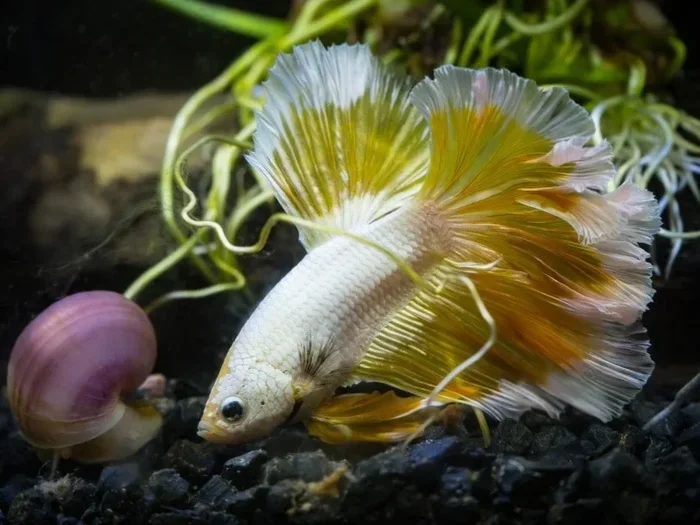
New growth is often clear or pale. It may look uneven at first. A soft, light edge that stays in place can be a good sign.
Crowntail bettas also have natural gaps between their rays. These gaps are part of their shape. They are not always tail damage.
Signs of tail biting
Tail biting can leave round or C-shaped chunks. The edges may look red from the bite. The fish may chase tank mates, flare at its reflection, or live in a tank that causes stress.
Ammonia burn can also irritate fins. It may look red or sore. A water test is the only reliable way to rule out ammonia and nitrite.
When Can You Trim a Betta Fish Tail Safely?
The question “Can you trim a betta fish tail safely?” has a strict answer. Try it only for a tiny, loose flap that is clearly separate from healthy fin tissue.
Do not cut if the damage is near the body. Do not cut if you see blood, rot, swelling, or a live fin ray. Do not trim a fin that is still tearing because the tank setup is unsafe.
Fix the cause before touching the fin
Check the whole home, not just the tail. Remove sharp plastic plants, rough rocks, and hard decorations. Run a bit of soft fabric over each item. If it snags, it can snag your betta too.
Test the tank water. Ammonia and nitrite should both be zero. Use a water conditioner for tap water. Keep the water warm and stable, with a gentle filter flow that does not push your fish around.
For help with the basics, read our guides on using tap water safely in a betta tank and choosing and using a gentle betta filter.
A heated tank of five gallons or more is a good starting point for most pet bettas. Add hides, a lid, and soft plants. These changes reduce fish stress and help prevent another tail injury.
Use photos to guide your choice
Take a clear photo of the fin now. Take another photo in 24 hours from the same angle. Healing usually stays stable. Fin rot often spreads.
Expert insight: If you are unsure, send the photos to an aquatic vet or an experienced fish keeper before you cut. A second set of eyes can prevent a costly mistake.
How to Trim a Betta Fish Tail Step by Step
This method is only for a very small, loose flap. If the cut is large, close to the body, or linked to illness, get help from an aquatic vet.
Gather safe supplies first
- Small, plain metal scissors
- A covered dish for cooling the tools
- Single-use sterile saline with no added medicine
- A soft fish net
- A clean container with original tank water
- A timer and clean towel
- Water conditioner and a water test kit
- A calm helper
Boil plain metal scissors for ten minutes. Move them with clean tongs. Let them cool in the covered dish. Do not touch the tips or blow on them.
Do not use soap, hydrogen peroxide, alcohol, or human skin cream on the fish. Tool cleaners can leave harmful residue. Dull or dirty scissors can crush tissue and add germs.
Prepare the fish and tank
Fix the main tank before you handle the fish. Dim the lights and let the room become quiet. Wash soap from your hands, then rinse very well. Wet nitrile gloves are safer than dry hands.
Do not fast the fish for this task. Do not use clove oil or another home anesthetic unless an aquatic vet gives you an exact method. A wrong dose can stop a fish from breathing.
Make one small cut
- Place the betta gently in a soft net over shallow, original tank water. Keep the gills wet at all times.
- Ask your helper to hold the net. You should hold the sterile scissors.
- Find the loose flap. Look for any colored line or firm fin ray. If a ray reaches the flap, stop.
- Make one small cut at the base of the loose piece. Do not round off or reshape the rest of the tail.
- Return the fish to the clean, warm tank at once. Keep time out of the water to only a few seconds.
- Watch the fish from a distance. Do not tap the glass or reach back into the tank.
Stop at once if the fish thrashes, gasps, turns dark, or starts to bleed. A small trim should not turn into a long procedure.
Common mistakes to avoid
- Cutting healthy fin just to make a smooth edge
- Trimming through a live fin ray
- Using dirty, dull, or coated scissors
- Holding the fish in a dry towel
- Letting the gills dry out
- Trying to cut while the fish is still fighting the net
- Adding peroxide, salt, or medicine without a clear need
If the flap is not easy to remove in one calm attempt, leave it. You can try another day after seeking expert advice.
Betta Tail Aftercare and Fin Regrowth
Aftercare matters more than the cut. Return your betta to clean, warm, cycled tank water. Avoid a full water change unless an expert tells you to make one.
If the water caused the injury, make a conditioned partial change. Match the new water temperature to the tank. Never wipe out the filter media, since it holds useful bacteria that keep the tank safe.
Create a calm healing space
- Keep the water near 78–80°F unless your vet advises otherwise.
- Use low, gentle filter flow.
- Dim bright lights for a day or two.
- Provide soft plants and a safe hide.
- Keep the tank covered because stressed fish may jump.
- Feed a normal, small meal of high-quality food.
Do not add random antibiotics or aquarium salt. Salt is not right for every tank, and the wrong medicine can add stress. Treat the cause after you know what it is.
What healthy fin regrowth looks like
A minor tear may settle within a few days. Clear new growth may appear in one or two weeks. Full fin regrowth can take two to eight weeks, and a deep injury may take longer.
The new edge may have a different color or shape. If a fin ray was lost, it may not grow back. The fish can still live a full, healthy life.
When to get urgent help
Contact an aquatic vet if the edge keeps receding or rot reaches the body. Also seek help for active bleeding, severe lethargy, loss of appetite, swelling, or hard breathing.
A worsening tail injury is not a wait-and-see issue. Early care gives your betta a better chance at healing.
How to Stop a Betta Fish From Damaging Its Tail Again
The best trim is the one your betta never needs. A safe tank and a calm routine prevent many torn fins and tail bites.
Make the tank tail-friendly
- Choose silk or live plants instead of hard plastic ones.
- Smooth sharp rocks or remove them.
- Keep the filter flow gentle.
- Maintain stable heat and clean tank water.
- Test ammonia, nitrite, and nitrate on a set schedule.
- Give your betta places to rest near the surface.
Avoid overcrowding. Some tank mates chase nippy fish or make a betta feel under threat. Separate any fish that chases or nips at once.
Lower daily stress
Keep lights, meals, and water care on a steady routine. Do not use a mirror for long flaring sessions. Avoid constant tapping, loud vibration, and frequent moves.
Your hands are not toys. Read when it is safe to touch a pet betta before reaching into the tank. Less handling helps protect the slime coat and reduces stress.
Quick tips for a healthy tail
- Photograph new damage so you can track it.
- Test the water before adding medicine.
- Remove any object that catches a cloth.
- Give a frightened fish a quiet day.
- Leave clear new growth alone.
Conclusion
So, can you trim a betta fish tail at home? You can remove a tiny, loose flap in rare cases, but you should not trim a healthy or infected fin. Clean water, safe decor, low stress, and time solve most minor tail problems.
When in doubt, do not cut. Take a photo, fix the tank, and ask an aquatic vet. A slightly uneven tail is a small trade for a safe, healthy betta.
Frequently Asked Questions
Can I trim my betta’s torn tail?
You may trim only a tiny, loose flap that has no blood and no fin ray. Do not cut a fresh tear, a ragged edge, or tissue near the body.
Will a betta fish tail grow back after trimming?
Minor fin damage often grows back in a few weeks. Deep cuts may heal with a new shape, and a lost fin ray may not return.
How can I tell fin rot from new fin growth?
New growth is often clear, pale, and stable. Fin rot may look black, red, fuzzy, slimy, or spread toward the body over a day or two.
Does trimming a betta fish tail hurt?
A betta’s tail has nerves and blood vessels, so a bad cut can hurt and cause stress. Cutting through a live fin ray is especially risky.
What scissors should I use to trim a betta fin?
Use small, sharp, plain metal scissors that have been boiled and cooled without touching the tips. Never use dirty, dull, soapy, or rusty tools.
When should I take my betta to a vet for tail damage?
Seek help if the edge spreads, bleeding will not stop, or the fish stops eating. Also contact an aquatic vet for fuzzy growth, swelling, clamped fins, or hard breathing.