No, sea monkeys and betta fish cannot live together safely. Their natural habitats and water requirements are completely opposite—sea monkeys need brackish (slightly salty) water, while bettas are strict freshwater fish. Furthermore, bettas are carnivorous, aggressive hunters who will view swimming sea monkeys as food, causing them to be eaten immediately. The stress of incompatible water conditions and predation makes cohabitation impossible and unethical. Instead, keep them in separate, appropriately configured tanks to ensure both thrive happily and healthily.
Hey there, fellow aquatic enthusiast! Have you ever stared at your bubbling betta fish tank, with its vibrant fins and curious personality, and then glanced over at that fascinating little sea monkey aquarium, watching those tiny crustaceans zip around? A fun, quirky thought might pop into your head: “What if they lived together? That would be an epic, tiny ecosystem!” It’s a creative idea, born from a love of all things aquatic. But before you even think about pouring those sea monkey eggs into your betta’s domain, we need to have a serious chat. The short, crucial answer is a firm no, sea monkeys cannot live with betta fish. Not just “it’s not a good idea,” but it is biologically impossible, dangerously stressful, and ultimately a death sentence for your poor sea monkeys. Let’s dive deep into the why, exploring the science, the instincts, and the practical realities that make this combination one of the worst pairings in the pet trade.
Key Takeaways
- Fundamental Habitat Incompatibility: Sea monkeys (brine shrimp) require brackish water with specific salinity, while betta fish are tropical freshwater fish that cannot survive in saltwater.
- Predatory Nature of Bettas: Betta fish are instinctive carnivores and aggressive hunters; they will immediately eat any sea monkeys introduced into their tank.
- Ideal Water Parameters Clash: The optimal temperature, pH, and mineral content for thriving sea monkeys are harmful and lethal to bettas, and vice versa.
- Severe Stress and Health Risks: Forcing these species together causes immense stress, leading to suppressed immune systems, disease, and rapid death for both animals.
- Separate Tanks Are Essential: The only safe way to “keep” both is in two distinct, species-appropriate aquariums, allowing you to enjoy each pet’s unique behaviors properly.
- Misleading Marketing: The “sea monkey” kits are designed as closed, self-contained ecosystems, not as additions to a community freshwater tank with fish.
- Focus on Proper Care: Success lies in understanding and replicating each species’ natural environment, not in forcing unnatural and dangerous pairings for novelty.
📑 Table of Contents
- Understanding Your Sea Monkeys: Not Actually Monkeys
- Understanding Your Betta Fish: The Fierce Siamese Fighting Fish
- The Critical Water Parameter Clash: A Non-Negotiable Barrier
- The Predation Problem: Betta as an Inevitable Hunter
- Safe and Spectacular Alternatives for Your Aquariums
- Conclusion: Respecting the Natural Order
Understanding Your Sea Monkeys: Not Actually Monkeys
First, let’s clear up the magic trick. “Sea Monkeys” is the brilliant marketing name for a specific type of brine shrimp, scientifically known as Artemia salina. They are not monkeys, of course; they are tiny crustaceans, more closely related to crabs and lobsters than to any fish. The kits you buy are a packaged wonder, containing dormant eggs (cysts), a small tank, and a salt blend. When you add water, these cysts “hatch” into minuscule, translucent creatures with a single, beady eye.
Their Natural Home: Hypersaline Ponds and Lakes
In the wild, sea monkeys are native to saltwater environments, but not the ocean. They thrive in inland salt lakes, salt pans, and evaporation ponds that have extremely high salinity—often much saltier than the open sea. These are harsh, predator-free (in terms of fish) environments. Their entire biology is built for this. Their bodies are osmoregulators, meaning they actively manage the salt and water balance inside their cells to survive in water that would instantly kill a freshwater fish. The “Sea Monkey” salt packets sold with the kits are specifically formulated to create this brackish to hypersaline environment, typically with a salinity of around 1.5-2.5% (parts per thousand), compared to the ocean’s 3.5%.
Life Cycle and Dietary Needs
Sea monkeys have a rapid life cycle. They hatch, mature, and begin reproducing in as little as 2-3 weeks under perfect conditions. They are filter feeders and scavengers. They use their little legs to stir up particles in the water and consume algae, bacteria, yeast, and the provided “growth food” (which is essentially powdered algae and nutrients). They are not hunters; they are passive grazers. Their tiny size (adults are about 0.5 cm long) and delicate, soft bodies make them easy prey for almost any small carnivorous fish.
Understanding Your Betta Fish: The Fierce Siamese Fighting Fish
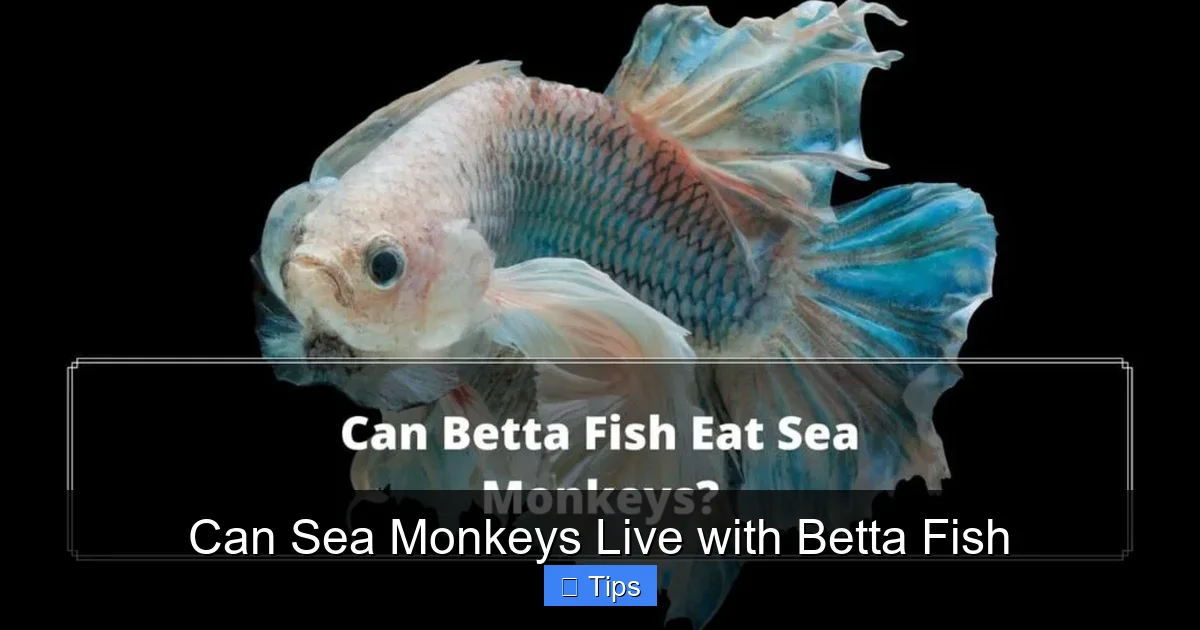
Now, let’s talk about your betta, Betta splendens. That flowing, gorgeous finnage and seemingly contemplative gaze hide the heart of a fierce, evolutionary warrior. Bettas are labyrinth fish, meaning they have a special organ that allows them to gulp air from the surface, an adaptation to their native stagnant, oxygen-poor waters of rice paddies and slow-moving streams in Southeast Asia.
Visual guide about Can Sea Monkeys Live with Betta Fish
Image source: inpetcare.com
Natural Aggression and Territorial Instincts
Bettas, especially the males we commonly keep, are famously territorial. In the wild, they defend small patches of reeds or leaf litter from rival males, flaring their gills and displaying vibrant colors to intimidate. This instinct doesn’t vanish in a glass tank. They are curious, intelligent, and will investigate anything that moves in their space—a leaf, a finger, a shadow. That movement triggers a predatory response. Anything small and shrimp-like is instantly classified as food or a threat. There is no “live and let live” instinct here. The betta’s brain is wired to see a darting, tiny, protein-packed morsel and go for it.
Strict Freshwater Requirements
Bettas are 100% freshwater fish. Their ideal water is soft to moderately hard, with a pH between 6.5 and 7.5, and a temperature between 76°F and 82°F (24°C – 28°C). They have zero tolerance for salt. Even a small amount of salinity, like what a sea monkey requires, will cause severe osmotic stress. The salt draws fluid out of the betta’s cells, leading to dehydration, kidney failure, and death. Conversely, the freshwater a betta needs would be fatal to sea monkeys, as it would cause their cells to absorb too much water and burst (lysis).
The Critical Water Parameter Clash: A Non-Negotiable Barrier
This is the most absolute, scientific reason these two cannot coexist. It’s not about personality; it’s about basic chemistry and biology. Let’s break down the specific water needs side-by-side.
- Salinity: Betta: 0 ppm (freshwater). Sea Monkey: 1,500-2,500 ppm (brackish to hypersaline). This is the deal-breaker. There is no middle ground that supports both.
- Temperature: Betta: 76-82°F (24-28°C). Sea Monkey: 70-80°F (21-27°C). While there is a small overlap, the salinity requirement overrides any temperature compatibility.
- pH: Betta: 6.5-7.5 (slightly acidic to neutral). Sea Monkey: 8.0-9.0 (alkaline). The sea monkey’s preferred alkaline water would stress a betta’s skin and gills.
- Filtration & Flow: Bettas prefer very gentle flow or no filter at all, as their long fins make them poor swimmers. Sea monkeys thrive in still or very gently aerated water. While this seems compatible, it’s irrelevant given the salinity issue.
You cannot compromise on salinity. A betta will die in brackish water within hours to days. Sea monkeys will die in freshwater within minutes to hours. Therefore, sharing the same water volume is an immediate fatality for at least one, if not both, species.
The Predation Problem: Betta as an Inevitable Hunter
Even if, in some magical universe, you could find a salinity that didn’t kill them both instantly (you can’t), the betta’s predatory instincts would take over. Sea monkeys are the perfect size and movement pattern for a betta to consider prey.
Visual guide about Can Sea Monkeys Live with Betta Fish
Image source: inpetcare.com
Instinct Overrides Opportunity
Bettas are carnivores. In the wild, they eat insects, insect larvae, and small crustaceans. A swimming sea monkey is a tiny, shrimp-like crustacean. The betta’s brain sees it and thinks “food.” It will chase, nip, and consume every single sea monkey in the tank. They are not fast or agile enough to escape a determined betta. The betta might even flare at them aggressively, causing immediate stress that stunts the sea monkeys’ growth and breeding. There is no scenario where the betta “ignores” them or they become “tank mates.” They become a high-protein snack.
The Stress Cascade
For the sea monkeys, the presence of a large, aggressive predator is chronic, terrifying stress. They will spend all their time hiding at the bottom or in corners, not feeding, not swimming, not breeding. This suppresses their immune system. They will die from stress-induced illness long before the betta possibly eats them all. For the betta, the constant presence of these strange, darting creatures might cause agitation. It could lead to the betta flaring constantly, damaging its own delicate fins, or becoming generally unhappy and listless. It’s a lose-lose situation fueled by fear and hunger.
Safe and Spectacular Alternatives for Your Aquariums
So you love the whimsy of sea monkeys and the beauty of bettas. Great news! You can absolutely enjoy both, but they must be kept in separate, properly set-up worlds. This isn’t a compromise; it’s an opportunity to create two stunning, educational displays.
Visual guide about Can Sea Monkeys Live with Betta Fish
Image source: inpetcare.com
Setting Up the Perfect Sea Monkey World
Your sea monkey kit is a fantastic starting point. To maximize their health and your viewing pleasure, upgrade their home. Use a clean, dedicated 1-2 gallon glass or acrylic tank (never one that held chemicals). Use only the provided sea monkey salt or a reputable marine salt mix (like Instant Ocean) to achieve the correct salinity (use a hydrometer to be precise!). Provide gentle aeration with a tiny air stone on the lowest setting—they need oxygenated water but are weak swimmers. Feed them their specialized food (or a pinch of active dry yeast) every 2-3 days. Keep them in a warm spot (78°F is ideal) with bright, indirect light. Watch them swim in their little saline universe, a mesmerizing microcosm of life.
Creating a Thriving Betta Paradise
Your betta deserves a spacious, enriched home. A 5-gallon tank is the absolute minimum (bigger is always better). Use a gentle sponge filter to provide clean water without strong currents. Add live plants like Java fern or Anubias, or soft silk plants, for hiding and resting. A secure lid is a must—bettas are jumpers! Maintain warm, clean freshwater (78-80°F). Feed a high-quality betta pellet diet, supplemented with occasional frozen or live foods like daphnia or brine shrimp nauplii (baby brine shrimp, which are different from adult sea monkeys and can be a great treat). A happy, healthy betta will flare at its own reflection, explore its plants, and build bubble nests—a far more rewarding sight than a stressed hunter stalking helpless prey.
The Ultimate “Companion”: Observation, Not Co-Habitation
Want to combine the themes? Place the two tanks side-by-side! This is the only safe way for them to “live together.” Your betta might curiously flare at the moving sea monkeys in the adjacent tank, providing mental stimulation. You, the keeper, get the joy of observing two completely different forms of aquatic life in their ideal habitats. It’s a fantastic lesson in biodiversity for kids and adults alike. You can even use a divider in a large, custom tank with completely sealed, separate water systems (like a built-in sump partition), but this is complex and not recommended for beginners. Separate tanks are simple, safe, and best.
Conclusion: Respecting the Natural Order
The dream of a tiny, mixed-species world is charming, but it must bow to the unwavering laws of biology. Sea monkeys and betta fish are separated by millions of years of evolution, adapted for utterly different and incompatible environments. The brackish sea of the brine shrimp is a poison to the labyrinth fish, and the freshwater kingdom of the betta is a death trap for the salt-dependent crustacean. Layer on top of that the betta’s unchangeable, predatory instinct, and you have a recipe for disaster, fear, and death.
True pet ownership is about providing what an animal needs to thrive, not just what we find amusing. By keeping these species in their own dedicated, correctly configured aquariums, you do them the greatest service. You honor their natural designs, you prevent suffering, and you get to witness each one exhibit its full range of natural, beautiful behaviors. So, set up that perfect little sea monkey universe in its own right, and build a lush paradise for your betta. Enjoy them both, safely and ethically, side-by-side. That’s the real win.
Frequently Asked Questions
Can a betta fish eat sea monkeys?
Yes, absolutely. Betta fish are carnivorous predators, and sea monkeys are tiny, shrimp-like crustaceans that fit perfectly into a betta’s food size range. A betta will hunt, chase, and consume sea monkeys if they are placed in the same tank, viewing them as a natural food source.
What if my betta is very calm and doesn’t seem interested in the sea monkeys?
Even a seemingly “calm” betta’s predatory instinct is triggered by small, moving prey. The sea monkeys’ darting movements are a direct trigger. The betta may eventually eat them all, or the constant presence of the predator will cause such severe stress to the sea monkeys that they will stop eating, breeding, and will die from stress-related illness. There is no safe scenario for cohabitation.
Can I add just one or two sea monkeys to my betta tank as a “clean-up crew”?
No. This is a common misconception. Sea monkeys are not freshwater shrimp like Amano or Cherry shrimp. They cannot survive in freshwater, so they would die quickly from osmotic shock. Furthermore, your betta would see them as food, not as tank cleaners. They would be eaten immediately or stressed to death.
Is there any fish that can safely live with sea monkeys?
Sea monkeys are best kept as a species-only, closed ecosystem. Their brackish water requirement immediately rules out almost all common freshwater community fish. Some extremely hardy, tiny brackish-water fish like the Mexican molly (Poecilia sphenops) might tolerate the lower end of sea monkey salinity, but it’s still not ideal and carries risks. The safest and most successful approach is to keep sea monkeys alone in their own tank.
What about using a tank divider to separate them in the same aquarium?
While physically possible with a custom, watertight divider, it is still not advisable. The salinity requirement for the sea monkey side would contaminate the freshwater betta side over time through evaporation and splashes, creating a toxic mix for the betta. Maintaining two completely separate, stable water chemistries in one tank is an advanced and risky endeavor that is not suitable for these species.
Can baby sea monkeys (nauplii) be used as betta food?
Yes, newly hatched brine shrimp nauplii (which are essentially baby sea monkeys/brine shrimp) are one of the very best, most nutritious live foods you can offer a betta. However, this is a feeding event, not cohabitation. You would hatch the cysts in a separate, clean container of brackish water, then rinse them thoroughly and net a few to drop into your betta’s freshwater tank as a treat. The nauplii will die quickly in freshwater after being eaten or not eaten.