Can One Betta Fish Live Alone
Yes, one betta fish can and often should live alone. While famous for aggression, bettas are not inherently lonely; they are territorial and stress easily in groups. A properly sized, enriched solo tank with warm, clean water is the gold standard for their health and vibrant display. Community tanks are possible but require extreme caution, careful species selection, and ample space. The ultimate goal is to observe your individual betta’s unique personality and prioritize its stress-free well-being over assumptions about social needs.
Key Takeaways
- Solitude is the safest default: A single betta in its own tank eliminates the risk of aggression, injury, and chronic stress from incompatible tankmates.
- Tank size is non-negotiable: The myth that bettas belong in tiny bowls is dangerous. A minimum of 5 gallons (19 liters) is essential for a healthy, active solo betta.
- Environmental enrichment is critical: Without tankmates, you must provide plants, caves, and hiding spots to prevent boredom and offer security, mimicking a complex natural habitat.
- Not all bettas are the same: Individual personality matters. Some tolerate carefully chosen tankmates, while others will always be aggressive. You must observe your specific fish.
- Water quality trumps companionship: A pristine, warm, filtered environment is far more important for a betta’s longevity than the presence of other fish.
- Females can be less aggressive, but not always: While female bettas are often housed in sororities, this is advanced, risky, and not recommended for beginners. A single female is still a perfectly happy and ideal pet.
- Signs of stress indicate a problem: Lethargy, faded colors, clamped fins, and loss of appetite signal your betta is unhappy, often due to poor water, wrong temperature, or incompatible tankmates.
📑 Table of Contents
- Understanding the Betta: Beyond the Fighting Fish Reputation
- The Lone Betta: Myth vs. Reality
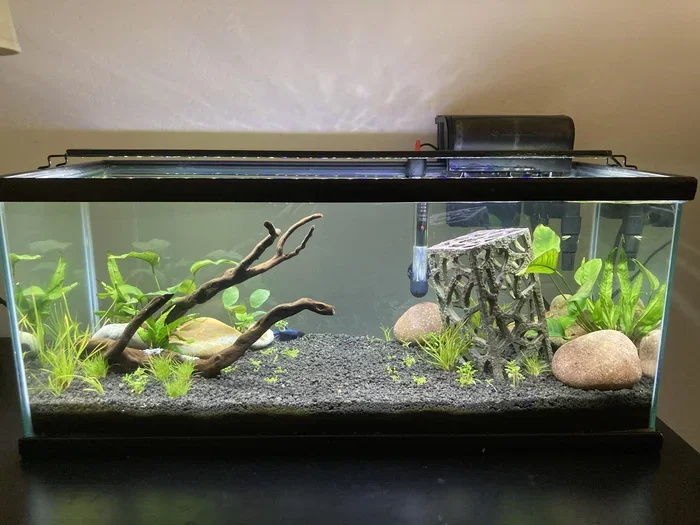
- Creating the Ideal Solo Habitat: The Solo Tank Blueprint
- Recognizing Stress and Loneliness in Your Solo Betta
- When (and How) a Community Tank *Might* Work for a Betta
- Your Betta’s Best Life: Making the Right Choice
- Conclusion: Solitude as the Ultimate Care
Understanding the Betta: Beyond the Fighting Fish Reputation
To answer “can one betta fish live alone?” we must first look past the dramatic label of “Siamese fighting fish.” This nickname, born from centuries of selective breeding for aggression in Thailand, casts a long shadow. It leads many to believe these fish are perpetually angry hermits, doomed to a life of solitary confinement. The reality is more nuanced, and understanding it is the first step to becoming a fantastic betta keeper.
The Wild Betta: A Solitary but Resource-Rich Existence
In the shallow rice paddies, slow-moving streams, and floodplains of Southeast Asia, wild bettas (Betta splendens) live a largely solitary life. They are not schooling fish. Their days are spent exploring dense vegetation, hunting insects and larvae at the water’s surface, and defending a small territory—often just a patch of plants or a fallen leaf—from intruders. This territory provides food, shelter from predators, and a place to build their iconic bubble nests. Their world is not empty; it’s a complex tapestry of hiding spots, surface cover, and dispersed resources. They encounter other bettas briefly, usually to spar or during courtship, but they do not form social bonds. This instinct is hardwired.
The Captive Betta: A Matter of Instinct and Space
Bring a betta into your home, and you replicate a fraction of this wild world. The key word is “fraction.” A tiny vase or a half-gallon “betta tank” offers none of the complexity of a Southeast Asian floodplain. It offers only stress. In such a confined space, a betta has no room to establish a territory, no places to hide from perceived threats (like your hand reaching in), and no environmental stimulation. The question isn’t “will it be lonely?” but “will it be chronically stressed and unhealthy?” In this context, a single betta in a properly sized, decorated tank is not a punishment; it’s the foundation of proper care. It gives the fish control over its environment, which is paramount for its mental well-being.
The Lone Betta: Myth vs. Reality
Now, let’s directly confront the myths surrounding a solo betta. The most pervasive is that they are “lonely” without friends. This is an anthropomorphism—applying human emotions to an animal with a completely different psychological framework. A betta does not yearn for companionship. Its primary drives are survival, territory, and reproduction. A well-set-up solo tank meets the survival and territory needs perfectly.
Visual guide about Can One Betta Fish Live Alone
Image source: bettafishnest.com
Myth: Bettas Get Lonely and Need Friends
Reality: Bettas are not social fish. They do not form schools, pairs, or friendships. In the wild, interactions are competitive or reproductive. A peaceful, non-threatening tankmate is simply ignored, not befriended. The “loneliness” an owner might perceive (a fish resting a lot) is often a sign of boredom or improper water conditions, not a desire for a buddy. Providing a stimulating environment with plants, caves, and varying textures is the solution to boredom, not adding another fish which introduces risk.
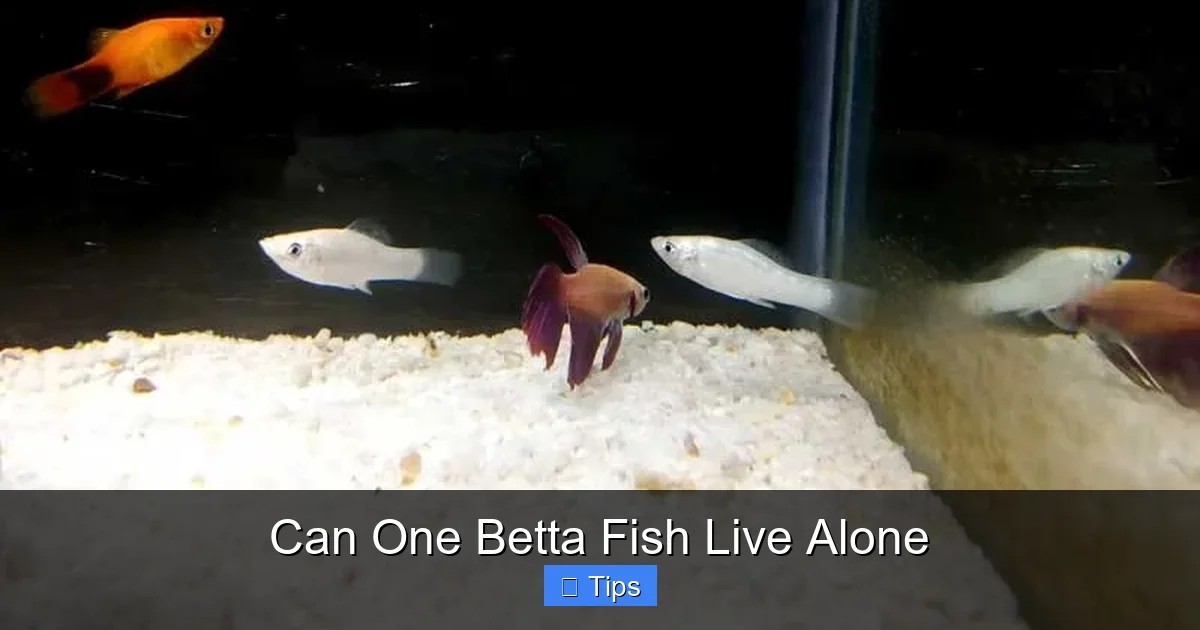
Myth: A Betta in a Community Tank is Happier
Reality: This is a high-stakes gamble. While some bettas, particularly certain less aggressive plakat (short-finned) varieties, may tolerate a carefully selected community, the majority will see other fish as rivals or food. The constant stress of defending a territory in a shared space suppresses the immune system, shortens lifespan, and can lead to torn fins, nipping, and eventual death for the betta or its tankmates. A community tank for a betta is not about “happiness”; it’s about managing potential conflict with no guarantees. For 95% of keepers, a solo tank is the happier, safer path.
Myth: Female Bettas Must Live in Groups (Sororities)
Reality: Female betta sororities are a popular but advanced and often misunderstood setup. While females can be less aggressively territorial than males, they still establish a strict hierarchy. In a small, poorly planted tank, this leads to relentless bullying, injury, and death. A successful sorority requires a large, heavily planted tank (20+ gallons), a group of 5+ females introduced simultaneously, and meticulous monitoring. For a beginner or anyone seeking a low-stress pet, a single female betta is an excellent, perfectly normal, and highly recommended choice. She will be just as interactive and beautiful as a male.
Creating the Ideal Solo Habitat: The Solo Tank Blueprint
If we accept that one betta living alone is not only acceptable but often ideal, the next question is: how do we make that solo tank a paradise? The goal is to build a rich, secure, and stimulating world that caters to their natural instincts. This is where you have creative control and can directly impact your fish’s health and vibrancy.
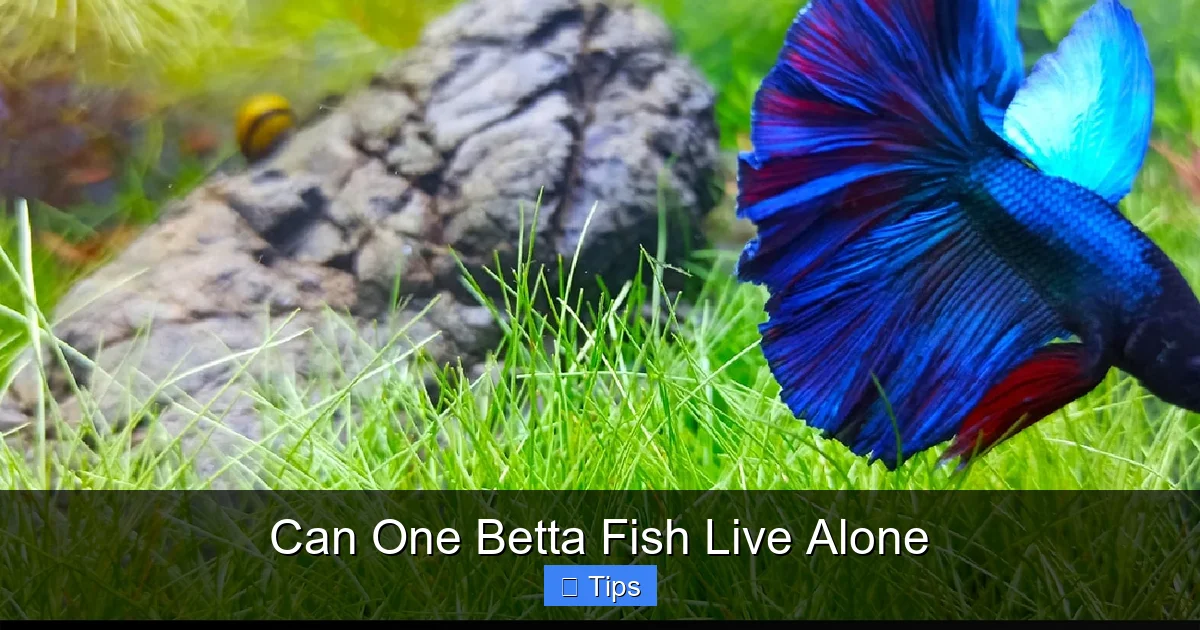
Visual guide about Can One Betta Fish Live Alone
Image source: buildyouraquarium.com
Tank Size: The Foundation of Everything
Let’s settle this once and for all: a betta needs a minimum of 5 gallons (19 liters). This is the overwhelming consensus of modern, science-based aquatic veterinarians and experienced hobbyists. Why?
- Stable Water Parameters: Smaller volumes of water fluctuate wildly in temperature and toxin levels (ammonia, nitrite). A 5-gallon tank provides a stable buffer, making maintenance easier and water safer.
- Swimming Space: Bettas are active explorers. They need room to swim horizontally, not just bob in place. More space allows for exercise and reduces stress.
- Heating & Filtration: A small, adjustable heater can properly and evenly warm a 5-gallon tank. A gentle filter (see below) can be used without creating a current that exhausts the betta. In a 1-gallon vase, a heater is a burn risk, and filtration is impossible.
- Enrichment Potential: You can create a true landscape with plants, hardscape, and hiding spots in a 5-gallon tank. A tiny bowl offers none of this.
If you have the space and budget, a 10-gallon (38 liters) or larger is even better. It provides more swimming area, more stable water, and more room for creative aquascaping.
Heating: The Tropical Imperative
Betta splendens are tropical fish. They require a constant water temperature between 78°F and 80°F (25.5°C – 26.5°C). Cold water slows their metabolism, suppresses their immune system, and makes them lethargic and prone to diseases like dropsy. A reliable, fully submersible aquarium heater with an automatic shut-off is non-negotiable for a solo betta tank. Never rely on room temperature. Use a small, stick-on thermometer to verify the temperature.
Filtration: Gentle but Effective
Clean water is life. A filter is essential to cycle the tank (establish beneficial bacteria that process waste) and keep ammonia and nitrite at zero. The challenge with bettas is their long, delicate fins. They are not strong swimmers and cannot tolerate a strong current. You need a filter that is:
- Adjustable: So you can turn the output down to a trickle.
- Sponge-based: Air-driven sponge filters are perfect. They provide excellent biological filtration with zero current, and bettas often love swimming through the bubbles.
- With a spray bar or diffuser: If using a hang-on-back (HOB) or canister filter, direct the output against the glass or use a spray bar to diffuse the flow.
Never run a betta tank without a filter. “Frequent water changes” in a tiny, unfiltered bowl are a poor substitute for a cycled, filtered ecosystem and lead to a constant state of toxic stress.
Enrichment & Décor: Building a Secure World
This is the fun part and directly addresses the “boredom” concern. Your betta’s tank should be a jungle gym and fortress combined.
- Live or Silk Plants: These are the single best addition. Floating plants (like duckweed or frogbit) are betta favorites, providing security at the surface where they breathe and build bubble nests. Tall, leafy plants (like Amazon swords, java fern, or betta hammocks) give them places to rest mid-level. Avoid plastic plants with sharp edges—they can tear fins.
- Caves and Tubes: Provide at least one dark, enclosed space (a ceramic cave, a piece of PVC pipe, a coconut shell) where the betta can retreat and feel completely safe.
- Gentle Lighting: Bettas prefer subdued light. A tank light on a timer (8-10 hours) is fine, but avoid direct, harsh sunlight which causes algae blooms and overheating. Floating plants help diffuse light.
- Substrate: Sand or smooth gravel is fine. Avoid sharp, pointed gravel.
- A Secure Lid: Bettas are jumpers! A tight-fitting lid is mandatory. They can and will leap to their death if given the chance.
Arrange plants and decorations to break up lines of sight. This creates more “territories” within the tank, allowing your betta to choose different spots and feel in control.
Recognizing Stress and Loneliness in Your Solo Betta
Even in a perfect solo setup, you need to be a detective. A betta cannot tell you it’s unhappy with words, but its body and behavior are a clear book if you learn to read it. The signs of a stressed or unhealthy betta are often the opposite of what a “lonely” betta would show.
Visual guide about Can One Betta Fish Live Alone
Image source: aniimad.com
The Language of a Stressed Betta: Red Flags
Watch for these chronic signs that something is wrong with the environment:
- Lethargy and Clamped Fins: A healthy betta is alert, with fins gracefully extended. A stressed betta will hold its fins close to its body, rest motionless on the bottom or a leaf, and show little interest in food.
- Faded or Dull Colors: Vibrant reds, blues, and greens are a sign of health. Stress causes color loss, often making the fish appear pale, gray, or washed out.
- Rapid Gasping at the Surface: This indicates poor water quality (high ammonia/nitrite) or low oxygen. It’s an emergency sign.
- Loss of Appetite: While bettas can be picky, a complete refusal to eat for several days is a major red flag.
- Erratic Swimming (Swim Bladder Issues): Floating upside down, swimming in circles, or struggling to maintain depth is often linked to diet or water quality, but can be exacerbated by stress.
- Hiding Constantly: While bettas do use caves, if yours is permanently sequestered and never comes out, the tank likely lacks security or has a water quality issue.
Important: These are almost never signs of “loneliness.” They are signs of a failing environment: dirty water, wrong temperature, strong currents, lack of hiding spots, or a frightening setup (bright lights, constant disturbances). Fixing the environment resolves these issues.
The Happy, Healthy Solo Betta: Signs of Success
What should you see? A betta thriving in its solo domain:
- Active Exploration: It swims throughout the tank, investigates plants and decorations.
- Flaring (Occasionally): Flaring its gills and spreading its fins is a natural display, often triggered by its own reflection (see below) or a sudden movement. It’s not always aggression; it can be excitement or curiosity.
- Bubble Nest Building: This is the ultimate sign of a comfortable, healthy male (and sometimes female) betta. Building a nest at the surface means it feels secure and its instincts are engaged.
- Vibrant Colors and Graceful Fins: Colors are bright, fins are held elegantly.
- Eager Feeding: It comes to the front to greet you and eats eagerly.
- Resting in Strategic Spots: It will rest on a broad leaf, a hammock, or a cave entrance—places where it feels secure but can also observe its territory.
When (and How) a Community Tank *Might* Work for a Betta
Despite the strong recommendation for a solo tank, you may still be drawn to the idea of a community. This is a path for the patient, observant, and well-equipped keeper. It is not a beginner project. If you choose to try, you must follow strict rules.
The Cardinal Rules for a Betta Community
- Tank Size is Paramount: The absolute minimum is a heavily planted 20-gallon (75-liter) long tank. More space is the single most important factor for success. It dilutes aggression and allows for clear territories.
- Species Selection is Everything: You are not choosing “pretty fish.” You are choosing peaceful, fast, non-flashy, and non-territorial fish. They must occupy different swimming levels to avoid competition.
- Avoid These at All Costs: No other anabantoids (gouramis, paradise fish—they will fight). No long, flowing fins (fancy guppies, angelfish—will be seen as rivals). No bright, bold colors that trigger aggression (some tetras, male guppies). No fish that inhabit the top layer (like hatchetfish—betta territory). No nippy fish (like tiger barbs).
- Introduce the Betta LAST: Set up the community tank, let it cycle, and establish the other fish first (2-3 weeks). Then, introduce the betta. This allows the other fish to claim their own spaces first, making the betta the “newcomer” who must fit in, not the invader.
- Have a Backup Plan: You must have a fully cycled 5-gallon hospital tank ready. Be prepared to move the betta or the offending fish at a moment’s notice. Do not hope problems will resolve themselves.
Potential Community Candidates (With Caveats)
These species are sometimes successful in a large, well-planted betta community. There are no guarantees.
- Schooling Tetras: Ember tetras, neon tetras, harlequin rasboras. They are fast, stay in the middle levels, and school together, which diffuses attention. (Note: Some bettas still see them as food).
- Corydoras Catfish: These peaceful, armored bottom-feeders are excellent cleanup crew. They occupy a different niche and are too busy sifting sand to bother a betta. Need a group of 6+.
- Otocinclus Catfish: Small, algae-eating catfish that are shy and stay on the glass. Good in groups.
- Kuhli Loaches: Eel-like, nocturnal, and incredibly peaceful bottom dwellers. A great addition for a large tank.
- Snails: Nerite snails, mystery snails, ramshorn snails. They are generally ignored. They are great cleanup crew but produce a lot of waste, requiring more diligent water changes.
- Shrimp: This is a huge gamble. Cherry shrimp are often seen as a snack. Larger Amano shrimp have a better chance. Ghost shrimp are hit-or-miss. You must accept that you may be feeding your betta expensive shrimp.
Example Setup: A 20-gallon long, densely planted with java fern, anubias, and floating frogbit. Stock: 1 betta, 8 ember tetras, 6 corydoras pygmaeus, 3 nerite snails. This uses all tank levels and provides ample space and visual barriers.
Your Betta’s Best Life: Making the Right Choice
So, we return to the core question: can one betta fish live alone? The evidence and experience point overwhelmingly to yes, and it is the path that leads to the most successful, stress-free, and long-lasting betta ownership. A solo betta in a 5+ gallon, heated, filtered, and enriched tank is not a lonely prisoner. It is a king or queen in its own perfectly designed kingdom. It will display its full personality—curious, interactive, and flamboyant—without the constant threat of violence or harassment.
The Joy of the Solo Betta
When you have a single betta, your relationship with it deepens. You become the primary source of stimulation. It will learn to recognize you, follow your finger along the glass, and eat from your tweezers. You can carefully train it to flare on command or jump through a hoop. You can observe its unique behaviors: how it builds its bubble nest, which leaf is its favorite sleeping spot, how it reacts to a water change. This intimate, low-stress interaction is the true reward of betta keeping. You are providing an optimal life, not just a tank.
When to Consider a Community (The Exception, Not the Rule)
Only consider a community if:
- You have a large tank (20+ gallons) and the budget for it.
- You are willing to research species compatibility exhaustively.
- You understand this is an experiment that may fail, and you have a backup tank.
- You are starting with a known, mild-mannered betta (often a female or a plakat male from a reputable breeder who breeds for temperament).
- Your primary goal is a community tank with a betta as an optional member, not a betta that needs friends.
If any of those points give you pause, the answer is clear: stick with a solo tank. There is no shame in it. It is the responsible, educated choice.
Conclusion: Solitude as the Ultimate Care
The question “can one betta fish live alone?” has been clouded by myth and sentimentality. The scientific and practical answer is a resounding yes. The solitary betta is not a tragic figure; it is a beneficiary of care that understands its ancient, territorial nature. By providing a spacious, warm, clean, and enriched environment, you are not depriving it of social interaction—you are granting it the security and stability that all wild bettas instinctively seek. You are removing the chronic stress of competition and allowing its immune system, colors, and natural behaviors to flourish. While the allure of a peaceful community is understandable, it is a complex, risky endeavor that places the betta’s well-being in constant jeopardy. The simplest, kindest, and most rewarding path is to embrace the solo betta. Build its kingdom, watch it thrive, and enjoy the unique bond that comes from providing exactly what this magnificent, misunderstood fish truly needs: a peaceful, solitary dominion of its own.
Frequently Asked Questions
Can a betta fish get lonely without other fish?
No, bettas are not social fish and do not get lonely in the human sense. They are territorial and are far more stressed by the presence of other fish than by being alone. A well-enriched solo tank meets all their needs.
What is the smallest tank I can keep a single betta in?
The absolute minimum is a 5-gallon (19-liter) tank. This allows for stable water parameters, space for a heater and gentle filter, and room for essential enrichment like plants and hiding spots. Anything smaller is considered inhumane by modern standards.
Can I put a female betta with other female bettas?
Can I put a female betta with other female bettas?
Female betta sororities are possible but are an advanced, high-risk setup requiring a large (20+ gallon), heavily planted tank with 5+ females introduced at the same time. For almost all keepers, a single female betta is the safe and recommended choice.
What are the safest fish to put with a betta?
If attempting a community in a large tank (20+ gallons), the safest candidates are peaceful, fast, non-flashy mid-level and bottom dwellers like ember tetras, corydoras catfish, or kuhli loaches. Snails like nerites are also usually safe. Success is never guaranteed and depends heavily on the individual betta’s temperament.
How can I tell if my betta is stressed in its tank?
Signs of chronic stress include clamped fins, faded colors, lethargy (constantly resting), rapid gasping at the surface, loss of appetite, and erratic swimming. These are almost always caused by poor water quality, incorrect temperature, strong currents, or lack of hiding spots—not by being alone.
What is the best way to enrich a solo betta’s tank?
Focus on creating complexity and security. Use plenty of live or silk plants (especially floating ones), provide at least one cave or hiding tube, use a soft substrate, and ensure the tank has a secure lid. This mimics their natural habitat and gives them places to explore, rest, and feel in control of their territory.