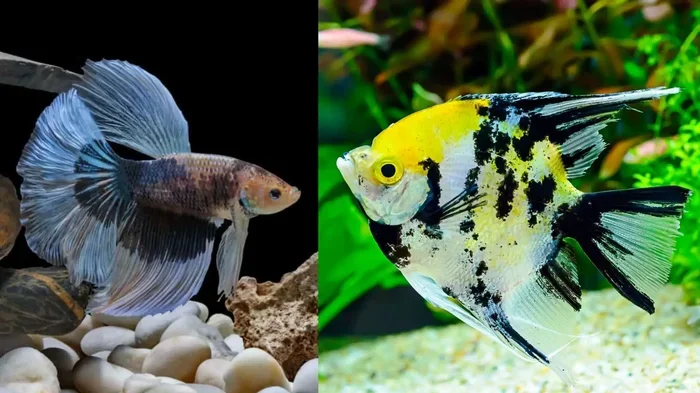
Can You Teach A Betta Fish Tricks With These Fun Methods

Yes, you can teach a betta fish tricks with positive reinforcement, small food rewards, and brief daily practice. Many bettas can learn to follow your finger, track a stick, or jump through a hoop. Keep sessions under five minutes and stop as soon as your fish seems stressed.
SEO Title: Can You Teach a Betta Fish Tricks? Fun Methods
Meta Title: Can You Teach a Betta Fish Tricks? 7 Fun Training Tips
URL Slug: teach-betta-fish-tricks
Category: Tips
Opening Summary: The answer to the question can you teach a betta fish tricks is yes. Most bettas can learn simple behaviors through positive reinforcement, tiny food rewards, and calm practice. They may learn to follow your finger, spin, or touch a hoop when training stays short. This guide explains how to set up a safe tank, choose rewards, teach seven tricks, and spot stress early.
Can You Teach A Betta Fish Tricks With These Fun Methods
Betta fish are curious and smart enough to link an action with a result. With steady cues and a calm routine, a pet betta can turn simple games into daily tank enrichment.
Training also helps you learn your fish’s habits. It should never feel like a test, however, and it must never force your betta to move or jump.
Key Takeaways
- Bettas can learn: Most bettas can learn simple behaviors through positive reinforcement and consistent cues.
- Keep practice short: Two to five minute sessions fit a betta’s short attention span better than long drills.
- Use tiny rewards: Offer small flakes or soaked freeze-dried treats without adding extra calories.
- Start with targeting: Finger or stick targeting is the easiest skill and forms the base for most other tricks.
- Watch for stress: Stop if your betta hides, clamps its fins, loses its appetite, or swims in a panic.
- Build trust first: A calm tank, steady routine, and gentle handling make training much easier.
📑 Table of Contents
Can You Teach a Betta Fish Tricks? The Short Answer
How betta fish cognition works
Bettas use associative learning. They learn that a cue, action, and reward are linked. For example, a betta may learn that touching a colored stick is followed by a tiny food piece.
Their betta intelligence does not make them like dogs or parrots. They have a limited fish attention span, and each fish has its own pace. Some learn a new cue in days. Others need weeks.
Signs that your betta may be ready include:
- It swims to the surface when you come near.
- It follows food or a target with interest.
- It remains calm when your hand rests near the tank.
- It has a steady appetite and normal activity.
- It has adjusted well to its home for several weeks.
Do not train a newly bought fish right away. Give it at least one to two weeks to settle in. Aquarium stability and routine matter more than speed.
What tricks are realistic?
A betta can often learn to touch a target, follow a stick, spin, wait, or retrieve a light toy. Some may leap through a large hoop. Not every betta will enjoy jump training, though.
Think of these as simple games, not circus acts. A happy fish that chooses to take part is the real goal.
Prepare the Tank and Training Supplies
Create a safe training space
Start with a clean, heated, and cycled tank. A roomy tank gives your betta space to turn and makes training less stressful. A tiny bowl can cause poor water quality and fast changes in temperature. This betta fish in a bowl guide explains why a stable tank is a better home.
For many healthy adult bettas, 76–80°F and a pH near 6.8–7.5 are common starting points. Exact needs can vary, so test the water and focus on stability. Keep ammonia and nitrite at 0 ppm.
A gentle betta fish tank filter can help, but the flow must not be strong. Use a sponge filter or reduce the output if your fish struggles to swim. Add a hide, broad leaves, and a secure lid.
Gather simple supplies
- A target stick: Use a smooth, clean stick with no paint or sharp edge.
- A marker: A clicker can work, but the simple word “yes” is enough.
- Small treats: Use tiny flakes, chopped foods, or soaked freeze-dried treats.
- A hoop: Choose a large, smooth hoop that will not pinch the fish.
- A light toy: A small foam ring can work for retrieve training.
- A test kit: Check the water if training suddenly stops.
Before using your hand, learn whether you can touch a pet betta fish so your first contact stays calm. Wash with soap, rinse well, and let any lotion dry. Never poke the fish, its gills, or its fins.
Quick Tips for Setup
- Train at the same calm time each day.
- Turn off loud music and close busy windows.
- Keep the room at a steady, comfortable temperature.
- Rinse toys after each session.
- Remove any uneaten treat at once.
Can You Teach a Betta Fish Tricks? Seven Fun Methods
Method 1: Finger or Stick Targeting
Target training is the best first skill. Hold a finger or target stick about an inch above the water. Wait for your betta to touch it with its nose.
Say “touch,” mark the action with “yes,” and give a tiny reward. Repeat three to five times. Keep your hand still. Do not chase the fish or move the target too fast.
Method 2: Following a Target
Once your betta touches the target, move it slowly to one side. Reward the fish for following. Then move it up, down, and in a gentle curve.
Use behavior shaping. Reward small steps at first. A small turn becomes a wider turn. A slow move becomes a smooth path. This builds confidence without stress.
Method 3: Jumping Through a Hoop
Start with the hoop floating on the water. Let your betta inspect it. Reward a sniff or touch. Next, hold the hoop partly above the surface.
Only try a jump when your betta is active and the tank is deep enough. Keep a lid on the tank. Use a hoop at least as wide as the fish is long. Never lift, push, or drop the fish through it.
Method 4: Spinning Around
Move the target in a small arc in front of the fish. Mark and reward the first small turn. Gradually ask for a wider turn over several sessions.
Do not pull the target around the fish’s body. That can cause strain or panic. If the betta swims straight ahead, return to an easy target touch.
Method 5: Picking Up a Light Toy
Float a clean foam ring near the surface. Wait for your betta to sniff or bump it. Mark that step, then offer a tiny piece of food beside the toy.
Soon, your betta may open its mouth or carry the ring a short distance. Keep the toy very light. Stop if the fish bats it hard or seems frustrated.
Method 6: Staying at the Surface
This trick builds self-control. Say “wait.” Mark your betta as soon as it holds still for one second. Give the reward while it is still in place.
Build the time slowly: one second, two seconds, three seconds, and then five. Do not count silently in your head. Use a timer at first so you do not reward late.
Method 7: Learning a Name or Sound Cue
Say your betta’s name, then give a familiar cue such as “ready.” Mark the response and offer food. Over time, your fish may swim over when it hears that sound.
This is sound training, not proof that the fish understands words. Keep the name short and use the same tone every day.
A Simple Practice Example
Try a short targeting lesson like this:
- Minute one: Let the fish find the target.
- Minute two: Move the target a little to the side.
- Minute three: Ask for one easy turn.
- Minute four: Repeat the best cue.
- Minute five: End with a calm reward.
Stop before your betta loses interest. A happy ending helps with future trust building.
Build a Simple Training Plan
Use a five-minute routine
Keep each session short. A good plan has one clear goal. Do not try to teach targeting, spinning, and jumping in the same session.
A basic routine is:
- One minute of calm setup.
- Two minutes of the main skill.
- One minute of an easy, known cue.
- One minute of praise and a final reward.
Three to five short sessions each week is enough for most bettas. You can train more often if your fish stays eager and relaxed.
Time rewards within one second
Timing is key. Mark the exact action, then give the reward within about one second. If the delay is too long, the fish may not know what it did right.
Use clicker training only after teaching what the click means. First, click and give food several times. Then use the click to mark a behavior. A spoken “yes” works just as well for many owners.
Compare the main trick methods
| Trick | Best for | Useful reward | Main caution |
|---|---|---|---|
| Finger target | Focus and trust | Tiny flake | Do not poke the fish |
| Follow target | Movement and control | Small food piece | Move slowly |
| Hoop | Active bettas | Small treat | Use a large hoop and lid |
| Spin | Coordination | Small treat | Reward only small turns |
| Retrieve | Enrichment | Light foam toy | Keep the toy very light |
| Stay | Patient control | Delayed food reward | Begin with one second |
Use food rewards safely
Train shortly before a normal meal, when the fish is mildly hungry. Use far less food than a full serving. If you train often, remove a small amount from its regular meal.
Good choices include a tiny flake, a small piece of pea, or a bite-sized portion of frozen food. Soak freeze-dried treats first. Never use salty, seasoned, or human table food.
Expert Insights, Common Mistakes, and Safe Handling
Common mistakes that slow progress
- Training too long: Keep practice to two to five minutes.
- Using large treats: Small pieces prevent overfeeding.
- Moving too fast: Change one step at a time.
- Repeating a failed cue: Return to an easy success.
- Forcing a jump: A willing betta should do the leap.
- Changing the tank often: Keep the home stable during lessons.
- Expecting one pace: Every betta learns at its own speed.
A trick is not a sign of obedience. It is a simple game based on food motivation and clear cues.
Watch for stress signals
Stop training if you see clamped fins, heavy hiding, rapid breathing, flashing, or frantic swimming. A sudden loss of appetite can also be a warning. Darker color may show stress, although it can have other causes too.
Check the temperature, ammonia, nitrite, and filter flow. Return the fish to a quiet tank and try again another day. If signs continue, contact an aquatic veterinarian.
Expert tips for better results
- End each lesson on a cue your betta can master.
- Practice when the room is quiet and the light is soft.
- Keep hands, sticks, and toys smooth and clean.
- Use the same word, motion, and reward each time.
- Take a break after a new success.
- Focus on willing participation, not perfect form.
If a trick stops working, do not raise the pressure. Review the last step your betta understood. Then make the task easier. This keeps training positive instead of frustrating.
Conclusion
Can you teach a betta fish tricks? Yes, when you use patience, safe handling, and small rewards. Start with finger targeting, keep lessons under five minutes, and let your betta choose to take part. Pick one fun method, practice a few times a week, and enjoy the time you spend together.
Frequently Asked Questions
Can you teach a betta fish tricks without food?
You can use praise or a gentle touch as a marker, but food is usually the clearest reward for bettas. Keep the portions tiny and count them toward the fish’s daily meal.
How long does it take to train a betta fish?
Many bettas learn a simple target touch within a few days to two weeks. More complex skills, such as jumping through a hoop, may take several weeks or may never suit that fish.
Can an older betta fish learn new tricks?
Yes. Older bettas can learn, but they may need slower movements and shorter sessions. Watch for tired fins, slow reactions, or stress, and adjust the pace.
Can a betta learn its name?
A betta can learn to respond to a sound. Say its short name before a cue, then reward the response. This shows sound recognition, not human-style language skills.
Can you train two betta fish together?
Training them separately is safer and easier. Tank mates can distract, chase, or stress one another during lessons. Always consider each fish’s personality and housing needs.
Why will my betta not do a trick?
Your betta may be tired, stressed, ill, or unsure of the cue. Check the water, use a smaller step, and end the session calmly. If the change is sudden, look for signs of illness.