Can Male Female Betta Fish Live Together

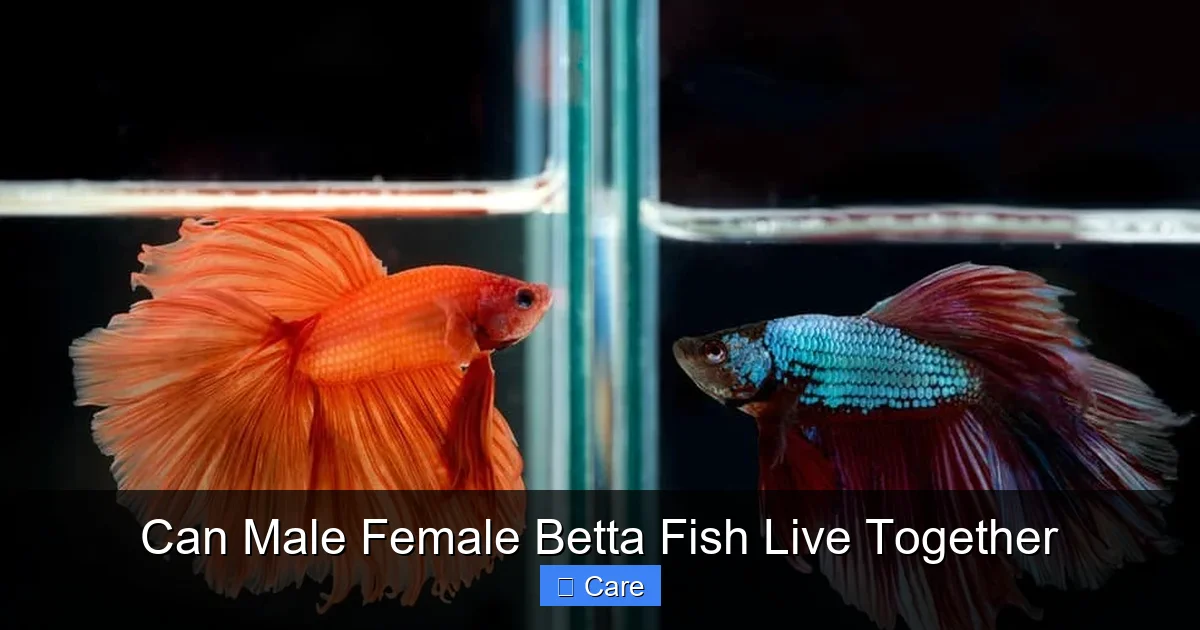
In the vast majority of cases, housing a male and female betta fish together is not safe and is strongly discouraged. Their natural aggression, especially in males, leads to fatal fights or severe stress. While brief, supervised breeding interactions are possible, permanent cohabitation requires an enormous, expertly planted tank and a documented, exceptionally docile pair—a scenario that is the rare exception, not the rule. The safest approach is always to keep bettas solitary or with carefully selected, non-threatening tank mates in a species-only or community setup.
Key Takeaways
- Natural Aggression: Bettas, particularly males, are genetically programmed for territorial aggression towards other bettas, making cohabitation inherently risky.
- Permanent Cohabitation is Rare: A male and female betta living together long-term is an exception that requires a massive tank (75+ gallons), perfect water parameters, and a uniquely peaceful pair.
- Breeding is Temporary: The only common reason to introduce a male and female is for supervised breeding, after which they must be separated immediately to prevent injury or death.
- Tank Size is Non-Negotiable: The “minimum” for a successful permanent pair is often cited as 75 gallons, but many experts recommend 100+ gallons to provide enough space to establish separate territories.
- Aquascaping is Critical: A tank must be heavily planted with dense foliage, driftwood, and rockwork to create visual barriers and break lines of sight, reducing constant confrontation.
- There Are Safer Alternatives: A betta sorority (multiple females) or a well-researched community tank with peaceful, fast-moving species is a far safer way to provide social enrichment.
- Stress is a Silent Killer: Even if physical fighting is avoided, the constant stress of proximity can weaken a betta’s immune system, leading to disease and a shortened lifespan.
📑 Table of Contents
- The Allure and The Reality of Betta Pairs
- Understanding the Betta’s Aggressive Nature
- The “Breeding Tank” Scenario: A Temporary Exception
- The “Successful Pair” Myth: When It Actually (Rarely) Works
- Why Even a “Peaceful” Pair is a Bad Idea
- Safer, Enriching Alternatives for Your Betta
- Conclusion: Respecting the Fighting Fish
The Allure and The Reality of Betta Pairs
You gaze at your stunning male betta, his fins flowing like silk, and then at the beautiful female you just brought home. The idea of a peaceful, colorful pair swimming together is undeniably romantic. It’s a vision often sold by pet stores with multiple bettas in a single, small display tank. But here’s the hard, crucial truth every potential betta owner must understand: can male female betta fish live together? The overwhelming and consistent answer from aquarists and veterinarians is a firm no for permanent, everyday cohabitation.
Betta splendens, the “Siamese fighting fish,” earned its name for a reason. Centuries of selective breeding for aggression have hardwired these fish to view other bettas as mortal rivals. This isn’t just about males; females can be territorial and aggressive as well. The common misconception that a male and female will “get along” because they are opposite sexes is a dangerous myth. In fact, a male may see a female as an intruder in his territory or, conversely, as a potential mate he must guard aggressively from all other perceived threats—including her if she doesn’t respond immediately. This guide will dissect the biology, the extreme exceptions, and the practical, safe alternatives to help you make the best, most humane decision for your aquatic pets.
Understanding the Betta’s Aggressive Nature
A History of Fighting
To understand why can male female betta fish live together is such a complex question, we must look at their history. Wild bettas are relatively shy and only engage in brief skirmishes over territory. However, in 19th-century Southeast Asia, they were bred specifically for gambling matches where they would fight until one retreated. This selective pressure for relentless aggression, particularly in males, is deeply embedded in their genetics. While modern pet bettas are less extreme than their fighting ancestors, the instinct remains potent.
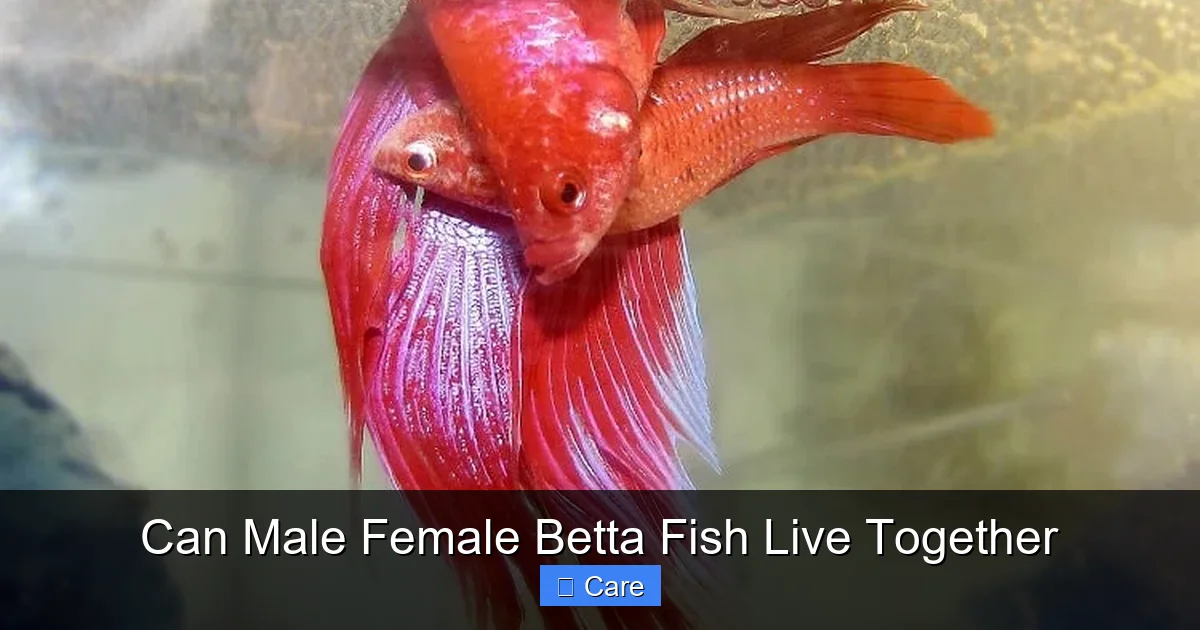
Visual guide about Can Male Female Betta Fish Live Together
Image source: fishlab.com
Territory Over Everything
For a betta, its space is its identity. A male builds a bubble nest at the water’s surface and meticulously patrols a designated territory below it. Any other fish that enters this space, especially another betta with its flowing fins and similar body shape, is seen as an intruder challenging his dominance. The response is immediate: flaring (gilling out their opercula and extending their fins to look larger), chasing, and biting. A female, while generally less verbose in nest-building, still establishes her own preferred areas and will defend them fiercely, especially from males.
Practical Example: Imagine your living room is your entire world. Now, someone moves a stranger with a similar style of clothing and haircut into your living room permanently. You would feel your personal space was violated and react defensively. For a betta, the entire tank is that living room.
The “Breeding Tank” Scenario: A Temporary Exception
The only widely accepted scenario where a male and female betta are intentionally placed together is for the purpose of breeding. Even then, it is a carefully managed, temporary event under close human supervision. This is not cohabitation; it is a controlled introduction with an exit strategy.
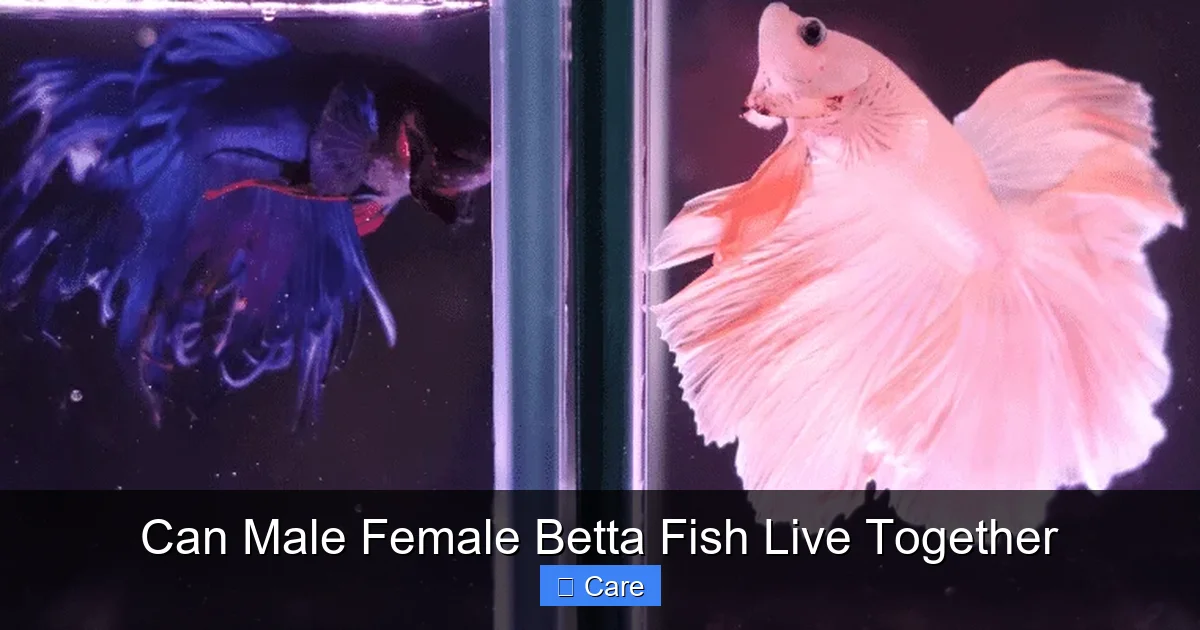
Visual guide about Can Male Female Betta Fish Live Together
Image source: aquariumsphere.com
The Breeding Process and Its Dangers
A conditioned (healthily plump) male and female are introduced in a separate, bare or sparsely decorated breeding tank (often 10-20 gallons). The male displays his best colors and builds a bubble nest. The female, receptive to his advances, will darken in color and develop vertical “breeding bars.” The male then performs a courtship dance, leading her to the nest. Spawning occurs, where the male wraps the female and she releases eggs which he fertilizes and places in the nest.
This is the most dangerous moment. The male becomes hyper-protective of the nest and eggs. The female, after spawning, is often exhausted and may be seen as a threat to the nest or simply an irritant. The male will frequently chase her relentlessly. It is the aquarist’s critical duty to remove the female immediately after spawning is complete (usually within 24-48 hours) to a separate recovery tank. Leaving her in will almost certainly result in her being injured or killed by the now-ferocious father guarding his future offspring.
Why This Doesn’t Equal “Living Together”
The breeding tank scenario is a brief, purposeful biological event. The fish are not “living together” in a social sense. They are brought together for a single, specific function and are then permanently separated. The stress of the process is immense for both fish. Using this temporary, high-stress interaction as proof that a male and female betta can share a home long-term is a fundamental misunderstanding of their behavior.
The “Successful Pair” Myth: When It Actually (Rarely) Works
You will find anecdotes online and in forums about a male and female betta living together peacefully for months or years. These stories are not fabrications, but they represent statistical outliers that require a perfect storm of conditions. It is crucial to understand what these conditions are to see why this is not a viable or recommended approach for the average hobbyist.
Visual guide about Can Male Female Betta Fish Live Together
Image source: fishtankmaster.com
The Tank: Size is Everything
The single most common factor in these “success” stories is an exceptionally large tank. We are not talking about a 10-gallon or even a 20-gallon “long” tank. The floor for a documented, lasting pair is a 75-gallon aquarium, and many experts argue a 100+ gallon tank is the true starting point. Why such vast space? It allows for the creation of two distinct, non-overlapping territories. The tank must be so large that the male and female can each have a section they consider their own, with minimal need to cross into the other’s domain. In a smaller tank, there is no escape; the rival is always in sight, triggering constant stress and conflict.
The Setup: Creating Invisible Borders
In this giant tank, aquascaping is not for aesthetics alone; it is a survival tool. You must use:
- Dense Planting: Thick clusters of stem plants (like Rotala, Ludwigia), mosses (Java moss, weeping moss), and Cryptocorynes to create thick, impenetrable walls of green.
- Hardscape Barriers: Large pieces of driftwood, slate, and rock formations that break the tank into separate zones. The goal is to prevent a clear line of sight from one end of the tank to the other.
- Floating Plants: These are essential. They provide a sense of security from above (betzas feel vulnerable from the surface) and help diffuse light, which can reduce aggression.
Practical Example: Think of the tank not as a home, but as a large apartment building. The male gets the “penthouse” with his bubble nest under a thick patch of floating plants. The female gets the “ground-floor suite” behind a massive driftwood root and a forest of Crypts. The hallway (open water) is neutral territory they pass through quickly, but neither feels the other is invading their private apartment.
The Fish: The Ultimate Gamble
Even with a perfect tank, you are still gambling on the individual personalities of two animals bred for aggression. You must select a male that is not overly flashy or assertive (sometimes a “dumpy” or less vibrant male is less aggressive) and a female that is notably shy and non-confrontational. This is not something you can reliably determine before introduction. The process of introducing them must be done with extreme caution, using a divider initially to allow them to see but not touch each other, observing reactions for days or weeks before any attempt at full integration. The risk of a sudden, violent flare-up days or months after “peace” is established is always present.
Why Even a “Peaceful” Pair is a Bad Idea
Let’s assume, against all odds, you have a 100-gallon masterpiece of an aquarium and two bettas that seem to ignore each other. Is this an ideal, natural situation? The answer is still no.
Chronic Stress and Its Consequences
Bettas are highly aware of their surroundings. The mere presence of another betta, even if not actively fighting, is a source of low-grade, chronic stress. They are constantly aware of the other’s location, subconsciously monitoring for threats. This constant state of alertness elevates stress hormones like cortisol. Over time, this suppresses the immune system, making the fish susceptible to diseases like fin rot, ich, and internal parasites. A betta that appears “cohabiting” may look physically healthy but is internally under immense strain, leading to a significantly shortened and poorer-quality life.
The Lack of True Social Behavior
Unlike schooling fish or some cichlids that form pair bonds, bettas do not have a social structure that includes peaceful, paired cohabitation. In the wild, a male’s territory contains the nest and a harem of females that he visits for spawning, but they do not live together in a shared space. The female has her own separate area. A permanent pair in a confined tank, no matter how large, is an artificial and fundamentally stressful arrangement because it contradicts their natural solitary-territorial instincts. They are not “friends”; they are two rivals forced into a shared space.
Safer, Enriching Alternatives for Your Betta
If you want to provide your betta with a more stimulating environment than a solitary 5-gallon tank, there are several proven, much safer paths than risking a male-female pairing.
The Betta Sorority (Female-Only Group)
A sorority is a group of 4-6 unrelated female bettas kept together in a large, heavily planted tank (minimum 40 gallons, 55+ ideal). This is the only true “group” housing for bettas that can be successful. The key is numbers and space. With enough females, no single individual can dominate the entire tank, and hierarchies form that diffuse aggression. The tank must be meticulously aquascaped with endless hiding spots and visual barriers. This is an advanced setup requiring diligent observation and a plan to separate any overly aggressive individuals. It mimics a natural situation where multiple females have overlapping territories.
The Community Tank Approach
This involves keeping a single betta (male or female) with other, carefully chosen species. The rule of “one betta per tank” still applies—no other bettas. The tank mates must be:
- Non-Threatening: They should not have long, flowing fins that trigger a betta’s aggression (avoid guppies, fancy mollies).
- Fast and Nimble: They should be able to evade a sudden chase (good options: Harlequin rasboras, Chili rasboras, Ember tetras, Corydoras catfish, Kuhli loaches).
- Not Brightly Colored or Nippy: Avoid fish that are as flashy as the betta or known for fin-nipping (like some tiger barbs).
The tank must be a minimum of 20 gallons, heavily planted, and the betta should be introduced after the community is established to reduce its perception of the tank as its exclusive territory from day one.
Environmental Enrichment for a Solo Betta
Never underestimate the need to enrich the life of a solitary betta. A well-decorated 10-gallon tank is not a prison if done right. Provide:
- A variety of plants (live is best, silk is a good alternative) for exploration and resting.
- Driftwood, caves, and ceramic pots for hiding and claiming as a personal territory.
- Slow, gentle filter flow.
- Regular water changes and a varied diet (high-quality pellets, occasional frozen or live foods like brine shrimp or daphnia).
A healthy, stimulated solo betta will display vibrant colors, active exploration, and curious behavior—signs of good welfare that are often absent in a stressed “cohabiting” pair.
Conclusion: Respecting the Fighting Fish
The question “can male female betta fish live together” forces us to confront the nature of the animal we love. The romantic, peaceful vision clashes with a genetic legacy of territorial aggression. While the internet loves a success story, these are extreme exceptions built on enormous expense, space, and constant risk. They are not a model for responsible pet ownership. The stress of forced proximity, even without visible fighting, is a silent burden on a betta’s health and wellbeing.
Your desire to provide a richer life for your betta is commendable. Channel that desire into creating the best possible solo environment or exploring the far safer, more rewarding paths of a female sorority or a carefully curated community tank. By respecting the betta’s innate nature—solitary, territorial, and stunning—you provide not just a home, but a life of true quality and dignity for your finned companion. Remember, in fishkeeping, the most beautiful tank is often the one that prioritizes the animal’s natural needs over our own aesthetic or social wishes.
Frequently Asked Questions
Can I put a male and female betta together to breed and then leave them?
Absolutely not. Once spawning is complete, the male becomes fiercely protective of the eggs and will attack the female. She must be removed to a separate tank immediately, usually within 24 hours, to prevent serious injury or death.
What is the absolute smallest tank where a male and female betta might survive together?
3>There is no safe “small” tank. The absolute minimum cited for a *possible* permanent pair is a 75-gallon aquarium, and even that is high-risk. Any tank under 50 gallons is considered guaranteed failure and severe animal cruelty due to the inability to establish separate territories.
How can I tell if my male and female bettas are getting along?
You cannot. Initial “peace” is often a period of tense truce or stress-induced immobility. True compatibility is extremely rare. Any flaring, chasing, nipped fins, or one fish consistently hiding are clear signs of incompatibility that require immediate separation.
Are female bettas less aggressive than males? Can two females live together?
Female bettas are generally less aggressive than males, but they are still bettas. A pair of females is not recommended. However, a properly set up sorority (group of 4-6 females in a 40+ gallon, heavily planted tank) can be successful as it diffuses aggression through numbers and hierarchy.
What are the best tank mates for a single male betta?
The best tank mates are peaceful, fast-moving, and fin-safe. Excellent choices include schooling fish like Harlequin rasboras, Chili rasboras, or Ember tetras (in a group of 8+), and bottom-dwellers like Corydoras catfish or Kuhli loaches. Always introduce the betta to an already established community tank.
My betta store had males and females in the same tank. Doesn’t that mean they can live together?
No. Pet stores often use small, divided tanks or keep bettas in poor conditions to maximize shelf space. They are not models of proper, long-term husbandry. The aggressive behavior is simply suppressed by the small size and frequent disturbances, not eliminated. Never use a pet store display as a guide for home aquarium compatibility.