Can I Use Sink Water for My Betta Fish
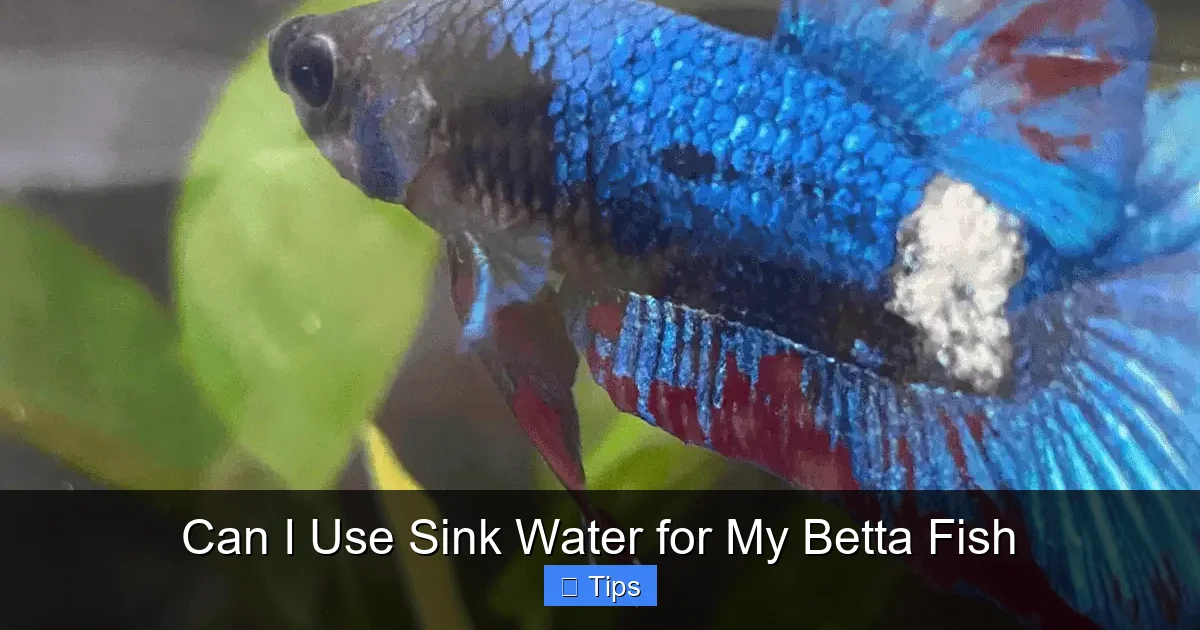
The short answer is: yes, you absolutely can use sink (tap) water for your betta fish, but only if you treat it first. Untreated municipal water contains chlorine, chloramines, and heavy metals that are lethal to bettas. The key is using a reliable water conditioner to neutralize these toxins, maintaining a cycled tank, and regularly testing water parameters. Never assume your tap water is safe as-is—proper preparation is non-negotiable for your betta’s health and longevity.
Let’s be honest: when you bring that beautiful, flashy betta fish home from the store, the last thing you want to think about is water chemistry. You just want to admire those flowing fins! But here’s the truth every betta owner must face—your fish’s entire world is the water it swims in. Get the water wrong, and you’re signing up for a world of stress, sickness, and heartbreak. One of the most common questions we get is, “Can I just use water from my kitchen sink?” It’s a logical question. Sink water is clean, convenient, and free. So, can you use sink water for your betta fish? The answer is a definitive yes, but with absolutely critical conditions. untreated tap water is a silent killer for bettas. But with the right knowledge and tools, your sink can be the source of a thriving, healthy aquatic environment. This guide will walk you through everything you need to know, from what’s lurking in your tap to the exact steps for safe water changes. We’ll debunk myths, highlight common pitfalls, and give you a clear, actionable routine. By the end, you’ll have the confidence to use your sink water safely, ensuring your betta lives its best, most vibrant life.
Key Takeaways
- Untreated sink water is dangerous: Tap water contains chlorine, chloramines, and heavy metals that will burn your betta’s gills, damage its slime coat, and lead to poisoning or death.
- A water conditioner is essential: You must use a quality dechlorinator to neutralize chlorine and chloramines instantly. Letting water sit only removes chlorine, not the more persistent chloramines.
- Your tank must be cycled: A fully established nitrogen cycle is critical to process your betta’s waste. A “fish-in cycle” on untreated water is a primary cause of new tank syndrome and high mortality.
- Test your water regularly: Use a liquid test kit to monitor ammonia, nitrite, nitrate, and pH. Safe water is defined by these parameters, not just clarity or smell.
- Temperature matching is crucial: New water added during a change must be within 1-2°F (0.5-1°C) of the tank’s temperature to prevent dangerous thermal shock.
- Bottled or distilled water is not a simple fix: These often lack essential minerals and have incorrect pH, requiring careful remineralization. They are generally not recommended for long-term use.
- Consistency is everything: Establishing a regular maintenance schedule with properly treated sink water is the single most important factor in preventing disease and ensuring a long, healthy life for your betta.
📑 Table of Contents
- What Exactly Is “Sink Water”? Understanding Your Tap
- The Hidden Dangers: Why Untreated Sink Water is a Betta’s Worst Enemy
- How to Make Sink Water Safe: Your Non-Negotiable Toolkit
- Common Water-Related Mistakes That Kill Betta Fish
- Alternatives to Tap Water: When and How to Use Them
- Your Betta’s Water Maintenance Routine: A Step-by-Step Guide
- Conclusion: Your Sink is a Power Tool—Use It Wisely
What Exactly Is “Sink Water”? Understanding Your Tap
When we say “sink water,” we’re almost always talking about municipal tap water—the water that comes out of your faucet, treated by your city or county water department. It’s important to understand that this is not “natural” water. It’s a carefully treated product designed for human consumption and household use, not for delicate tropical fish. The composition varies dramatically based on your geographic location, the source (river, lake, aquifer), and the treatment process your local plant uses.
The Good, the Bad, and the Ugly in Your Faucet
Your tap water is a cocktail of substances. The “good” includes minerals like calcium and magnesium (which contribute to General Hardness, or GH) and trace elements. These are actually beneficial for your betta in proper amounts, helping to stabilize pH and support biological functions. The “bad” and “ugly” are the additives meant to protect you from harmful pathogens. The two biggest villains for your betta are:
- Chlorine: A gas added to kill bacteria and viruses. It dissipates relatively quickly when exposed to air, which is why the old advice to “let water sit for 24 hours” sometimes works. But it’s unreliable and doesn’t address the next threat.
- Chloramines: A more stable compound formed by combining chlorine and ammonia. Many municipalities now use chloramines because they last longer in the pipes. This is the most critical point: chloramines do NOT evaporate. Letting water sit for days does nothing to remove them. They are highly toxic to fish, causing the same damage as chlorine but persisting until chemically neutralized.
Additionally, your water may contain trace heavy metals (like copper from pipes), fluoride, and varying levels of nitrates. The pH and hardness (GH/KH) can also be outside the ideal range for a betta, which prefers slightly acidic to neutral water (pH 6.5-7.5) and softer to moderately hard water.
Well Water: A Different Beast
If you have a private well, your “sink water” is a completely different scenario. Well water is untreated by chlorine or chloramines, which seems like a win. However, it can contain high levels of iron, sulfur, nitrates from agricultural runoff, or bacteria. It might also be extremely hard or have an erratic pH. Well water often requires testing and potentially filtration or treatment before it’s safe for a betta. Always test well water before use.
The Hidden Dangers: Why Untreated Sink Water is a Betta’s Worst Enemy
It’s not an exaggeration to say that pouring untreated tap water into your betta’s tank is like slowly poisoning it. The effects aren’t always immediate, which makes the danger insidious. You might not see a fish floating belly-up right away, but you’ll be causing cumulative, irreversible damage. Let’s break down exactly what these chemicals do to your betta’s delicate body.
Visual guide about Can I Use Sink Water for My Betta Fish
Image source: acaquarium.com
Chlorine & Chloramines: The Respiratory Assassins
These chemicals attack your betta’s most vital organ: its gills. The gills are thin, filamentous structures designed for efficient oxygen exchange. Chlorine and chloramines cause gill necrosis—they literally burn and destroy the gill tissue. This reduces your betta’s ability to extract oxygen from the water, leading to respiratory distress. You’ll see symptoms like rapid gill movement (gasping for air), lethargy, and clamped fins. The slime coat, a protective mucous layer, is also stripped away, leaving the fish vulnerable to bacterial and fungal infections like fin rot. Chloramines are particularly nasty because they also release ammonia into the bloodstream, causing direct toxicity.
Heavy Metals: The Silent Organ Damage
Copper, lead, and zinc can leach into water from old pipes or from natural sources. Even in parts per billion, heavy metals are toxic to fish. They accumulate in the tissues, damaging the kidney and liver, impairing neurological function, and disrupting osmoregulation (the fish’s ability to balance salts and water in its body). This leads to a slow decline in health, loss of color, and increased susceptibility to disease.
pH Shock and Mineral Imbalance
Bettas are adapted to the soft, acidic waters of Southeast Asian rice paddies and slow-moving streams. If your tap water is very hard and alkaline (common in many regions), a sudden change to that environment can cause pH shock. This disrupts the fish’s internal blood chemistry and can be fatal. Furthermore, a drastic mismatch in mineral content (GH/KH) can stress the fish’s osmoregulatory system, forcing it to work overtime just to maintain its internal balance.
Practical Example: Imagine you have a betta in a tank with a pH of 6.8, established over months. You do a 50% water change with untreated tap water that has a pH of 8.2. That sudden spike is a massive shock to the fish’s system. It’s like suddenly dropping a human into a high-pressure, low-oxygen environment. The stress can kill directly or open the door for opportunistic infections.
How to Make Sink Water Safe: Your Non-Negotiable Toolkit
Now for the empowering part! Making your tap water safe is a simple, two-minute process that becomes second nature. It requires two critical pieces of equipment: a reliable water conditioner and a water test kit. Let’s build your setup.
Visual guide about Can I Use Sink Water for My Betta Fish
Image source: fishkeepingadvice.com
Step 1: Choose a Superior Water Conditioner
A water conditioner (or dechlorinator) is a chemical treatment that instantly neutralizes chlorine, chloramines, and heavy metals. It’s your tap water’s “off switch” for toxicity. Not all conditioners are created equal. Here’s what to look for:
- Must-Neutralize Chloramines: The label must explicitly state it removes or neutralizes chloramines. If it only says “removes chlorine,” it’s useless for most modern water supplies.
- Heavy Metal Detoxification: Many quality conditioners also bind to and remove heavy metals like copper. This is a huge bonus.
- Slime Coat Protection: Look for ingredients like Aloe Vera or polyvinylpyrrolidone (PVP) that help repair and protect the fish’s slime coat during stressful events like water changes.
- Trusted Brands: Seachem Prime is the gold standard—highly concentrated, effective against chloramines and heavy metals, and it also detoxifies ammonia for 48 hours (a lifesaver during a cycling emergency). Other excellent options include API Stress Coat+, Aqueon Water Conditioner, and Fluval Aquaplus.
How to Use It: Follow the dosage instructions on the bottle for the amount of water you are treating. For a typical 5-gallon betta tank, you’ll add conditioner to the new water before it touches your fish or tank. The easiest method: fill your clean bucket or container with the required amount of new tap water, add the correct dose of conditioner, and stir gently. Let it sit for 5 minutes. It’s now chemically safe to add to your aquarium.
Step 2: Master the Art of Water Matching
Chemical safety is only half the battle. The physical properties of the new water must match your tank as closely as possible.
- Temperature: This is paramount. The new water must be within 1-2°F (0.5-1°C) of your tank’s current temperature. A large temperature difference causes thermal shock, which can stop a betta’s heart. Always use an in-tank thermometer to check your tank temp, and a separate thermometer for your bucket of new water. Adjust with a small aquarium heater or by adding a little warm water from the tap (conditioned, of course!).
- pH and Hardness: While you don’t need to adjust these perfectly every time (your conditioner and the tank’s cycle will help buffer them), drastic differences are bad. If your tap water has a pH of 8.0 and your tank is at 6.5, you need to do smaller, more frequent water changes (e.g., 25% instead of 50%) to slowly acclimate the tank’s parameters. Never try to chemically adjust pH with additives as a regular practice—it causes dangerous swings. Stability is key.
Step 3: The Nitrogen Cycle is Your Foundation
You can have perfectly treated water, but if your tank isn’t cycled, your betta is still in danger. The nitrogen cycle is the biological process where beneficial bacteria convert toxic fish waste (ammonia) into less harmful nitrite, and finally into nitrate. A cycled tank has an established colony of these bacteria, primarily in the filter media and on surfaces. For a new tank, you must “cycle” it for 4-6 weeks before adding your betta, using a source of ammonia (like pure ammonia or a bacteria starter). If you have a “fish-in cycle” (adding the betta immediately), you are relying on the conditioner to detoxify the ammonia your betta produces while the bacteria slowly grow. This is a high-risk, high-stress situation that requires daily testing and partial water changes to keep ammonia and nitrite at zero. A fully cycled tank is the single best thing you can do for your betta’s long-term health.
Step 4: Test, Don’t Guess
You cannot see ammonia, nitrite, or nitrate. You cannot see a stable pH. Your eyes are lying to you. The only way to know your water is safe is to test it. Invest in a liquid test kit like the API Freshwater Master Test Kit. Strip tests are notoriously inaccurate. Test your tank water weekly, and always test your new tap water before conditioning it to understand its baseline parameters. Your goal: Ammonia = 0 ppm, Nitrite = 0 ppm, Nitrate < 20 ppm (for bettas), pH stable.
Common Water-Related Mistakes That Kill Betta Fish
Knowing what to do is only half the battle. Knowing what not to do is equally important. These are the most frequent, heartbreaking errors we see from well-meaning betta owners.
Visual guide about Can I Use Sink Water for My Betta Fish
Image source: bettasource.com
Mistake 1: Skipping the Conditioner “Just This Once”
This is the #1 mistake. “Oh, the water looks clean, I’ll just add a little.” Or, “I forgot to buy more conditioner, this won’t hurt.” One exposure might not kill your betta outright, but it will severely stress it, damage its slime coat, and set the stage for disease. It is never, ever okay. Always, always, always use conditioner. Keep a spare bottle. Consider it as essential as the fish food itself.
Mistake 2: Over-Cleaning the Tank & Filter
In a misguided effort to keep things “spotless,” owners will scrub every surface with soap, replace all the filter media at once, or do 100% water changes with untreated water. This destroys the beneficial bacteria colony, crashing the cycle and causing a toxic spike in ammonia. The rule: never use soap or chemicals in your aquarium. Only ever rinse filter media in the old tank water you’re removing during a change—never in tap water. Change 25-50% of the water weekly, not 100%.
Mistake 3: Using the Wrong “Alternative” Waters
Many people hear “tap water is bad” and switch to bottled spring water, distilled water, or reverse osmosis (RO) water. While these are free of chlorine, they are also devoid of essential minerals and buffering capacity. They can have a dangerously low pH that crashes, causing severe stress. These waters are only suitable if you are meticulously remineralizing them with a product like Seachem Equilibrium (for minerals) and Alkaline Buffer (for KH/pH). For 99% of hobbyists, properly conditioned tap water is simpler, safer, and more stable.
Mistake 4: Ignoring Temperature and Pouring Directly
Grabbing a bucket of cold tap water and dumping it straight into the warm tank is a one-way ticket to shock. Always match temperatures. Also, never pour the new water directly onto your betta or into the substrate with force. This can stress the fish and stir up debris. Gently pour the conditioned water into a clean cup or the filter output to diffuse the flow and protect your fish.
Alternatives to Tap Water: When and How to Use Them
While conditioned tap water is the ideal, accessible choice for most, there are valid reasons to consider alternatives. Your tap water might be so extremely hard, alkaline, or contaminated that even with conditioning, it’s not suitable. Or, you might be on a well with known issues. Here’s a breakdown of options.
Bottled Spring Water: A Convenient but Costly Compromise
Spring water is naturally filtered and contains minerals. It’s chlorine-free, so you might think you can skip conditioner. Do not skip it. Bottled water can still contain variable levels of minerals that affect pH and hardness unpredictably. It’s also expensive for regular changes. If you use it, you must still treat it with a conditioner to be safe against any potential chloramines (some brands do use them) and to protect the slime coat. Test its parameters first. It can be a good short-term solution for water changes if your tap is temporarily unsafe.
Distilled & Reverse Osmosis (RO) Water: The Blank Slate
These are pure H2O—they have had all minerals removed. This makes them chemically neutral but also unstable and “hungry.” Adding pure water to your tank will cause the pH to plummet and can leach minerals from your fish and decor. You must remineralize this water before use. Products like Seachem Equilibrium (for GH) and Seachem Alkaline Buffer (for KH) are designed specifically for this. This is a more advanced, precise method used by serious hobbyists breeding sensitive fish. For a single betta, it’s usually overkill and adds unnecessary cost and complexity unless your tap water is truly terrible.
The Well Water Consideration
As mentioned, well water is a special case. Get it tested. If it’s high in iron or sulfur, you’ll need a specific filter (like an oxidizing iron filter or a carbon filter). If it’s very hard, you might need a water softener (but be cautious, as softeners add sodium). Often, the simplest solution for a betta keeper with problematic well water is to use a small RO/DI unit and then remineralize, ensuring perfect, consistent parameters every time.
Your Betta’s Water Maintenance Routine: A Step-by-Step Guide
Knowledge is power, but routine is everything. Here is a simple, fail-safe weekly maintenance schedule using your sink water. This assumes a properly cycled 5-gallon tank for a single betta.
What You’ll Need:
- Aquarium water conditioner (e.g., Seachem Prime)
- API Freshwater Master Test Kit (or similar)
- Gravel vacuum/siphon
- Two clean, dedicated buckets (never used for cleaning supplies!)
- Tank thermometer
- Bucket thermometer (or use the tank thermometer after filling)
Weekly Water Change Ritual (25-50%):
- Test First: Test your tank water. Note ammonia, nitrite, nitrate, and pH. This tells you how much to change. If nitrate is below 20 ppm, 25% is fine. If it’s 20-40 ppm, do 50%.
- Prepare New Water: Fill your clean bucket with the required amount of tap water. Check its temperature with your thermometer. Adjust if needed (use your aquarium heater in the bucket for a few minutes, or add a little warm tap water—but remeasure!).
- Condition: Add the correct dosage of water conditioner to the bucket of new water. Stir well. Let sit for 5 minutes.
- Siphon & Clean: While the conditioner works, use your gravel vacuum to clean the substrate. Siphon out debris and the old tank water into a separate bucket or down the drain. Aim to remove 25-50% of the total volume.
- Refill Slowly: Gently pour the conditioned, temperature-matched new water back into the tank. You can pour it into the filter output cup or over a clean cup placed in the tank to diffuse the flow and avoid disturbing the substrate or stressing your betta.
- Final Check: After 30 minutes, re-test your tank water to ensure parameters are stable. Log your results if you like.
Stick to this. Every week. No exceptions. This routine, using your properly treated sink water, will keep your betta’s environment pristine and its immune system strong.
Conclusion: Your Sink is a Power Tool—Use It Wisely
So, can you use sink water for your betta fish? The resounding answer is yes, and for most people, it’s the most practical and sustainable choice. But this guide has made one thing crystal clear: “using” sink water is not a passive act. It’s an active process of treatment and management. Your sink is a power tool. In the hands of someone who understands its output—who knows about chlorine, chloramines, and the importance of a conditioner—it can provide a perfect, consistent home for your betta. In the hands of someone who doesn’t, it’s a source of invisible poison.
The journey from a new betta owner to a confident caretaker is paved with good intentions and, too often, preventable mistakes. By committing to the simple, non-negotiable steps outlined here—condition every drop, cycle your tank, match the temperature, and test weekly—you remove the guesswork and the risk. You transform your tap from a potential hazard into a reliable source of life-sustaining water. Your betta doesn’t need a complex, expensive setup. It needs clean, stable, toxin-free water at the right temperature. That’s it. Everything else—the plants, the decor, the fancy food—is just bonus. Nail the water, and you’ve given your betta the greatest gift possible: a long, healthy, and spectacularly colorful life. Now, go check that thermometer and conditioner bottle. Your fish is counting on you.
Frequently Asked Questions
Can I use bottled water (like Dasani or Evian) for my betta instead of tap water?
You can, but it’s not ideal. Bottled water is often just filtered tap water and may still contain chloramines. It also lacks essential minerals, leading to unstable pH. If you use it, you must still treat it with a water conditioner and may need to remineralize it. Conditioned tap water is usually a better, more stable, and far less expensive option.
How long do I need to let tap water sit out to make it safe for my betta?
This is a dangerous myth. Letting water sit only removes chlorine, not chloramines, which are present in most municipal supplies and do not evaporate. You must use a chemical water conditioner to neutralize both chlorine and chloramines instantly. Relying on “sitting” will likely poison your fish.
Is distilled water safe for betta fish?
No, not by itself. Distilled water is pure H2O with no minerals. It has no buffering capacity, causing pH to crash dangerously low. It will leach essential minerals from your betta’s body. It should only be used if you are carefully and consistently remineralizing it with products like Seachem Equilibrium and Alkaline Buffer.
I have well water. Can I use it directly for my betta tank?
Probably not. Well water is untreated and its safety varies wildly. It may contain high iron, sulfur, nitrates, or bacteria. It could be very hard or have a wildly fluctuating pH. You must have your well water professionally tested. Based on the results, you may need filtration (carbon, oxidizing) or may need to condition it and potentially blend it with RO water.
How often should I change my betta’s water if I’m using conditioned tap water?
For a properly filtered tank of 5 gallons or more, perform a 25-50% water change once a week. Always use conditioned, temperature-matched water. Smaller, unfiltered bowls require much more frequent changes (even daily 100% changes), but a filtered tank with a cycle allows for this manageable weekly routine that keeps nitrate levels low.
How can I tell if my tap water (after conditioning) is actually safe for my betta?
You don’t guess, you test. Use a liquid test kit (like API Master Test Kit) to check your tank water weekly. Your goal is 0 ppm ammonia, 0 ppm nitrite, and nitrate below 20 ppm. Also, ensure your tank is fully cycled. If these parameters are consistently safe and your betta is active, eating, and has healthy fins, your water management routine is working.