Can Snails Go with Betta Fish

Yes, many snails can live peacefully with betta fish, but success depends on choosing the right species and providing proper tank conditions. While bettas are famously territorial, they typically ignore slow-moving, shelled snails like Nerite, Mystery, and Ramshorn snails. These snails offer valuable cleaning services by eating algae and detritus without posing a threat. However, small or delicate snails may be seen as food, and water parameters must be carefully managed for both inhabitants’ health.
So, you’ve got a beautiful, flashy betta fish—a lone king or queen in their own aquatic kingdom. The tank looks great, but maybe it feels a little… empty. Or perhaps you’re battling a stubborn patch of algae and wondering if there’s a natural solution. The thought crosses your mind: can snails go with betta fish? It’s a fantastic question, and the answer opens up a world of possibilities for creating a more dynamic and healthier betta tank. The short answer is yes, many snails make excellent and peaceful tank mates for bettas. However, the journey to a harmonious community tank isn’t as simple as just dropping any snail into the water. It requires understanding your betta’s personality, selecting the right snail species, and setting up the perfect environment. This guide will walk you through every step, turning your “maybe” into a confident, thriving aquatic community.
Think of your betta not just as a fish, but as a personality. That vibrant, flowing fin and curious gaze belong to an animal with a strong will and a history of territorial behavior. In the wild, Siamese fighting fish (their true name) defend small patches of water against rivals. That instinct doesn’t vanish in captivity. A snail, with its slow, deliberate movements and hard shell, presents a very different kind of “intruder” than another flashy fish. For many bettas, a snail is simply an interesting, non-threatening piece of living décor that goes about its business. For others, especially more aggressive males, that slow-moving shell might become an object of relentless nipping or an attempted meal. Our goal is to set the stage so your betta sees the snail as a harmless part of the furniture, not a threat or a snack.
Key Takeaways
- Compatibility is Species-Dependent: Not all snails are suitable. Choose large, hardy, algae-eating species like Nerite, Mystery (Apple), or Ramshorn snails to minimize the risk of being seen as prey by a curious betta.
- Bettas Are Individuals: A betta’s temperament varies. Some are aggressive towards any tank mate, while others are more docile. Always observe your specific betta’s behavior before and after introducing a snail.
- Snails Provide Practical Benefits: They are excellent “clean-up crew” members, consuming leftover food, algae wafers, and decaying plant matter, which helps maintain water quality and reduces your maintenance workload.
- Tank Size and Setup Are Critical: A minimum 5-gallon tank is essential. Provide ample hiding spots (plants, driftwood, caves) for the snail to retreat if the betta shows interest, and ensure the tank has a secure lid to prevent escapes.
- Water Parameters Must Match: Bettas and most common freshwater snails require similar warm water (76-82°F / 24-28°C) and a neutral to slightly alkaline pH (7.0-7.5). Avoid soft, acidic water which can erode snail shells.
- Potential Risks Exist: Snails can overpopulate if you have a male and female of a species that reproduces quickly (like Ramshorns). They are also sensitive to copper-based medications, which are toxic to them.
- Introduction Protocol Matters: Acclimate the snail properly using the drip method. Use a breeder box or net divider for the first 24-48 hours to allow visual contact without physical interaction, observing for signs of aggression.
📑 Table of Contents
- Understanding Your Betta’s Temperament: The First Step
- The Best Snail Species for Betta Tanks: Your Top Contenders
- Creating the Perfect Snail-Friendly Betta Habitat
- The Introduction Process: Patience is a Virtue
- The Benefits of a Snail in Your Betta Tank
- Potential Problems and How to Solve Them
- Conclusion: A Rewarding Partnership with the Right Approach
Understanding Your Betta’s Temperament: The First Step
Before you even look at a snail, you need to be a detective in your own tank. Your betta’s individual personality is the single most important factor in determining snail compatibility. Generalizations about the species are useful starting points, but your specific fish is the final authority.
Is Your Betta a Chill Community Member or a Solo Sovereign?
Spend a few days just watching. Does your betta flare (puff up their gills and fins) at their own reflection? Do they dart aggressively at a finger pressed against the glass? Do they chase any movement, like a passing shadow or a floating leaf? These are signs of a high-strung, territorial betta. On the other hand, a betta that calmly investigates new decorations, rests openly on plants, and seems generally unbothered by activity outside the tank is a much better candidate for tank mates.
Pro Tip: A good test is to introduce a safe, temporary object. Use a clean, new plastic plant or a piece of decorative ceramic. Place it in the tank and watch your betta’s reaction. If they investigate briefly and then ignore it, that’s promising. If they spend the next hour attacking it, you may need to reconsider adding any live tank mate, including snails.
The Importance of Tank Size: Space Reduces Stress
Size matters enormously. A betta in a cramped 1-gallon bowl is far more likely to be irritable and defensive than one in a spacious, well-planted 10-gallon tank. The general rule is that a 5-gallon tank is the absolute minimum for a betta with any companion, but a 10-gallon or larger provides a much better buffer zone. More space means the betta and snail can easily avoid each other. It dilutes the betta’s territory, making the snail’s presence less of an infringement. It also allows you to create distinct areas—a betta’s open swimming zone and a snail’s grazing territory on rocks and glass.
The Best Snail Species for Betta Tanks: Your Top Contenders
Not all snails are created equal in the eyes of a betta. The ideal snail is large enough that it can’t be easily eaten, has a hard, unappetizing shell, and is primarily an algae grazer that won’t compete with your betta for food. Here are the champions of the betta-snail world.
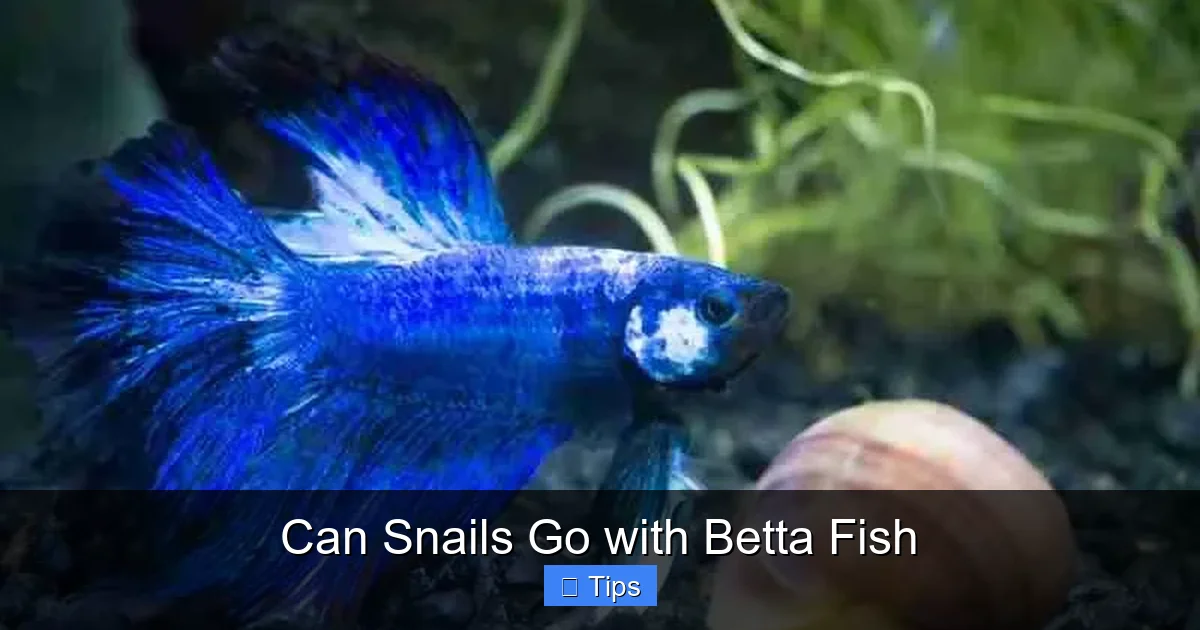
Visual guide about Can Snails Go with Betta Fish
Image source: fishkeepingwisdom.com
Nerite Snails: The Algae-Eating Powerhouses
If your primary goal is to clean algae, Nerite Snails are your number one choice. These snails come in stunning varieties—Zebra, Tiger, Olive, and Racing—each with unique shell patterns. They are absolute workhorses, scraping away at brown algae, green spot algae, and even some hair algae from glass, rocks, and decorations. Critically, Nerites are brackish water breeders. They require slightly salty water to reproduce, which means in your standard freshwater betta tank, they will not lay fertile eggs. You will not have a snail population explosion. They are also quite active and will move around the tank, making them interesting to watch. Their shells are very hard, and they are a sizeable snail, usually 1-2 inches in diameter, making them too big for all but the most determined and large bettas to bother.
Mystery Snails (Apple Snails): The Gentle Giants
Mystery Snails are the gentle giants of the freshwater snail world. They are large (often 2-3 inches), have a beautiful, rounded shell (available in gold, blue, ivory, and more), and are incredibly peaceful. They are not strict algae eaters; they prefer to munch on leftover food, algae wafers, and blanched vegetables like zucchini or spinach. Their slow, methodical movements and tendency to sometimes “sleep” attached to the glass make them a calming presence. Because of their size and thick shell, they are generally safe from bettas. One important note: Mystery Snails are prolific breeders in freshwater. If you have a male and female, you will get clusters of pink eggs above the waterline. You must manage this by removing egg clutches if you don’t want hundreds of baby snails.
Ramshorn Snails: The Hardy, Low-Maintenance Option
Ramshorn Snails are small to medium-sized snails with a distinctive, flat, coiled shell that looks like a ram’s horn. They are incredibly hardy, adaptable, and excellent at cleaning. They will eat algae, decaying matter, and leftover food. Their main drawback is their reproductive speed. They are livebearers and can quickly populate a tank if conditions are good. However, their shells are relatively soft compared to Nerites and Mystery Snails. While many bettas ignore them, a particularly nippy betta might damage a Ramshorn’s shell or attempt to eat it. They are a good choice for a betta that has shown no aggression towards slow-moving things, but they carry a slightly higher risk than the larger two.
Other Snails to Consider (With Caution)
Trumpet Snails (or Assassin Snails) are a specialized case. They are carnivorous, eating other snails and their eggs. They are not algae eaters and are not a “clean-up crew.” They are, however, excellent for controlling a population explosion of pest snails like Ramshorns or Pond Snails. They have a conical, hard shell and are generally left alone by bettas due to their different behavior. Japanese Trapdoor Snails are another hardy, live-bearing option with a hard operculum (trapdoor) they can seal shut. They are good algae grazers and are fairly large, but like Ramshorns, they can reproduce in freshwater.
Snails to AVOID: Pond Snails and Bladder Snails are the classic “pest snails.” They are very small, have very thin shells, and reproduce explosively. They are almost guaranteed to be harassed or eaten by a betta and will become a costly snack rather than a tank mate. Apple Snail Eggs are bright pink and toxic if ingested by fish, so ensure any egg clutches are removed promptly if you have a curious betta who might nibble on them.
Creating the Perfect Snail-Friendly Betta Habitat
You’ve chosen your snail and assessed your betta. Now, you must build a home where both can thrive. The environment is your tool to manage behavior and ensure health.
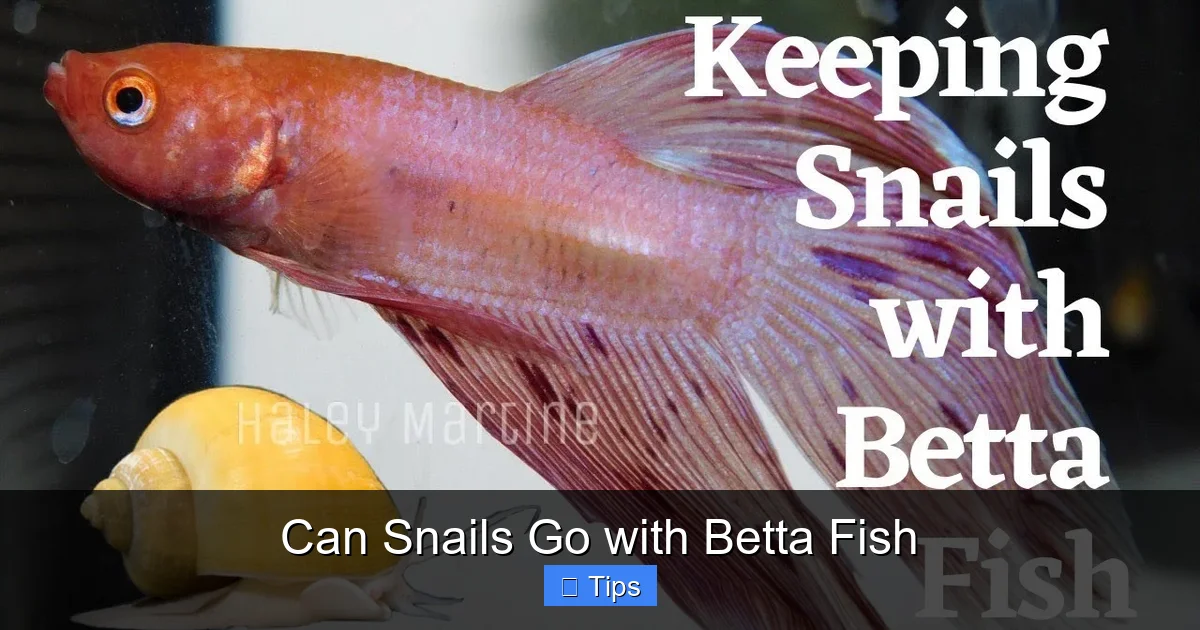
Visual guide about Can Snails Go with Betta Fish
Image source: i.ytimg.com
Tank Setup: Size, Lid, and Landscape
As reiterated, a 5-gallon tank is the bare minimum. Go bigger if you can. A secure lid is non-negotiable. Many snails, especially Nerites, are notorious escape artists. They will crawl up the side of the tank and attempt to cross the lid. If there’s any gap, you’ll find your snail dried out on the floor. A tight-fitting lid with no gaps around filter cords or wires is essential.
The aquascape should prioritize hiding places and visual barriers. Use live plants (like Anubias, Java Fern, Cryptocorynes) or silk plants to create dense thickets. Add driftwood, rock caves, and ceramic ornaments. The idea is to break up the line of sight. If the betta can’t constantly see the snail, it’s less likely to fixate on it as a target. The snail also needs surfaces to graze on—rocks, driftwood, and the tank glass itself. Avoid using sharp or rough decorations that could damage a snail’s foot or shell.
Water Parameters: The Non-Negotiable Foundation
Both bettas and snails are sensitive to poor water quality, but snails are especially vulnerable to specific chemical imbalances. Bettas thrive in warm, clean water between 76-82°F (24-28°C). This temperature range is perfect for most snails too. The critical parameter is pH and hardness. Snails need calcium to build and maintain their shells. In soft, acidic water (low pH, low GH/KH), their shells can become thin, pitted, and weak, leading to death. Aim for a pH of 7.0-7.5 and a general hardness (GH) of at least 8 dGH. Using a liquid test kit to monitor these numbers is highly recommended. Crushed coral in the filter or a calcium-rich substrate can help buffer pH and provide minerals. Never use copper-based medications (like many ich treatments) in a tank with snails, as copper is highly toxic to them. Always check medication labels for invertebrate safety.
Feeding: Avoiding Competition and Pollution
Your betta is a carnivore, needing a protein-rich diet of pellets, frozen, or live foods. Snails are omnivores/scavengers. The key is to feed your betta appropriately and remove any uneaten food promptly. Overfeeding is the number one cause of poor water quality and snail overpopulation (as they breed on available food). Offer your betta only what they can consume in 2-3 minutes, once or twice a day. For snails, you can supplement their algae grazing with a small algae wafer once or twice a week or a piece of blanched vegetable (spinach, cucumber, zucchini) attached to a clip or weighted down. This ensures they get nutrients without them competing directly with your betta for its primary food.
The Introduction Process: Patience is a Virtue
Rushing the introduction is the fastest way to disaster. You must allow both animals to adjust without immediate physical conflict.
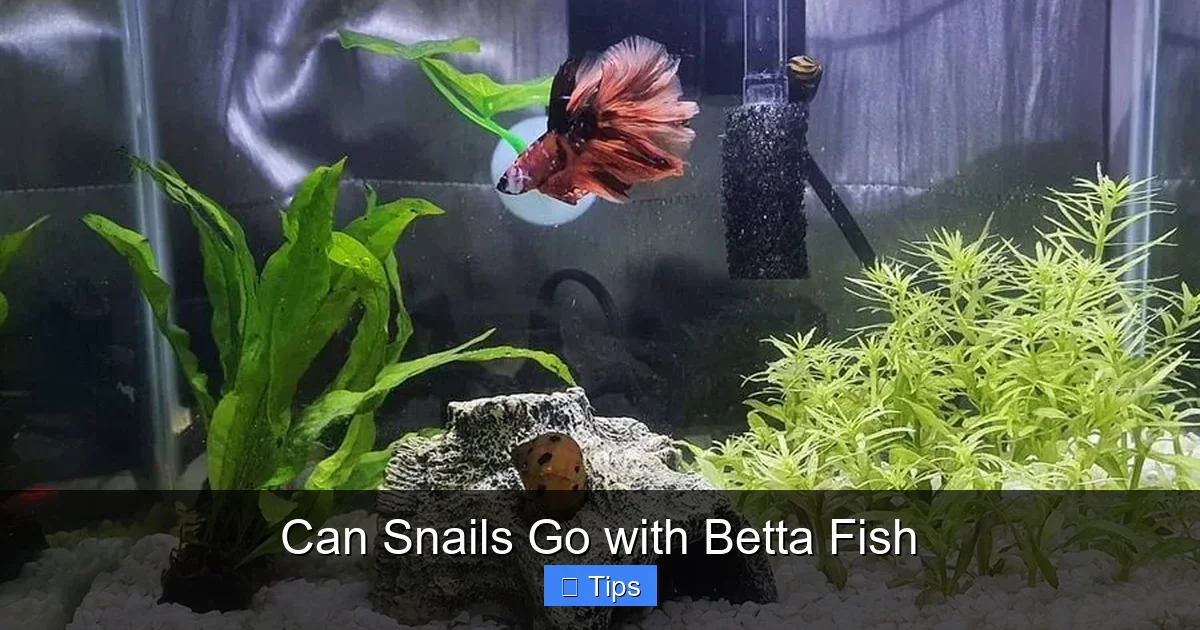
Visual guide about Can Snails Go with Betta Fish
Image source: ouraquariumlife.com
Step 1: Quarantine and Acclimate
Always quarantine any new snail for at least 2-4 weeks in a separate tank. This prevents the introduction of parasites, eggs, or diseases to your main betta tank. During quarantine, observe the snail for signs of illness, parasites (like leeches), or unusual behavior. Once cleared, begin the acclimation process. Use the drip acclimation method for 1-2 hours. This slowly introduces the snail to your tank’s specific water parameters (temperature, pH, hardness), which is far less shocking than simply floating the bag. Never add the water from the pet store bag to your tank.
Step 2: The Barrier Method
Do not release the snail directly into the main tank. Place it in a breeder box or net divider inside the tank. This allows the snail and betta to see each other, get used to each other’s presence and scent, but prevents any physical contact. Keep the snail in this safe zone for 24-48 hours. Watch the betta’s reaction. Do they flare persistently at the divider? Do they try to nip through it? Or do they largely ignore it after initial curiosity? If the betta is obsessively aggressive, you may need to reconsider the pairing. If they are calm or only mildly interested, you can proceed.
Step 3: The First Release
After 48 hours of calm observation, it’s time. Turn off the tank lights (snails are less active in the dark, and it calms the betta). Gently release the snail from the breeder box into a part of the tank with plenty of cover—behind a large rock, into a thicket of plants, or onto the back wall. Let it find its own spot. Do not place it directly in the betta’s favorite resting spot. Keep the lights off for another hour or so. For the first few days, monitor closely. You may see the betta investigate, maybe give a tentative nip. If the snail retracts and the betta loses interest quickly, that’s a good sign. If the betta relentlessly chases and attacks the snail, you may need to use the divider long-term or rehome the snail.
The Benefits of a Snail in Your Betta Tank
When the pairing works, the rewards are significant. You’re not just adding a decorative creature; you’re enhancing the entire ecosystem of your betta’s world.
Natural Algae Control and Cleaning
This is the most obvious benefit. Nerite snails are unparalleled at keeping glass and decorations clear of unsightly algae. Even non-algae-eating snails like Mystery Snails will clean up bits of uneaten food and detritus (decaying plant matter) that sinks to the bottom. This “clean-up crew” work reduces the amount of waste decomposing in your substrate, which in turn helps maintain better water quality and reduces the frequency of water changes needed. A cleaner tank is a healthier tank for your betta.
Increased Environmental Enrichment
For your betta, a snail is a form of environmental enrichment. It provides a novel, slow-moving object to observe. This can be particularly stimulating for a betta in a species-only tank, giving them something to be casually curious about without the stress of a fish that might compete for space or flare back. The presence of a snail adds a layer of natural complexity to the aquascape, making the tank look more like a complete, balanced ecosystem.
Educational Value and Reduced Boredom for You
Watching a snail’s nocturnal adventures, seeing it methodically clean a leaf, or observing the fascinating process of a Mystery Snail climbing to the glass to breathe air is deeply interesting. It adds another dimension to your hobby. For new aquarists, it’s a lesson in compatible invertebrates and the delicate balance of a closed aquatic system. It turns simple maintenance into an ongoing observation of a mini-ecosystem.
Potential Problems and How to Solve Them
Even in the best setups, issues can arise. Being prepared is key to solving them quickly.
“My Betta Is Chasing/Nipping the Snail!”
This is the most common problem. First, assess the severity. Is the betta just doing a quick charge and then losing interest? That’s often normal initial curiosity. Is the betta relentlessly pursuing the snail, preventing it from grazing or resting, and visibly stressing it (the snail is constantly retracted)? This is a problem. Solutions: 1) Ensure the tank is large enough and has ample hiding places. Add more plants or decor immediately. 2) Use a tank divider permanently to create separate territories. 3) Rehome the snail to a different tank. A stressed snail is a dead snail, and a betta fixated on it will only become more stressed itself.
Snail Population Explosion
This only happens with live-bearing snails (Ramshorns, Trumpet Snails, Japanese Trapdoor) or if you have a breeding pair of Mystery Snails. A few snails can become dozens in a few months. Solutions: 1) Prevention: Only get one snail of a species that reproduces asexually (like Ramshorns, which are often all female). For Mystery Snails, get only one or ensure you have a same-sex pair (males are smaller and have a rounder shell opening). 2) Manual Removal: Regularly search for and remove egg clutches (pink globs for Mystery Snails, translucent jelly for others). For livebearers, you must manually remove baby snails as you see them. 3) Natural Predators: Introduce a dedicated snail-eating fish like a single dwarf puffer (not recommended with bettas) or a loach (needs a much larger tank). This is often more trouble than it’s worth. 4) Traps: Use a lettuce leaf or zucchini slice on a plate as a bait trap, removing it with snails attached.
Snail Death and Water Quality Issues
A dead snail decomposing in the tank will cause a rapid spike in ammonia, which is lethal to your betta. Solutions: 1) Immediate Removal: The moment you see a snail has died (often it will be lying motioneless, sometimes with a foul odor), remove it with a net. 2) Prevention: Maintain excellent water quality with regular water changes. Ensure proper calcium and pH to prevent shell erosion. Avoid copper. Feed appropriately to avoid overpopulation and subsequent die-offs from starvation or poor conditions.
Conclusion: A Rewarding Partnership with the Right Approach
So, can snails go with betta fish? Absolutely. The partnership between a betta and a well-chosen snail can be one of the most successful and low-maintenance combinations in the freshwater aquarium hobby. It boils down to this: know your betta, choose a hardy, appropriately-sized snail, and build a spacious, structured environment that gives the snail places to hide and thrive. The Nerite Snail, the Mystery Snail, and the cautious Ramshorn are your best starting points. They bring the practical benefit of cleaning, the aesthetic value of movement and form, and the simple joy of watching a peaceful creature cohabit with the flamboyant betta.
Start with patience. Quarantine, acclimate slowly, and use a divider. Observe the interactions. Your betta’s behavior is your guide. If you see curiosity without malice, you’ve likely succeeded. If you see aggression, you have the knowledge to intervene—by adding more hiding spots or making a difficult decision for the snail’s safety. The effort is worth it. A thriving betta-snail community tank is a testament to thoughtful aquascaping and a deeper understanding of aquatic life. It transforms your betta’s world from a solitary stage into a shared habitat, richer for both its inhabitants and for you, the observer.
Frequently Asked Questions
Will my betta definitely try to eat a snail?
Not necessarily. A betta’s reaction depends on its individual temperament. Aggressive or highly curious bettas may nip at a snail’s tentacles or foot, but they usually give up if the snail retracts into its hard shell. Snails with thick, heavy shells (like Nerites or Mystery Snails) are rarely seen as food. Always observe your betta’s initial reaction closely.
Do snails really clean algae in a betta tank?
Yes, but with a major caveat. Only specific snails are dedicated algae grazers. Nerite Snails are the best for this, actively scraping algae off glass and decorations. Other snails like Mystery Snails will eat algae occasionally but prefer leftover food and vegetables. No snail will single-handedly eliminate a severe algae bloom; proper lighting and nutrient management are still required.
What if my snail lays eggs? Will they hatch?
It depends on the species. Nerite Snail eggs will not hatch in freshwater, as they require brackish water. Mystery Snail egg clutches (pink, above the waterline) will hatch if kept moist and in freshwater. Ramshorn and other pest snails give live birth and will reproduce quickly. If you don’t want a population explosion, you must manually remove egg clutches or single out live-bearing snails for rehoming.
Can snails live in the same water conditions as bettas?
Yes, but with a critical addendum. Both prefer warm water (76-82°F). However, bettas can tolerate slightly softer, more acidic water, while snails require harder, more alkaline water with adequate calcium to maintain their shells. You must test and maintain a stable pH around 7.0-7.5 and a general hardness (GH) of 8+ dGH for long-term snail health.
How often should I feed my snail?
Most snails get sufficient nutrition from the algae and detritus naturally present in a well-maintained tank. Supplementing 1-2 times per week with a small algae wafer or a piece of blanched vegetable (zucchini, spinach) is plenty. Overfeeding to “feed the snail” will only foul the water and encourage pest snail reproduction if they are present.
What is the #1 mistake people make when adding a snail to a betta tank?
The #1 mistake is skipping the quarantine and barrier introduction. Adding a snail directly to the tank stresses the snail, introduces potential parasites to your betta’s environment, and gives the betta zero time to adjust, often leading to immediate aggression. Always quarantine the snail for 2-4 weeks, acclimate slowly via drip, and use a breeder box for 24-48 hours before full release.