Can Shrimp and Betta Fish Live Together

Can shrimp and betta fish live together? The answer is a cautious “sometimes.” Betta fish, known for their aggression, often see shrimp as food. However, with careful species selection, a heavily planted tank, and a betta with a calmer temperament, certain hardy shrimp like Amano or large ghost shrimp can coexist. Success depends entirely on the individual betta’s personality and providing ample hiding spaces. It’s a high-risk community tank requiring constant monitoring and a backup plan.
Key Takeaways
- Betta temperament is the wild card: Your betta’s individual personality is the single biggest factor. Some are docile, most are predatory, and you cannot predict it until you try.
- Not all shrimp are equal: Small, colorful shrimp like Cherry shrimp are frequent snacks. Larger, transparent, or fast-reproducing species like Amano, Bamboo, or Ghost shrimp have a better survival rate.
- Tank setup is non-negotiable: A minimum 10-gallon tank with dense vegetation, hiding spots, and visual barriers is essential to break line-of-sight and give shrimp refuge.
- Introduction is a careful process: Never drop shrimp in. Use a divider or quarantine tank first. Add shrimp at night when the betta is less active.
- You must be a constant observer: For the first few weeks, watch for chasing, fin nipping, or hiding. Have a separate tank ready to rescue shrimp immediately.
- Manage your expectations: The goal is coexistence, not friendship. Shrimp may be seen as “clean-up crew” and some will inevitably be lost. Success is measured in weeks and months, not days.
📑 Table of Contents
- The Eternal Aquarium Question: Can They Actually Coexist?
- Decoding the Betta: It’s All About Personality
- The Shrimp Survival Guide: Choosing the Right Species
- Tank Setup: The Fortress Strategy
- The Introduction: A Delicate Operation
- Ongoing Care: Feeding and Monitoring for the Long Haul
- When It Doesn’t Work: Signs, Rescue, and Alternatives
- The Final Verdict: Knowledge is Power
The Eternal Aquarium Question: Can They Actually Coexist?
So you’ve got a beautiful, solitary betta fish in its own tank. It’s a stunning centerpiece, but maybe the tank feels a little empty. You’ve heard about the fascinating world of freshwater shrimp—their busy cleaning, their interesting behaviors. The idea of a bustling nano-ecosystem is appealing. Then you ask the internet, and the answers are all over the place: “Yes, but…” “No, don’t do it!” “My betta ate all my shrimp!” “My betta ignores them!” It’s confusing and frustrating. The real answer is frustratingly nuanced: can shrimp and betta fish live together? Sometimes, under very specific conditions, with a lot of luck and preparation. This guide will strip away the myths and give you the unvarnished truth, the exact steps to try it, and the hard truths about when it fails. We’re talking about two creatures with fundamentally opposed instincts: a solitary, territorial predator and tiny, vulnerable invertebrates. Making it work is an exercise in fishkeeping skill, not a beginner’s gamble.
First, let’s establish the core conflict. Betta fish, especially the males commonly sold in stores, are bred for aggression. Their long, flowing fins are a target, and their natural instinct is to attack anything that enters their perceived territory that is small, moves erratically, or has similar long fins—which describes many shrimp perfectly. Shrimp, on the other hand, are primarily prey animals. Their defense is camouflage, hiding, and rapid reproduction. Your job as the aquarist is to build an environment so rich and complex that the betta’s hunting instincts are frustrated, and the shrimp have so many places to hide that predation becomes rare, not constant. It’s about tilting the odds, not eliminating them.
Decoding the Betta: It’s All About Personality
This is the most critical section. If you skip this, you’re setting yourself up for failure. The phrase “can shrimp and betta fish live together” has no universal answer because every betta is an individual. You cannot judge a betta’s compatibility with shrimp by its color, breed, or gender alone. While females are *generally* less aggressive than males, a feisty female can be a worse hunter than a laid-back male.
Visual guide about Can Shrimp and Betta Fish Live Together
Image source: smartaquariumguide.com
The Spectrum of Betta Behavior
Bettas exist on a wide spectrum. On one end, you have the “Zen Master.” This betta might barely notice a shrimp crawling on its favorite leaf. It’s calm, slow-moving, and seems to coexist peacefully. On the other end is the “Nibbler” or “Hunter.” This betta will relentlessly chase anything that moves, pecking at shrimp, snails, and even its own reflection. Most bettas fall somewhere in the middle—they might investigate a shrimp, give a chase, but eventually lose interest if the shrimp effectively hides.
How do you assess your betta? Observe it in its current tank. Does it flare at you when you walk by? Does it attack the filter current or its reflection? Is it constantly patrolling the same few spots? A betta that is highly reactive and territorial is a poor candidate for a community with shrimp. A betta that seems lazy, spends most time resting on a leaf, or ignores other fish (if you have any) is a much better prospect. You must know your betta’s personality before you even consider adding shrimp.
Age also plays a role. A young, vibrant betta in its prime (6-18 months) has the most energy and aggression. An older, more sedate betta (2+ years) might be less inclined to chase. However, this is not a guarantee. The only way to truly know is through a controlled introduction process, which we’ll detail later. Never assume. Always test.
The Shrimp Survival Guide: Choosing the Right Species
If your betta is the unpredictable variable, your choice of shrimp is the controllable one. You must select species that are built to withstand predation. The golden rule is: avoid small, brightly colored shrimp. Bright reds, blues, and yellows are like waving a red flag at a bull—they trigger the betta’s instinct to attack rival males (as many shrimp have similar coloration) and are simply easy to see. Small size means they fit in a betta’s mouth.
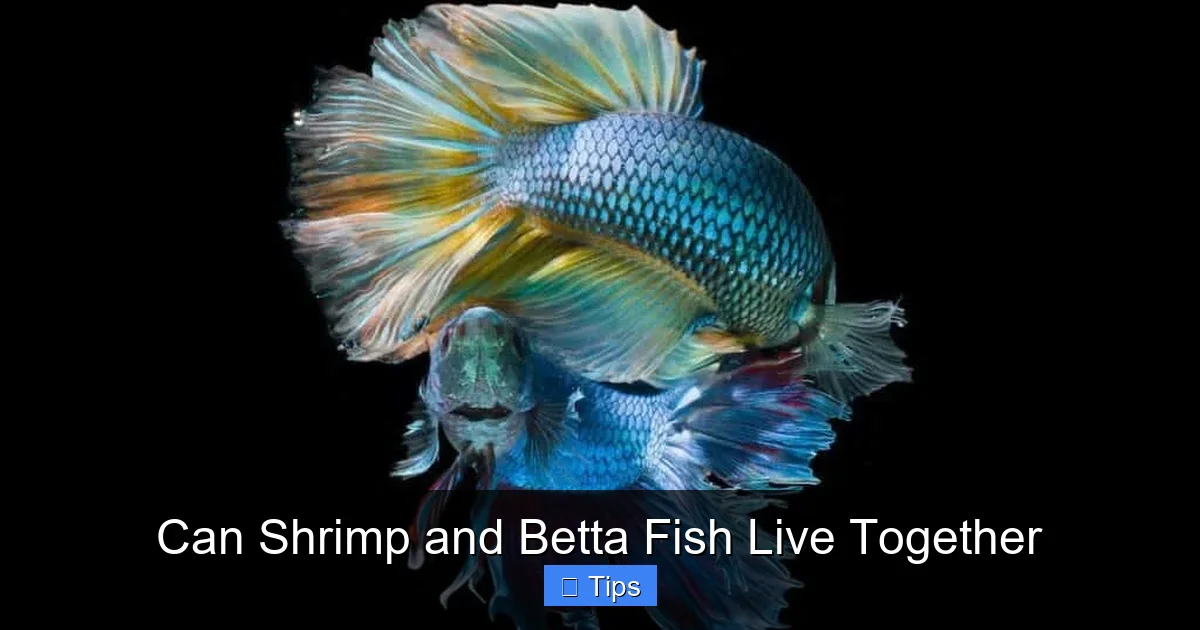
Visual guide about Can Shrimp and Betta Fish Live Together
Image source: ouraquariumlife.com
Top Contenders for Betta Tanks
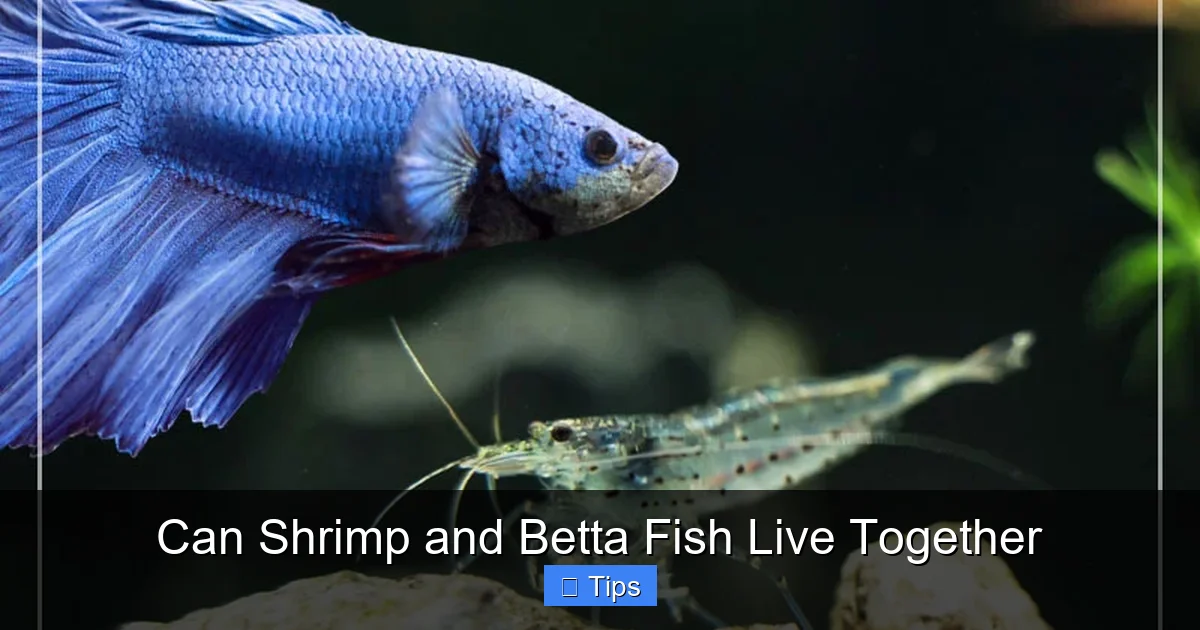
- Amano Shrimp (Caridina multidentata): The gold standard. They are large (2+ inches), translucent with rusty spots, and incredibly fast. They are primarily algae eaters, so they have a useful job that keeps them busy at the tank edges, not in the open center. Their speed and size make them very difficult for a betta to catch.
- Ghost Shrimp (Palaemonetes spp.): Another excellent choice. They are almost completely transparent, making them very hard for a betta to spot. They are also larger (1.5-2 inches) and prolific breeders. They are scavengers and will clean up debris. Their invisibility is their greatest defense.
- Bamboo Shrimp (Atyopsis moluccensis): A filter-feeding giant (3-4 inches). They are too big to be considered food by most bettas and spend their time fanning the water current for particles. They are fascinating to watch and pose virtually no threat. However, they require very clean, well-filtered water.
- Asian Fan Shrimp (Atyopsis spinipes): Similar to Bamboo shrimp, they are large filter feeders with beautiful fan-like arms. Their size and specialized feeding niche keep them safe.
- Large Freshwater Prawns (Macrobrachium rosenbergii): This is a **major caveat**. These are true prawns that can grow over 6 inches. They are far too large for a betta to harm and are often completely ignored. However, they are aggressive towards other invertebrates and can damage plants or tank decor with their large claws. They are also messy and require a very large, powerful filter. They are for advanced hobbyists with massive tanks only.
High-Risk Species (Avoid These)
Cherry Shrimp (Neocaridina davidi), Bee Shrimp, and other small, colorful Neocaridina species are the most common casualties. They are beautiful, cheap, and breed prolifically, which is why people try them. But their small size (under 1 inch) and vibrant colors make them perfect betta targets. You can *try* them with a very calm betta in a massive, heavily planted tank, but statistically, you will lose most, if not all, of them quickly. It’s a gamble, not a plan.
Tank Setup: The Fortress Strategy
You cannot put a shrimp in a standard, bare betta tank and expect success. The environment must be engineered from the ground up to protect the shrimp. This is where you spend your time and money. A proper setup dramatically increases the odds of coexistence.
Visual guide about Can Shrimp and Betta Fish Live Together
Image source: petshun.com
Tank Size: Bigger is Infinitely Better
The absolute minimum is a 10-gallon (40-liter) tank. A 20-gallon long (75-liter) is the true sweet spot. Why? Space. In a small tank, a betta can patrol the entire area in seconds. There are no true hiding spots. In a larger tank, the betta’s territory is a smaller percentage of the total space. Shrimp can establish homes in the far corners or mid-levels, out of the betta’s immediate attention. More water volume also means more stable parameters, which is crucial for sensitive shrimp species.
The Power of Plants: Creating a Jungle
Your goal is to break the betta’s line of sight at all times. The tank should look like a dense jungle, not an open plain. Use a variety:
- Floating Plants: Frogbit, Duckweed, Salvinia. These create a canopy at the water’s surface, blocking the betta’s view from above and providing shade. Shrimp love to graze on the roots.
- Stem Plants: Rotala, Ludwigia, Limnophilia. Plant them densely in the background and midground to create thick walls of greenery.
- Mosses: Java Moss, Christmas Moss, Marimo Moss Balls. These are shrimp paradises. They provide microscopic food (infusoria), perfect hiding places for juveniles, and break up the visual field on the substrate and on hardscape.
- Anubias & Java Fern: Attach these to driftwood and rocks. Their broad leaves offer resting spots and cover.
Don’t be afraid to overstock plants. More is always better for shrimp security.
Hardscape and Hiding Spots
Incorporate driftwood, rock piles, and ceramic caves. Create a complex landscape with nooks, crannies, and overhangs. PVC pipes or bamboo stalks can also be used. The idea is to provide endless tiny spaces where a shrimp can slip away and be completely out of view. A shrimp that can’t be seen is a shrimp that is often safe.
Water Parameters: The Non-Negotiable Foundation
Shrimp are far more sensitive to water quality than bettas. Ammonia or nitrite spikes will kill shrimp instantly. You must have a fully cycled tank (the nitrogen cycle is complete) before adding any shrimp. This process takes 4-6 weeks. Test your water daily with a reliable liquid test kit. Target parameters for most common shrimp:
- Temperature: 72-78°F (22-26°C) – compatible with bettas.
- pH: 7.0-7.5 (stable is more important than perfect).
- GH (General Hardness): 4-8 dGH.
- KH (Carbonate Hardness): 3-5 dKH.
- Copper: MUST be ZERO. Even trace amounts from tap water or medications are lethal. Use a copper test if unsure.
Important: Always research the specific needs of the shrimp species you choose. Some (like Crystal Red Shrimp) require extremely soft, acidic water that is incompatible with most bettas.
The Introduction: A Delicate Operation
You have a calm betta, a 20-gallon jungle, and your chosen shrimp. Now you must introduce them. Rushing this is the #1 reason for failure. The process is about minimizing stress and shock for both animals.
Step 1: The Quarantine & Acclimation
Never add shrimp directly from the store bag to your display tank. The store water could contain diseases or parasites. First, drip-acclimate the shrimp in their bag to your tank water over 1-2 hours. Then, use a net to transfer them to a separate, cycled quarantine tank (a 5-gallon is fine) with similar plants and hiding spots. Let them recover here for at least 2 weeks. Monitor them for lethargy, not eating, or death, which could indicate disease. This also lets you ensure they are healthy and eating before facing the betta.
Step 2: The Divider Method (Highly Recommended)
This is the safest method. Use a tank divider (a piece of acrylic or egg crate secured with suction cups) to split your main tank into two sections. Place your betta on one side and the shrimp on the other. The betta will see the shrimp but cannot reach them. This allows them to get used to each other’s presence and scents over 1-2 weeks. Observe the betta’s reaction. Does it constantly flare at the divider? Or does it largely ignore the shrimp? Aggressive flaring is a bad sign.
Step 3: The Night Release
If the betta’s reaction during divider time is mild (it notices but doesn’t obsess), you can proceed. Remove the divider. **Do this at night**, an hour or two after you turn off the tank lights. Bettas are less active and visually oriented in the dark. Gently net the shrimp from the quarantine tank and release them into the main tank in an area with dense planting, away from the betta’s usual resting spot. Turn the lights off completely for the night.
Step 4: The Critical First 72 Hours
For the next three days, you will be on high alert. Keep the lights dim. Do not feed the betta extra, as a hungry betta is a more aggressive hunter. Observe constantly, from a distance so you don’t stress the fish. You are looking for:
- Chasing: The betta actively pursuing shrimp across the tank.
- Fin Nipping: The betta taking quick bites at shrimp.
- Hiding: All shrimp remaining completely hidden and not coming out to forage, even at night.
Mild investigation (betta slowly approaching, shrimp darting away) can be normal. Sustained, aggressive hunting is not. If you see relentless chasing, you must intervene immediately, which is why having a backup plan is essential.
Ongoing Care: Feeding and Monitoring for the Long Haul
If the introduction seems peaceful after a week, the hard work of maintenance begins. The goal now is to keep the betta well-fed and distracted, and the shrimp population healthy enough to withstand minor losses.
Feeding Strategies to Divert Attention
A well-fed betta is a less motivated hunter. Feed your betta a high-quality pellet or frozen food (like daphnia or brine shrimp) once or twice a day, only what it can eat in 2 minutes. Overfeeding fouls the water and harms shrimp. For the shrimp, you must supplement. They need more than just algae. Use a high-quality shrimp pellet or algae wafer, placed in a hidden spot (under a piece of wood, in a cave) where the betta is less likely to find it. You can also use a feeding ring or a shrimp feeding dish. This ensures the shrimp get adequate nutrition without having to venture into open water where the betta can see them.
Constant Vigilance: The New Normal
Even in a seemingly peaceful tank, you must be observant. Check daily for:
- Missing shrimp (count them during feeding times).
- Shrimp with damaged shells or missing legs (signs of a betta nip).
- The betta “camping” near a specific plant or cave where shrimp live.
- Any changes in betta behavior—increased patrolling, flaring at shadows.
Water changes are even more critical. Shrimp are sensitive to pollutants. Perform 25% weekly water changes with dechlorinated, temperature-matched water. Vacuum gently to avoid sucking up baby shrimp. Use a pre-filter sponge on filter intakes to prevent shrimp from being sucked in.
When It Doesn’t Work: Signs, Rescue, and Alternatives
Let’s be brutally honest: this setup fails more often than it succeeds, especially for beginners. You must have an exit strategy from day one.
Red Flags That Mean “Abort Mission”
- Immediate, violent chasing on release.
- Visible injuries on shrimp within 24 hours.
- Betta staking out and guarding a specific hiding spot.
- No shrimp seen for 48+ hours, even at night with a red light.
If you see these, the experiment is over. You are responsible for the lives in your care.
The Rescue Plan
You must have a separate “hospital” or “rescue” tank ready *before* you add the first shrimp. This can be a simple 5-gallon cycled setup with plants and a sponge filter. As soon as you see a shrimp being targeted, net it immediately and move it to the rescue tank. Do this quietly and quickly. You may need to rescue multiple shrimp over several days. Once you have rescued them, do not reintroduce them. The betta has now marked them as food, and the risk is too high. The rescue tank becomes their permanent home, or you can try to rehome them.
Realistic Alternatives to Consider
If the risk seems too high, or your betta shows aggression, consider these alternatives that offer similar “clean-up crew” benefits with far less risk:
- Snails: Nerite snails (algae eaters, cannot breed in freshwater) or Mystery/Apple snails (large, peaceful). They have hard shells and are generally ignored by bettas. They are the safest, most effective algae cleaners.
- Otocinclus Catfish: A school of 6+ in a 20+ gallon tank. They are peaceful algae eaters that cling to glass and leaves. They are small but fast and school for protection.
- Kuhli Loaches: In a 20+ gallon with a soft sand substrate, a small group of these eel-like fish are peaceful bottom dwellers that bettas usually ignore. They eat leftover food and detritus.
- Keep it Simple: A beautifully planted betta tank with a few floating plants and a snail is a stunning, low-stress, and highly successful setup. There is no shame in choosing reliability over a risky mix.
The Final Verdict: Knowledge is Power
So, can shrimp and betta fish live together? Yes, but it’s a conditional yes that depends on a perfect storm of factors: a genetically and individually calm betta, the right large and fast shrimp species, a meticulously planted and sized tank, flawless water quality, a careful introduction, and your constant, attentive monitoring. It is one of the more challenging community tank setups in the hobby, not a beginner project. You are essentially trying to create a habitat where a natural predator’s instincts are consistently frustrated. This requires skill, patience, and resources.
If you decide to proceed, go in with eyes wide open. Have the backup tank ready. Accept that you may lose some shrimp. Celebrate if you get three months of peaceful coexistence. If your betta is a known hunter, or you have a small, bare tank, please choose the safer alternatives. The health and stress levels of your betta and the shrimp should be the ultimate priority. A beautiful, thriving betta in a simple, well-maintained planted tank is always a better outcome than a stressed betta and a pile of shrimp carcasses. Do your research, understand the risks, and make the choice that aligns with your skill level and the well-being of your aquatic pets. For a deeper dive into the principles of responsible fishkeeping and tank compatibility, it’s always wise to research and understand the key terms and conditions of maintaining a harmonious aquarium ecosystem. Remember, the goal is a stable, healthy tank where all inhabitants can thrive, not just survive.
Frequently Asked Questions
What is the best shrimp to try with a betta?
The safest bets are large, fast, or transparent shrimp like Amano Shrimp, Ghost Shrimp, or Bamboo Shrimp. Their size, speed, or invisibility gives them the highest chance of avoiding a betta’s attention. Avoid small, colorful shrimp like Cherry shrimp.
What is the minimum tank size for a betta and shrimp?
The absolute minimum is a 10-gallon tank, but a 20-gallon long is strongly recommended. More space provides more hiding areas, breaks the betta’s line of sight, and dilutes the betta’s territorial dominance, giving shrimp more room to establish safe zones.
How should I feed shrimp in a tank with a betta?
You must feed the shrimp separately from the betta to ensure they get food and don’t have to forage in open water. Use shrimp-specific pellets or algae wafers placed in a hidden spot, under a piece of driftwood, or in a designated shrimp feeding dish. This keeps the betta from associating the shrimp with food competition.
How can I tell if my betta is going to eat the shrimp?
What are the clear signs of aggression?
Watch for relentless chasing, fin nipping, and the betta “camping” near shrimp hiding spots. If the shrimp are completely hidden 24/7 and not coming out to eat, that’s also a sign of severe stress. Any shrimp found with a missing leg or a damaged shell is a victim of an attack.
What is the realistic success rate for this combination?
It varies wildly by the individual betta. With a truly calm betta and the right shrimp in a perfect setup, you can achieve long-term coexistence. However, it’s common to lose a few shrimp in the first few weeks, even in good setups. For high-risk bettas or small shrimp, the success rate is near zero. Manage your expectations accordingly.
What should I do if my betta starts attacking the shrimp?
Act immediately. Have a separate, cycled “rescue” tank ready. Net the targeted shrimp and move them to safety within hours of observing an attack. Do not wait. Once a betta identifies something as prey, it will rarely stop. The shrimp must be permanently rehomed.