Can Sea Monkeys Live with Betta Fish
No, sea monkeys should never be housed with betta fish. Their vastly different environmental needs, dietary requirements, and the betta’s aggressive, territorial nature create a recipe for disaster. Sea monkeys require pristine, stable saltwater conditions, while bettas are hardy freshwater fish. A betta will almost certainly see the tiny, swimming sea monkeys as food or a threat, leading to stress, injury, or death for the brine shrimp. The only safe way to “keep” both is in separate, properly set-up tanks tailored to each species’ specific needs.
So, you’ve got a beautiful, flaring betta fish in its own little world, and maybe you’ve also been mesmerized by those fascinating little “sea monkeys” in their tiny, space-age looking tanks. It seems like a match made in aquarium heaven, right? A community tank with a flashy centerpiece and a cloud of tiny, dancing shrimp below. It’s a lovely thought, but in reality, it’s one of the most dangerous and ill-advised combinations you could attempt. The short, brutally honest answer is: no, sea monkeys cannot live with betta fish. Not safely. Not happily. Not at all.
This isn’t just a case of two pets not getting along; it’s a fundamental clash of ecosystems, biology, and instinct. To understand why this combination is so catastrophic, we need to dive deep into what each of these creatures truly is, what they need to thrive, and what happens when their worlds violently collide. By the end of this guide, you’ll not only know exactly why you should never mix them, but you’ll also have a clear, actionable plan for how to successfully and ethically keep both of these incredible pets in your home, separately.
Key Takeaways
- Incompatible Species: Sea monkeys (brine shrimp) and betta fish have fundamentally different biological needs and are not compatible tank mates under any circumstances.
- Water Parameter War: Sea monkeys require brackish to full-strength saltwater with specific gravity, while bettas are freshwater fish that cannot tolerate salinity.
- Dietary Divide: Sea monkeys are filter feeders on microscopic algae and bacteria, whereas bettas are carnivorous surface feeders needing protein-rich pellets and live/frozen foods.
- Betta Aggression is Guaranteed: Betta fish are instinctively territorial and predatory. They will hunt, nip, and consume sea monkeys, causing them immense stress and death.
- Breeding Conflict: Betta males build bubble nests at the surface, the exact zone where sea monkeys swim and feed, leading to constant disturbance and destruction of the nest.
- Stress is the Silent Killer: Even if a betta doesn’t immediately eat the sea monkeys, their mere presence causes chronic stress for both animals, weakening immune systems and shortening lifespans.
- The Only Safe “Together” Solution: You can enjoy both pets by maintaining two separate aquariums—a conditioned, cycled freshwater tank for the betta and a proper marine setup for the sea monkeys.
📑 Table of Contents
- Understanding the Players: What *Are* Sea Monkeys and Betta Fish?
- The Unbridgeable Gap: Water Parameter Warfare
- The Dinner Bell Rings: A Clash of Diets and Feeding Zones
- The Temperamental Titan: Betta Aggression and Territory
- The Bubble Nest Problem: Breeding Instincts Collide
- The Only Ethical Path: Keeping Both Pets Successfully (Separately)
- Conclusion: Respecting the Species
Understanding the Players: What *Are* Sea Monkeys and Betta Fish?
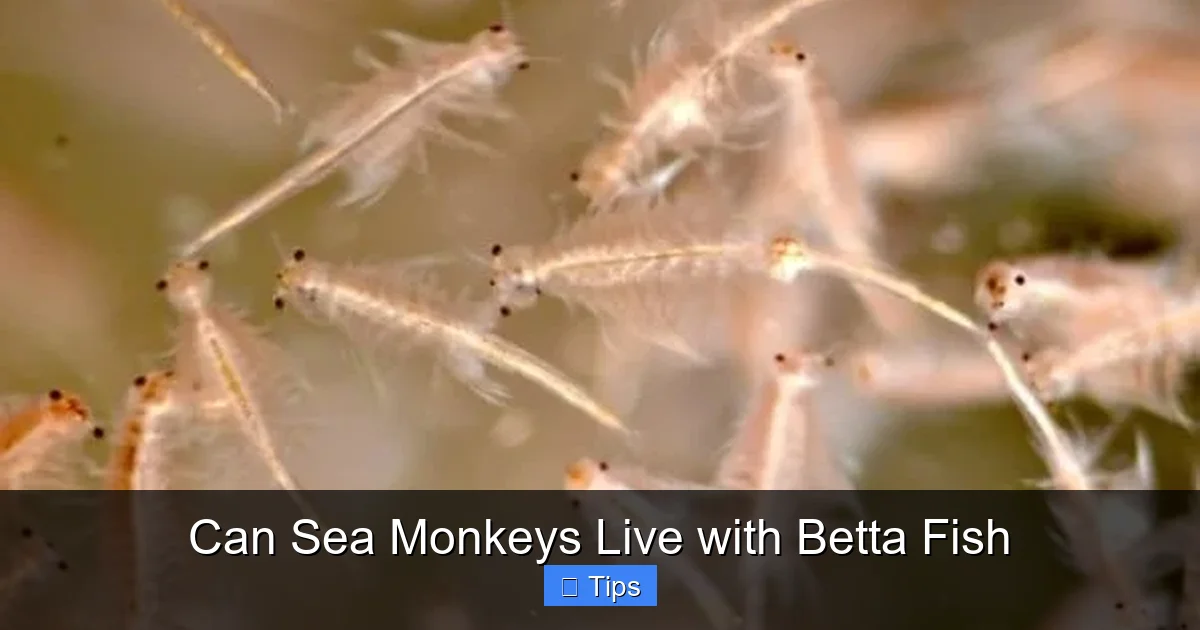
Before we dissect the incompatibility, we must first shatter a common misconception. “Sea monkeys” are not monkeys. They are not even a single species in the way we think of pet fish. The name is a brilliant marketing term for a specific type of brine shrimp, most commonly Artemia salina or Artemia franciscana. They are crustaceans, more closely related to crabs and lobsters than to any fish. They are sold as “instant pets” in kits because their eggs (cysts) can lie dormant for years and hatch almost instantly in the right saltwater conditions.
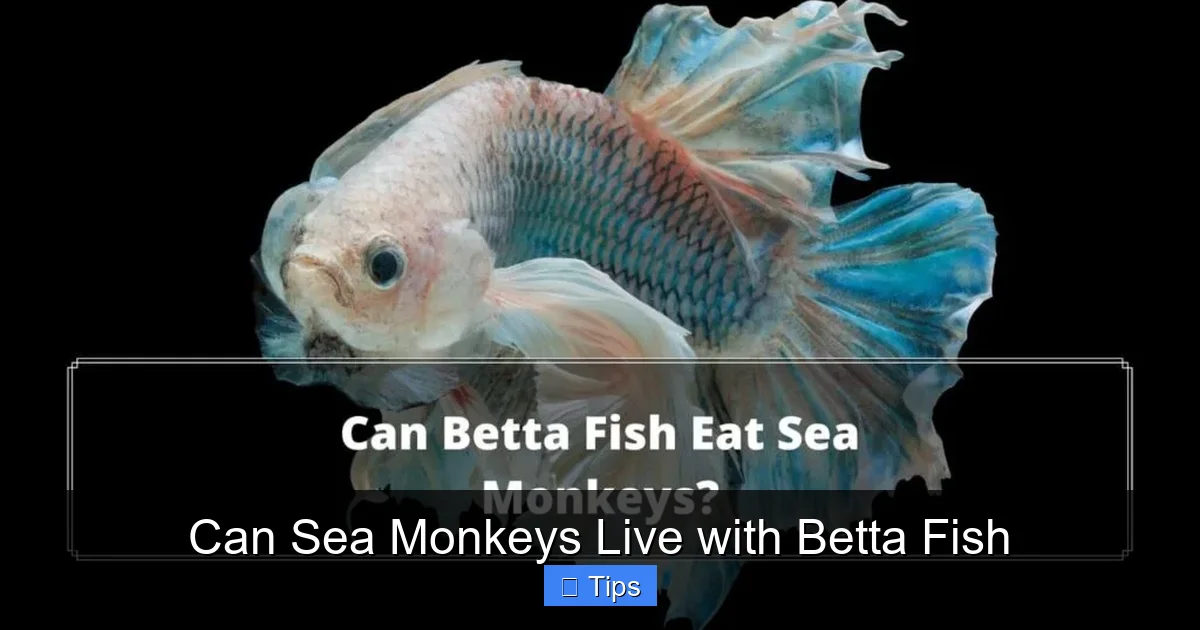
Your betta fish, Betta splendens, is a true fish. A labyrinth fish, to be precise, meaning it has a special organ that allows it to breathe atmospheric air. Native to the shallow, warm rice paddies and stagnant pools of Thailand, bettas are adapted to low-oxygen freshwater environments. They are famous for their flowing fins, vibrant colors, and the male’s fiercely territorial and aggressive behavior—hence the nickname “Siamese fighting fish.”
The “Instant Pet” vs. The “Labyrinth Fish”
The sea monkey’s entire lifecycle is built around rapid reproduction in ephemeral, salty pools that often dry up. Their cysts are a survival mechanism. The hatched shrimp live for just a few weeks to a couple of months, feeding on microscopic algae and bacteria. They are incredibly fragile, sensitive to water chemistry, and are essentially a live, moving food source for almost anything that can fit them in its mouth.
The betta, in contrast, is a relatively hardy, long-lived (2-5 years with proper care) predator. It’s a surface-dwelling fish with a upturned mouth, designed to snatch insects and larvae from the water’s surface in the wild. It has a strong instinct to defend a small territory, especially around the water’s surface where it builds its bubble nest for breeding. These are two animals operating on completely different planetary rules, and trying to merge those rules in one tank is an act of cruelty.
The Unbridgeable Gap: Water Parameter Warfare
This is the most absolute and non-negotiable reason for separation. The water requirements for these two animals are diametrically opposed.
Visual guide about Can Sea Monkeys Live with Betta Fish
Image source: inpetcare.com
Sea Monkey Requirements: The Saltwater Spectrum
Sea monkeys must live in saltwater. The kits come with a salt blend, but for long-term health (beyond the initial kit), you need to use a proper marine salt mix. They thrive in a specific gravity (a measure of salinity) of around 1.018-1.025. This is essentially the same salinity as a coral reef tank. The water pH should be alkaline, between 8.0 and 9.0. They are very sensitive to chlorine, chloramines, and heavy metals found in tap water, requiring meticulous water conditioning. Their tiny size means any toxic spike in ammonia, nitrite, or nitrate can wipe them out in hours.
Betta Fish Requirements: The Freshwater Kingdom
Betta fish are freshwater fish. Their ideal water has a specific gravity of 1.000 (essentially pure water). They prefer a pH between 6.5 and 7.5, though they are somewhat adaptable within a stable range. They are also sensitive to ammonia and nitrite, but are generally more tolerant of minor water quality issues than sea monkeys—provided the water is not salty. A betta’s gills and kidneys are not adapted to process salt. Placing a betta in brackish or saltwater causes extreme physiological stress, leading to osmotic shock, organ failure, and a slow, painful death.
There is No Middle Ground
You cannot create a “compromise” salinity. A specific gravity of 1.010 might seem like a middle point, but it is lethal to both. It is too salty for the betta’s freshwater system and not salty enough for the sea monkeys’ osmoregulation. You cannot have one tank with two different water types. The only solution is two separate, correctly prepared tanks.
The Dinner Bell Rings: A Clash of Diets and Feeding Zones
Even if we magically solved the water issue, the feeding dynamics would immediately doom the sea monkeys.
Visual guide about Can Sea Monkeys Live with Betta Fish
Image source: inpetcare.com
Sea Monkey Feeding: The Microscopic Buffet
Sea monkeys are filter feeders. They use their little legs to create currents, sweeping microscopic algae (phytoplankton), bacteria, and detritus from the water column into their mouths. In a properly cycled, algae-established tank, they can often sustain themselves on the natural biofilm and algae growth. Commercial “sea monkey food” is just powdered algae and yeast. They feed continuously throughout the water column, from mid-level to the bottom.
Betta Feeding: The Carnivorous Surface Ambush
Bettas are obligate carnivores. In the wild, they eat insects, mosquito larvae, and small crustaceans that fall onto the water’s surface. In captivity, they need a diet of high-quality betta pellets, frozen or live daphnia, brine shrimp (not sea-monkey-sized!), and bloodworms. They are surface feeders. They will not chase food to the bottom; they wait for it to come to them at the top. Their food is large, protein-rich, and visible.
The Inevitable Outcome: Snacks vs. Neighbors
To a betta, a mature sea monkey is a perfect-sized, wriggling piece of protein. It’s exactly the type of food they are evolutionarily designed to hunt. The sea monkeys, swimming in their cloud below, would look like an all-you-can-eat buffet. The betta would relentlessly hunt them. Even if the betta was “well-fed” and not hungry, the hunting instinct would be triggered. The movement of the sea monkeys is a stimulus the betta cannot ignore. The sea monkeys would be consumed, stressed to death, or driven into hiding until they starve. There is no scenario where the betta views the sea monkeys as tank mates; they are viewed exclusively as food.
The Temperamental Titan: Betta Aggression and Territory
This is the behavioral nail in the coffin. Betta aggression is not a personality quirk; it is a hardwired survival instinct.
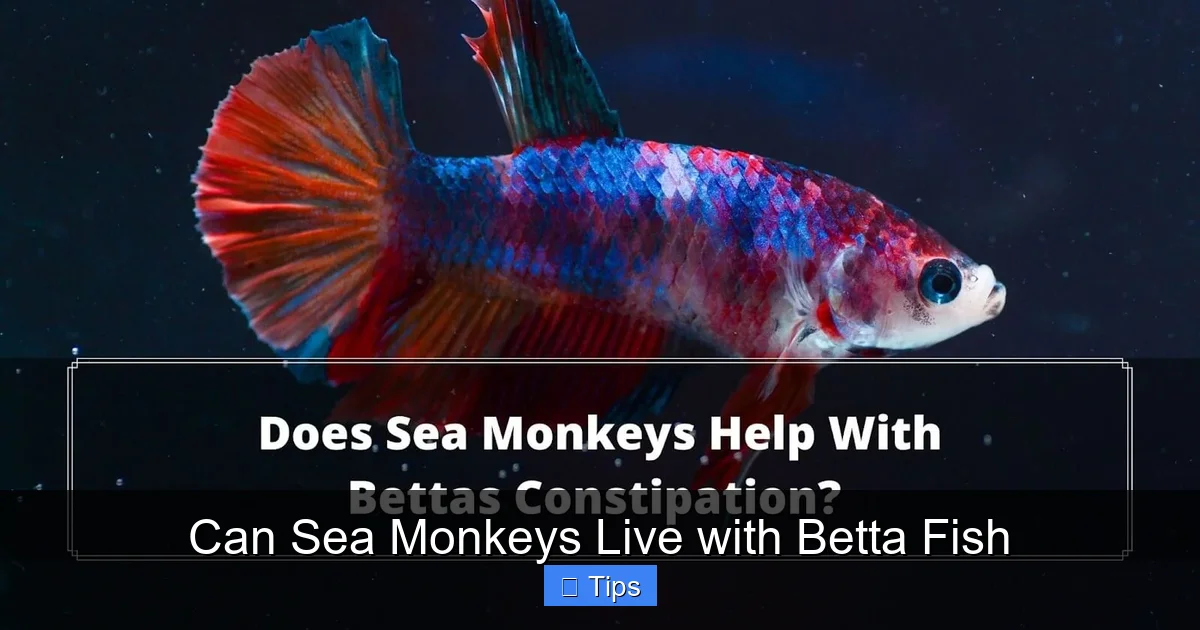
Visual guide about Can Sea Monkeys Live with Betta Fish
Image source: inpetcare.com
Territory: It’s Not Just a Tank, It’s a Kingdom
Male bettas are fiercely territorial. They claim a section of the water column, often centered around a plant, a decoration, or the surface where they build a bubble nest. They will patrol this territory constantly, flaring their gills and fins at any intruder. Any other fish that enters this space is a threat to be challenged or eliminated. The entire water volume of a typical “community” or even a 5-gallon tank is often considered a betta’s territory if it’s the sole fish.
Sea Monkeys: The Ultimate Intruder
Sea monkeys occupy exactly the same water column as a betta. They swim at mid-levels and surface-feed on algae. They are constantly in the betta’s claimed airspace. Their erratic, jerky swimming pattern is not calming; it is provocative to a territorial fish. The betta would perceive them as tiny invaders violating its airspace. The result would be constant chasing, nipping, and flaring. The sea monkeys would be in a perpetual state of panic, hiding or being harassed. This chronic stress is a death sentence for the delicate shrimp, as it suppresses their immune system and inhibits feeding and molting.
Even a “Peaceful” Betta is a Risk
You might think your betta is docile. Maybe it lives with other fish. But the instinct to hunt small, moving, shrimp-like creatures is different from aggression toward other fish. A betta that ignores a school of neon tetras may still go into a predatory frenzy at the sight of a swarm of sea monkeys. Their small size and movement trigger a different, more primal response. It is a gamble that is never worth taking, and the shrimp always lose.
The Bubble Nest Problem: Breeding Instincts Collide
If you have a male betta, the situation becomes even more complex and destructive due to breeding behavior.
The Bubble Nest: A Fragile Masterpiece
When a male betta is ready to spawn (or even just in good condition), he builds a nest of bubbles at the very surface of the water. This nest is his pride and joy. He meticulously maintains it, adding bubbles and repairing any damage. It is the site where he will entice a female to spawn and where the fertilized eggs will be kept safe until they hatch and the fry become free-swimming. The integrity of this bubble nest is critical to his reproductive success.
Sea Monkeys: Bubble Nest Vandals
Sea monkeys, as filter feeders, constantly move at the surface. They will swim through, brush against, and otherwise disrupt the betta’s precious bubble nest. To the betta, this is an act of war. He will see the sea monkeys as invaders destroying his home and future offspring. The resulting defense will be violent. He may try to catch and eat them, or simply flare at them so intensely that the constant disturbance prevents him from maintaining a nest at all. A male betta housed with sea monkeys would be in a state of near-constant agitation, unable to perform his natural breeding behaviors.
The Only Ethical Path: Keeping Both Pets Successfully (Separately)
So, you love the elegant beauty of a betta and the fascinating science of sea monkeys. Great! You can absolutely be a proud keeper of both. The key is compartmentalization. Let’s build your two-tank dream setup.
Tank 1: The Betta’s Freshwater Palace
Your betta needs a minimum of 5 gallons, but more is always better (10+ gallons provides much more stable water conditions). A secure lid is essential—bettas are jumpers. Provide a gentle filter (a sponge filter is ideal) to keep water clean without creating a strong current, as bettas have long, flowing fins. A heater is non-negotiable to maintain a steady 78-80°F (25.5-26.5°C). Use smooth, silk or live plants for resting spots and hiding places. Never use gravel with sharp edges. Perform regular water changes (25% weekly) with dechlorinated tap water. Feed a varied diet of high-quality pellets and occasional frozen foods.
Tank 2: The Sea Monkey’s Saltwater Microcosm
Forget the tiny plastic kit. For a thriving, breeding colony, set up a dedicated small aquarium, even a 1-gallon nano tank is fine. Use a proper marine salt mix (like Instant Ocean) mixed with dechlorinated water to a specific gravity of 1.018-1.022. Use a small, gentle air stone to create minimal water movement—sea monkeys are weak swimmers and can be sucked into powerful filters. No heater is usually needed; they thrive at room temperature (68-78°F or 20-25.5°C). The magic is in the cycling: allow the tank to establish a healthy biofilm and micro-algae culture before adding the cysts. Use a small LED light on a 12-hour cycle to encourage algae growth. Feed a pinch of their powdered food or a drop of baker’s yeast once a week to boost the microbial life. The goal is a stable, self-sustaining mini-ecosystem.
The “Together” Illusion: Dividing Your Attention
The joy comes from observing each in its ideal environment. Watch your betta flare at its reflection or lazily explore its planted forest. Then, switch gears and use a magnifying glass to watch your sea monkeys’ intricate mating dances and the females carrying eggs in their brood pouches. You get two completely different, equally captivating aquatic experiences. Place the tanks in different rooms or on different levels of a stand to physically separate their environments and your care routines.
Conclusion: Respecting the Species
The desire to create a harmonious underwater community is a beautiful one, born from a love of aquatic life. But true pet ownership means prioritizing the animals’ welfare over our aesthetic wishes. The combination of a betta fish and sea monkeys is a perfect storm of incompatibility: irreconcilable water chemistry, a predator-prey relationship, clashing territorial needs, and conflicting breeding behaviors. It is not a “maybe” or a “if you’re lucky.” It is a guaranteed path to the suffering and death of the fragile sea monkeys and the chronic stress of the betta.
Embrace the role of a responsible keeper. Set up two proper habitats. Give your betta the warm, calm freshwater kingdom it deserves. Give your sea monkeys the stable, salty micro-world they need to thrive and reproduce. In doing so, you become not just an owner, but a steward for two amazing forms of life, each allowed to express their natural behaviors in peace. That is the only way to truly appreciate them both.
Frequently Asked Questions
Can I at least put sea monkeys in the same *room* as my betta tank?
Yes, absolutely! Placing the two separate tanks in the same room is perfectly fine. This allows you to enjoy both pets without any risk of cross-contamination or stress. Just ensure each tank has its own stable, species-appropriate environment and equipment.
What if I only put sea monkey eggs in with my betta? They’ll hatch and be tiny food.
>This is a particularly cruel idea. The betta would immediately see the hatching cysts as a sudden influx of food and would consume them all within minutes. The eggs themselves would also likely be eaten. No sea monkeys would survive to adulthood, and you’d be using a living creature purely as a disposable snack, which is unethical pet keeping.
I accidentally put sea monkeys in my betta tank. What do I do?
You must act immediately. Use a fine net or a small cup to scoop out every single sea monkey you can see. Then, perform a 50% water change on the betta tank with properly dechlorinated, temperature-matched freshwater to dilute any salt that was introduced. Monitor your betta closely for signs of stress (clamped fins, lethargy, loss of appetite). The salt may have harmed the beneficial bacteria in your filter, so test water parameters daily for a week and be prepared for an ammonia spike.
Are there *any* shrimp that can live with a betta?
Yes, but with extreme caution and only in a suitably large, heavily planted tank (20+ gallons). Ghost shrimp or Amano shrimp are sometimes attempted, as they are larger, faster, and more robust. However, there is never a guarantee. A betta’s personality is the ultimate deciding factor. Some bettas will ignore them, others will hunt them relentlessly. You must be prepared for the possibility that the shrimp will become a snack.
Could I use a tank divider to keep them in the same tank?
Technically, you could install a solid, secure divider that completely separates the water into two distinct sections with no flow between them. However, this is logistically very difficult. You would need two separate filtration systems, two heaters, and the ability to maintain two completely different water chemistries (freshwater on one side, saltwater on the other) without them mixing through the divider or during maintenance. The risk of a leak or cross-contamination is high, making this an impractical and risky solution for almost all hobbyists.
My sea monkey kit says they can live in “tap water.” Is that true?
It’s a dangerous oversimplification. The kit includes a salt and water conditioner packet. You must use the entire packet in the exact amount of water specified. The “salt” is what makes the water suitable for them; plain tap water, even conditioned, will kill them. For long-term health beyond the initial kit, you should transition to a proper marine salt mix and consistently maintain the correct salinity and pH.