Betta food is specially formulated for the high-protein, carnivorous diet of Siamese fighting fish and is not suitable for most other aquarium species. Feeding it to “regular fish” like goldfish (herbivores) or many tropical community fish (omnivores) can lead to serious health issues, including digestive problems, obesity, and poor water quality. While an occasional nibble won’t cause immediate harm, long-term use is strongly discouraged. The cornerstone of healthy fishkeeping is researching your specific fish’s natural diet and providing high-quality, species-appropriate food.
So, you’ve got a bustling community tank or maybe a goldfish swimming lazily in its bowl, and you’ve just purchased a fancy betta pellet. A natural question pops into your head: “Can my other fish eat this betta food?” It seems harmless—it’s all fish food, right? The packet says it’s “complete nutrition.” Unfortunately, this is one of the most common and potentially dangerous misconceptions in the aquarium hobby. The short, critical answer is: No, regular fish should not eat betta food as a staple part of their diet. Betta food is a highly specialized product designed for a very specific type of fish with a very specific physiology. Using it for your “regular” fish is like feeding a vegan a steak every single day—it might fill their stomach, but it’s fundamentally wrong and will make them sick over time.
To understand why, we need to dive into the fascinating world of fish nutrition. Fish are not a monolith. Their dietary needs are as diverse as the ecosystems they come from. A betta’s natural habitat—the shallow, warm rice paddies and slow-moving streams of Southeast Asia—is filled with insects, mosquito larvae, and tiny crustaceans. This has shaped them into obligate carnivores. In contrast, your common goldfish comes from temperate, plant-rich ponds in China, making it a primarily herbivorous grazer. Your neon tetras, from the blackwater streams of the Amazon, are opportunistic omnivores, eating both plant matter and tiny invertebrates. Feeding a carnivore’s diet to a herbivore is a surefire way to create problems. This article will serve as your comprehensive guide, breaking down exactly what betta food is, why it’s wrong for most fish, the specific risks involved, and what you should be feeding your aquatic companions for a long, healthy life.
Key Takeaways
- Betta food is hyper-specialized: It’s packed with animal protein (40-50%+) and minimal fiber, mimicking a betta’s natural insect/larvae diet, which is the opposite of what many common fish require.
- One-size-fits-all does NOT apply: Fish have vastly different nutritional needs—herbivores (like plecos), omnivores (like tetras), and carnivores (like some cichlids) all require different macronutrient ratios.
- Health risks are significant: The wrong food can cause constipation, swim bladder disease, fatty liver, obesity, and increased waste that fouls your tank water.
- Occasional vs. chronic: A single missed feeding or a curious nibble is not an emergency, but making betta food a staple for non-bettas is a recipe for long-term health decline.
- Read the label, know your fish: Always check the primary ingredients on any food bag. The first three ingredients should align with your fish’s natural diet (e.g., spirulina for herbivores, varied proteins for omnivores).
- Water quality is directly linked: Improper food leads to excess ammonia and nitrates from undigested protein, stressing fish and destabilizing your entire aquarium ecosystem.
- There are safe, better alternatives: High-quality general tropical flakes or pellets, sinking wafers for bottom-feeders, and occasional frozen or live foods tailored to your species are the correct choices.
📑 Table of Contents
- What Is Betta Food Actually Designed For?
- Nutritional Needs of Common “Regular Fish”
- The Real Risks: What Happens When Regular Fish Eat Betta Food?
- When (If Ever) Is It Okay to Use Betta Food for Other Fish?
- Choosing the Right Food for Your Specific Fish
- Practical Feeding Tips for a Healthy Aquarium
- Conclusion: Respect the Biological Blueprint
What Is Betta Food Actually Designed For?
Before we can critique betta food for other species, we must first understand its intended purpose and composition. Betta food isn’t just “small pellets.” It’s a carefully engineered product to meet the unique metabolic demands of Betta splendens.
The Carnivorous Blueprint of a Betta
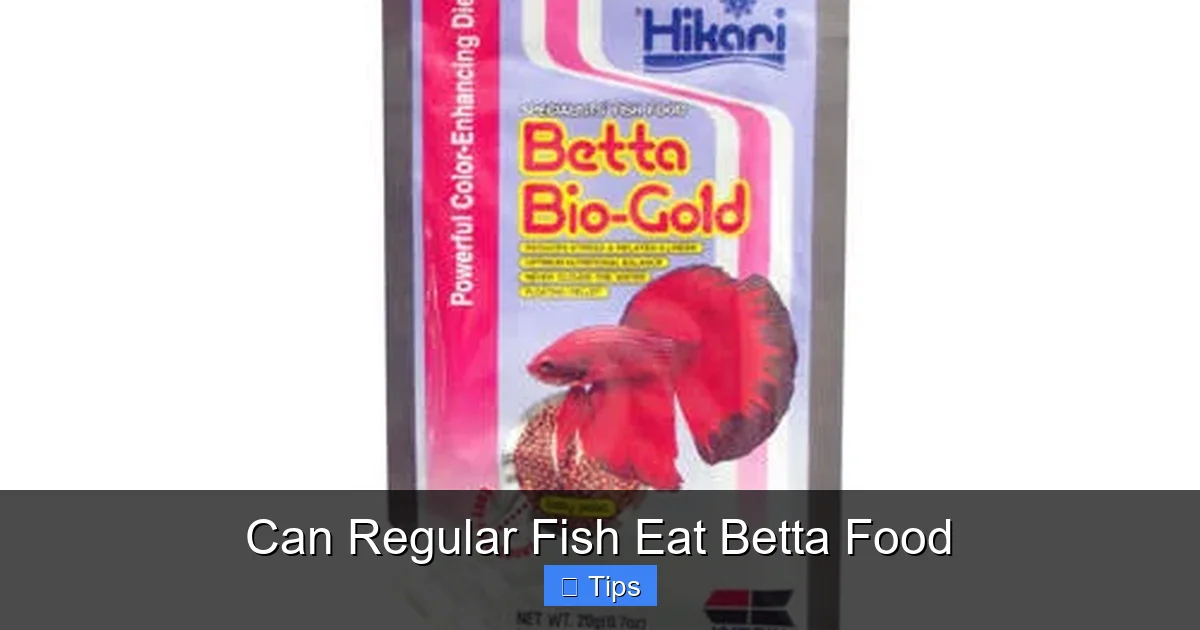
Bettas are labyrinth fish, meaning they breathe atmospheric air from the surface. This adaptation allows them to survive in low-oxygen water, but it doesn’t change their fundamental digestive system. In the wild, a betta’s diet consists almost exclusively of protein-rich sources: insect larvae (especially mosquitoes), Daphnia, brine shrimp, and tiny crustaceans. They are surface feeders by nature, hunting for prey at the water’s top layer. Consequently, their digestive tracts are short and acidic, optimized for rapidly breaking down and absorbing animal proteins and fats. They have a very limited ability to digest complex carbohydrates and plant fibers.
Typical Composition of Commercial Betta Pellets
If you turn over a container of quality betta pellets, the ingredient list tells the story. You’ll see:
- High Protein Content: Typically 40-50% or higher. The protein sources are animal-based: fish meal, shrimp meal, squid meal, krill meal, or bloodworms.
- High Fat Content: Often 8-12% or more, providing dense energy for their active, territorial nature.
- Minimal Carbohydrates & Fiber: The carb content is kept low (often under 10%), and what’s present is usually from binders like wheat flour or potato starch. You will not see significant amounts of kelp, spirulina, alfalfa, or vegetable matter.
- Small, Floating Pellets: They are designed to float or sink slowly to accommodate the betta’s surface-feeding habit.
This formula is perfect for a betta. It’s a power-packed, meat-heavy meal. For a fish that evolved to eat almost exclusively meat, this is ideal. For any other fish, it’s a nutritional mismatch of epic proportions.
Nutritional Needs of Common “Regular Fish”
Now let’s look at the dietary profiles of the fish most commonly kept by hobbyists who might be tempted to use betta food. We’ll categorize them into three broad groups, as their digestive systems are fundamentally different.
Visual guide about Can Regular Fish Eat Betta Food
Image source: bettafishworld.com
Herbivores: The Plant-Powered Cleaners
Think of plecostomus (plecos), otocinclus cats, and certain cyprinids like the bristlenose pleco or the American flagfish. These fish are primarily herbivores. In nature, they graze constantly on algae, biofilm, decaying plant matter, and soft vegetable matter. Their digestive tracts are long and complex, housing bacteria that ferment plant fibers to extract nutrients.
- Dietary Needs: They require a diet extremely high in digestible plant matter and fiber (20-40%+), with moderate protein (25-35%) and very low fat (<5%).
- Key Ingredients: Spirulina algae, kelp, alfalfa, zucchini, peas, cucumber, and specialized vegetable-based wafers or pellets.
- Why Betta Food Fails: Feeding high-protein, high-fat betta pellets to a pleco is like feeding a rabbit a cheeseburger. The protein and fat are largely indigestible, leading to severe constipation (a common, fatal issue for plecos), liver disease (fatty liver), and digestive blockages. They simply cannot process it efficiently.
Omnivores: The Balanced Opportunists
This is the largest category, including most tetras (neons, cardinals), barbs (cherry, tiger), rasboras, guppies, platies, mollies, swordtails, and many dwarf cichlids. These fish eat a varied diet in the wild: small insects, crustaceans, worms, algae, and plant detritus.
- Dietary Needs: They require a balanced mix: protein around 35-45%, fats 8-10%, and carbohydrates/fiber around 20-30% from plant sources.
- Key Ingredients: A good quality staple flake or pellet for tropical fish will list fish meal, shrimp, and spirulina or kelp in the first few ingredients. Variety is key—supplement with blanched veggies, daphnia, or brine shrimp.
- Why Betta Food Fails: While the high protein isn’t as immediately dangerous as for a pure herbivore, it’s still imbalanced. The lack of vegetable matter means they miss out on essential vitamins (like Vitamin C from spirulina) and roughage. Long-term, this can lead to obesity, reduced immune function, and digestive issues like constipation. The excess protein also produces more ammonia waste, poisoning the tank.
Carnivores: The Meat-Eaters (But Not All Are Equal)
This group includes larger predatory fish like Oscars, Jack Dempseys, many larger cichlids (like African mbuna, which are often more algae-grazers), and loaches like the clown loach. It’s crucial to distinguish between insectivores (like bettas) and piscivores (fish-eaters).
- Dietary Needs: They need high protein (45-50%+), but the source matters. Piscivores (fish-eaters) need protein from whole fish or fish meal. Insectivores (like bettas) need protein from insects and crustaceans. Fat content should be moderate (6-10%).
- Key Ingredients: For insectivores/carnivores: krill, shrimp, squid, earthworm meal. For piscivores: whole fish, fish oil.
- Why Betta Food Might Be Closer, But Still Wrong: A large carnivorous cichlid might tolerate the high protein in betta food, but the pellets are far too small. They would need to eat hundreds to get sufficient nutrition, which is impractical and pollutes the water. Furthermore, the fat profile in betta food isn’t ideal for a large, cold-water metabolized fish like an Oscar. The pellet size is a major functional mismatch.
The Real Risks: What Happens When Regular Fish Eat Betta Food?
It’s not just a theoretical nutritional imbalance. Feeding the wrong food has tangible, often severe, consequences for your fish and your entire aquarium system.
Visual guide about Can Regular Fish Eat Betta Food
Image source: bettasource.com
Digestive Distress and Disease
The fish’s digestive system is a finely-tuned machine for its natural diet. Throw in the wrong fuel, and it breaks down.
- Constipation & Blockages: This is the #1 issue, especially for herbivores. Undigested protein and fat compact in the gut, causing swelling, loss of appetite, and eventual death. You’ll see stringy feces, a “pumpkin” shape from swelling, and lethargy.
- Swim Bladder Disorder (SBD): Constipation is a leading cause of SBD. The impacted gut presses against the swim bladder, causing the fish to float uncontrollably, sink, or swim upside down.
- Fatty Liver Disease (Hepatic Lipidosis): The liver, overwhelmed by processing excessive fats, becomes infiltrated with fat cells, loses function, and fails. This is a common, often fatal, result of long-term high-fat diets in fish not built for it.
- Malnutrition & Vitamin Deficiencies: Despite being “overfed,” the fish is actually malnourished. Missing key vitamins (like C, E, and B-complex from plant sources) leads to poor coloration, weakened immune systems (making them prone to ich, velvet, etc.), fin rot, and slow growth.
Water Quality Degradation: The Silent Killer
This is a critical point that affects every fish in the tank. Fish can only absorb and utilize a certain percentage of the protein they eat. The rest is excreted as ammonia (NH3/NH4+) through their gills and as solid waste.
- Excess Ammonia & Nitrite: Betta food is so protein-dense that non-bettas will excrete a massive amount of unused nitrogenous waste. This causes toxic ammonia and nitrite spikes, burning fish gills and causing immense stress.
- Nitrate Overload & Algae Blooms: The excess waste converts to nitrate. High nitrate levels (above 20 ppm for most tanks) stunt growth, suppress the immune system, and fuel persistent, ugly algae blooms on glass and decor.
- Cloudy Water & Slime Coat Damage: Undigested fats and proteins cloud the water and can coat a fish’s protective slime layer, making them more susceptible to bacterial and fungal infections.
You are essentially slowly poisoning your entire aquarium ecosystem by feeding inappropriate food. Your filter will struggle, water changes will become a constant chore, and your fish will live in a toxic environment.
Behavioral and Physical Changes
Over time, you’ll notice changes in your fish:
- Obesity: Fish can get fat! You’ll see a swollen, rounded abdomen. This is especially common in fancy goldfish and bettas themselves if overfed, but any fish on a high-fat, high-protein diet will gain unhealthy weight.
- Lethargy and Loss of Appetite: A fish with digestive pain or poor nutrition becomes listless, hides, and stops eating eagerly.
- Faded Coloration: Vibrant colors come from a balanced diet rich in carotenoids (from algae, crustaceans, and certain vegetables). A meat-only diet will make your neon tetras look dull and your guppies lose their sheen.
When (If Ever) Is It Okay to Use Betta Food for Other Fish?
In the absolute strictest sense, there are a few very narrow, controlled scenarios where a betta pellet might be used as a tiny part of a diet, but they are the exception, not the rule.
Visual guide about Can Regular Fish Eat Betta Food
Image source: hepper.com
As an Occasional “Treat” for Carnivorous/Omnivorous Fish
For a fish that naturally eats insects and crustaceans—like some larger tetras ( Congo tetras), some barbs ( tiger barbs can be nippy but are omnivores), or certain dwarf cichlids—a single betta pellet once a week or less as a novelty treat is unlikely to cause harm. It’s high-value, so they’ll love it. But it must be a microscopic part of their overall diet. Think of it like giving your dog a piece of bacon—a rare treat, not a meal. For herbivores, never.
In a True Emergency Situation
If your specialized herbivore food runs out and you have a hungry pleco, and the only other food you have is betta pellets, you might offer one or two pellets to tide it over for a single day while you get proper food. This is an emergency bridge, not a solution. Do not make a habit of it. For an omnivore, a few pellets for a day or two in a pinch is less dangerous, but still not ideal.
For “Cleaner” Crew in a Betta-Only Tank
If you have a betta tank and you add a few snails or a single, hardy, omnivorous shrimp (like a bamboo shrimp) to help with algae, they might nibble on uneaten betta pellets. This is generally fine, as shrimp and snails are more adaptable. However, you should still supplement their diet with algae wafers or blanched veggies for balanced nutrition.
The Golden Rule: If you are asking “Can I feed this to my fish?” and the fish in question is not a betta, the answer is almost certainly no. The risks of chronic, subtle health damage far outweigh any perceived convenience. The cost of a proper food bag is minuscule compared to the cost of vet care (for fish, often just euthanasia) or a crashed tank cycle.
Choosing the Right Food for Your Specific Fish
So, what should you be feeding? The answer is: it depends entirely on the fish. Here is a practical guide.
Step 1: Identify Your Fish’s Natural Diet
Use a reliable source like FishBase, Seriously Fish, or a reputable aquarium book. Don’t rely on pet store staff alone. Search “[Your Fish Species] diet in the wild.” Is it an algae-scraper? A predator? A fruit-eater? This is your starting point.
Step 2: Select a High-Quality Staple
Based on that research, buy a staple food formulated for that dietary type.
- For Herbivores/Grazers: Sinking algae wafers (e.g., Hikari Algae Wafers, Omega One Veggie Kelp Floating Discs), high-quality spirulina-based pellets (for plecos, parrotfish).
- For Omnivores (Most Community Fish): A high-quality tropical flake or micro-pellet. Look for brands where the first 3 ingredients are specific fish/shrimp meals and spirulina/kelp (e.g., New Life Spectrum, Ocean Nutrition, Fluval). Avoid foods where “wheat flour” or “soybean meal” is first.
- For Carnivores/Predators: Large pellets or sticks formulated for cichlids or predator fish, with high fish protein content. Frozen foods like bloodworms, brine shrimp, or krill are excellent supplements.
- For Bettas (The Only Exception): High-quality betta pellets or frozen foods (daphnia, brine shrimp, bloodworms) as a staple, with occasional treats.
Step 3: Implement a Varied Diet
No single food is perfect. Variety is the true key to health.
- Feed your staple 3-5 times a week.
- On other days, offer supplements: blanched zucchini or peas (for herbivores/omnivores), daphnia (a great natural laxative), a small piece of earthworm, or a high-quality frozen food.
- For herbivores, ensure they get their veggies! A pleco will starve on betta pellets alone, even if it eats them.
Step 4: Feed Correctly
Amount and frequency matter more than the food brand.
- Rule of Thumb: Feed an amount your fish can consume in 2-3 minutes, 1-2 times per day. For slow grazers like plecos, offer a wafer they can graze on overnight.
- Observe: Watch your fish eat. Are they getting food? Is it sinking too fast for a bottom feeder? Adjust accordingly.
- Fast Once a Week: A 24-hour fast once a week is excellent for digestion and mimics natural feeding patterns. It also helps clear out any minor blockages.
Practical Feeding Tips for a Healthy Aquarium
Beyond food choice, your feeding technique is crucial for tank health and fish well-being.
The “Test Feeding” Method
When introducing any new food, do a test feed. Drop in a very small amount (a pinch of flakes, one pellet). Watch for 10 minutes. Does your targeted fish eat it? Does it sink too fast for bottom feeders? Does it cloud the water excessively? This simple test prevents wasting money on unsuitable food and protects your water quality.
Target Feeding for Special Needs
In a community tank, a shy or specialized fish (like a pleco or a bottom-dwelling catfish) might not get enough food if you just sprinkle flakes on top. Use a turkey baster or your fingers to place a sinking wafer directly near them, or feed after lights out when more active fish are less aggressive.
Storage is Everything
Fish food, especially pellets and flakes, degrades rapidly once opened. Nutrients, especially fats and vitamins, oxidize and become useless or even harmful.
- Buy food in quantities you will use within 1-2 months.
- Store in a cool, dark, airtight container. A small mason jar is perfect. Do not keep it in the original bag with a clip.
- Never use food that smells rancid, has changed color, or is clumpy with moisture.
Connect Feeding to Water Changes
Your feeding regimen should directly inform your maintenance schedule. If you feed heavily (and appropriately), you must do more frequent water changes to remove the resulting waste. A heavily fed tank might need 25% weekly changes. A lightly fed, planted tank might manage with 25% bi-weekly. Test your water regularly (ammonia, nitrite, nitrate) to see the direct impact of your feeding.
Conclusion: Respect the Biological Blueprint
The question “Can regular fish eat betta food?” opens a door to the fundamental principle of responsible fishkeeping: understanding and replicating nature as closely as possible within our glass boxes. Bettas are fascinating, beautiful fish with very specific needs. Their food is a tool for those needs alone. Using it for other species is a shortcut that leads to poor health, suffering, and a messy, unstable tank. It stems from a desire for convenience, but the consequences are anything but convenient.
Take the time to learn about each fish in your care. Is that new goldfish a herbivore? That school of neons omnivores? That bristlenose pleco a dedicated algae-eater? Armed with that knowledge, you can select the correct staple food—a high-quality flake for omnivores, a spirulina wafer for herbivores, a carnivore pellet for predators—and build a varied menu around it. You will be rewarded with fish that display vibrant colors, active behavior, robust appetites, and long lifespans. Your water will be clearer, your maintenance easier, and your entire aquarium ecosystem will thrive. Remember, in fishkeeping, there are no universal shortcuts. The right food for the right fish is not a suggestion; it is a requirement for ethical and successful husbandry.
Frequently Asked Questions
Can goldfish eat betta food?
No. Goldfish are primarily herbivores with digestive systems designed for plant matter. Betta food is extremely high in animal protein and fat, which causes severe constipation, swim bladder disease, and fatty liver in goldfish. Always feed goldfish-specific food with high vegetable content.
Can tropical community fish like tetras or guppies eat betta food?
They can physically consume it, but it is not a suitable staple. As omnivores, they need a balanced diet with plant-based carbohydrates and fiber. A diet of only betta food (high-protein, low-fiber) can lead to obesity, poor coloration, digestive issues, and excess ammonia waste that fouls the tank water.
What about other carnivorous fish, like Oscars or Jack Dempseys?
While these are also carnivores, betta pellets are far too small in size for them to get adequate nutrition. They would need to eat hundreds, leading to massive water pollution. Furthermore, the fat and protein profile in betta food is formulated for a small, insect-eating fish, not a large, piscivorous (fish-eating) cichlid. Use large cichlid pellets or frozen foods instead.
Is a single betta pellet going to harm my other fish if they eat it accidentally?
No. One or two pellets accidentally consumed by an omnivorous or carnivorous fish is not an emergency. The danger comes from chronic, long-term feeding. The goal is to make betta food a permanent part of their diet, which it never should be.
My pleco is always hungry and eats the betta pellets I put in for my betta. Is that okay?
It is not okay. While the pleco might eat them, it is being slowly poisoned. The high protein and fat will cause life-threatening constipation and liver damage. You must stop this immediately. Feed your pleco dedicated sinking algae wafers or spirulina pellets in a separate feeding, preferably after lights out, to ensure it gets proper nutrition.
What is the absolute safest alternative if I run out of my fish’s specific food?
For an emergency 1-2 day period:
- For herbivores/omnivores: Blanched, shelled green peas (excellent natural laxative) or a small piece of zucchini.
- For carnivores/omnivores: A small piece of cooked, unseasoned shrimp or a bit of earthworm.
- Never use betta food as a substitute. The best practice is to always have a backup container of a high-quality, general tropical flake or pellet that is suitable for most omnivores, but this is still not ideal for strict herbivores.