Yes, other fish can sometimes go with bettas, but it depends entirely on the individual betta’s temperament and a meticulously prepared tank. Success requires a minimum 20-gallon aquarium, careful selection of peaceful, non-flashy tank mates, and providing ample hiding spots. Always observe closely and be prepared to separate fish if aggression arises, as bettas are famously territorial.
Key Takeaways
- Bettas are individuals: Your betta’s unique personality is the biggest factor. Some are bullies, some are tolerant.
- Tank size is non-negotiable: A 20-gallon long tank is the absolute minimum recommended for any community with a betta.
- Choose peaceful, hardy species: Target fish that are not brightly colored, have short fins, and occupy different tank levels.
- Avoid fin-nippers and rivals: Never house bettas with fish known for nipping fins or those with similar body shapes and colors.
- Aquascaping is your defense: Use live plants, driftwood, and caves to create visual barriers and break lines of sight.
- Introduction is a careful process: Use a divider or quarantine tank first. Never just drop a new fish into the betta’s established home.
- Constant monitoring is required: Watch for flaring, chasing, and torn fins for at least 72 hours after any introduction.
📑 Table of Contents
- Introduction: The Solitary Artist of the Aquarium
- Understanding Your Betta: It’s All About Personality
- The Foundation of Success: Tank Setup & Environment
- The Ideal Tank Mates: Who Can Live with a Betta?
- The “No-Fly” List: Fish to NEVER House with a Betta
- The Introduction Protocol: How to Do It Right
- Monitoring, Troublesbling, and Knowing When to Bail
- Conclusion: Patience, Planning, and Prudence
Introduction: The Solitary Artist of the Aquarium
So, you have a beautiful, flowing betta fish, with its stunning fins and vibrant colors, and you’re looking at your aquarium and thinking: “Can other fish go with bettas?” It’s one of the most common and important questions for any betta owner. The short, honest answer is: sometimes. The longer, more useful answer is a deep dive into the complex personality of the Siamese fighting fish, the science of aquarium dynamics, and a whole lot of careful planning.
Betta splendens, with their history of being bred for aggression in fighting pits, carry a reputation as lone wolves. And it’s not entirely undeserved. They are incredibly territorial, especially the males. They view their little underwater kingdom as their sole domain and will often defend it vigorously against any perceived intruder. But to write them off as pure, unadulterated bullies is a mistake. In the right environment, with the right tank mates, many bettas can live in a peaceful community. The key phrase here is “in the right environment.” This article will be your complete guide to figuring out if your betta can have friends, and if so, how to make those friendships work. We’ll break down tank setup, the best and worst possible roommates, and the step-by-step process for a successful introduction.
Understanding Your Betta: It’s All About Personality
Before you even think about another species, you must understand your betta. This isn’t a one-size-fits-all pet. Bettas have distinct personalities, and their tolerance for tank mates varies wildly from one fish to the next. Your first job as a potential community tank manager is to become a betta behavior expert.

Visual guide about Can Other Fish Go with Bettas
Image source: petshun.com
The Spectrum of Betta Temperament
Think of betta temperament on a sliding scale. On one end, you have the “Placid Plopper.” This betta might barely glance at a shrimp swimming by. It’s content to lounge on a leaf, flares only at its own reflection, and seems utterly unbothered by the world. On the other end, you have the “Nimitz-class Destroyer.” This betta will flare at anything that moves—your hand near the glass, a shadow, a snail on the glass. It will relentlessly chase and harass any new fish introduced, often to the point of injury or death. Most bettas fall somewhere in the middle. They might be curious but not immediately violent, or they might have a specific trigger (like long, flowing fins).
How do you figure out where your betta falls? Observation. Watch your betta in its current tank. How does it react to you? How does it react to other fish in neighboring tanks at the pet store? If it’s already housed alone, does it seem stressed and frantic, or calm and curious? A betta that is already stressed from poor water conditions or a tiny tank is a guaranteed aggressor. Get the basics right first.
Male vs. Female Bettas
The classic rule is: never house two male bettas together. They will fight to the death. Female bettas, while less aggressively territorial than males, are not inherently peaceful. They can and will establish a pecking order and may still be nippy, especially in smaller tanks. A sorority of female bettas (5+ in a heavily planted 40+ gallon tank) is a specialized, advanced setup for experienced aquarists and is not recommended for a beginner community. For the purpose of this guide, we are primarily discussing a single male or female betta as the centerpiece of a community.
The Foundation of Success: Tank Setup & Environment
You can have the most peaceful betta in the world, but if you put it in a 5-gallon bowl with a neon tetra, you’ve set the stage for disaster. The environment is your most powerful tool for managing betta aggression. A properly sized and decorated tank doesn’t just give other fish a chance; it gives the betta itself a higher quality of life, reducing stress and territorial boredom.

Visual guide about Can Other Fish Go with Bettas
Image source: aqueon.com
Tank Size: The Golden Rule
Let’s be clear: a 5-gallon tank is for a betta alone. If you want to consider tank mates, you need to upgrade. The widely accepted absolute minimum is a 20-gallon long aquarium. Why “long”? Because horizontal swimming space is far more valuable to most fish than vertical height. A 20-gallon long provides about 30 inches of swimming length, which is crucial for creating territories and allowing fish to escape a betta’s line of sight. A 29-gallon or 30-gallon tank is an even better, more forgiving starting point. This volume dilutes the betta’s presence, provides more stable water parameters, and gives all inhabitants room to establish their own spaces without constant, stressful confrontation.
The Art of Aquascaping: Hiding Spots and Visual Barriers
A bare tank is a stress factory. Your goal is to break up the open water column and eliminate clear sight lines. Use a combination of:
- Dense Vegetation: Live plants like Java fern, Anubias, Cryptocorynes, and floating plants (Salvinia, Frogbit) are fantastic. They create a canopy at the surface (where bettas often patrol) and thickets at mid-level. Silk plants are a decent substitute if you can’t keep live ones.
- Hardscape: Driftwood, lava rock, and terracotta pots (with holes plugged) provide caves, overhangs, and tunnels. Position these to create “corners” and separate the tank into distinct zones.
- Substrate Variation: A sandy area for bottom dwellers and a gravel patch elsewhere can help define spaces.
The idea is that a betta should not be able to see the entire tank from any one vantage point. A coridor darter or Kuhli loach should be able to dart from one hiding spot to another without being constantly in the betta’s crosshairs.
Filtration and Water Quality
A larger community means a larger bioload. You need a filter that can handle the waste from all inhabitants. A gentle flow is best—bettas hate strong currents. Sponge filters are excellent for this, providing mechanical and biological filtration without a current. Canister filters with spray bars adjusted to diffuse flow are also great. Regardless of filter type, maintain impeccable water quality with regular water changes (25-50% weekly in a community). Ammonia or nitrite spikes will make any fish, especially a betta, irritable and prone to disease.
The Ideal Tank Mates: Who Can Live with a Betta?
Now for the fun part. If you have a suitably large, well-decorated tank, what are your options? The best candidates share these traits: they are peaceful, fast-moving, non-territorial, and not brightly colored or long-finned. They also should not look like another betta (i.e., not have large, flowing fins or a similar body shape). Here are the top categories of successful tank mates, with specific examples.
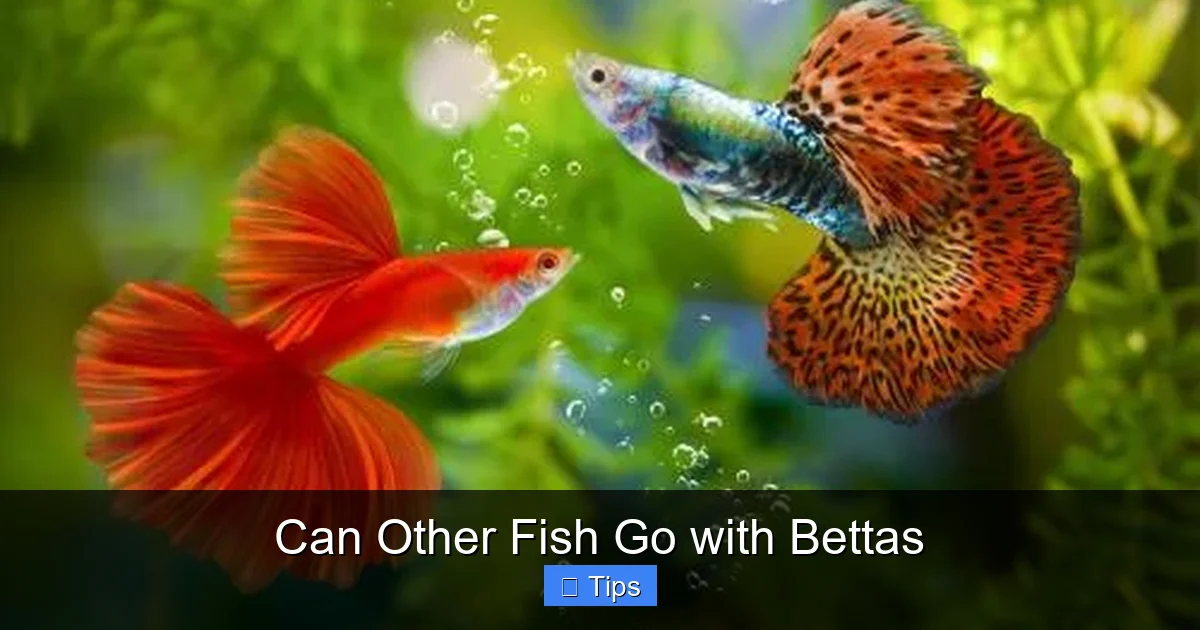
Visual guide about Can Other Fish Go with Bettas
Image source: aqueon.com
Peaceful, Active Schooling Fish (Top Mid-Level Swimmers)
These fish are often the best choice. Their key advantage is numbers and speed. A school of 6-8 small, fast fish creates a moving barrier that a betta often can’t single out. They occupy the mid-level of the tank, different from a betta’s top-and-front patrol zone.
- Neon & Cardinal Tetras: The classic choice. They are small (1.5 inches), peaceful, and their iridescent blue/red stripe is different enough from a betta’s solid colors that they are often ignored. Crucially, they must be in a school of 8+ to feel secure and spread out the betta’s attention.
- Harlequin Rasboras: Slightly larger (2 inches) and more robust than neons. Their orange coloration and active, loose-schooling behavior make them excellent dither fish that can help draw a betta’s focus away from other inhabitants.
- Cherry Barbs (female): Males are brightly red and can trigger aggression. Females are plumper and more brownish-pink, making them a better, though still not foolproof, choice. They are active and need a school of 6+.
- Ember Tetras: Tiny (0.8 inches), reddish-orange fish that are almost glowing. Their small size and constant, frantic movement in a large school of 10+ often makes them “invisible” to a betta.
Bottom Dwellers: The Peaceful Clean-Up Crew
These fish occupy a completely different niche, staying on the substrate. Since bettas are top- and mid-level swimmers, they often ignore what happens at the bottom, especially if there are plenty of hiding places down there.
- Kuhli Loaches: The ultimate betta companion. These eel-like, nocturnal fish are incredibly peaceful, shy, and spend their days burrowed in the substrate or hiding under decorations. They are fascinating to watch and pose zero threat.
- Bristlenose Plecos (Ancistrus sp.): The smaller, more peaceful cousin of the common pleco. The albino or standard brown varieties are good choices. They are dedicated algae eaters, have armored plates, and are generally not interested in interacting with a betta. Ensure your tank is large enough (20+ gallons) and has driftwood for them to rasp on.
- Corydoras Catfish: The adorable, social “cories.” They are small (2-3 inches), school in groups of 6+, and are constantly active on the bottom, sifting sand. Their armored scutes and different shape make them unappealing as targets. Pygmy Corys are great for smaller tanks.
- Otocinclus Catfish: The tiny (1.5 inch), algae-munching specialists. They are schooling fish that need a group of 6+ and a tank with established algal growth or supplemented with algae wafers. Their size and behavior make them largely ignored.
Invertebrates: The Unlikely Peacekeepers
Shrimp and snails are fantastic, low-biomass additions that can add activity and cleanup without triggering a betta’s territorial instincts—usually.
- Amano Shrimp: The largest common aquarium shrimp (2-3 inches). They are hardy, excellent algae eaters, and their size and transparent/colored pattern often makes them uninteresting to bettas. They are less likely to be seen as food.
- Ghost Shrimp & Cherry Shrimp: These are smaller and more likely to be eaten, especially by a curious or hungry betta. Cherry shrimp, with their bright red color, can actually be a target. If you try them, use a large, heavily planted tank and accept that you may lose a few. It’s a calculated risk.
- Nerite Snails: The perfect snail. They have a beautiful, patterned shell, cannot reproduce in freshwater (so no snail explosion), and are completely harmless. They crawl on glass and wood, cleaning algae as they go. A betta will almost never bother a snail.
- Mystery/Apple Snails: Larger snails that also do a great job. They can sometimes be knocked off surfaces by an investigating betta, but they are generally safe. Be aware they produce a lot of waste.
The “No-Fly” List: Fish to NEVER House with a Betta
Just as important as knowing the good choices is knowing the absolute disasters waiting to happen. These fish are guaranteed to cause problems, stress, injury, or death.
Fin-Nippers and Boisterous Swimmers
These fish have one instinct: to nip at the long, flowing fins of a betta. It’s like a red flag to a bull.
- Tetras (some): While neon tetras are often okay, Serpae Tetras and Rummy-nose Tetras are notorious fin-nippers and should be avoided at all costs.
- Tiger Barbs: The classic example. They are fast, aggressive little fish that will relentlessly harass a slow-moving betta with long fins.
- Some Danios: Zebra Danios and especially Leopard Danios can be boisterous and may nip at a betta’s fins.
- Angelfish & Gouramis: Both are larger, more territorial fish that will likely fight with a betta for dominance. They also have similar body shapes, which is a major trigger.
Other Flashy or Territorial Fish
- Other Bettas: As stated, males with males. Males with females should only be for breeding, under strict supervision, and with an immediate plan to remove the female. Female sororities are high-risk.
- Fancy Guppies: The males have incredibly long, flowing caudal fins that are practically a magnet for a betta. They are also brightly colored. A betta will almost certainly see a male guppy as a rival and attack.
- Fantail or Veiltail Goldfish: They have similar flowing fins and are cold-water fish, making them incompatible on temperature alone. They are also messy.
- Any fish that looks like a betta: This includes some Killifish, Paradise Fish (which are actually a type of gourami and very aggressive), and any fish with a similar body profile and vibrant colors.
The Introduction Protocol: How to Do It Right
You have your 20+ gallon tank, aquascaped with hiding spots. You’ve chosen a school of harlequin rasboras and a few Kuhli loaches. Now, the most critical phase: introducing them. Rushing this is the #1 reason community attempts fail.
Step 1: The Betta Must Be the Last Inhabitant
This is vital. Your betta must consider the entire tank its territory from day one. If you add other fish first and let them establish their territories, then introduce the betta, it will see the entire community as an invading force and likely attack everything. Set up and cycle your tank with the planned community fish first. Let them live together peacefully for 2-3 weeks. This establishes a stable hierarchy without the betta present.
Step 2: The Acclimation Process
When you bring your betta home, do not just net it and drop it in. Use a divider or a breeder box inside the main tank. Place the betta in the divider/box on one side of the tank. Let it see, smell, and react to the other fish for at least 24-48 hours. You will likely see flaring (the betta puffing out its gills and fins). This is normal. The goal is to see the betta’s initial aggressive reaction begin to wane. If it is relentlessly trying to attack through the divider after a full day, this is a very bad sign that cohabitation may not work.
Step 3: The First Release
After 24-48 hours of observation, it’s time. Turn off the tank lights. Gently net the betta and release it into the tank, ideally near a dense cluster of plants or a hiding spot. Keep the lights off for several hours or overnight to reduce stress and visual stimulation. When you turn the lights back on, observe closely. Some flaring and chasing is normal as the betta re-asserts its place in the now-larger territory. But if chasing is relentless, non-stop, and one fish is being cornered or injured, you must be prepared to remove either the betta or the new fish immediately using a net or a separate quarantine tank.
Monitoring, Troublesbling, and Knowing When to Bail
The first 72 hours are the most critical. Watch for:
- Flaring: Normal in short bursts. A constant, puffed-up betta is stressed and aggressive.
- Chasing: Brief chases to establish dominance can happen. Constant, high-speed chasing of one specific fish is a red flag.
- Torn Fins or Missing Scales: The most obvious sign of physical harm. If you see this, separation is immediate.
- Hiding: If the other fish are permanently hidden and not coming out to eat, the betta has won. They are living in terror.
- Loss of Appetite: In either the betta or the tank mates. Stress shuts down feeding.
Have a Plan B: Before you even buy the first tank mate, have a backup plan. This means having a second, cycled tank (even a 10-gallon) ready to act as a “refuge” tank. If the betta proves too aggressive, you can move the other fish there. If the other fish are causing the problem (unlikely, but possible), you can move the betta back to a solo setup. Never introduce a fish into a system where you have no way to remove it if things go wrong.
Conclusion: Patience, Planning, and Prudence
So, can other fish go with bettas? The answer is a qualified, careful yes. But it’s a yes that comes with a heavy burden of responsibility. It’s not about finding a magical, bulletproof list of fish. It’s about understanding the complex, individual nature of your betta, providing an environment that respects its territorial needs while offering escape for others, and being a vigilant, hands-on observer. A successful betta community is a beautiful, dynamic showcase of aquatic life. A failed attempt is a stressful, sometimes tragic lesson. Start with the largest tank you can manage, choose the hardiest, most peaceful species from the lists above, and introduce with military-grade caution. Remember, the goal is not to force coexistence, but to create conditions where peaceful coexistence becomes the easiest, most logical choice for all the fish involved. Your betta’s happiness—and the safety of its potential tank mates—depends on it.
Frequently Asked Questions
Can betta fish live with shrimp?
Yes, bettas can often live with shrimp, but it’s a calculated risk. Larger, hardier shrimp like Amano shrimp have the best chance. Small, colorful shrimp like Cherry shrimp are more likely to be seen as food, especially by a curious betta. A heavily planted tank gives shrimp places to hide. Be prepared for the possibility that some shrimp may be eaten.
What is the absolute minimum tank size for a betta with tank mates?
The absolute minimum is a 20-gallon long tank. This provides enough horizontal swimming space to create visual barriers and separate territories. A standard 20-gallon “high” tank is less ideal due to its smaller footprint. For the best chance of success, a 29-gallon or larger tank is highly recommended.
Are female bettas less aggressive than males and better for community tanks?
Generally, yes, female bettas tend to be less aggressively territorial than males, but they are not inherently peaceful. A single female betta can often be a better candidate for a community than a highly aggressive male. However, you must still follow all the same rules regarding tank size, tank mates, and careful introduction. Some females can still be quite feisty.
Can I put a betta with a snail or a pleco?
Yes, snails (like Nerite or Mystery snails) are almost always safe with bettas. They are slow, have shells, and are not seen as competition. Bristlenose plecos are also generally good tank mates due to their armored bodies and different habitat preference (bottom). They are algae eaters and usually ignore bettas completely.
How do I know if my betta is too aggressive for tank mates?
Signs of an overly aggressive betta include relentless, non-stop chasing of any other fish, constant flaring at everything that moves, and physically injuring or killing tank mates within the first few days. If your betta exhibits this behavior during the divider test phase, it is a strong indicator that it should be kept as a solo fish for its own safety and the safety of others.
What should I do if my betta starts attacking a new tank mate?
You must act immediately to prevent serious injury or death. Have a backup tank ready. Use a net to carefully remove the fish that is being targeted (or the betta, if the other fish is the aggressor—rare but possible). Return the aggressor to a solo setup or the targeted fish to a separate hospital tank. Do not hope they will “work it out.” Once a betta establishes a pattern of attack, it is unlikely to change.